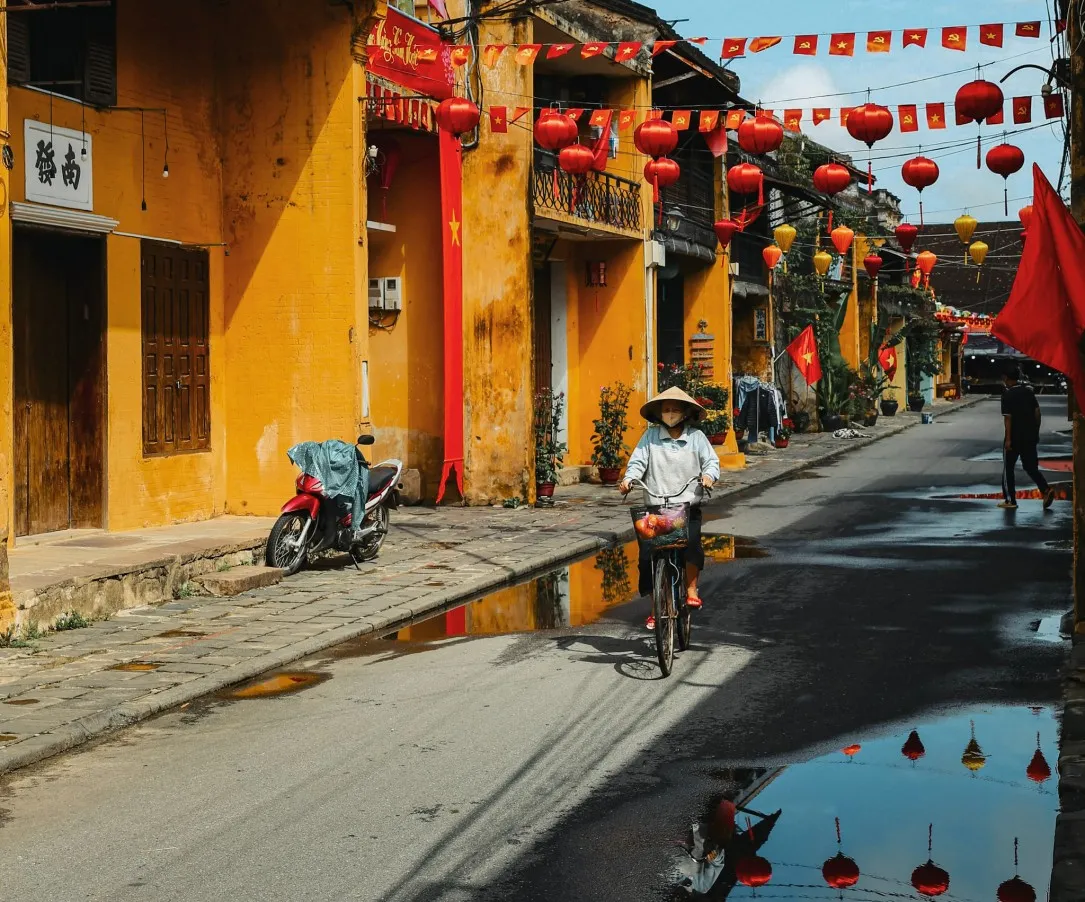
V I E T N A M
travel guide
Vietnam was so much more than I expected. We landed in Hanoi on day four of our Southeast Asia trip, and for a while, I didn’t find my place there. It was a total culture shock: the noise, the traffic, the sheer density of it all, but I slowly eased into its rhythm, and by the time we left, I understood why so many people fall hard for this country.
This Vietnam travel guide has all the practical information you need before you go, plus the blog posts I wrote along the way, from the dishes I couldn’t stop ordering to the neighbourhoods worth getting lost in.
The four things to sort before you fly.
Travel insurance
Nobody buys travel insurance with any enthusiasm, and almost everyone wishes they had at some point, usually around the moment a scooter spill in Hoi An becomes a clinic visit, or a cancelled domestic flight wipes out a non-refundable hotel. Two providers cover almost everyone reading this.
True Traveller
If you hold an EU passport, True Traveller is the most sensibly priced option I’ve found. EU-only as a product, but covers you anywhere in the world. They’ll also let you buy cover after you’ve already left home, which most insurers refuse to do.
Get a quote →World Nomads
For travellers from outside the EU, and for anyone planning a longer trip with the usual mix of motorbikes, trekking and the odd cliff jump into a lagoon, World Nomads remains the standard. Adventure activities most insurers won’t touch, and you can extend your cover from the road.
Get a quote →An eSIM, sorted before takeoff
Vietnam has fast, cheap, increasingly reliable data, and the cleanest move now is to load an eSIM onto your phone before you fly. You’ll be online the moment you land, which matters in airports like Hanoi and Tan Son Nhat where the taxi touts are working. No fumbling with a physical SIM, no airport kiosk queue, no haggling in a language you don’t speak.
Airalo
Pay-as-you-go data on a Vietnam plan, around US$4.50 for 1GB and US$18 for 5GB across 30 days. Install the eSIM through their app a few minutes before takeoff. The standard for short trips and light users.
Get a plan →Visa (worth ten minutes online)
Vietnam is less hands-off than its neighbours here, so check which lane you’re in before you fly. A short list of nationalities, including the UK, Germany, France, Spain, Italy, Japan, South Korea and the Nordics, gets 45 days visa-free, no paperwork required, just a passport valid for six months and a couple of blank pages. Most other passports, including the US, Canada, Australia and Ireland, need an e-visa sorted in advance: it’s a same-day online application through the official portal, costs around US$25, and is generally approved within a few days. Apply directly through the official e-visa portal rather than a third-party site, since plenty of lookalikes charge a markup for the same form.
A card that doesn’t punish you abroad
Cities are increasingly card-friendly, but markets, street food stalls and rural areas still run almost entirely on cash. The clean setup is a fee-free travel card like Wise or Revolut for ATM withdrawals and contactless payments. Withdraw around 3,000,000 to 5,000,000 VND (US$120 to US$200) on arrival and you’ll be set for the first few days. A small tip is appreciated for tour guides and drivers, but it’s not the default it is elsewhere.
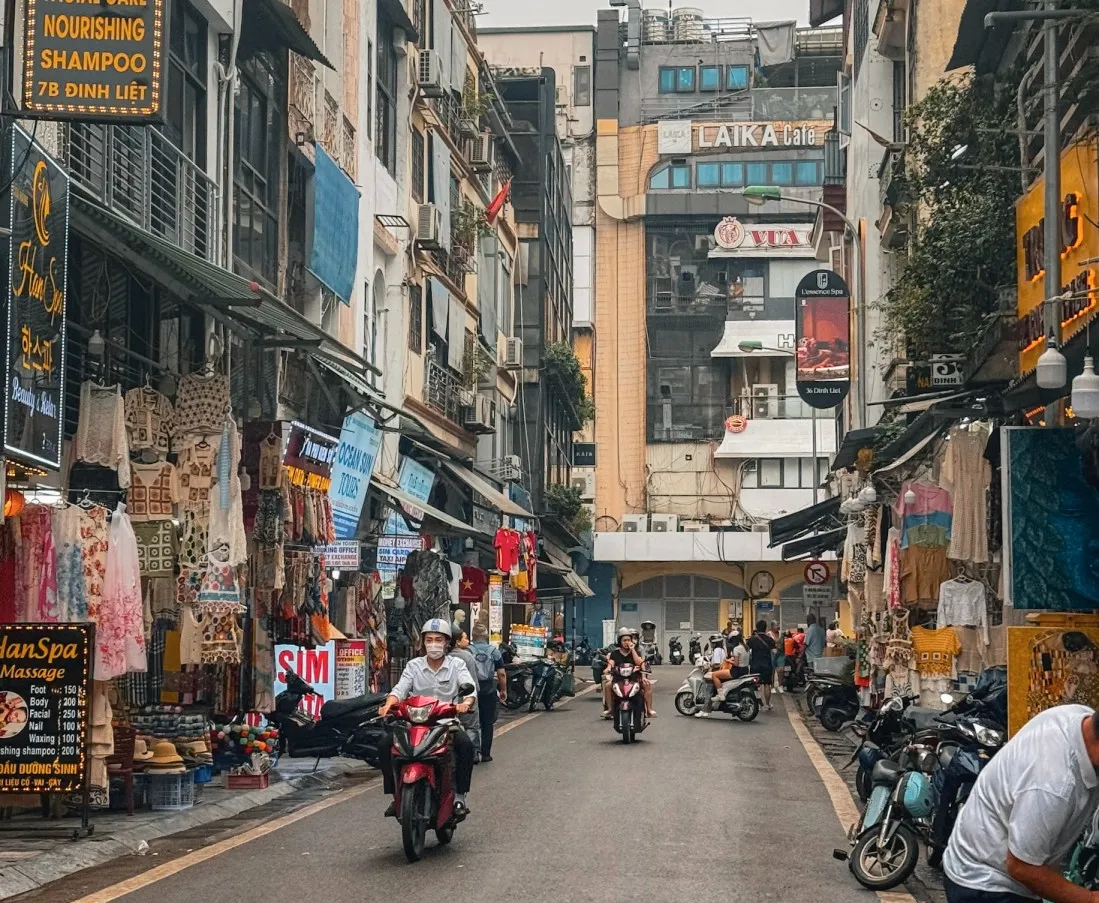
How To Get Around Vietnam
Vietnam doesn’t have a single nationwide transit pass the way Taiwan does, mostly because there isn’t really a nationwide metro system to tap into yet. Ho Chi Minh City opened its first line in December 2024, a 19.7km stretch from Bến Thành Market out to Suối Tiên, and it’s genuinely useful if you’re staying near that corridor, fares run from around 7,000 to 20,000 VND depending on distance, paid by token, top-up card, or contactless bank card at the gate. Hanoi has its own short urban line, but neither city’s network covers enough ground yet to be your main way around. For everything else, the answer is Grab.
Grab is the Uber of Southeast Asia and it runs Vietnam’s cities. You can book a car, a motorbike taxi (GrabBike, by far the cheapest and fastest way through traffic), or food delivery, all from one app with upfront pricing in dong so you never have to haggle. Download it before you land and link a card, it’ll save you more stress than any transit pass would.
I used 12GoAsia when booking all my transport around Vietnam. It never let me down.
1. The Reunification Express
If you’re moving up or down the country, the train is the most scenic way to do it, and arguably the most Vietnamese. The Reunification Express runs the full 1,726km from Hanoi to Ho Chi Minh City, hugging the coast through Hue, Da Nang, and the Hai Van Pass along the way. Doing the whole route in one sitting takes 32 to 37 hours, which almost nobody does, most travellers break it into overnight legs like Hanoi to Hue, or Da Nang to Nha Trang, sleeping through the boring bits and waking up somewhere new.
A soft sleeper (four-berth, air conditioned, proper mattress) runs roughly $55 to $90 for an overnight segment, and is worth the upgrade over a hard sleeper if you’re over 5’8″ or just want headroom. Private operators like Lotus Train and Violette attach nicer carriages to the same state-run trains for a premium, better bedding, sometimes breakfast included. Book through the official Vietnam Railways booking partner, or through Baolau or 12Go Asia, both have English interfaces and take foreign cards without trouble.
I wrote about my experience with Lamen Express from Hanoi to DaNang here.
Lower berths sell out first and they’re the better pick anyway, easier to access, no climbing required, and you can sit up properly. Book at least a few weeks out if you want one, especially around Tet (Lunar New Year), when the whole country is travelling at once.
2. Sleeper Buses
If the train doesn’t go where you’re headed, or you’re on a backpacker budget, the sleeper bus is the real backbone of long-distance travel here. These aren’t ordinary coaches, they’re fitted with two tiers of reclining pod-style berths instead of upright seats, so you lie down (mostly flat) and wake up at your destination, saving a hotel night in the process. A Hanoi to Sapa run is 5 to 6 hours, Ho Chi Minh City to Nha Trang is 9 to 10, and most routes cost a fraction of flying.
3. Motorbike
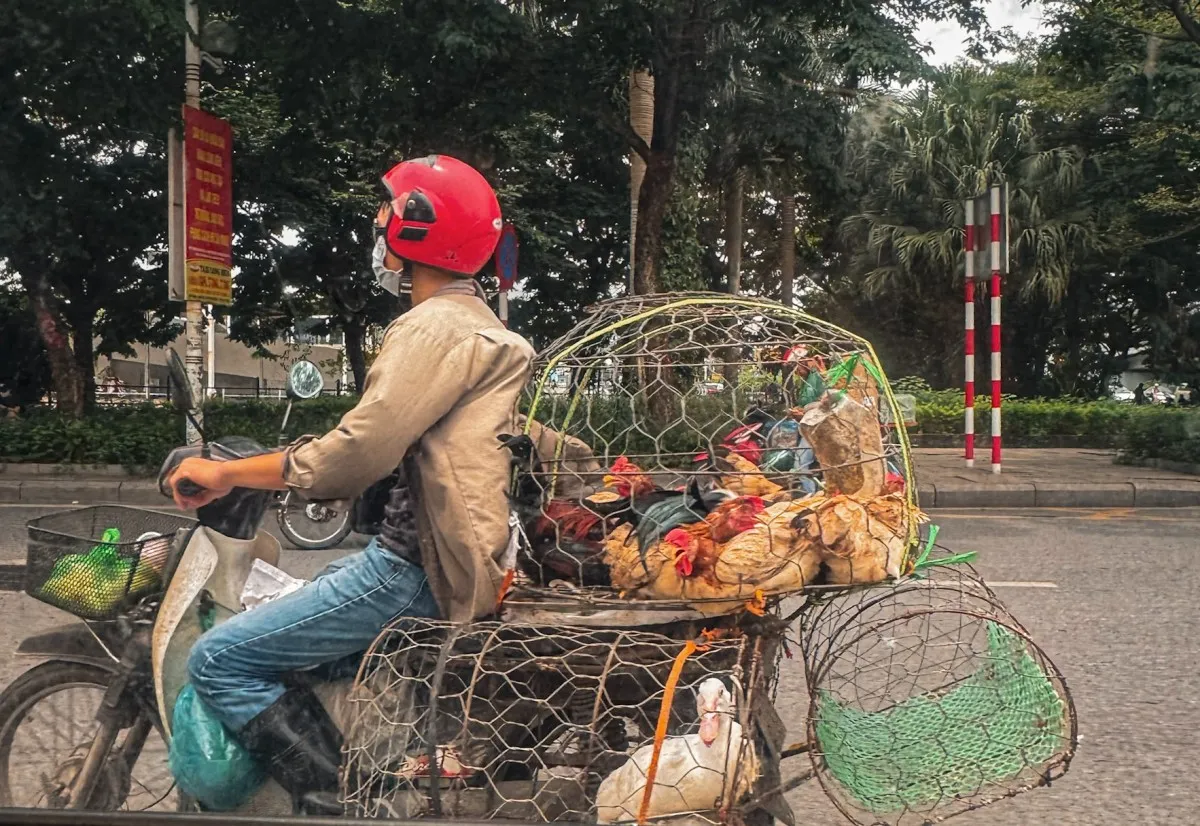
Vietnam runs on two wheels. Motorbikes outnumber cars by a huge margin, and the traffic flow that looks like chaos from the sidewalk actually has its own logic once you’re moving with it rather than against it. You don’t need to drive one yourself, GrabBike will get you anywhere a regular taxi would for less, but if you want the freedom to detour down a coastal road or up into the hills, renting your own is the way to go.
Legally, you need an International Driving Permit that covers motorcycles, plus travel insurance that explicitly covers scooters, plenty of policies exclude them by default, so check the fine print before you ride. Rentals run from around 100,000 to 250,000 VND a day (roughly $4 to $10) for an automatic scooter, bookable through apps like Vexere or local rental shops in any tourist town. Inspect the bike together with the shop before you take it, photograph any existing scratches, and check the brakes, lights, and horn.
Best Time To Visit Vietnam?
The only region with a real winter. Temperate monsoon climate gives four genuine seasons — cold, sometimes near-freezing nights in the high country come December and January, hot and properly wet from May through August. The dry window runs October to April.
Runs on the opposite clock to everywhere else. Dry and increasingly hot from February through August, then the wet season — and typhoon season — takes over from September into January. If the rest of the country is dry, the centre is often when it isn’t.
Tropical and consistent year-round, just two seasons instead of four. Dry and sunny from November to April, warm and wet (short, hard afternoon downpours rather than all-day rain) from May to October. The most forgiving region on the calendar.
The north wakes up — mild days, low rainfall, terraced fields turning green again, and Tet (Lunar New Year, late Jan/Feb) brings the whole country to life before transport and hotels get squeezed for a week. The south is still in its dry season and barely changes. The centre, however, is just getting hot and dry itself, so this window works for almost the entire country at once. Best six to eight weeks of the year to attempt Hanoi, Hoi An and Ho Chi Minh City in one trip.
The north and south both tip into their wet seasons — hot, humid, and prone to short, heavy afternoon downpours rather than washed-out days. The centre, by contrast, is at its driest and sunniest all year, regularly hitting the mid-30s°C with the occasional hot, dry “Lao wind.” This is genuinely the best stretch for Hoi An and Da Nang’s beaches, even as Hanoi gets sticky and Halong Bay cruises start getting cancelled for rough seas.
Beautiful in the north — Hanoi’s most loved season, clear skies, golden rice terraces around Sapa and Mu Cang Chai, cool mornings without the winter chill. But this is exactly when the centre turns dangerous: September to November is typhoon season on the coast, and Hoi An’s Old Town floods most years. The south is in transition out of its rains. Plan the north now, keep the centre flexible, and double-check Da Nang and Hoi An forecasts before you commit.
This is when the three regions look like three different countries. Hanoi and Sapa go properly cold and grey, sometimes near freezing in the highlands, with mist that can swallow Halong Bay for days. The south hits its dry-season stride — Ho Chi Minh City, the Mekong, and Phu Quoc all sunny and warm. The centre is calming down from typhoon season but still patchy. So: south for sun and certainty, north for cold-weather scenery and hot pho, and pack a jacket if you’re doing both.
Go February to April. It’s the one stretch where all three regions are workable at once — the north is mild and green, the centre hasn’t hit peak heat, and the south is still dry. Nothing is perfect, but nothing is ruled out either.
The one to avoid for a full-country trip: September to November — gorgeous in the north, but peak typhoon risk on the central coast. If you’re set on that window, build in flexible days around Hoi An and Da Nang and lead with the north instead.
Vietnamese Food: What To Eat In Vietnam
Vietnamese cuisine gets lumped in with “Southeast Asian food” by people who haven’t actually eaten their way through it, but it’s its own thing entirely: bright, herb-heavy, built on balance rather than heat. Things that sound impossible on paper work perfectly on the plate. Egg coffee, for one, a thick whipped egg-yolk cream sitting on top of strong dark roast, invented in Hanoi in the 1940s when milk ran out during wartime and a bartender improvised with what he had. Or bún chả, cold rice noodles and a pile of fresh herbs served alongside smoky grilled pork in a sweet-sour dipping broth, where you build the bite yourself rather than eating it pre-assembled. And then there’s the broken rice and grilled pork you’ll find on every Saigon street corner, the rice grains slightly cracked, almost an accident of milling that became the whole point. Eat local, find a place with more locals than tourists, grab a little stool and have the best meal of your life surrounded by the chaos of Vietnamese streets.
Shaped by a thousand years of Chinese rule in the north, nearly a century of French colonisation, and waves of Khmer and Cham influence in the south, Vietnamese food carries more history per bowl than almost any cuisine in the region. The French left baguettes, pâté and coffee with condensed milk, which the Vietnamese took and made entirely their own: bánh mì is not a sandwich that happens to use French bread, it’s the French baguette finally figuring out what it was for. The Chinese left stir-frying, noodle culture and chopsticks, most visible up north around Hanoi. The result is a country whose food changes character as you move down it: subtle and precise in the north, bold and fiery around the old imperial capital of Hue in the centre, sweet and herb-forward once you reach the Mekong Delta in the south. The heart of it all is the street, plastic stools, a single dish done one way for forty years, and a queue of locals who know exactly which stall is worth the wait.
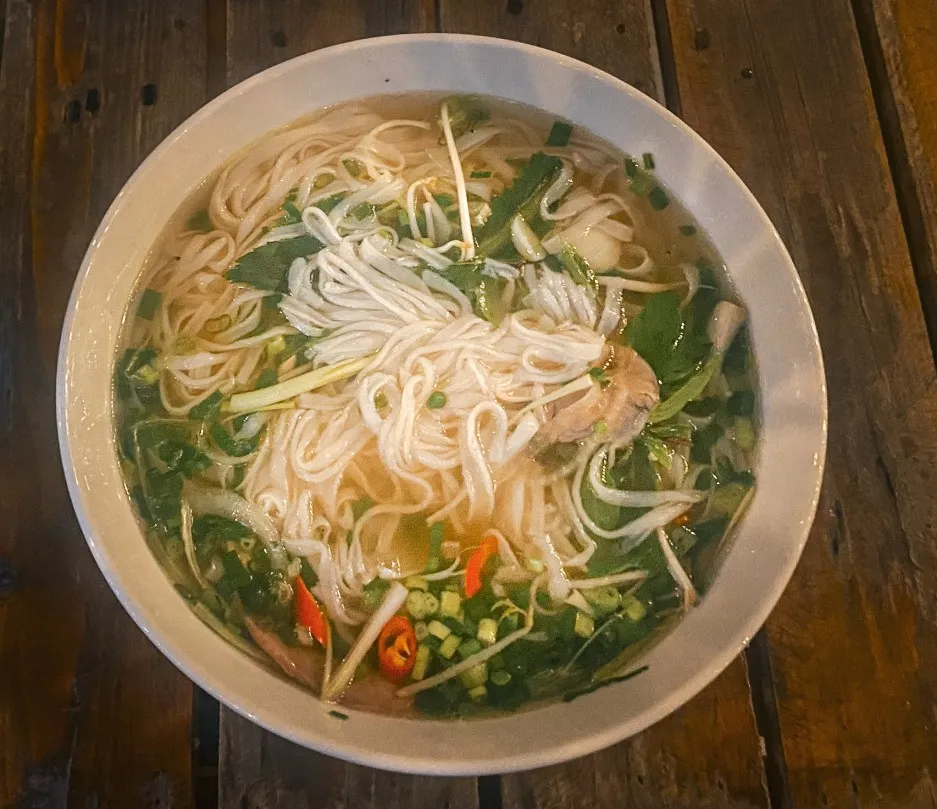
A clear beef or chicken broth, simmered for hours with star anise and charred ginger, poured over flat rice noodles with herbs and a squeeze of lime on the side, not in the bowl. Northern phở is plainer and more austere than what gets served abroad — fewer garnishes, more restraint. Eaten for breakfast, by everyone, every day.
Must order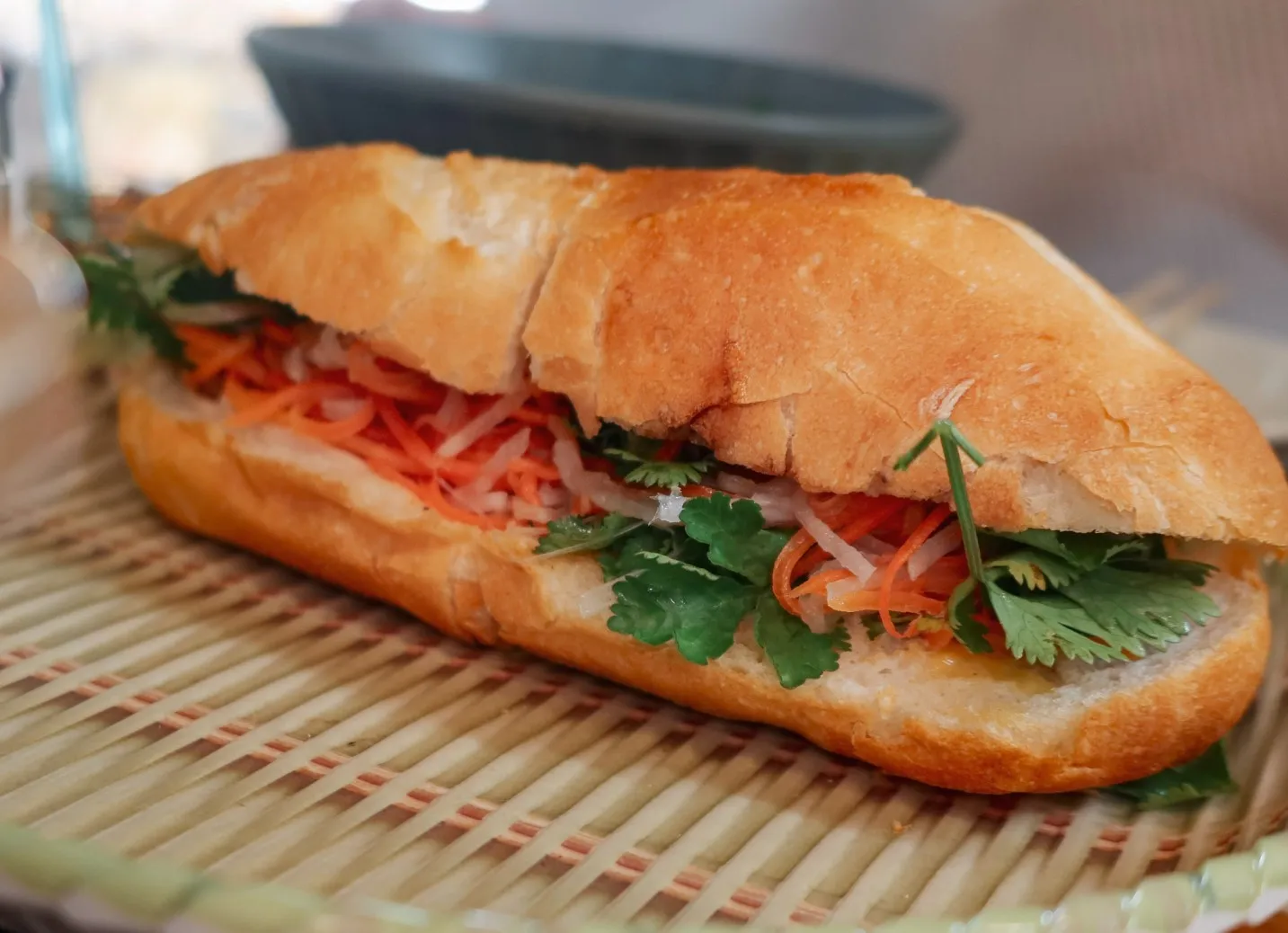
A French baguette, lighter and crisper than the original, split and filled with pâté, mayonnaise, pickled carrot and daikon, cucumber, cilantro and your choice of grilled pork, pork roll or egg. The clearest single proof of how thoroughly Vietnam took a colonial leftover and rebuilt it as something better.
Street food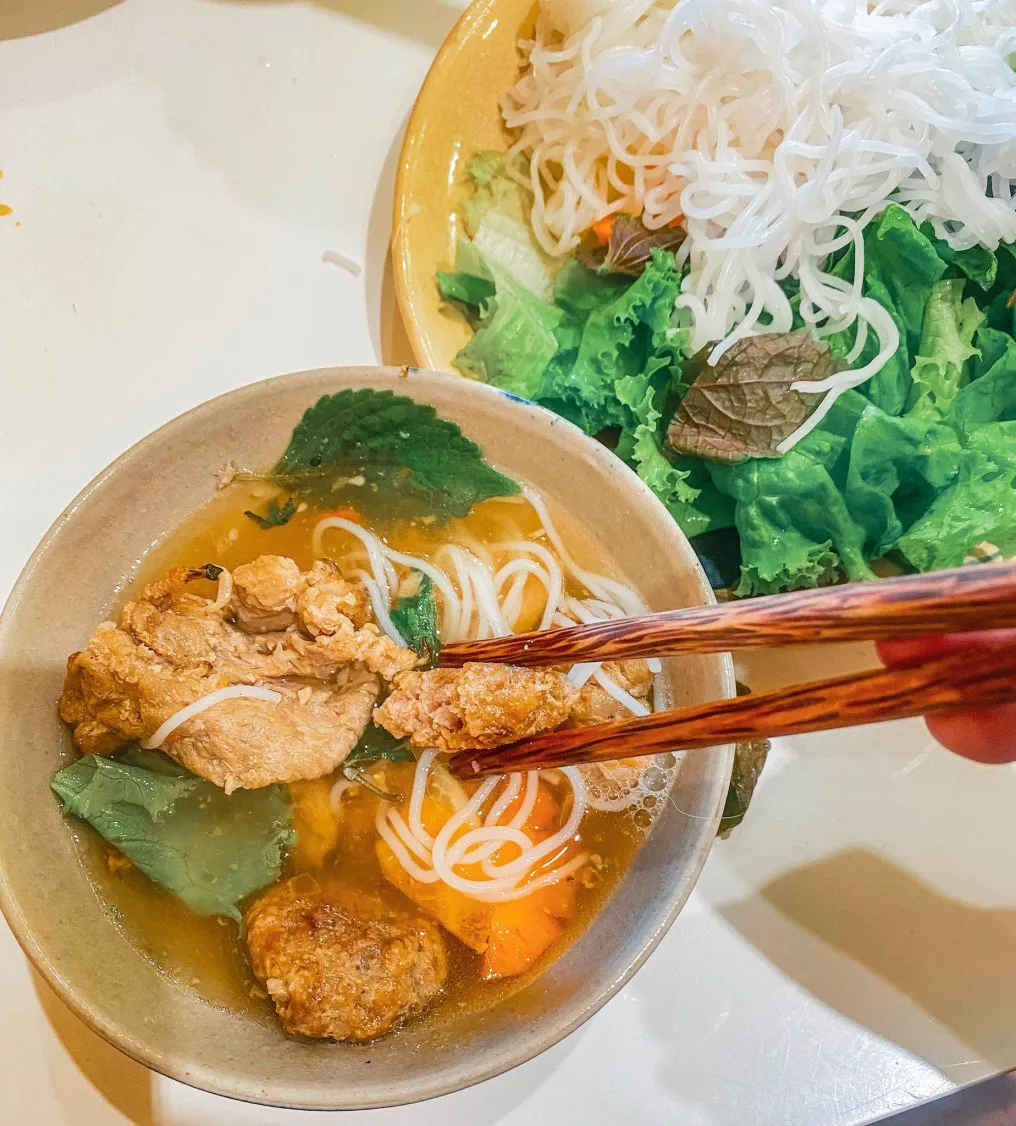
Smoky grilled pork patties and pork belly, served alongside a bowl of room-temperature rice noodles, a plate of fresh herbs, and a sweet-sour fish sauce broth you dunk everything into. You build the bite, not the kitchen. Famously the dish Obama and Anthony Bourdain shared at a Hanoi plastic-stool joint in 2016.
Don’t skip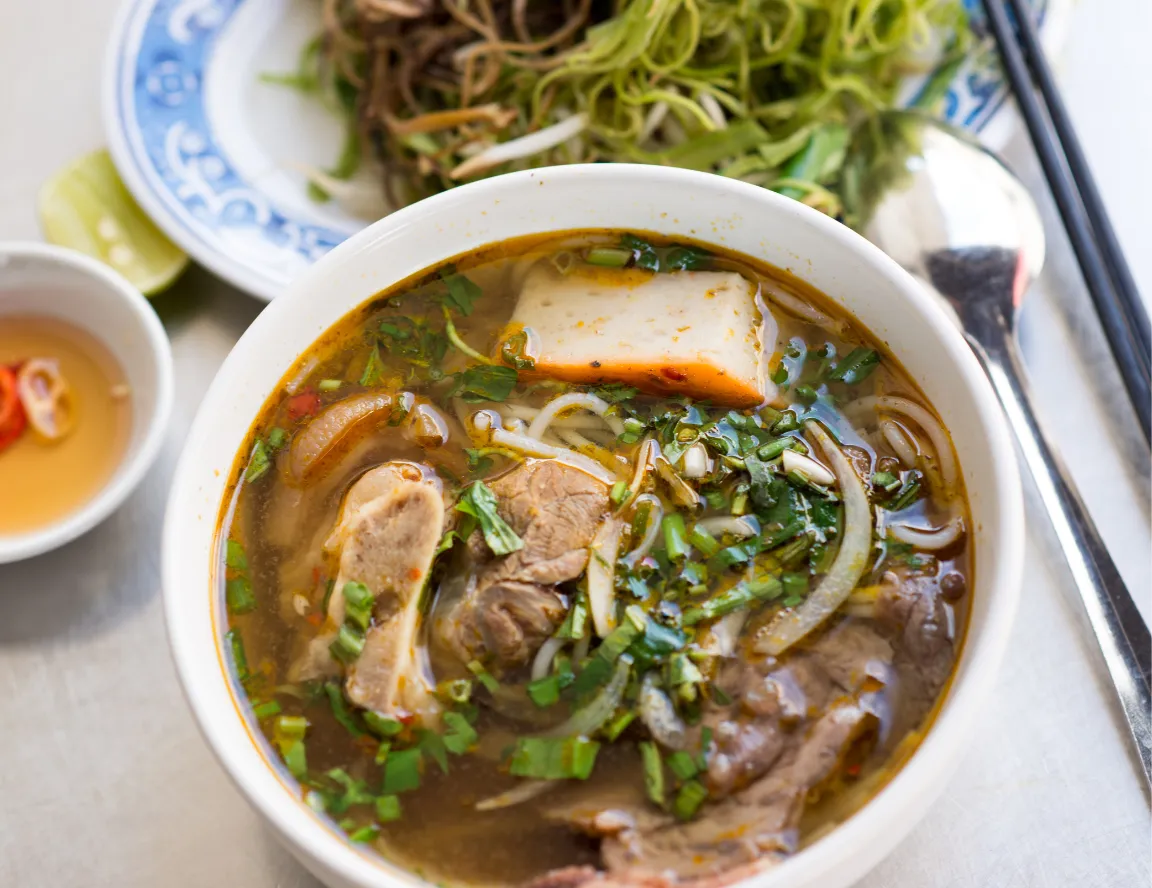
A thick, round rice noodle in a fiery lemongrass-and-chilli beef broth, dense with shrimp paste and a slick of red chilli oil on top. The signature dish of Hue, Vietnam’s old imperial capital, and the clearest proof that central Vietnamese food plays a different, hotter game than the north or south.
Must order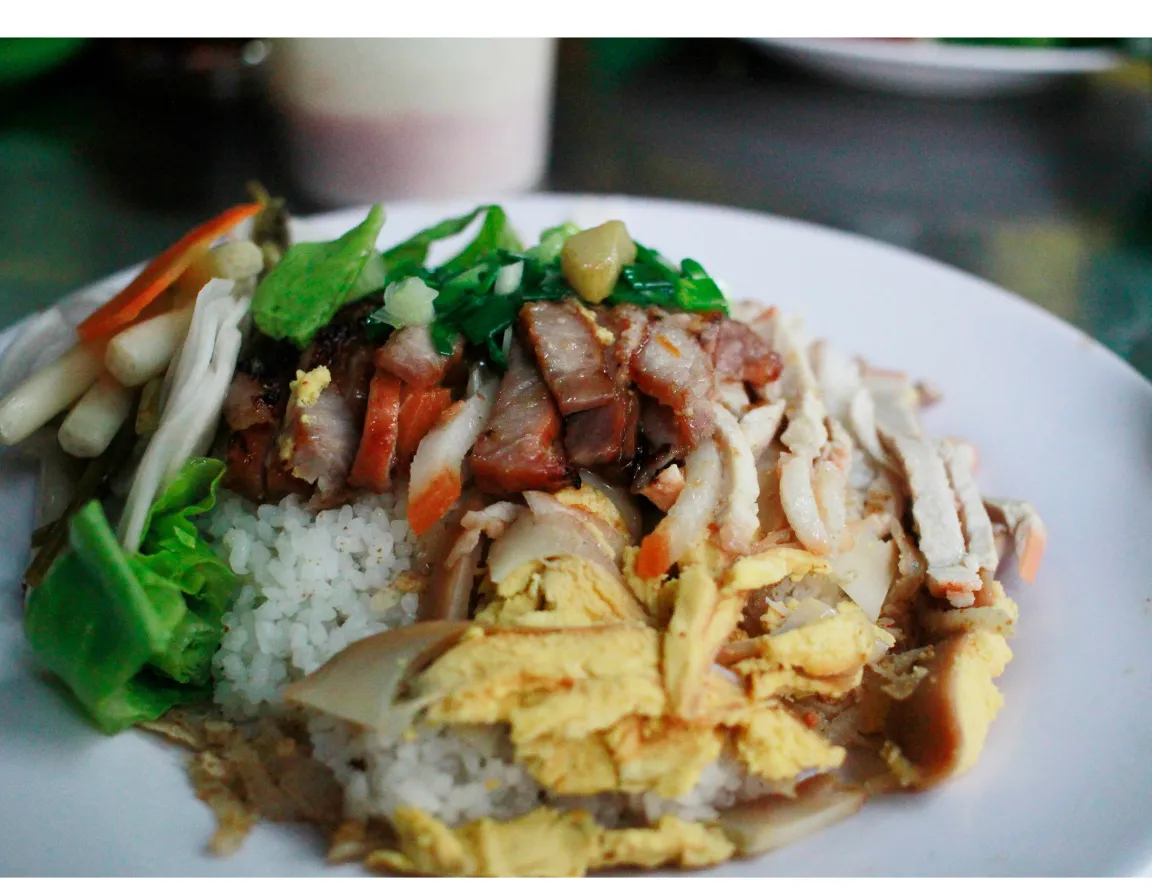
“Broken rice” — grains cracked during milling, once sold cheap because they were considered a defect, now a Saigon institution. Served with smoky grilled pork chop, a fried egg, pickled vegetables and a pork-skin shred called bì, all doused in sweet fish sauce. Order it for lunch, eat it with a spoon, not chopsticks.
Quick lunch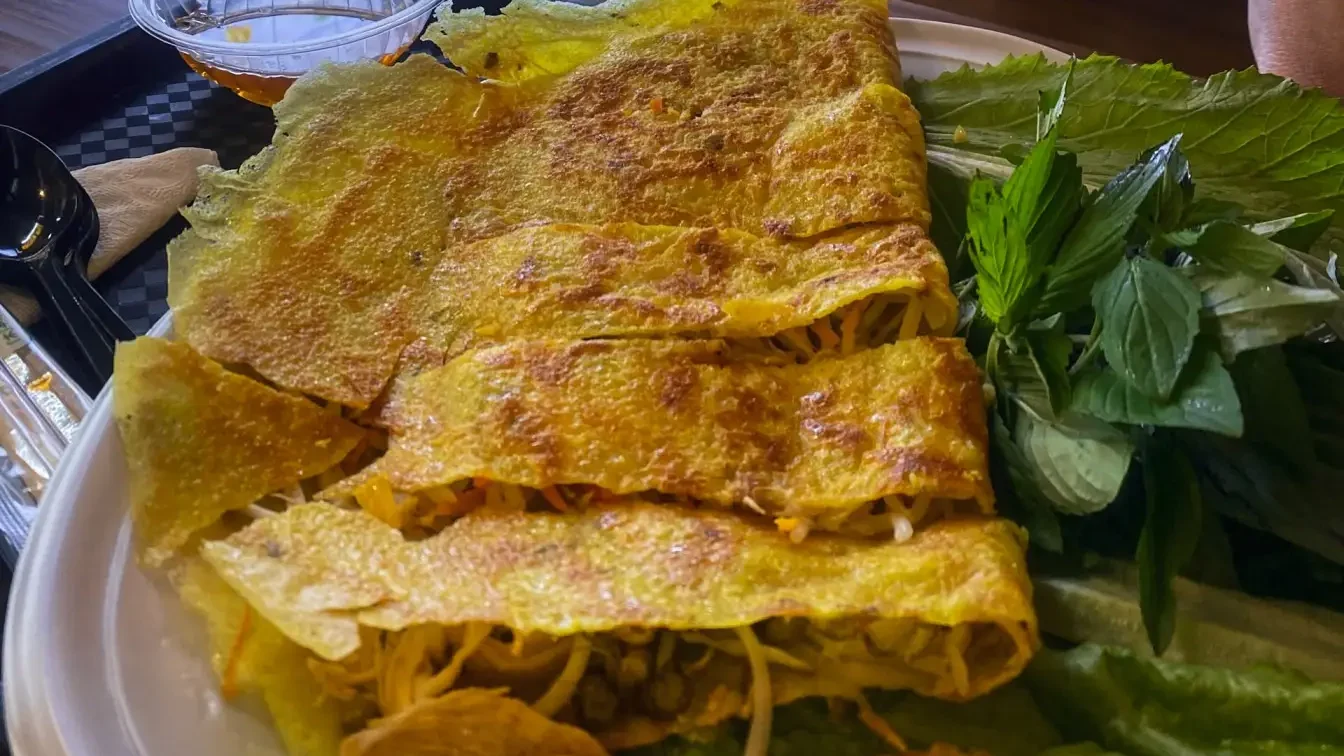
A crisp turmeric-yellow rice crepe, “sizzling cake” in translation for the sound it makes hitting the pan, folded over shrimp, pork and bean sprouts. Torn apart by hand, wrapped in a lettuce or mustard leaf with extra herbs, and dunked in sweet fish sauce. Loud, messy, exactly how it should be eaten.
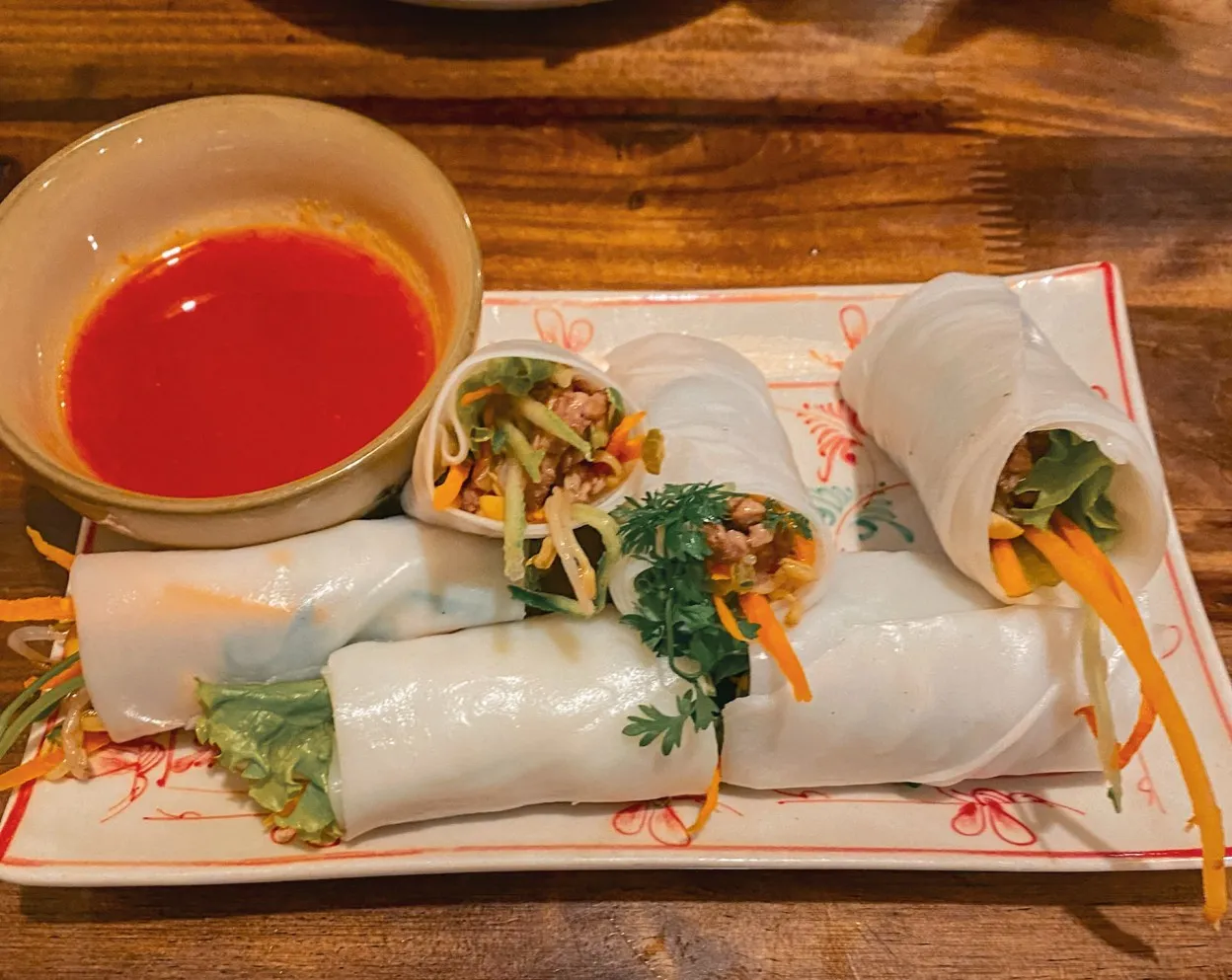
Fresh spring rolls: rice paper wrapped tight around prawn or pork, vermicelli, mint and lettuce, served cool with a thick peanut hoisin dip. The lighter cousin to its deep-fried relatives, and the easiest entry point if you’re easing into Vietnamese food rather than diving straight into the deep end.
Quick lunch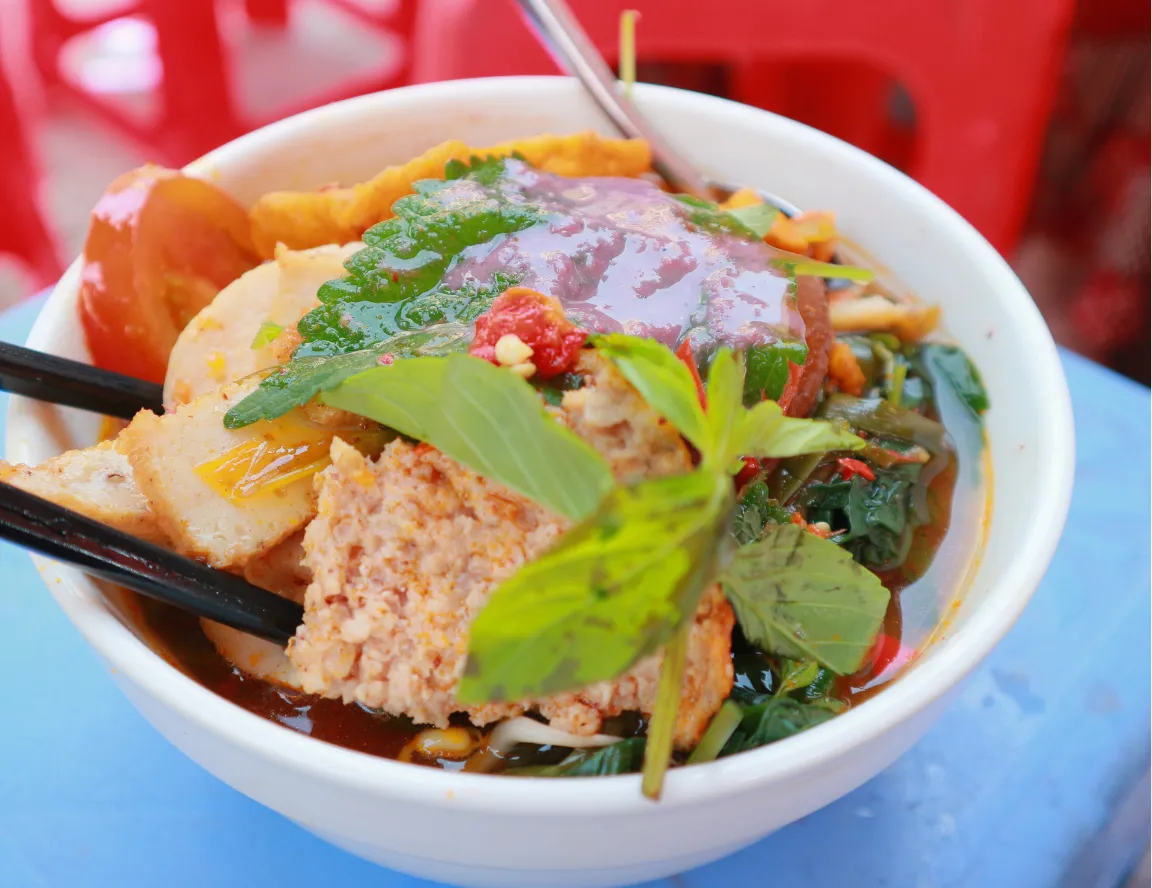
A tangy tomato-based broth built on freshwater crab paste, with soft tofu, tomato wedges and rice vermicelli, finished with a slick of chilli oil and a tangle of herbs. Sourer and funkier than phở, and considered by a lot of Hanoians to be the better bowl of noodles on a hot day.
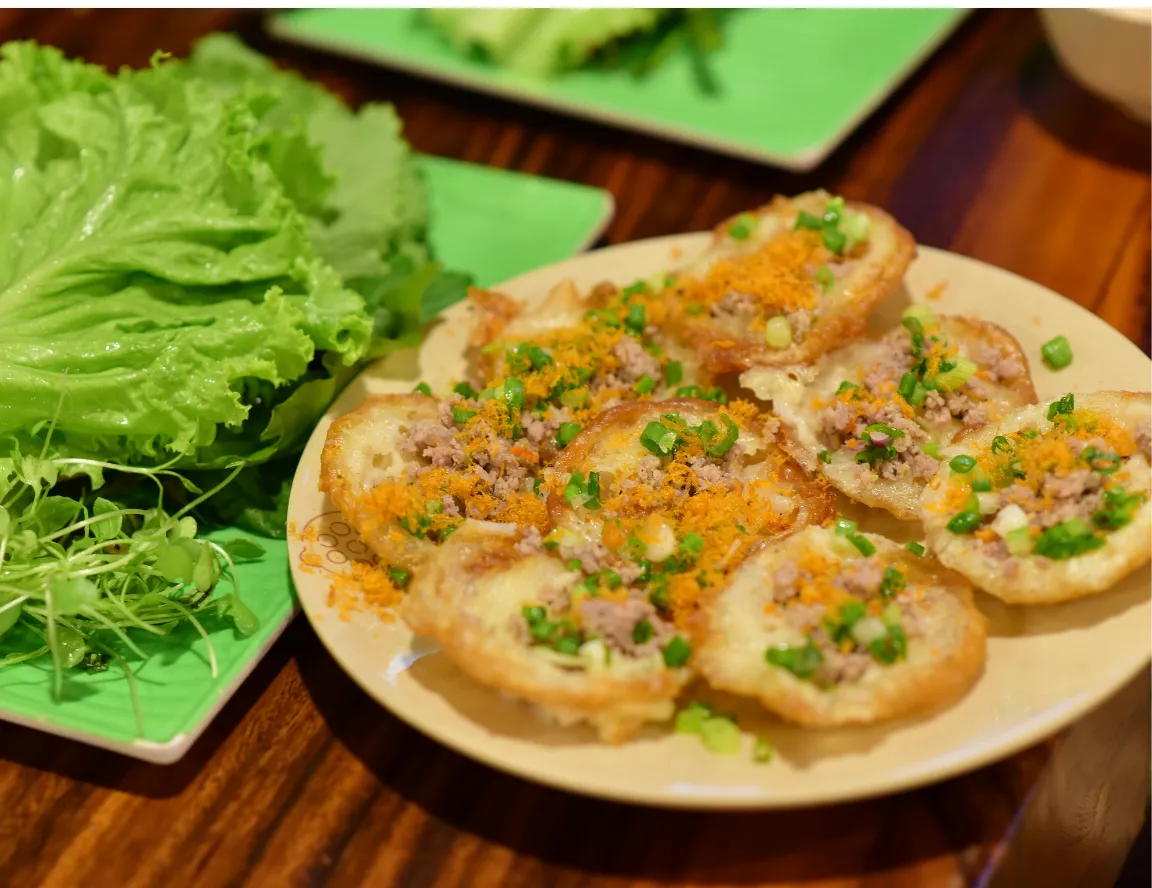
Bite-sized coconut-rice pancakes fried in a dimpled pan until the edges turn lacy and crisp, each one topped with a whole shrimp. Wrapped in lettuce with herbs, dipped in sweet fish sauce. A southern coastal speciality, smaller and crunchier than its larger cousin bánh xèo.
Street food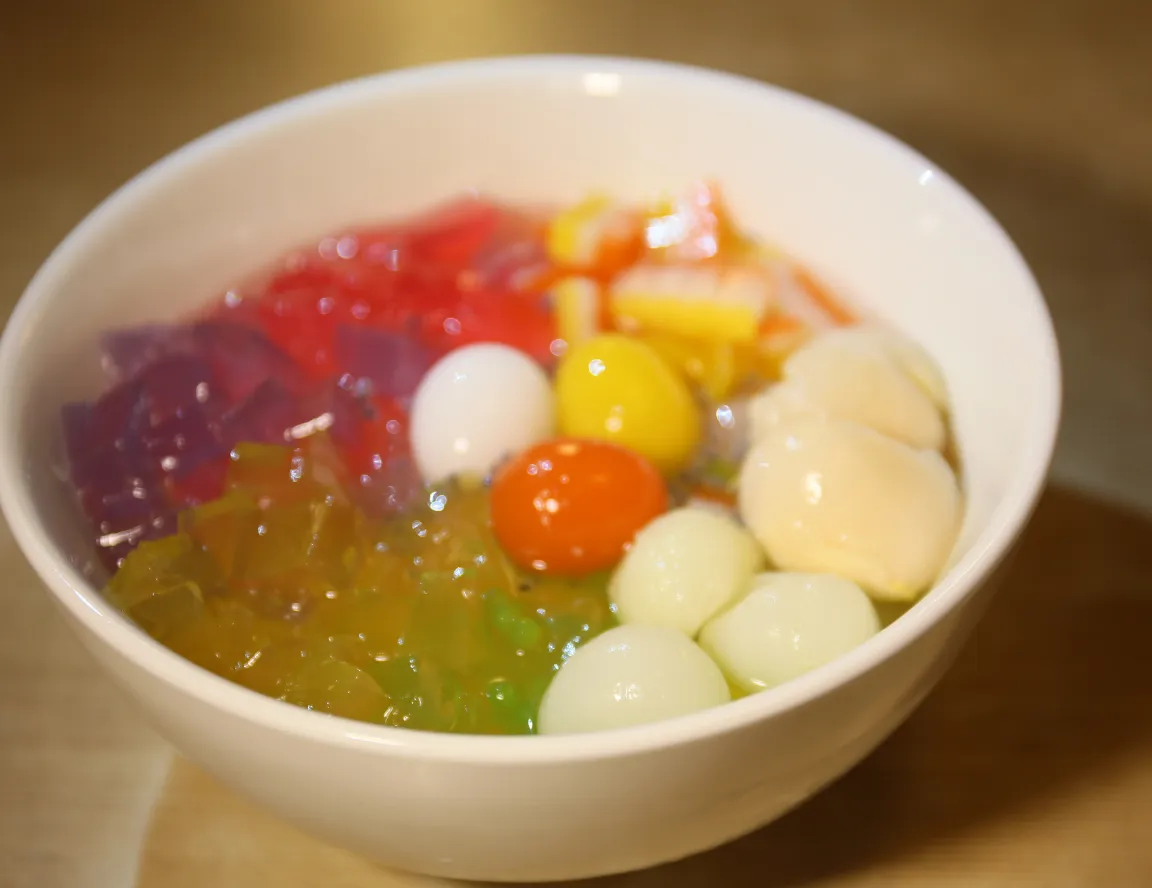
Not one dessert but a whole category: sweet beans, jellies, fruit, coconut milk and crushed ice layered in a tall glass, with dozens of regional variations. Order it as a sampler if you can — every street vendor’s version is slightly different, and there’s no wrong combination to land on.
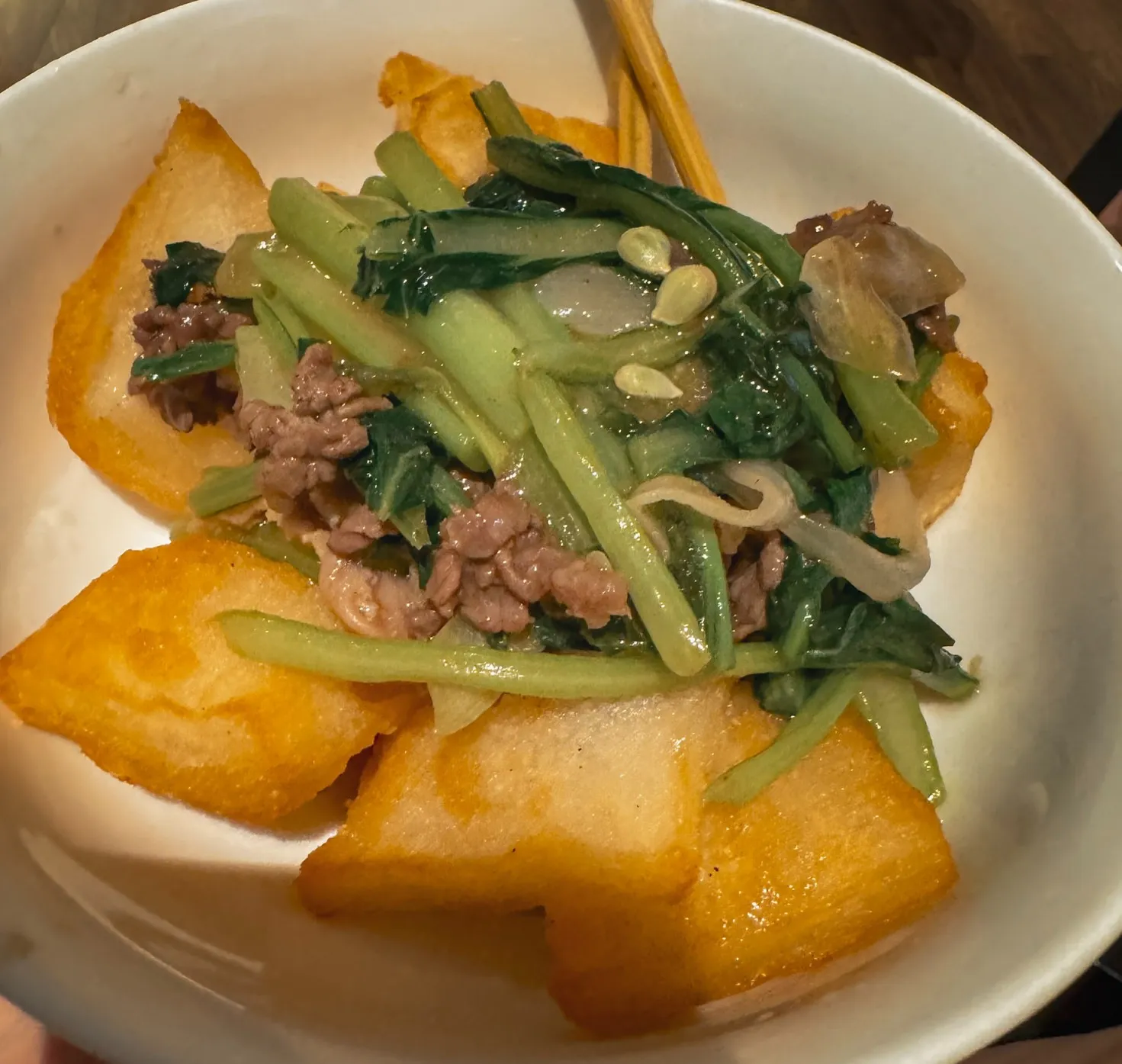
Sheets of fresh phở noodle, cut into squares and deep-fried until they puff up into crisp, hollow pillows, then smothered in a thick beef-and-greens gravy. Pure indulgence next to its lighter cousin phở cuốn, and a dish you’ll mostly only find around Truc Bach Lake, where entire streets specialise in it.
Don’t skip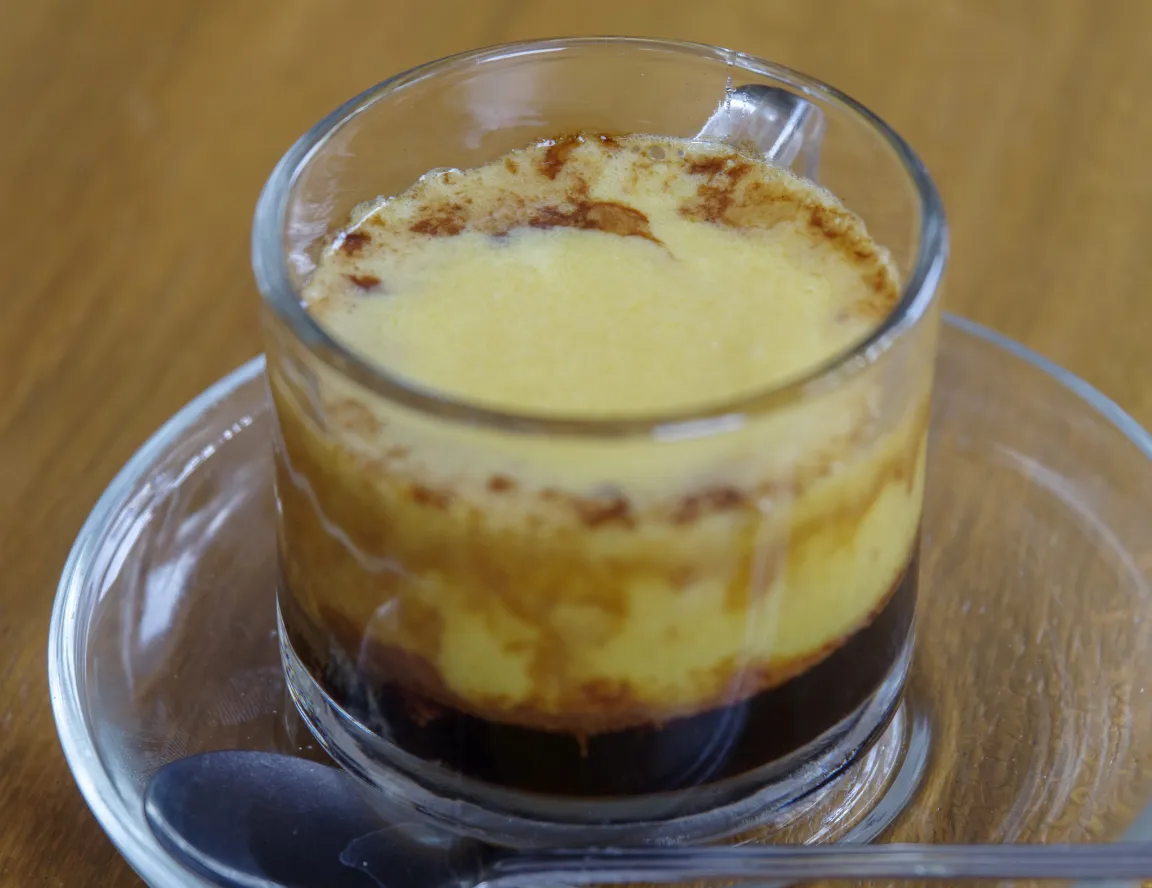
Strong Vietnamese coffee under a thick, whipped layer of egg yolk and condensed milk, eaten slowly with a spoon rather than sipped. Invented in 1946 by a bartender at Hanoi’s Sofitel Metropole, Nguyen Van Giang, who improvised when wartime shortages left him without fresh milk. His original shop, Cafe Giang, tucked down an alley in the Old Quarter, still serves it from the same family recipe seventy years on — and it remains the standard every other version in the city is measured against.
After dinnerVietnam Travel Guides
DaNang
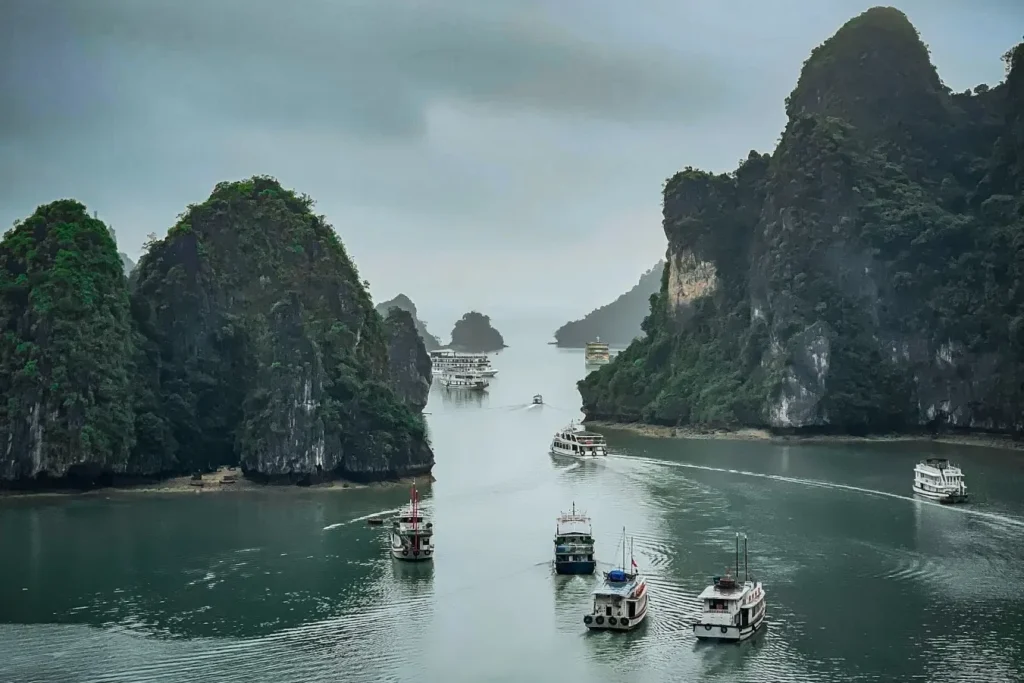
HaLong Bay
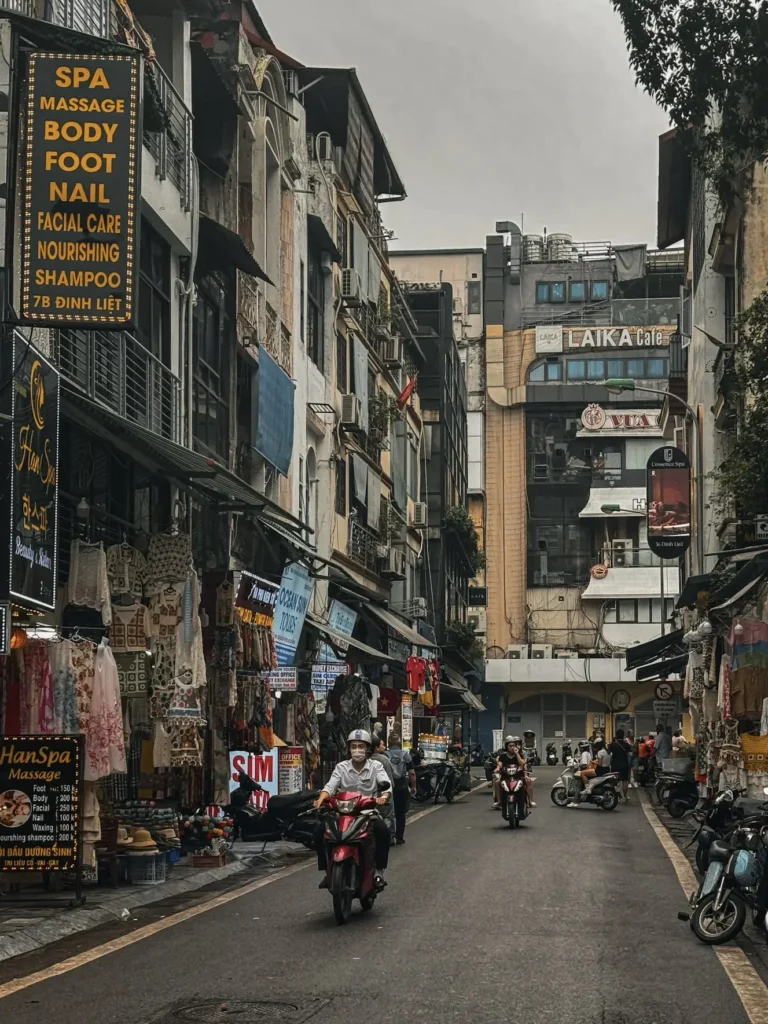
Hanoi
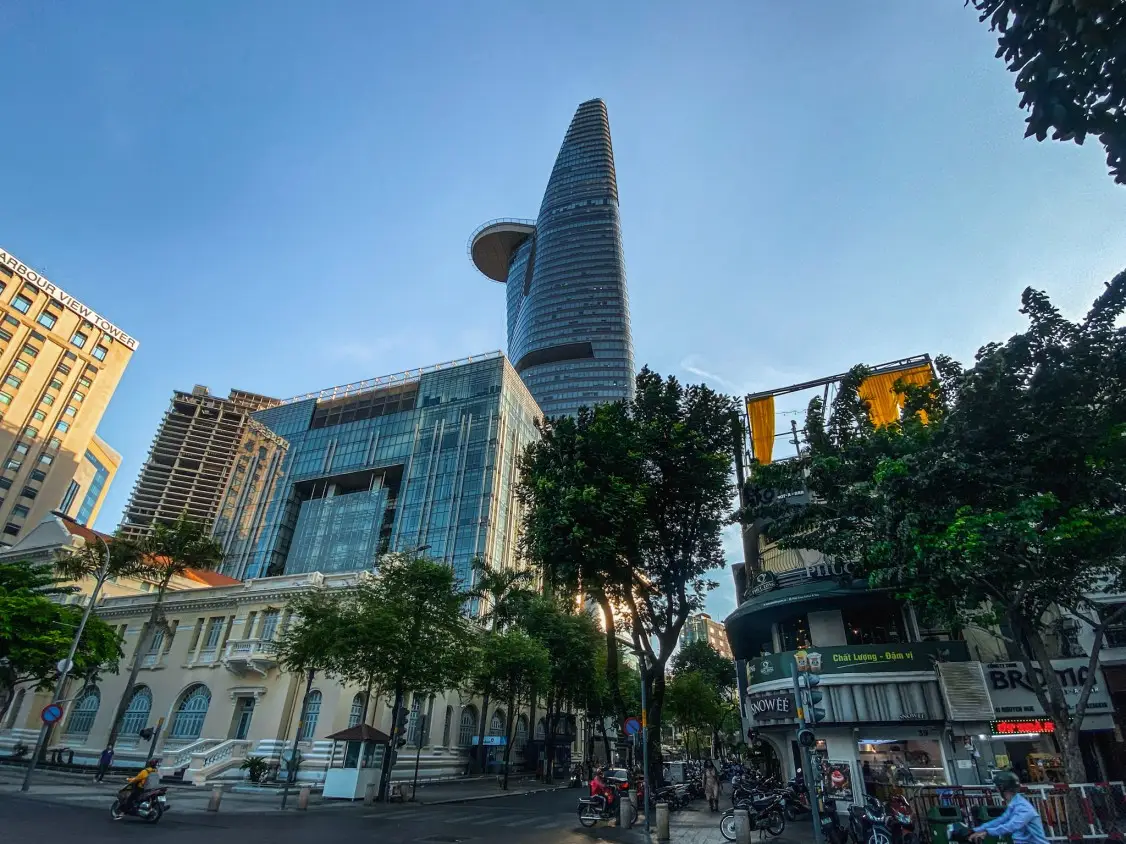
Ho Chi Minh
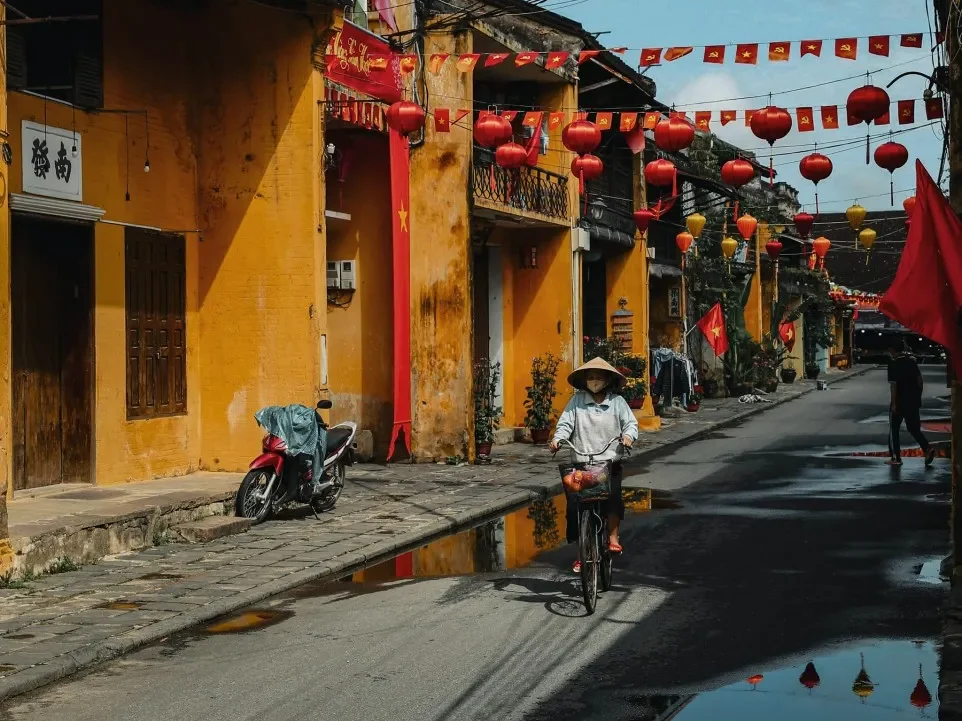
Hoi An
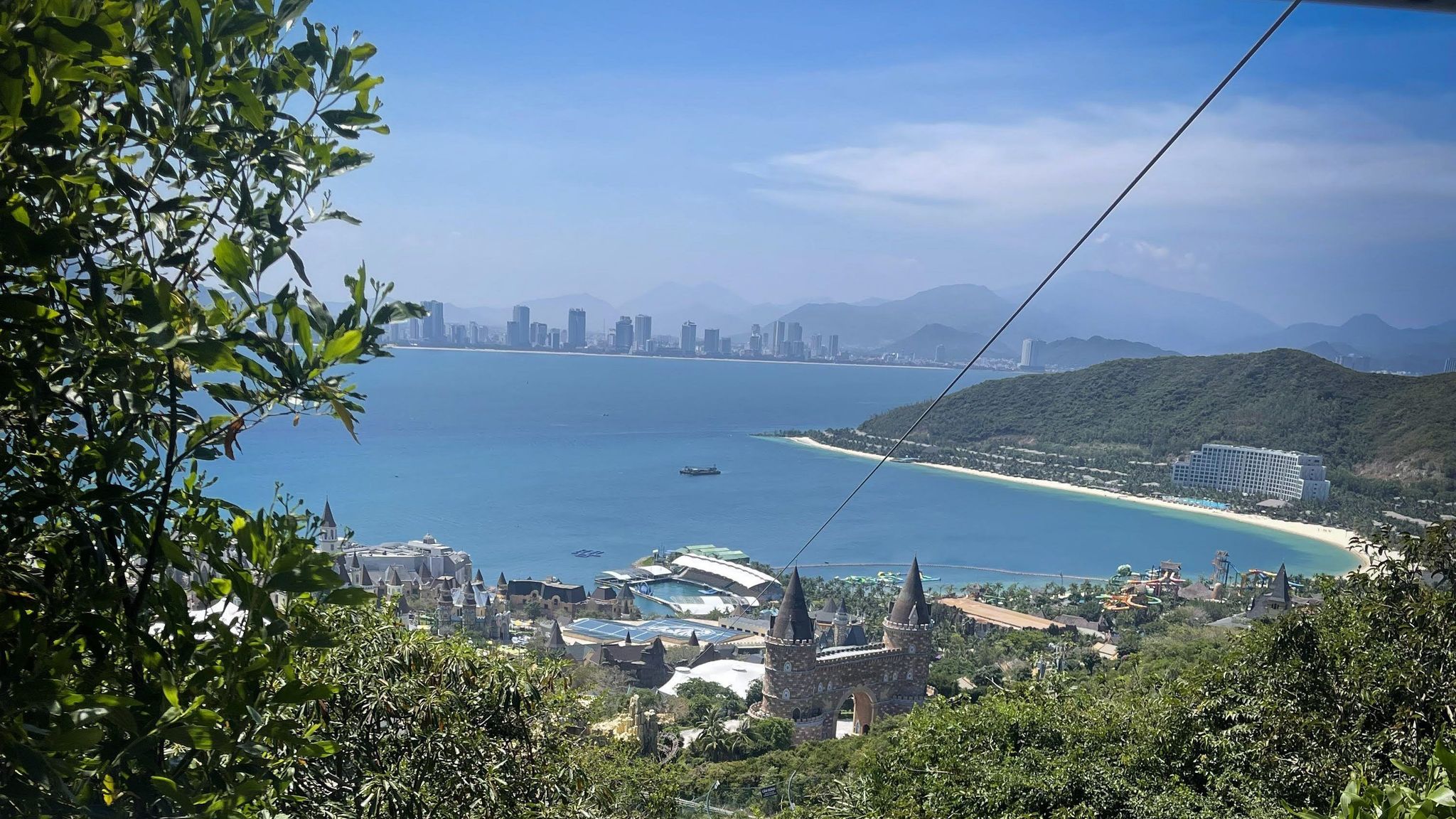
NhaTrang
