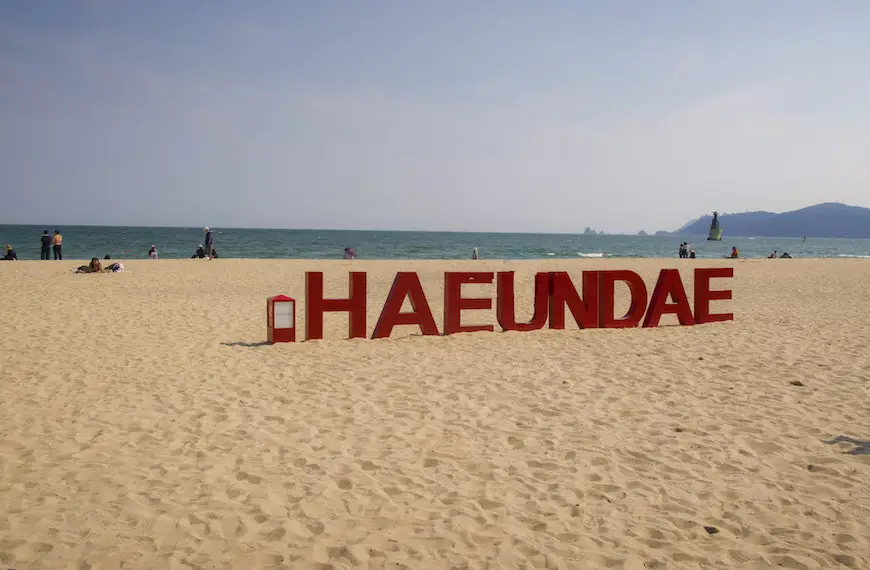
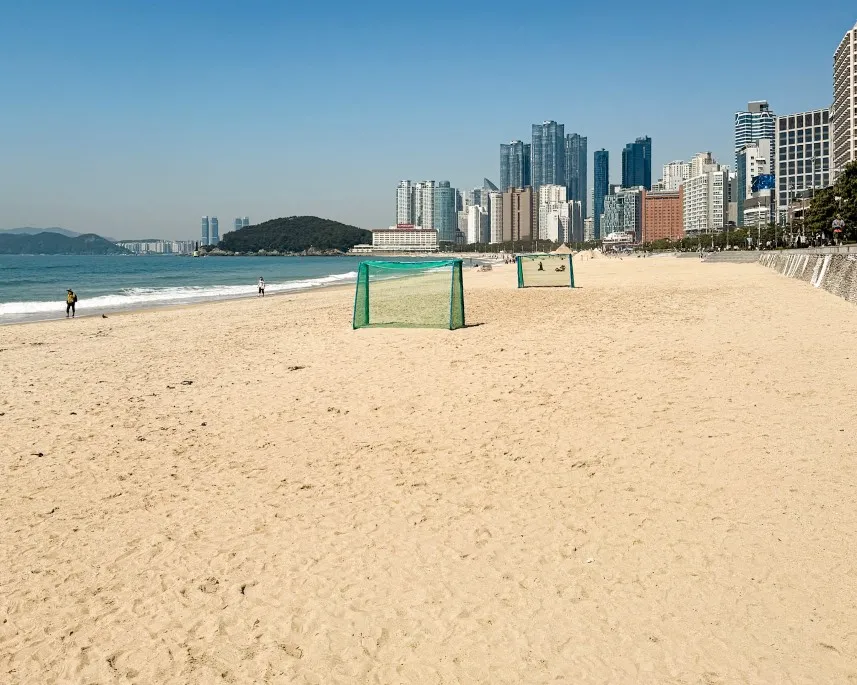
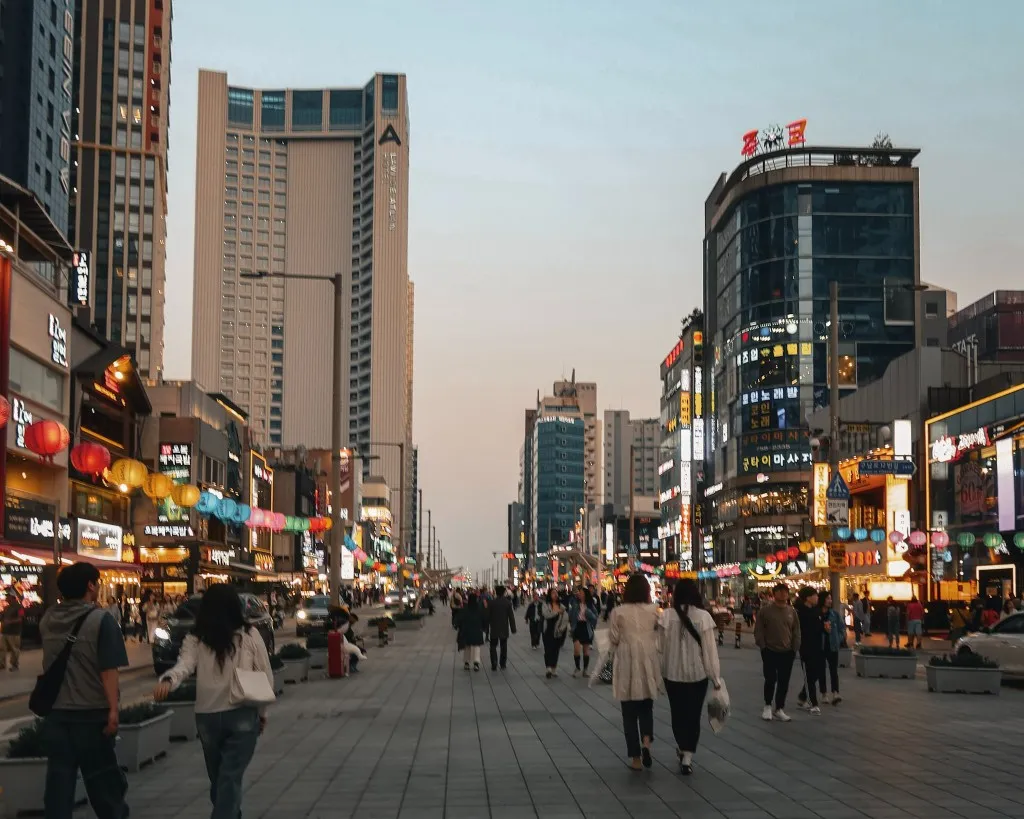
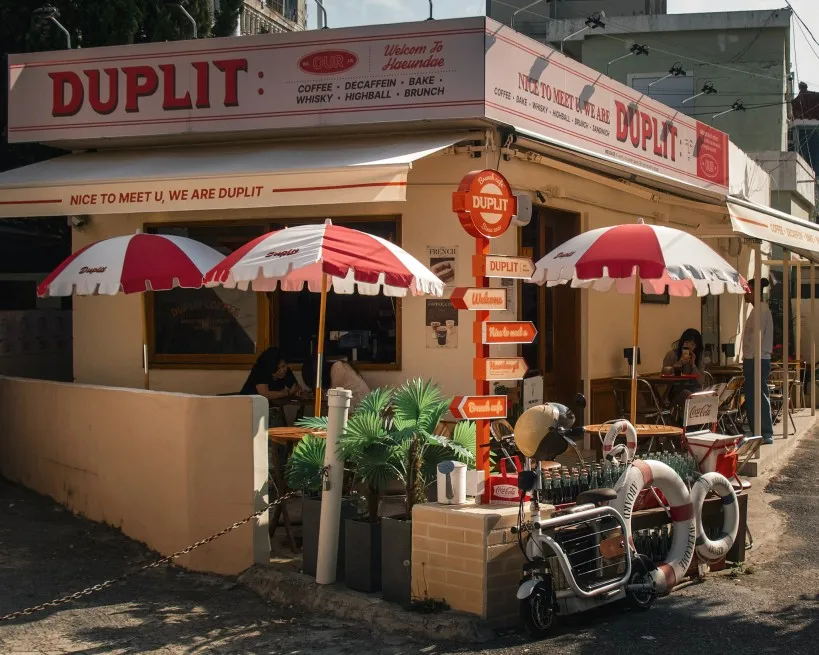
When I stayed in Haeundae, Busan, most of my mornings looked like this – wake up, get dressed, slip on my sandals, go to the Blu Shaak or Tide (my favourite cafes) for a coffee to go and then sit on the beach for 30 – 40 mins listening to a podcast. With my feet in the sand watching the waves, I felt grounded and incredibly lucky. Seoul may get all the attention, but I found that Busan got the charm.
Busan is Korea’s second largest city. Many travellers gloss over it, giving it 1-2 day max, preferring to concentrate on Seoul. We spent two months here, based in the famous beach town, Haeundae. Where Seoul feels like it’s almost preforming for you Busan doesn’t really care for an audience – real, gritty and laidback. With beach towns like Haeundae and Gwangalli, many Koreans choose Busan as a holiday, the atmosphere is lively, soju is flowing, it’s clear that everyone is here for a good time.
Busan is Korea’s second largest city. Many travellers gloss over it, giving it 1-2 day max, preferring to concentrate on Seoul. We spent two months here, based in the famous beach town, Haeundae. Where Seoul feels like it’s keeping up appearances, Busan doesn’t really care what you think of it – real, gritty and laidback. This is where Koreans come on holiday, the atmosphere is lively, soju is flowing, it’s clear that everyone is here for a good time.
Save a spot for Busan on your Korean itinerary. Not a rushed day trip squeezed between palace visits in Seoul, give it at least three or four days. Enough time to watch the fish auction wrap up at Jagalchi, hike up to a temple that clings to the sea, eat dwaeji gukbap from a plastic stool at 11pm, and have one slow morning where you do nothing but drink coffee on the sand.
First time to South Korea? Read my South Korea travel guide for all the essential information you need to plan your trip.
The Busan Essentials
01
🌤
Best Time to Visit
April to June and September to November are Busan at its finest — dry, clear, and the air scented with sea. Late March into early April brings cherry blossoms, particularly stunning along the Dalmaji-gil and in Samnak Ecological Park.
October is special: the Busan International Film Festival transforms Haeundae and Centum City into a ten-day cultural event, and autumn foliage paints the mountain temples.
July’s jangma rainy season is humid and grey; August is hot and prone to typhoons. Winter is cold but surprisingly sunny and mild by Korean standards — just don’t expect to swim.
Apr – Jun ✓Sep – Nov ✓Dec – FebJul – Aug
02
🏨
How Much Is A Hotel In Busan?
Busan is noticeably cheaper than Seoul for equivalent quality. Guesthouses cluster in Nampo-dong and near Busan Station; design hotels and chains line Seomyeon; and the oceanfront towers of Haeundae deliver genuine five-star stays at prices that would embarrass Tokyo.
Haeundae and Gwangalli carry the biggest beach premium. Seomyeon offers the sweet spot — central, two subway lines crossing, and the city’s best nightlife on your doorstep.
Prices spike over Seollal, Chuseok, and BIFF week in early October
03
🗓
How Many Days In Busan?
Three days covers the essentials: the pastel labyrinth of Gamcheon Culture Village, dawn at Jagalchi Fish Market, a sunset walk along Gwangalli with the bridge lit up, and a morning at Beomeosa Temple tucked into Geumjeongsan. Add two more days and you can KTX to Gyeongju — the open-air museum that was Korea’s capital for a thousand years — or wander Taejongdae’s cliffs on Yeongdo Island. A full week rewards slower pleasures: Jeonpo’s coffee streets, Huinnyeoul village above the sea, and island-hopping on the ferry.
D1
D2
D3
D4
D5
D6
D7
Shaded days optional but highly recommended if time allows.
04
🍜
What To Eat In Busan
Busan’s food culture is fiercely local — several of Korea’s most beloved dishes were invented here, forged by refugees during the Korean War.
🍜
MilmyeonChilled wheat noodles in a tangy beef-and-herb broth, invented in Busan when buckwheat was scarce. Order it bibim style for the spicy version. Try Gaya Milmyeon or Choryang Milmyeon.
🍲
Dwaeji GukbapMilky pork-bone soup with rice and tender slices of pork, seasoned at the table with shrimp paste, chilli, and chives. A true Busan comfort food — head to the gukbap alleys in Seomyeon.
🥞
Ssiat HotteokA sweet pancake slit open and stuffed with sunflower seeds, peanuts, and brown sugar. The BIFF Square version in Nampo-dong is the original and still the best.
🐟
Hoe at JagalchiSliced raw fish — flounder, sea bream, abalone — bought from the ajummas downstairs and eaten upstairs with soju. Korea’s greatest sashimi experience.
🍢
Busan EomukFish cake skewered and simmered in dashi, eaten hot from street carts in winter. Samjin Eomuk in Yeongdo is the famous sit-down version with every shape imaginable.
Where To Stay In Busan
If you’re in Busan for the first time, I highly recommend staying in Haeundae. We stayed here for two months, it was an amazing base. It has the beach, the best hotels, the biggest concentration of restaurants and cafes as well as the easiest base for everything east of the city. The one catch is that Haeundae is a 40-minute subway ride from the city centre and Jagalchi, but these areas don’t require multiple visits.
Seomyeon is a good pick if it’s your second trip, or if you’d rather be in the thick of the city than on the beach. Two subway lines cross here, which means you can get anywhere in Busan in under 30 minutes, and the nightlife, shopping, and gukbap alleys are all on your doorstep. Rooms are noticeably cheaper than Haeundae for the same quality.
For something quieter, Gwangalli gives you the bridge view and a lovely promenade without the Haeundae crowds, and Nampo-dong puts you a short walk from Jagalchi, BIFF Square, and the ferry terminal if you’re heading to Jeju or Japan. Avoid booking too far out near Busan Station unless you’ve got an early KTX, it’s convenient for trains and not much else.
Busan is a spread out city, more than what the maps make it appear. It is also hilly so public transport is not optional during your trip. Grab a T-money card at any convenience store (CU, GS25, 7-Eleven) or from the airport when you land. It works on the metro, buses, and even taxis, and saves you queuing for paper tickets every time.
It’s also worth noting that GoogleMaps does not work in Korea, instead download NaverMaps which will give you accurate walking and up to date transportation.
Subway
The subway is the backbone of Busan’s transport system with 4 lines. Line 2 is the one you’ll use most: it runs along the coast from Seomyeon out to Haeundae and Jangsan. Line 1 covers the Nampo-dong and Jagalchi side. Signs and announcements are also in English, Japanese and Chinese. There is a flat fare of about ₩1,500 which makes it pretty reasonably priced.
Bus
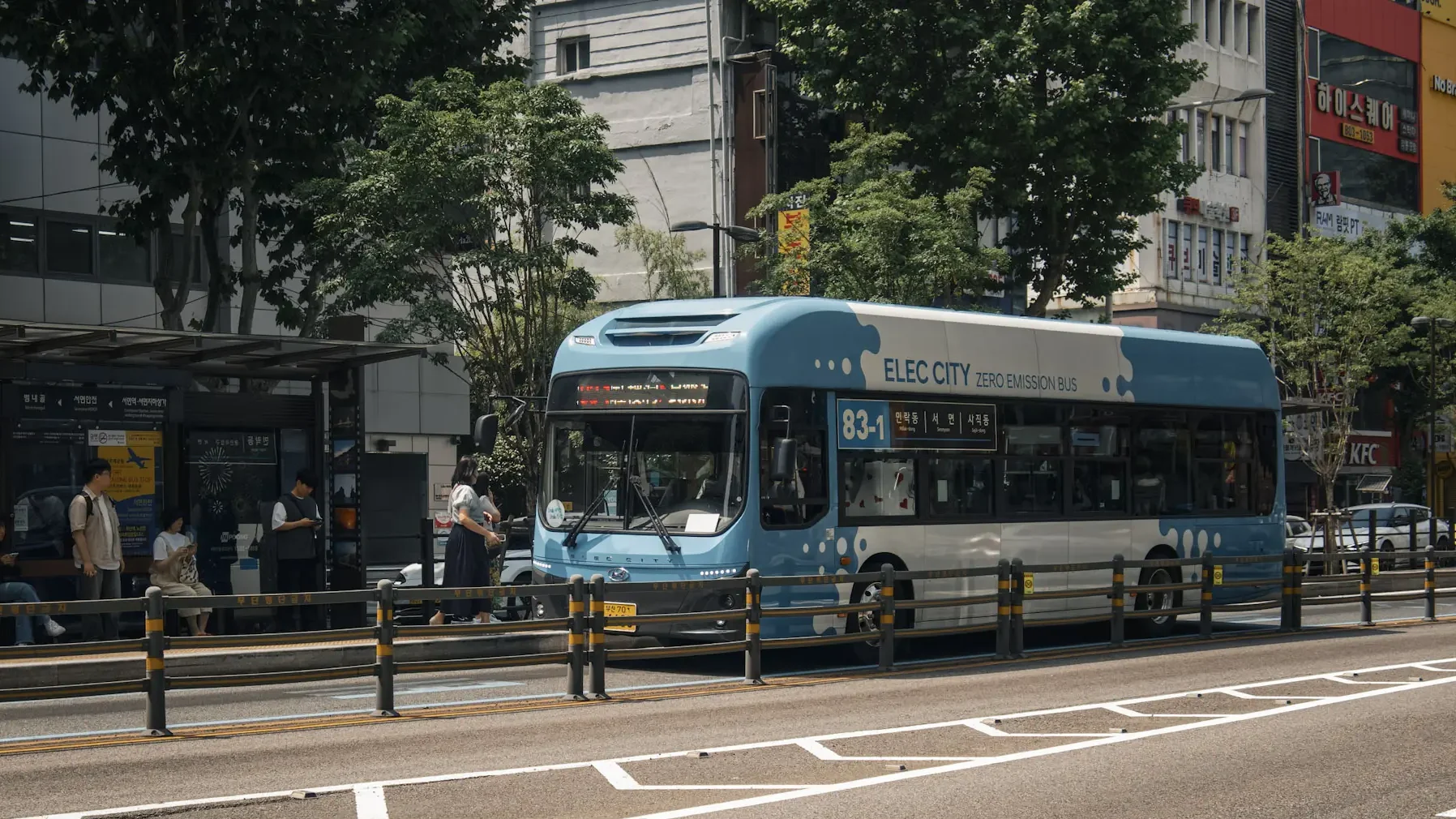
I used the bus much more than the subway, I found them comfortable, always seats available and outside of rush hour they were fast. Crucially, they’re how you get up to Gamcheon Culture Village: take the 2, 2-2, or 1-1 from Toseong Station.
There are three different types of buses; the normal buses which have numbers from 1-500, express city buses have numbers 1XXX and non-stop express city bus have numbers 2XXX.
Busan bus fares are fixed meaning no matter the distance you will be charged ₩1,550 for normal buses and ₩2,100 for express buses. Remember you need to tap your t-money card on and off.
Taxis
Taxis are genuinely affordable. Fares start at ₩4,800 and most cross-city rides come in under ₩15,000. Orange and silver cabs are standard. The black “deluxe” taxis cost roughly double and aren’t worth it. Download Kakao T, which is the local equivalent of Uber. It works in English, lets you pay by card, and bypasses the language barrier entirely. Most drivers won’t speak much English, but between Kakao T and Papago (Korea’s translation app, better than Google Translate for Korean) you’ll be fine.
KTX
The KTX out of Busan Station is the other essential piece. Seoul is two and a half hours away, Daegu is under an hour, and Gyeongju sits about 50 minutes up the line, which makes it a completely viable day trip. Book through the Korail app a day or two ahead on weekends and during holidays, when trains sell out. Tickets for Gyeongju run around ₩11,000 each way.
Gimhae Airport is refreshingly close to the city, about 20 minutes out. You have three options. The light rail (BGL) connects to Sasang Station on Line 2 for ₩1,500 and takes around 35 minutes into the centre. The Limousine Bus runs direct to Seomyeon and Haeundae for about ₩7,000 and is the easiest option if you have luggage.
Don’t rent a car. The traffic is punishing, the streets are narrow and hilly, and parking ranges from expensive to impossible.
Best Things To Do In Busan
Gamcheon Culture Village · Saha-gu
01Don’t miss
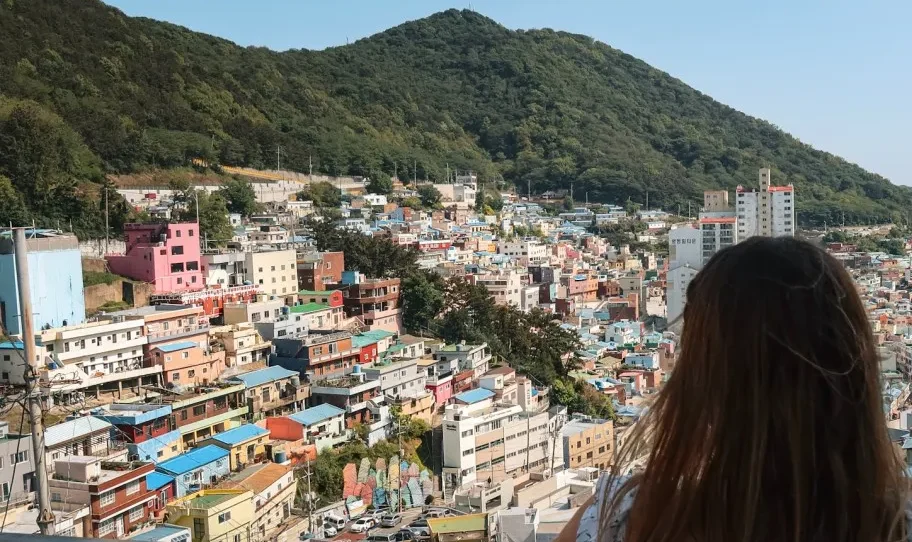
Gamcheon Culture Village
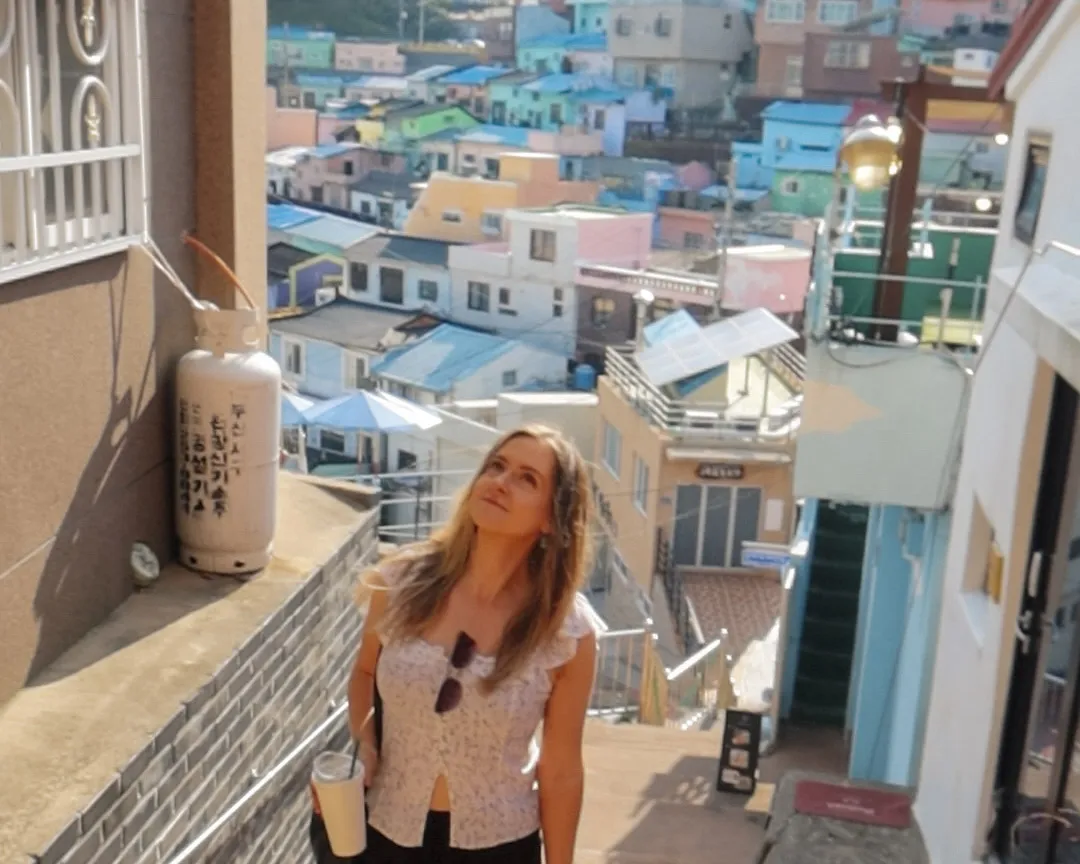
A former refugee settlement turned open-air art project, tumbling down the hillside in a cascade of pastel houses. Narrow staircases, murals around every corner, and viewpoints that actually deliver. Go on a weekday morning to beat the tour groups. Take bus 2, 2-2, or 1-1 from Toseong Station, or a cheap taxi up and walk down. Allow two hours, longer if you stop for coffee.
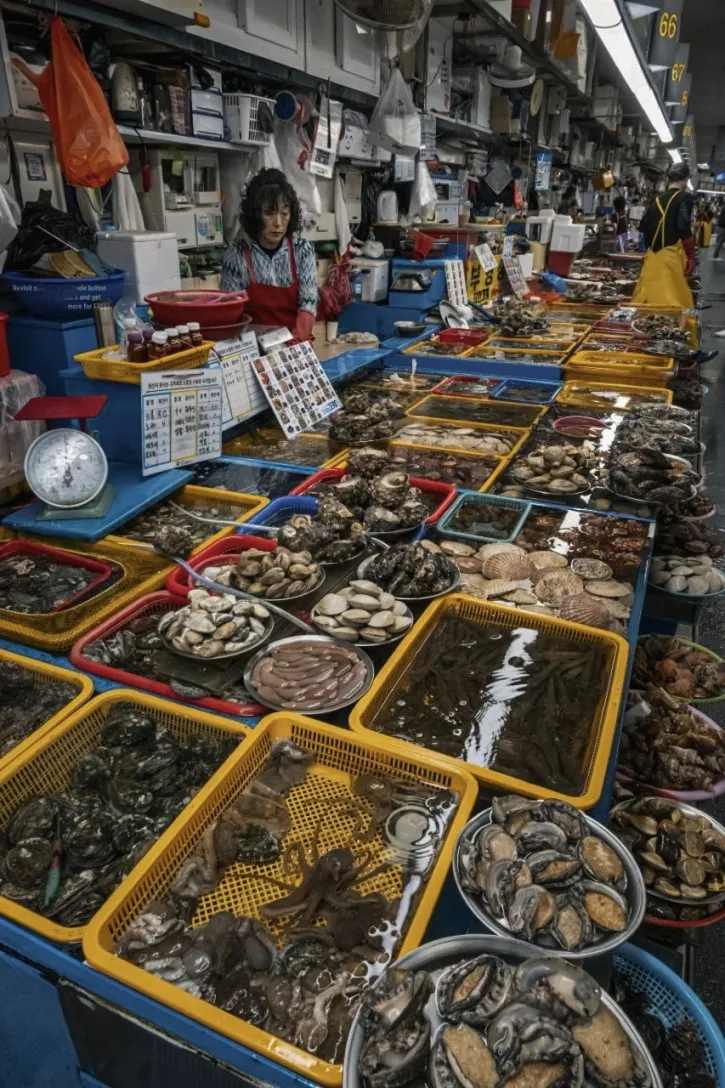
Korea’s largest seafood market and the morning that defines a trip to Busan. Wander the ground floor past ajummas hawking octopus, king crab, abalone, and everything that swims in the East Sea. Head upstairs to the restaurants for hoe (sliced raw fish) picked live from the tanks below. Arrive before 9am for the real energy. The outdoor stalls on the promenade come alive again after dark.
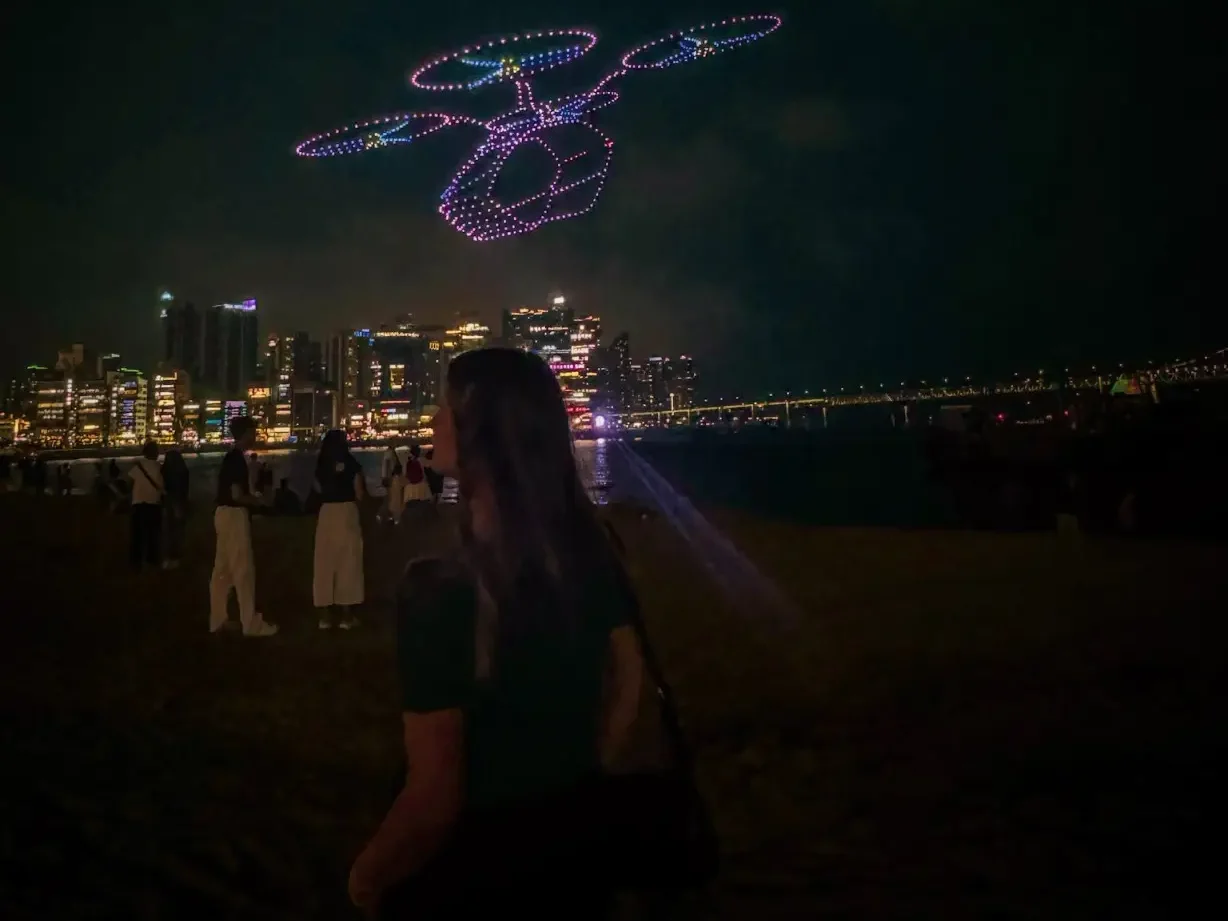
The Gwangan Bridge is the best piece of infrastructure in Korea, a double-deck suspension bridge lit up in shifting colours over a shallow crescent bay. There’s a free drone light show every Saturday at 8pm from spring through autumn. Grab craft beer at Galmegi Brewing, a rooftop seat on the promenade, or just a can from the 7-Eleven and sit on the sand. The single most atmospheric evening in Busan.
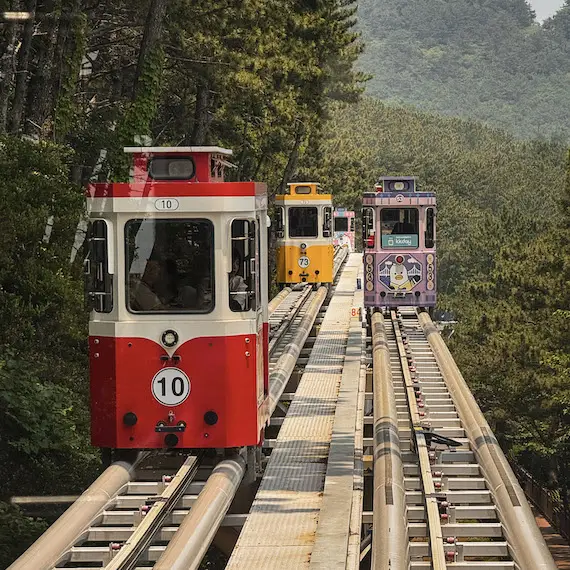
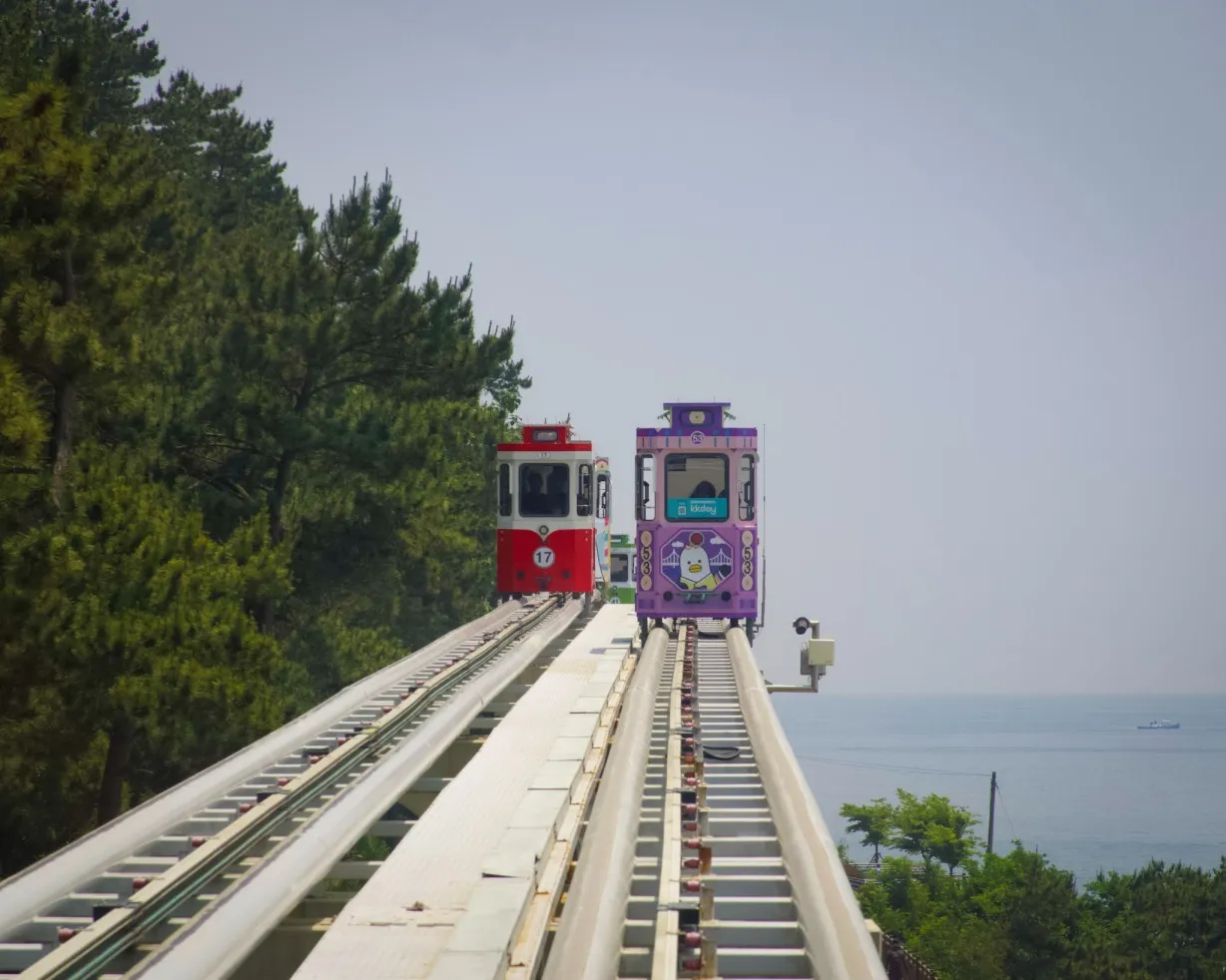
Pastel glass pods running 2km along a disused coastal railway between Mipo and Cheongsapo, hanging about 10m above the shoreline. It’s touristy and pricey for the distance (₩35,000 one-way, fits up to four people), but the views are the real deal and it beats walking back after taking the one-way Beach Train out. Book the return leg for sunset. Weekends sell out, reserve online a day ahead.
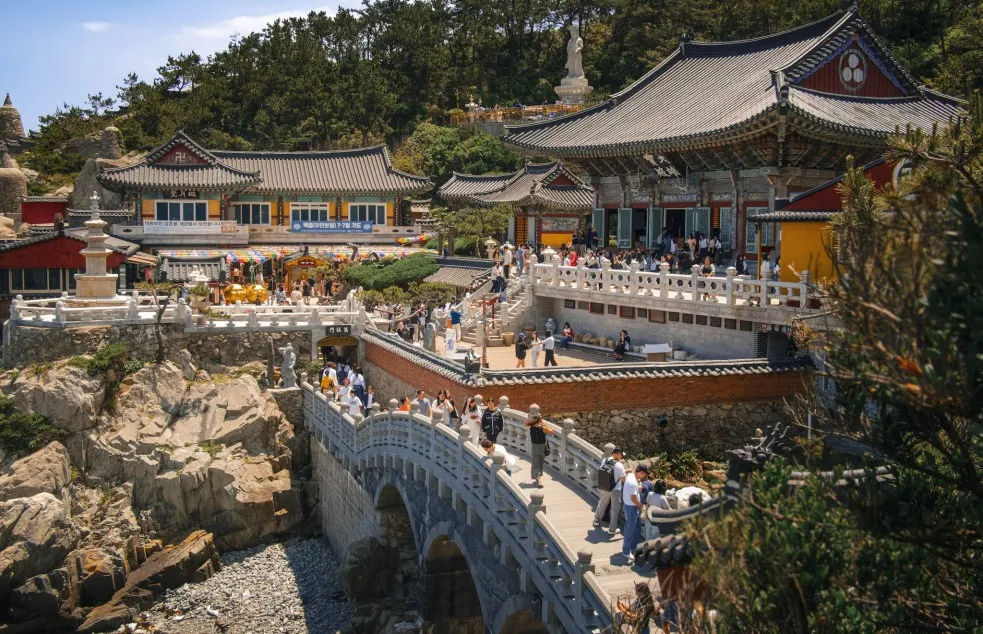
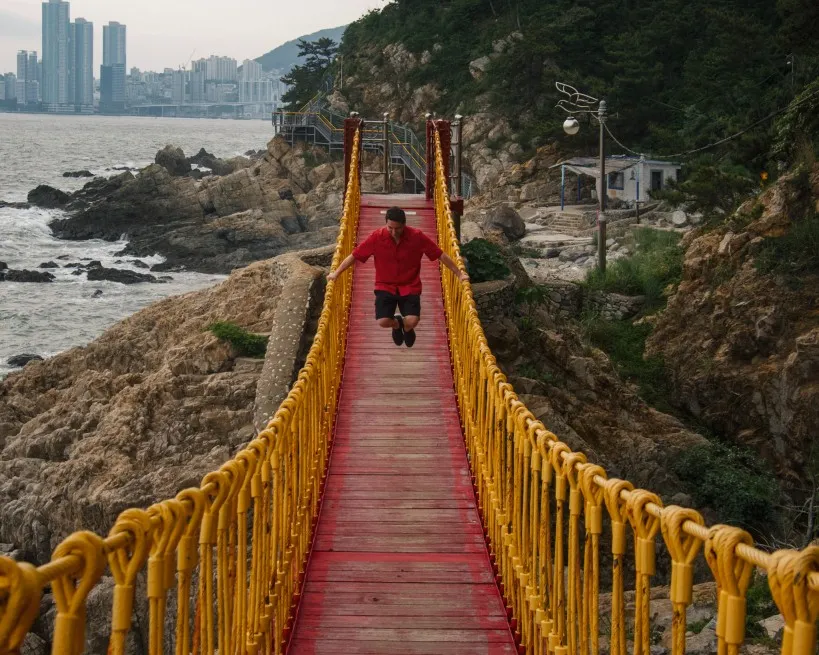
One of the very few Korean temples built right on the sea, clinging to a rocky stretch of coast on the northeastern edge of Busan. Founded in 1376, rebuilt after wartime damage, and unusually photogenic at every angle. Enter through the 108-step stone passage, cross the little bridge, and come out at the main hall with waves crashing directly below. Go at sunrise for the postcard shot, or in early April when the cherry blossoms frame the whole complex. Bus 181 from Haeundae, or Line 2 to Osiria Station and a short taxi. Free entry.
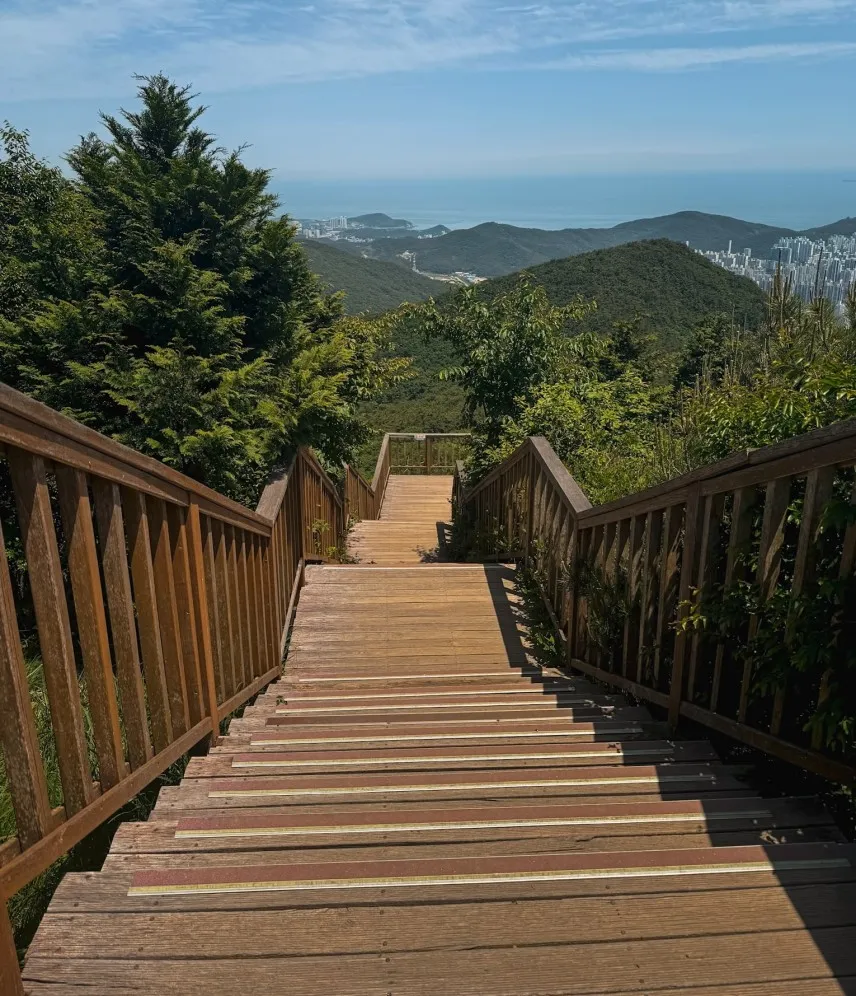
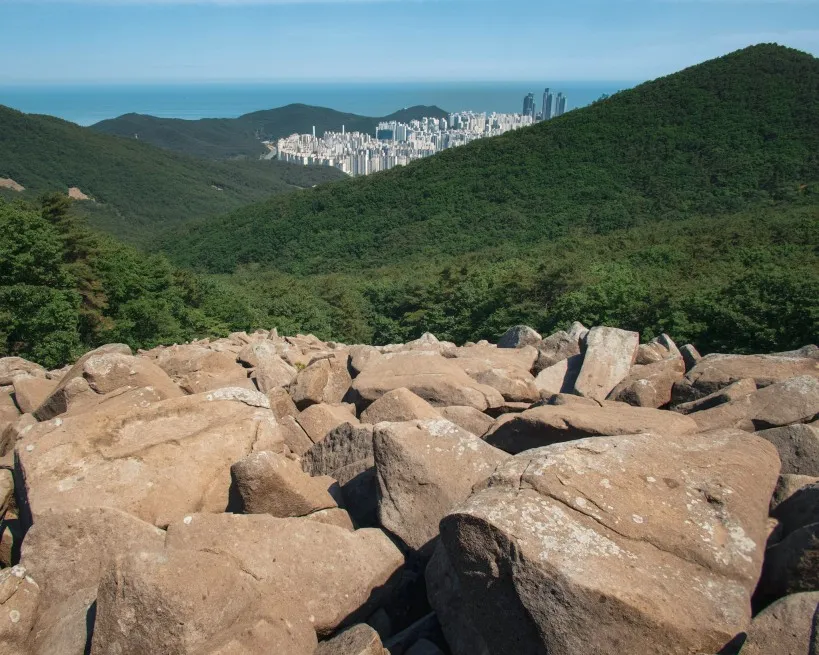
The highest peak in eastern Busan at 634m, rising straight up behind Haeundae. The trail from Daecheon Park to Madumae Peak is the sweet spot, around 2 hours return with sweeping views over Haeundae Beach, Gwangalli, and out to the islands. The actual summit is a military zone and closed to the public, but Madumae gets you the best of the view anyway. Take Line 2 to Jangsan Station, exit 10. Go in October for the autumn foliage or on a clear winter morning when visibility stretches for miles.
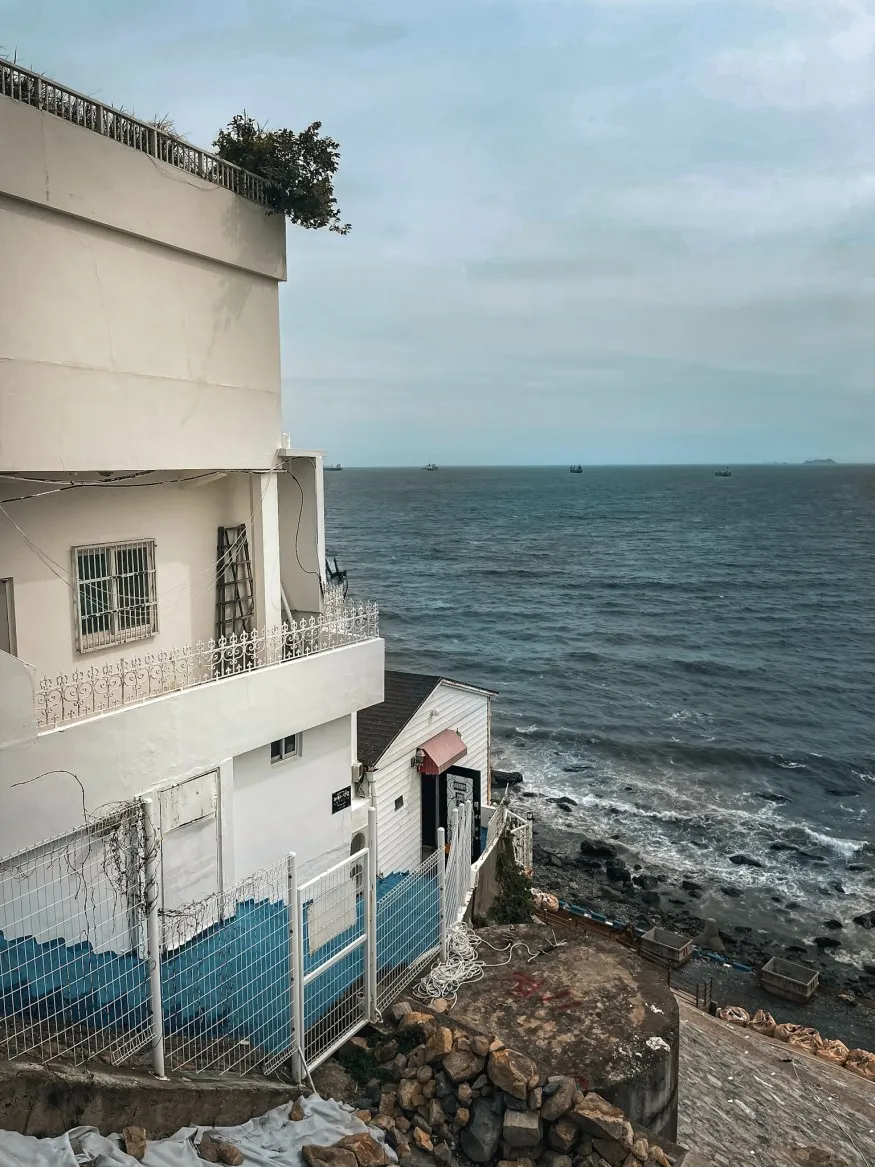
Busan’s answer to Santorini. A narrow strip of whitewashed houses perched on a cliff edge above the sea, with tiny cafes, art galleries, and a working fishing harbour below. Much quieter than Gamcheon and arguably more beautiful. Pair it with a morning on Yeongdo into a single day out. The seaside walkway at the base, carved into the rock, is the best bit. Sunset here is quietly spectacular.
Korea’s most famous beach and the anchor of modern Busan. A clean 1.5km arc of sand flanked by skyscrapers, with cafes, pojangmacha tents, and the aquarium at one end. Swim July and August, walk the boardwalk any other time of year. The real pleasure is late afternoon. Grab a beer with the locals, watch paragliders come in to land at Dalmaji-gil, then eat dinner back through Haeundae Traditional Market.
Hello, I am Tara, the creator of this travel blog! After 4 years of full-time travel, I’ve learned what actually matters when planning a trip and what’s just tourist hype. I share brutally honest guides, realistic itineraries and real tips (including the downsides) about the places I’ve been to. No sugar-coating, no fluff, just the information you actually need to plan a great trip.
Some links in this post are affiliate links, which means if you make a purchase I may earn a commission at no extra cost to you
 First time to South Korea? Read my South Korea travel guide for all the essential information you need to plan your trip.