Updated May 2026
I ended up in Siena Italy because I couldn’t afford Florence. It’s not the best way to start a post about reasons to visit here, but it’s true. I’d left it too late to book accommodation in Florence, my budget was depleted from a stretch in Riva del Garda and Siena turned out to be the only Tuscan city I could afford to stay in for a few weeks. I arrived late at night, dragging a suitcase with rattling wheels through narrow cobbled alleys, waking up half the neighbourhood as I went and feeling slightly sorry for myself.
I left three weeks later genuinely sad to leave.
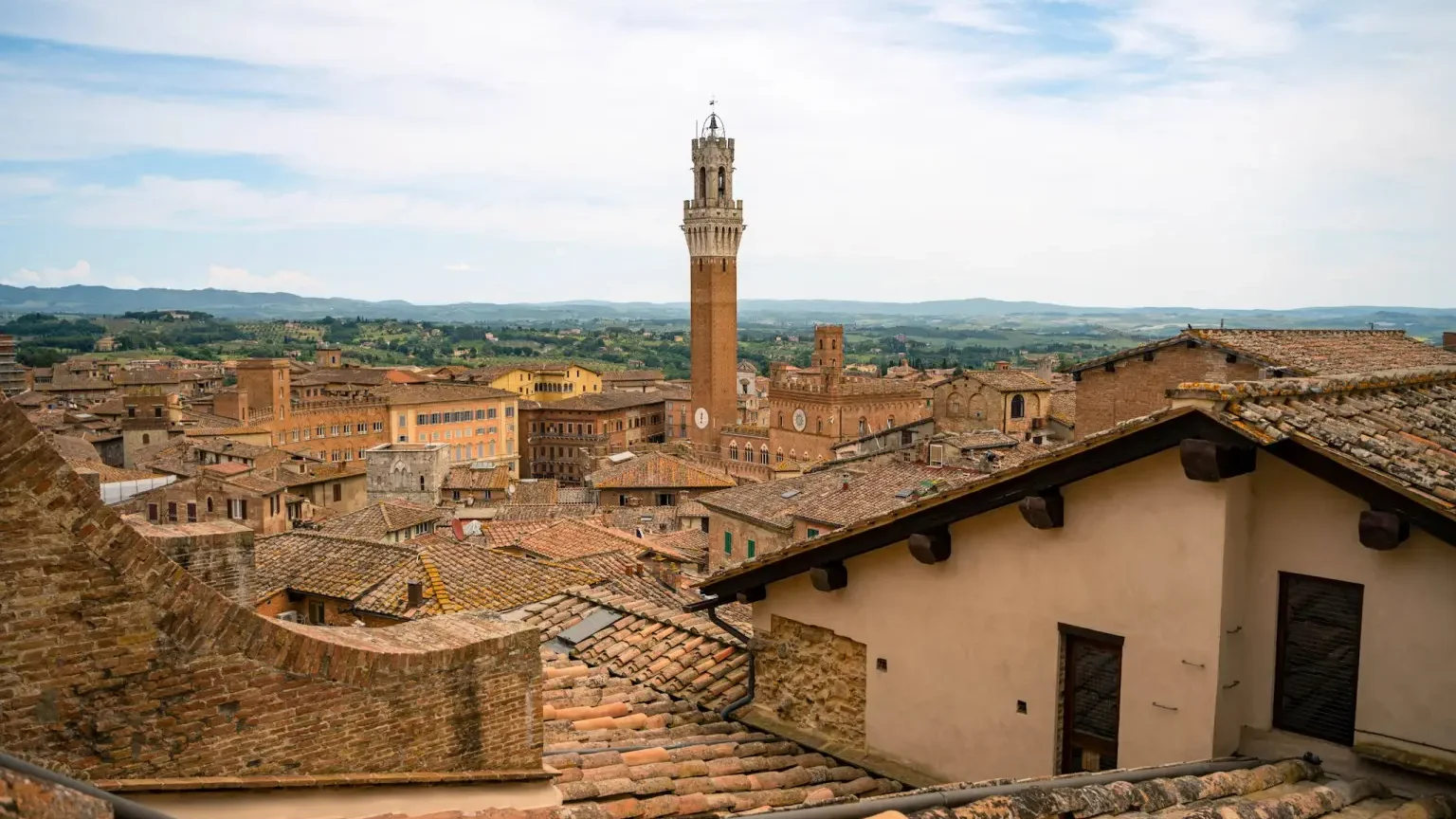
Siena is the most underrated city I’ve spent time in in Italy. It is medieval, walled, walkable, beautiful, and built on three hills – so the views are good. Food comes fresh from the surrounding Tuscan farms. The crowds are nothing like Florence or Rome. The Duomo is one of the most extraordinary cathedrals in Europe, and almost no one outside Italy talks about it. And, Siena is one of the few cities in Italy where you can hear yourself think, because the locals still outnumber the tourists by a sensible margin.
This guide covers the ten things worth doing in Siena, ranked roughly in the order I’d recommend a first-time visitor do them. I’ve also included a tightened version at the end for anyone fitting the city into a single day. Everything in here is from time I actually spent there.
- Why visit Siena…
- 10 Things To Do In Siena
- 1. Duomo di Siena Complex
- 2. Piazza del Campo
- 3. Climb the Torre del Mangia
- 4. Sunset at Fortezza Medicea
- 5. Eat ciaccino at La Piccola Ciaccineria
- 6. Coffee and ricciarelli in a quiet alley
- 7. Walk Chiasso del Bargello (and the alleys nearby)
- 8. Palazzo Salimbeni
- 9. The Naked Lady On Via dei Rossi
- 10. Traditional Siena Dinner
- Map Of One Day Siena Itinerary
- What To Do In Siena For 2 Days
- Where To Stay In Siena
- Siena FAQ
- Where to go next

Some links in this post are affiliate links, if you purchase, we might earn a small commission
Where to stay: The historic centre is walkable to everything in this guide. Attilio Camere for budget (100 metres from Piazza del Campo), B&B I Tetti di Siena for mid-range, Siena Vip B&B for splurge.
Tourist tax: Siena charges a small per-night tourist tax (around €1.50 to €5 depending on hotel category), collected by your accommodation at check-in. Just be ready to pay it on arrival.
Insurance: I use True Traveller for EU/UK citizens and World Nomads for everyone else. Both have actually paid out when I’ve needed them.
Mobile data: Airalo is the easiest eSIM option. Download it before you arrive and you’re connected the moment you land.
Car rental: Don’t rent a car for Siena itself. The historic centre is largely pedestrianised and parking outside is expensive. If you’re touring the wider Tuscan countryside, DiscoverCars is the comparison site I use.
Getting there: Most travellers come via Florence, which is 1h 15m by bus or 1h 30m by train. The bus is more reliable; the train requires a change at Empoli. From Rome it’s 3h by train. I book through Omio, which lets you compare trains, buses and flights in one place.
Why visit Siena…
If you’ve already done Rome, Florence, and Venice, Siena is the Italian city you should book next. It is the same medieval Italy without the queues, without the tour groups walking five abreast through every alley and without the picture book tourist menus.
If Siena is your first Italian city, you have, frankly, picked well. You’ll get a more honest sense of how the country actually feels than you would in Florence, where the tourists outnumber the locals by something like four to one in peak season. Siena has not been changed for its visitors. It looks the way it has looked for six hundred years because the people who live in it never let it be turned into something else.
10 Things To Do In Siena
1. Duomo di Siena Complex
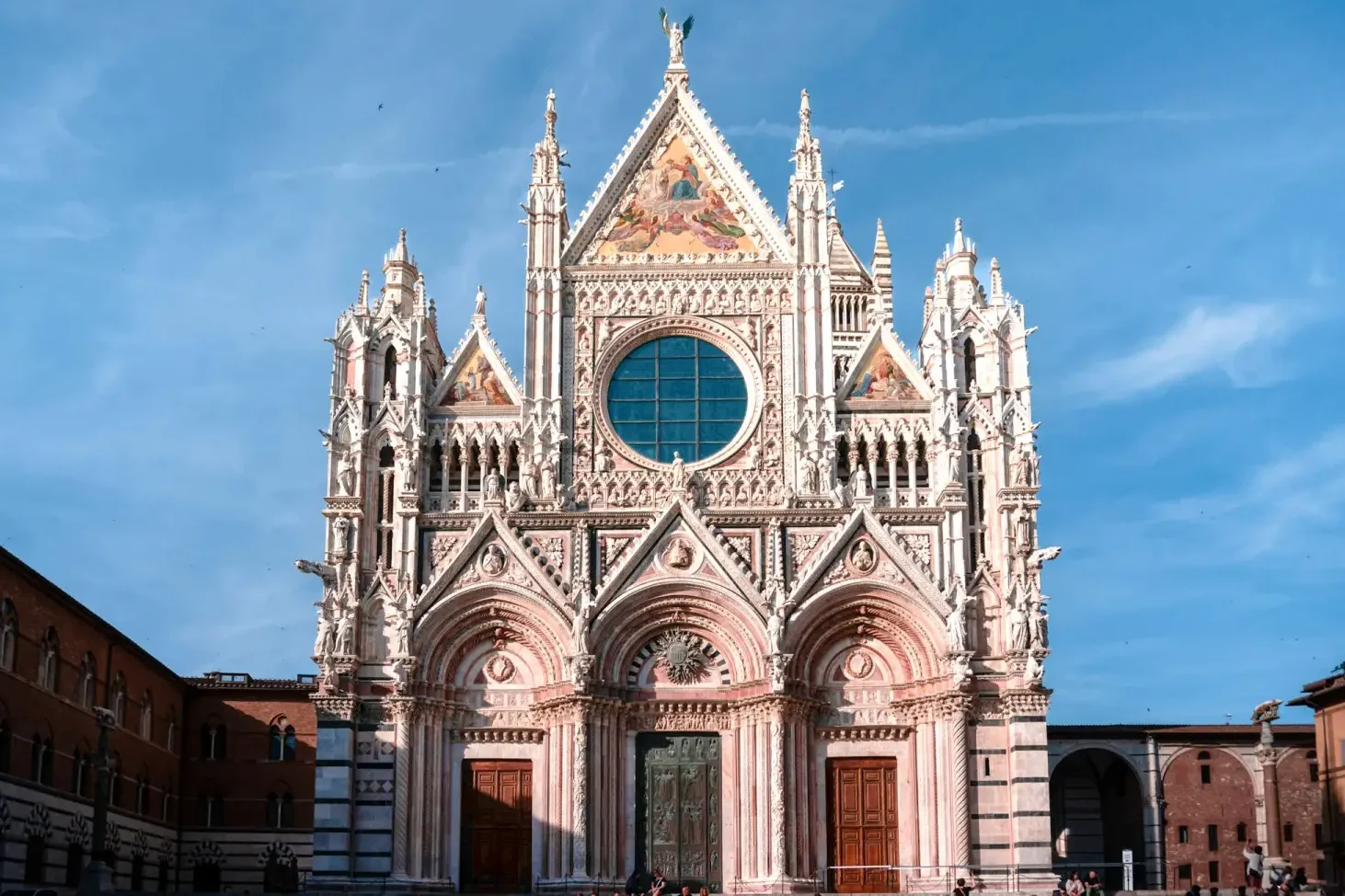
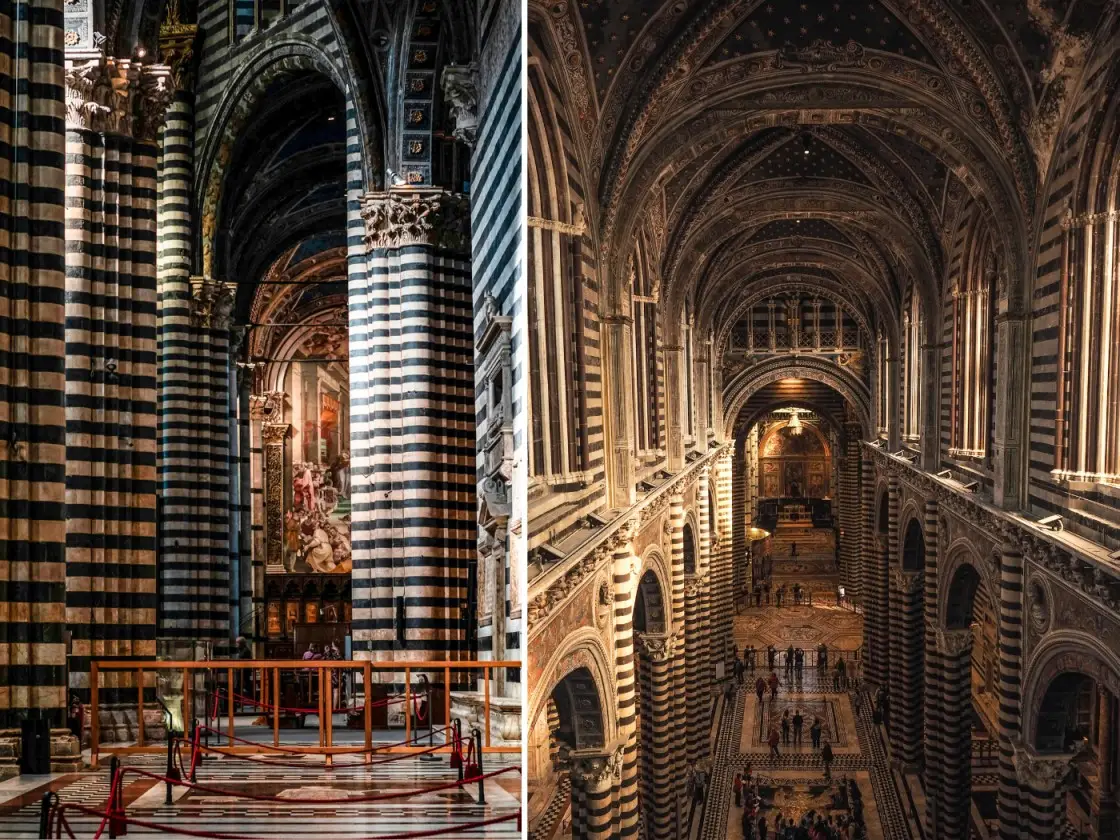
Not only is this the single most extraordinary building in Siena Italy, but also one of the most extraordinary cathedrals in Europe. Most travellers have never heard of it. That is partly because Florence’s duomo is a 1 hour train ride away and gets all the attention, and partly because Siena’s local government has not spent the last fifty years marketing the place. It is just there, doing its job, since the 13th century.
The exterior is built in alternating stripes of black and white marble which sounds gimmicky and looks, in person, mesmerising – especially on a hot day when it shimmers in the sun. The front facade is a mosaic of pink, gold, green, and white, restored repeatedly over the centuries. And the interior floor has 56 inlaid marble panels depicting Old Testament stories, sibyls, and allegorical scenes. The floor is normally covered to protect it; it’s only fully uncovered for around eight to ten weeks a year, usually around late summer and early autumn. Check the dates before you book.
There’s also the Facciatone, the unfinished facade of what was meant to be a much larger cathedral, abandoned when the Black Death hit Siena in 1348 and killed roughly half the city. You can climb to the top of it for a panoramic view of Siena and the surrounding hills. This was a highlight for me.
Buy the Porta del Cielo (“Gateway to Heaven”) combined ticket. It gets you into the cathedral, the floor (when uncovered), the baptistery, the crypt, the Piccolomini Library with its 15th-century frescoes, the museum, and the Facciatone climb. Book online ahead of time and pick a morning slot as this is the busiest attraction in Siena and the queues at the door are real.
Budget two to three hours. It looks like a lot. It is not enough.
2. Piazza del Campo
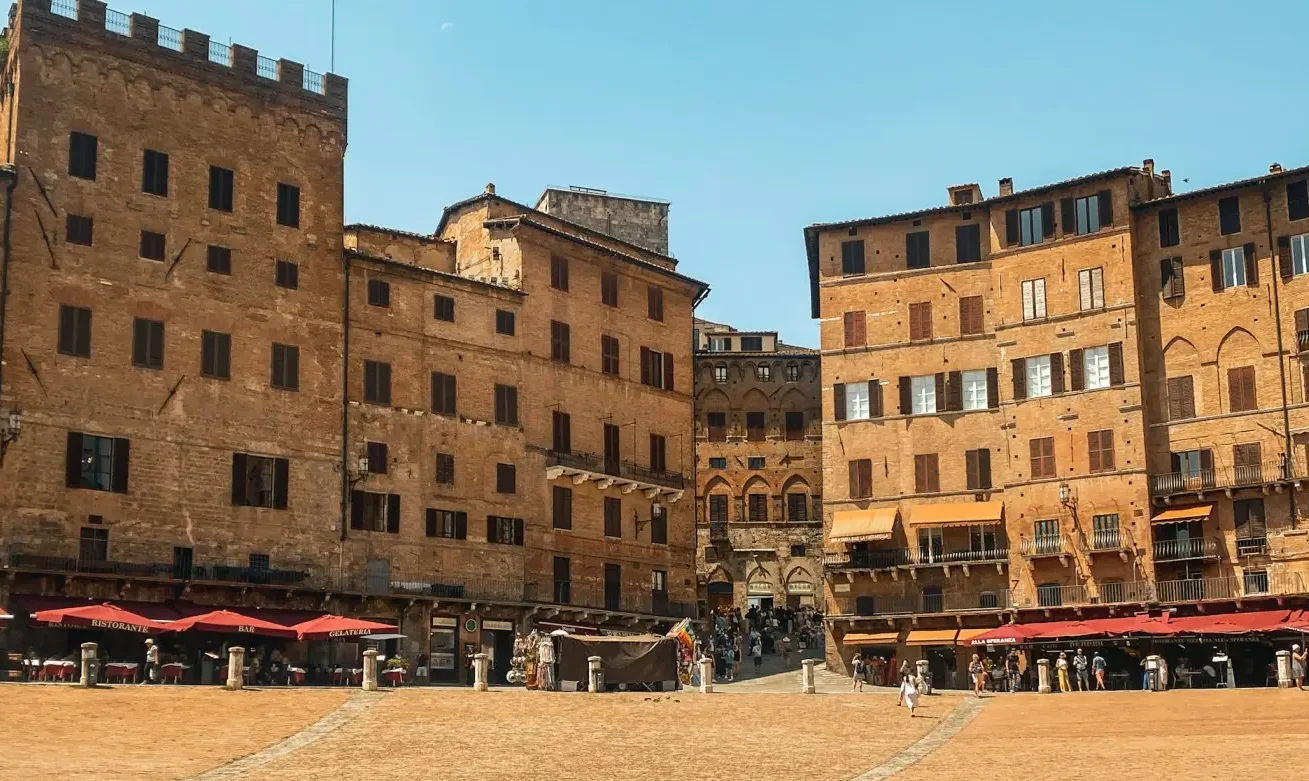
If you only have time to sit in one square in Italy, sit in this one. The Piazza del Campo is shell-shaped, slopes downhill toward the Palazzo Pubblico, and is paved in red brick divided into nine sections: one for each of the medieval governing council that built the city. It’s considered one of the great public squares in Europe.
It’s also where the Palio di Siena is run, twice a year, on 2 July and 16 August. The Palio is a bareback horse race lasting about ninety seconds, contested by ten of Siena’s seventeen contrade (neighbourhood districts), and treated by Sienese as roughly the most important event in the calendar. If you’re in town on either date, you’ll know as the city becomes a different place. If you’re not, you can still see the contrade flags hanging over alleys all year round.
The rest of the time, the Piazza is for sitting in. Locals lie on the bricks in the afternoon. Tourists eat overpriced gelato at the cafés around the edge. Skip the cafés, buy a coffee or a slice of ciaccino somewhere cheaper and bring it here.
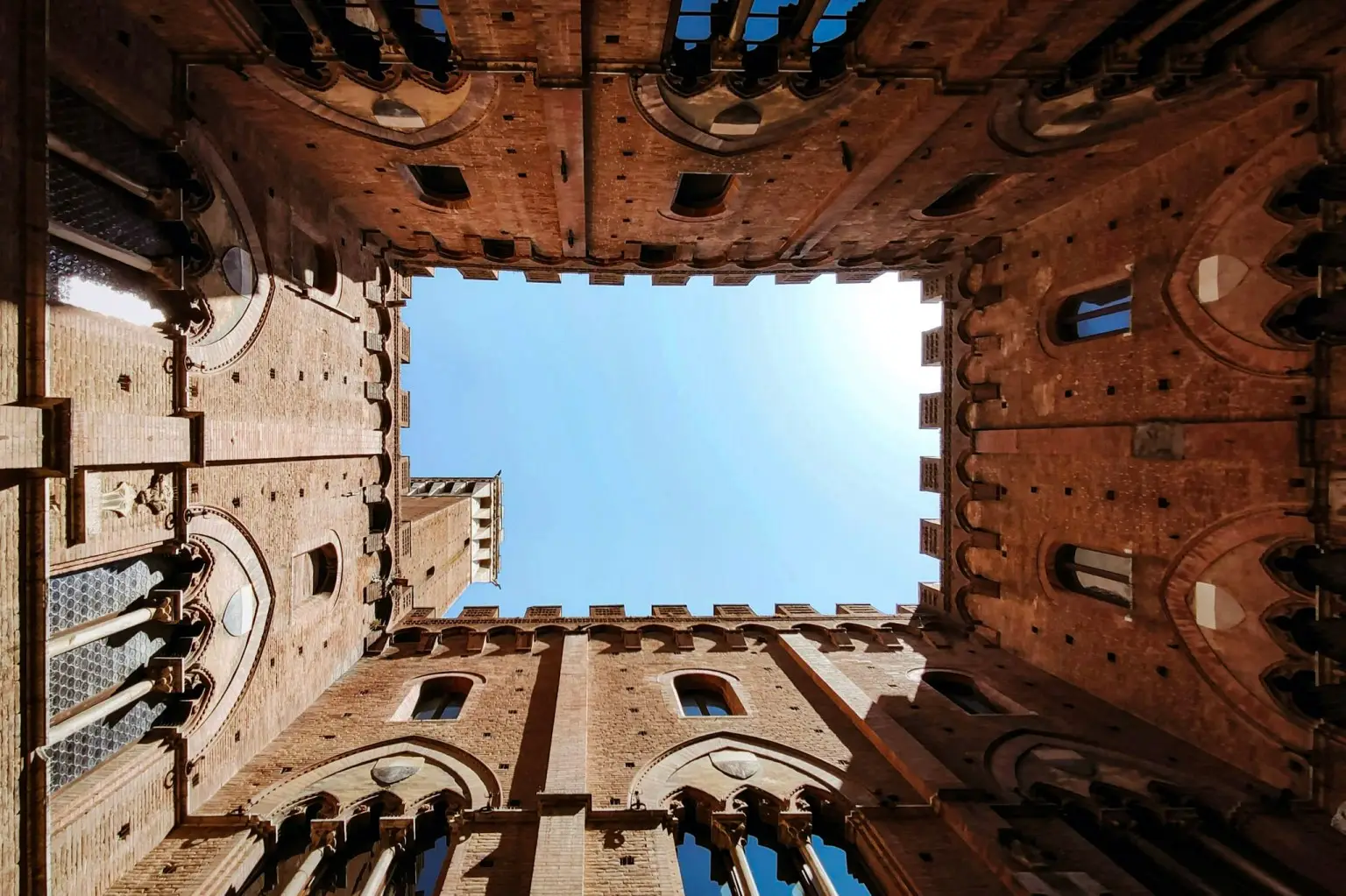
3. Climb the Torre del Mangia
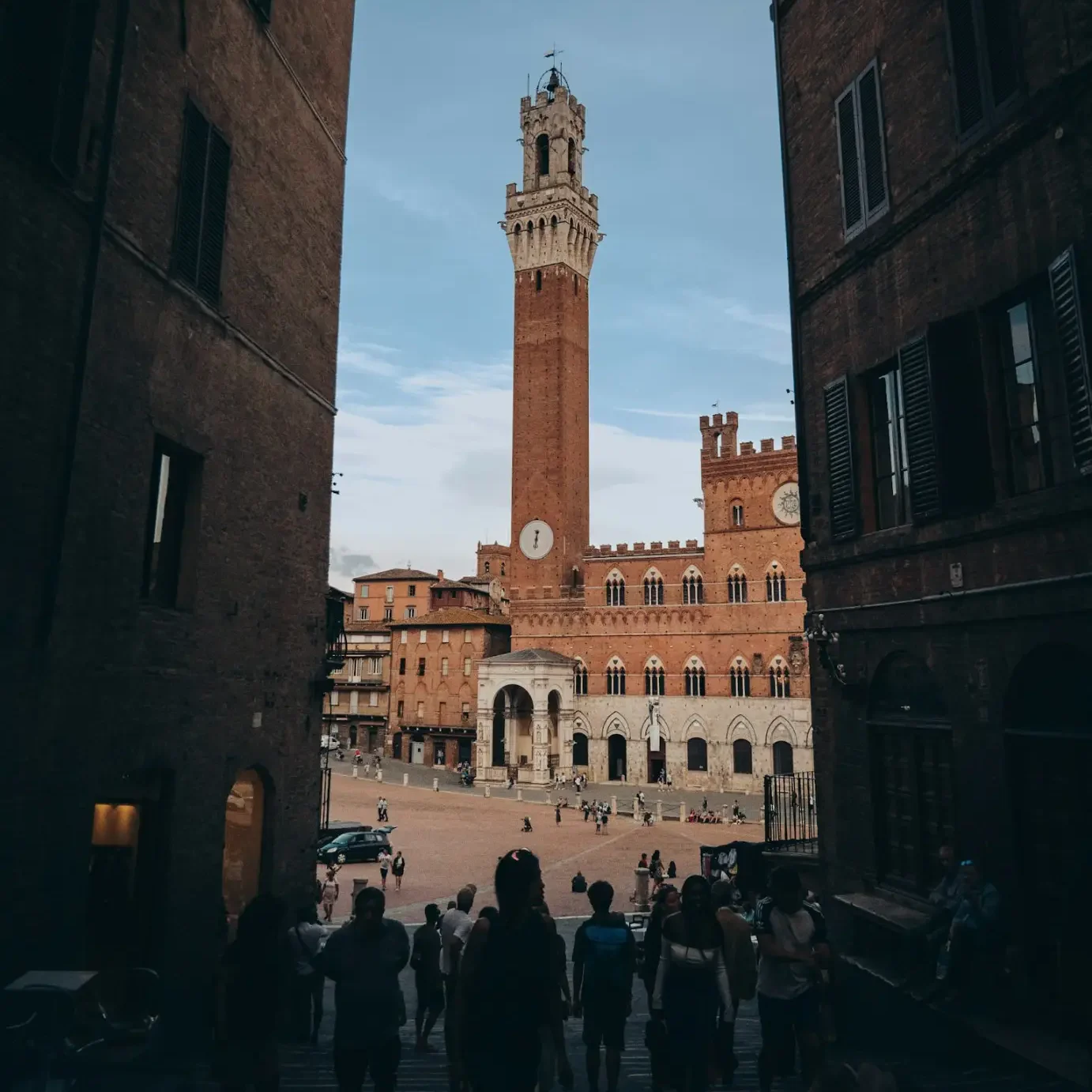
The bell tower attached to the Palazzo Pubblico, on the Piazza del Campo. At 87 metres it’s the second-tallest medieval tower in Italy, and it was built deliberately to match the height of the Duomo’s tower. This was more than an aesthetic choice, it was Siena’s medieval government making a quiet point that civic power and church power were equal.
You climb 400 steps to the top. There is no lift and the stairs narrow as you go up. The view at the top is the best in Siena: the red rooftops of the city below, the striped Duomo, the medieval walls, and the Tuscan hills rolling out in every direction.
Tickets are sold on the spot only, you can’t book online, and they cap the number of people allowed up at any one time. Slots sell out by mid-morning in summer. Book your slot first thing, ideally before you do the Duomo. That way you’ve reserved your spot without committing your whole morning to the queue.
If you have any kind of mobility issue, this isn’t the climb for you. The stairs are old and tight.
4. Sunset at Fortezza Medicea
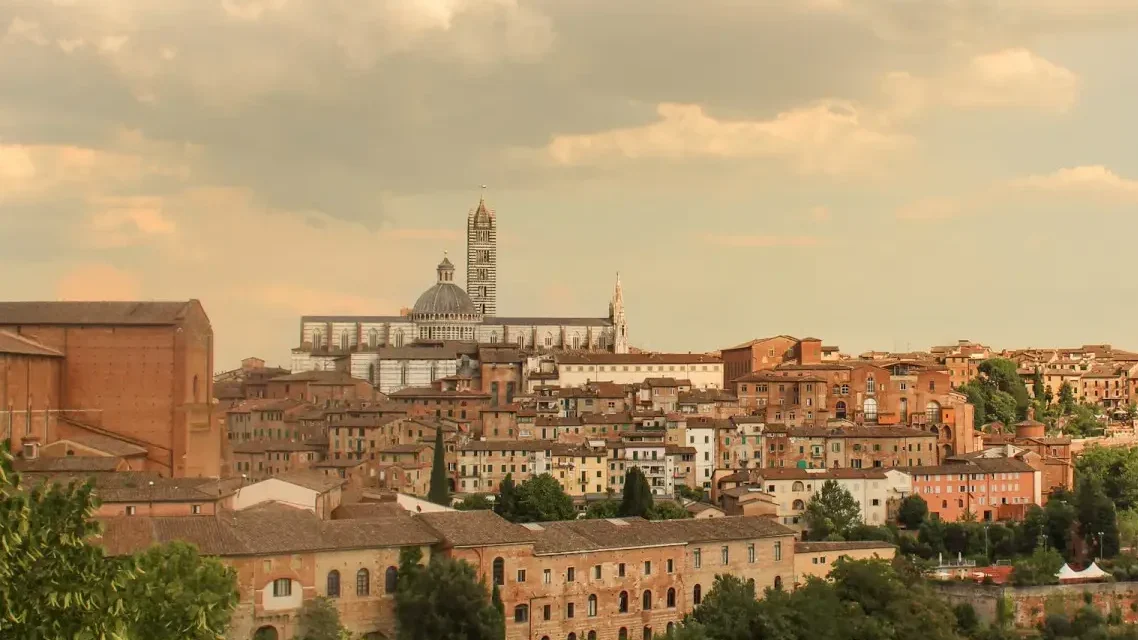
This was my favourite view in Siena, and I went up regularly. The Fortezza Medicea is a 16th-century star-shaped fortress built by the Medici after Florence conquered Siena in 1555. The fortress now hosts an outdoor cinema, summer concerts and an enoteca with a wine list of Tuscan reds longer than my arm.
You go up for the view. The terraces look out over the western edge of the city: the cathedral on its hill, the rooftops in between, and the Tuscan countryside opening up behind it. At sunset the whole city turns the colour of terracotta lit from inside.
It’s a short walk from the centre and almost no day-tripping tour groups make it up. I’d often walk up around 7pm with a small bottle of wine from the enoteca on the way and find maybe a dozen other people sitting on the walls, mostly Sienese.
5. Eat ciaccino at La Piccola Ciaccineria
Ciaccino is Siena’s version of the Tuscan schiacciata: a thin, focaccia-like flatbread split open and stuffed with cured meats, cheese, and sometimes vegetables. It is the perfect cheap lunch in Siena: portable, dense, satisfying and unlike a sandwich.
La Piccola Ciaccineria is where I went repeatedly. It’s a tiny hole-in-the-wall that is easy to miss, no seating inside, has a queue out the door at lunch. A slice will run you around €3, with fillings that change daily but reliably involve some combination of prosciutto, salami, speck, mozzarella, stracchino, or mascarpone. The bread is light and crisp and slightly oily but in the right way.
There’s nowhere to sit, so take it across the road and sit on the steps. That’s what locals do.
If you’re queuing and they’ve sold out of your first choice, ask what’s coming out of the oven next. There’s always something coming out of the oven next.
6. Coffee and ricciarelli in a quiet alley
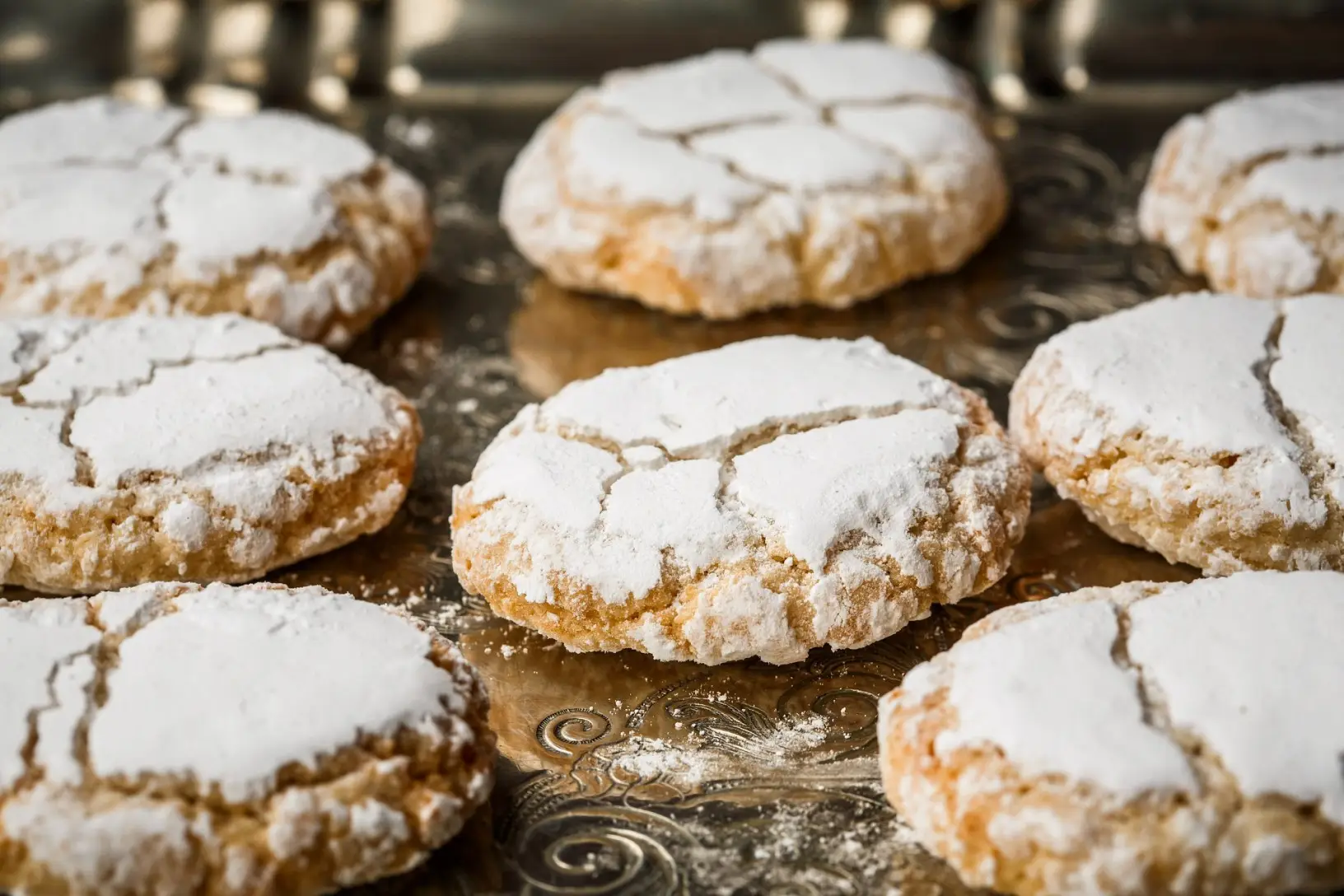
Siena has dozens of pastry shops and espresso bars, and one of the genuine pleasures of staying for any length of time is finding your local. The thing to order, at least once, is ricciarelli, soft almond biscuits, slightly chewy, dusted with icing sugar, naturally gluten-free. They’re a Sienese specialty, dating back to the 14th century, and they go with coffee.
Four places I rate, in different parts of town:
- Bakery Il Magnifico: historic bakery near the Duomo, good for ricciarelli and the city’s other almond specialty, cantucci.
- Torrefazione Fiorella: small specialty coffee bar; the espresso is excellent.
- La Nuova Pasticceria: neighbourhood pasticceria slightly off the main drag, no English menu, no problem.
- Pasticceria Nannini Conca D’Oro: the big-name historic pasticceria. Touristy but good ricciarelli.
The point of this stop isn’t really the coffee. It’s sitting on a quiet alley with a pastry, watching the city walk by.
7. Walk Chiasso del Bargello (and the alleys nearby)
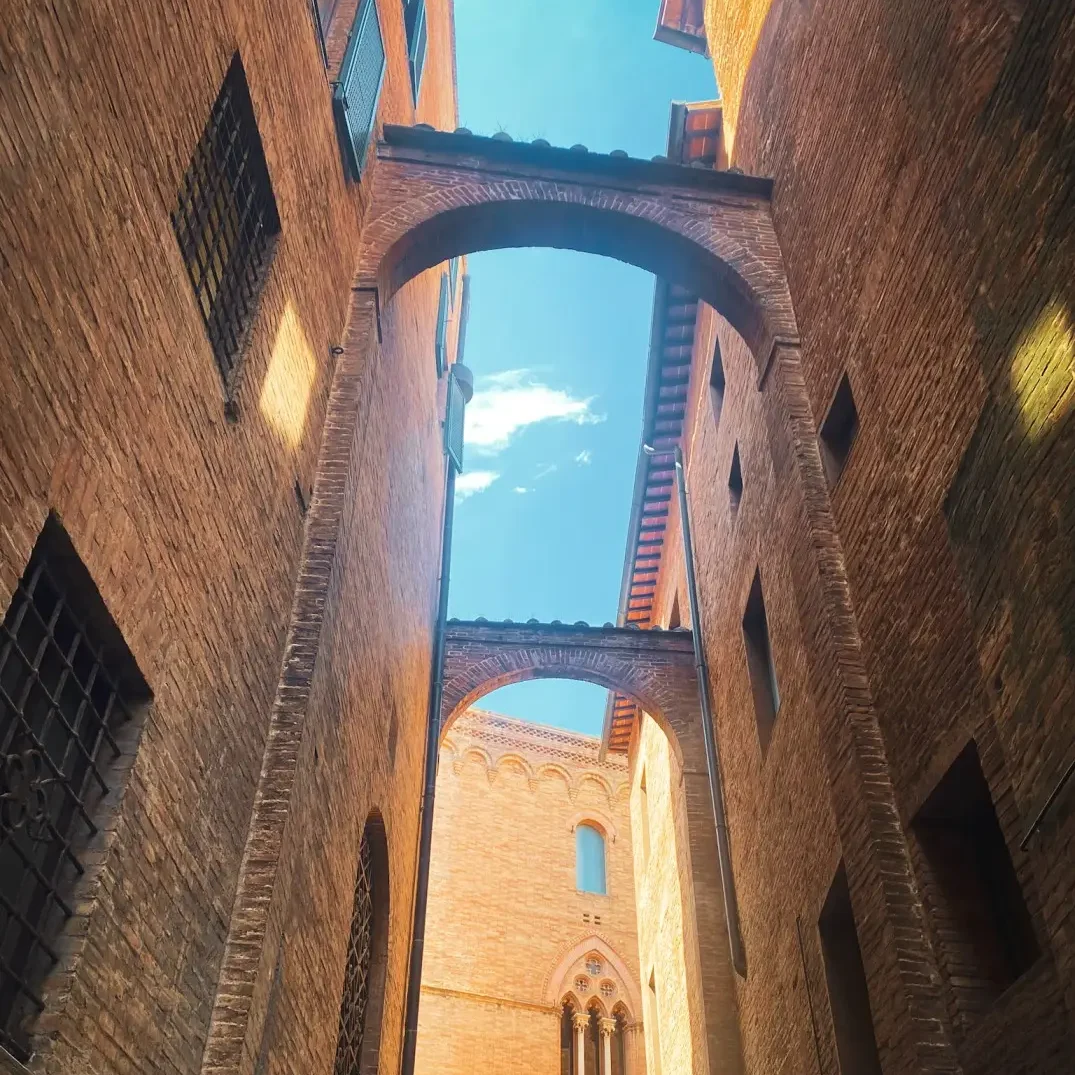
The single most photogenic alley in Siena and one most travellers walk straight past because it’s not on the way to anything famous. Chiasso del Bargello connects Via di Città with Via San Pietro and is framed by a stone archway, with potted plants hung along the walls by the people who live there.
It’s a thirty-second walk. Worth knowing about because it sets up a broader principle for visiting Siena: the city’s alleys are the attraction, not the buildings. Once you’ve done the headline sights, the best thing you can do is wander the streets without a destination. Get lost on purpose. The historic centre is small enough that you’ll find your way back, and the alleys away from the main drags are where the city actually lives.
If you want a short walking route, work your way from Piazza del Campo down toward Via San Pietro, then loop up through Via dei Fusari and Via dei Pellegrini. You’ll pass Chiasso del Bargello, three contrade fountains, and at least one church you’ve never heard of that’s older than most countries.
8. Palazzo Salimbeni
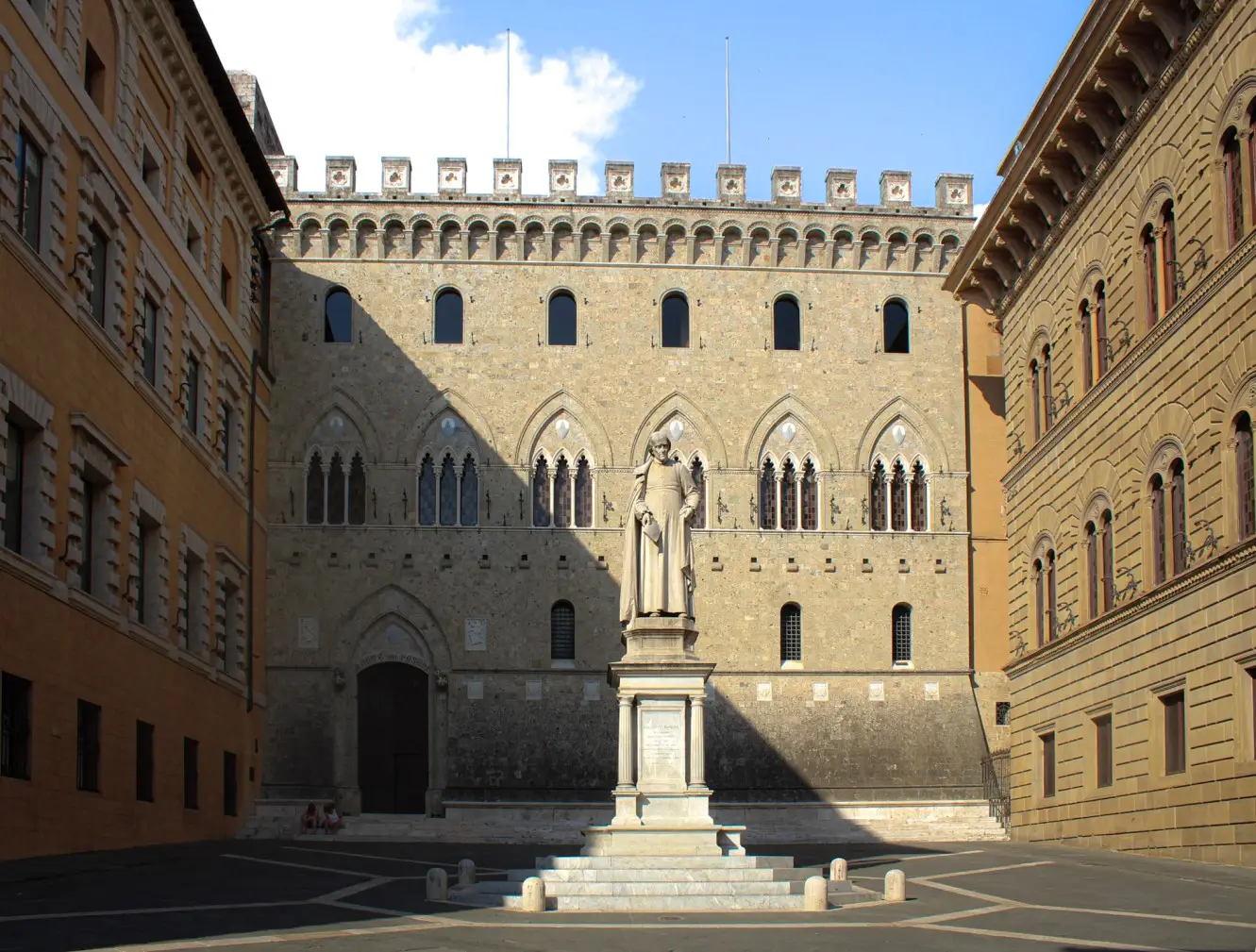
The world’s oldest still-operating bank, Monte dei Paschi di Siena, was founded in 1472 and is still headquartered in the Palazzo Salimbeni in the centre of the old city. The building is fifteenth-century Gothic, lit dramatically at night, with a white marble statue of Sallustio Bandini (an 18th-century Sienese economist) in the centre of the courtyard. One cool feature is that there are stone busts of past directors built into the facade above.
There’s nothing inside to visit. This is a ten-minute stop, ideally with a gelato in hand.
If you want gelato to go with the moment, GROM is the best in the centre, and it’s a few minutes away.
9. The Naked Lady On Via dei Rossi
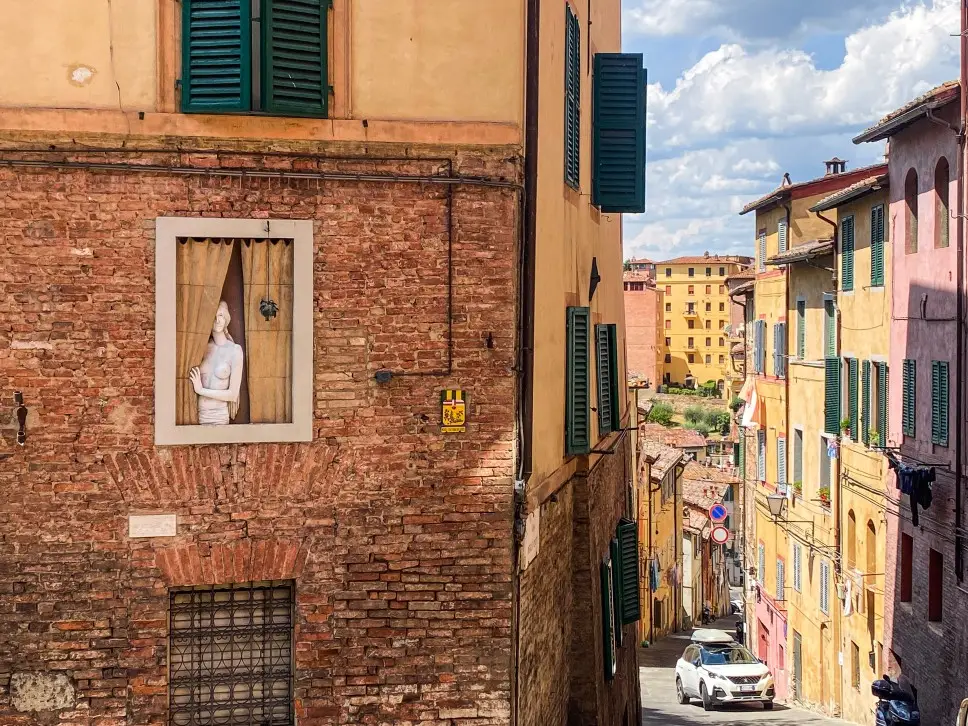
On the corner of Via dei Rossi, a life-sized statue of a naked woman peers out of a building’s window, holding a pomegranate. She’s called La Dama Ignuda and she was installed in 1995 by a local artist, Pier Luigi Olla. There is no plaque, no explanation, no obvious reason for her to be there. She’s just there, half-leaning out of the wall, unnoticed by most passers-by.
Once you’ve seen her, you can’t un-see her and you spend the next few days squinting up at every other window in Siena to check for anyone else.
10. Traditional Siena Dinner
In three weeks of eating in Siena, I did not have a bad meal. Tuscan food is rustic, peasant-rooted, slow-cooked nothing like the lighter cooking you’d get in coastal Italy.
Four dishes worth ordering at least once:
- Pici pasta: hand-rolled, thick, slightly chewy noodles, like very fat spaghetti. Usually served with cacio e pepe, with wild boar ragu (cinghiale), or with garlic and breadcrumbs (all’aglione).
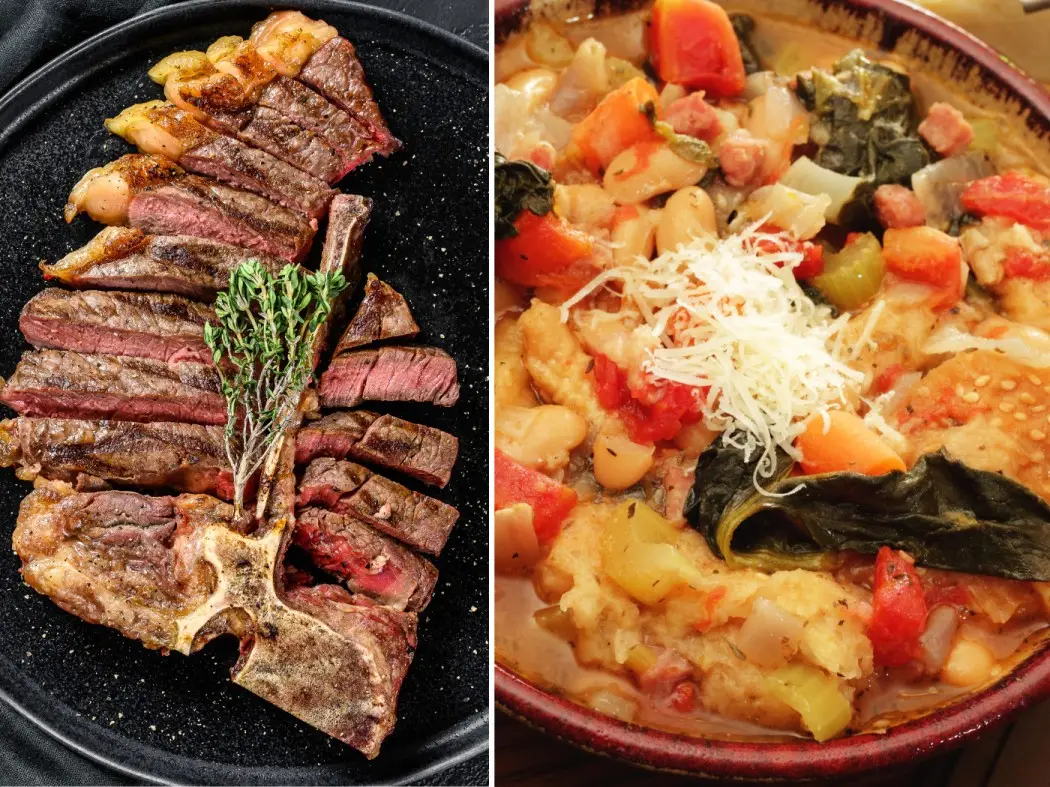
- Ribollita: a Tuscan vegetable and bread stew, traditionally made with leftover cannellini beans, kale, carrots, and stale bread. It’s a peasant dish that has graduated to becoming a Tuscan classic.
- Bistecca alla Fiorentina: a thick T-bone steak, served rare, dressed only with salt, pepper, lemon, and good olive oil. Yes, it’s technically a Florentine dish; yes, Siena does it well; yes, it costs €60+ and is meant to be split between two people.
- Peposo: a slow-cooked black-pepper-and-red-wine beef stew, traditionally served over polenta. The recipe dates back to the men who built Florence’s Duomo in the fifteenth century; they cooked it overnight in their kilns. If you only order one Tuscan dish in your life, make it this.
Restaurants I’d send you to, in increasing order of fanciness:
- Osteria Permalico: small, cosy, romantic, in a historic building. The pici with boar ragu is what I’d order.
- Il Cavaliere Errante: on a quiet piazza; underrated pizza; the tiramisu is one of the best I had in Italy.
- Casato Ristorante Wine Bar: modern, elegant, slightly more expensive. Cinta Senese pork is the dish here.
- Grotta Santa Caterina da Bagoga: tucked down an alley, the slightly-fancy choice. The bistecca alla Fiorentina and the peposo are both excellent. They also do a tasting menu that lets the chef cook for you.
Avoid restaurants on Piazza del Campo. I keep saying this; I keep meaning it.
Map Of One Day Siena Itinerary
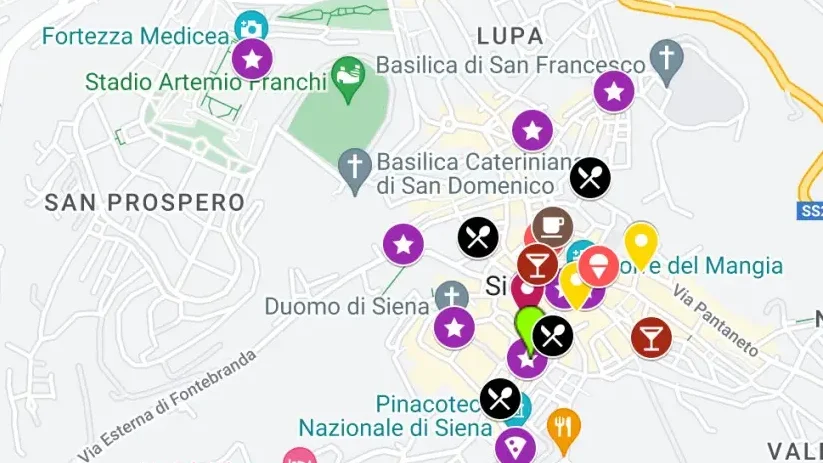
This is the end of my One day in Siena itinerary. Keep reading for more practical information and an FAQ section.
What To Do In Siena For 2 Days
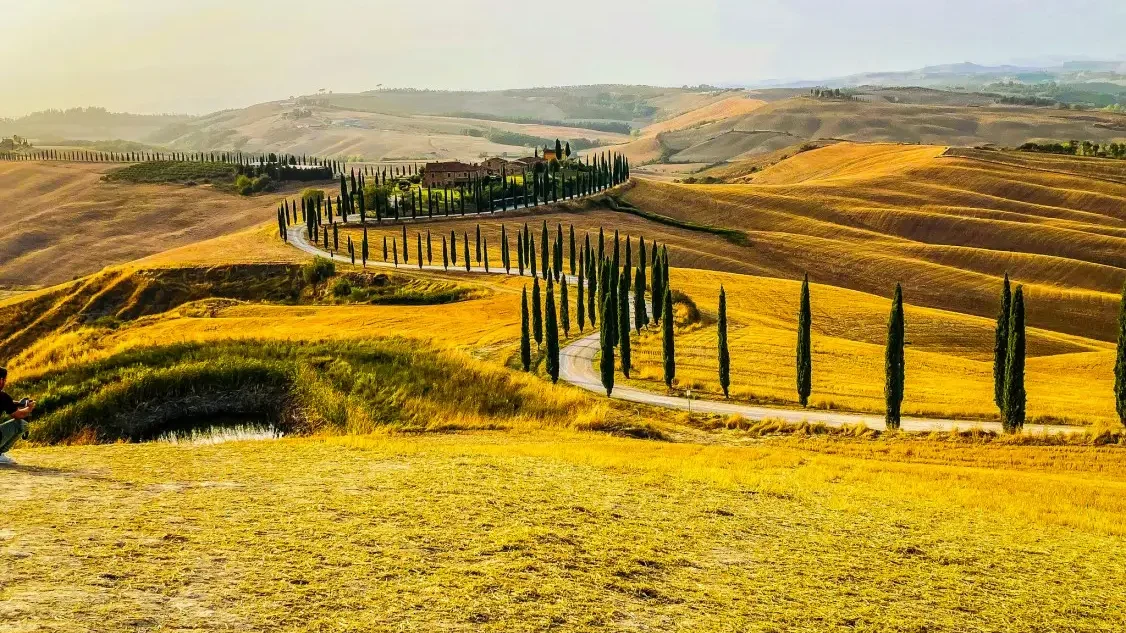
If you have two days, spend the second one in the countryside. Siena is the natural base for visiting the Tuscan hill towns, the wine regions, and the food country, and a guided day tour will get you to places you’d struggle to reach on public transport.
- Cycle through the famous Tuscan countryside surrounded by vineyards.
- Visit the nearby medieval villages of Pienza and Montepulciano. This tour includes a 3 course meal and pecorino cheese tasting at an organic farm and wine cellar tour and tasting in Montepulciano.
- Learn about the famous Brunello wine on a Brunello di Montalcino Guided Wine Tour and lunch. Brunello di Montalcino is made with 100% Sangiovese, this is the wine that according to critics is the best in Italy.
Where To Stay In Siena
The historical centre of Siena is the best place to stay. You will be within walking distance of the main attractions, plenty of incredible restaurants and bars. Check out some of my recommendations below,
Budget | Attilio Camere is centrally located just 100 metres from Piazza del Campo and very close to Siena’s main sights. Rooms are cosy, with high wooden beam ceiling, all are fitted with AC and some have an incredible view of the city.
Mid-range | B&B I Tetti di Siena is located in the historic centre of Siena, rooms are bright and spacious, if you are lucky enough to have a room with a balcony the view of the city is spectacular.
Splurge | Siena Vip B&B, a boutique b&b located just 5 minutes walk to the Duomo. The hotel offers a big breakfast spread that is delivered to your room each morning. The rooms are modern and spacious, you can also choose to stay in a studio or apartment with a private kitchen
Siena FAQ
Is one day enough in Siena?
It’s enough for the headline sights, but it’s a tight day and you’ll feel rushed at the Duomo. Two days is the sweet spot — one for the city, one for the countryside. If you have three, add Florence as a day trip.
Is Siena cheaper than Florence?
Yes, noticeably. Restaurant prices run roughly 10% lower, accommodation around 20% lower, and the city has fewer “tourist tax” markups in general. The exception is high-season weekends, when central Siena fills up and prices spike.
Is Siena walkable?
Yes and it’s the only way to see it. The historic centre is largely pedestrianised, compact enough to cross in twenty minutes, and full of streets too narrow for cars. The catch is the hills. There are three of them, and they are all paved in old, polished cobblestones. Bring proper shoes.
Is Siena safe at night?
Very. The streets empty out after dinner and the city becomes one of the quietest historic centres in Italy. Standard precautions for any old city but keep your bag on you, don’t wander alleys you don’t know, but I walked home alone at midnight regularly and never had a moment of concern.
When is the Palio?
Twice a year: 2 July and 16 August. If you want to attend, book accommodation at least six months ahead and expect the entire city to be sold out. If you want to avoid the crowds, the days immediately before and after the Palio are also full of related events and impossible to book. Visit in May–June or September–October if you want a quiet city.
What’s the best month to visit Siena?
Late April to early June, or September to early October. Summer is hot, busy and Palio-distorted. Winter is quiet but several attractions go on reduced hours and the famous Tuscan countryside loses its postcard look.
Can I see Siena in half a day?
Honestly, no. You’d see the Duomo or the Piazza but not both, and you’d miss the thing the city is actually known for, which is the medieval atmosphere. If you only have a few hours, go to Florence instead. Save Siena for a proper visit.
Where to go next
If you’re plotting the rest of your Italian trip, my favourites:
→ One day in Riva del Garda for anyone heading north afterwards. Lake Garda, hiking, gelato, lake views.
→ The 18 best things to do in Riva del Garda the longer version, if you’re staying more than a day.
→ Best things to do in Naples in 1 day if you’re going south. Naples is the loud, lived-in opposite of Siena and they pair surprisingly well as a two-week Italy trip.
→ One day in Venice itinerary the other unmissable Italian city, with the same itinerary structure as this post.
→ Italy travel guide the full hub if you’re planning the whole trip.