Kaohsiung is the part of Taiwan that most international visitors skip, which is increasingly their loss. Taipei gets the dumplings and the night markets and the magazine covers; Kaohsiung gets the harbour, the warmer winters and the cheaper rooms . It sits 350km south of the capital on a flat coastal plain, ninety minutes down the high-speed rail line, and runs to a noticeably different rhythm than the north.
For most of the twentieth century this was Taiwan’s industrial city, the working harbour that built ships and refined oil and stayed unfashionable on purpose. Then in the early 2000s the city handed twenty-five abandoned port warehouses to artists, rebuilt the waterfront, opened a properly good MRT system, dropped a new Music Center and one of the world’s largest performing arts complexes into the skyline, and quietly turned itself into one of the more confident second cities in Asia. It still has the harbour and the heat. It now also has weekend brunch, craft beer and a tram that runs through the art district.
The guides below cover the practical questions. When to come, where to stay, how to get around, what to eat and the things you’d be sorry to leave without doing. They assume you have between three days and a week, that you’d like to spend some of that time on the ferry to Cijin and some of it eating duck rice in Yancheng, and that you don’t need to be sold on the place. You’ve already booked the ticket. Here’s how to use it.
First time visiting Taiwan? Read my Taiwan travel guide for all the essential information you need to plan your trip.
Kaohsiung Essentials
The bits worth knowing first.
The sweet spot for Kaohsiung is mid-November through early April. Daytime highs sit between 23 and 28°C, the humidity finally backs off, the skies stay genuinely blue for weeks at a time, and the city stops feeling like a sauna. November is the single best month on paper: ten hours of sunshine a day, rainfall close to zero, and the heat that defines the rest of the year has properly broken. December and January follow close behind, with cooler evenings around 16°C that make the harbour walks and Pier-2 wanders feel like a different city from the summer version.
February into March keeps the dry weather and adds the Taiwan Lantern Festival, which has rotated through Kaohsiung in past years and lights up the Love River with installations either way. Late February into early March is when the migratory purple crow butterflies are still settled in the Maolin valleys east of the city, a small natural spectacle that builds from autumn into winter. If you can travel mid-week through these months, you’ll get the best weather, the lowest prices and the thinnest crowds Kaohsiung offers all year.
May to September is the difficult half. June, July and August push 32 to 34°C with humidity that makes the air feel like a wet towel, and August is the wettest month in the entire country, averaging more than 400mm of rain across roughly 17 wet days. Typhoons land most often between July and September. Even September, which has the fewest visitors of any month and the lowest hotel rates, still feels like an extension of summer until well into October. If you came for Lotus Pond and Cijin beach and the ferry across the harbour, you want to be here in the dry season; if you came for hot soup at Liuhe night market, even the wet months have their moments.
Jan
Feb
Mar
Apr
May
Jun
Jul
Aug
Sep
Oct
Nov
Dec
Best monthsQuieter, hit and miss weatherSkip if you can
Kaohsiung runs about 20 to 30 percent cheaper than Taipei on most things, and the gap is widest on accommodation. A clean three-star with breakfast lands around NT$2,000 to NT$3,500, a serious bowl of duck rice at a sit-down spot is NT$80 to NT$150, and dinner with a beer at a proper local restaurant rarely tops NT$800 a head. The MRT is excellent and almost free by Western standards, with most rides between NT$20 and NT$40, and the harbour ferry to Cijin Island is included on your EasyCard for the price of a single MRT ride.
For where to stay, Yancheng District is the standout first choice. It’s right on the harbour, walkable to Pier-2, the Music Center and the Cijin ferry terminal, full of old-school food stalls and Michelin-recommended noodle shops, and connected to the rest of the city on the MRT orange line. Central Park and the area around Formosa Boulevard station are the next best, with the Dome of Light art installation, the most hotels and the easiest access to Liuhe Night Market. Near Kaohsiung Main Station is the cheapest, with the highest concentration of budget hostels and three-star hotels at small money. Downtown around 85 Sky Tower is where the luxury hotels and the shopping malls are.
NT$2,800
Per night, mid-range
Hostel or budget hotelNT$700–1,500
Three-star with breakfastNT$2,000–3,500
Four-star in YanchengNT$4,000–7,500
Bowl of duck riceNT$80–150
Cijin seafood lunchNT$250–500
Saturdays cost more than Mondays almost everywhere, and Lunar New Year (late January or February) pushes rates up sharply for about ten days. Hotels can be the same room at half the price on a Tuesday in November. Book accordingly.
Kaohsiung is more spread out than Taipei and the MRT does even more of the heavy lifting. Three full days covers the essentials. Day one belongs to Lotus Pond up at the northern edge of town, the Dragon and Tiger Pagodas (in through the dragon’s mouth, out through the tiger’s) and the Confucius Temple alongside, then back down to Liuhe Night Market and the lantern-lit Sanfeng Temple after dark. Day two is Pier-2 Art Center and the Dome of Light at Formosa Boulevard station in the morning, the short ferry across to Cijin Island for grilled seafood and the lighthouse, and sunset at Xiziwan or the old British Consulate on the hill above it. Day three is the day trip out to Fo Guang Shan, the largest Buddhist monastery in Taiwan, with the 108-metre seated Buddha and a vegetarian lunch at the Hi Lai restaurant inside the visitor center.
With more time, the south of Taiwan opens up properly. Day four is the classic Tainan day trip: the old capital is forty minutes by train, packed with temples, traditional Hakka food and the kind of slow streetlife Kaohsiung gave up decades ago, and worth an overnight if you can spare one. Day five takes you down to Kenting at the southern tip of the island for the beaches, Eluanbi lighthouse and the Sail Rock; doable as a long day but better as two. Day six can be the Maolin valley east of the city for hiking and the purple crow butterflies between November and March, and with a full week the high-speed rail puts Alishan and the cypress forests within range as a stretched two-day trip.
1core
2pier 2
3buddha
4tainan
5kenting
6maolin
7alishan
Solid pink is the minimum.
Kaohsiung eats differently from Taipei. The southern Taiwanese palate runs sweeter than the north and the dishes lean on what the harbour brought in: milkfish from the local fish ponds, swordfish from the boats, oysters and clams from the inlets up the coast. There is a real Hakka influence in the hills behind the city, a Japanese inheritance in the bento culture and a stubborn local pride in things you simply don’t find in Taipei. Don’t leave without trying at least these.
Duck RiceThe local specialty
Ya rou fan, the dish Kaohsiung is most proud of. Tender slices of duck served over rice that has been cooked or finished in the duck’s own rendered fat, with a sweet-savoury soy gravy and slivers of fresh ginger on the side. Sweet but not greasy. Find it at any number of old-school spots around Yancheng and Liuhe; Duck Zhen near Pier-2 has been doing the smoked-duck version for sixty years.
Milkfish AnythingThe southern classic
Sabahy in the local Taiwanese, farmed in the fish ponds south of the city for centuries. Milkfish porridge for breakfast is the proper Kaohsiung start to the day; milkfish belly soup is the lunchtime version, with the flaky white fish in a clear broth with a hit of white pepper and a side of pickled ginger. Lao Chai near Yancheng market is the famous early-morning spot; they sell out by 1pm and close on Mondays.
Swordfish BallsCijin Island
Qi yu wan, swordfish paste rolled into bouncy white balls and boiled in a clear broth with shredded ginger, or deep-fried as tempura with a sweet dipping sauce. The unmistakable street food of Cijin Island, eaten standing up between the ferry and the lighthouse, alongside the grilled squid and the oyster omelets the island is also known for. NT$50 buys you a bowl that would cost three times that in Taipei.
Gangshan Mutton Hot PotThe pilgrimage dish
An hour north of the city in Gangshan, the local mutton hot pot is the dish people drive in from across the south for. Fresh-slaughtered lamb, simmered in an angelica root broth with goji berries and ginger, served with sesame oil noodles drizzled in the rendered mutton fat. The honest, restorative winter food of southern Taiwan. Worth the trip out, or worth waiting for a cold January evening in the city to find a proper version.
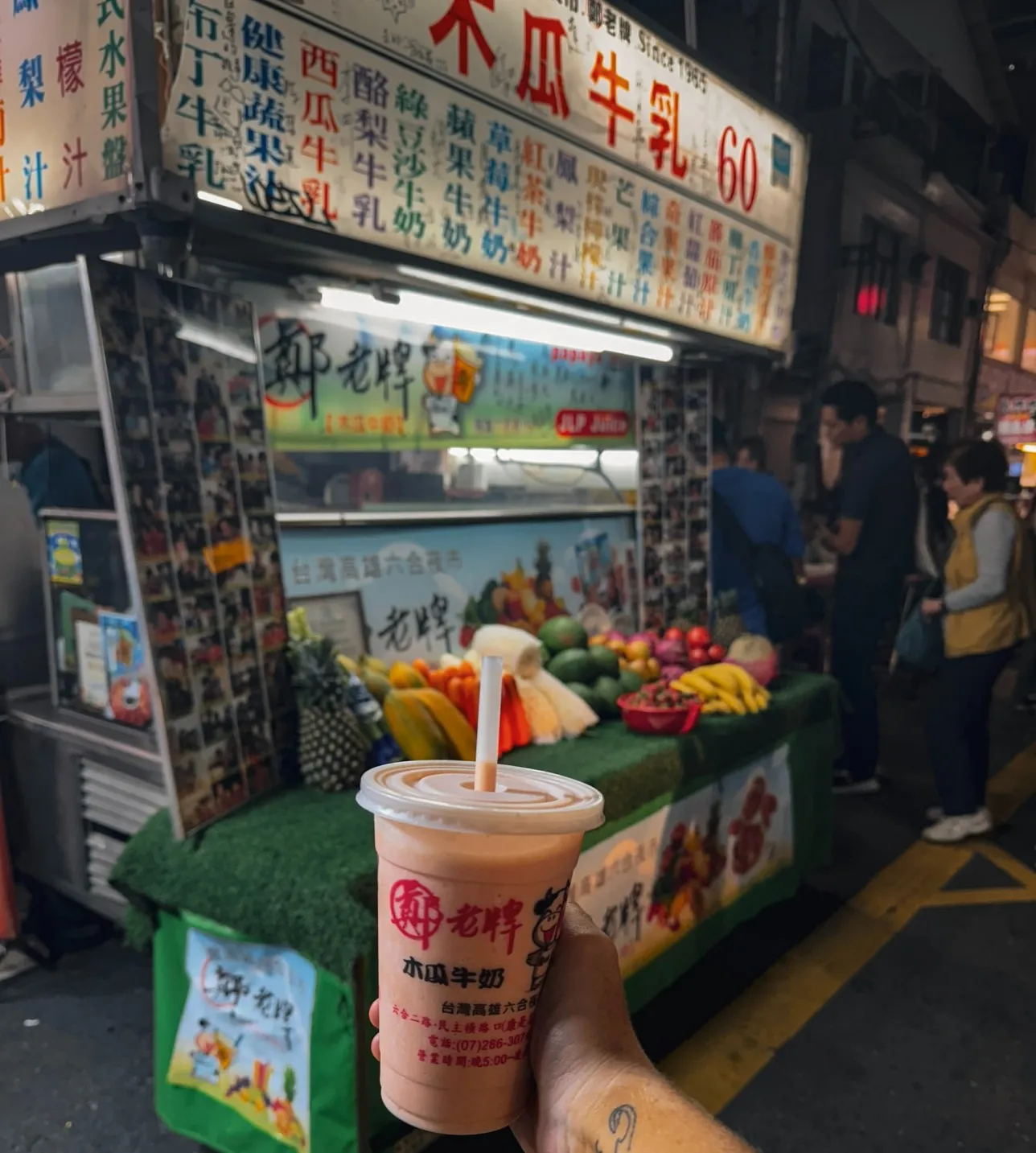
Wash any of the above down with a Taiwan Beer Gold Medal, an iced papaya milk from a streetside juice stall, or a cup of Sun Moon Lake black tea grown a few hours north of the city. Bubble tea was invented in Taichung, not Kaohsiung, but the southern version with proper hand-shaken tea and chewy tapioca is hard to beat anywhere on earth.
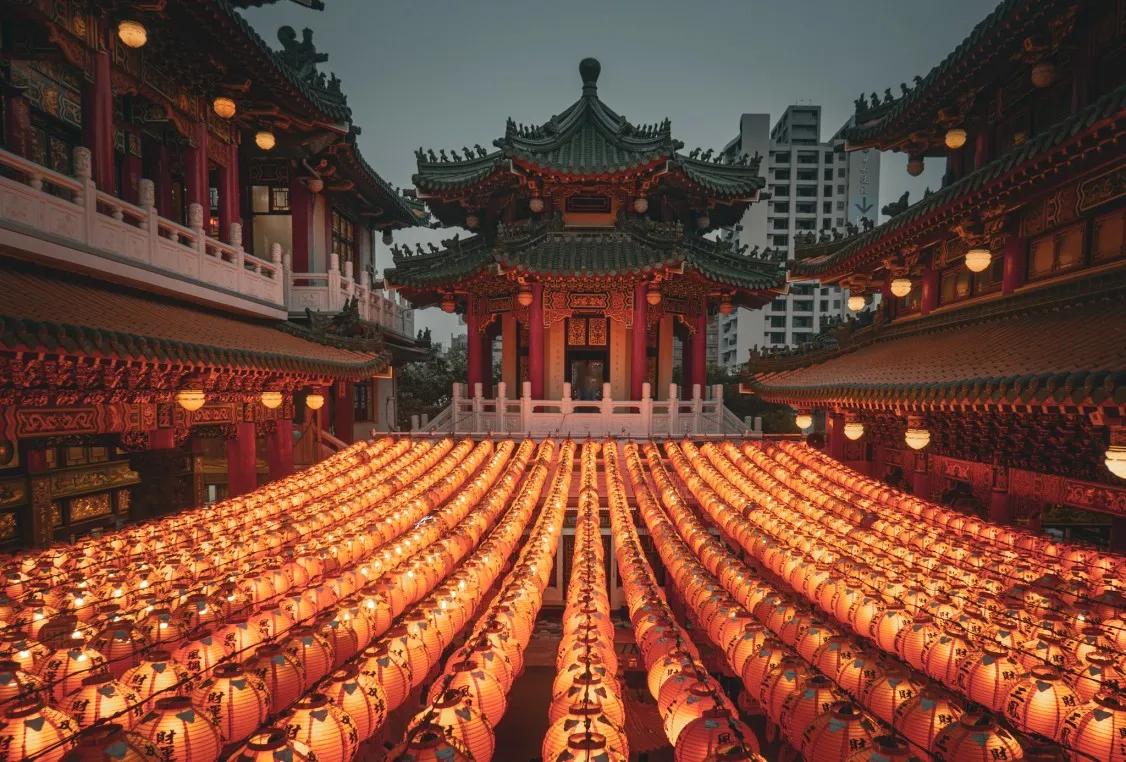
Sanfong Temple Kaohsiung
Where To Stay In Kaohsiung
Whatever else you do, stay within a five-minute walk of an MRT or LRT station. Kaohsiung is more spread out than Taipei and the difference between staying near a station and not is the difference between a good trip and a long one.
For a first trip, stay in Yancheng. It’s the answer most people get to after a few nights somewhere else and wish they’d started here. The neighbourhood sits between the Love River and the harbour, walkable to Pier-2 Art Center, the Music Center and the Cijin ferry terminal, packed with old breakfast shops, and Michelin-recommended noodle places. It’s on the orange line of the MRT at Yanchengpu Station, with the light rail running through it as well, and you can be in any other part of the city in twenty minutes. Hotel Yam Lagom and Fullon Hotel Kaohsiung are the obvious mid-range picks. City Suites Chenai has the harbour-view rooms looking across at the Music Center, which is genuinely spectacular at night.
The next best option is the area around Central Park and Formosa Boulevard MRT, where the city’s two lines cross and the Dome of Light sits in the station ceiling. You’re in the middle of everything here: ten minutes walk to Liuhe Night Market, twenty minutes to Pier-2, a short hop south to the malls and skyscrapers of Sanduo. Hotel Indigo Kaohsiung Central Park is the design-hotel pick of the neighbourhood. There are also a dozen reliable three-stars in the immediate area at sensible prices. This is the right call if you’re staying four nights or more and want to feel central without the converted-warehouse coolness of Yancheng.
Near Kaohsiung Main Station is where the budget hotels and hostels cluster. The station itself is a stop on the red line, one north of Formosa Boulevard, and the area between them holds the highest concentration of cheap rooms in the city. You can find a clean private double for NT$1,000 to NT$1,500 if you book ahead, and Liuhe Night Market is a fifteen-minute walk south. The trade-off is that the surrounding streets are a bit faded compared to Yancheng, with more pawn shops than coffee shops.
Downtown around 85 Sky Tower and Sanduo Shopping District is where the luxury hotels and the malls live. The InterContinental, the Kaohsiung Marriott on the Love River, THE AMNIS Luxury Collection and Hotel Nikko are all in or close to this corridor. The neighbourhood is glassy and modern and good if you’re here for the shopping and the harbour views, less good if you want street life on your doorstep. The red line takes you to the airport in about thirty minutes from Sanduo Shopping District Station, which is useful for early departures.
One area to avoid is Zuoying near the HSR station, unless you’re only in Kaohsiung for one night. It’s convenient for the train and for Lotus Pond, but it’s a thirty-minute MRT ride from anywhere you actually want to be after dark.
The MRT will be the main way that you get around Kaohsiung. There are two lines, Red and Orange, crossing at Formosa Boulevard station downtown. Trains every four to six minutes, clean, signed in English, and almost insultingly cheap by Western standards: most rides between NT$20 and NT$40, with a day pass around NT$150 if you’ll be hopping on and off. The red line runs north to south and connects Zuoying HSR Station, Kaohsiung Main Station, Central Park, Sanduo Shopping District and Kaohsiung International Airport. The orange line runs east to west through Yancheng. Between them they cover most of what you’ll want to do.
Filling in the gaps is the Light Rail Circular Line, an above ground tram that loops around the harbour and the Love River through Pier-2, the Music Center and the new bay area. It’s slower than the MRT and twice as scenic. The same EasyCard works on it and rides are NT$30. A full loop takes about an hour and is worth doing once just for the view.
The Cijin ferry from Gushan Ferry Pier is also public transport network in everything but name. Tap your EasyCard at the gate, board with your scooter, car or just on foot, and you’re across the harbour in five minutes for around NT$40. The ferry runs every 10 -20 minutes from 5:00 AM to 2:00 AM.
YouBike is the public bike share, with stations every few hundred metres in the city centre and along the harbour. The catch is that if you don’t have a Taiwanese phone number then you must register for single use and pay a deposit of about NT$3,000. It takes up to 2 weeks for this deposit to be refunded to your account. Pier-2 to the Love River to Cijin, and Lotus pond are both pleasant cycles.
City buses are another option but the MRT will get you there much faster . The one bus everyone ends up using is the shuttle from Zuoying HSR Station to Fo Guang Shan, the E02, which also accepts EasyCard.
Best Things To Do In Kaohsiung
Dragon & Tiger Pagodas · Lotus Pond, Zuoying
01Don’t miss
Walk through the Dragon and Tiger Pagodas
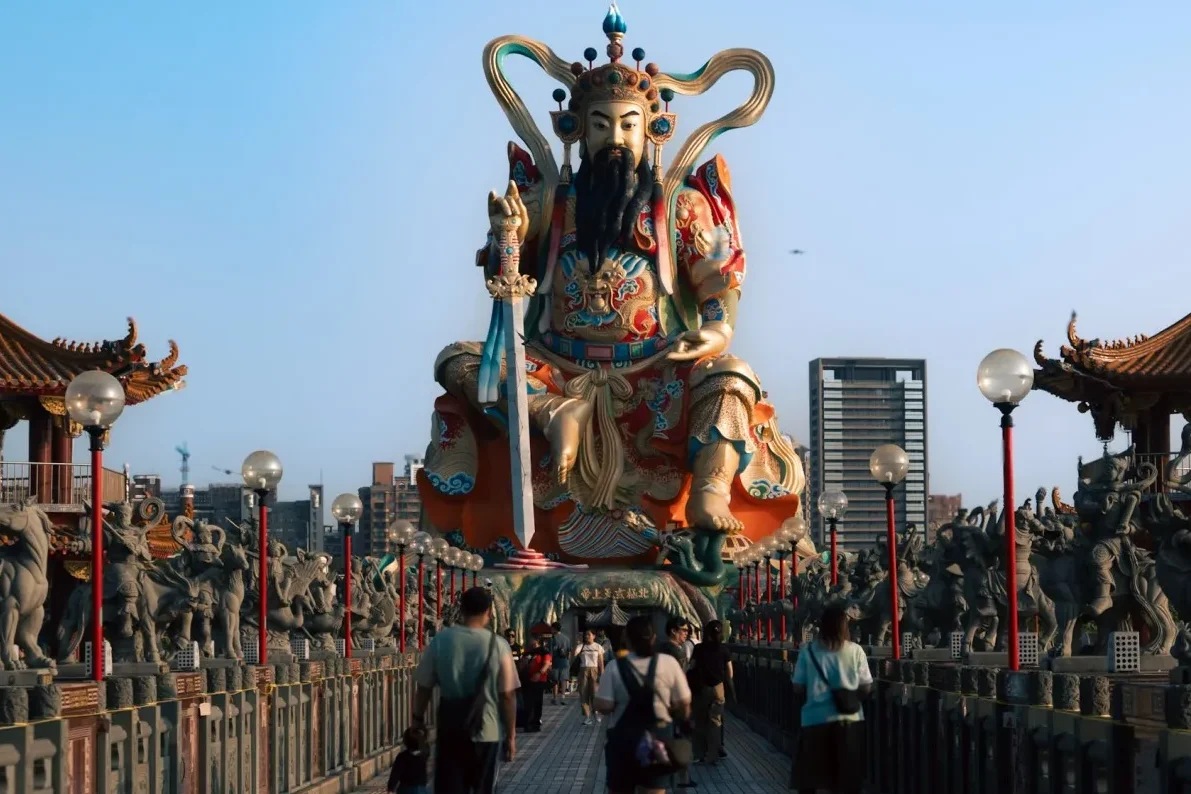
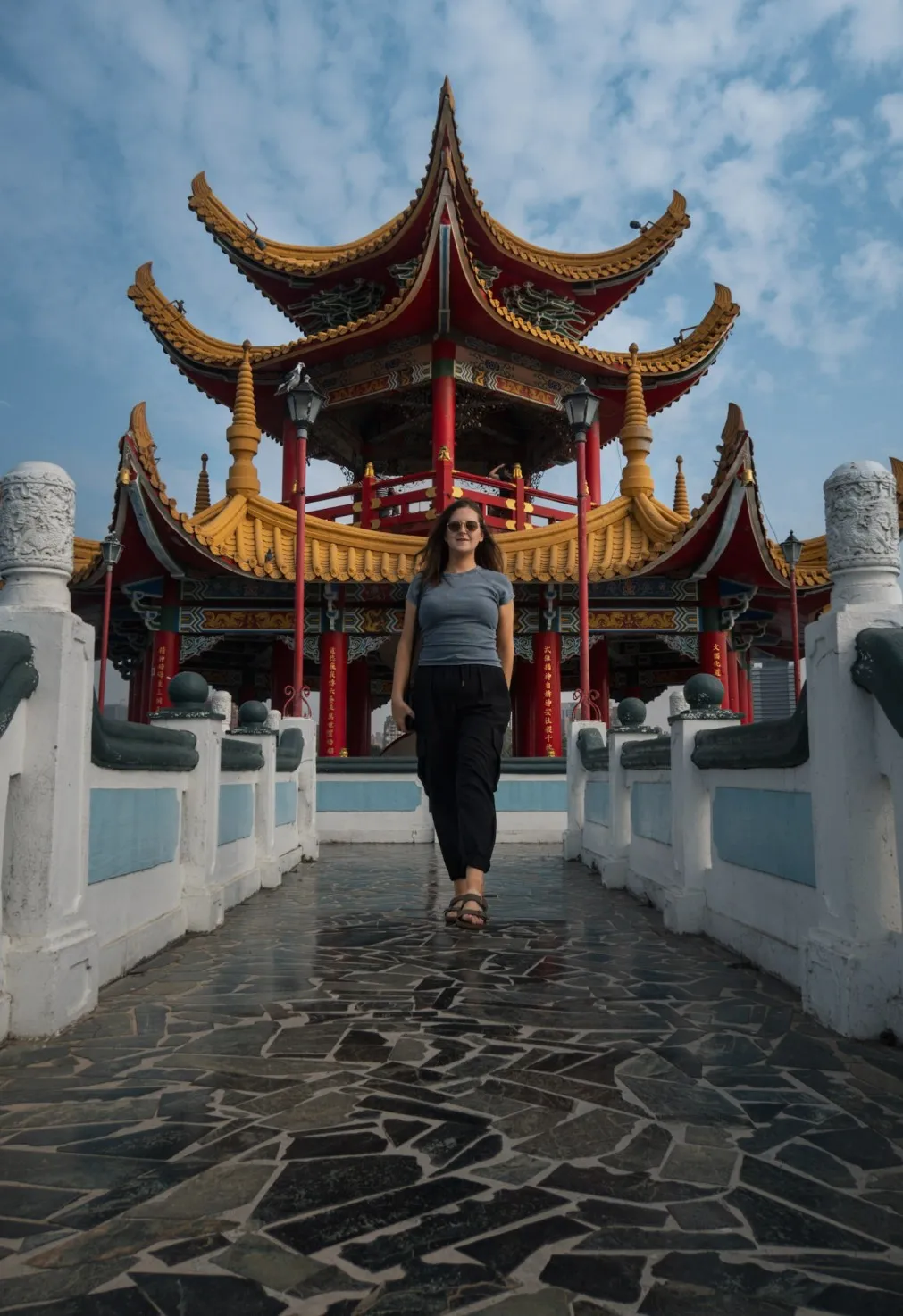
The defining image of Kaohsiung: two seven-storey yellow pagodas standing knee-deep in the green water of Lotus Pond, one fronted by a giant dragon and the other by a tiger, both with their mouths wide open. Tradition says you enter through the dragon’s mouth and exit through the tiger’s, turning bad luck into good as you walk the zigzag bridge between them. Reopened fully in 2025 after several years of restoration, and you can climb the pagodas again for the view across the pond. Free, open from morning until around dusk, ten minutes by taxi from Zuoying HSR. While you’re there, walk on around the pond to the Spring and Autumn Pavilions and the soaring Xuantian Shangdi statue, then the Confucius Temple at the north end. Go in the late afternoon for the photo, stay for sunset.
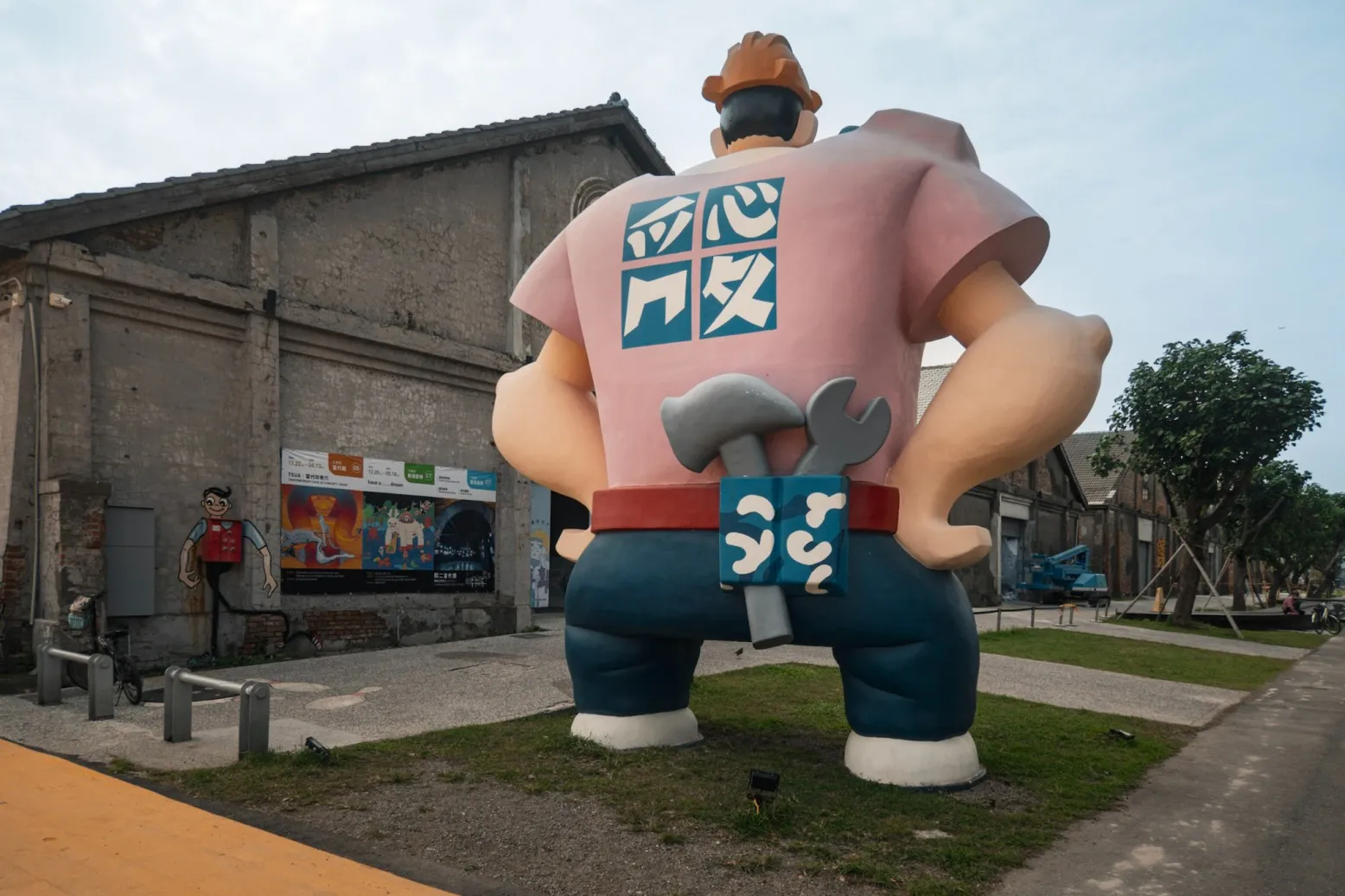
Twenty-five old port warehouses that used to pack sugar and dried fish for export, abandoned for decades and then handed over to artists in the early 2000s. The result is one of the most successful regeneration projects in Asia: galleries, indie boutiques, design studios, a branch of Eslite bookshop, weekend flea markets, the Kaohsiung Music Center next door and dozens of outdoor sculptures scattered along the water. The light rail runs right through it, the bike paths connect onward to the Love River and the Cijin ferry terminal, and there’s a giant Robot Land for kids and a craft beer place called Takao for adults. Free to walk through, individual exhibitions are usually NT$100 to NT$200. Go in the afternoon and stay for the sunset across the harbour from the boardwalk; it’s the best free view in the city.
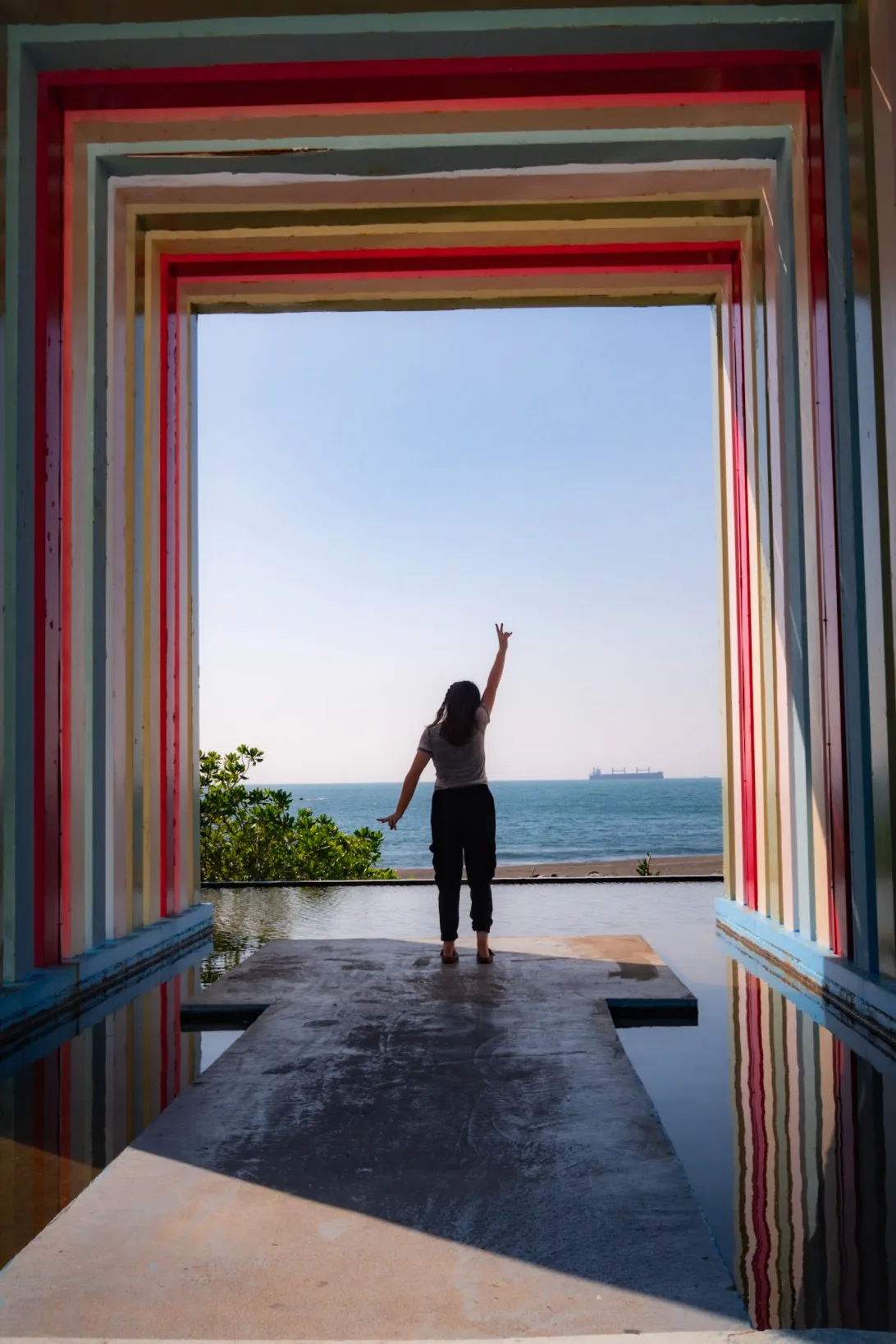
The five-minute harbour crossing locals do without thinking and visitors talk about for years. Tap your EasyCard at Gushan Ferry Pier in Yancheng, pay around NT$30, and the old green-and-white ferry trundles you over the busiest container port in Taiwan to Cijin Island, a thin three-kilometre sandbar with a beach, an old lighthouse and a 17th-century fort on the hill above it. Rent a bike at the terminal, ride the length of the island in twenty minutes, eat grilled squid and swordfish balls on Cijin Old Street, and stop at the photogenic Rainbow Church sculpture near the beach. Time it so you’re at the lighthouse for sunset over the Taiwan Strait, then catch the last ferries back. The most distinctly Kaohsiung thing you’ll do all trip.
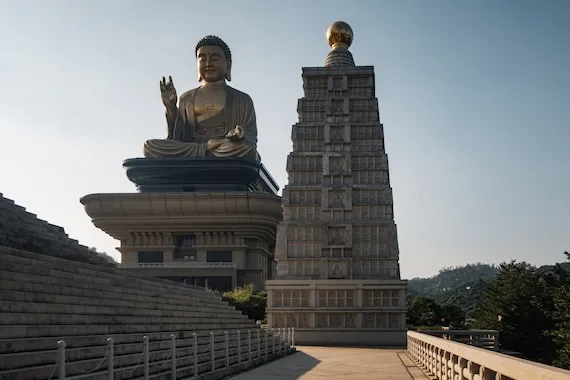
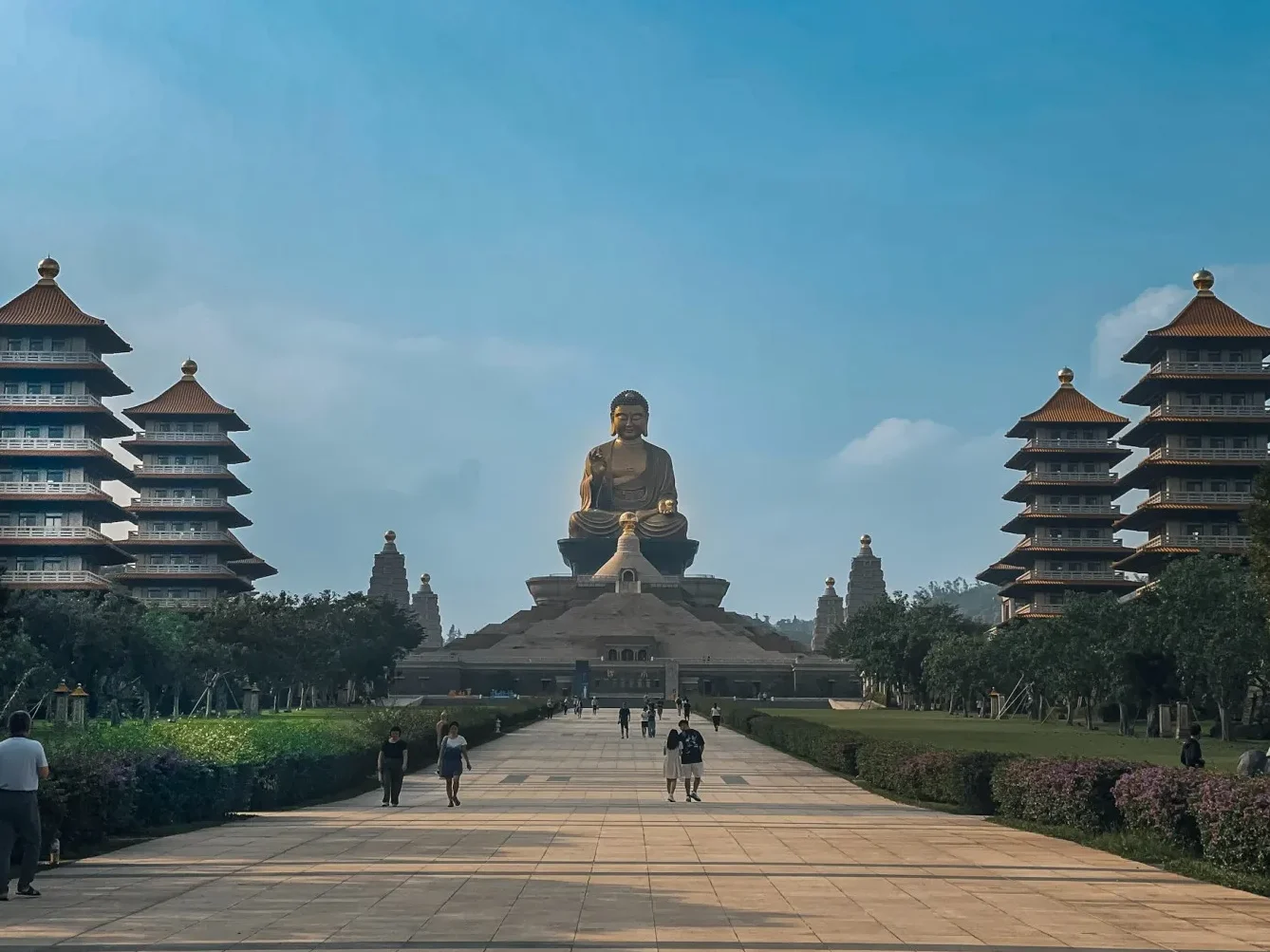
Forty minutes out of the city by shuttle bus from Zuoying HSR is the largest Buddhist monastery in Taiwan and one of the most ambitious religious complexes built anywhere in the last century. The headline figure is a 108-metre seated bronze Buddha, the tallest of its kind in Asia, sitting on a plinth at the end of a kilometre-long ceremonial avenue flanked by eight pagodas. The complex includes a serious museum of Buddhist art, a relic hall said to hold a tooth of the historical Buddha, free vegetarian meals at the canteen and a famous Hi Lai vegetarian restaurant inside the visitor center. There is also, improbably, a Starbucks selling a Fo Guang Shan-exclusive mug. Free entry, closed Tuesdays, give it at least half a day. The shuttle bus accepts EasyCard.
A 380-metre strip of food stalls running between Zhongshan Road and Ziqiang Road, two minutes from Formosa Boulevard MRT (where you’ll also walk under the Dome of Light on the way, the world’s largest single glass artwork at 30 metres across the underground station ceiling). Liuhe is the tourist-friendly market and proud of it: easy to walk end to end, well lit, signs in English and Japanese, and a wider range of seafood than any Taipei night market thanks to the harbour. Hit the papaya milk stalls, the grilled squid and the swordfish ball soup; try the famous steak on a hot iron plate with a fried egg at one of the corner stalls; finish with shaved ice. If you want the version locals send each other to, take the MRT north to Ruifeng Night Market in Zuoying instead. Open 5pm to midnight, busiest after 8.
 First time visiting Taiwan? Read my Taiwan travel guide for all the essential information you need to plan your trip.