Kyoto is non-negotiable on a Japan itinerary. You’re going, everyone goes. The city has over 2,000 temples and shrines, some dating back to 603 AD, and it was Japan’s capital for over 1,000 years. But don’t be mistaken, Kyoto isn’t this preserved ancient city frozen in time. It’s a modern city with pockets of history scattered throughout.
Before visiting, I expected every street to look like a postcard with wooden buildings and temples on every corner. That’s not reality. To my surprise, much of Kyoto looks like any other Japanese city with modern buildings, traffic and the beloved convenience stores. The historic bits exist, but you need to know where to find them, choosing where to stay in Kyoto impacts your entire experience.
We’ve spent months in Japan and visited Kyoto multiple times. We’ve stayed in different neighborhoods, tested transport connections and figured out which are the best places to stay in Kyoto for tourists versus which ones just sound good on paper. This guide breaks down the 6 main areas, who they’re actually good for, and cuts through the “stay anywhere, Kyoto is magical” advice that doesn’t help anyone make a real decision.
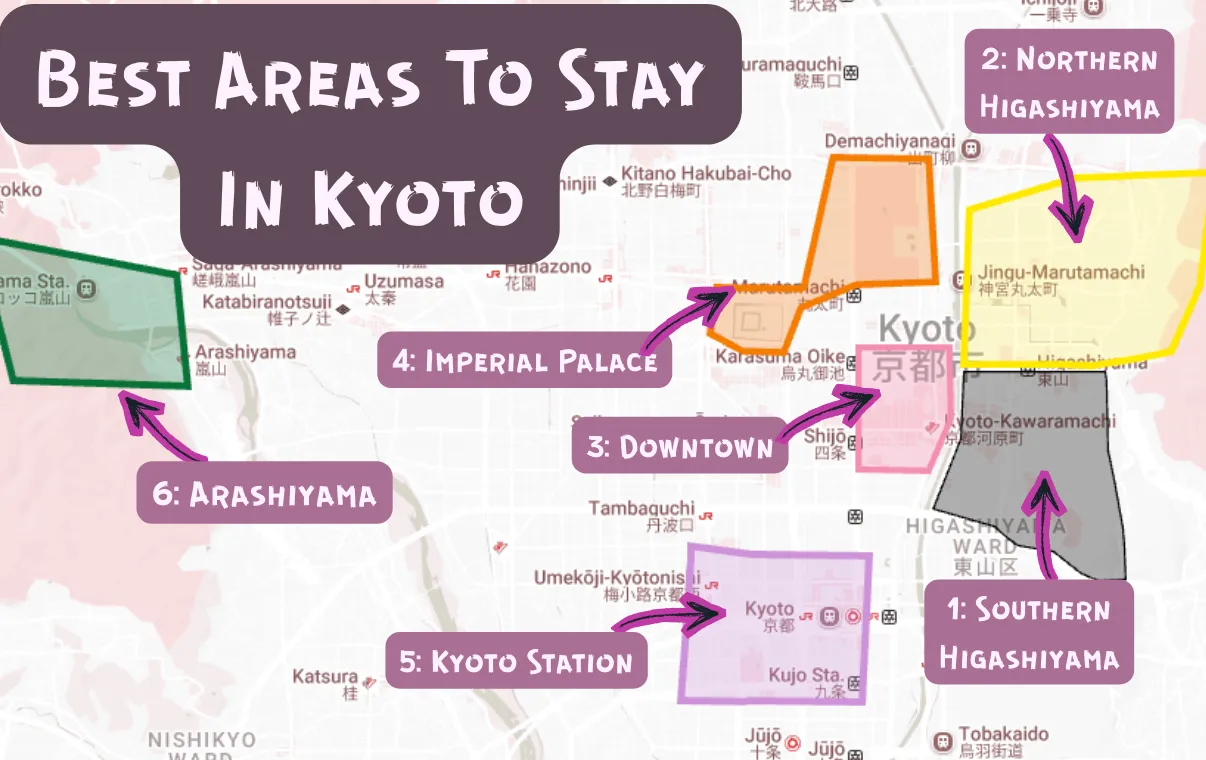
Deciding where to stay in Kyoto comes down to what you want from the city. For most first-time visitors, the best area to stay in Kyoto is Southern Higashiyama, the famous temples, Gion and traditional streets are all within walking distance. If your priority is transport, food and nightlife, Downtown is the best location, while budget travellers get the best value around Kyoto Station or the quieter Imperial Palace neighborhood. For nature and a romantic base, Arashiyama wins, though it’s best kept to one or two nights. Below I break down all six neighborhoods so you can pick the right one.
Where to stay in Kyoto at a glance
| Area | Vibe | Price | Transport | My hotel pick |
|---|---|---|---|---|
| Southern Higashiyama | Iconic, historic, busy | $$$ | Keihan / Tozai | Hotel Seiryu Kyoto Kiyomizu |
| Northern Higashiyama | Peaceful, leafy, temples | $$$ | Tozai + bus | Ryokan KANADE |
| Downtown Kyoto | Modern, food, nightlife | $$$ | Karasuma / Tozai | Hotel Okura Kyoto |
| Imperial Palace Area | Quiet, residential, local | $$$ | Karasuma | Kyoto Brighton Hotel |
| Kyoto Station Area | Transit hub, functional | $$$ | JR / Shinkansen | Kyoto Tower Hotel |
| Arashiyama | Nature, bamboo, scenic | $$$ | JR Sagano / Hankyu | Ryokan Togetsutei |
Prices are a rough guide to nightly hotel rates: $ budget, $$ mid-range, $$$ higher-end.
 Read my Kyoto travel guide here.

Some links in this post are affiliate links, meaning I may earn a commission at no extra cost to you if you make a purchase
 Don’t forget travel insurance. Healthcare is super expensive in Japan.
I use True Traveller (only for EU/UK citizens). But World Nomads is also an excellent choice for anyone outside the EU/UK.
Planning a wider Japan trip? Check out my Japan travel guide here.
How Expensive is Kyoto?
Hotel rates vary greatly depending on the season you travel. Spring and Autumn see the highest hotel prices, this is Japan’s peak season. Additionally, Golden Week is a major 1 week holiday with 4 consecutive bank holidays when locals travel domestically.
Early December is the cheapest month to visit Kyoto, with hotel prices seeing up to an 80% drop, but prices spike around Christmas and New Years. Kyoto summers (July-August) are brutally hot and humid, with temperatures regularly hitting 35°C (95°F). If visiting in summer, prioritize areas with better subway access like Downtown or Kyoto Station so you can minimize walking.
Along with seasons, the days you visit impact prices. If you can, I recommend booking your Kyoto trip for weekdays, hotels in Kyoto on weekends are 20-30% higher.
Expect to pay $100-200 per night mid-range hotels, $200+ for luxury. Budget hostels average around $60 per night.

Top Tip: If you are finding Kyoto is above your budget, Osaka is just a 1 hour train ride away.
Kyoto is expensive but my 23 top hacks for saving money in Japan can help you
Should You Stay In A Ryokan?
A Ryokan is a traditional Japanese guesthouse, they are all over Japan, not just in Kyoto. A ryokan in Kyoto offers tatami mats, kaiseki meals and often onsen baths.
Along with sleeping arrangements, breakfast and dinner is normally included, with delicious Japanese kaiseki meals served to your room. This was my favorite thing about staying in a ryokan, it’s so special. Kaiseki is a multi-course Japanese meal with anything from 6-15 dishes. A kaiseki meal typically involves dishes that are in season, with appetizers, followed by soup, sashimi, a seasonal dish, grilled fish, steamed dish, rice dish and dessert such as wagashi.
Many ryokans also have serene gardens and onsen baths, which really helps you get your zen on.
Here’s something to consider: ryokans include expensive kaiseki meals, which is great, but are you really going to eat both breakfast and dinner at your accommodation when you’re out exploring all day? For most people, that’s wasted money.
Rather than multiple nights, I recommend spending 1-2 nights at a ryokan during your Japan trip. It is an unforgettable and authentic experience. I wouldn’t recommend staying at a ryokan for your whole trip as the floor bedding can take some time to get used to.
Ryokans typically cost $200-500+ per night with meals included.

Kyo no Yado Sangen Ninenzaka is located in the historic Ninenzaka district. It offers a rooftop onsen which has nice views of the city including Hokan-ji temple.
Best hotels in Kyoto by budget
| Hotel type | Best hotel in Kyoto | From / night |
|---|---|---|
| Luxury hotel | Hotel Seiryu Kyoto Kiyomizu Southern Higashiyama | $636 |
| Ryokan experience | Ryokan Togetsutei Arashiyama | $450 |
| Mid-range hotel | Hotel Okura Kyoto Downtown Kyoto | $140 |
| Budget hotel | Rinn Miyagawacho Southern Higashiyama | $52 |
Still deciding or want full details? Read the complete breakdown of each area below, including transport, restaurants, and hotel recommendations.
Deciding where to stay in Kyoto first time can feel overwhelming due to the city’s size and layout, but choosing the right area will save you hours of travel time and help you experience Kyoto at its best.
Check out my realistic 1 Day In Kyoto itinerary.
What’s the best location to stay in Kyoto?
Map Of Where To Stay Kyoto
Note on Higashiyama: Southern and Northern Higashiyama sit right next to each other on Kyoto’s east side – think of them as the same neighborhood split into a busier southern half (Gion, Kiyomizu-dera) and quieter northern half (Philosopher’s Path). You can walk between them in 20-25 minutes.
Read my review of the best restaurant in Kyoto: Kichi Kichi.
1. Southern Higashiyama
Best place to stay in Kyoto for: iconic attractions, first-timers, Geisha spotting, romantic break
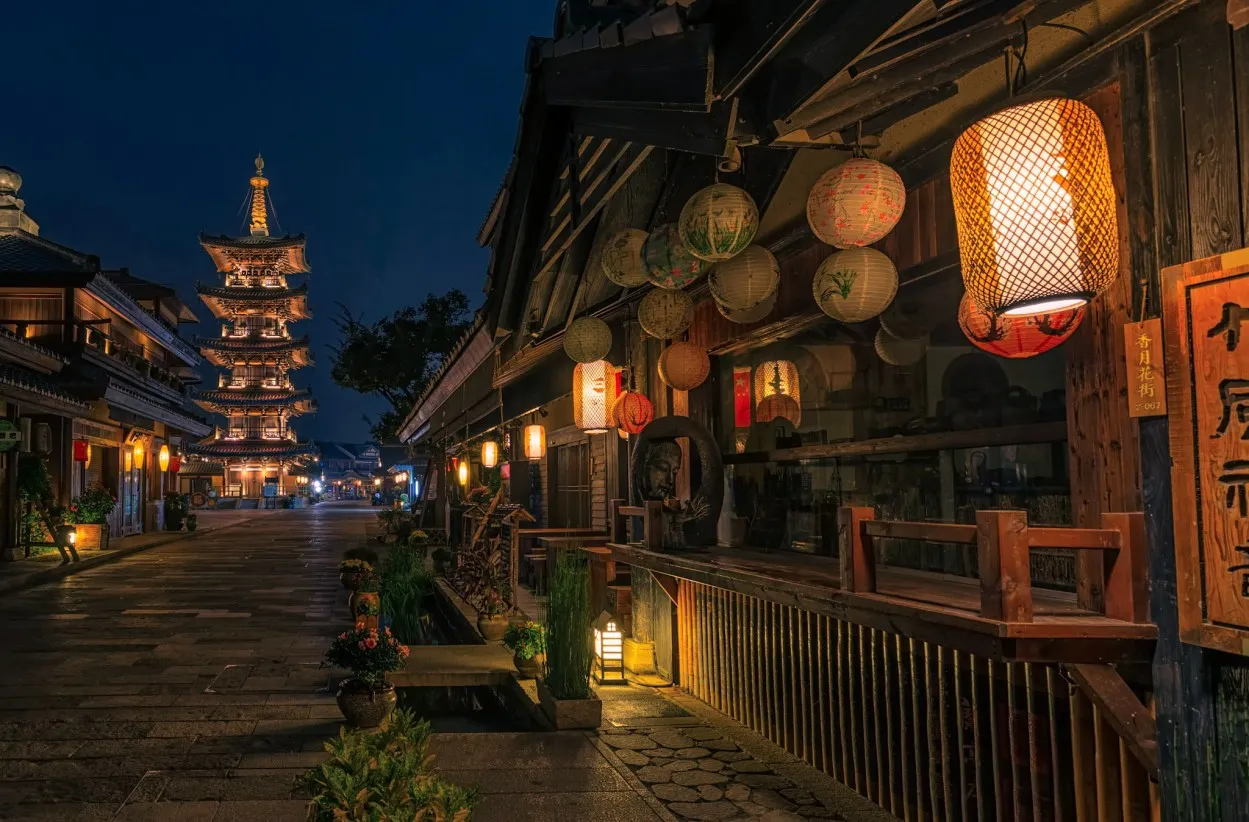
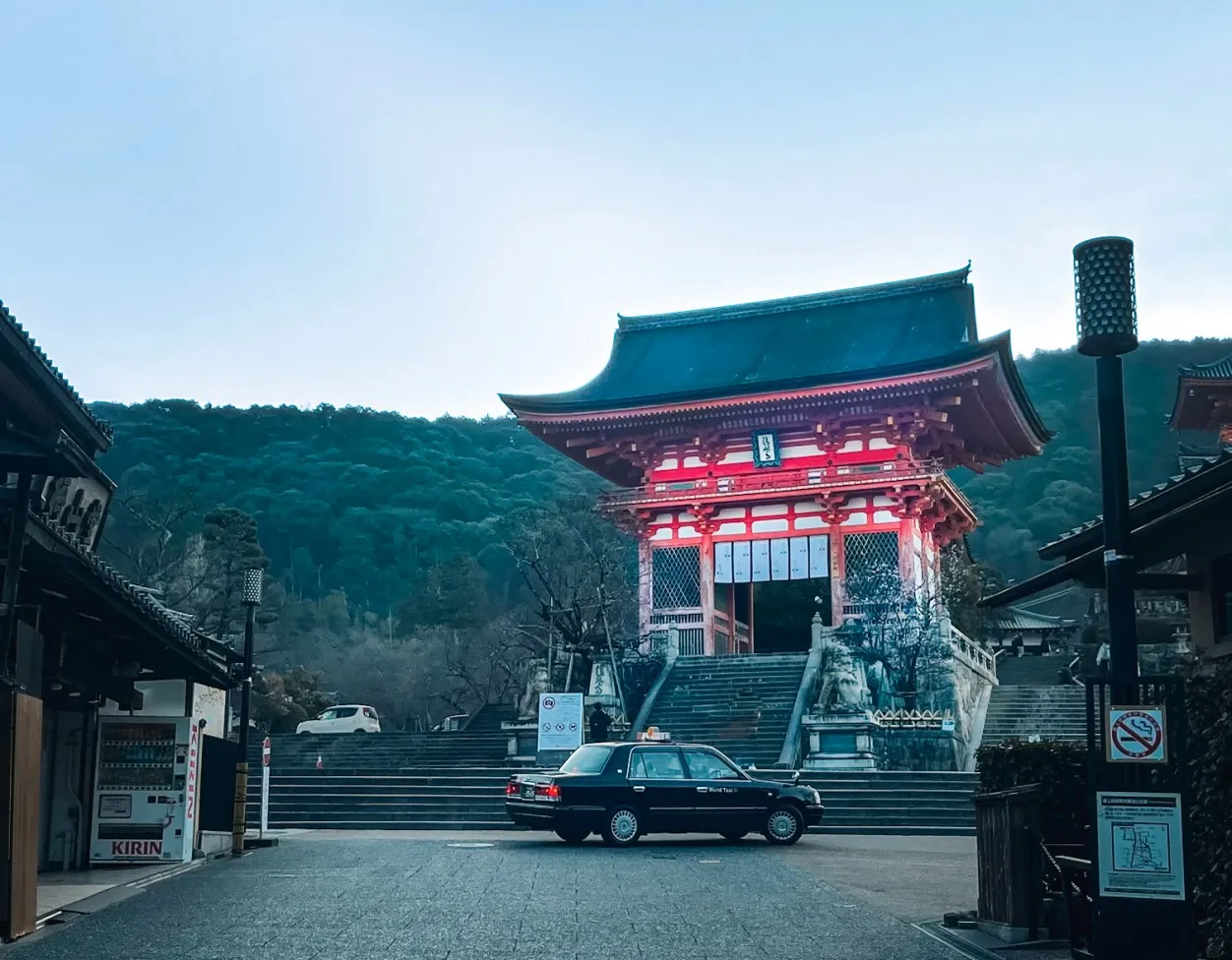
Southern Higashiyama is everything you think Kyoto is going to be. Quintessential historical Japan with Kiyomizu-dera Temple, Gion Geisha district, traditional wooden houses, Ninenzaka shopping streets, all here within walking distance. Effectively, the Kyoto that guidebooks show you.
For first timers to Kyoto you can’t get much better than this. In the heart of all the action you can see Geishas on their way to work, centuries old temples, streets lined with traditional wooden buildings and plenty of the Insta-famous haunts like Kumonocha Cafe (cloud pastries) and Maccha House (matcha desserts).
At night it becomes even more special, crowds disperse at around 8 PM and the atmospheric alleys are gently lit with Hokan-ji Temple illuminated in the distance. It makes for a romantic stroll.
The luxury hotels in Kyoto concentrate in Southern Higashiyama, with Hotel Seiryu as the top pick due to its beautiful location overlooking Kiyomizu-dera Temple.
Cons Of Staying in Southern Higashiyama
This is the most expensive place to stay in Kyoto. Expect to spend an average of $300 per night for your stay here. You are paying a heavy location tax here.
This is the busiest area of Kyoto, thousands of people come here every single day. Not only do you have people who are staying here, but also day trippers and tour bus groups all congregate here. Personally, I found when we visited between 9 AM – 8 PM it was overwhelming, just a sea of people, a far cry from what we were expecting. The crowds turned every semblance of tranquility into chaos. I recommend avoiding this area between the hours of 9AM and 8 PM if crowds are tough for you. Early morning and evening is where you’ll find the best experience.
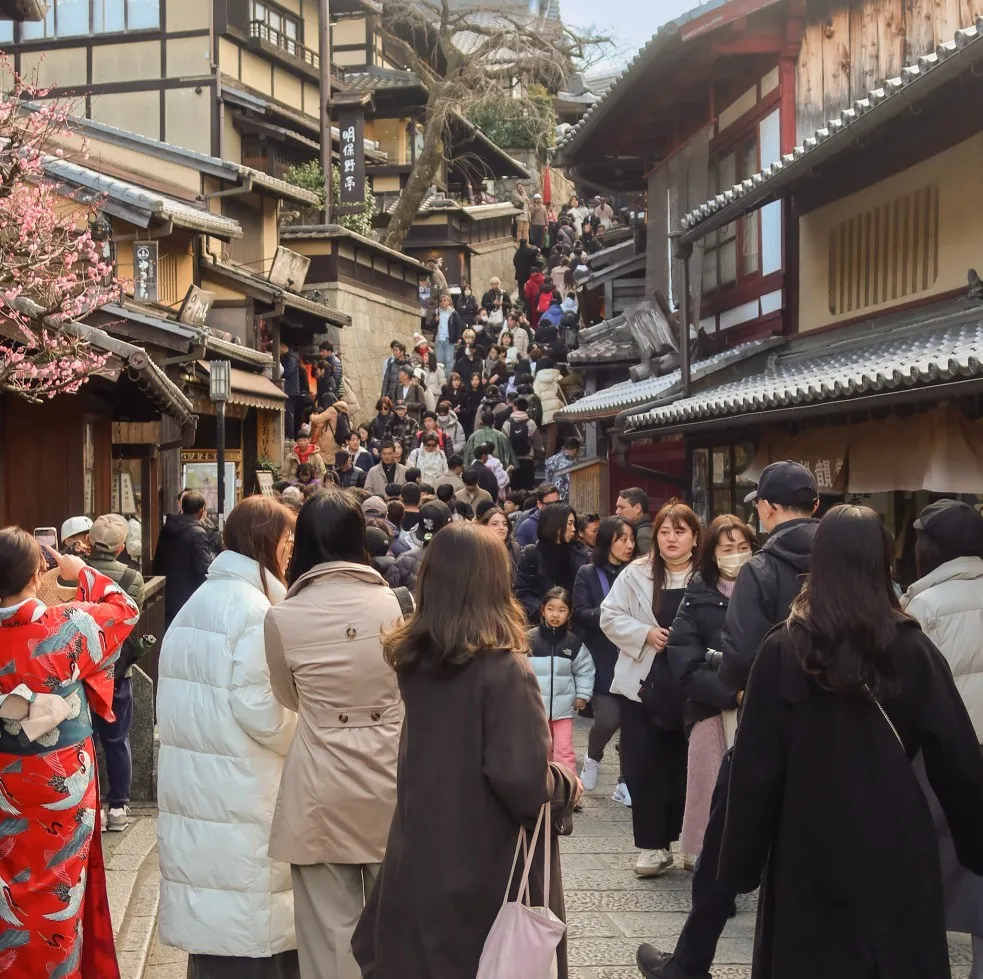
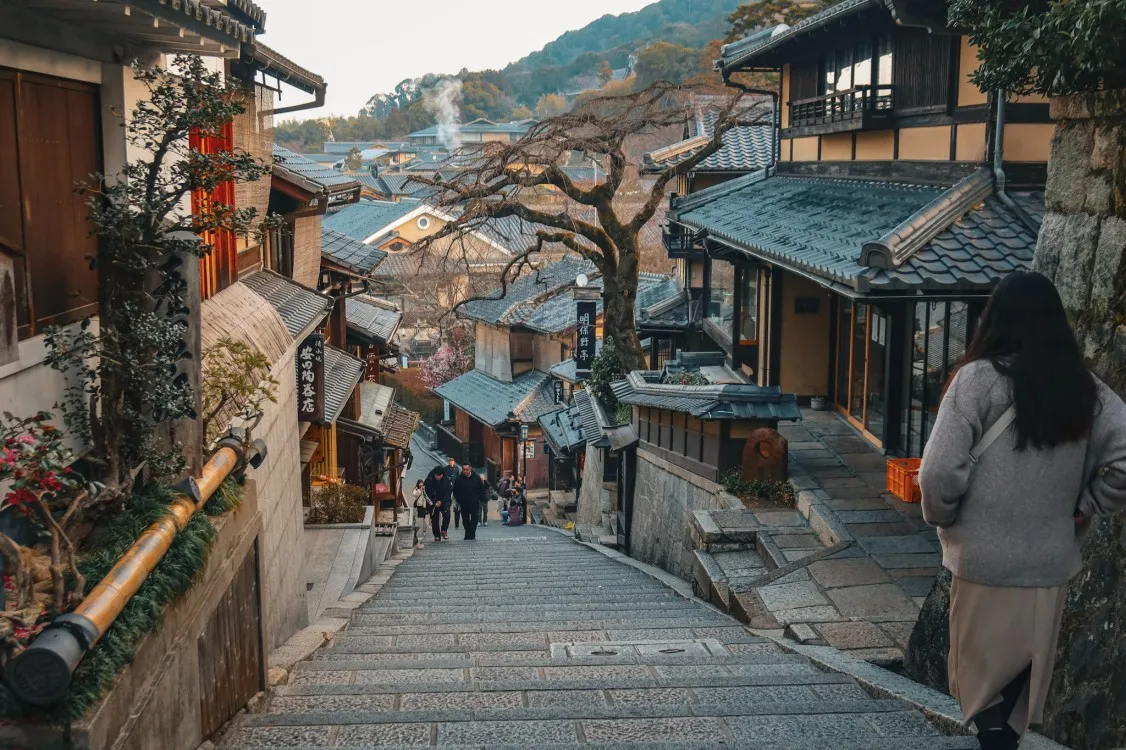
We had great success in starting our sightseeing at 6 AM everyday. I am not a morning girl, so this took a lot of inner strength, but I was delighted we did it so we could experience Kyoto at a more gentle rhythm.
Finally, although an excellent spot for sightseeing on foot, some parts of this area are hilly with steep slopes which could be a problem for anyone with accessibility needs. So please keep that in mind.
Things To Do In Southern Higashiyama
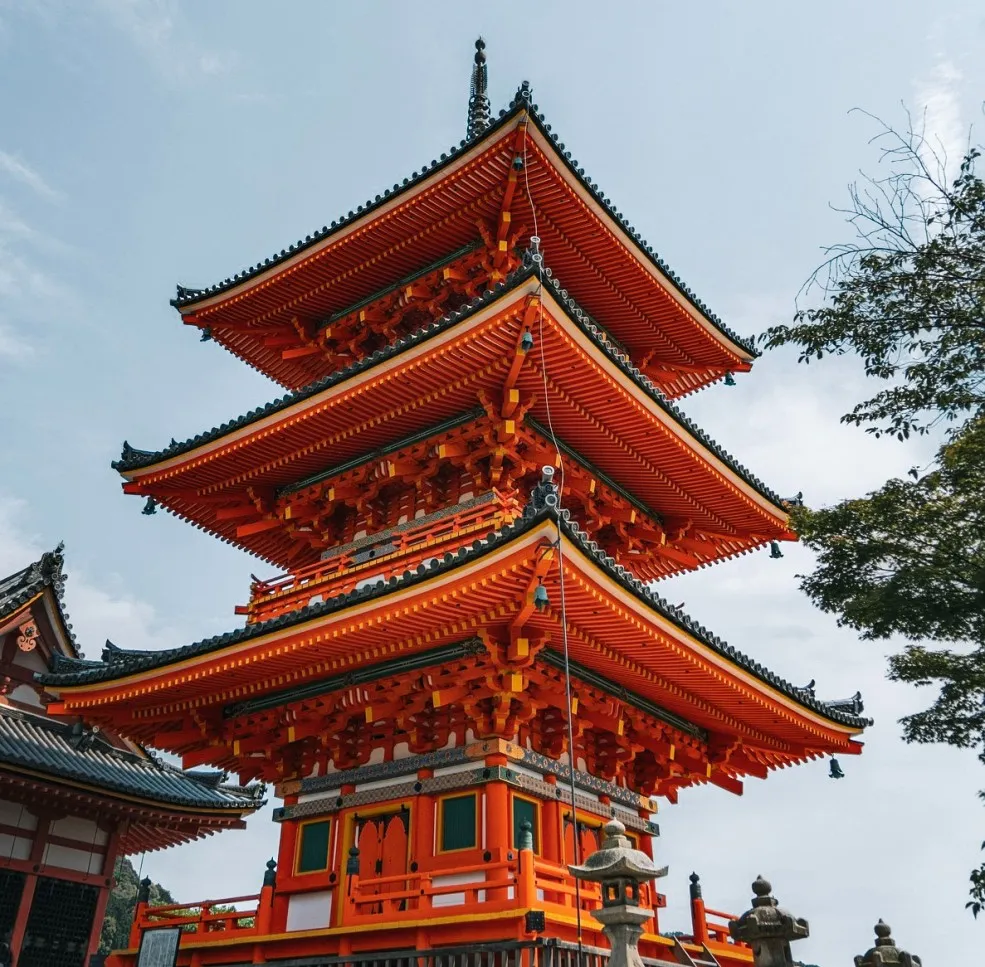
- Kiyomizu-dera: Kyoto’s most famous temple with the iconic wooden terrace jutting out 13 meters above the hillside. Gets absolutely packed during the day, so go at 6am or pay for the evening illumination sessions (spring, summer, autumn only). The views of the city are worth the crowds, but only just.
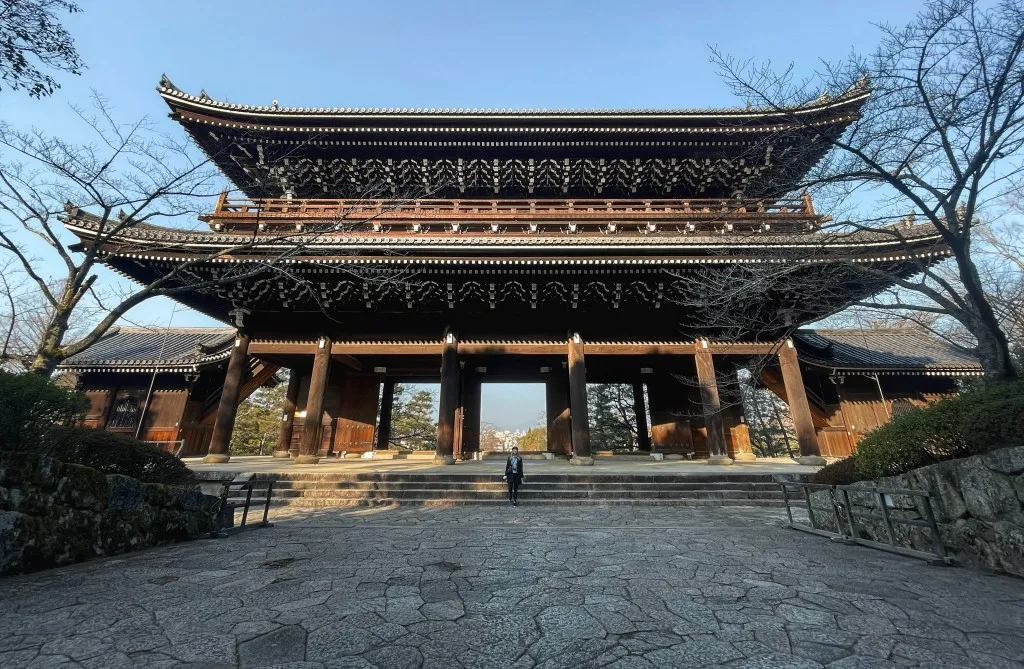
- Chionin Temple: Massive temple complex with Japan’s largest wooden gate (24 meters tall, impossible to miss). The grounds are spacious enough that you can usually find quiet corners even when it’s busy. Free entry to the grounds, but you pay to enter the main buildings.
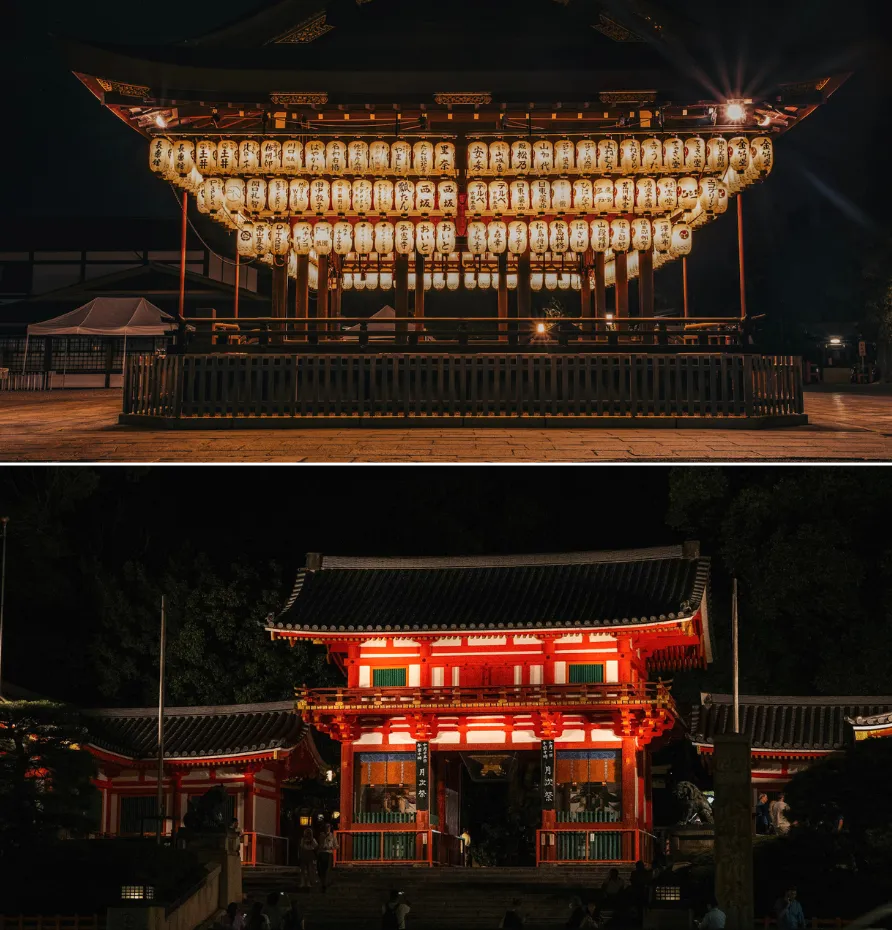
- Yasaka Shrine: Bright vermillion shrine at the edge of Maruyama Park where Gion meets Higashiyama. Always open, free to enter, and looks particularly good lit up at night. Less crowded than the temples because most tour groups skip it.
- Shōrenin Temple: Smaller temple with a stunning rock garden and evening illuminations in autumn (open until 10pm). The winding path through the buildings and garden up a small hill is genuinely peaceful. Gets overlooked by most tourists, which is exactly why you should go.
- Ninenzaka: Tourist shopping street lined with traditional wooden buildings selling souvenirs, matcha desserts, and rental kimonos. Expect crowds and inflated prices, but it’s undeniably atmospheric. The Starbucks here is in a traditional tea house, which is actually pretty cool.
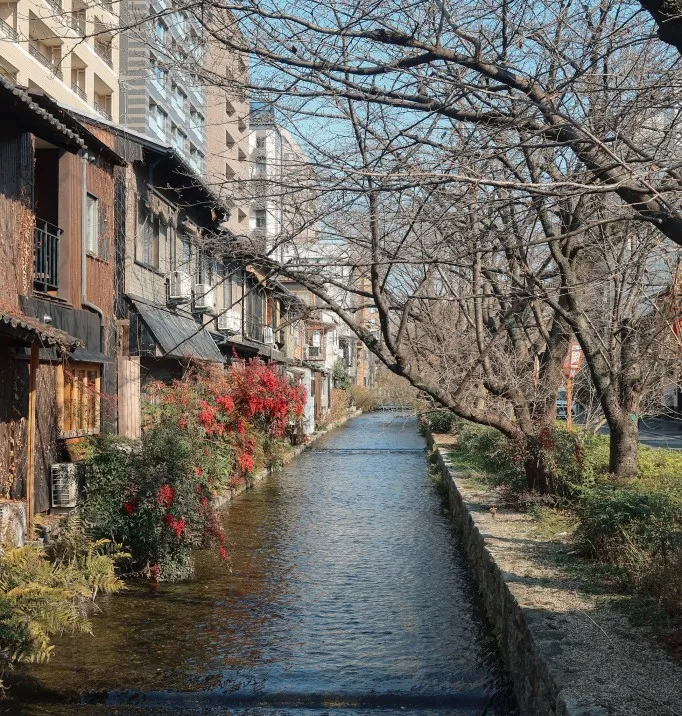
- Shirakawa Canal: Small canal in Gion lined with willow trees and traditional wooden machiya houses. Looks magical at night with the lanterns reflected in the water, as well as the Cherry Blossom season. Much quieter than the main Gion streets, and this is where you’re most likely to spot geishas walking to appointments.
- Higashiyama Mount Peak Park Observatory: Free viewpoint overlooking Kyoto with less crowds than Kiyomizu-dera’s terrace. You’ll need to hike uphill for about 15 minutes, but the 360-degree views are worth it. Best at sunset.
- Maruyama Park: Public park famous for its massive weeping cherry tree that gets lit up during blossom season. It’s basically a picnic spot that gets absolutely mobbed in late March/early April. Outside cherry blossom season, it’s just a nice park with a pond.
- Yasui Kompiragū Shrine: Small shrine famous for cutting bad relationships and forming good ones. You crawl through a stone with a hole in it after writing your wish on paper. Sounds gimmicky but locals actually use it, and there’s always a queue for the stone.
Top Tip: From April 2024 tourists have been banned from certain areas of Gion. This was a solution to some badly behaving tourists. Private alleys have been blocked to stop tourists harassing geishas, shouting and taking photos of them. Signs will indicate which areas are prohibited. If you don’t abide you can be fined up to $65 (¥10,000).
Getting Around
Everything is walkable here. Kiyomizu-dera to Gion is 20 min on foot via Ninenzaka/Sannenzaka shopping streets. You don’t need to bother with buses.
- To Downtown: 10-15 min walk OR 5 min subway
- To Kyoto Station: 15 min (Keihan Line direct to Shichijo, then 10-min walk)
- To Northern Higashiyama: 20-25 min walk OR 10 min by bus
- To Arashiyama: 40 min (train)
The main stations are Gion-Shijo Station (Keihan Main Line), Kiyomizu-Gojo Station (Keihan Main Line) and Higashiyama Station (Tozai subway line) along the northern edge.
Restaurants + Nightlife
The main streets of Ninenzaka and Sannenzaka are oriented towards tourists, this means higher prices and often mediocre quality. HOWEVER, Gion’s back alleys and along Shirakawa Canal have a few good spots. Aside from restaurant there are many tea houses for matcha and wagashi (Japanese sweets).
The nightlife here is more upscale than downtown Kyoto, with sophisticated bars and izakayas that stay open until midnight.
Top Tip: Restaurants typically need to be booked in advance, especially the popular / highly rated one. You can do this in person or sites like Tablelog or TableCheck, but not all restaurants will be on this. If you need to make a phone reservation then your hotel reception should do this at your request.
My Recommendations:
- ぎおん 刀 – simple dishes elevated. Specialising in yakitori and also offers three omakase courses. [$$$]
- Jisai Kyouman Gion – a 3 hour experience with a 10 meal tasting menu all of wagu. The kitchen is open so you can watch your chefs prepare the food. [$$$]
- Gion Soy Milk Ramen Uno Yokiko – this was my favorite restaurant in Kyoto. We kept returning, which I rarely do. Gluten free and vegan ramen that is bursting with flavor. I highly recommend the DanDan which is topped with gyozas and 15 types of root vegetable. [$]
- Full Hooking Kyoto Gion – cosy cocktail bar full of character that’s a little but hidden in Gion. Along with delicious cocktails like the Sakura Pearl, they have homemade umeshu (plum wine). [$$]
- RECORD BAR YAMADA – lowkey bar with a great atmosphere and even better music with djs on some nights. Try the matcha sour. [$$]
- MANDARACHA – tea room with high quality matcha and variety of teas prepared at your table. They also have a selection of desserts. [$$]
Best Hotels In Southern Higashiyama
$$$
from $636 per night
Hotel Seiryu Kyoto Kiyomizu
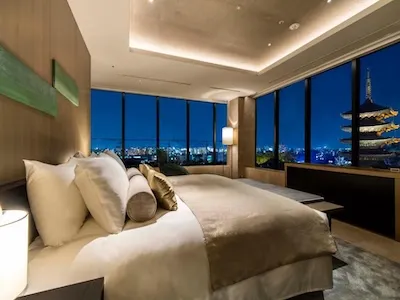
This is the best luxury hotel in Kyoto. Stay in the foothills of Kiyomizu-dera Temple with 5-star treatment. Rooms are spacious. The rooftop bar has views across Higashiyama, and there are often geisha performances.
$$
from $183 per night
Hotel Gion
Ichirin
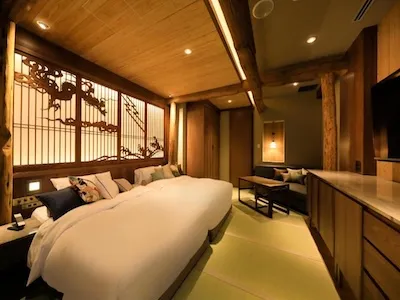
Large rooms that are elegantly designed to maximise your relaxation. Each room has seating areas, tatami floor and coffee machine. Facilities include spa facilities, a sauna, and a private open-air bath.
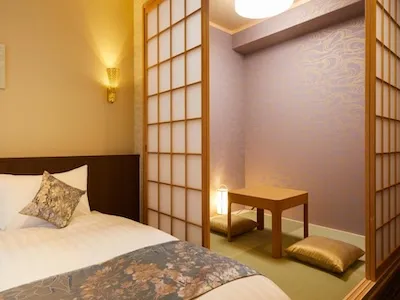
Cosy traditional style rooms with tatami floors. Excellent budget accommodation
in Gion, this quality and price match are a rare find. All rooms have a coffee machine and TV.
2. Northern Higashiyama
Best place to stay in Kyoto for: nature, temples, less touristy attractions, long stays
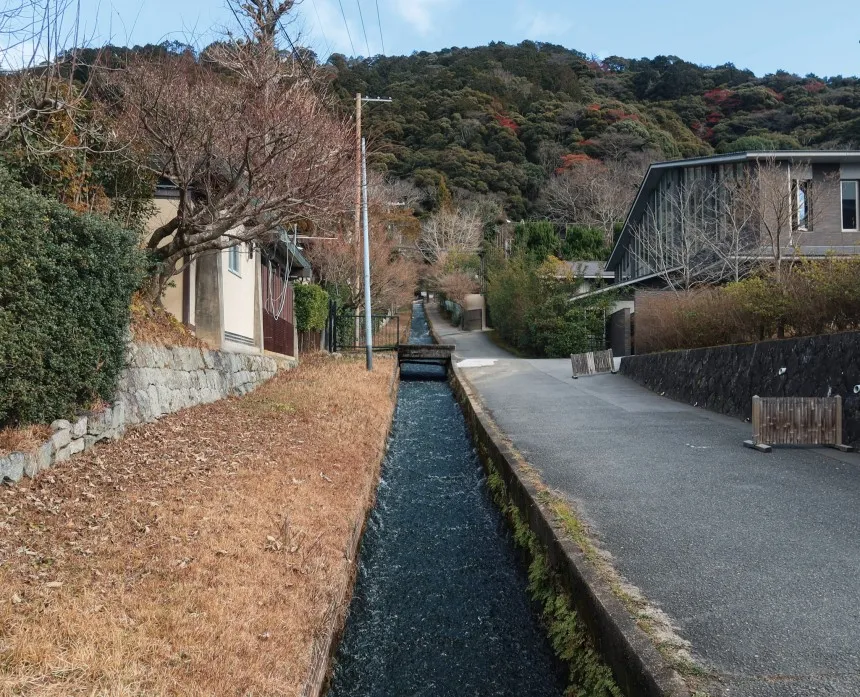
If you want the same atmospheric vibes as Southern Higashiyama but less crowds and a good dose of nature, Northern Higashiyama is a good call. You will still find historic temples here but with significantly less crowds. Yes, that means way less photobombing. It’s not that Northern Higashiyama lacks attractions, it’s just that most tourists cluster in Southern Higashiyama and Downtown, leaving this area quieter.
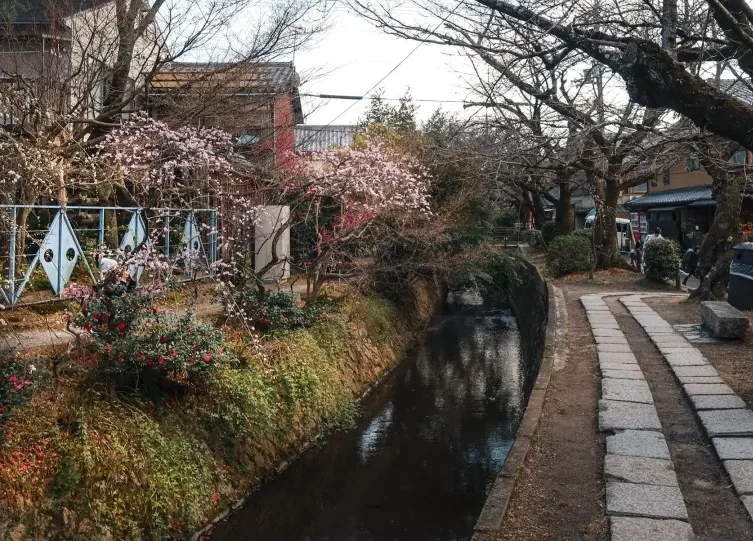
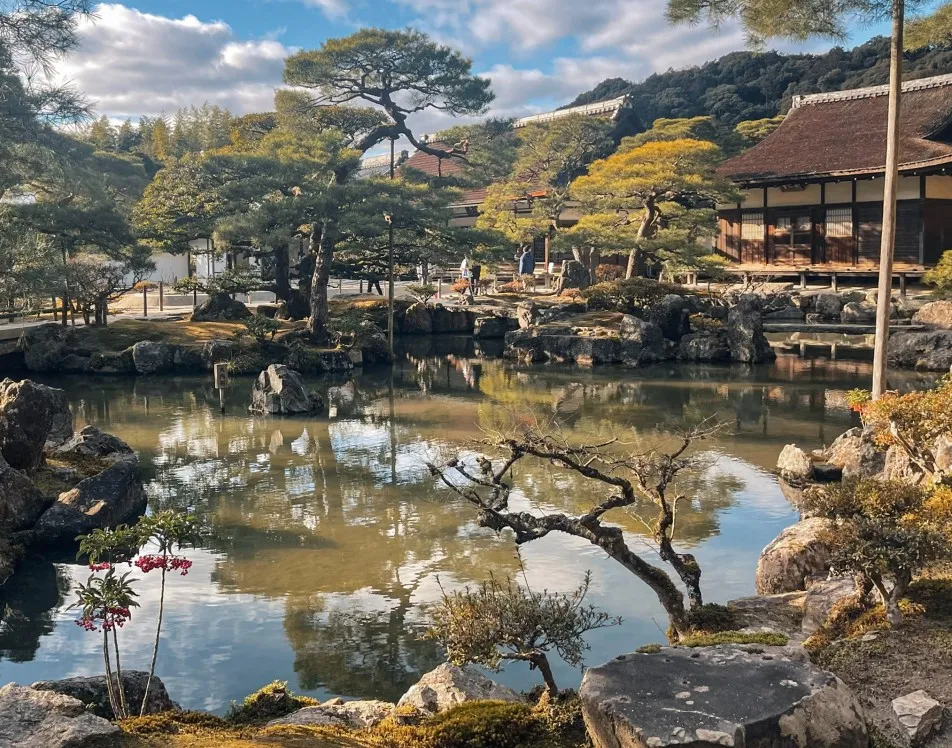
The Philosopher’s Path is a 30-minute walk which connects multiple temples through cherry blossoms in spring and red maples in autumn, this was my favorite thing we did in Kyoto, it’s genuinely beautiful and not just social media hype. There’s also the serene Ginkaku-ji garden and observatory, which aren’t heavily visited but offer a fantastic viewpoint over Kyoto.
As you’re staying where locals actually live, there is a real residential feel, not in a tourist zone. Hotels are cheaper here than Southern Higashiyama, and you’re still only a 20-minute walk from Downtown if you want restaurants and nightlife. If you’re the type who wants to visit temples in the early morning before the tour buses arrive, staying here means you can roll out of bed and be at Nanzen-ji by 6:30 AM.
Cons of staying in Northern Higashiyama
There isn’t much in terms of dining, just a few small cafes and tea houses, which are fine for lunch, but for dinner you’ll need to leave the area for more choice. Everything closes by around 9 PM, and there’s zero nightlife. If you’re someone who likes having options on their doorstep for where to eat dinner, this will frustrate you by day two.
Transport isn’t as convenient as other areas. The subway only covers the southern part, so you’ll need buses to reach the more northern attractions like Ginkaku-ji. Also, there are hills and stairs, so if you have mobility issues or are traveling with elderly relatives, this isn’t the easiest area to navigate.
Top Things To Do in Northern Higashiyama
- Ginkaku-ji: The “Silver Pavilion” that was never actually covered in silver. The temple itself is fine, but the real draw is the moss garden and perfectly raked sand garden that looks like frozen waves. Gets crowded but not as insane as the Golden Pavilion. Entry fee applies.
- Shinshō Gokurakuji (Shinnyodō) Temple-ji: Small temple on a hillside that barely anyone visits despite having gorgeous autumn colors and a peaceful atmosphere. The main hall dates back to the 10th century. Free entry, which partly explains why it stays off most tourist radars.
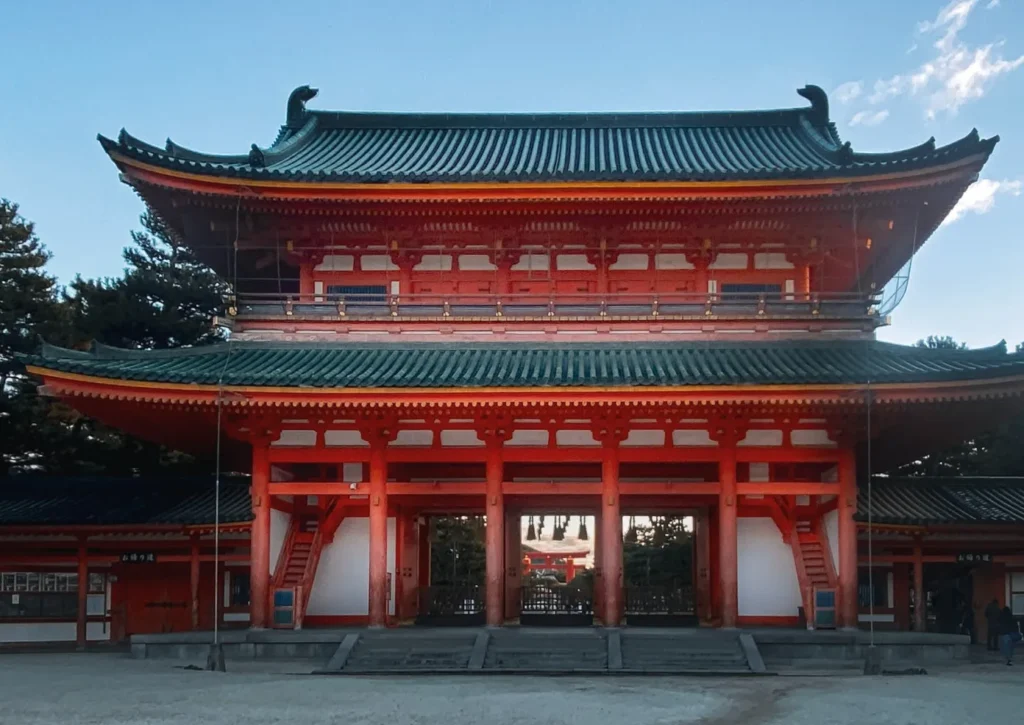
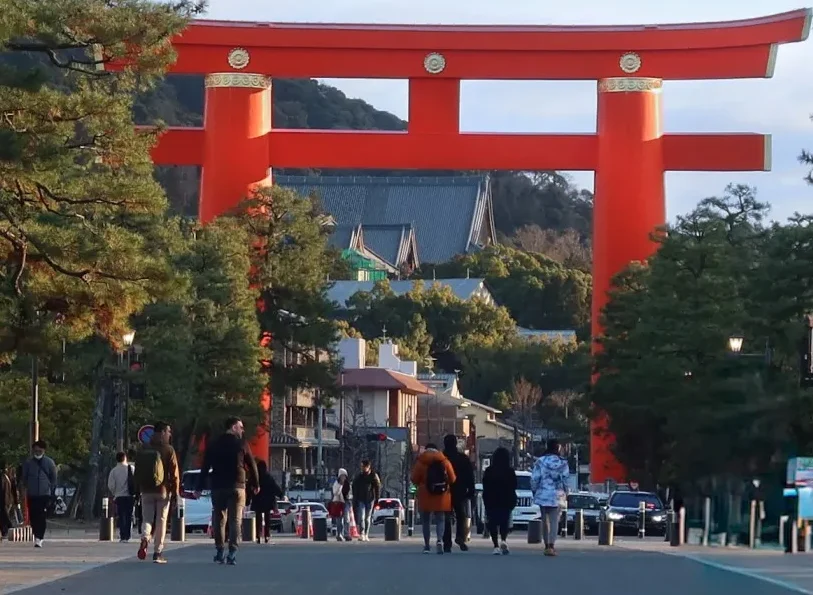
- Heian-jingu Shrine + Torii Gate: Massive shrine with a 25-meter bright orange torii gate you can’t miss. The real attraction is the garden behind the main buildings with a huge pond that’s spectacular during cherry blossom season. Skip the shrine itself if you’re short on time, pay for the garden.”
- Nanzen-ji: One of Japan’s most important Zen temples with an enormous entrance gate and a stunning rock garden. The brick aqueduct running through the grounds is oddly photogenic. Gets busy but the grounds are large enough to find quiet spots. Small entry fee for the main buildings.
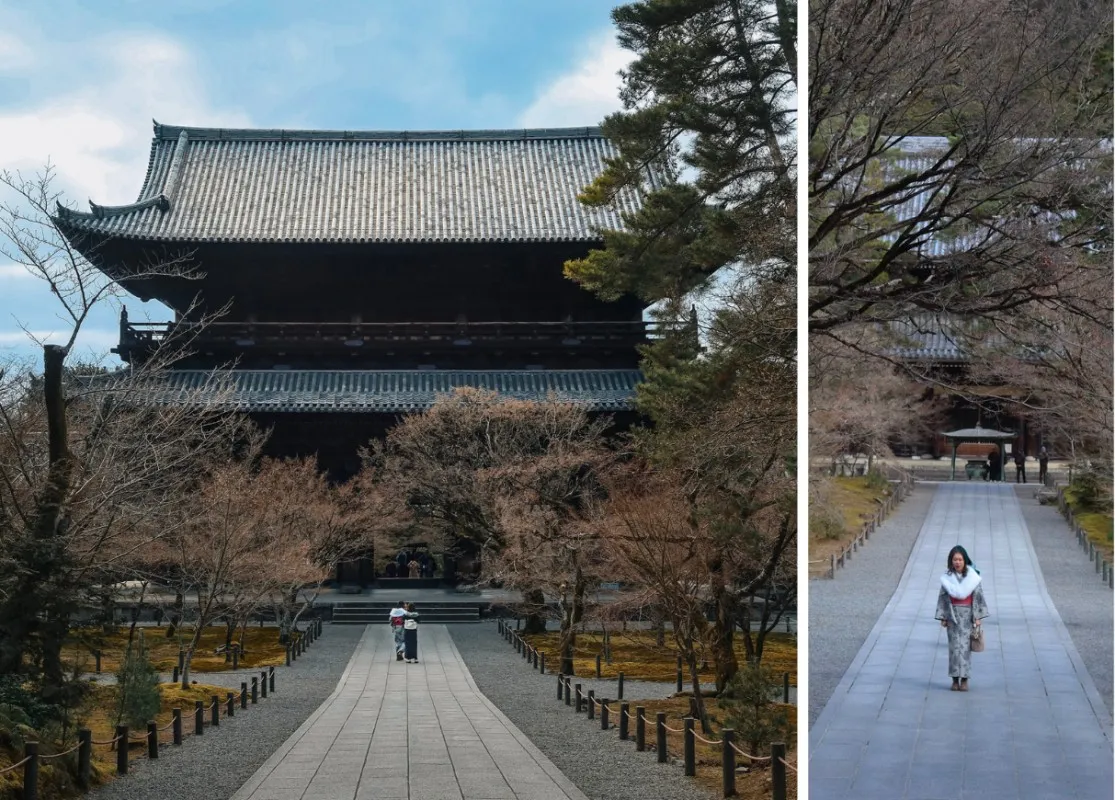
- Konkai Kōmyō-ji Temple: Off-the-beaten-path temple with incredible autumn foliage and hardly any tourists. The approach up the hill through maple trees is the highlight. Only worth visiting during autumn leaf season (November), otherwise skip it.
- Philosopher’s Path (Tetsugaku no Michi): Two-kilometer canal-side walking path lined with hundreds of cherry trees connecting Ginkaku-ji to Nanzen-ji area. Takes about 30 minutes to walk and is genuinely lovely, not just Instagram hype. Absolutely mobbed during cherry blossom season, peaceful the rest of the year.
Getting Around
Walk! Philosopher’s Path connects Ginkaku-ji to Nanzen-ji (30-min scenic walk). Temples are clustered, so walking between them is easier. Buses serve the northern part near Ginkaku-ji (number 5).
- To Downtown: 10-15 min (subway)
- To Kyoto Station: 20 min (subway with one transfer at Karasuma Oike)
- To Southern Higashiyama: 25 min walk OR 10 min by bus
- To Arashiyama: 45+ min (subway + train)
Higashiyama Station (Tozai subway line) – southern end of area. Most northern temples require buses (Ginkaku-ji area)
Restaurants + Nightlife
Neighborhood cafes, tea houses, and small Japanese restaurants mostly cluster along Philosopher’s Path and near temples. Expect traditional foods like kaiseki, udon, tempura, matcha desserts. There are limited international options.
There is no nightlife so if you want drinks or a late dinner you’ll have to venture to downtown or southern Higashiyama is an easy 15 minute walk away.
My recommendations:
- Omen Ginkaku-ji – udon noodles and sets for a reasonable price. Also have mackerel sushi (sabazushi) which is a Kyoto speciality. [$]
- Kyoya – this one is for the wagu lover, offering sets that come with with rice, miso, lettuce salad, pickled vegetables, sauce, tofu, and radish. Tonkatsu, fried chicken and udon also on the menu. [$$]
- Botanic Coffee Kyoto – located on the philosopher’s path, it’s a perfect place for a bit of lunch. Pancakes and french toast are their speciality, you’ll also find many homemade cakes and pastries. [$]
- Juugo – buckwheat soba with the buckwheat farmed by the chef himself, noodles are super fresh and are made in front of you. It’s a one man show that results in an unforgettable meal. [$$]
- Ao Onigiri – cute and well established onigiri shop for when you want something quick yet tasty and satisfying. I highly recommend the green onion and mentaiko flavor. There are also lots of vegetarian options. [$]
Best Hotels In Northern Higashiyama
$$$
from $400 per night
UTAHI
Ryokan
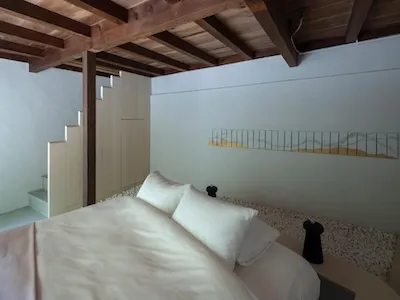
This 100-year-old machiya near Philosopher’s Path is run by artist Showko, who guests say gives great local recommendations and has genuinely interesting conversations about Kyoto. Traditional Japanese breakfast included, peaceful location, easy bus access to temples.
$$
from $122 per night
Ryokan
KANADE
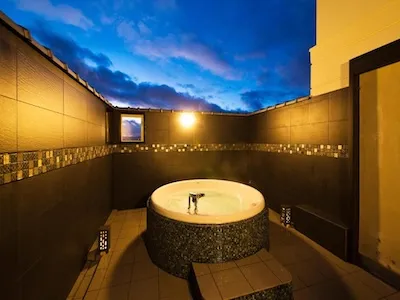
Ryokan KANADE sits in quiet Northern Higashiyama, walking distance to Gion and Philosopher’s Path. You’re sleeping on futons, soaking in the rooftop onsen under the stars, and guests say it feels more like a spa than a hotel. Traditional setup without the luxury price tag, and far enough from
tourist chaos to actually relax.
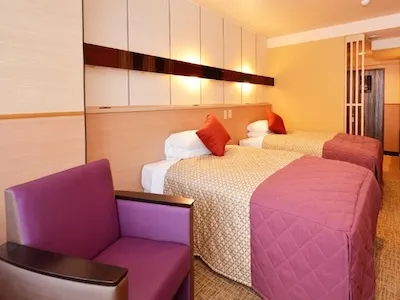
Ten minutes on foot from Heian Jingu Shrine and Philosopher’s Walk, with an onsen, buffet breakfast, and rooms that are actually spacious by Japan standards. Guests mention the cleanliness and friendly staff, plus there are rental bicycles if you want to explore the area without dealing with buses. Solid mid-range option in a good location.
Visiting Osaka too? Read my Osaka Guide + Osaka Itinerary here.
3. Downtown Kyoto
Best place to stay in Kyoto for: first-timers, families with kids, shopping, nightlife
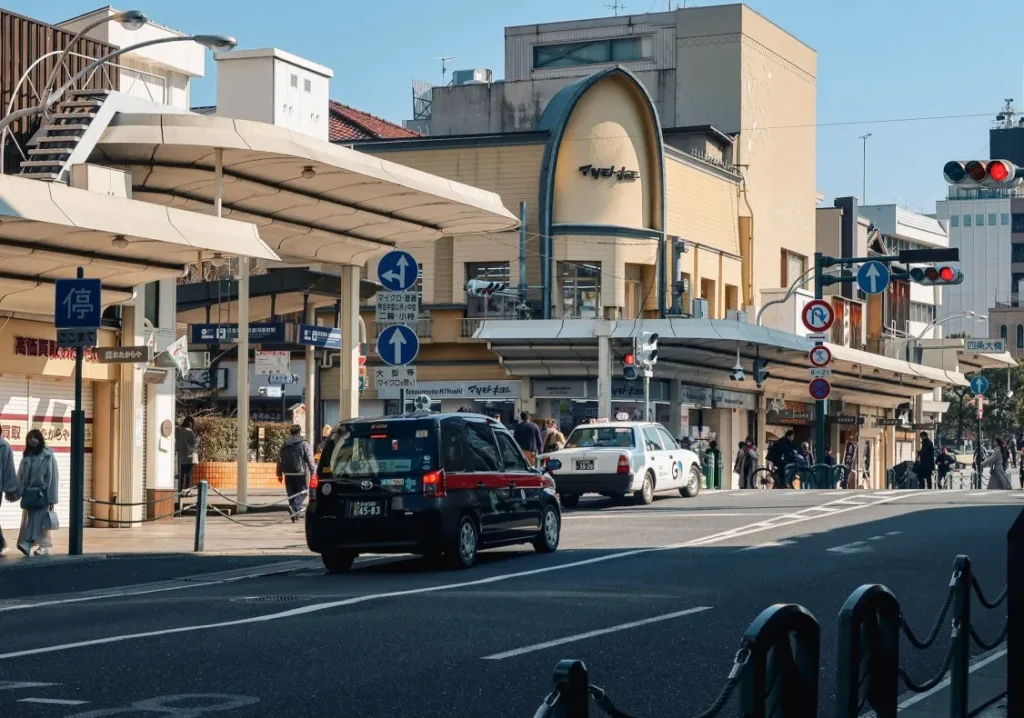
This is modern Kyoto, the side that doesn’t make it onto Instagram. Think wide pedestrian streets, Western brands, international restaurants, and cocktail bars. It’s not what people picture when they think of Kyoto, but it’s where actual city life happens.
The location is unbeatable. You can walk to both Higashiyama temple areas in 15-20 minutes, and you’re right on top of two subway lines that connect you to the entire city.
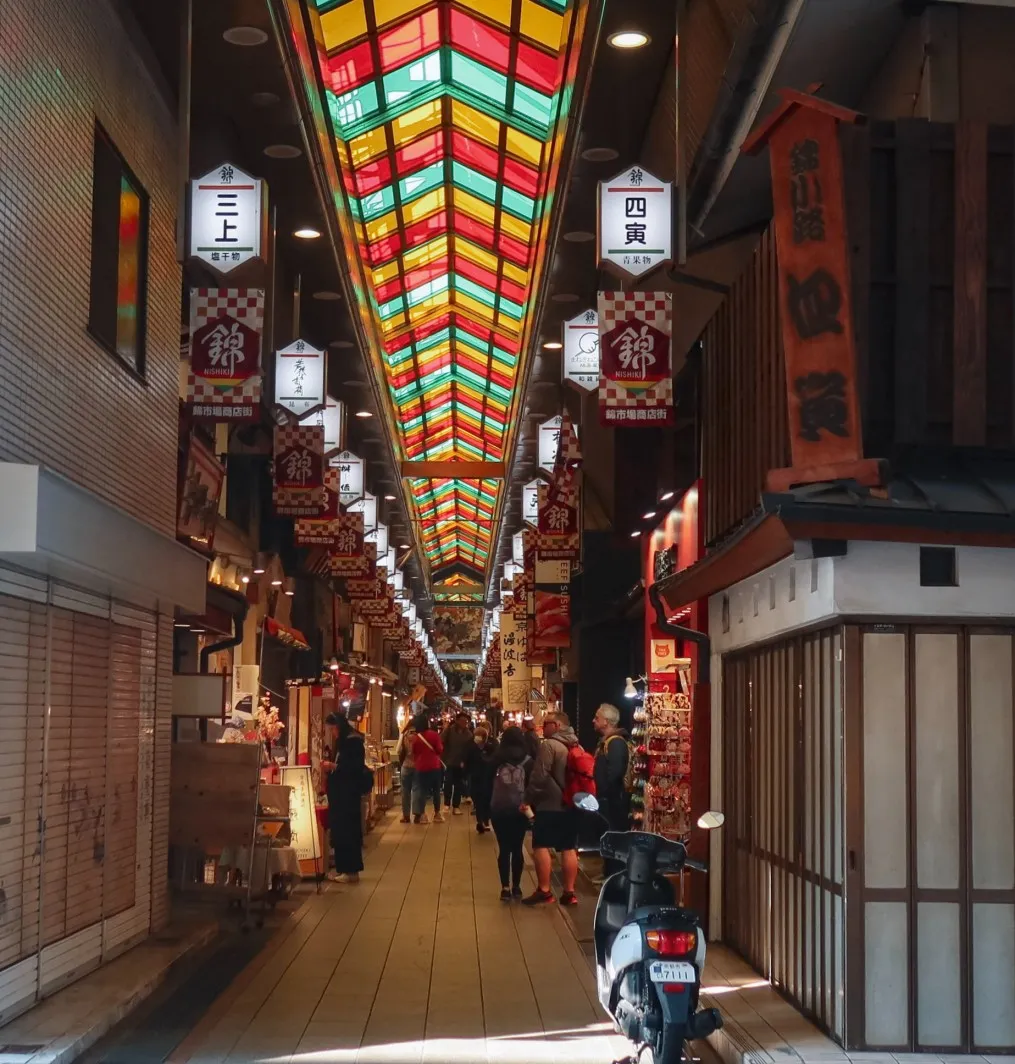
For food, this is the best area in Kyoto, hands down. Hundreds of restaurants covering every cuisine and budget, Michelin starred to low key ramen joints. Nishiki Market is here too, which is Kyoto’s main food market with street food stalls and local specialties. You’ll actually have choices for where to eat dinner, unlike some other areas.
Downtown is also Kyoto’s shopping hub. Department stores, boutiques, covered shopping arcades – this is where you find actual Japanese fashion and homeware, not just tourist souvenir shops selling the same kimonos and fans.
For families with kids, this is the most practical area. The flat terrain is stroller-friendly, you have every cuisine imaginable for picky eaters, and the subway access means you’re not dragging exhausted children through crowds or up hills. Nishiki Market keeps kids entertained with samples and street food, and the Samurai Ninja Museum is a 10-minute walk.
Cons of staying in Downtown Kyoto
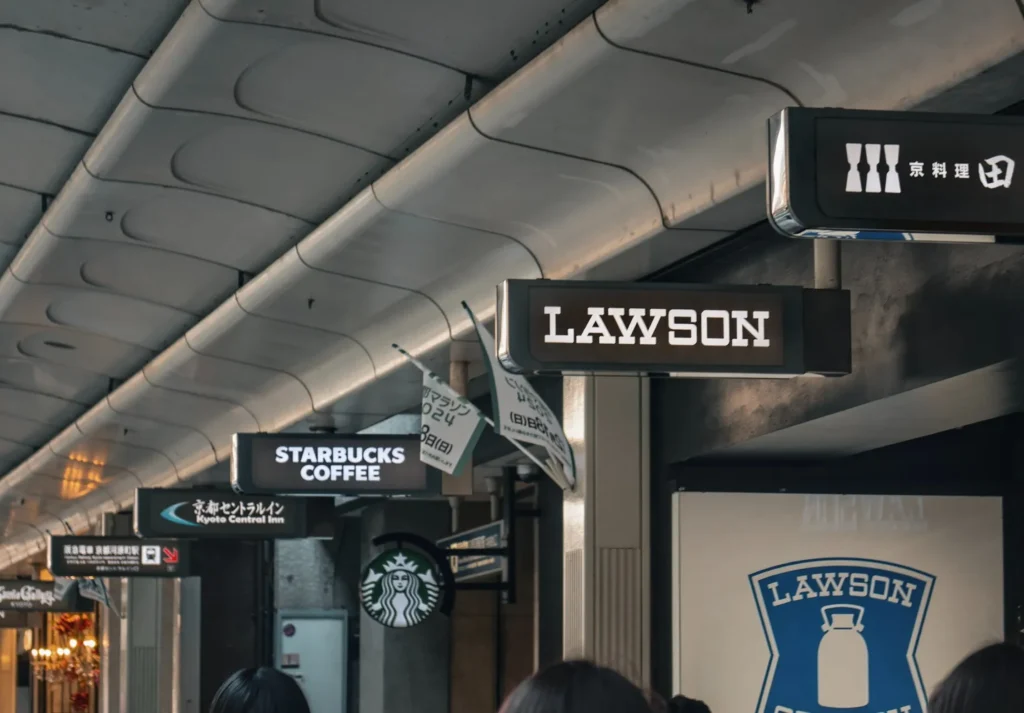
This is not the Kyoto you imagine, in fact, it can feel like just another generic city centre, a bit grey with lots of people. Of course there are a few nice pockets, particularly Pontocho Alley, a small canal side geisha district with lots of izakayas. But for the most part, it feels like a typical big city.
The convenience of staying here will also cost you, it’s one the most expensive areas to stay in Kyoto. If you value convenience and food options above atmosphere, the higher prices are justified. But for a similar price you could stay in an area with more old world character that people visit Kyoto for.
Things To Do
- Nishiki Market: Kyoto’s main food market with over 100 stalls selling everything from fresh seafood to pickles to knife shops. Gets shoulder-to-shoulder packed after 11am. Go early or late, try the pickled vegetables and fresh sushi, and don’t miss Aritsugu knife shop if you’re into cooking.
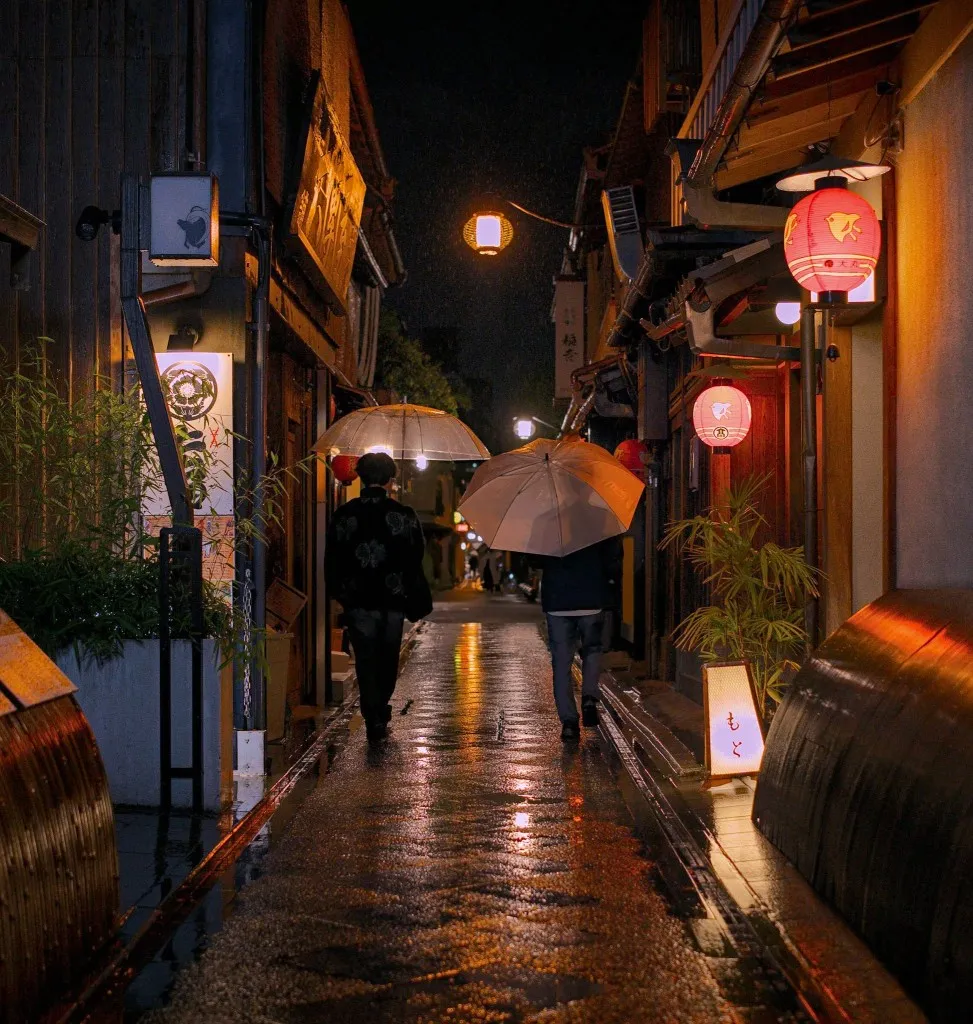
- Pontocho Alley: Narrow alley running parallel to the river packed with traditional restaurants, many with riverside terraces. Atmospheric in the evening with lanterns lit up, but expensive dining. This is one of Kyoto’s five geisha districts, though you’re more likely to spot them in Gion.
- Kawaramachi-dori Street: Kyoto’s main shopping street, basically the equivalent of Oxford Street or Fifth Avenue but Japanese. Department stores, fast fashion, restaurants, and constant foot traffic. Not charming, just convenient if you need to buy anything.
- Samurai Ninja Museum Kyoto: Touristy interactive museum where you dress up as a samurai or ninja and throw ninja stars. It’s cheesy but actually fun if you embrace the kitsch, and the guides are entertaining. Takes 2-3 hours. Book in advance because it’s popular with families.
- The Museum of Kyoto: Museum covering Kyoto’s history from ancient times to present with rotating exhibitions. Decent if you’re genuinely interested in the city’s background, otherwise skip it. The building itself is more interesting than some of the exhibits.
Getting Around
Totally walkable. Everything in downtown is within 15-min walk. Both main subway lines run through here, so you’re connected to the entire city.Karasuma Oike connects both subway lines, meaning you can reach any area without transfers.
- To Kyoto Station: 5 min (Karasuma Line direct, no transfers)
- To Southern Higashiyama: 10 min walk OR 5 min subway
- To Northern Higashiyama: 10-15 min (subway)
- To Imperial Palace: 5-10 min walk
- To Arashiyama: 25-30 min (Hankyu Line from Kawaramachi)
Karasuma Oike Station (Karasuma Line + Tozai Line intersect here) – BEST CONNECTED Kawaramachi Station (Hankyu Kyoto Line) Kyoto Shiyakusho-mae Station (Tozai Line) Karasuma Station (Hankyu Kyoto Line)
Restaurants + Nightlife
THIS is where Kyoto eats. Hundreds of options at every price point, you’ve got Indian, Mexican, Italian, Chinese, really anything you want. Big brands like ichiran, ippudo, shakeshack, McDonalds can be found here.
The nightlife here is also the best in Kyoto with bars, izakayas, clubs, karaoke, jazz bars – something for everyone. Pontocho and Kiyamachi Street (along the canal) are nightlife hubs. Mix of local hangouts and tourist-friendly spots.
My recommendations:
- Kichi Kichi Omurice – world famous omurice, food meets performance art as chef Kichi Kichi puts on a show. Of course the omurice is delicious but the ox tongue stew was the showstopper for me. VERY hard to get a table, read here exactly how you get a table. [$$$]
- Kyo Unawa Honten – crispy unagi (eel) with a slightly charcoal flavour. If you love unagi this has to be on your Kyoto must eat list. Tender, juicy and crispy. Option to eat it Hitsumabushi style where you can try it 4 different ways, all in one sitting. Each way changes the flavor profile of the unagi. [$]
- Orale – for when you want something different this Mexican restaurant will hit the spot. The mole enchiladas are a must try. [$$]
- GYUKATSU Kyoto Katsugyu Teramachi Kyogoku – beef cutlets coated in fine panko crumbs. Beef is served raw, you use a hot stone in the middle of the table to grill it to your liking. [$$]
- BABBI GELATERIA KYOTO – lots of pistachio treats including a hot pistachio drink. Their coffee was my go to as it was near my accommodation, but their gelato looked so good too. [$]
- Saryo Suisen – insta-famous dessert cafe, the matcha Mont Blanc looks like green strands of spaghetti but it’s fun to watch. You can also get shaved ice, warabi mochi and parfaits. [$$]
Best Hotels In Downtown Kyoto
$$$
from $240 per night
Karasuma Rokkaku
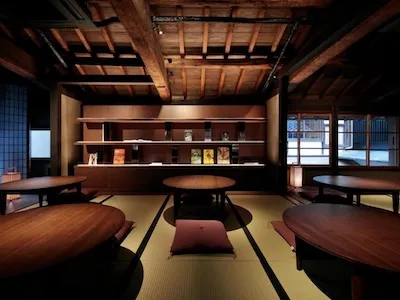
Ryokan-style entrance
with tatami floors and
onsen on the top floor, and a cozy library lounge. 3 minutes
from the subway. The Japanese breakfast bento delivered to your room is solid, and the public bath is cleaner and better than the tiny shower cubicles in
the rooms.
$$
from $140 per night
Hotel Okura Kyoto
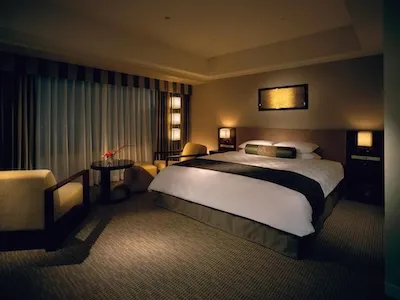
Connected directly to Shiyakusho-mae Subway Station via basement, with mountain and city views from the upper floors. This is old-school 5-star territory with spacious rooms, attentive staff, and multiple restaurants including a French spot with its own wine cellar. Free shuttle to/from Kyoto Station, origami details
throughout the property
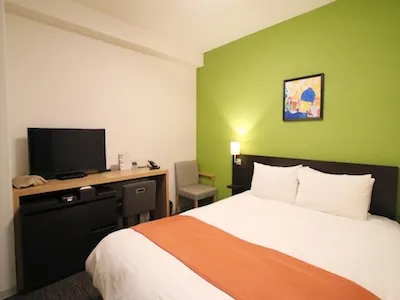
Steps from Kyoto Shiyakusho-mae Subway Station and a 10-minute walk to both Gion and Nishiki Market. Choose between Western beds or tatami rooms with futon bedding (good for families with kids). The entrance is tucked in an alley so it’s a bit tricky to find, but
once you’re there you’re surrounded by tiny local shops and right in the mix of things.
4. Imperial Palace Area
Best place to stay in Kyoto for: budget travelers, quiet atmosphere, local dining
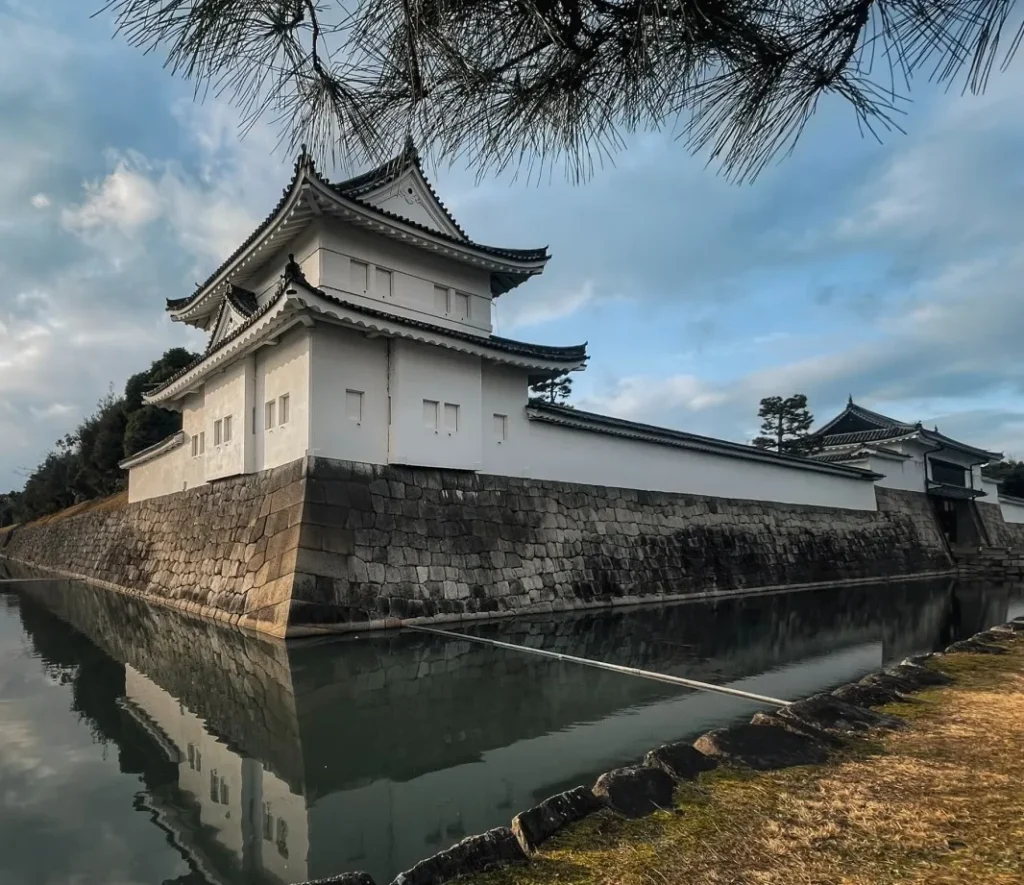
The Imperial Palace area gives you a residential neighborhood feel while still being close to Downtown, you can walk there in 10 minutes. It’s quieter and cheaper place to stay in Kyoto rather than downtown, but you’re not isolated. The Imperial Palace Park is huge and free, which is perfect for morning walks or picnics. Nijo Castle is also a 10 minute walk away.
Hotels here are better value, compared to Downtown or Southern Higashiyama, hotels in Kyoto’s Imperial Palace area offer 20-30% lower rates for similar quality. The local restaurants are cheaper too, and you’re eating where actual Kyoto residents eat, not in tourist traps. It’s a good middle ground if you want convenience without the chaos.
Cons Of Staying Here
The area itself doesn’t have much going on. It’s residential, which means it’s not particularly scenic or atmospheric, just normal city streets. You’ll need to travel to reach most major sights. Restaurant variety is limited to mostly Japanese places, so if you want international food or lots of options, you’ll be walking to Downtown.
There’s also minimal nightlife – if you want drinks or evening entertainment, you’re heading elsewhere. The hotel selection is smaller than central areas, so you have fewer choices. It’s a fine area, but it lacks personality. You’re basically choosing it for affordability and proximity to Downtown, not because there’s anything special here.
Things To Do
- Nijō Castle: Impressive shogun castle from the Edo period with “nightingale floors” that squeak when you walk on them (original security system). The gardens are stunning, especially in autumn. Gets tour bus crowds but the grounds are large. Entry fee applies, worth it.
- Kyoto Gyoen National Garden: Massive free park surrounding the Imperial Palace, perfect for picnics or morning walks. Beautiful during cherry blossom season and autumn. Locals actually use this park, so it feels less touristy. You can spend 20 minutes or 2 hours here depending on your energy.
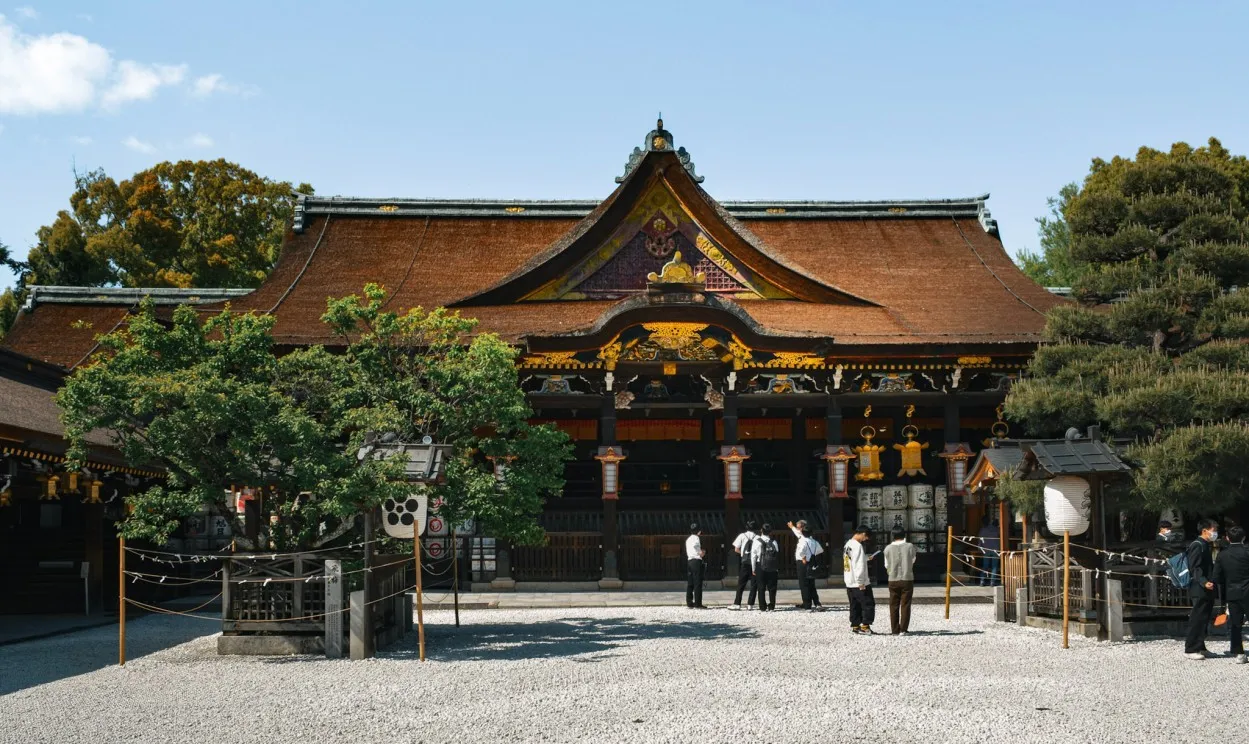
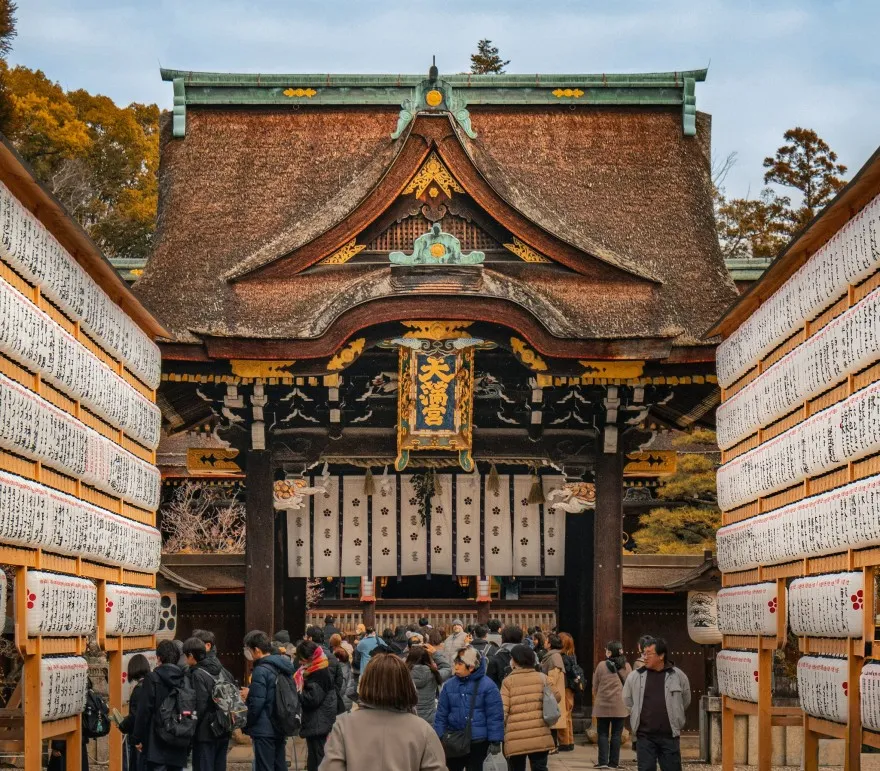
- Kitano Tenmangu Shrine: Important shrine dedicated to the god of learning, so you’ll see students praying before exams. Famous for plum blossoms in February and autumn leaves in November. The monthly flea market (25th of each month) is worth timing your visit for if you like vintage finds.
Getting Around
Mix of walking and buses. Imperial Palace grounds are huge – budget 20+ min to walk across. Nijo Castle is walkable. Golden Pavilion requires a bus (no subway nearby). Downtown is an easy walk. Overall it’s best for people happy to take one subway ride to reach sights
- To Kyoto Station: 10 min (Karasuma Line direct)
- To Downtown: 5-10 min walk OR 5 min subway
- To Southern Higashiyama: 15 min (subway)
- To Golden Pavilion: 20-25 min (bus)
- To Nijo Castle: 10-15 min walk from Marutamachi
Imadegawa Station (Karasuma subway line) – north side Marutamachi Station (Karasuma subway line) – south side Karasuma Oike Station – southern edge (technically downtown but close)
Restaurants + Nightlife
Dining here is less touristy, more authentic, with small ramen shops, family-run izakayas, curry houses and local bakeries. There are a few trendy cafes near universities (Kyoto University is nearby). Downtown is a 10-min walk if you want more variety.
My recommendations:
- Kyoto Curry Seisakusho Karil – Japanese + Indian fusion curries. The curries hit the right balance of spiciness and flavor. The butter chicken curry, keema curry and mango lassi are a must. You can choose your level of spice. [$]
- Kikyo Sushi – family run sushi joint where reservations are a must. They also have gluten free soy sauce and miso soup, which is not so common in Japanese restaurants. The Miso Black Cod was a highlight. [$$$]
- Yoshiharu – tonkatsu and tonkatsu tan tan ramen. They have a self service pickle counter where you can choose as much as you like (ginger is always a good call). [$]
- common – if you only go to one cafe in Kyoto, this should be it. Here craftsmanship, passion and aesthetics meet. Most importantly the coffee is excellent, one of the best oat milk lattes I have had. [$$]
Best Hotels In Imperial Palace Area
$$$
from $820 per night
Garrya Nijo
Castle Kyoto
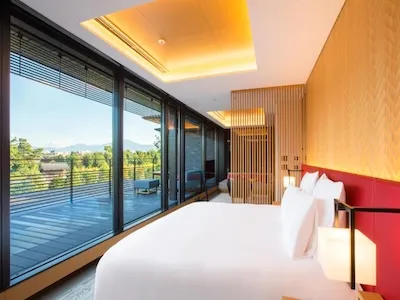
Right across from Nijo Castle with only 25 rooms, so staff actually recognizes you. Modern rooms with big windows, heated toilets, and a water filter system instead of plastic bottles (smart move). Three breakfast options you book the night before, Michelin restaurant on-site, and the momiji tree at the entrance is genuinely beautiful. Street-facing rooms catch some noise, and storage space is tight for luggage, but everything else works.
$$
from $166 per night
Kyoto Brighton
Hotel
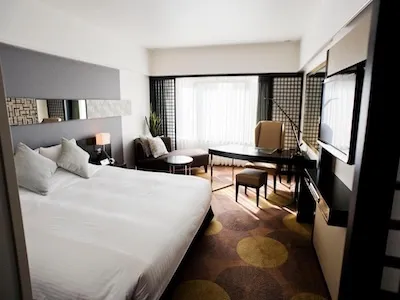
Five-minute walk from Imperial Palace in a quiet residential area with soundproofed rooms, deep bathtubs, and matcha tea sets. The service here apparently exceeds what you’d get at pricier places, and rooms are more spacious than typical Kyoto hotels with proper toiletries and amenities. Free shuttle runs to the subway every 20 minutes. No gym or pool, but the experience justifies the 5-star rating anyway.
Spacious rooms by Japanese standards
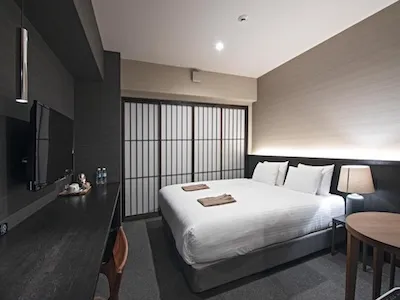
(10m3) in a quiet, stylish property with a meditation garden out back. Comfortable beds, lots of amenities, and a self-service setup where you grab extra towels or toothbrushes from
reception yourself. Central location near Imperial Palace and Nijo Castle. Good value for
what you get.
5. Kyoto Station Area
Best place to stay in Kyoto for: short stays, budget travellers, day-trippers
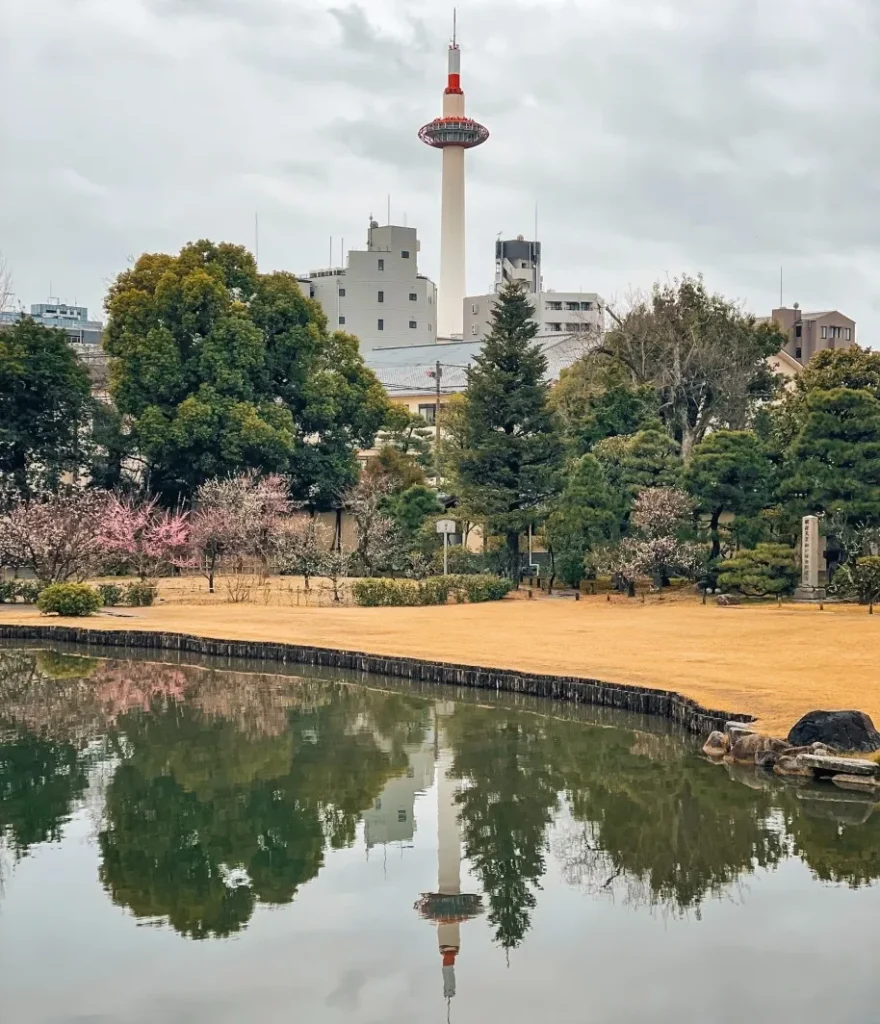
If you have more than 2 days in the city, staying here the whole time would be a waste. If transport convenience is your priority, this is unbeatable. Kyoto Station is the hub for everything with direct trains to Osaka, Nara, Tokyo and Arashiyama. You can drop your bags at the hotel and be on a train to Nara in 5 minutes. Perfect for one-night stopovers or if your train arrives at 10pm and leaves at 7am. Hotels in Kyoto Station area are the cheapest because it’s a transit zone, not a destination.
The station building itself has 100+ restaurants, so you’ll never struggle to find food. There are luggage forwarding services if you want to send your bags to your next city.
Cheap hotels in Kyoto cluster around Kyoto Station, where you’ll find budget options from $60/night.
Cons Of Staying In Kyoto Station Area
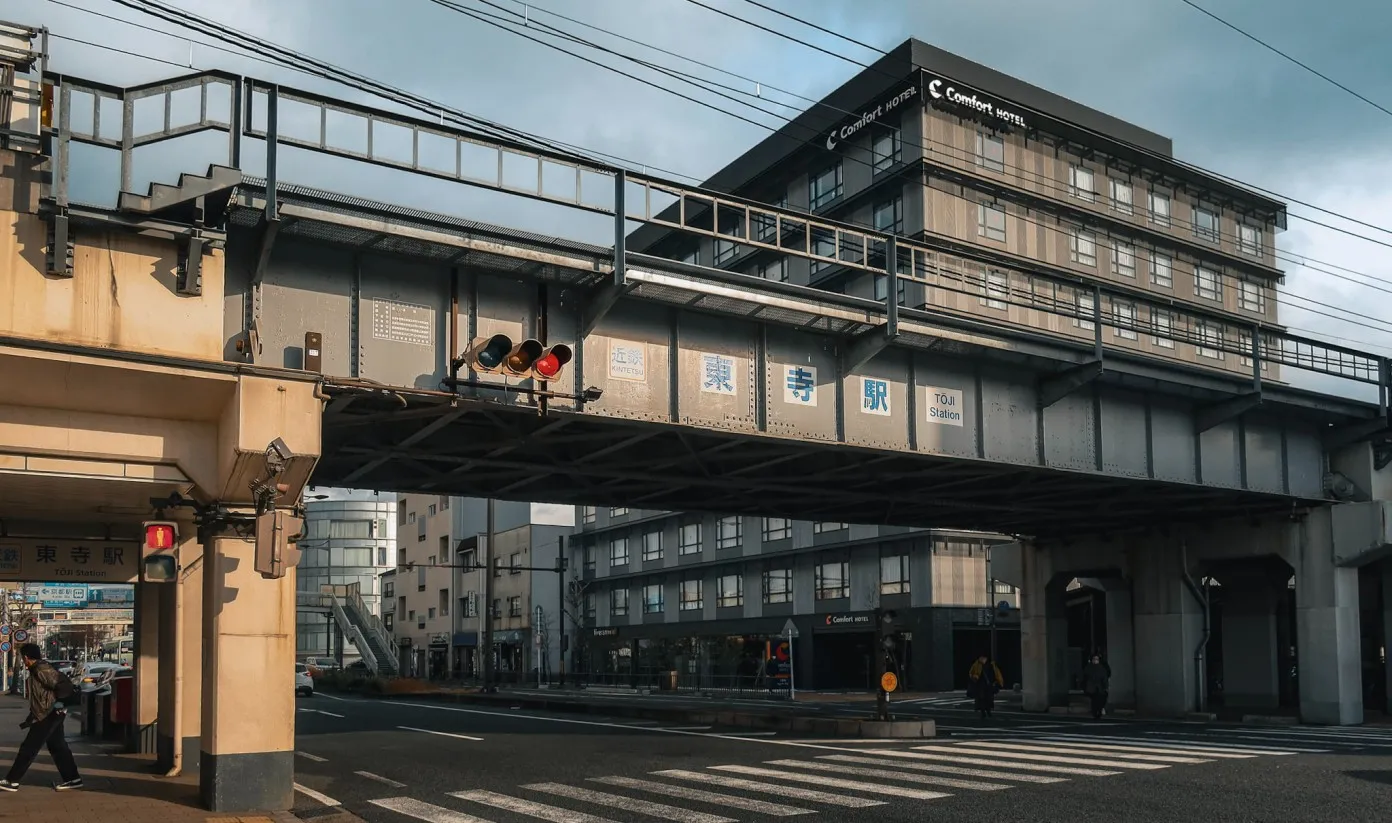
There’s no atmosphere whatsoever, it is dull. This is a business district/transit zone, not a neighborhood. You’ll need to travel to reach any actual sights, and the dining is mostly chains and food court quality.
There’s zero nightlife, and the area is dead after 9pm except for hotel bars. It’s noisy from constant train announcements and foot traffic. You’re basically choosing this area because it’s cheap and convenient for transport, not because you want to experience Kyoto.
Things To Do In Kyoto Station Area
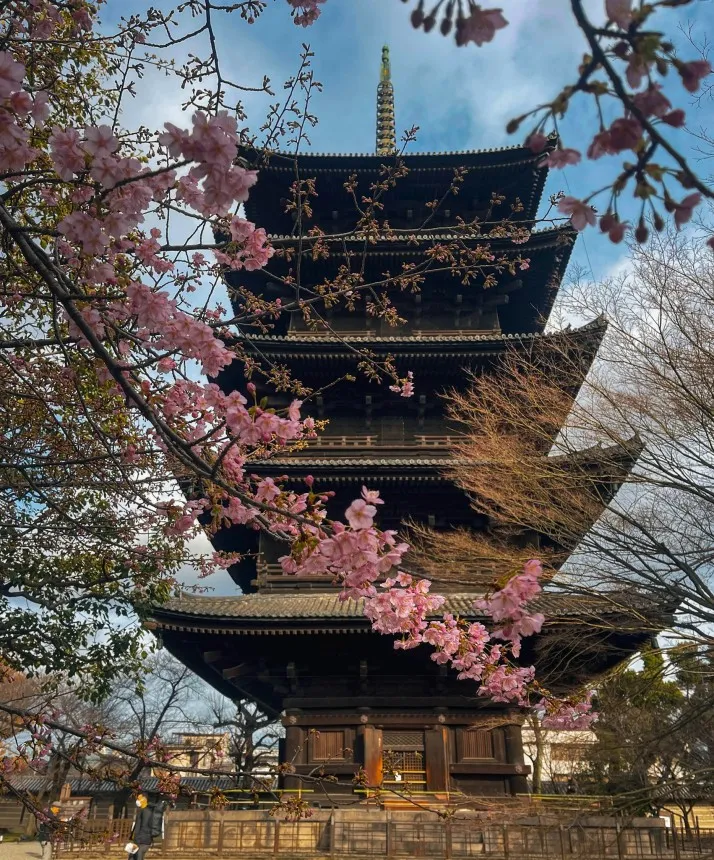
- To-ji Temple: Buddhist temple complex with Kyoto’s tallest pagoda (55 meters, you can’t miss it). Less crowded than other major temples despite being equally impressive. There’s a flea market here on the 21st of each month. About 15 minutes walk from Kyoto Station.
- Kyoto Tower: Observation deck offering 360-degree views of Kyoto from 100 meters up. Useful for getting oriented when you first arrive, but not worth it if you’re on a tight schedule. The touchscreens showing day/night comparisons are actually pretty cool. Right next to Kyoto Station.
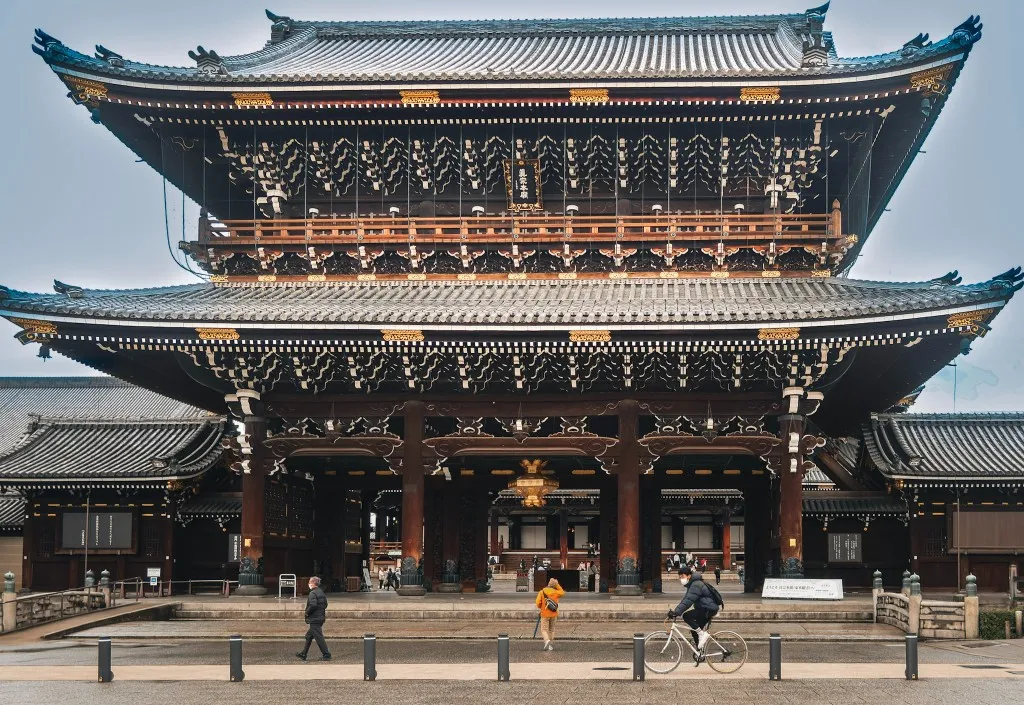
- Higashi Hongan-ji Temple: one of Kyoto’s most impressive Buddhist temples, known for its vast wooden halls and peaceful atmosphere just a short walk from Kyoto Station. Unlike many of Kyoto’s more touristy temples, it feels calm and local, making it a great place to experience everyday temple life. The scale of the architecture alone makes it worth a quick visit.
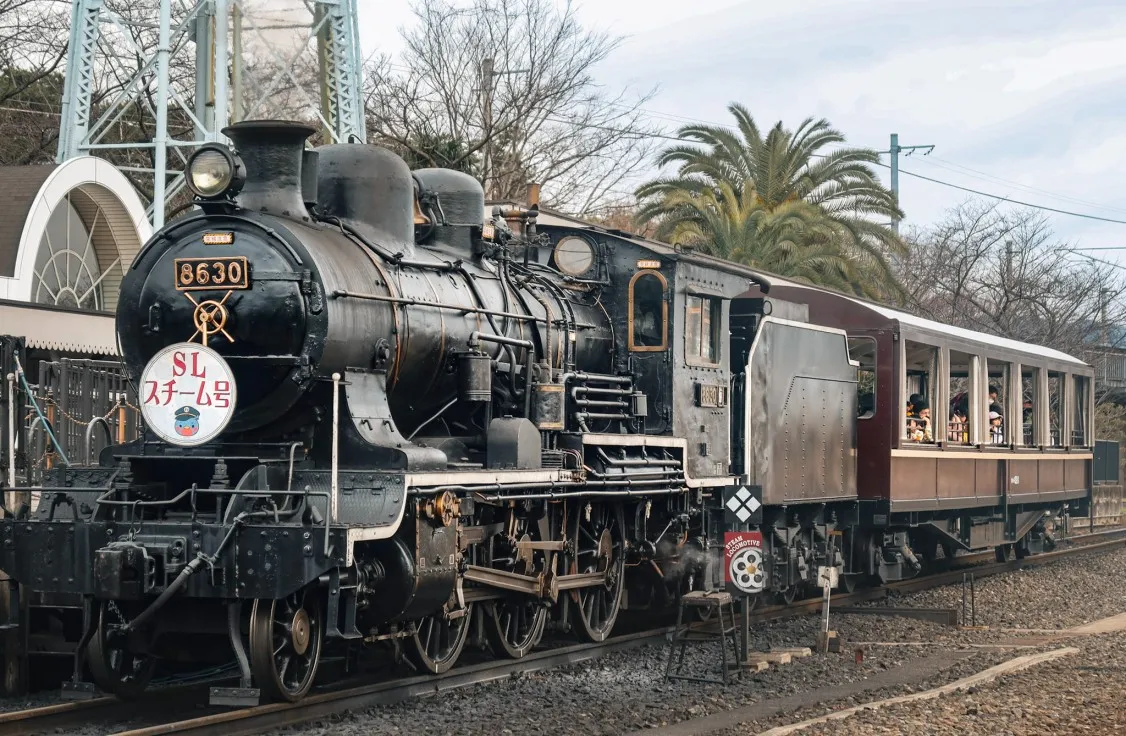
- Railway Museum: Massive museum with 53 trains including vintage steam locomotives and the original 1964 Shinkansen. Interactive displays, railroad diorama, and you can take a short ride on a real steam locomotive. Genuinely excellent if you have even a passing interest in trains. Takes 2-3 hours.
Getting Around
Staying here means you’ll take trains/subway everywhere, there’s not much to walk to in the immediate station area besides a few temples. But connections are unbeatable.
It’s best for people doing lots of day trips, short Kyoto stays (1-2 nights), or anyone who prioritizes transport convenience over neighborhood charm.
- To Downtown: 5 min (Karasuma Line)
- To Southern Higashiyama: 15-20 min (Keihan Line from Shichijo Station, 10-min walk from Kyoto Station)
- To Northern Higashiyama: 20 min (subway with transfer)
- To Arashiyama: 15-20 min (JR Sagano Line)
Restaurants + Nightlife
Kyoto Station itself has 100+ restaurants (literally) – entire floors of the station building are dining floors. Ramen lovers should head to the 10th floor of the station where 10+ ramen shops line a narrow corridor affectionately called ramen street. Away from the station is a few good local spots if you explore side streets 5-10 min from the station.
As this is business hotel territory there are a few hotel bars and chain izakayas, but nothing exciting. However, downtown is just a 5 minute subway ride away.
My recommendations:
- Yumemiya – cool okonomiyaki place with just 4 tables. Expect to queue as it’s a popular spot among locals. [$$]
- Yakitori Tsujiya – popular yakitori restaurant, a reservation is advisable. The neck is always a good shout. [$$]
- Kyoto Ramen Laboratory – cosy and vibrant tonkatsu ramen restaurant with big portions. – [$]
- Solkatt Coffee – good speciality coffee and croissants. Hand pour coffee is available. [$]
- Mister Gyoza – limited number of gyoza on sale everyday, once they sell out they are off the menu. They also have shoyu ramen and karage. [$$]
Best Hotels Around Kyoto Station
$$$
from $240 per night
Kyoto Tower
Hotel
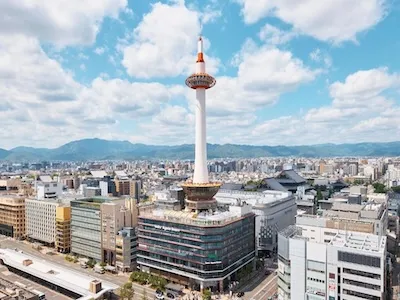
Directly across from Kyoto Station with a food court in the basement and a rooftop bar above. Rooms are more spacious than expected with city views, and you get discounted tickets to the observation tower. Walking distance to department stores, convenience stores, and everything you’d need.
$$
from $146 per night
Hotel Keihan Kyoto Ekiminami
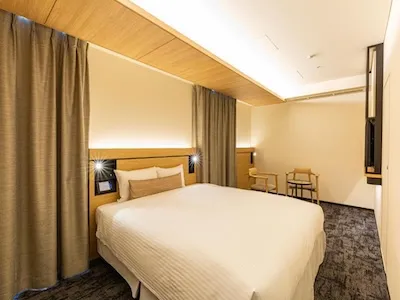
Directly across from Kyoto Station with easy access to Shinkansen and local trains. Rooms are small (typical Japan) but soundproofed, and the breakfast buffet is varied with Japanese and European options. You’re walking access to restaurants and attractions around the station area. Views of the hills from upper floors.
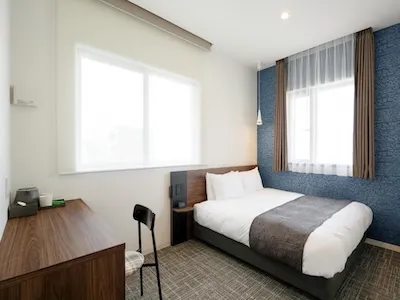
Fourteen minutes on foot from Kyoto Station with rooms bigger than you’d expect for the price. Good for solo travelers, fits two people comfortably. Clean with full amenities, 24/7 laundry room with microwave and water dispenser, and those auto-clean heated toilets. Staff is responsive but not overly warm. Affordable and functional.
6. Arashiyama
Best place to stay in Kyoto for: nature lovers, couples wanting a scenic break
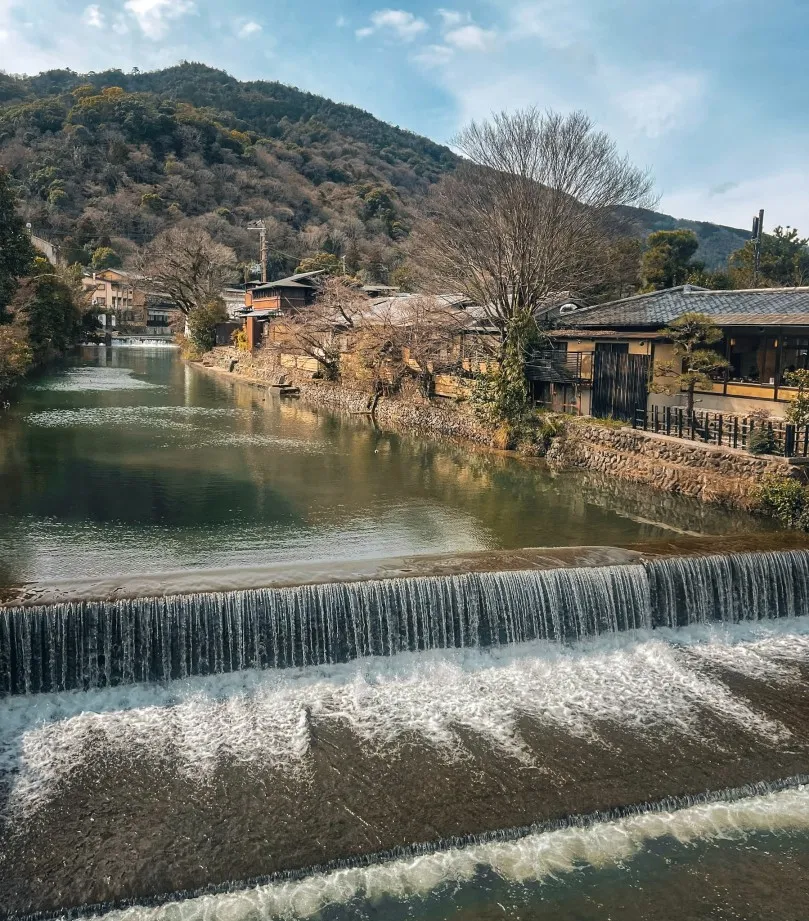
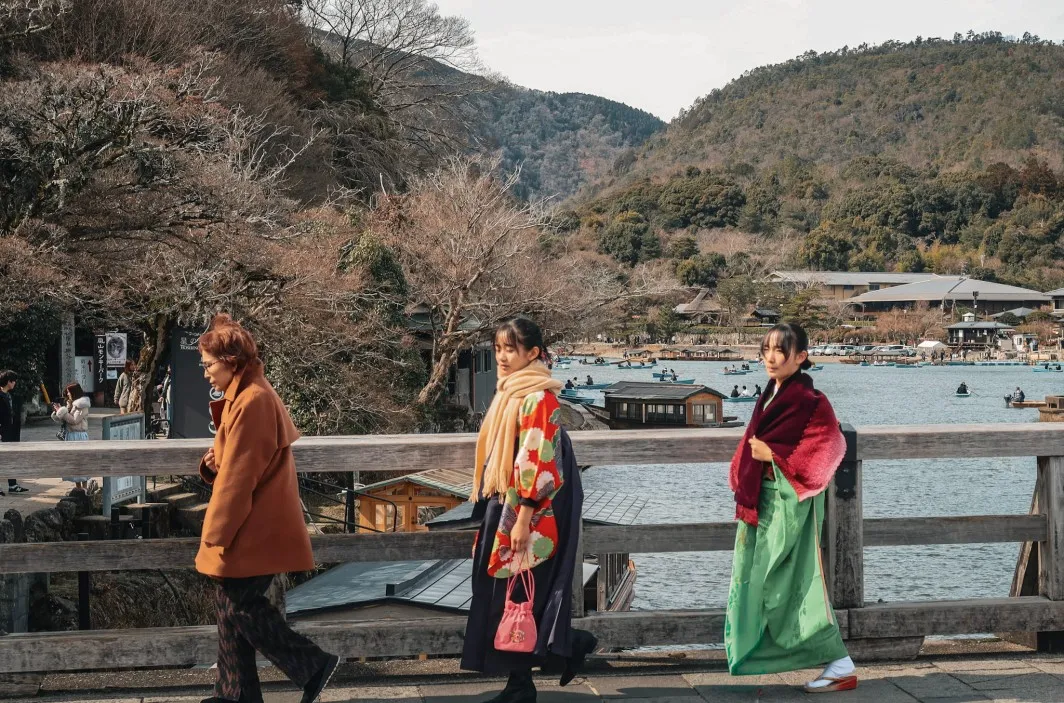
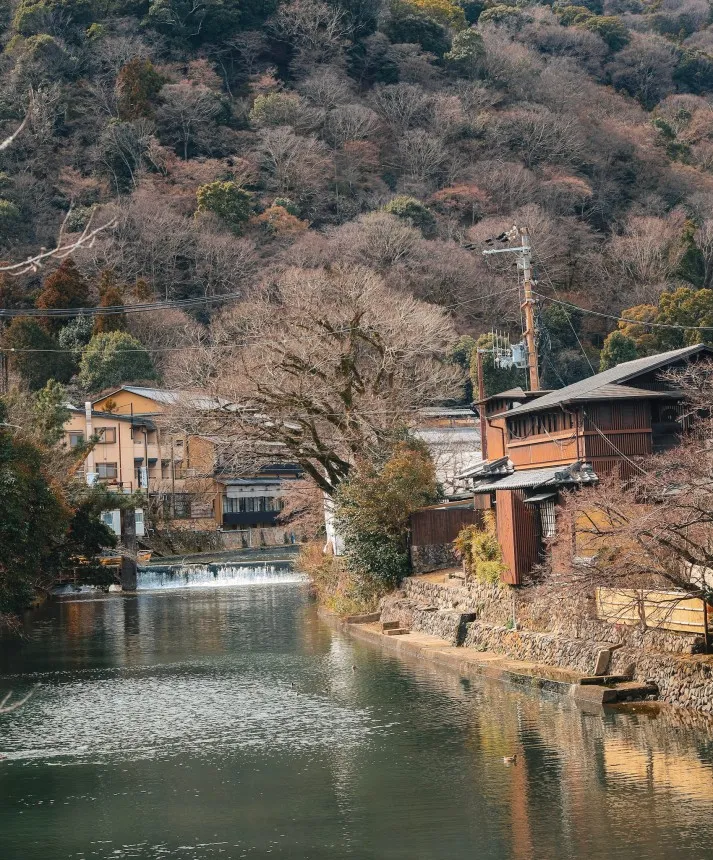
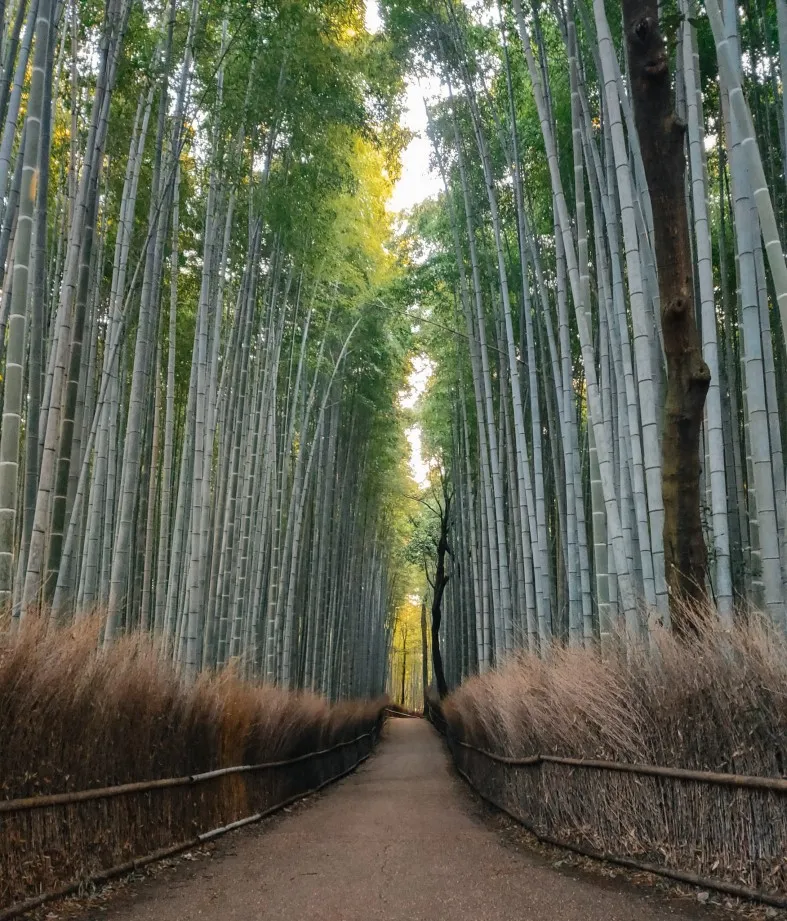
Arashiyama is completely different from urban Kyoto. You’re surrounded by mountains, rivers, bamboo forest. If you’re someone who gets overwhelmed by cities and crowds, this is your escape. The best part about staying here is enjoying the bamboo forest and main sights in the early morning or evening when all the day-trippers are gone. During the day it’s packed, but from 6 – 8 AM it’s much quieter.
This is THE area for a traditional ryokan Kyoto experience with river views and onsen baths. It’s one of the best areas to stay in Kyoto for couples or anyone wanting a romantic, peaceful atmosphere. You can bike along flat riverside paths, visit the monkey park, explore temples, there’s enough for a full day here.
Cons of Staying here
Depending on what you want, location can be a problem. Arashiyama is 30+ minutes from central Kyoto and 45+ minutes from the Higashiyama temple areas. Every single time you want to do anything outside Arashiyama, you’re looking at a 30-minute minimum commute. If you only have 2-3 days in Kyoto, you’re wasting too much time on trains. With this in mind, it’s not the best area to stay in Kyoto for first timers,
During the day Arashiyama is packed, it tends to make most people’s Kyoto itinerary. This makes it hard to stay here as every time you leave you accommodation you’re confronted with immense crowds. When we were here a walk down the street felt like we were in a queue, I don’t know about you but I like to walk fast so found this frustrating.
The dining situation leaves a lot to be desired. Maybe 10 restaurants total, and most close by 6-7pm. There’s zero nightlife, everything shuts down after the day-trippers leave. You’ll see everything in Arashiyama in one day, so staying multiple nights gets boring unless you’re content just relaxing at your ryokan. Hotels also charge a premium because “nature location,” but you’re still far from everything.
If you do stay here, book a ryokan with dinner included because your restaurant options are limited and mediocre.
Things to do in Arashiyama
- Arashiyama Bamboo Forest: The Instagram-famous bamboo path that’s mobbed with tourists from 9am-5pm. The bamboo itself is genuinely impressive and the light/sound is unique, but you’ll be queuing to take photos. Go at 6-7am if you want it to yourself, otherwise accept the crowds as part of the experience.
- Tenryu-ji Temple: Large Zen temple with a stunning pond garden designed in the 14th century. The garden is the main attraction, the temple buildings are fine but secondary. Gets busy but the grounds are spacious enough to handle crowds. Entry fee for garden only or combined ticket for temple buildings.
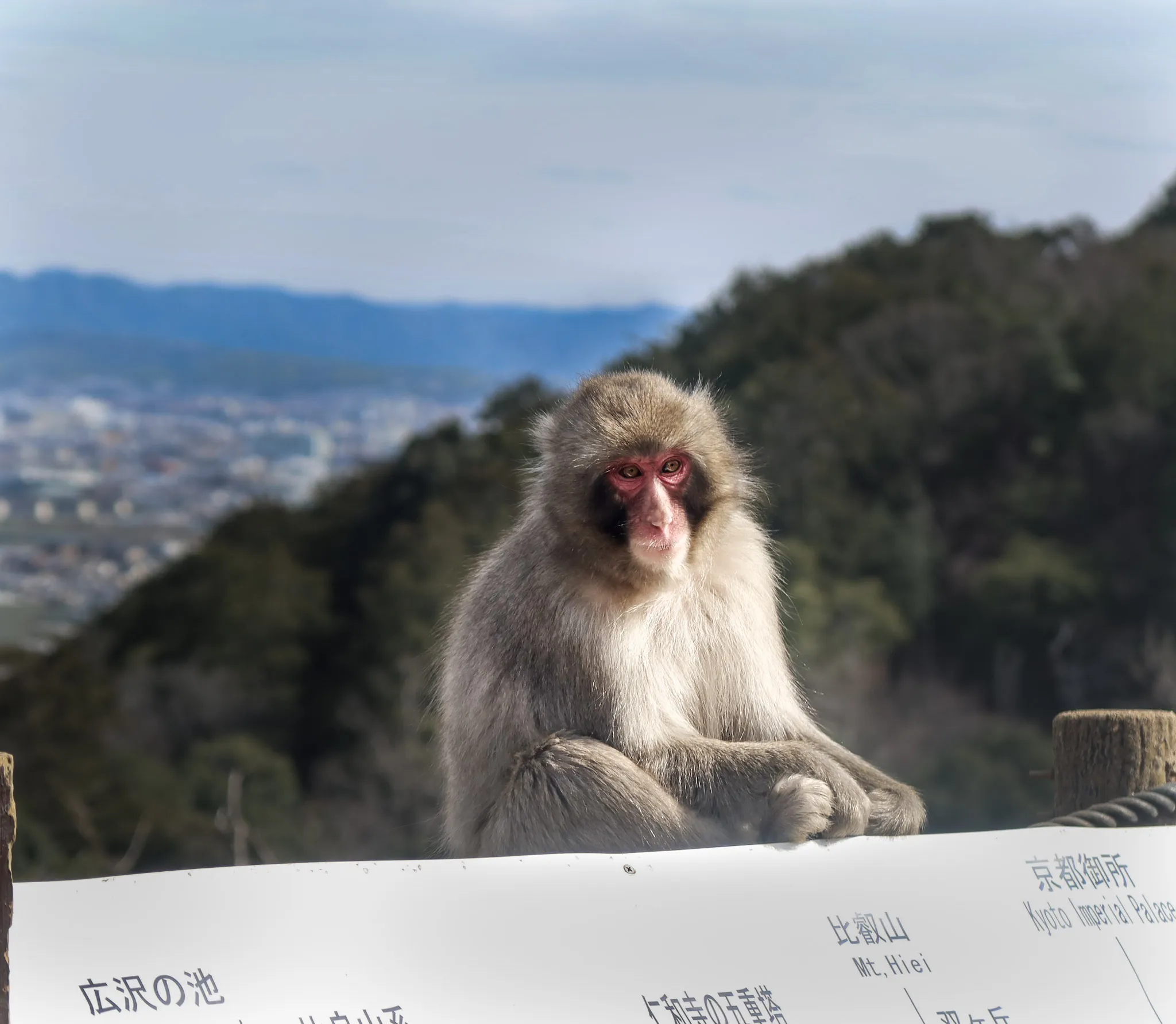
- Monkey Park Iwatayama: Mountain park with 200+ wild Japanese macaques roaming freely. You hike uphill for 20 minutes (it’s steeper than expected), then you’re at the top with monkeys everywhere and panoramic views of Kyoto. You can feed them through a window. Good workout, cute monkeys, solid views.
- Togetsu-kyo Bridge: The iconic wooden bridge crossing Katsura River, basically Arashiyama’s main landmark. Always packed with people and cars during the day. Nice views of the mountains, but it’s literally just a bridge. Good photo op, then move on.
Getting Around
Walking or cycling is the best way to explore here with the main sights (bamboo forest, Tenryu-ji, Togetsukyo Bridge) all within a 15-min walk. The flat, scenic riverside paths makes cycling actually enjoyable. Best for: People staying 4+ days who want a nature day/night, or couples on honeymoon who plan to stay put.
- To Kyoto Station: 15-20 min (JR Sagano Line)
- To Downtown: 25-30 min (Hankyu Line to Kawaramachi)
- To Southern/Northern Higashiyama: 45+ min (train + subway/bus)
Saga-Arashiyama Station (JR Sagano Line) Arashiyama Station (Keifuku Arashiyama Line) – closer to bamboo forest Hankyu Arashiyama Station (Hankyu Arashiyama Line)
Nightlife + Dining
There are mostly tourist restaurants along main street (Togetsukyo Bridge area). Expect prices to be inflated but there are nice views along with a few hidden gems if you walk away from main drag. Most restaurants close by 6-7pm when day-trippers go, leaving you with limited dinner options – maybe 5-10 restaurants stay open, mostly hotel dining.
As this is rural Kyoto everything shuts down after dark. There are no nightlife options aside from one or two hotel bars. Come here for nature and quiet, not nightlife.
Since the food scene is weak. If you’re staying here I recommend booking a ryokan with dinner included. You WILL get bored of the limited restaurant options by day 2. But that’s the trade-off for nature and peace.
My recommendations:
- Steak Otsuka – incredible beef restaurant, great place to try wagu. Set menus are available with rice, cabbage and sauces. Excellent value for the quality. [$$]
- Kyoto Kitcho Arashiyama – 3 Michelin star traditional Kaiseki restaurant with local ingredients. It’s such a special place with private tatami rooms and gardens, it would be perfect for celebrating an occasion. [$$$]
- Ogura Cha-Ya – tasty udon in a light broth, simple but delicious. Comes with a range of different toppings like tempura bits, fried tofu and rice cakes. [$$]
- Sabou Sagano – ran by two grandmas, one cooks and the other serves, it’s so cute. Menu includes curry, fried rice, spaghetti and sandwiches. Well priced and a genuinely lovely experience. [$]
- Coffee Shop Yamamoto – nice lunch spot with a selection of different sandwiches and coffee. Has an endearing old world charm with vintage coffee drawers. The wagu sandwich comes highly rated. [$$]
Best Hotels In Arashiyama
$$$
from $450 per night
Ryokan
Togetsutei
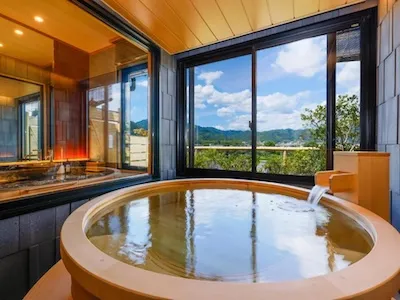
Riverside ryokan next to Togetsukyo Bridge with rooftop rooms that have private cypress baths overlooking the river. Futons are surprisingly comfortable, staff warms your shoes before you leave, and breakfast is served by the water. The building shows its age in a charming way. Walking distance to bamboo forest and monkey park, so you can beat the crowds.
$$
from $136 per night
Hotel
Arashiyama
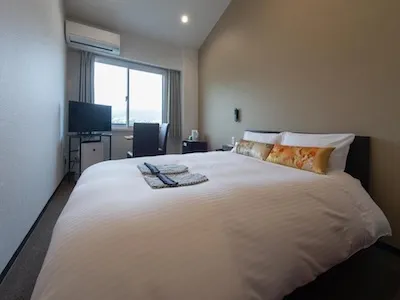
River views from the rooms where you can actually hear the water, which is more relaxing than it sounds. Five minutes from the station, 16-minute walk to the bamboo grove, free bikes to explore, and a discount for the nearby onsen. Rooms come with tea, snacks, and robes. Good breakfast, solid value for Arashiyama. This is the practical choice that still feels special.
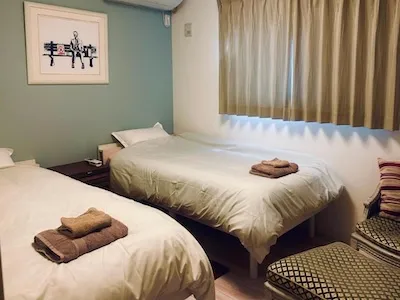
Guest house with shared bathroom near Arashiyama town but far enough to be quiet at night. Futons on tatami mats, washing machine on-site, and a lounge/kitchen area where you can sort your own breakfast. Clean, comfortable, and an 18-minute walk to bamboo grove, good for families or budget travelers who don’t need hotel services.
Is Tokyo also on your itinerary? Read my helpful 1 day itinerary, 3 day itinerary and guide on where to stay.
Summary Of Where To Stay In Kyoto
| Travel style | Best area to stay in Kyoto |
|---|---|
| First-timers | Southern Higashiyama or Downtown |
| Budget travelers | Kyoto Station Area or Imperial Palace Area |
| Atmosphere & character | Southern Higashiyama (premium) or Northern Higashiyama (more affordable) |
| Convenience & transport | Downtown Kyoto |
| Nature & scenery | Arashiyama (ideal for 1–2 nights only) |
Where To Stay In Kyoto FAQ
How many days is ideal in Kyoto?
3-4 days is sufficient to experience Kyoto to the fullest, including a day trip to Arashiyama. Kyoto has a huge number of attractions to explore from temples and parks to its more modern side. 1-2 will allow you to see the main attractions. If you have 1 day in Kyoto check my 24 hour itinerary here.
What’s a typical budget per night in Kyoto?
Hotels in Kyoto average $100-200 per night for mid-range, $200+ for luxury. Budget hotels average around $60 per night.
What’s the best area to stay in Kyoto?
There’s no single best area to stay in Kyoto, it depends on your priorities:
- First-timers: Southern Higashiyama (temples walking distance) or Downtown (central location)
- Budget travelers: Kyoto Station Area or Imperial Palace Area
- Temple lovers avoiding crowds: Northern Higashiyama
- Nature & romance: Arashiyama (1-2 nights)
For most visitors, Southern Higashiyama or Downtown offer the best balance.
Is Kyoto safe for female travelers?
Kyoto is a fantastic for female solo travelers. Crime Index of 14.24 out of 100 which is classed as very low. Violent crime is exceptionally rare, even more so for tourists. You can walk around both day and night with little worry, it’s a peaceful and welcoming city for female travelers. Japanese culture is based on respect and politeness, it’s a pretty introverted place with personal space being respected.
Should I base myself in Kyoto or Osaka?
Ideally spend a few nights in each city, but if money is a concern then staying in Osaka and taking a day trip or two to Kyoto can save you some cash. Hotels rooms are much cheaper, you can bag a mid-range hotel in central Osaka for around $50 per night, whereas Kyoto this would cost between $100-200 per night.
What are the best hotels in Kyoto?
The best hotels in Kyoto depend on your budget and preferred area:
- Best luxury hotel: Hotel Seiryu Kyoto Kiyomizu (Southern Higashiyama) – from $636/night with views of Kiyomizu-dera Temple.
- Best ryokan experience: Ryokan Togetsutei (Arashiyama) – from $450/night with riverside location and private cypress baths.
- Best mid-range hotel: Hotel Okura Kyoto (Downtown) – from $140/night with direct subway access and mountain views.
- Best budget option: Rinn Miyagawacho (Southern Higashiyama) – from $52/night with traditional tatami floors in Gion
Should I avoid Kyoto on weekends?
Kyoto is always busy, but the weekends see even more crowds, including early morning. For sanity and enjoyment I recommend visiting during the week, but if you can only travel weekends try go off season and go out at the crack of dawn.
Where should I stay in Kyoto for my first time?
If you’re deciding where to stay in Kyoto first time, Southern Higashiyama is ideal for temples and traditional atmosphere, while Downtown Kyoto offers better transport and nightlife.
Practical Tips
Insurance: I recommend True Traveller for EU/UK citizens and World Nomads for anyone else. Both are highly reputable and reliable travel insurers.
Mobile data: Airalo is a super convenient e-sim that you can just download to your phone and go!
Restaurant reservation: OpenTable is an easy way to book a table. There are many establishments on here.
Do not take photos of Geishas that you see walking around the Gion area. Additionally you should not stop them, touch them, or follow them. You will be fined $65.