The best way to sum up Vilnius is to quote their tourism campaign “Nobody knows where it is, but when you find it; it’s amazing”. Vilnius, the capital city of Lithuania, has been described as the “The G-Spot of Europe” alluding to the fact it’s a hidden pleasure. They aren’t wrong.
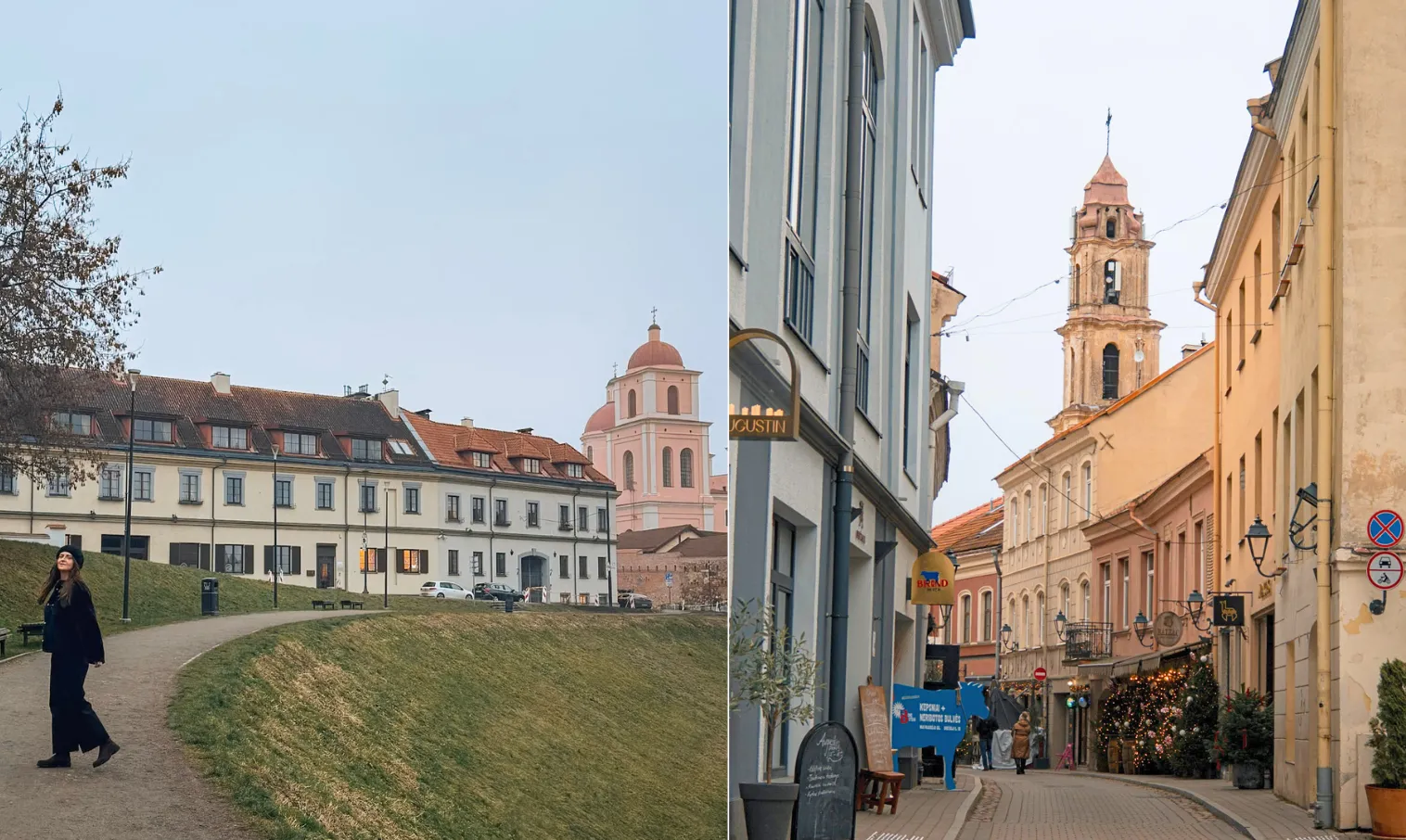
Vilnius was never at the top of my list but after spending over a month here finding the best things to do in Vilnius, I can tell you it belongs on everyone’s radar. I travelled here from Riga expecting it to be similar, a little rough around the edges, a post-Soviet city still finding its feet. This city is something else entirely, a well-preserved UNESCO Old Town, lively nightlife with mix of dive bars, upscale cocktail bars and hipster craft bars, edgy street art around every corner, 20+ Michelin restaurants, and some of the quaintest cafés I’ve come across in Europe. Vilnius has a big personality, which you’ll fall for in about 10 minutes.
This Vilnius travel guide covers all the best places to visit from lesser known churches to jiggly hippo shaped Korean panna cotta and a bar with a giant pink poodle. I always base my guides on my own experience staying weeks to months in the places I visit.
- What To Expect From Vilnius, Lithuania
- Best Time To Visit Vilnius
- How To Get Around Vilnius
- Best Things To Do In Vilnius, Lithuania
- 1. Gediminas Castle Tower
- 2. Hill of Three Crosses
- 3. Republic Of Uzupis | Užupio Respublikos
- 4. Stiklių Street | Glass Quarter
- 5. Literatu Gatve | Literatai Street
- 6. Vilnius Cathedral + Bell Tower
- 7. Snekutis
- 8. Bougie Cocktail At Pink Poodle
- 9. Church of St Anne and Bernardine Complex (Church of St. Francis of Assisi)
- 10. Dominican Church of the Holy Spirit
- 11. Hales Market
- 12. Gates Of Dawn
- 13. Palace of the Grand Dukes of Lithuania
- 14. Find The Street Art
- 15. MO Museum
- 16. Gogi Guy
- 17. Rub The Lucky Belly
- 18. Slide Sculpture
- 19. Paupio Turgus
- 20. Try Traditional Food At Etno Dvaras
- 21. Day Trip To Trakai
- Where To Stay In Vilnius: Best Areas
- Vilnius FAQ

Some links in this post are affiliate links, meaning I may earn a commission at no extra cost to you if you make a purchase.
What To Expect From Vilnius, Lithuania
Vilnius was the last stop before we returned to Ireland for Christmas. Travelling from Riga, I was expecting Vilnius to be pretty much the same. Truth be told, I would have been happy to skip it entirely, but thankfully we didn’t. Vilnius is now one of my favourite cities in Europe. I loved our time there.
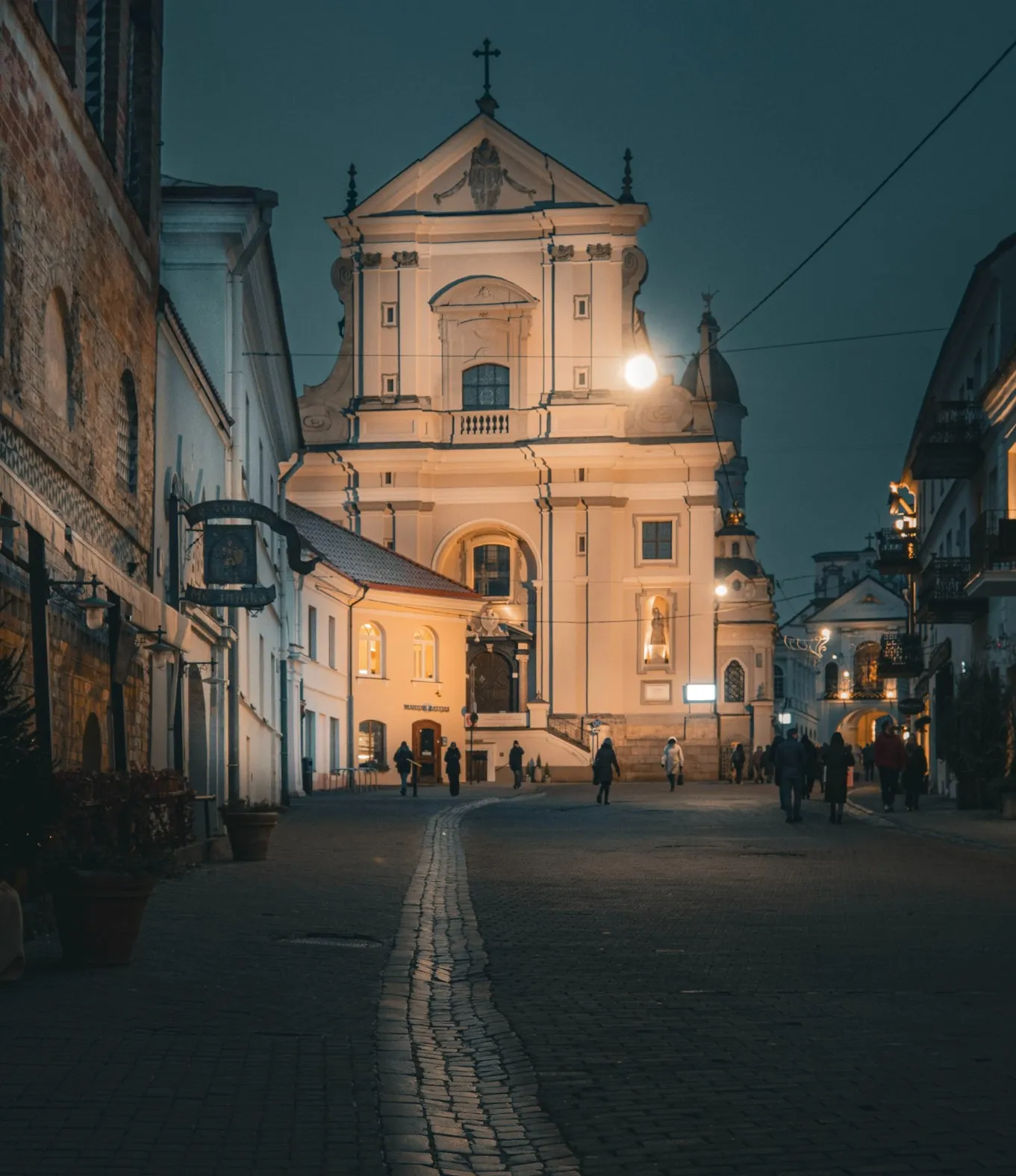
The city has two sides to it, the UNESCO old town, quiet and refined with narrow cobblestone alleys, upscale boutiques, local amber, modern patisseries and trendy bars. This old town doesn’t feel overly commercialised like other old towns in Europe, it doesn’t appear to be avoided by locals, and as a tourist this is a refreshing change. Sure, there are souvenir shops but they aren’t OTT. Then, the other side to the city is edgy, elaborate murals colour up dilapidated Soviet buildings, giving the streets a strong artistic personality and even a small, slightly eccentric enclave called the Republic of Uzupis .
Vilnius is also a major tech hub, the birthplace of major companies like Vinted and NordSecurity. Although a small city, it feels bigger, more cosmopolitan, which I think comes from the number of large corporations and their high-earning employees. This shows up in trendy cocktail bars like Poodle and the impressive number of Michelin restaurants (4 have 1 star while 20+ are Michelin Bib Gourmand) such as Nineteen18 and 14Horses.
RELATED: Where To Stay In Vilnius | An Honest Area By Area Guide →
Best Time To Visit Vilnius
Vilnius works in every season, but if you want the best of the weather without the crowds, aim for May or September. You get comfortable temperatures, a city that’s busy but not crowded, and accommodation prices that haven’t hit their summer peak yet. July and August are the most popular months, which means the Old Town gets busy and hotels charge accordingly.
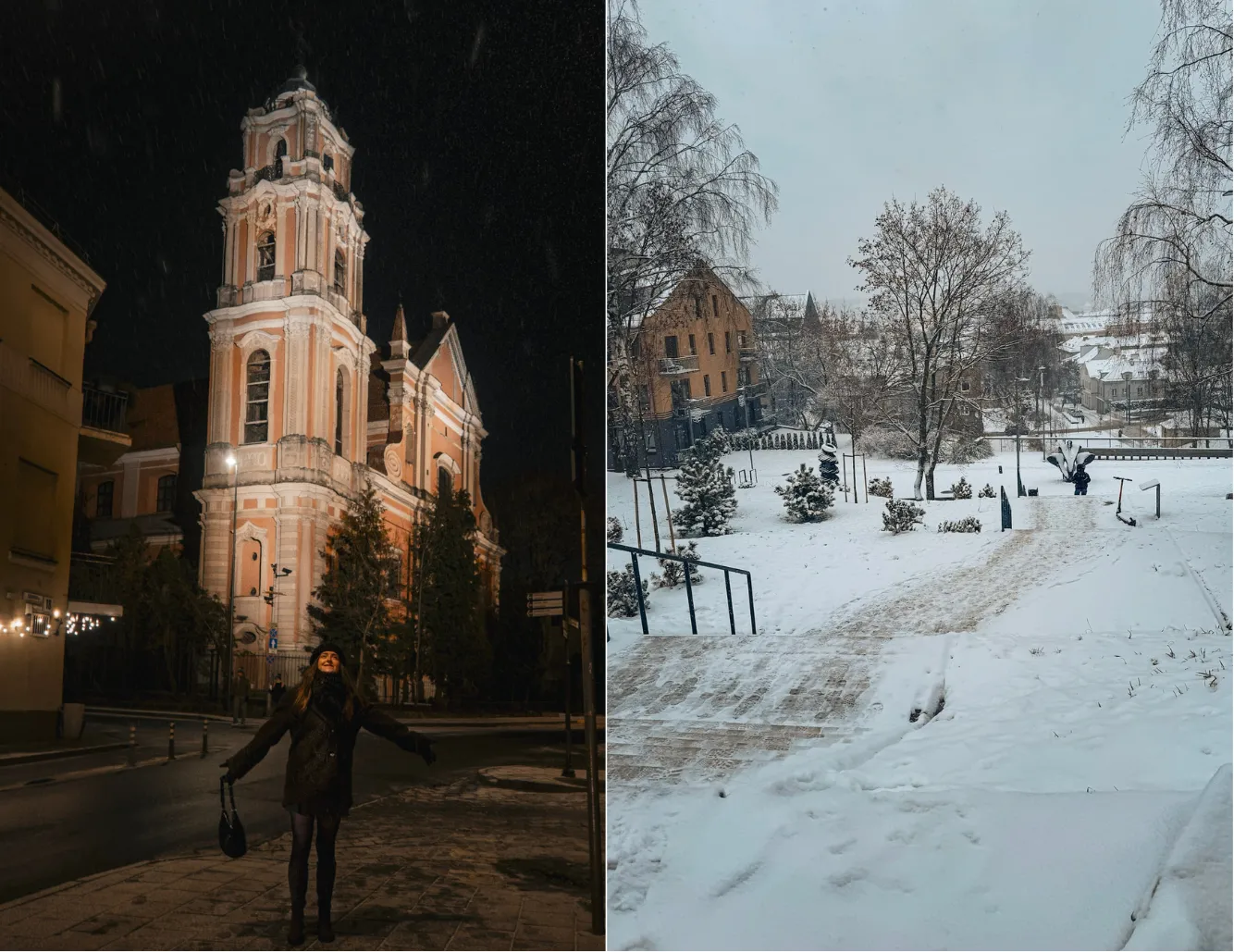
I visited in December and I’d go back in a heartbeat. Yes it’s cold, at times my hands felt frozen, but there’s something about Vilnius in winter, it’s magical. Snow on Baroque rooftops, elaborate decorations around old town, Christmas markets, every restaurant feeling like somewhere you want to stay for hours and there are plenty of mulled wine stalls to keep you warm. Hotel prices are also at their lowest, so your money goes further.
RELATED: Vilnius Christmas Market: My Experience + Everything You Need To Know →
How To Get Around Vilnius
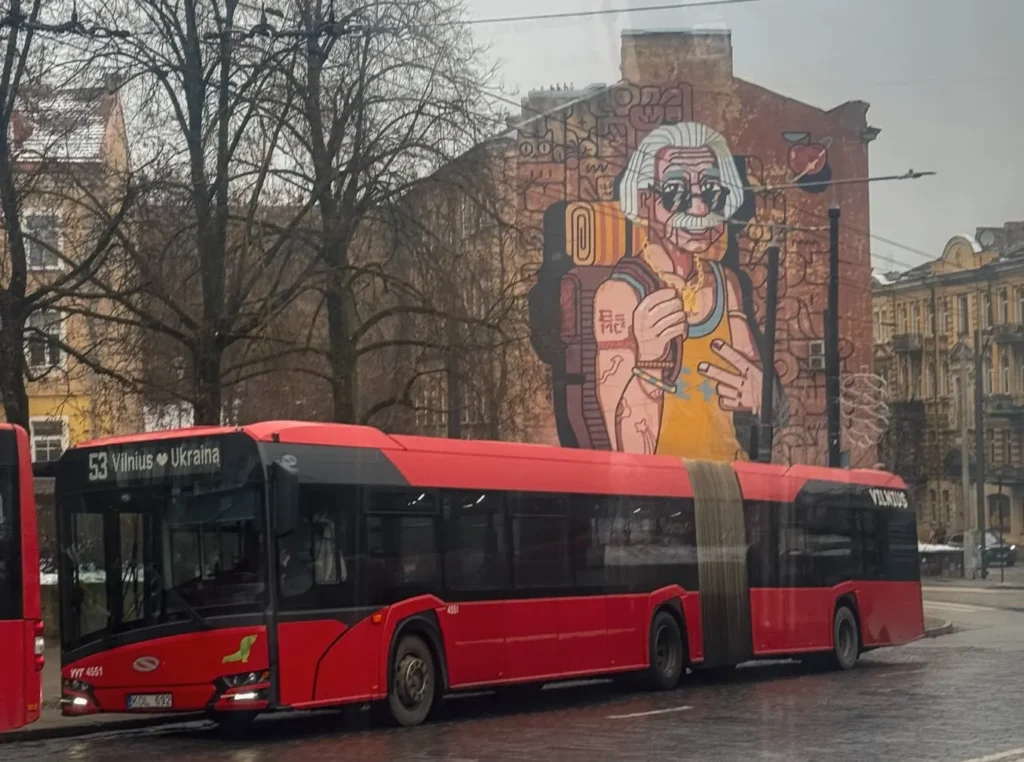
Vilnius is one of those cities that is a joy to walk around. It’s the best way to see the city, and its many hidden murals. Getting around is straightforward, which makes exploring Vilnius attractions outside the Old Town much easier than you’d expect
For places outside of the city there is an efficient bus network. I only used the bus to get to the shopping centre Akropolis, the airport and Trakai castle. I found it easy to navigate, just download the Trafi app which doesn’t require a Lithuanian phone number, upload a €5 credit, purchase a ticket and activate it when you’re on the bus. If you’ve a Lithuanian number then m.ticket is a good option that doesn’t require a minimum top up.
Tickets are priced at €1 for a 30-minute trip or €1.25 for a 60-minute journey. Alternatively, you can purchase a ticket using a contactless debit or credit card directly on the bus.
Buses run from around 5am until midnight. On Friday and Saturday nights there is also a limited night service running until around 3am. Buses marked with a “G” are express routes; “N” indicates night buses.
How To Get from Vilnius Airport To Vilnius City
Vilnius airport is only 7km from the city centre, so getting in is quick and straightforward whichever option you choose.
Bus: the cheapest option at €1 per ticket. Bus routes 1, 2, 88 and the express 3G all run from the airport every 10-30 minutes and take around 20 minutes to reach the city centre. The stop is right outside arrivals, they are regular city buses.
If you are arriving in Vilnius late the 88N runs from the airport – city centre – Europa Square from 22:30 to 05:30.
Train: the fastest option. A train runs from the airport to Vilnius Central Station every 40-60 minutes and takes just 7-9 minutes. Tickets cost €0.90 which you can purchase from ticket machines outside the platform (2 minute walk from the arrivals terminal) or from ltglink.lt. The station is a 10-15 minute walk from the Old Town. The train runs on the following schedule:
- Vilnius – Vilnius Airport
- 08:00–18:30 on weekdays
- 06:55–18:37 on weekends
- Vilnius Airport – Vilnius
- 07:10–19:20 daily
Taxi: the easiest option if you have luggage. The journey takes around 15 minutes and costs approximately €23. Bolt is cheaper than a street taxi. A pre-booked airport transfer is a stress free but expensive alternative but can be a lifesaver after a long flight being met by your driver in the arrivals hall who will take you bags and lead you to your accommodation. It’s the best option for large groups.
Best Things To Do In Vilnius, Lithuania
1. Gediminas Castle Tower
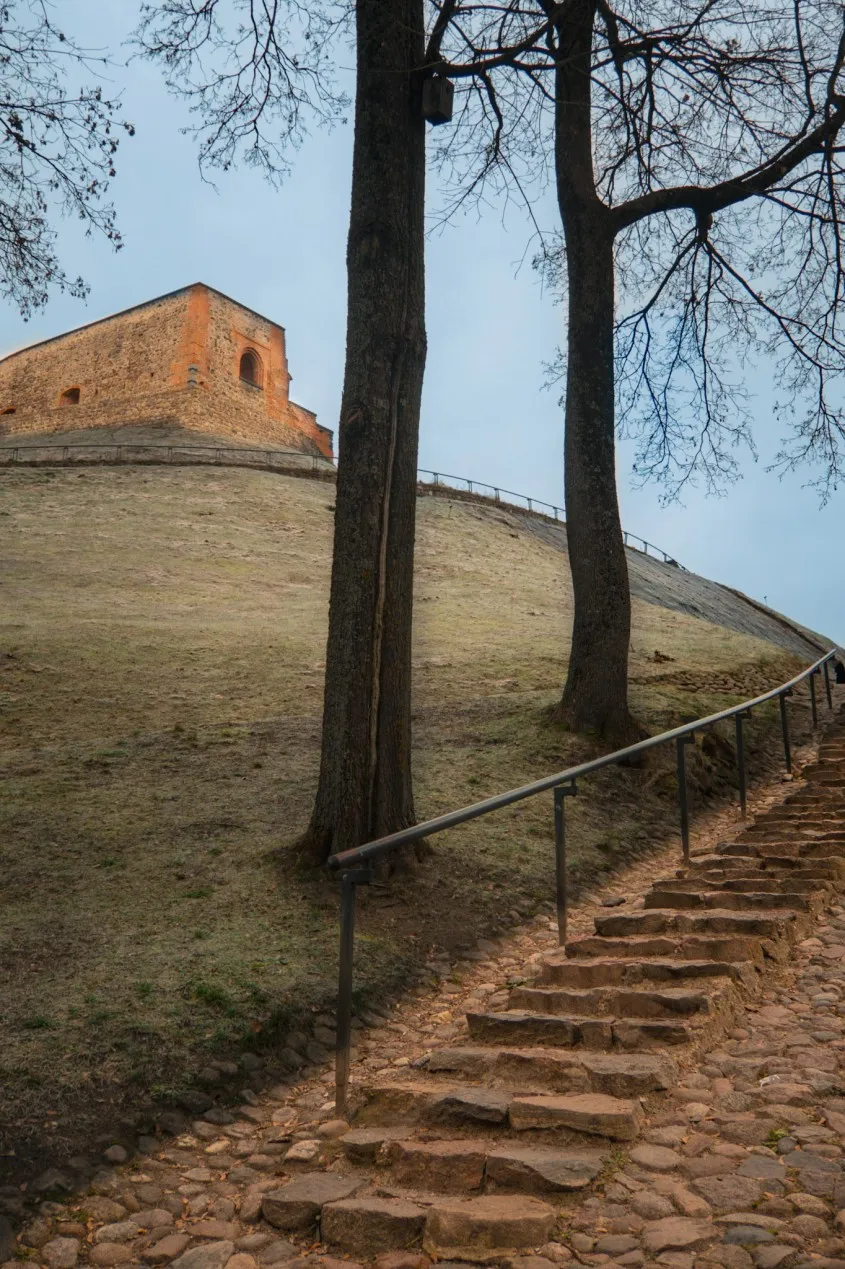
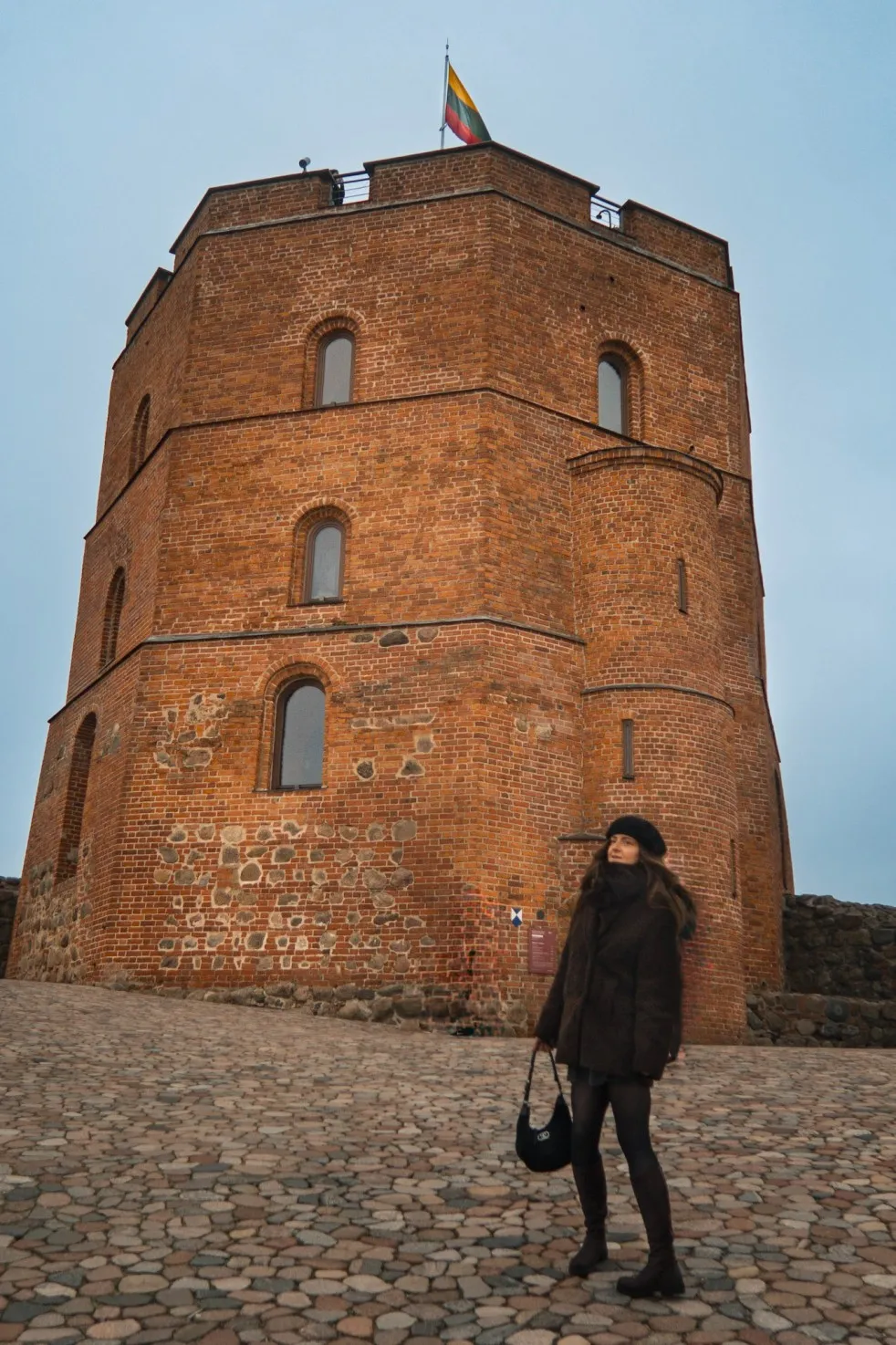
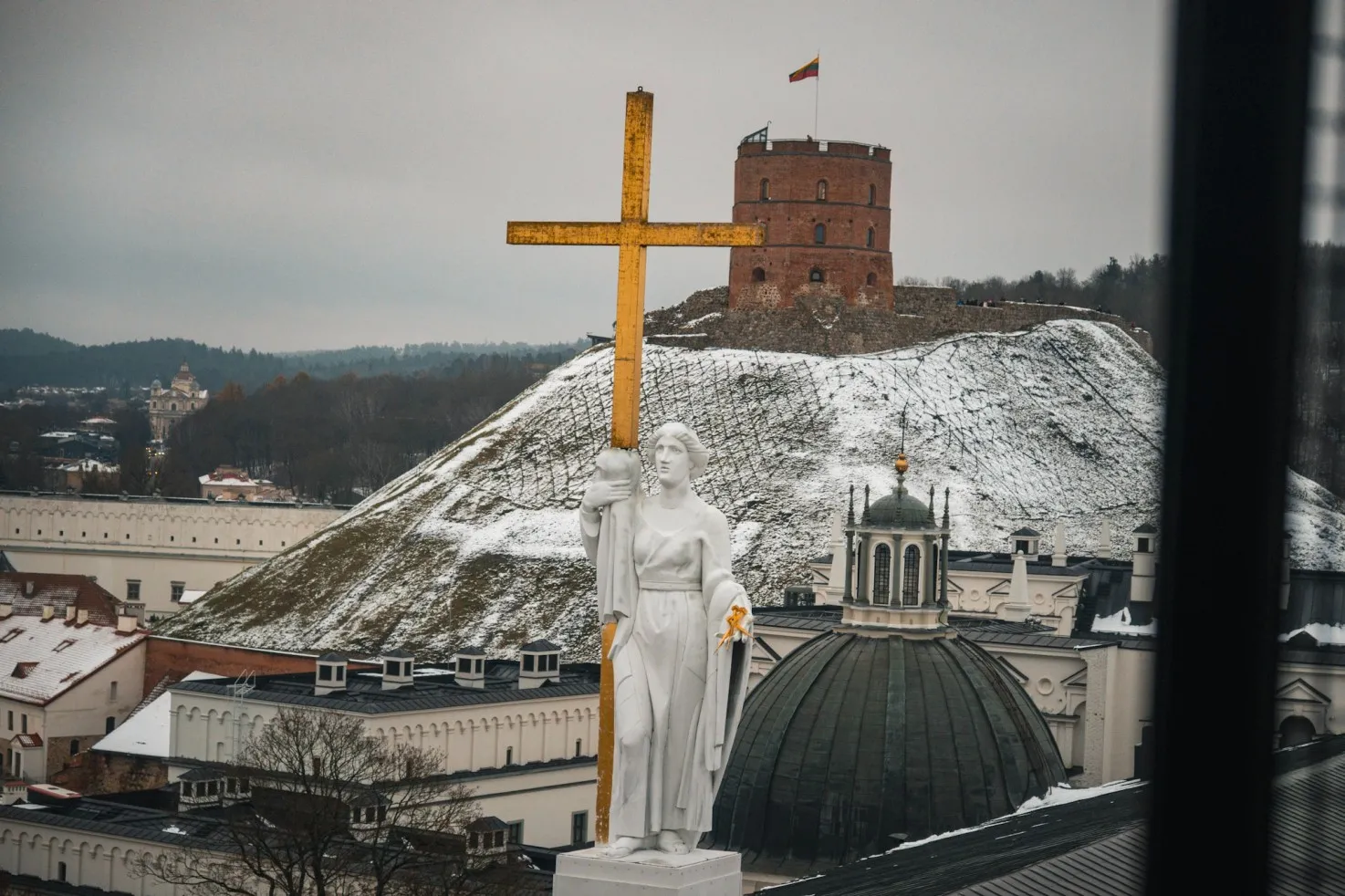
Arguably, Vilnius’s number 1 attraction, climbing up to Gediminas Castle Tower is a must do. Sitting 126 metres above Vilnius, you can spot this 14th century red brick tower throughout much of old town. The top offers one of the best viewpoints of the city, looking out at a sea of terracotta rooftops.
The climb to the top is not difficult, with a mix of stone steps and a wooden staircase. I found neither to be steep. If you’re visiting Vilnius in Winter make sure to wear shoes with a good grip and gloves as the wooden staircase gets covered in ice, so you need to grab onto the railing. Without my gloves I’m pretty certain I would have gotten a bruised bum!
Alternatively, you can take a quick funicular to the top for €3 return or €2 one-way, departing from The Old Arsenal Museum here.
Once you are at the top you have the option to climb the 20 metre tower for €8 (adults)/€4 (children). Throughout its three floors there are exhibitions, some of which are interactive, and then at the top of the tower you’ll find more sprawling city views.
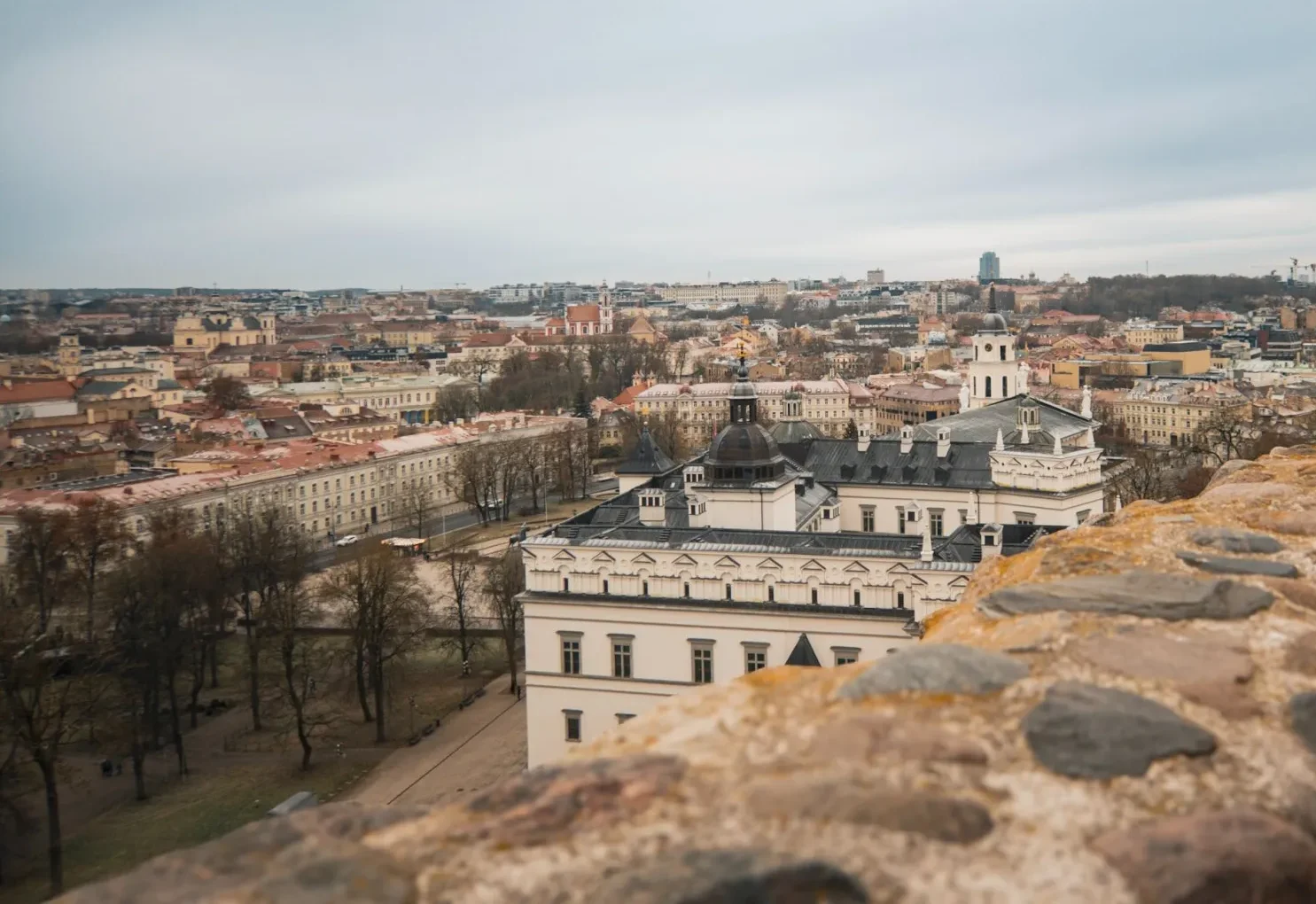
Legend has it the Lithuanian Grand Duke Gediminas built Vilnius after a hike, where he took a rest on a hill that led to a dream of a howling wolf that was interpreted as a sign he should build a city. He built the city that would later become known as Vilnius and a Castle, Gediminas Tower is all that remains of that castle.
2. Hill of Three Crosses
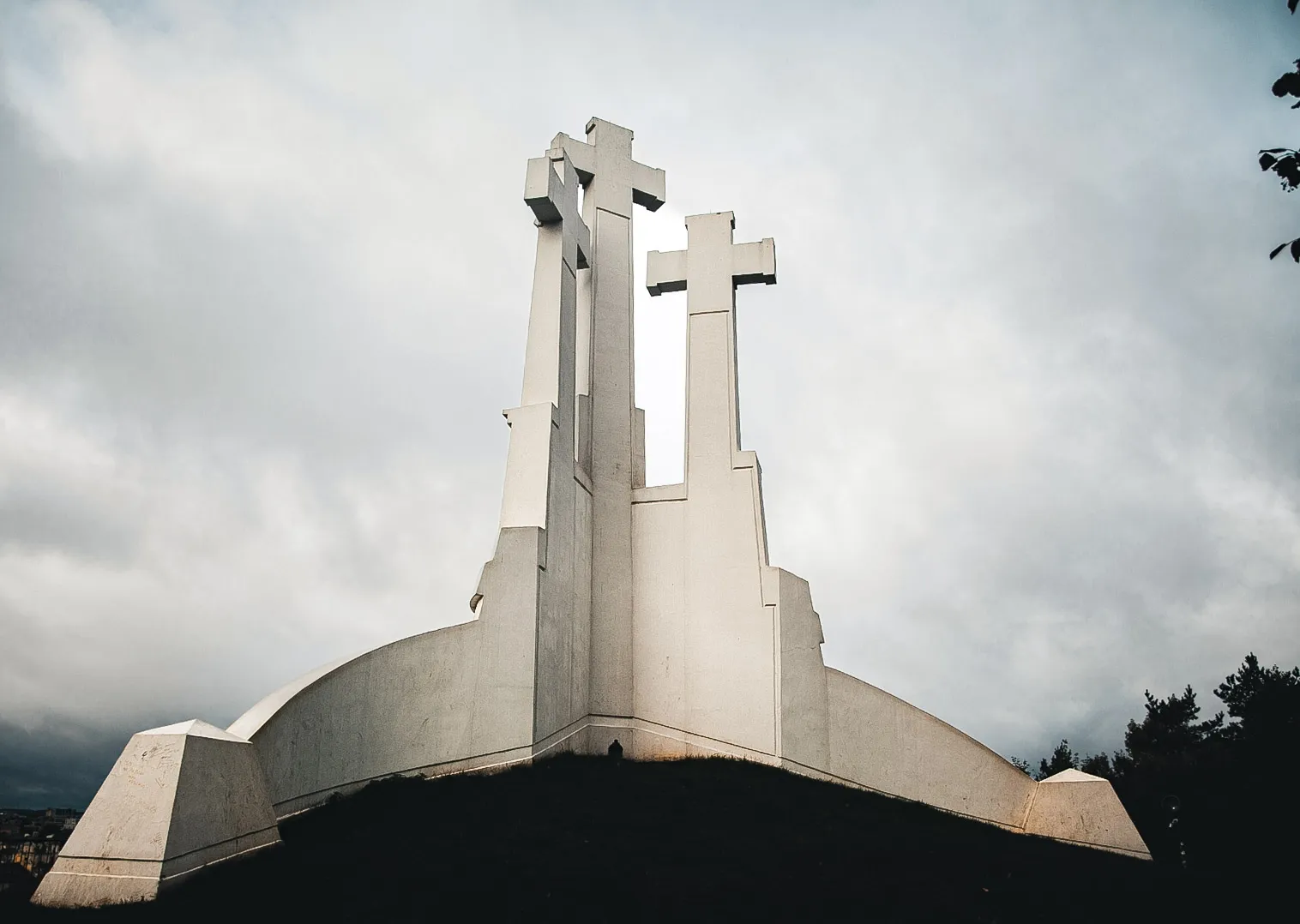
Situated on Plikasis Hill in Kalnų Park, The Hill of Crosses overlooks Vilnius and is one of the most iconic sights in the city. Wooden crosses have been placed on this site since the early 17th century, originally put up in memory of seven Franciscan friars who were killed for their faith. The site was demolished by the Soviets but rebuilt in 1988, and today the 12-metre structure is as striking as ever.
Getting there is easy. It’s a short walk of around 300 to 400 metres, taking maybe 15 to 25 minutes depending on your pace. It sits near the Bernardine Garden and the Vilnele River, which makes it a lovely area to wander around while you’re at it. There’s a small observation deck at the base of the crosses to take in the views and entry is free.
One thing worth knowing if you’re visiting in winter, it gets slippery, so wear shoes with a decent grip.
3. Republic Of Uzupis | Užupio Respublikos
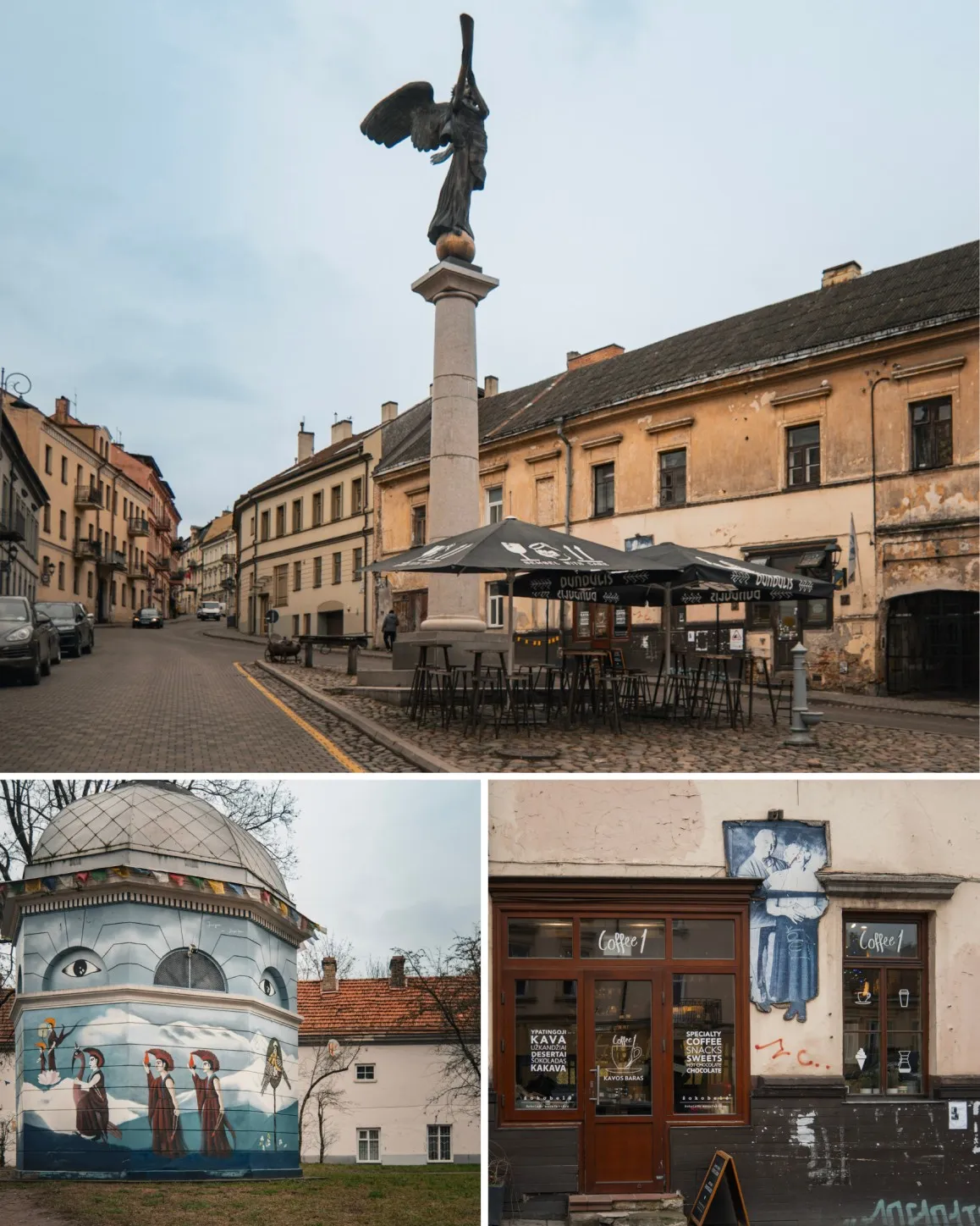
One of the coolest pockets of Vilnius is the self-proclaimed Republic of Uzupis, formed in 1998, by residents of Vilnius’s oldest and once most disadvantaged district. Today Uzupis has its own president, currency, flag, and constitution. Rather than being written by the Lithuanian government, local artists Romas Lileikis and Tomas Čepaitis created the constitution in 3 hours, on the 1st of April, which is no coincidence.
Designed as a revolt against Lithuania’s rigid society. You can find the 41 rule constitution in over 50 different languages displayed along the wall of Paupio Street. Here’s a little excerpt:
- A person has the right to be lazy or do nothing
- A person must remember his name
- A dog has the right to be a dog
- Everyone has the right to live by the River Vilnele, and the River Vilnele has the right to flow by everyone
- Everyone has the right to make mistakes
- Everyone has the right to have no rights
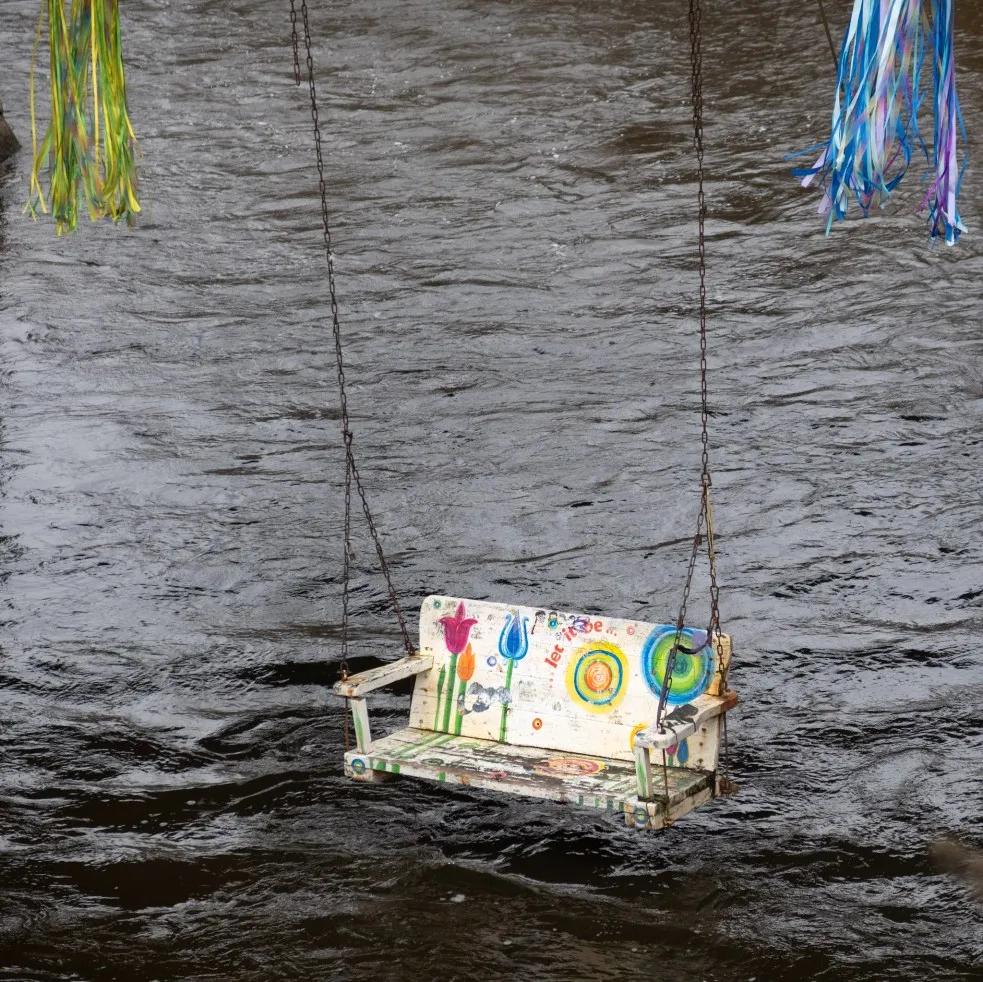
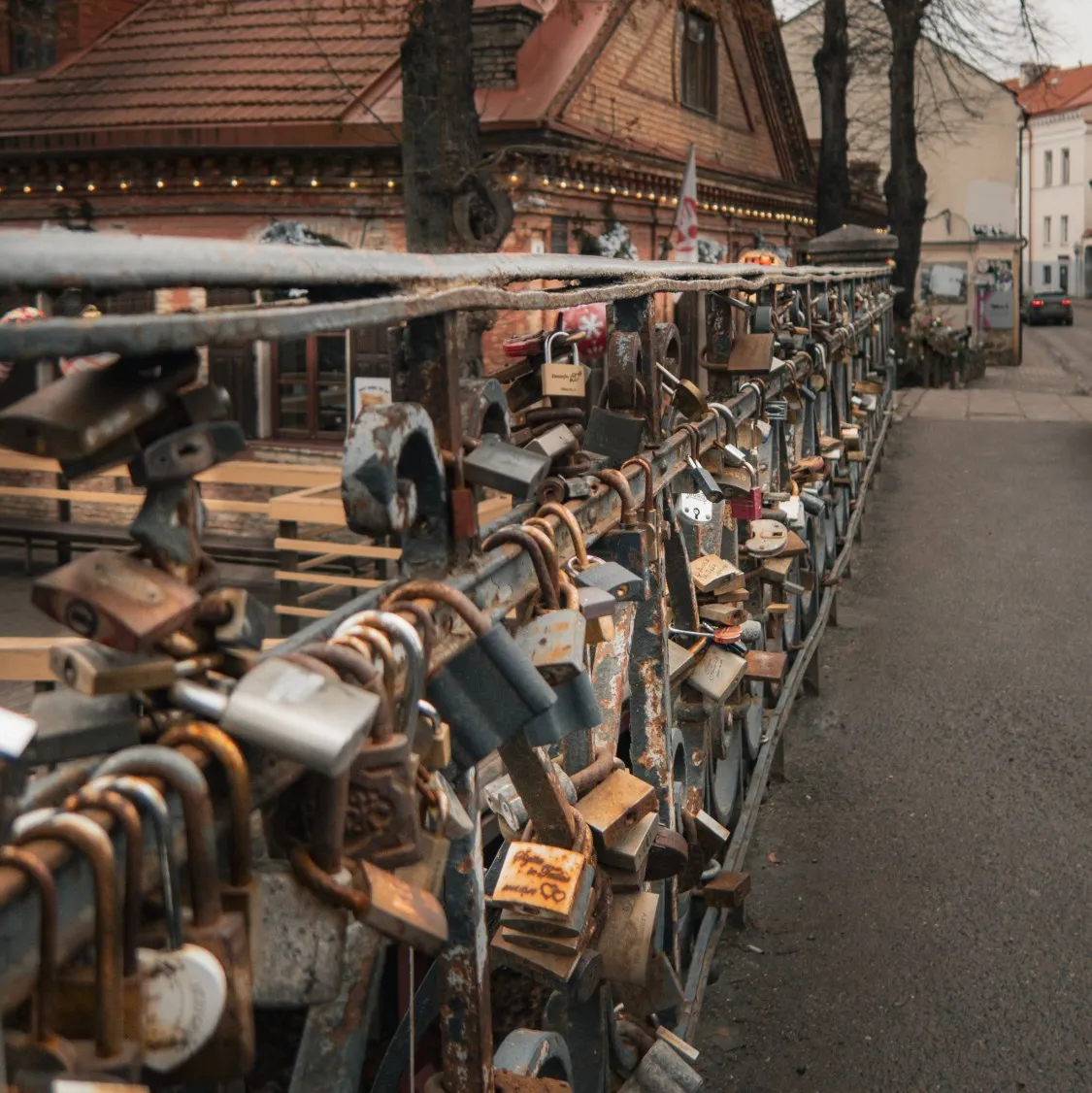
Uzupis is one of the most interesting areas of Vilnius to just take a stroll, there is plenty of artwork that brightens it up and many cafes to chill out in. I really enjoyed Coffee1 and their chocolate cheesecake. There is also a swing under a bridge that requires you to wade through water to get to it, making for a cool photo op.
Give yourself 2 – 3 hours to explore the streets, learn about the area, grab acoffee and bite to eat.
RELATED: The Best Things To Do In Užupis: Guide to Vilnius’ Mini Republic →
4. Stiklių Street | Glass Quarter
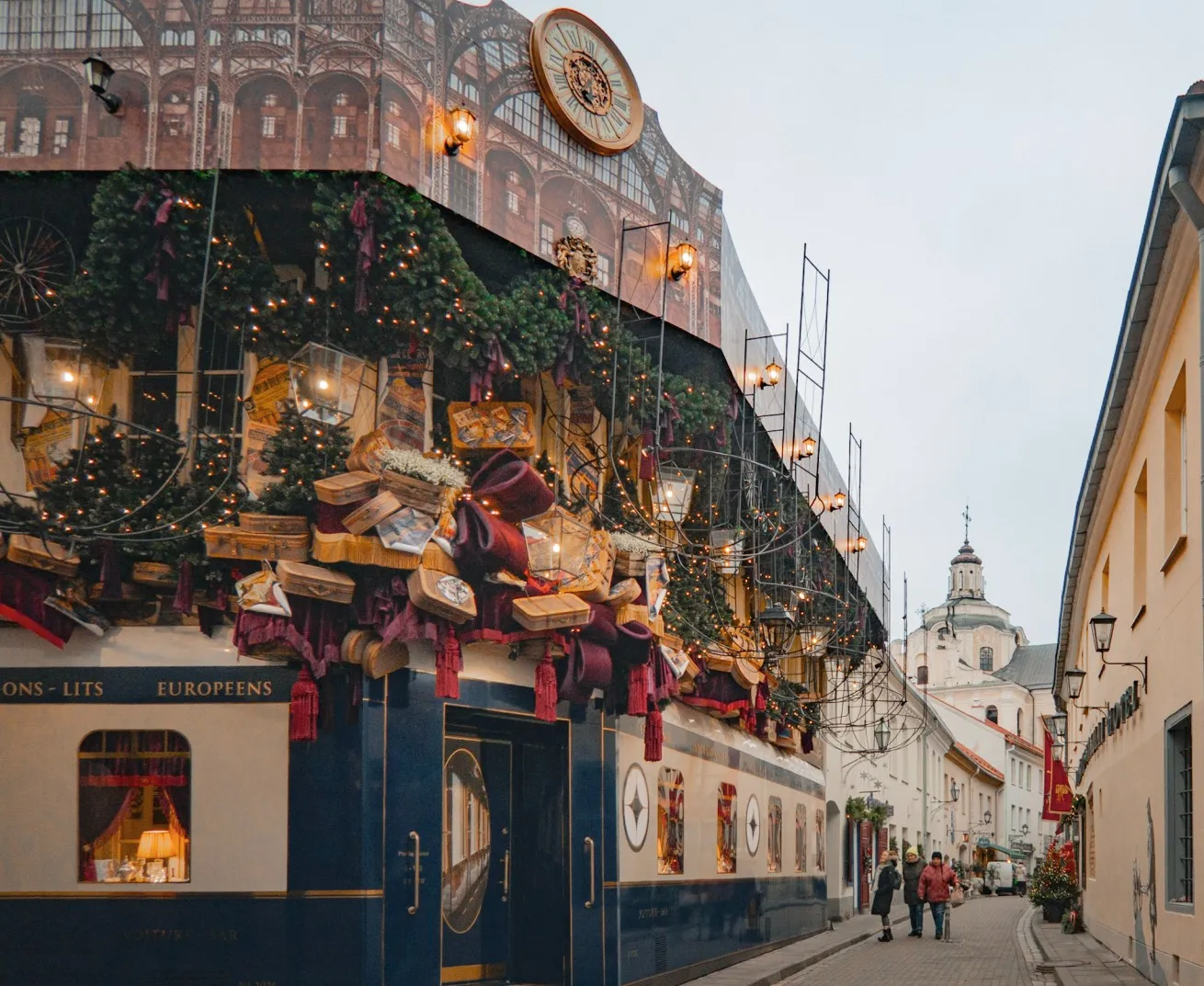
Once the heart of Vilnius’s Jewish community, this small 300 metre street used to be a ghetto that was home to goldsmiths and glassmakers – hence the name Glass Quarter. It was one of the liveliest places with a 3,000 capacity synagogue, that no longer remains today. There are a few nods to the past through murals, the house on Stikliai St. 14 which displays the date 1661 and the former Jewish Guild on Gaono St. 6.
It’s somewhat hidden and unexpected, you turn a corner and you’re suddenly here. I found it to be the prettiest part of the city, the boutiques, cafes and jewellers tend to decorate the facade of their shops according to the season. It’s not only romantic but the colourful decorations alongside the cobblestones make for an aesthetic wander.
In terms of where to go, I stumbled across the jeweller JurGus, although everything was out of my price range there were many unique pieces, and she was kind to a broke traveller like myself. Everything is her own designs so I’ve mentally bookmarked it for when my finances change.
Lokys is a traditional Lithuanian restaurant, located down a basement, it has a medieval theme and is very popular with tourists who want to try some good local food like zeppelins and Šaltibarščiai. If you have the room after Lokys, I highly recommend the macaroons from Poniu Laime, there are lots of flavours, you’ll have no problem finding them as this cafe always has the most eye catching decorations on the Glass Quarter. Augustas & Barbora love story café is a close second, cozy inside with a picturesque outdoor seating in front.
If it’s your first time, consider doing a walking tour of Vilnius Old Town with a local guide who will give you plenty of information and a few local snacks along the way →
RELATED: Best Cafes In Vilnius: 6 Of My Favourites →
5. Literatu Gatve | Literatai Street
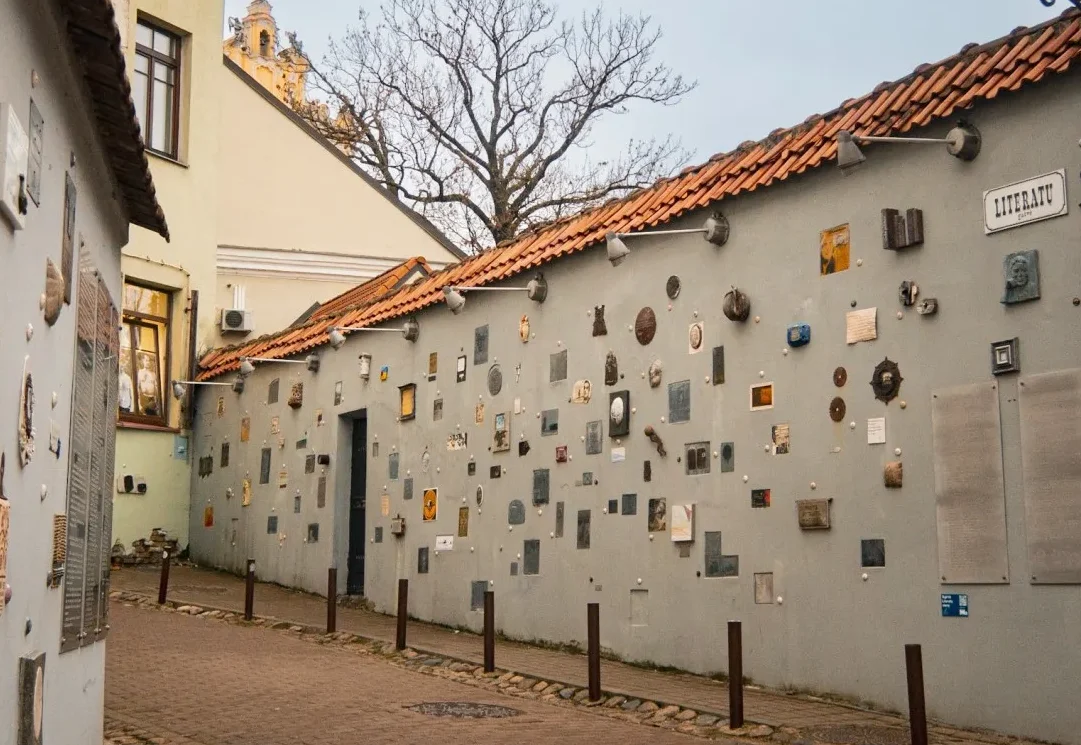
A short walk away from the Glass Quarter is another hidden little street, Literatai Street is a quirky slice of the city. It represents exactly what Vilnius stands for, artistic expression. 200 plaques dedicated to artists with a connection to Lithuania, line the walls of this narrow winding street.
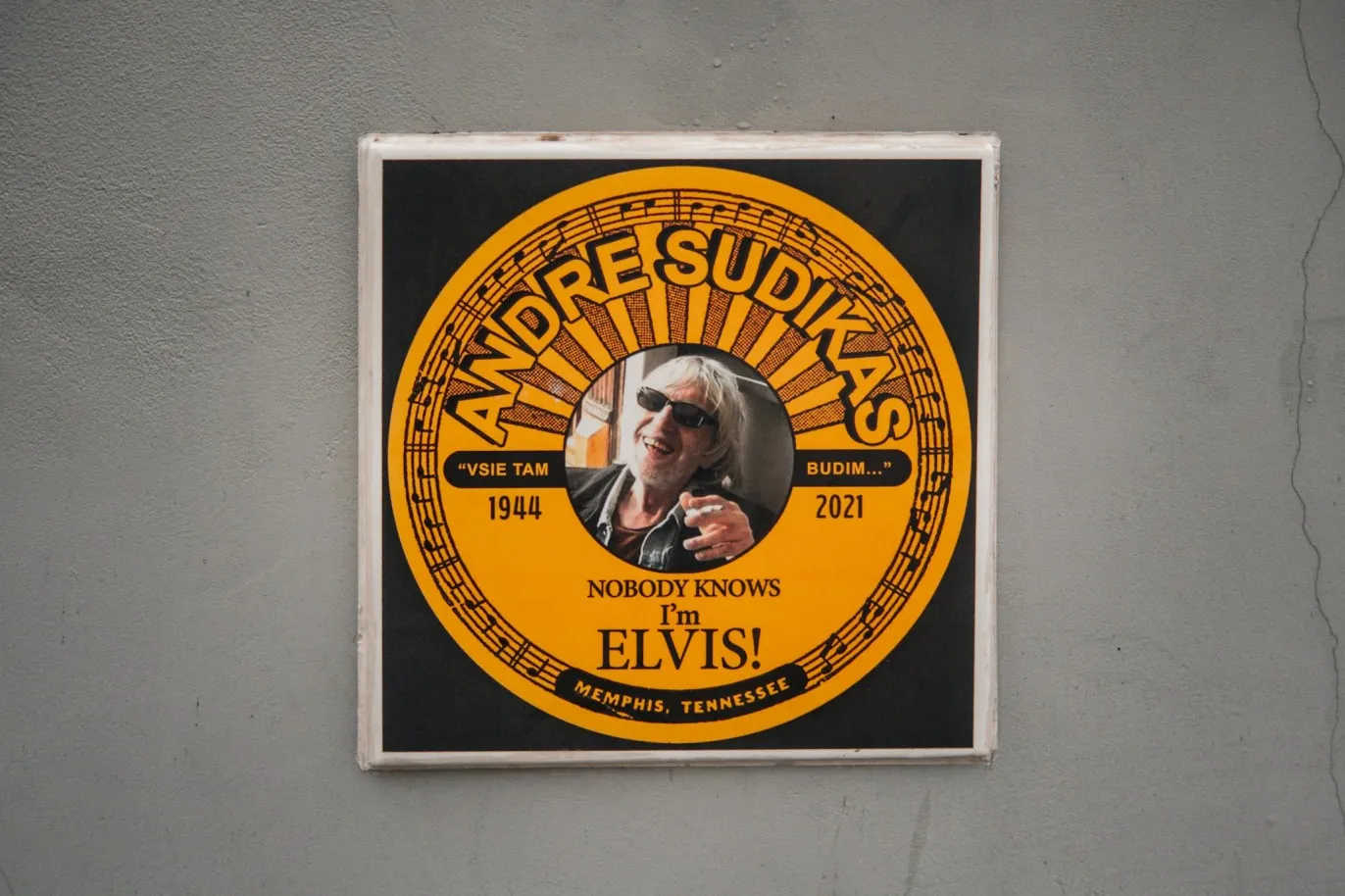
The plaques are all different, which adds to the whimsy of the street. Some are formal portraits while others are vibrant with some humour. My favourite was for Andre Sudiks, a yellow vinyl, his smiling face in the middle with the words nobody knows I’m Elvis. I never heard of Andre before that afternoon, but I think we would have got on.
It’s easy to miss so make sure you stop by when you are on Pilies Street, it just demands 5 to 10 minutes tops.
6. Vilnius Cathedral + Bell Tower
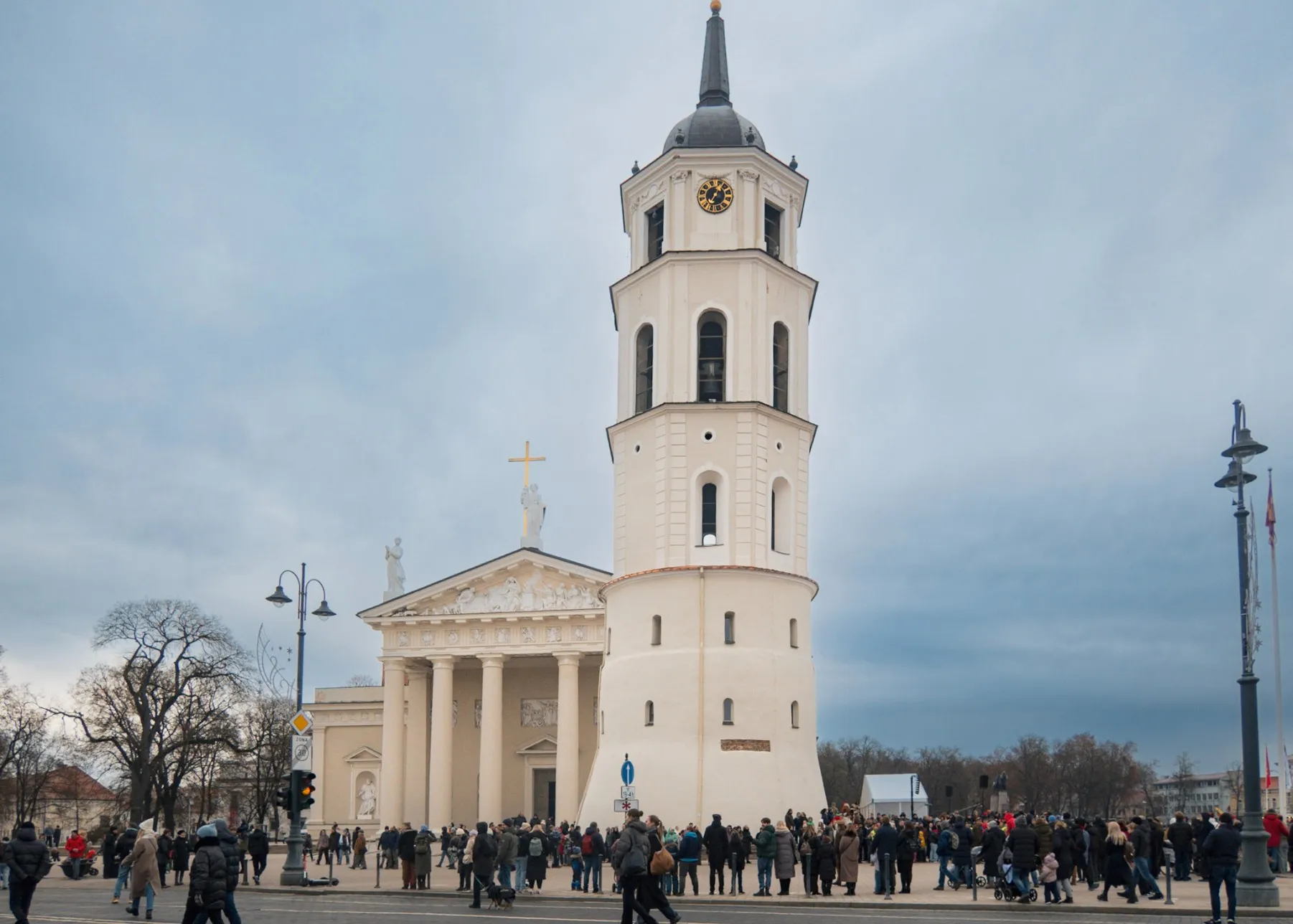
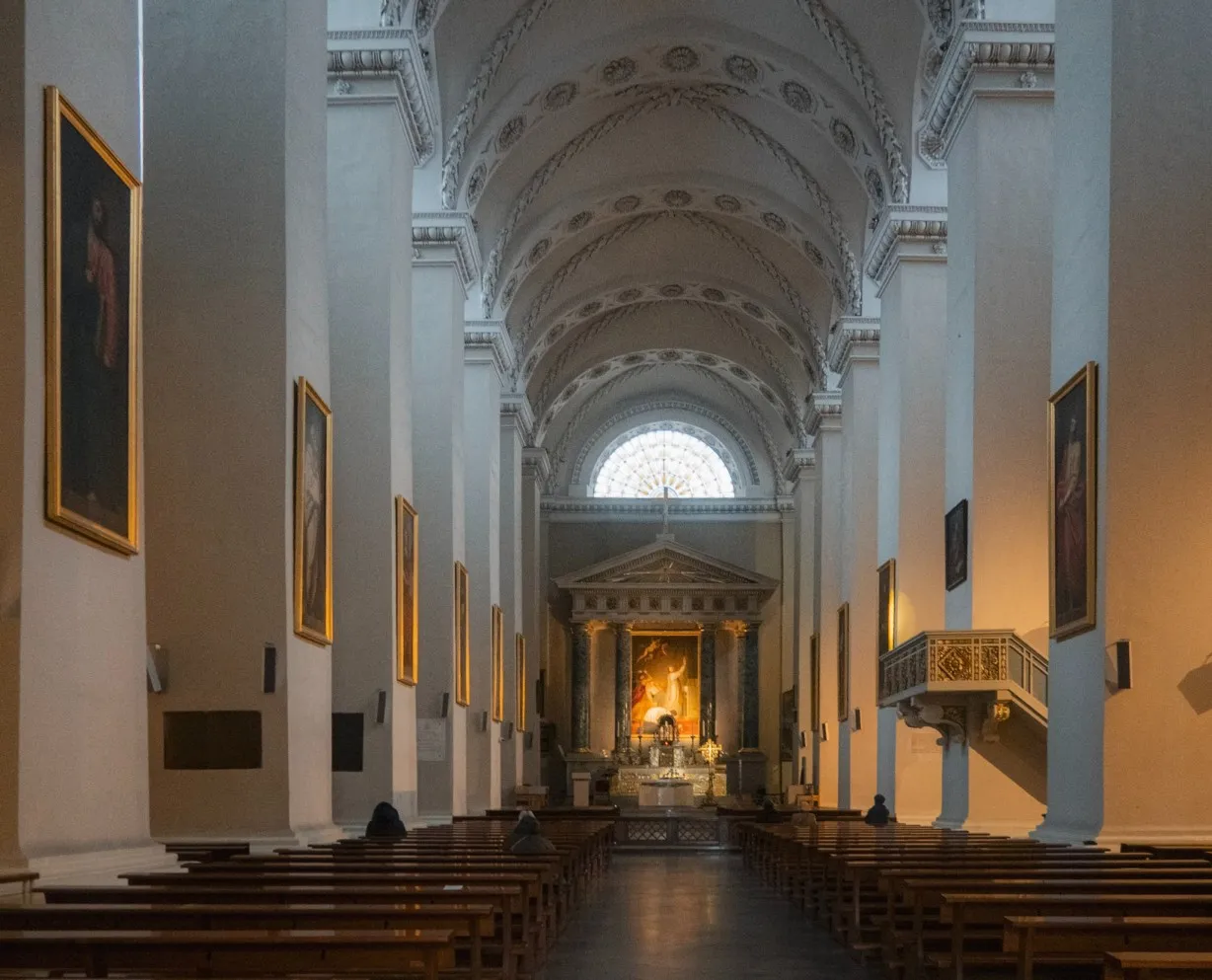
Dominating Cathedral Square, Vilnius Cathedral is hard to miss and impossible to ignore. The neoclassical facade with all white columns and clean lines feels almost too grand for a city this size.
Look down before you go in. There’s a tile in the square marked Stebuklas meaning miracle and local legend says if you stand on it, make a wish and turn three times, it comes true. I’m not superstitious, but I did it anyway, still waiting on that lotto win.
The Bell Tower beside it is older than the cathedral itself, a remnant of the city’s original defensive wall. It leans very slightly. You can climb it for a fee of €6. The stairs are steep and narrow, but you get a nice view of the city.
Worth 20 minutes of your time. Worth the photograph. Worth the wish, even if you don’t believe in that sort of thing.
7. Snekutis
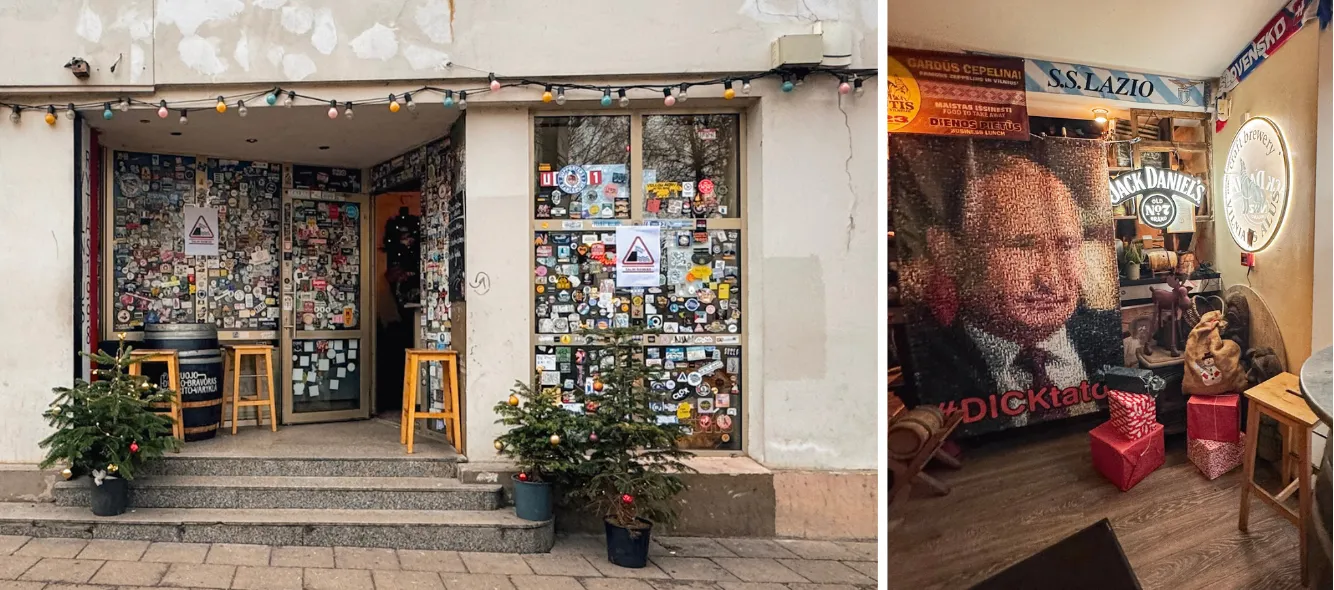
Of all the bars we visited in Vilnius, and there were a lot, Snekutis really stood out. As soon as we walked through the door we were greeted with a large image of Putin, made from thousands of tiny penises with the word Dicktator. Instantly I knew I was in good company. Inside it’s dark and cosy with football scarves from all over the world hung from the ceiling.
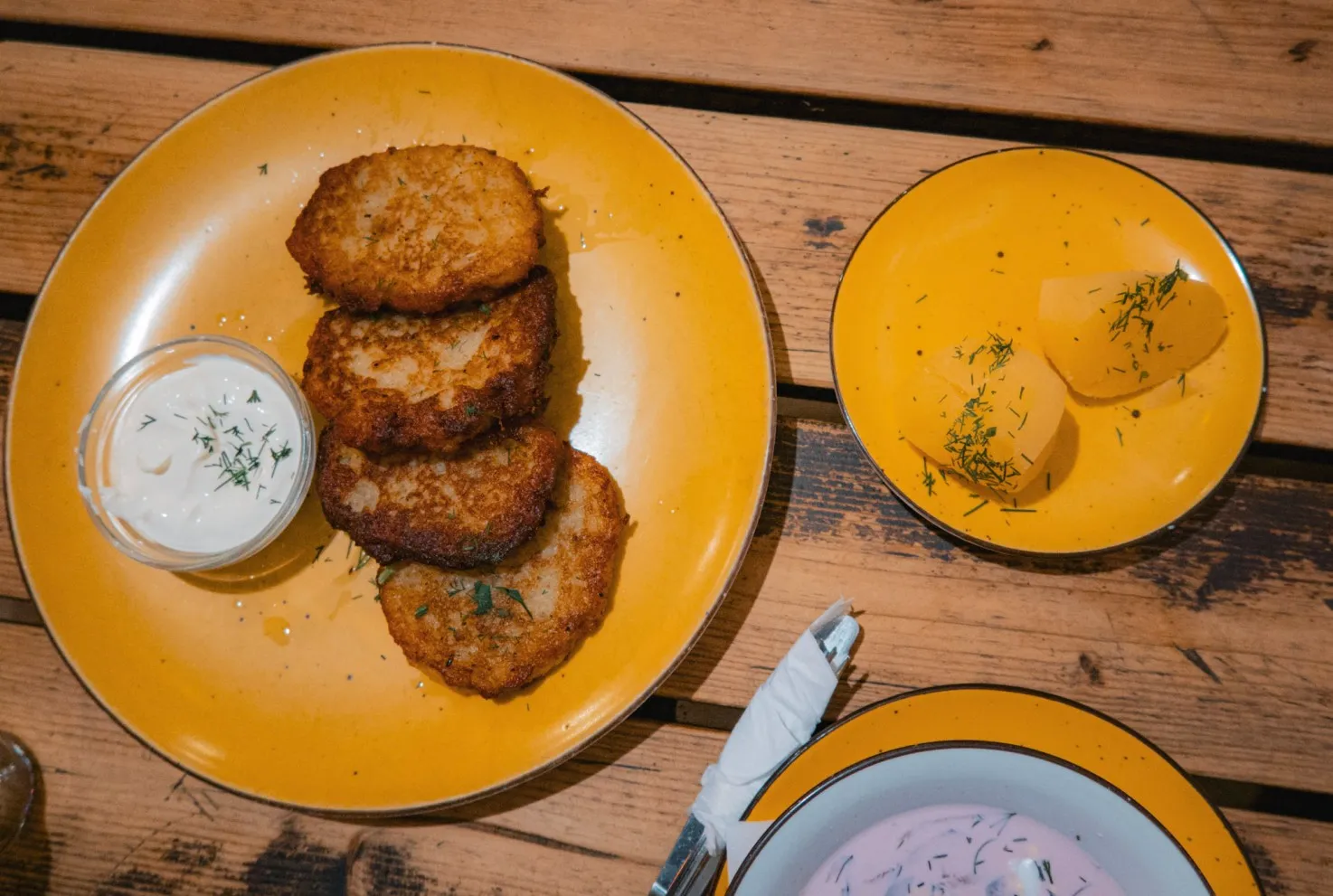
Snekutis is known for their tasty Lithuanian menu, but be warned, the portions are huge. Dishes include Cepelinai, pigs ear, potato pancakes, borscht and rye bread. We ordered the cold borscht and potato pancakes. The borscht was the best I’ve had, it was seasoned well and served with boiled potatoes. The potato pancakes were crisp, not too oily and served with a generous dollop of sour cream. You could get away with sharing a meal between two.
Of course, this is a pub, and it’s a good one. With over 30 types of beer, many from small Lithuanian breweries, you will find something new. My partner loved the honey beer. The prices are also reasonable, most dishes are under €9, pints are between €4-€5. They often have live music in the evenings.
It’s self serve, so find a seat, scan the QR code, and then go to the bar to order and pay.
Not sure what to eat in Vilnius? This Lithuanian food tasting experience showcases the food locals actually eat →
8. Bougie Cocktail At Pink Poodle
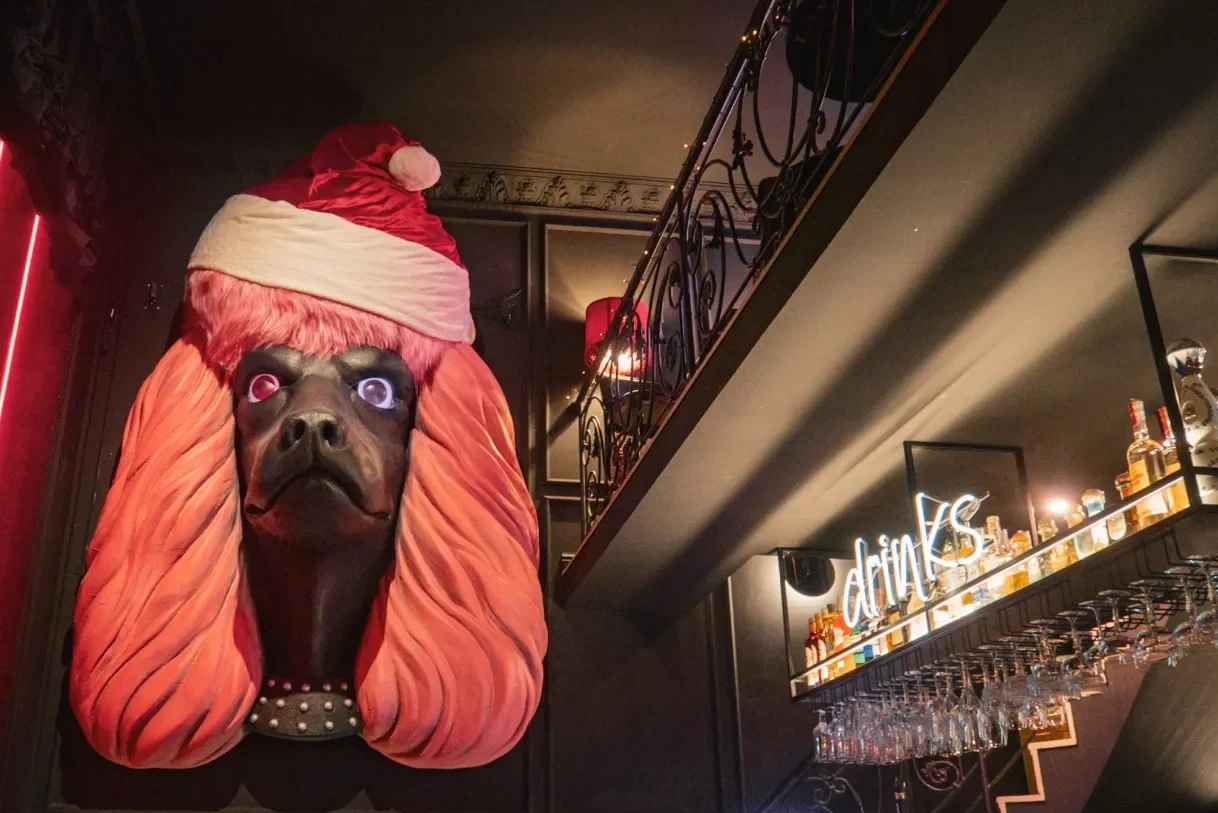
On the topic of bars, if you prefer somewhere more upscale than Snekutis, the Pink Poodle is the spot. Located on the busy Vilniaus street, the cocktails here are bougie, bold and addictive. We said “just one”, but stayed for another round. They were the best cocktails in Vilnius.
If you’re wondering where this bar gets its name from, the giant 3D pink and black poodle on the wall should answer that question for you. Seriously, it’s very cool and is a great backdrop for your photos.

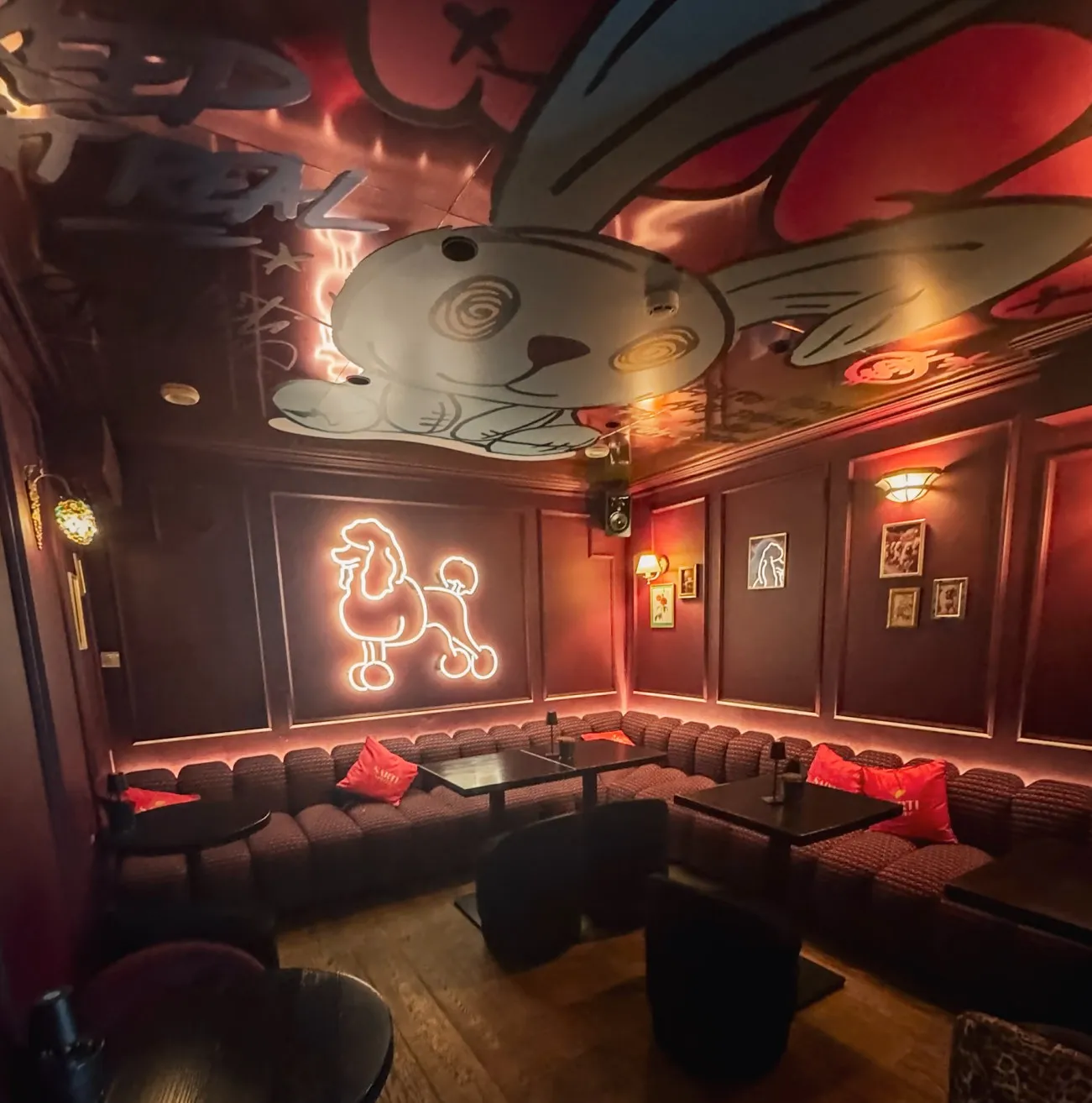
I recommend the Baby Shower, which is a bright blue vodka, elderflower and lime juice concoction topped with candy floss and a blue rubber duck. The Pink Poodle is another delicious choice, a creamy strawberry liqueur with vanilla vodka sprinkled with gold dust. I told you, this place is bougie.
Prices range from €11 to €15 for a cocktail, and €6 – €7 for a shot, €7-€10 for spirits and €5-€7 for a pint.
9. Church of St Anne and Bernardine Complex (Church of St. Francis of Assisi)
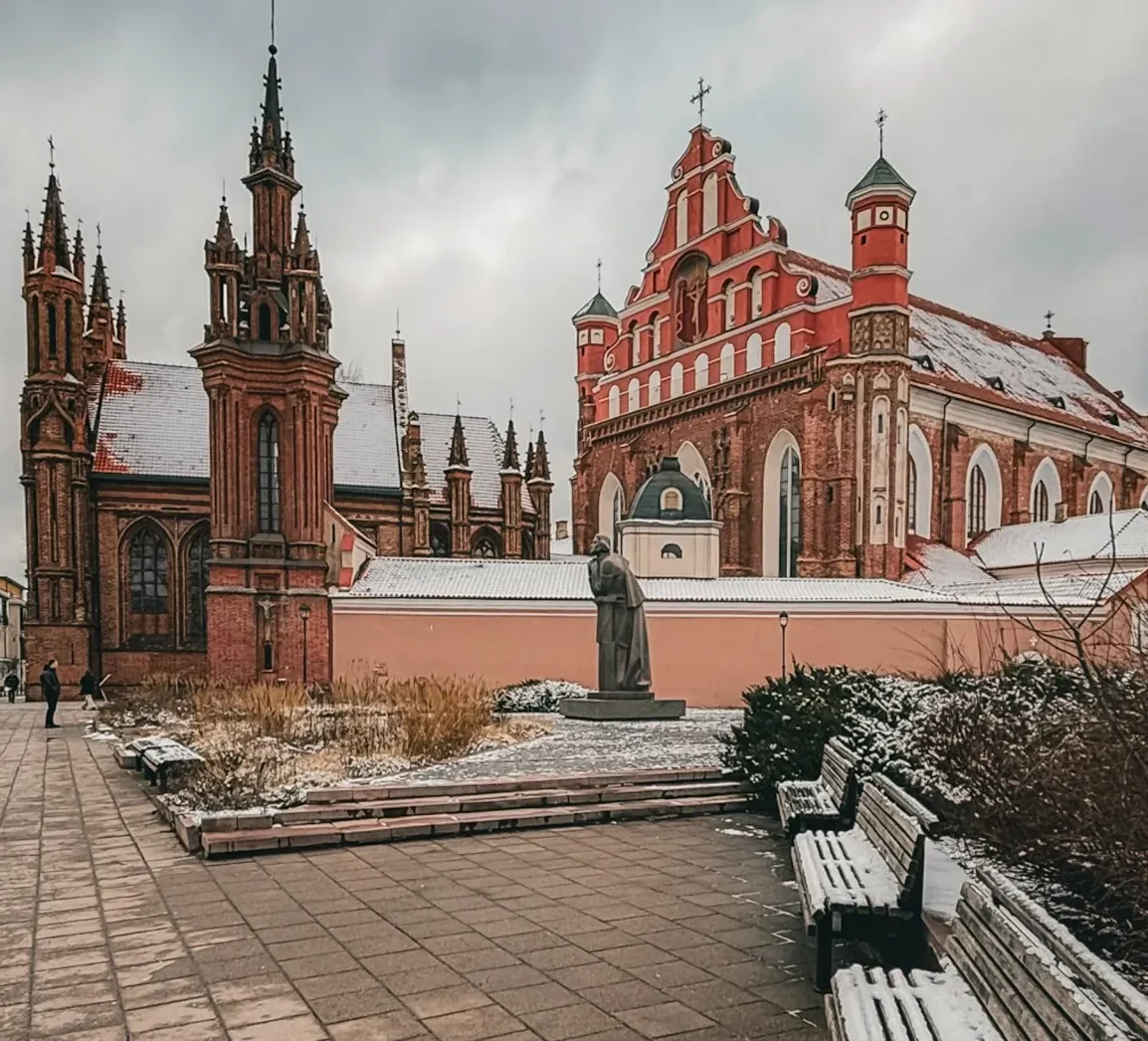
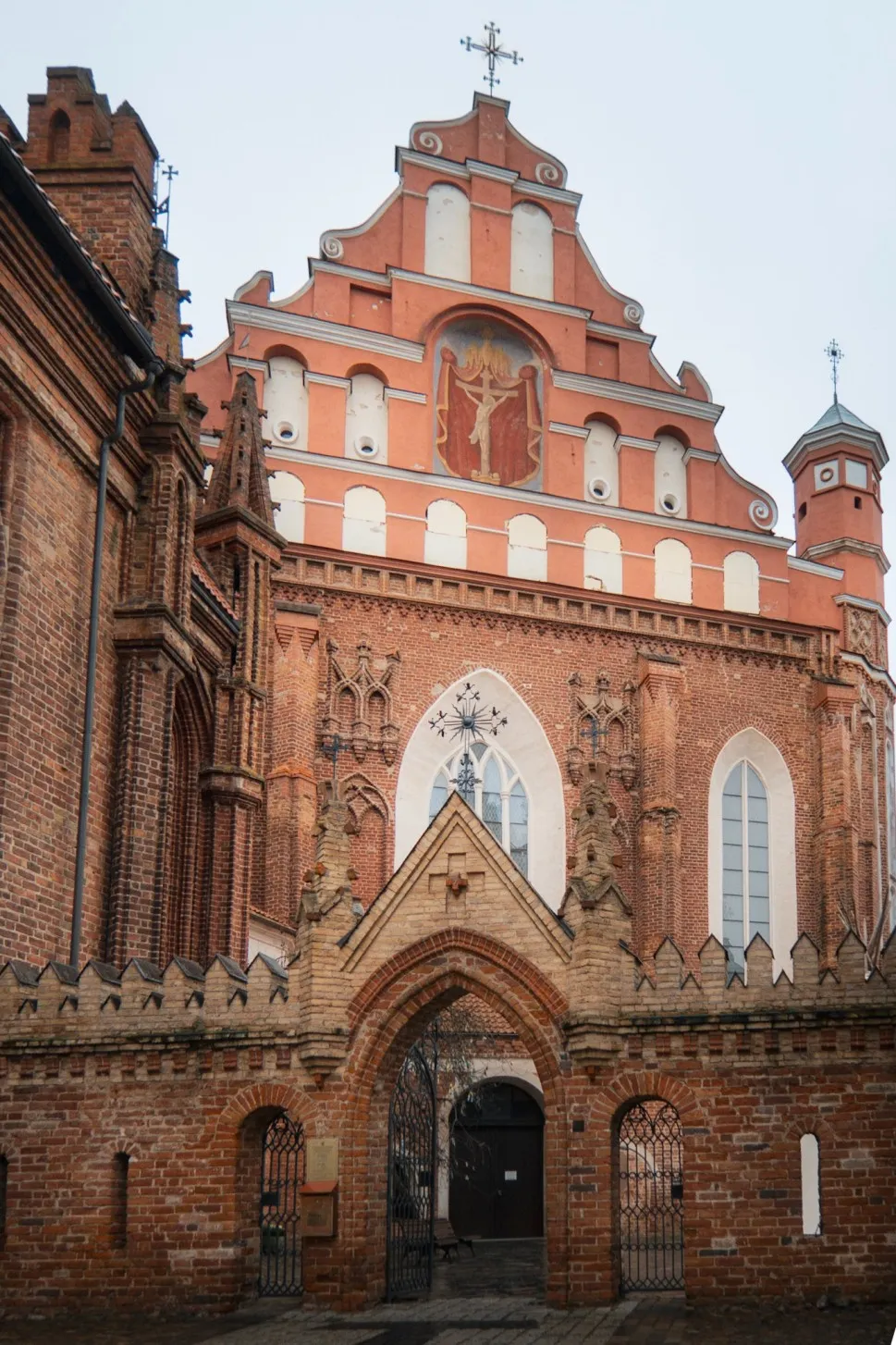
A stone’s throw from Uzupis, the Gothic red brick facade of the Roman Catholic Church of St. Anne entices you inside. Built between 1495 and 1500, with 33 different kinds of clay bricks and painted red, it has become one of the most photographed sights in Vilnius and the most famous Baroque church in Lithuania. Emperor Napoleon was so taken by it that he allegedly wanted to carry it back home to Paris in the palm of his hand. The guy thankfully wasn’t great at logistics.
The striking red brick wasn’t a stylistic choice, back then these kinds of structures required stone, which Vilnius did not have and therefore had to use brick instead. A choice I’m sure they would be happy with now, as it’s the kind of church that stops you in your tracks. It remains mostly unchanged after 500 years and just one glance will have you understanding why. Some things don’t need improving.
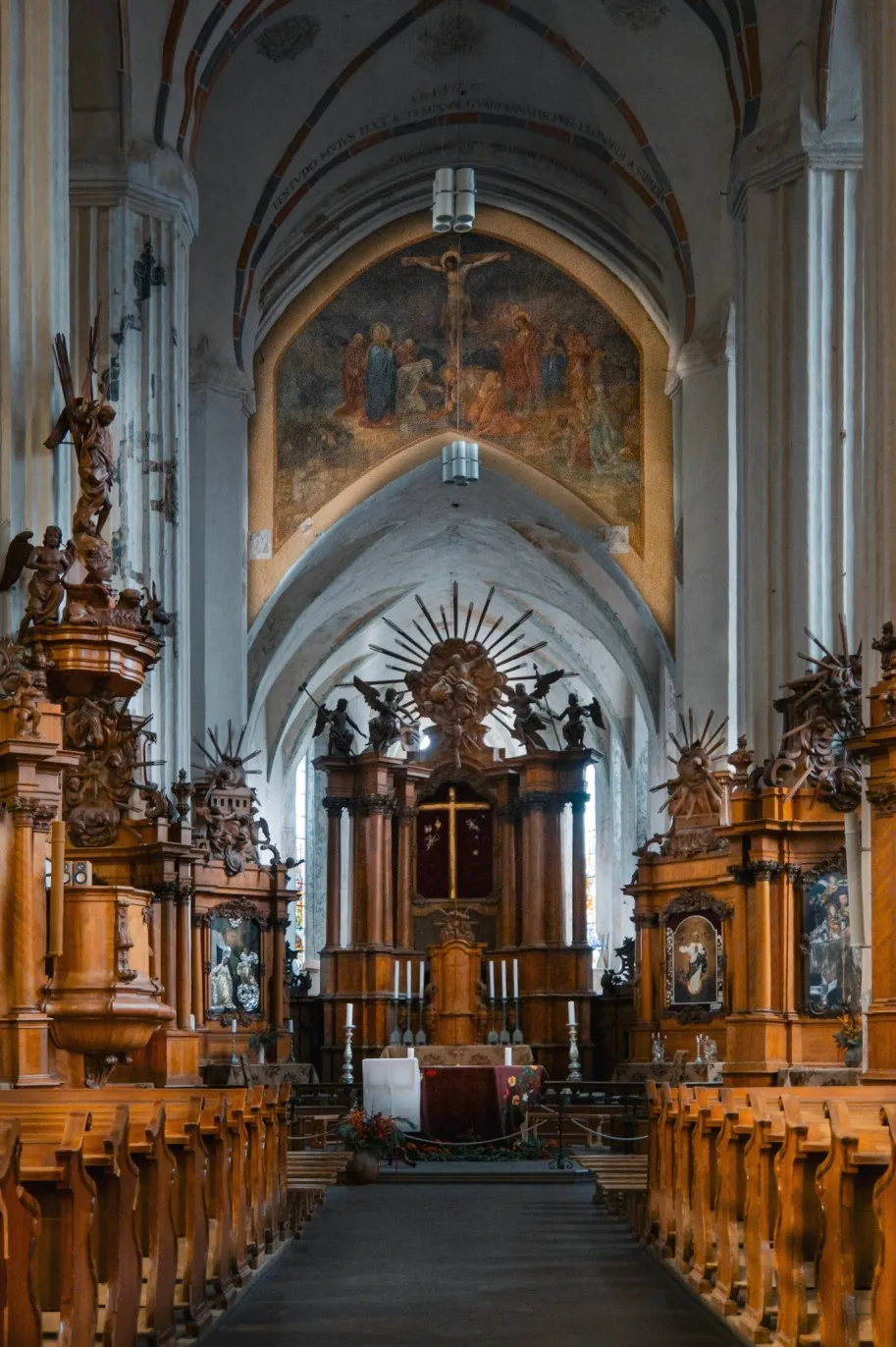
Inside it’s grand, but in an understated way, much more subdued than its exterior. Rather than gold, marble, and elaborate frescoes this church relies on ornate woodwork, vaulted ceilings and stained glass windows.
One of the best photo spots is from the small Bernardine bridge nearby. Combine your visit with the Bernardine Church and Bernardine Garden next door. In terms of exterior this is the nicest church in Vilnius, but the best interior award goes to the next entry on the list.
Related: Vilnius Or Riga? Which Baltic Capital Should You Visit →
10. Dominican Church of the Holy Spirit
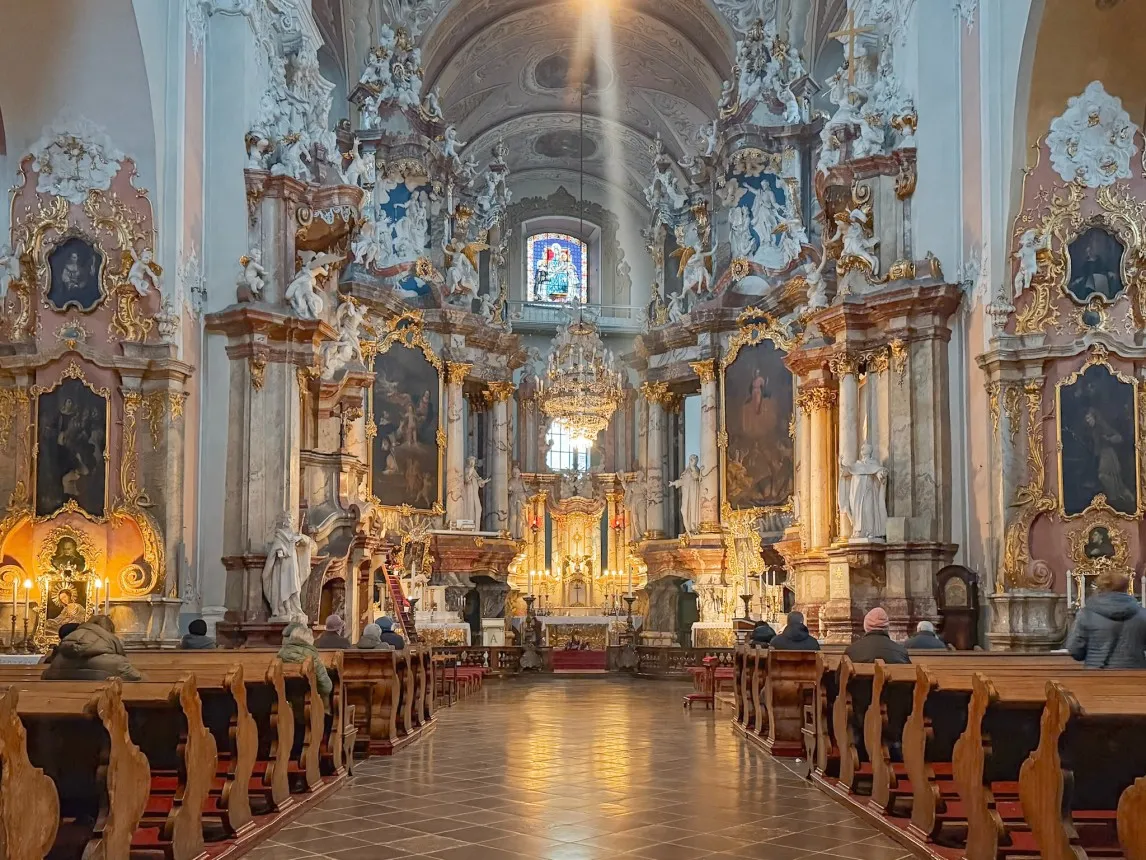
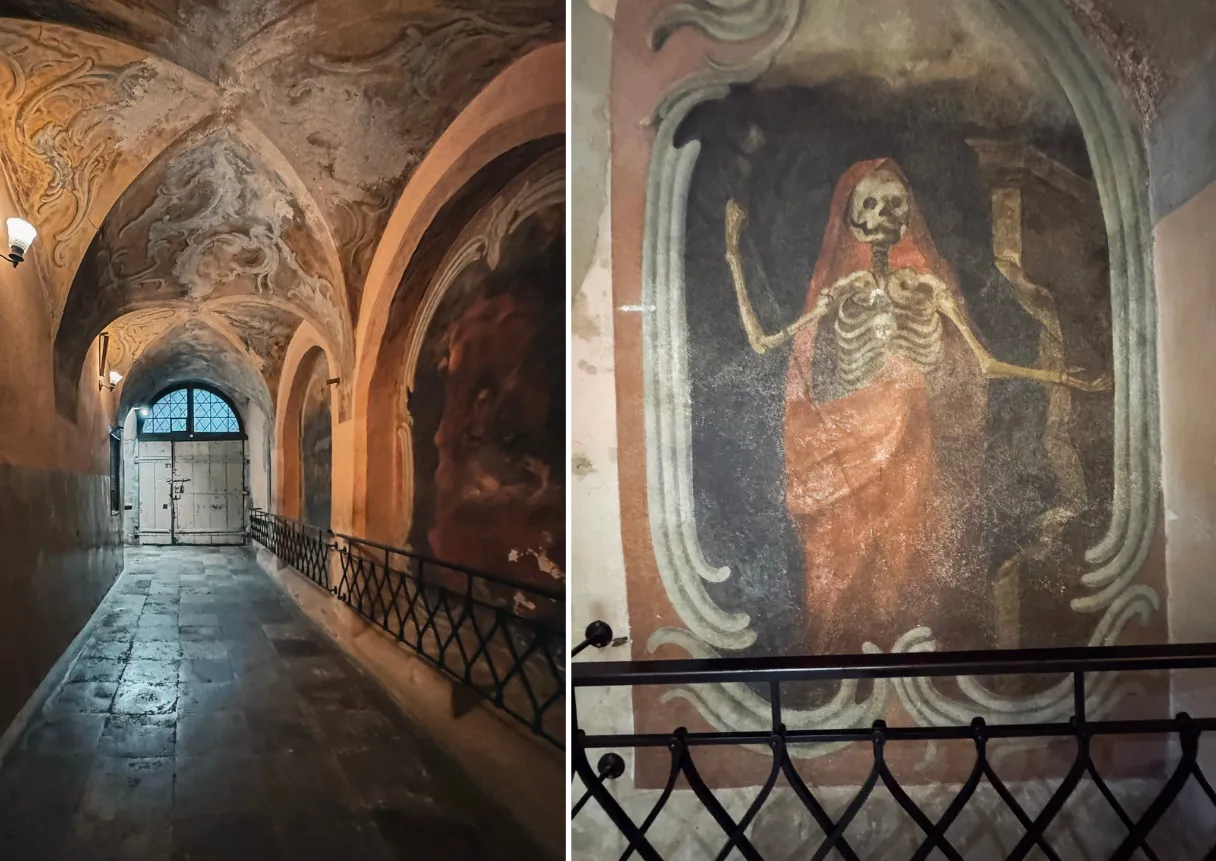
After wrestling with the heavy wooden door I stepped from the street into a long dark porch. I actually found it a bit spooky as at the end of the porch is a large painting of a skeleton in a red veil holding some kind of weapon, doesn’t exactly scream welcome. But that’s Christian imagery for you. Once inside the church things take an unexpected turn.
Sitting on Dominikonų Street, the Dominican Church of the Holy Spirit doesn’t necessarily stand out to you unless you are standing on the corner of Dominikonų and Stikliu Street, mostly it just melts into its surroundings. You’d be forgiven if you just wandered by without giving it a second thought. But please, take a few minutes and step inside.
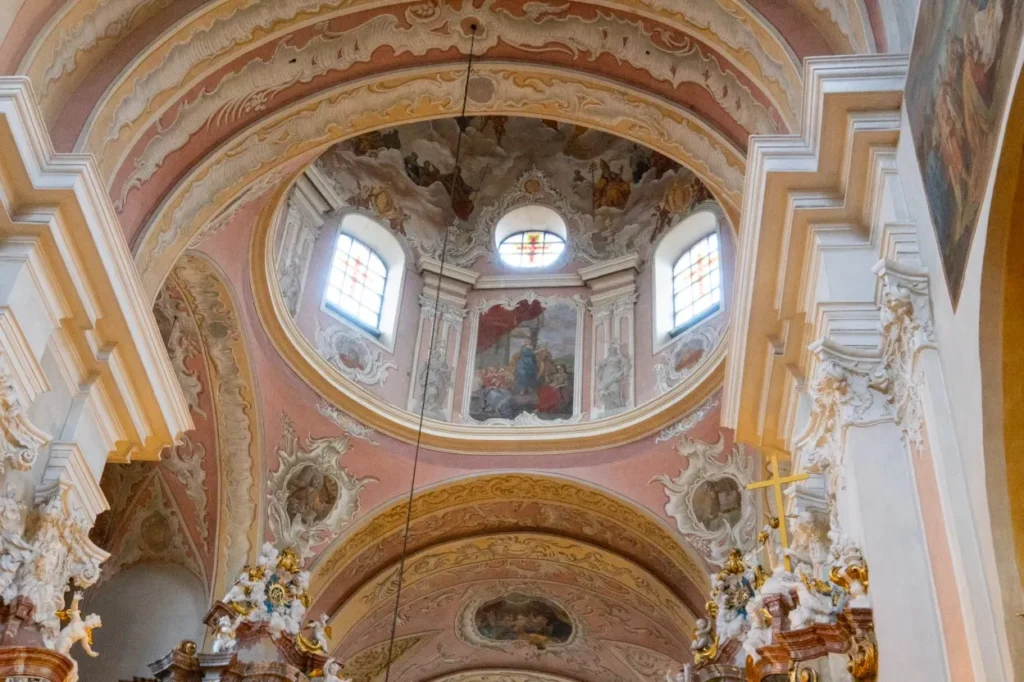
The Baroque style mix of pastel pink, gold, colourful frescoes, gold embellishments and marble cover every inch of this church. It is flamboyancy at its finest. It’s rare a church leaves me speechless, but I sat in the dimly lit pews in awe of it.
Mass is said twice a day and six times on Sunday with all ceremonies in Polish. You can find up to date times here.
The fact that not many people know about it makes it even better. It’s one of the most underrated things to do in Vilnius.
A few steps away you’ll find The Shrine of Divine Mercy, an original image from 1934 by Eugeniusz Kazimirowski according to the visions of Saint Faustina. It’s considered a sacred place for Catholics. Protected by security, it’s open to the public 24/7.
11. Hales Market
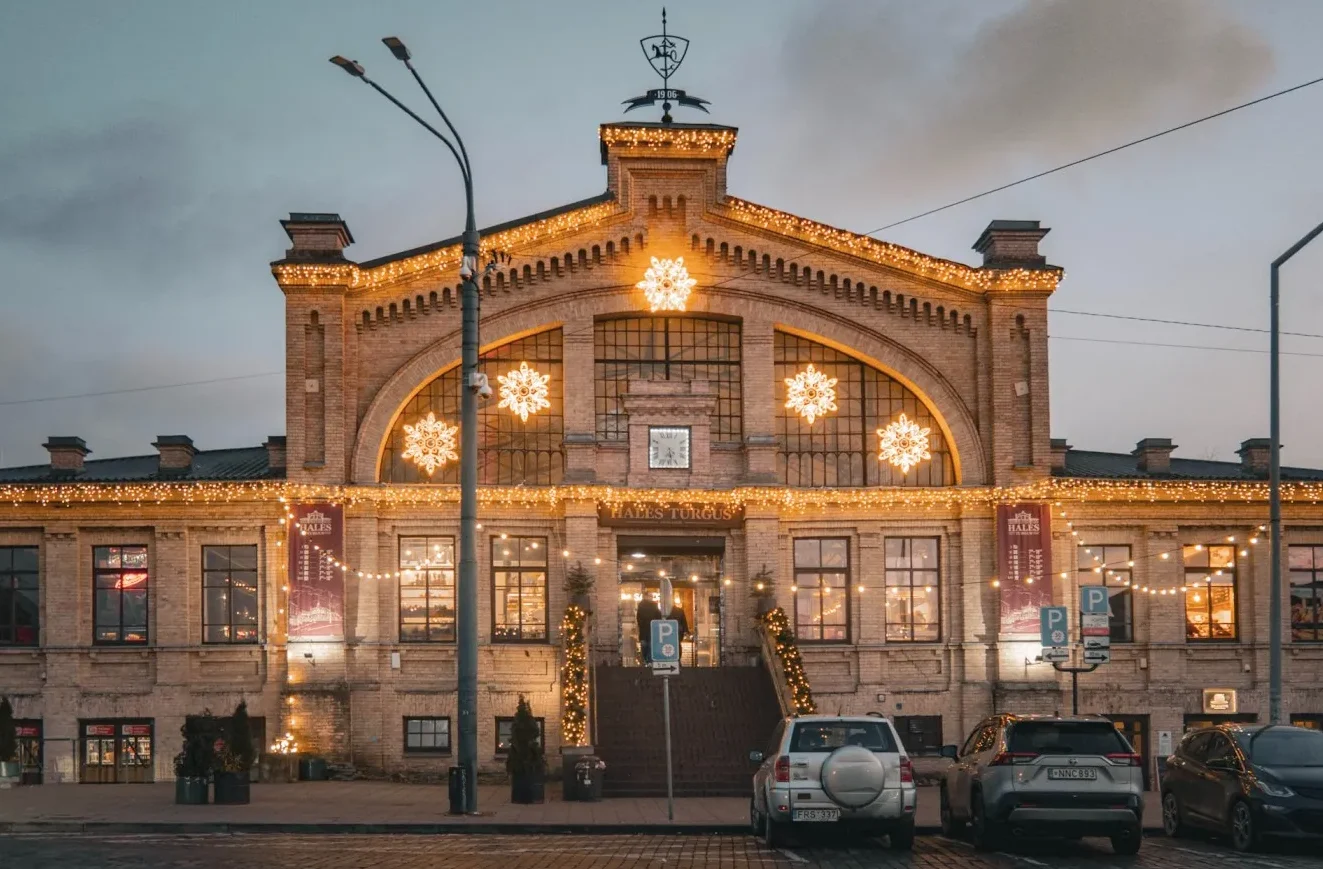
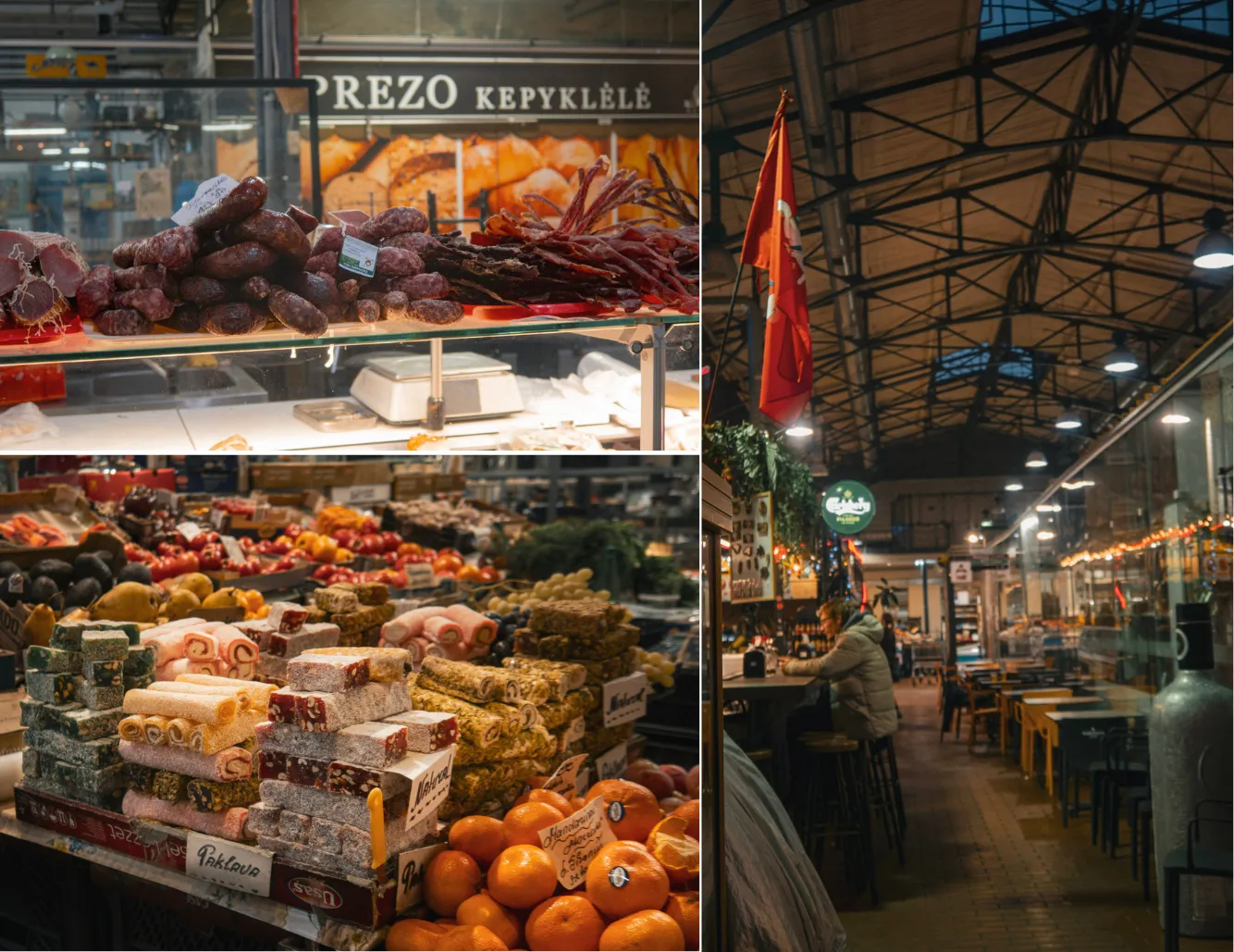
I’m used to city markets being a bit too crowded and chaotic, Hales Market was a welcome change. This is a small indoor market with cured meats, cheese and fish alongside independent clothes stalls, a café and a bar. Remember to look up when you walk in. Dating back to 1906, the ceiling shares the same construction style as the Eiffel Tower.
The cool thing about Hales Market is that amongst the traditional Lithuanian stalls are some modern ones that give the market an unexpected edge. Places like Eerie Onigiri, speciality cafe Oldskūl, and the Korean Chaosai catapult Vilnius’s oldest market into the 21st Century, but not forgetting its past.
This is a lovely little spot to explore on a rainy or cold day in Vilnius.
12. Gates Of Dawn
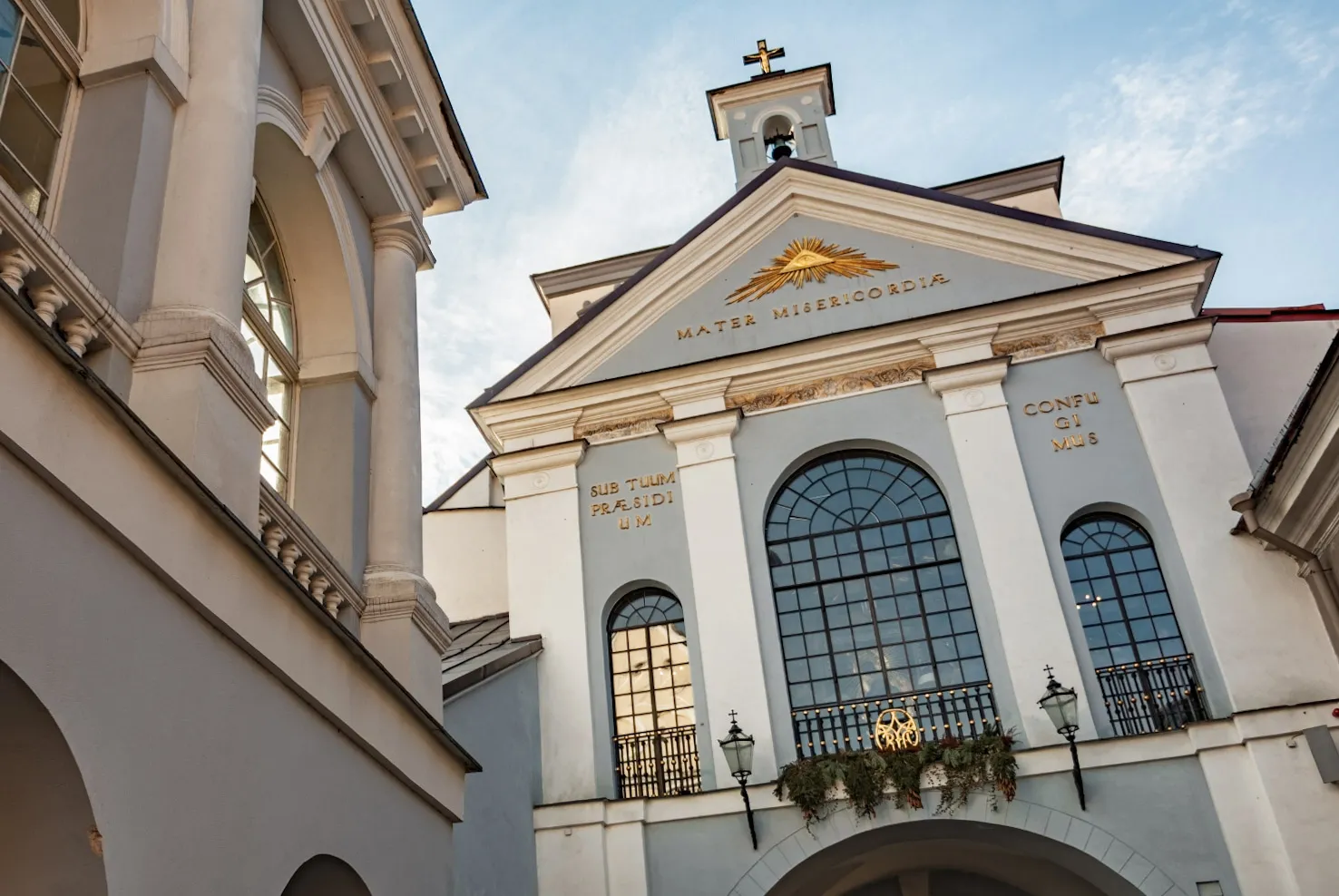
Built in the early 1500s as part of the city’s defensive fortifications, the Gates of Dawn is the last surviving city gate in Vilnius and the official entrance to the Old Town. The exterior is hard to miss, pastel blue and gold, ornate and a little unexpected for something that was originally built to keep people out. Today it does the opposite.
What most people don’t realise is that you can go inside. Up a narrow staircase sits a small chapel, home to a famous icon of the Virgin Mary, which is a major pilgrimage site for Lithuanian Catholics. No photos allowed, which forces you to actually look. It’s one of the most peaceful places in the city, religious or not.
At night the archway beneath glows with lights, which makes it worth a second visit if you’re passing.
13. Palace of the Grand Dukes of Lithuania
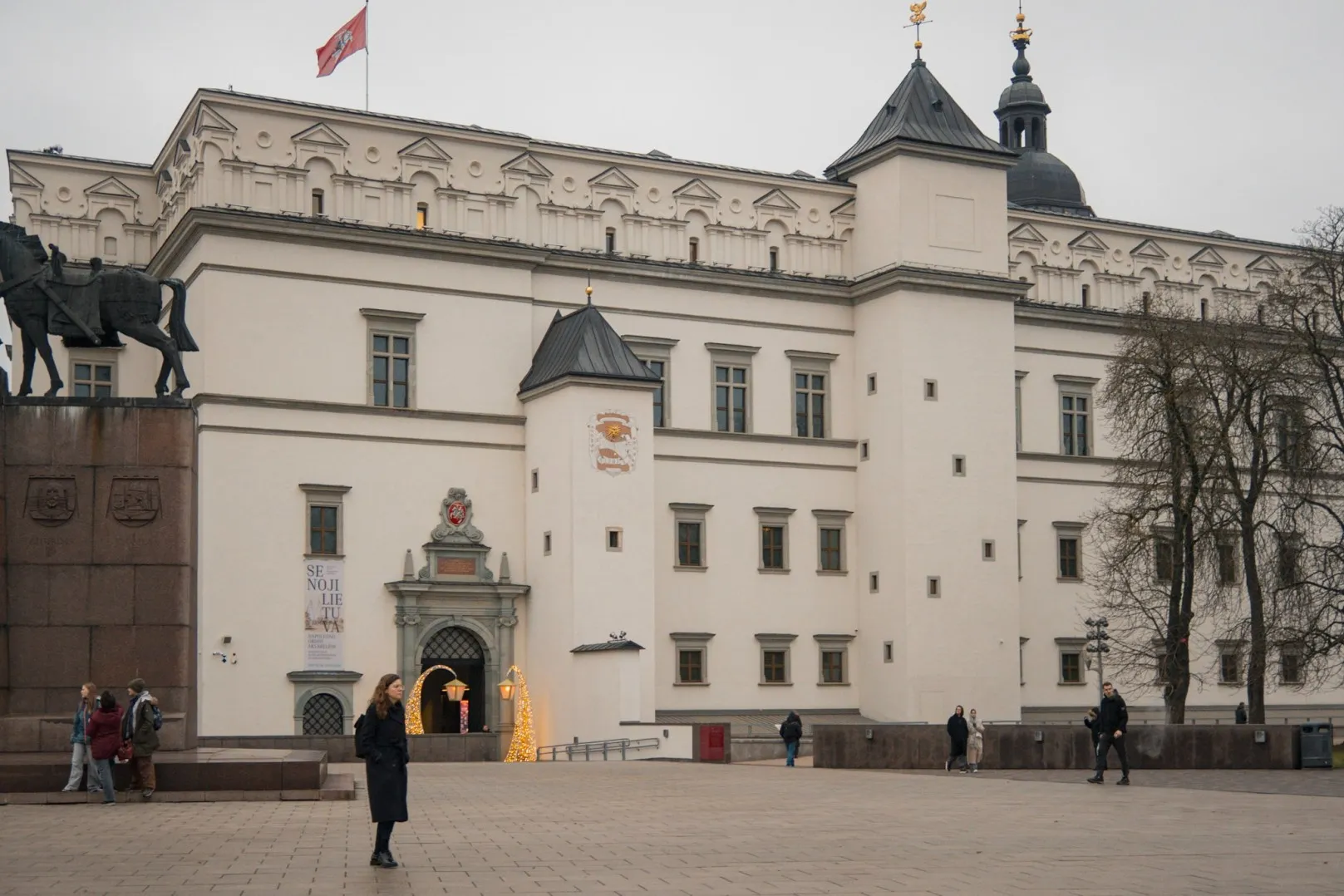
Sitting just behind Cathedral Square, the Palace of the Grand Dukes of Lithuania requires a chunk of your day. On a site settled since the 4th century, the palace was repeatedly remodelled, destroyed and rebuilt, which is pretty much the whole story of Lithuania.
The palace itself is a reconstruction, brand new, built to look exactly as it once did. That could put some people off but it shouldn’t. The history inside is real and there are panoramic views of the city at the top of the palace.
There are four routes to follow that cover different parts of the palace’s history.
- Route 1 takes you through the archaeological foundations and surviving original walls.
- Route 2 covers the grand ducal residence across the Gothic, Renaissance and Baroque periods. This is where the throne room is.
- Route 3 is the weapons and fortifications collection.
- Route 4 is the temporary exhibitions space.
Short on time? Route 2 is the one to pick that’s where the grand rooms and the throne are.
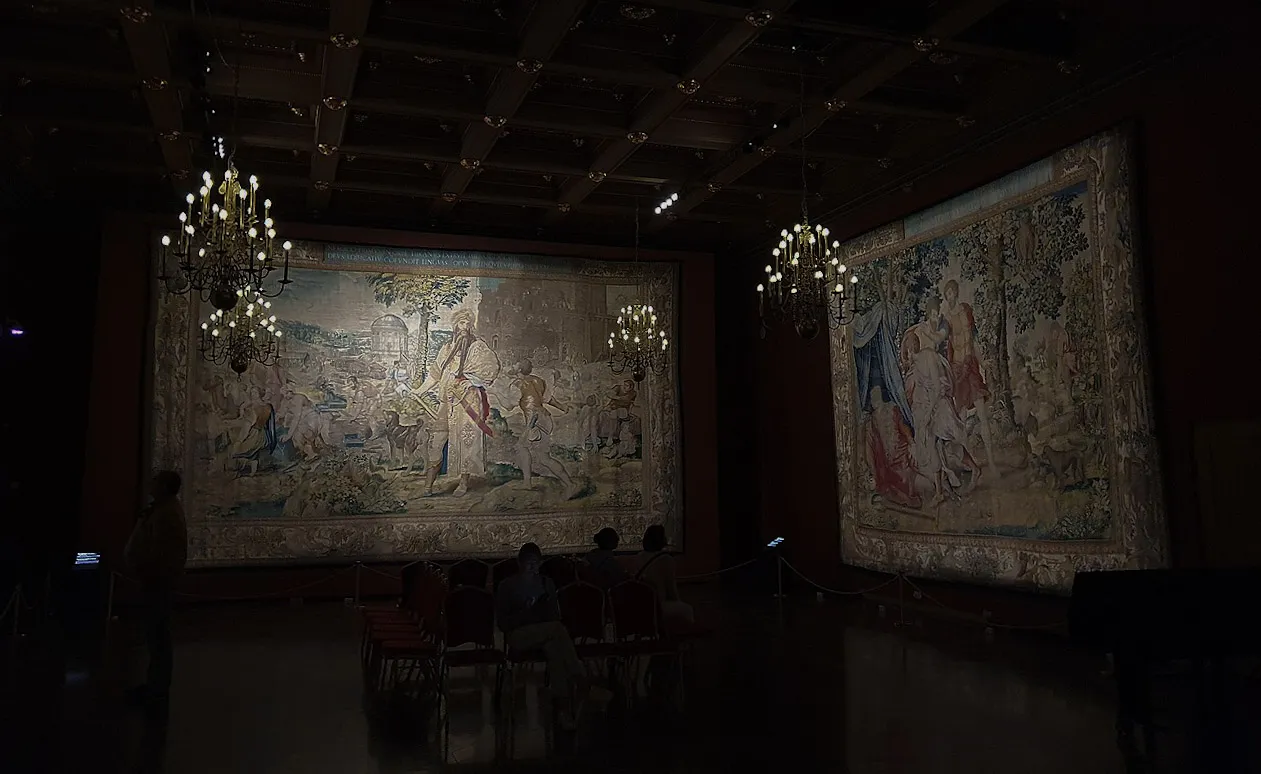
Allow at least two to three hours. It gets warm inside so ditch the coat in the free cloakroom before you start. There’s a café if you need a break halfway through.
It costs €15, unless you’re visiting on the last Sunday of the month then it’s free. An audioguide is an additional €1.
14. Find The Street Art
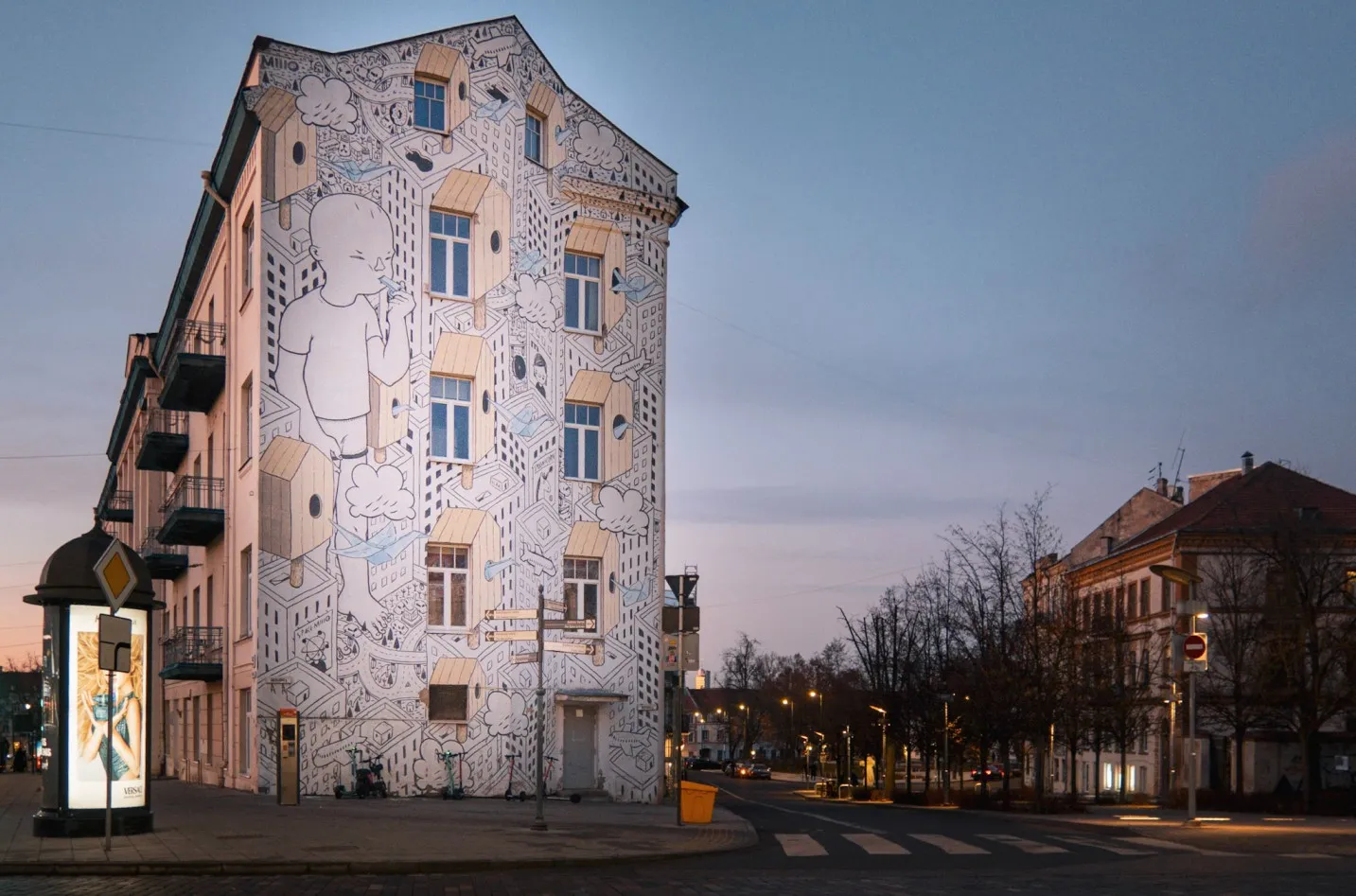
Vilnius is mostly known for its romantic old town, but a large part of the city’s identity is its connection to art. The number and scale of the street murals is like nowhere else I’ve experienced in Europe. It lifts the city up giving old Soviet buildings a splash of colour and intrigue.
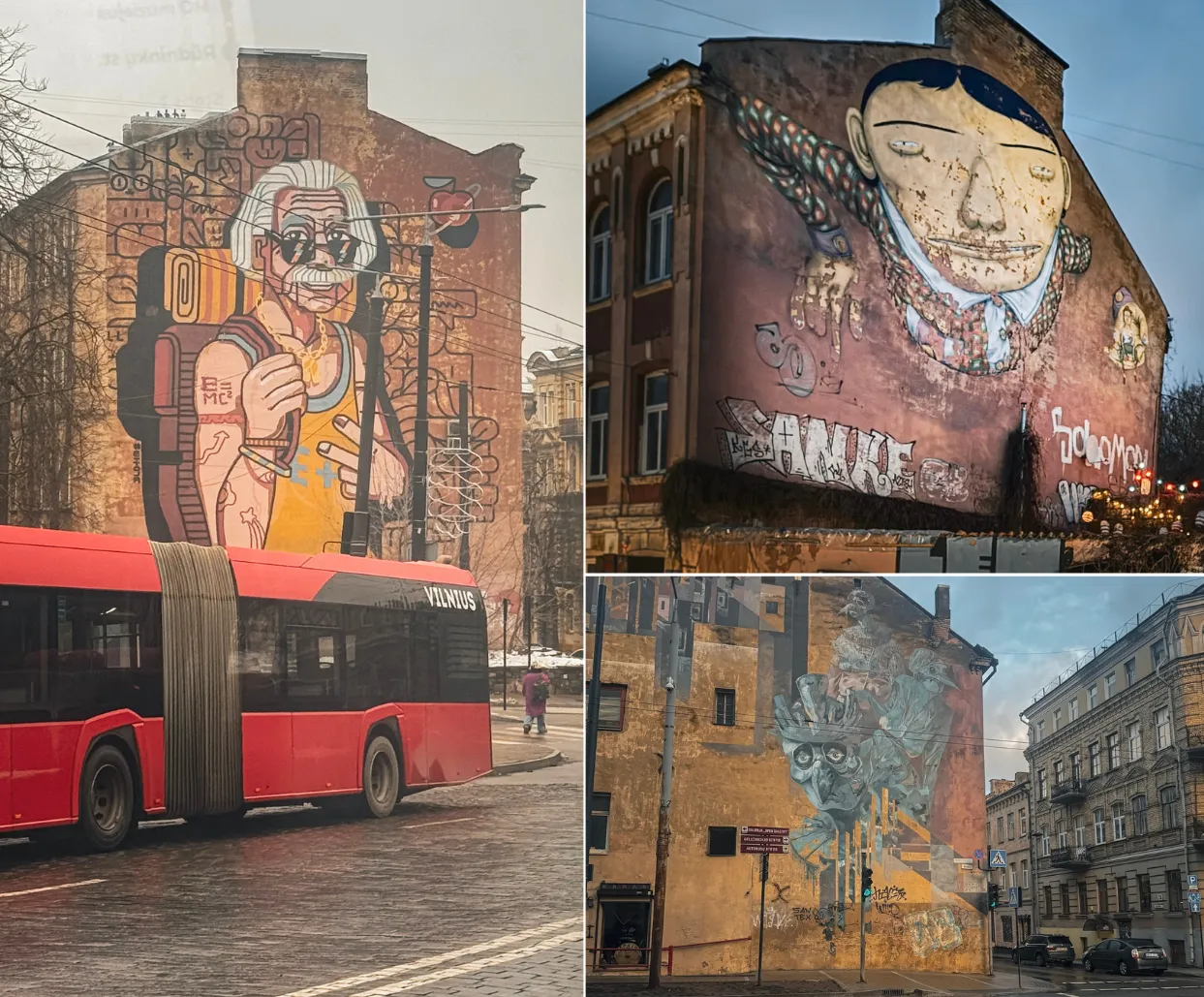
Atvira Meno Galerija is an old warehouse district filled with murals. The art changes every few years which keeps the place fresh and exciting. There is also so much around the city, these are the ones I’d recommend seeking out:
- 15 meter young Einstein with tattoos and some swag on V. Šopeno g.
- Millo’s Paper Birds on Pylimo g. 56.
- Yellow Man by the Os Gemeos brothers on Pylimo g. 66.
- 2-storey tree holding a purple brain and eyeball in its branchesHouse Tree on Beatričės g.
15. MO Museum
Lithuania’s answer to MOMA, the MO Museum is a compact and impressive modern art gallery that punches well above its size. The focus is on Lithuanian modern and contemporary art, with the selection feeling thoughtful, a clear sense of the country’s artistic evolution without trying to cram everything in at once.
The free audio guide, which doesn’t just explain the work it encourages you to actually engage with it, reflect on it, form your own opinion. A rare thing in a museum.
Allow 30 to 60 minutes. Check current exhibitions on mo.lt before you go. Tickets are €15.
16. Gogi Guy
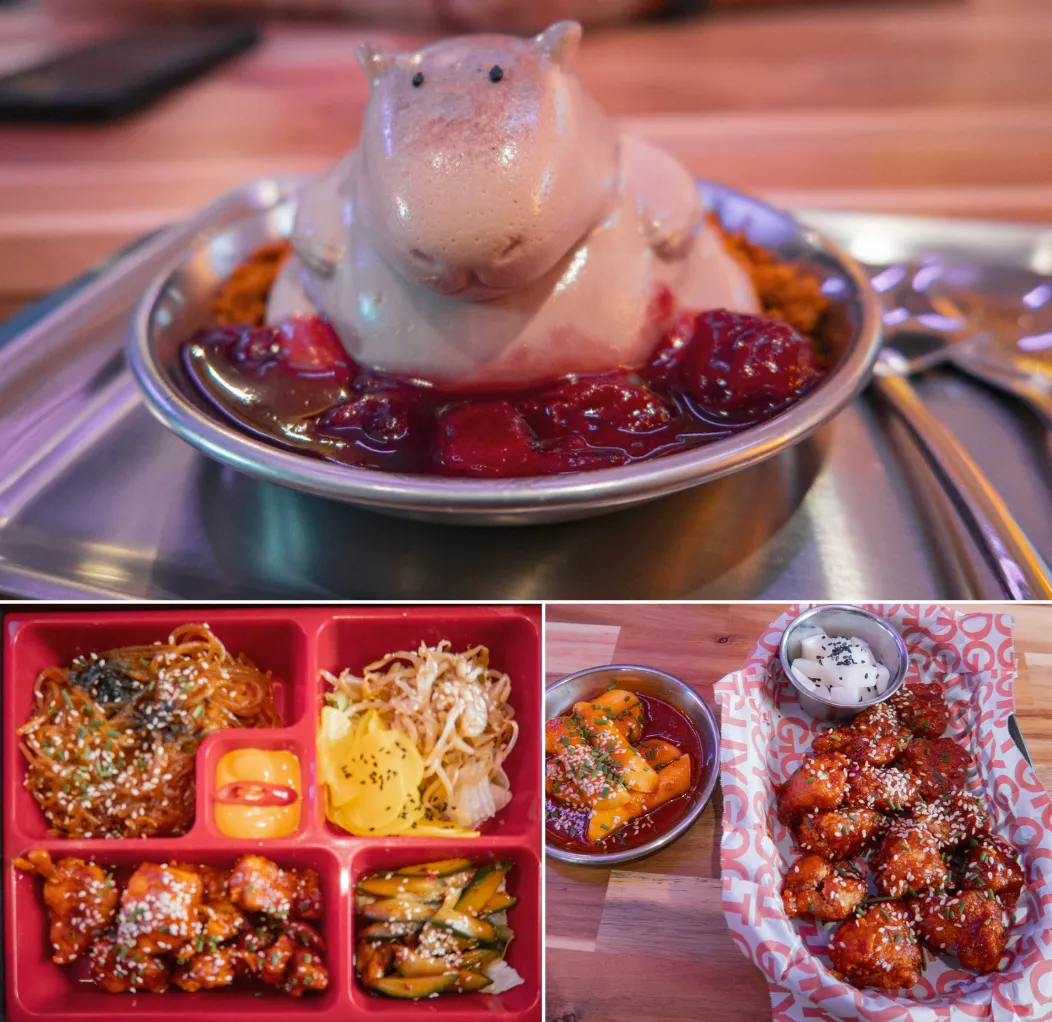
For when you want a break from Lithuanian food Gogi Guy should be on your radar. This cosy spot has a small menu of Korean classics like Bibimbap, fried chicken, DOSIRAK boxes, tteokbokki, kimchi, and soju. It’s very popular, so expect a queue, we were waiting 20 – 30 minutes on a Sunday in December.
We ordered the gochujang chicken which was exactly how it should be – sweet, spicy, juicy and crunchy, and the DOSIRAK box with mungbean noodles, chicken pieces, spicy cucumber and cabbage. The highlight was the viral pannacotta. A cute hippo surrounded by crumb and strawberry sauce, its jiggle is iconic. I pretty much felt like the hippo myself after such a good feed.
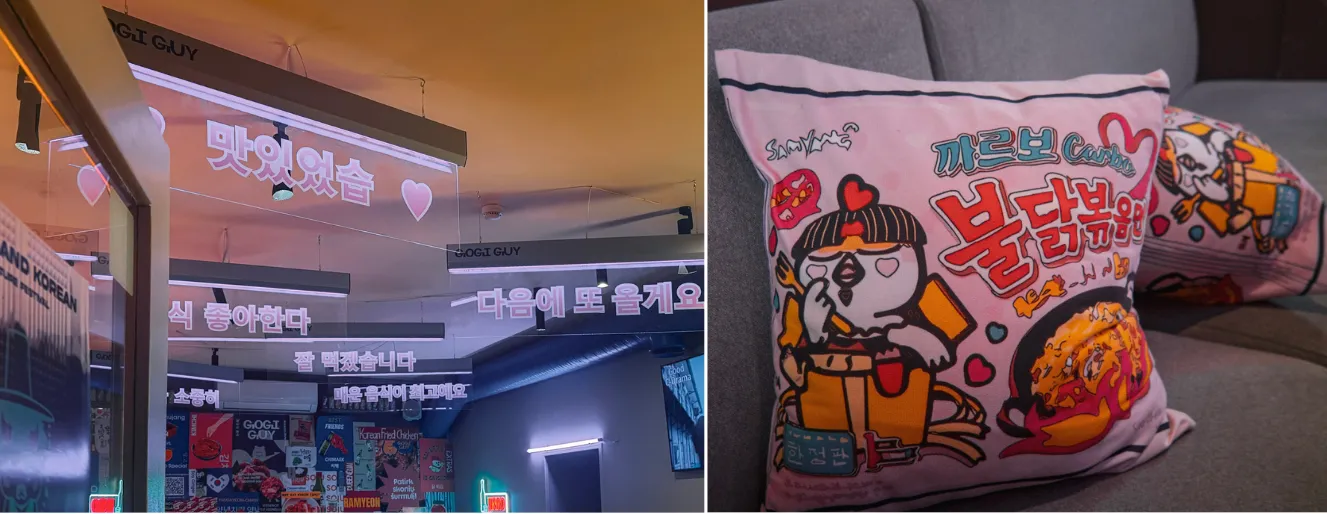
It’s a small space that has cute pink neon signs, colourful posters, KPOP on the TV and the coolest pink Buldak cushions which I need for my future home.
17. Rub The Lucky Belly
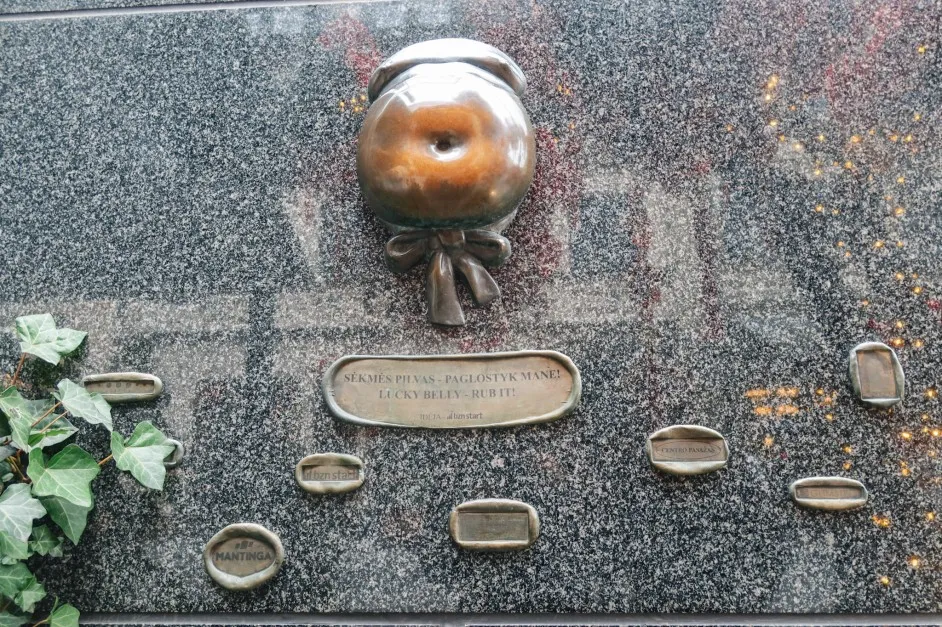
Tucked into the wall of the Novotel on Vilnius Street, the Lucky Belly is easy to walk past without noticing, which is half the fun of finding it. It’s believed rubbing this belly protruding from a wall will give you luck in your business. Spoiler alert, I’m still pretty poor.
A 40cm bronze bas-relief of a rather rotund male belly, rubbed shiny by what is clearly a very optimistic public. Still, it costs nothing and takes two minutes, and Vilnius has a thing for hiding small rituals around the city, you may as well collect them all.
18. Slide Sculpture
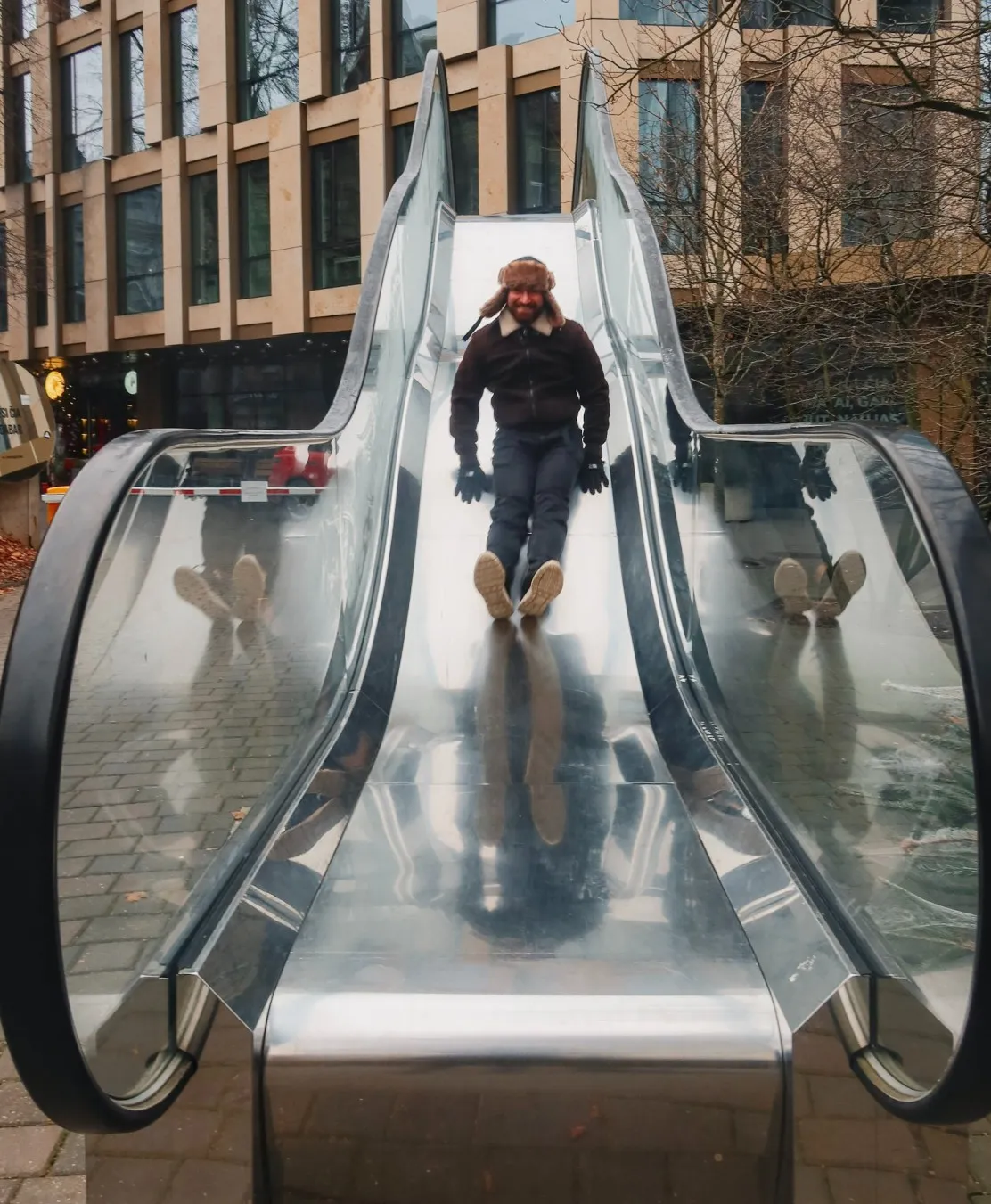
Another short stop, likely one of the silliest things to do in Vilnius, yes even sillier than rubbing the lucky belly above. Situated on Dainavos Street, in a quiet business area, a small mirrored stainless steel slide sculpture sticks out like a sore thumb.
Designed in 2020 by Lithuanian architect Julijonas Urbonas who described it as “corporate austerity meets playground pleasures”.
Reach the top by an escalator and then slide down its wavy track. I’d like to think the office workers use it after a tough day. I know I would.
19. Paupio Turgus
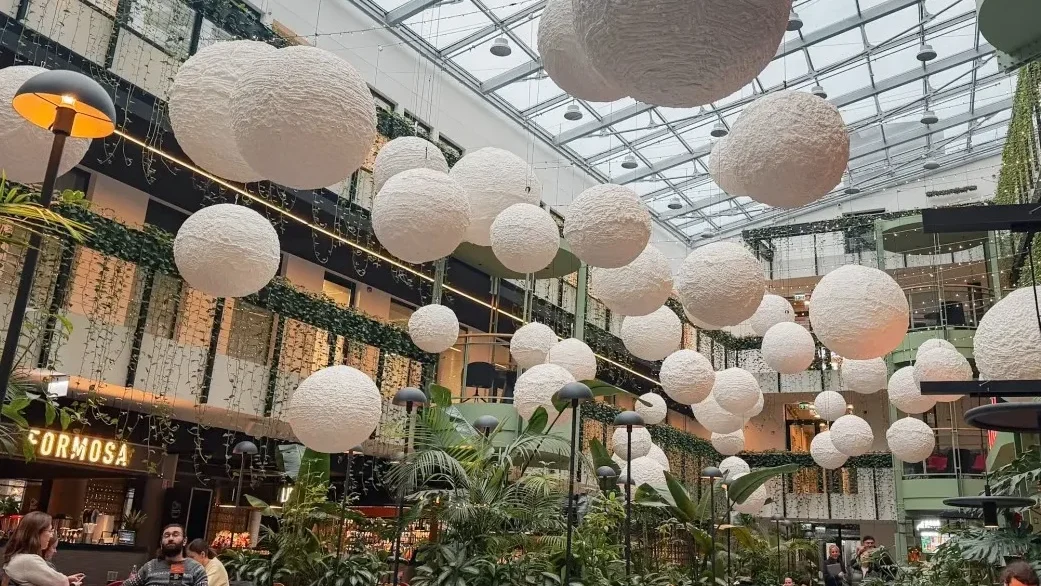
Halfway between a food court and a greenhouse, Paupio Turgus is one of those places you stumble into and immediately want to spend the afternoon. Lush plants drape over every floor, which somehow makes you forget you’re inside a corporate building. It’s always busy and buzzing.
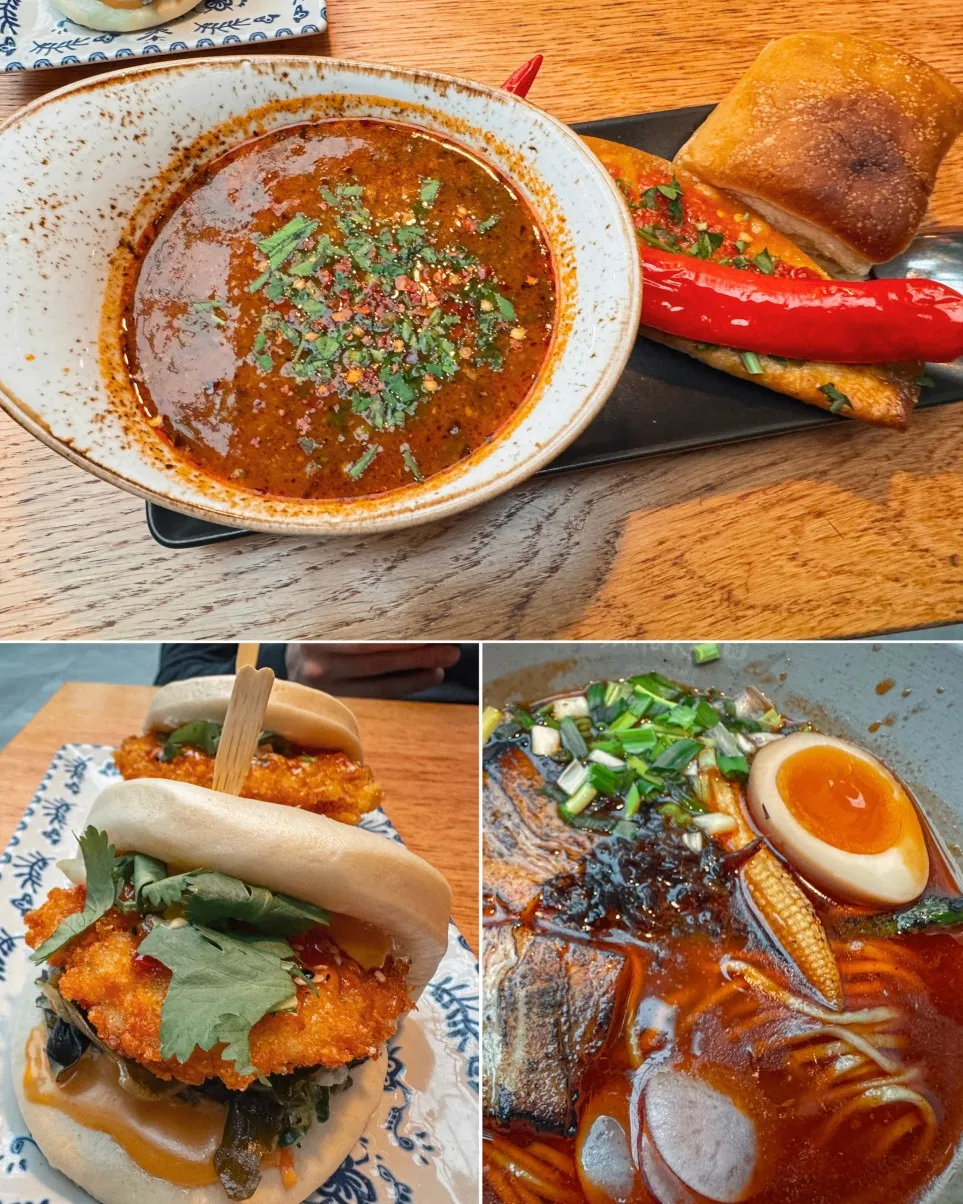
It’s dangerously convenient to order, just scan the QR code, wait for the notification your food is ready then collect directly from the vendor. There’s a good mix of cuisines to choose from including Japanese, Mexican, Greek, Italian and of course Lithuanian. We went with Kharcho the spicy tomato from Georgian chain Khačiapuri, spicy ramen from Samurai and crispy satay chicken bao buns from Wok Out. Along with food there are 3 drink vendors.
Honestly was one of the best accidental discoveries in Vilnius.
Don’t miss…
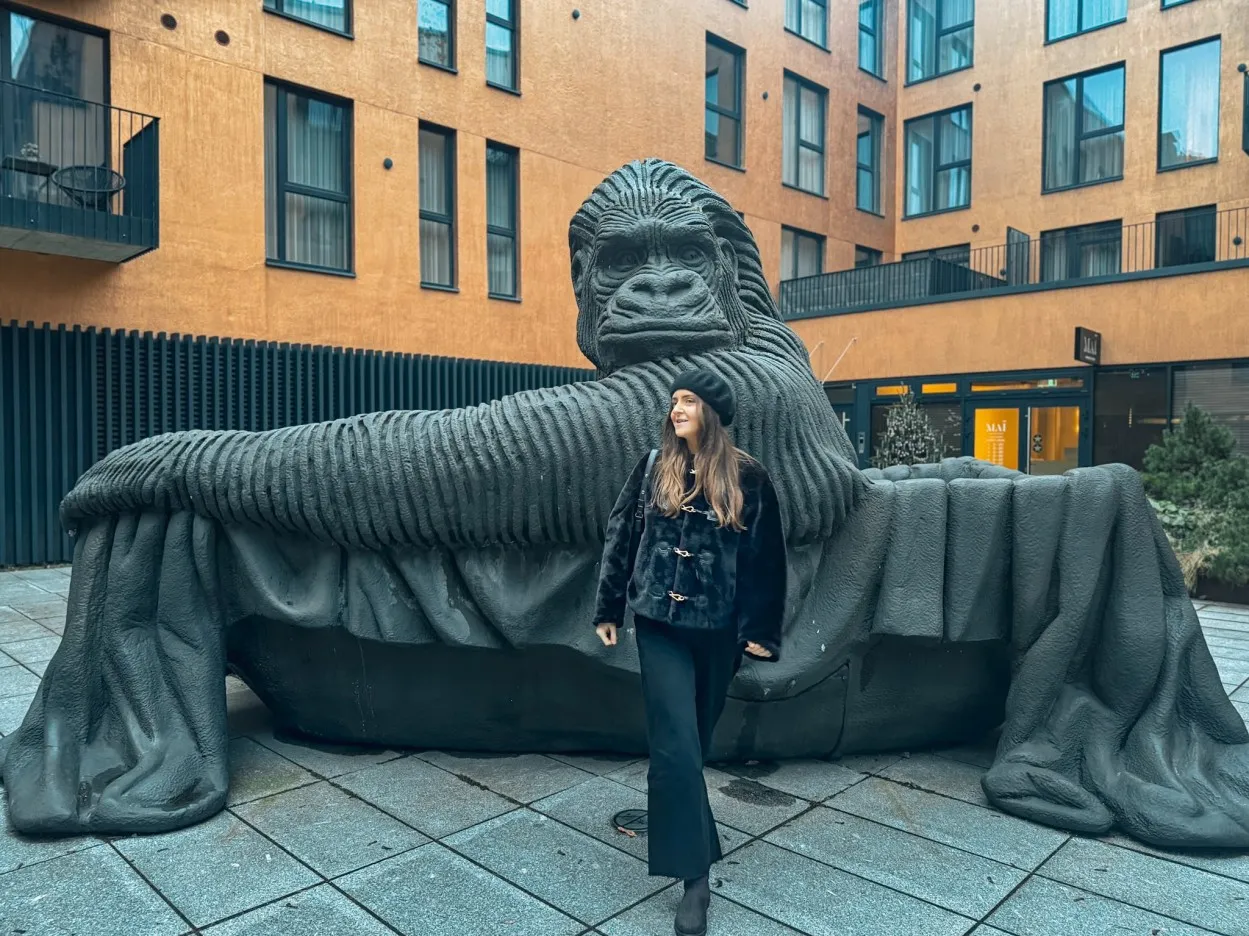
While you’re there, take a quick detour to the friendly Rytmetis, the chillest gorilla you’ll ever meet. This giant ape sits in an overflowing tub. Created by Donatas Jankauskas-Duonys, Rytmetis is incredibly detailed.
20. Try Traditional Food At Etno Dvaras
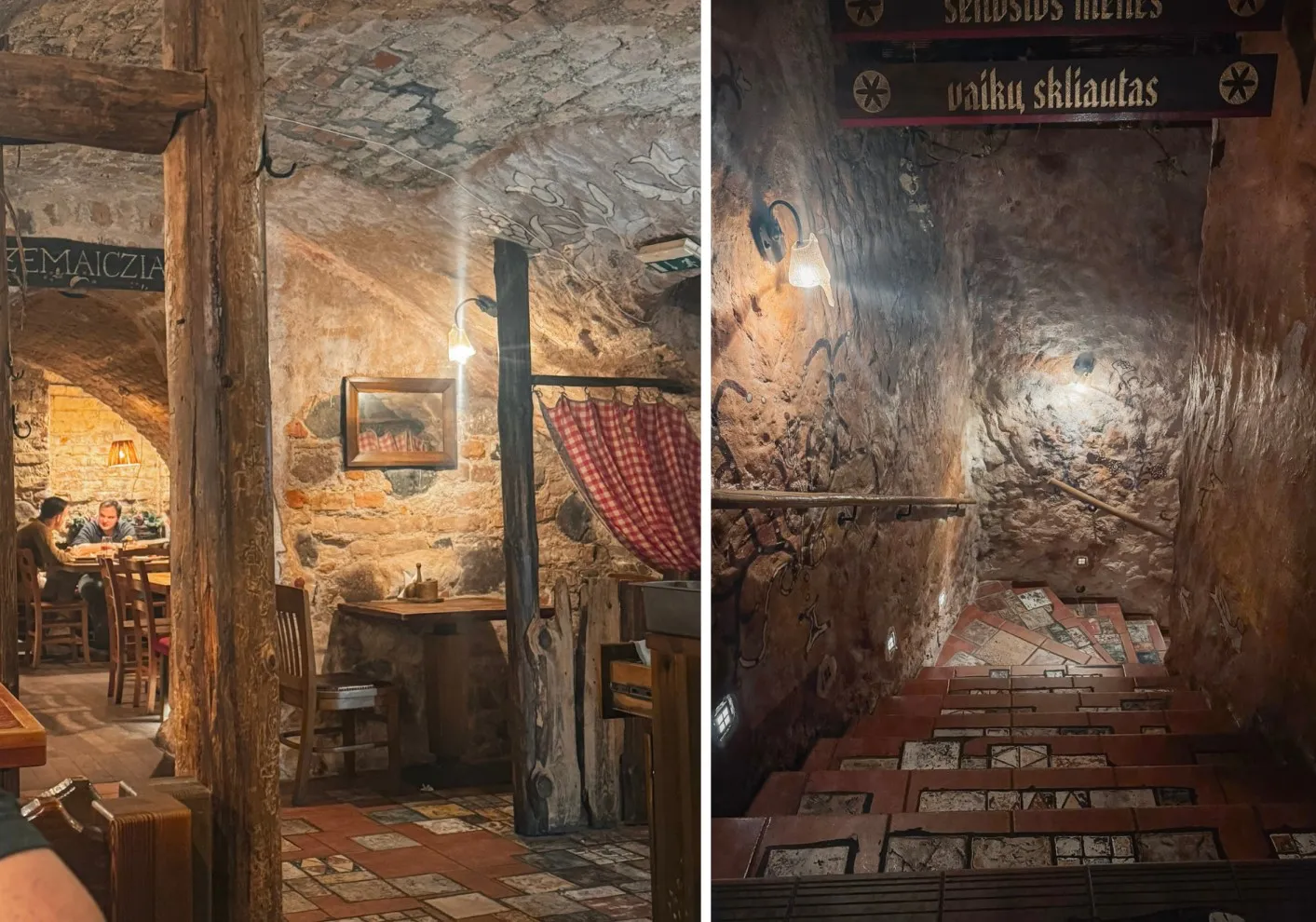
Lithuanian chain Etno Dvaras has many locations across the country, with three in Vilnius city centre. I recommend the one on Pilies Street, with an atmospheric medieval design and dark basement cellars.
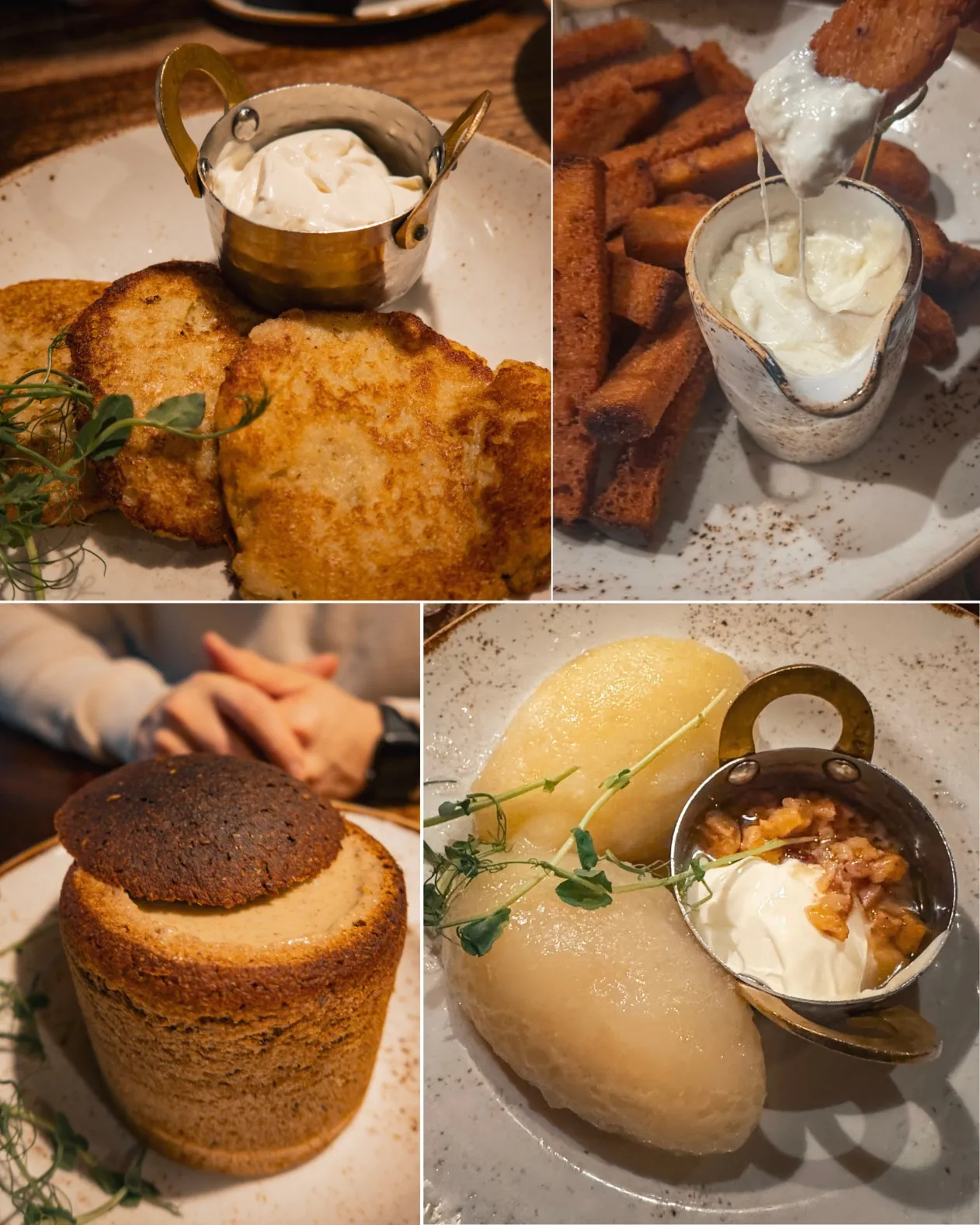
We came here a few times, it was a reliable cosy place when we didn’t know what we wanted. Specialising in Lithuanian food, the menu is large. My favourite was the cepelinai generously stuffed with mince meat and then topped with sour cream. Their creamy mushroom soup was also a highlight, served in a large hollowed out bread bowl it was the remedy to a cold December day.
With most dishes hovering around the €8 – €12 mark it’s very affordable.
RELATED: Traditional Lithuanian Food: 15 Best (and Weirdest) Dishes to Try →
21. Day Trip To Trakai
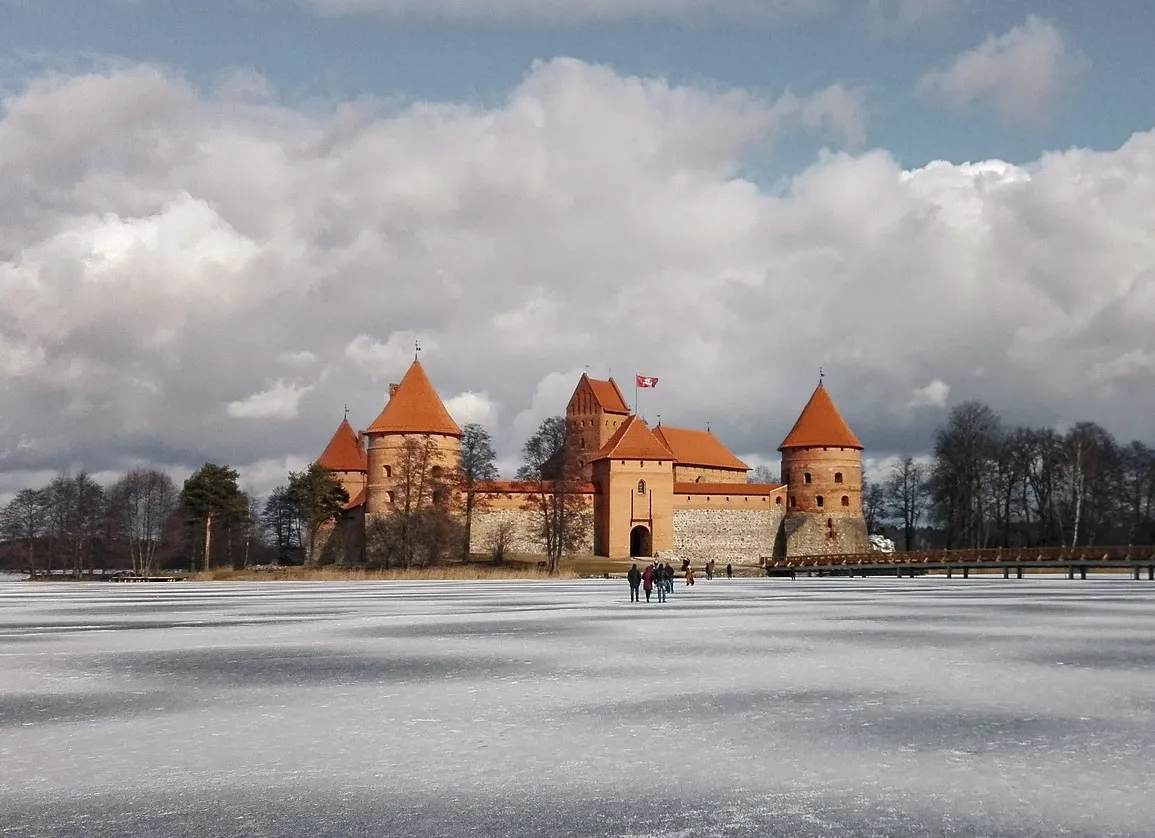
About 28km west of Vilnius, Trakai is the easiest day trip from the city. A medieval red-brick castle sitting on an island in Lake Galvė, surrounded by water on all sides, it looks like something from a Disney film.
The train from Vilnius takes around 40 minutes and runs regularly so there is no need to book a tour, but a guided tour does make things easier. While you’re there, try kibinai, which are small pastry parcels filled with meat, a local speciality tied to the Karaim people who have called Trakai home for centuries. Half a day is enough, but the walk around the lake might convince you to stay longer.
Where To Stay In Vilnius: Best Areas
- Vilnius Old Town: the obvious choice which leaves you close to all the major attractions. Cobblestone alleys, historic buildings and walking distance to the best things to do in Vilnius. The most expensive place to stay in Vilnius but everything is on your doorstep.
- Naujamiestis: we stayed here and loved it, finding it excellent value for money. Considered Vilnius New Town with a mix of commercial and residential buildings, international restaurants and trendy cafes. You can walk to Old town in 15 – 20 minutes.
- Paupys: fun and trendy, pretty much a new area. Close to Missionary Park and Uzupis.
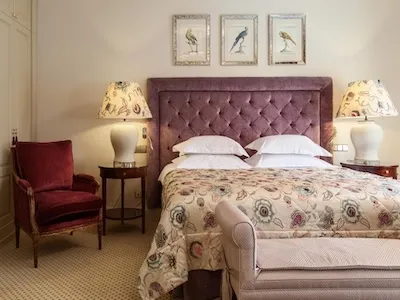
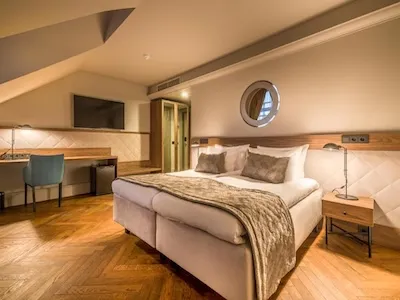
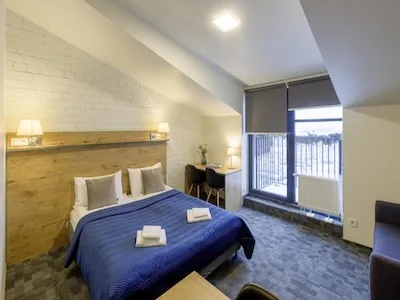
Best Hotels In Vilnius
Vilnius FAQ
How Many Days Do I Need In Vilnius?
Vilnius is the perfect weekend break. Two days is enough to see the city while three days allows for a day trip to Trakai.
Is Vilnius Expensive?
No, and that’s one of the best things about it. Meals typically run between €8 and €15, portions are generous, and a speciality coffee will rarely set you back more than €3.50. If you’re watching your budget, avoid the bars and restaurants directly on the main Old Town streets where prices creep up. Compared to other European capitals, Vilnius is excellent value, it’s cheaper than Riga, cheaper than Tallinn, cheaper than most Western European cities by some distance.
Is Vilnius Safe?
In my experience, yes. We walked around at night without any issues and never felt uncomfortable. Like any city, use your common sense, but Vilnius never gave me cause for concern.
Is Vilnius Worth Visiting?
Genuinely, yes. It’s one of the most underrated cities in Europe, it’s beautiful, affordable, easy to navigate and full of character. Most people who go wish they’d stayed longer.
What are the best places to visit in Vilnius?
The Old Town is the obvious starting point, but the best places to visit in Vilnius go well beyond it like Uzupis, the Dominican Church, Hales Market and Paupio Turgus are all worth your time.