Stepping off the plane after 18 months of sunshine, sea and sand, Riga brought us hurtling back to reality. As we shivered on the airport tarmac waiting for the airport shuttle, we could finally put real meaning to the phrase “it’s baltic out here”. Regret bubbled in my stomach as the bus drove through the wet and grey streets, I made a mental note to buy an umbrella asap.
Umbrella in hand, we started exploring, pretty soon the blustery weather became completely overshadowed by the colourful Art Nouveau style buildings of old town and the hearty local food that actually is perfect comfort for the weather outside. We visited Riga Latvia in mid October to mid November and what follows is our honest list of things to do in Riga that are actually worth your time, plus the one tourist trap I’d tell you to skip.
- Where To Stay In Riga
- Getting Around Riga
- Best time to visit Riga
- A Bit Of History…
- Best Things To Do In Riga
- 1. Climb St. Peter’s Bell Tower
- 2. Wander Around Old Town
- 3. House Of Blackheads
- 4. Doma Square and Riga Cathedral
- 5. Three Brothers
- 6. House Of Cats
- 7. Swedish Gate
- 8. Freedom Monument
- 9. Bastejkalna Park
- 10. The Corner House (KGB Museum)
- 11. Museum Of Occupation
- 12. Alberta Street and the Art Nouveau Walk
- 13. Riga Nativity of Christ Orthodox Cathedral
- 14. Holy Trinity Church of Pārdaugava
- 15. Latvian National Museum of Art
- 16. Riga Central Market
- 17. Body Museum (RSU Anatomy Museum)
- 18. Cocktails at Herbarijs (Galleria Riga)
- 19. BURZMA Food Hall at Galerija Centrs
- 20. Try Latvian Food At Lido
- 21. Cafe Hopping
- 22. Black Balsam
- 23. A Night in Ala Pagrabs
- 24. Giant Fox in Spīķeri
- What To Skip In Riga
- Riga Day Trips
- Things To Do In Riga FAQ

Some links in this post are affiliate links, meaning I may earn a commission at no extra cost to you if you make a purchase.
Where To Stay In Riga
Riga is a lot more than its Old Town, but the reality is you’ll spend most of your trip in Old Town because that’s where the bulk of the sights are. If you’re only here for 1 to 3 days, stay in Old Town or Centrs. Both are central, both are walkable to almost everything, and you’ll save yourself the hassle of working out the tram system for a short trip.
For a longer stay, the Quiet Centre (Klusais Centrs) is where I’d base myself next time. It’s where the best coffee, the best bakeries, and most of the Art Nouveau buildings actually are, and it’s still only a 15 minute walk into Old Town.
Budget | Tree House
Mid-range | Aparthotel Aurum
Luxury | Forums Boutique Hotel
RELATED: read my where to stay in Riga guide here for the best areas depending on budget and travel style →
Getting Around Riga
You mostly won’t be using anything other than your two feet. Riga Old Town is compact, it takes about 15 minutes to walk it all. The cobblestones are pretty but wear shoes you can actually move in, because they get slick when it rains…which is most of the time.
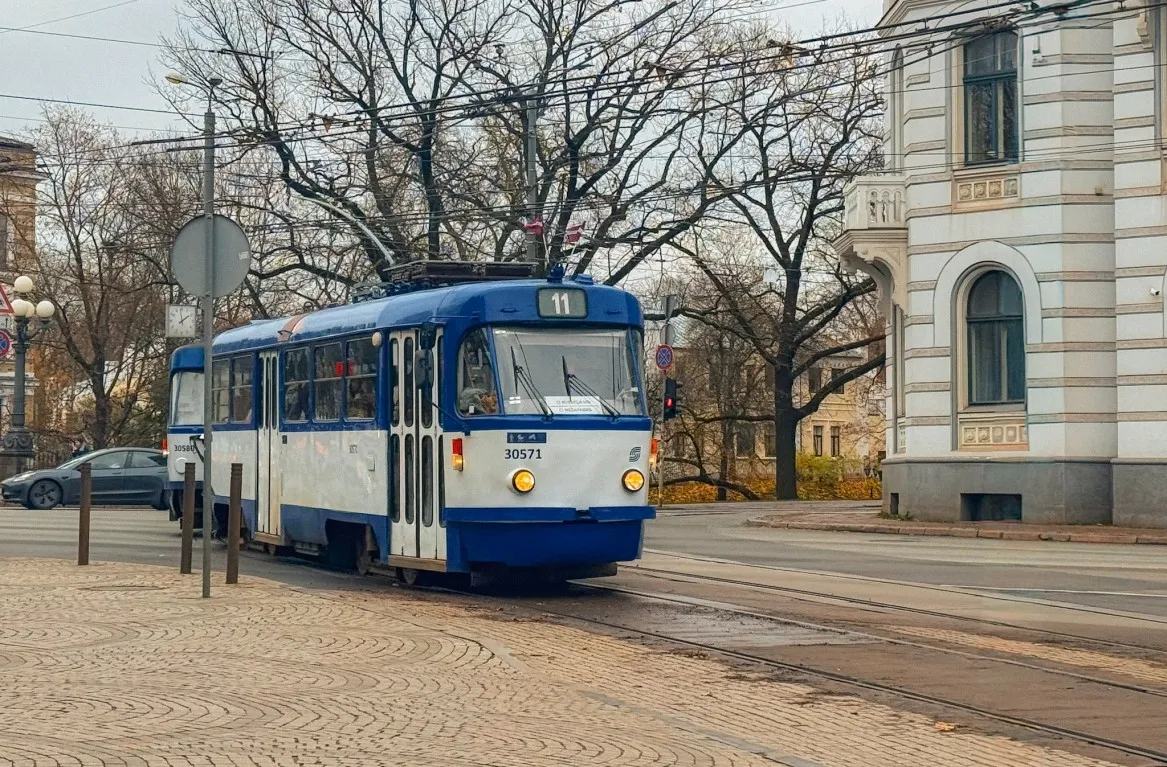
For areas further out, the trams are cheap and easy. You can buy your ticket from the machine at the stop or use the Mobilly app. A single ride is around €1.50 and the same ticket works on buses and trolleybuses. Bolt also operates here and it was our go-to for late night rides home. It’s usually cheaper than a regular street taxi and the cars show up within a few minutes.
The airport is about a 30 minute bus ride from the city centre on bus 22, running every 10 to 20 minutes from 05:45 to midnight. There’s a stop right outside arrivals and another one in town near the bus station. Costing just €2 it’s the best option to get from the airport to Riga. Outside the bus’s operating hours an airport transfer is the next best option.
Best time to visit Riga
If you want sunshine and lazy days sitting in a square in Old Town with a chilled beer then June through August is your window. Days are long with temperatures averaging 23°C (73°F), the parks are full of people, and it barely rains with just a few days of drizzle per month. The only trade-offs are the crowds and accommodation prices, which climb along with the temperature.
The beginning of Spring is still pretty wintery, it’s not until May where you see the real change of seasons. It finally becomes warm enough to sit outside, with averages highs of 18°C (64°F). The crowds come in June, so May is basically a cheaper summer.
Autumn is the rainiest season, it can be hit or miss. We actually spent October and November in Riga, it was mostly wet and gloomy. An umbrella was not a “nice to have” it was a necessity. A plus side to all that rain was that at times we felt like the only tourists. No queues at St. Peter’s, no waiting at restaurants, and hardly any tourists in our photos. On the days when it wasn’t raining, the city was crisp with bright orange leaves and a comfortable temperature of about 12°C (54°F).
Winter has its own magic, especially around Christmas when the markets pop up in Doma Square and the whole Old Town smells like mulled wine. It’s cold around – 5°C (23°F) but the city glistens in the snow. January and February can get brutal with the harsh cold and a lot of the outdoor things are harder to enjoy.
A Bit Of History…
I’m not going to do a full history lesson, but it’s good to have a tiny bit of context before you visit, otherwise a lot of what you see won’t make much sense.
Latvia got its independence at the end of WWI after centuries of being passed around by Sweden, Poland and Russia. Then in 1940 the Soviets arrived, followed by the Nazis, and then the Soviets again, who stuck around until 1991. Most adults you’ll pass on the street were born in the USSR and a lot of the most interesting things you can do in Riga (the Corner House, the Occupation Museum, the Stalin’s Birthday Cake building) come straight out of that period.
Doing one history thing on day one will make everything else hit harder. The Corner House tour is my pick for that, but more on that below.
Best Things To Do In Riga
1. Climb St. Peter’s Bell Tower
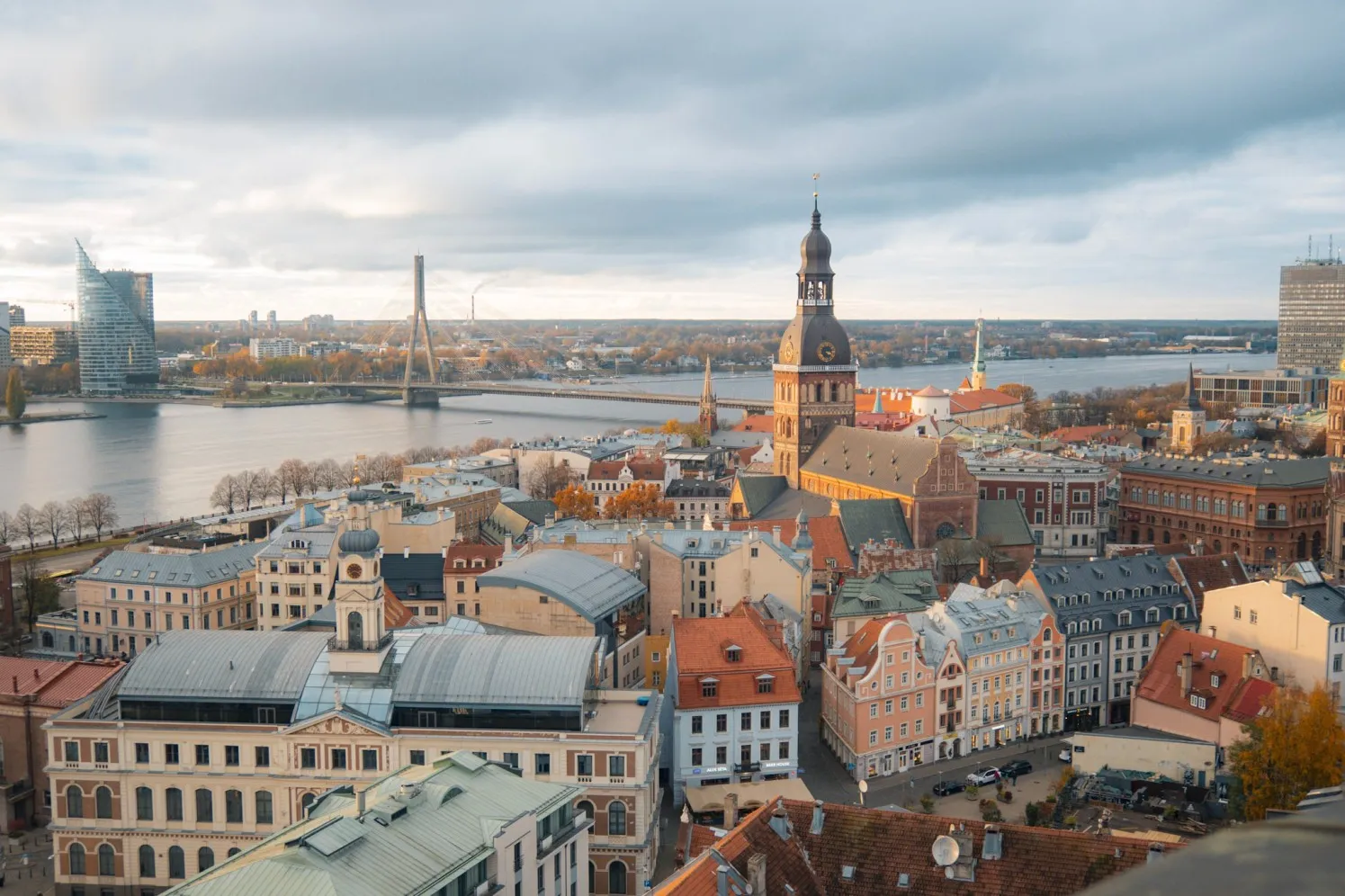
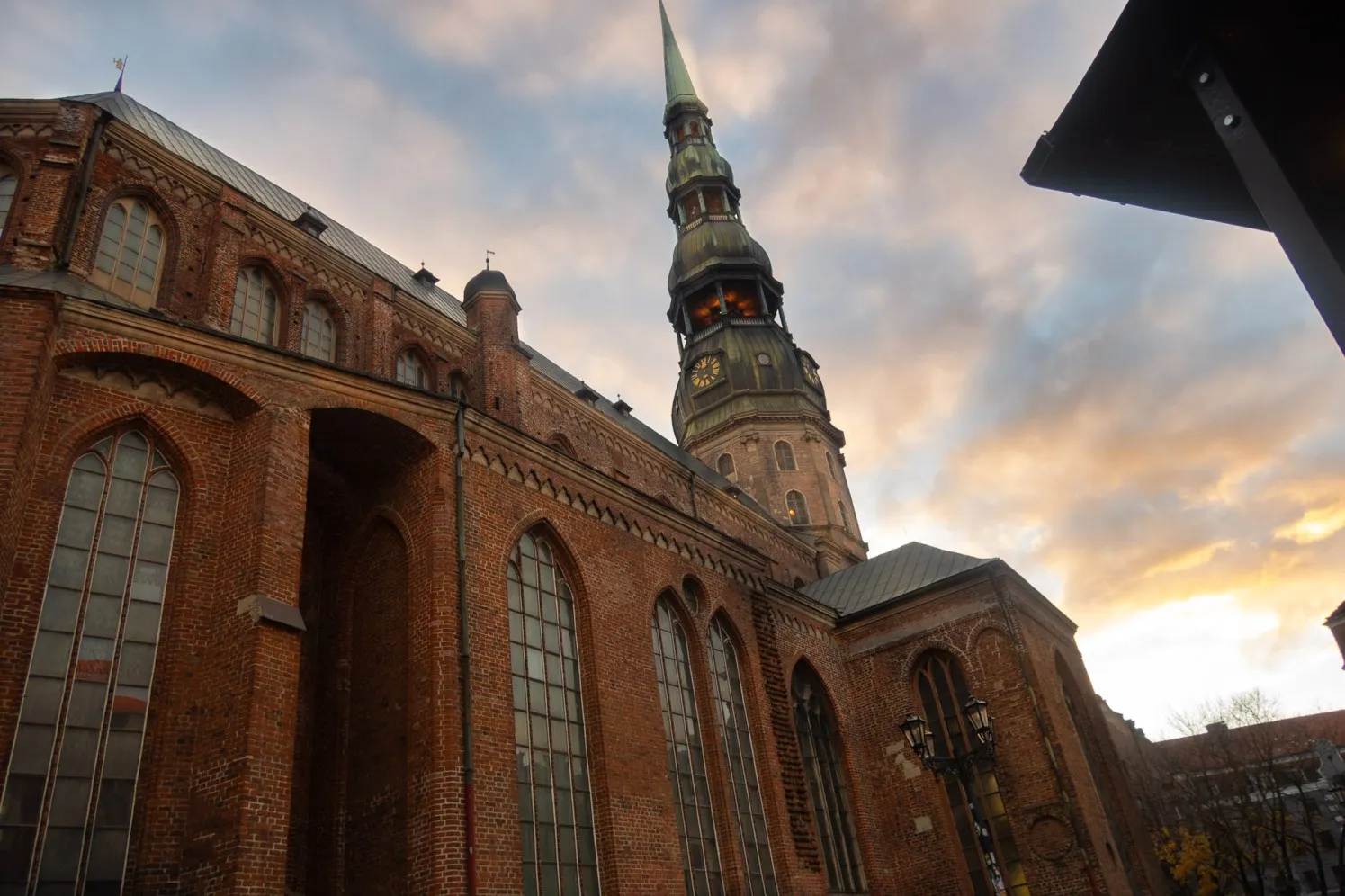
The 360 degree view from the top of St. Peter’s is the best one in the city. The tower is about 72 metres up, which you take an surprisingly fast and rickety elevator up to the top, no leg workout involved. You’ll see the red rooftops of Old Town, the spires of the other churches, the Daugava river snaking through the city, and the strange spaceship that is the National Library on the other side.
Tickets are around €9 and it’s worth going close to sunset if the sky is cooperating. It should only take 20 – 30 minutes in total.
Other viewpoints in Riga that are also worth your time:
- The Latvian Academy of Sciences 17th floor observation deck. Locals call it Stalin’s Birthday Cake (you’ll see why). Entry is around €6 and it gives you a completely different angle from 65 metres above the east side of the river.
- The roof terrace at Galerija Centrs shopping centre. Free, underrated, and there are a couple of decent bars up there if you fancy a cocktail with the view.
- Skyline Bar on the 26th floor of the Radisson Blu. Pricey cocktails but you’re paying for the view, not the alcohol.
2. Wander Around Old Town
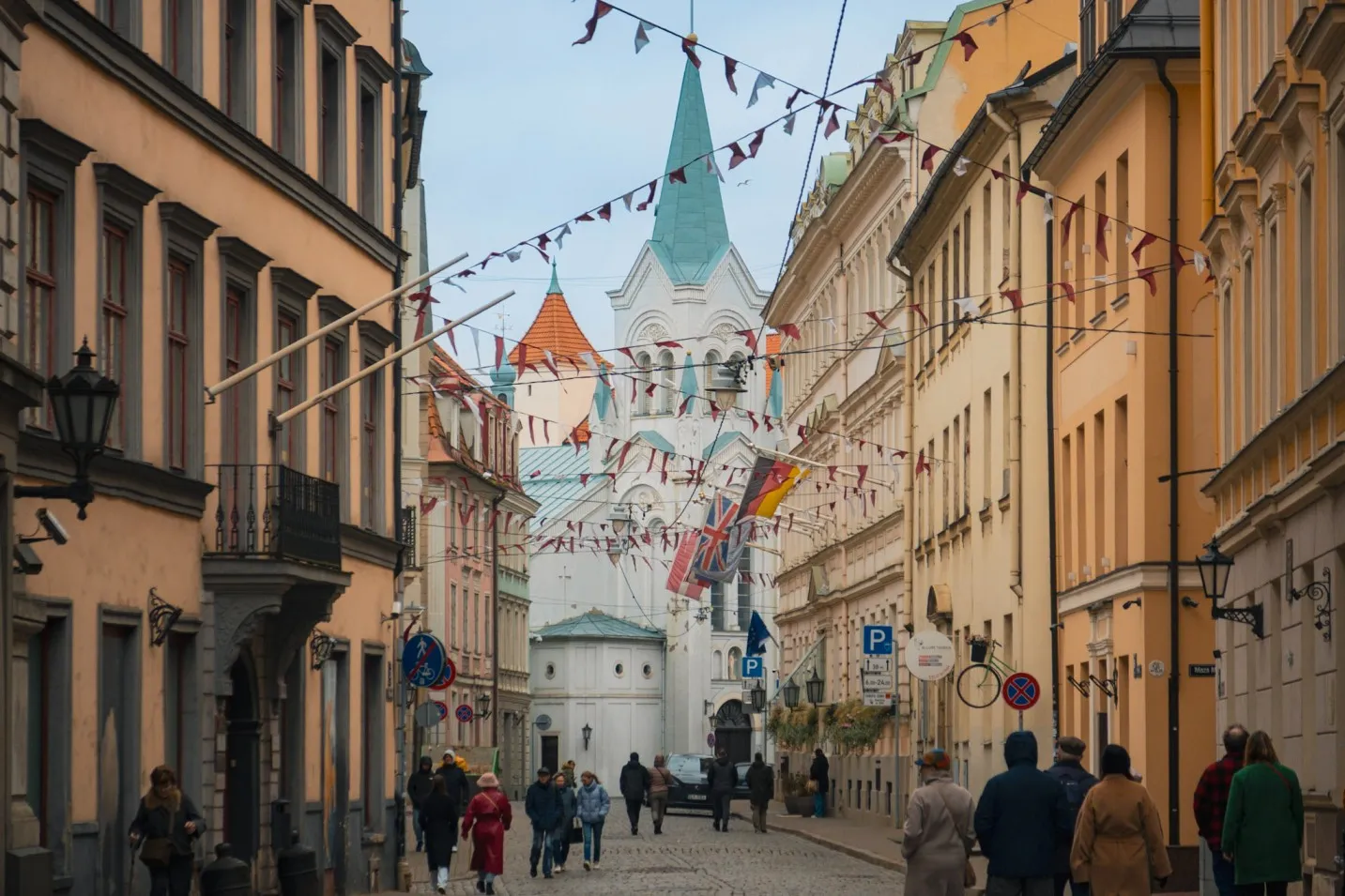
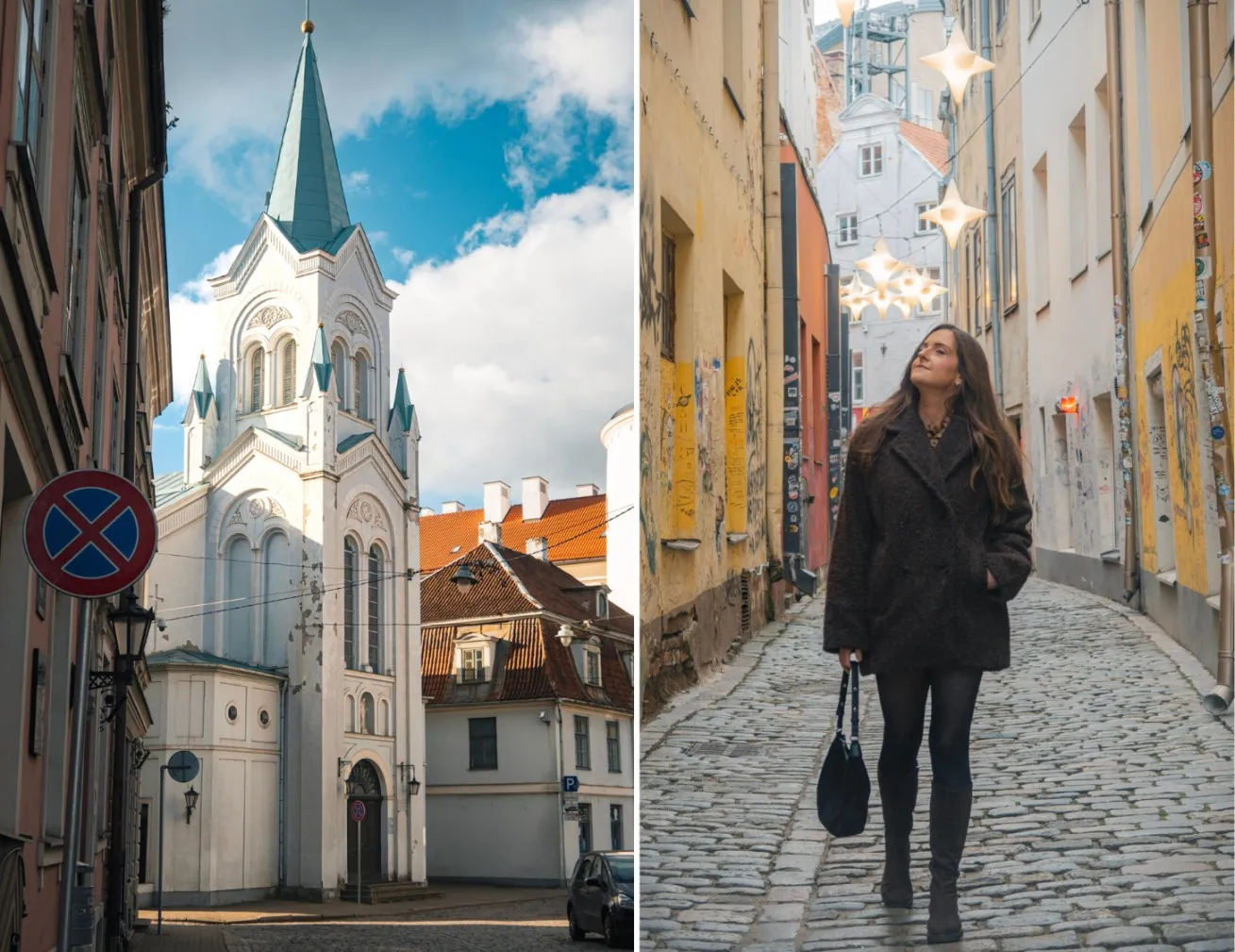
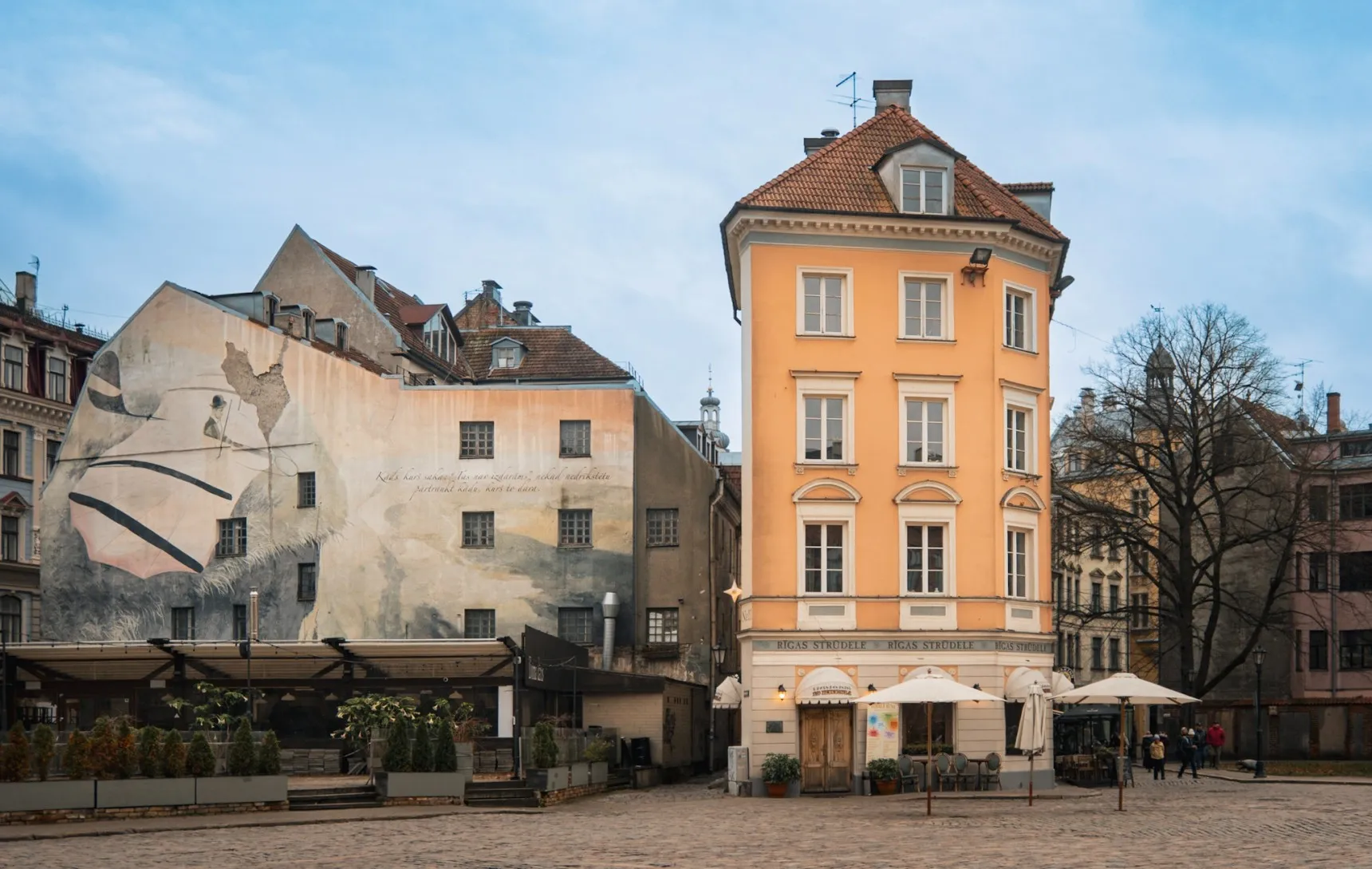
I know it sounds basic, but Riga’s Old Town is small enough that you can just walk and stumble onto everything. Cobblestone streets, colourful merchant houses, hidden courtyards, the occasional busker in a square. Half the joy of being here is just stumbling onto things.
I’d build in at least one full afternoon for pure wandering. Some of our best memories were not from the main attractions but from random alleys, random cafes and a random bar called The Armoury that we wandered into and stayed in for three hours (with our obligatory deep fried rye bread).
3. House Of Blackheads
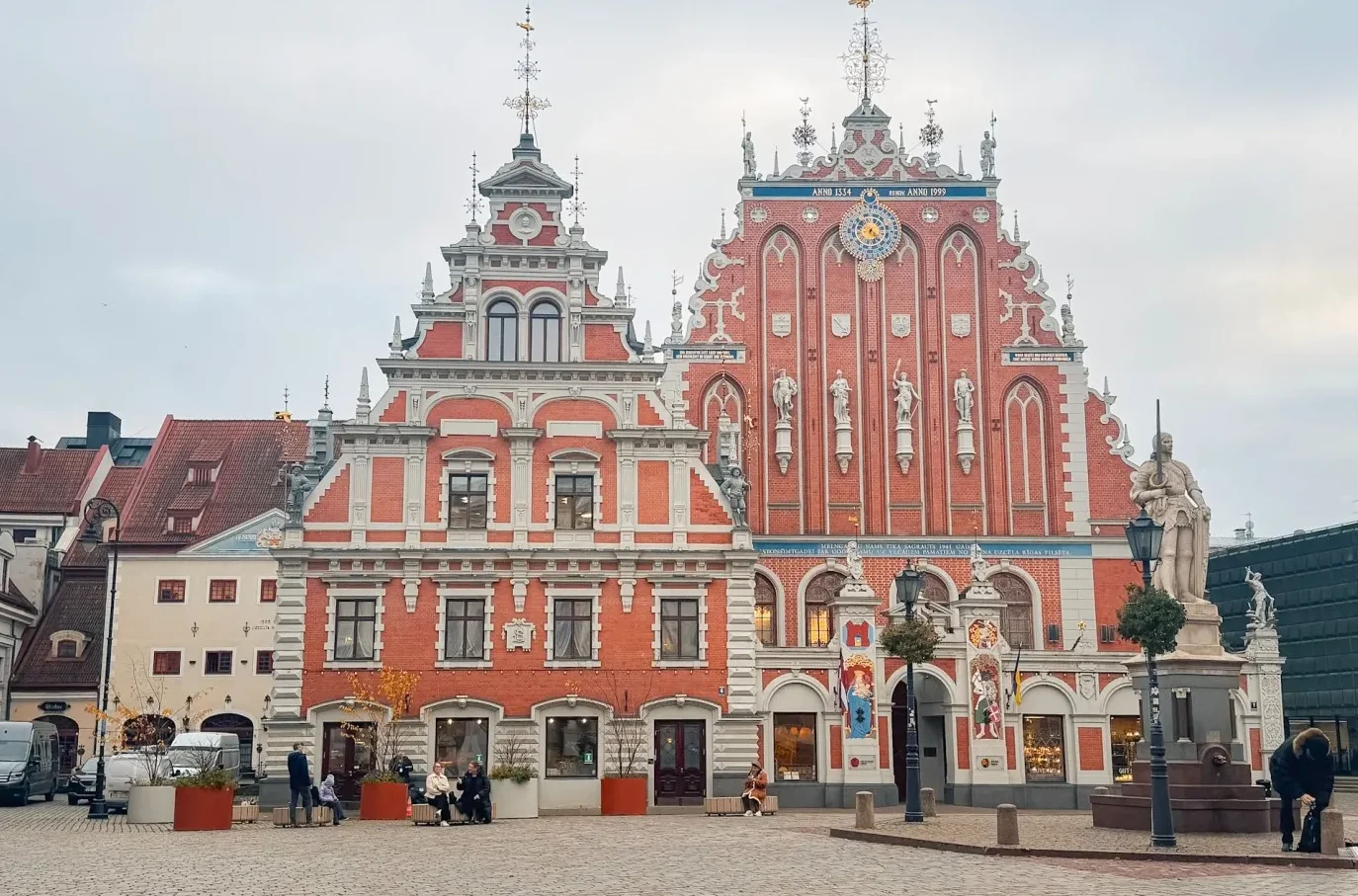
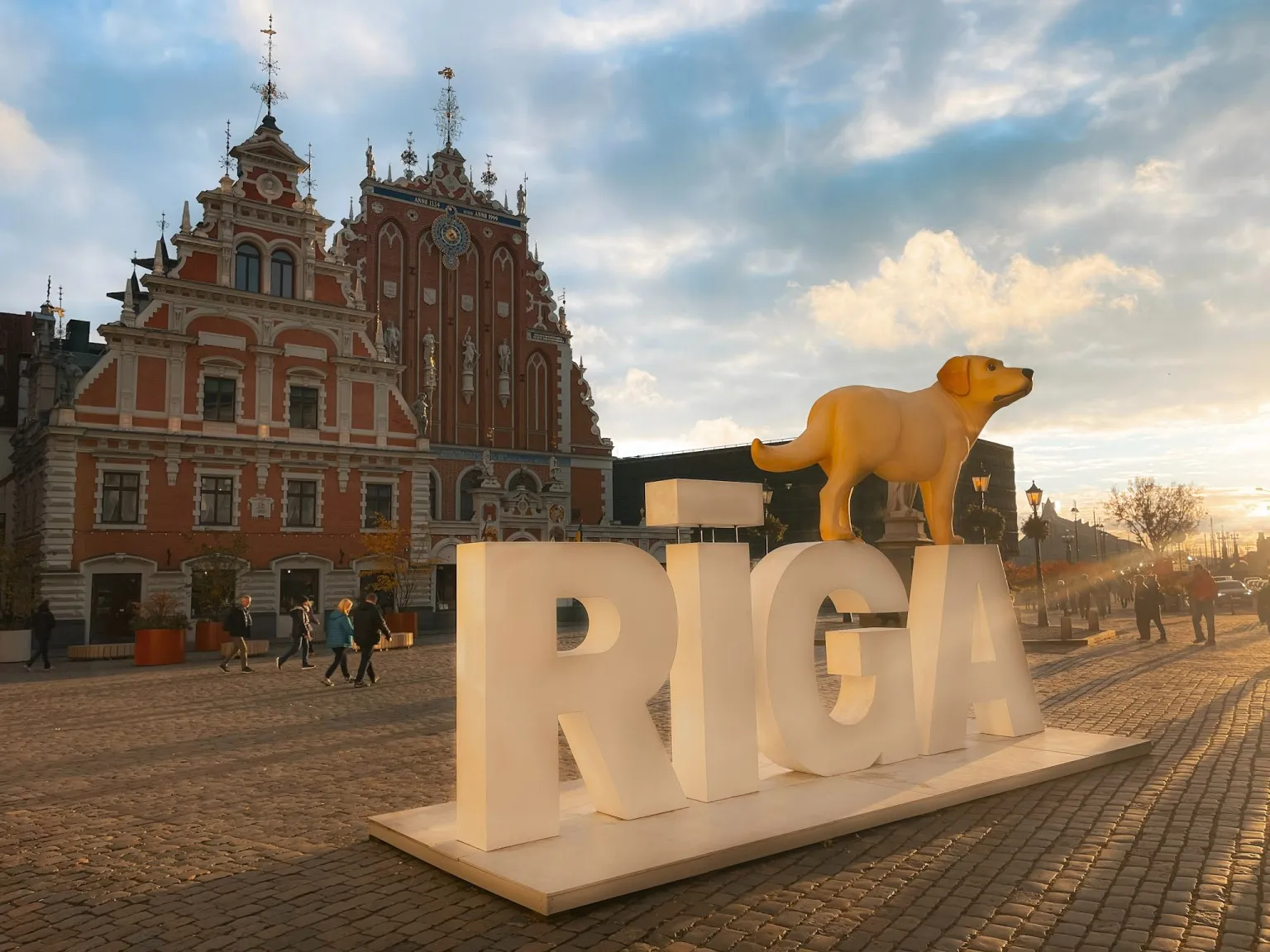
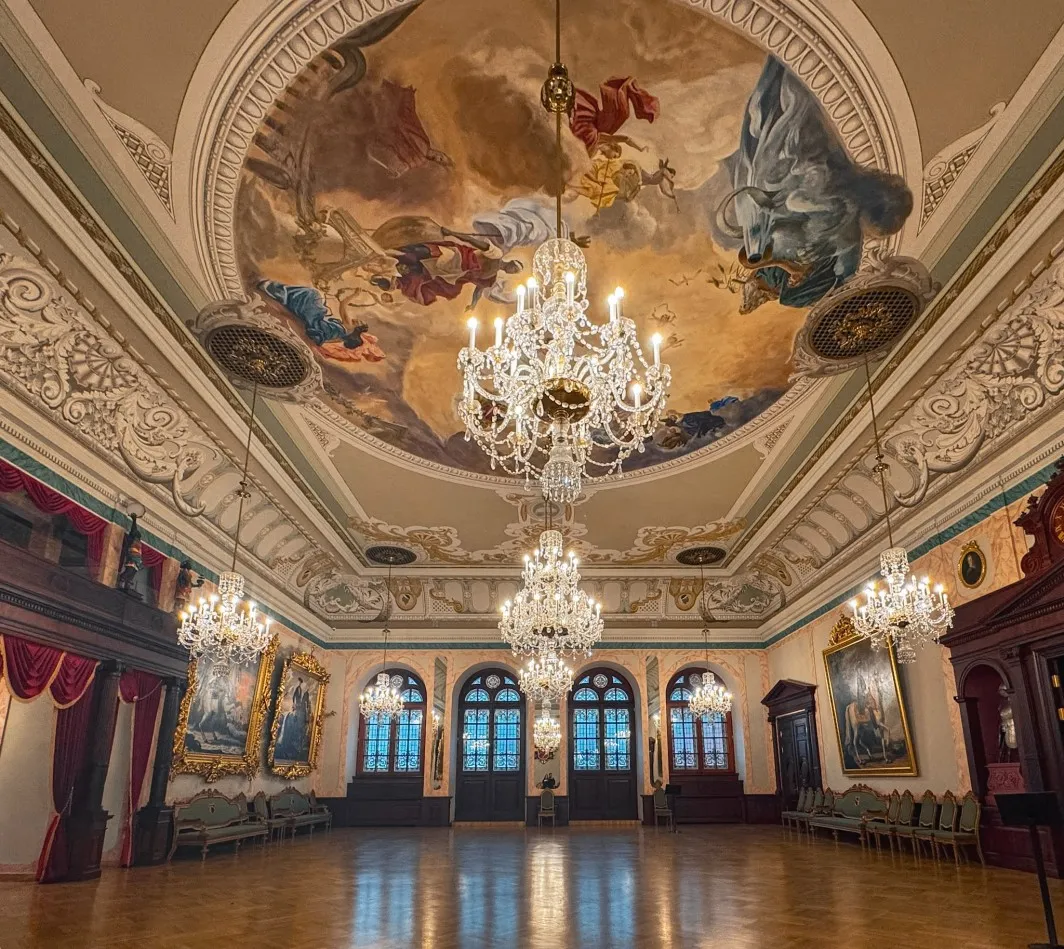
The House of Blackheads is probably the most photographed building in Riga, once you see it you’ll understand why. The facade is unreal: red brick, golden detailing, astronomical clock, statues everywhere. The original was destroyed in WWII and what you see now is a reconstruction from 1999, but you’d never know.
The inside is a museum and I’d give yourself around 45 minutes to an hour to do it properly. Freely explore the basement vaults and grand rooms. Entry starts at €10, or €12 including coffee and €13 including sparkling wine or balsam. Personally, I would just get the standard €10 ticket, and find a nice cafe or bar afterwards.
Outside in the square there’s a giant photographic RIGA sign with a sculpture of a dog peeking out next to it. The dog is part of the Bremen Town Musicians statue and rubbing his nose is supposed to bring good luck. Every single tourist queues up to do it, so it’s the dog with the shiniest nose you’ve ever seen.
Related: Vilnius Or Riga? Which Baltic Capital Should You Visit →
4. Doma Square and Riga Cathedral
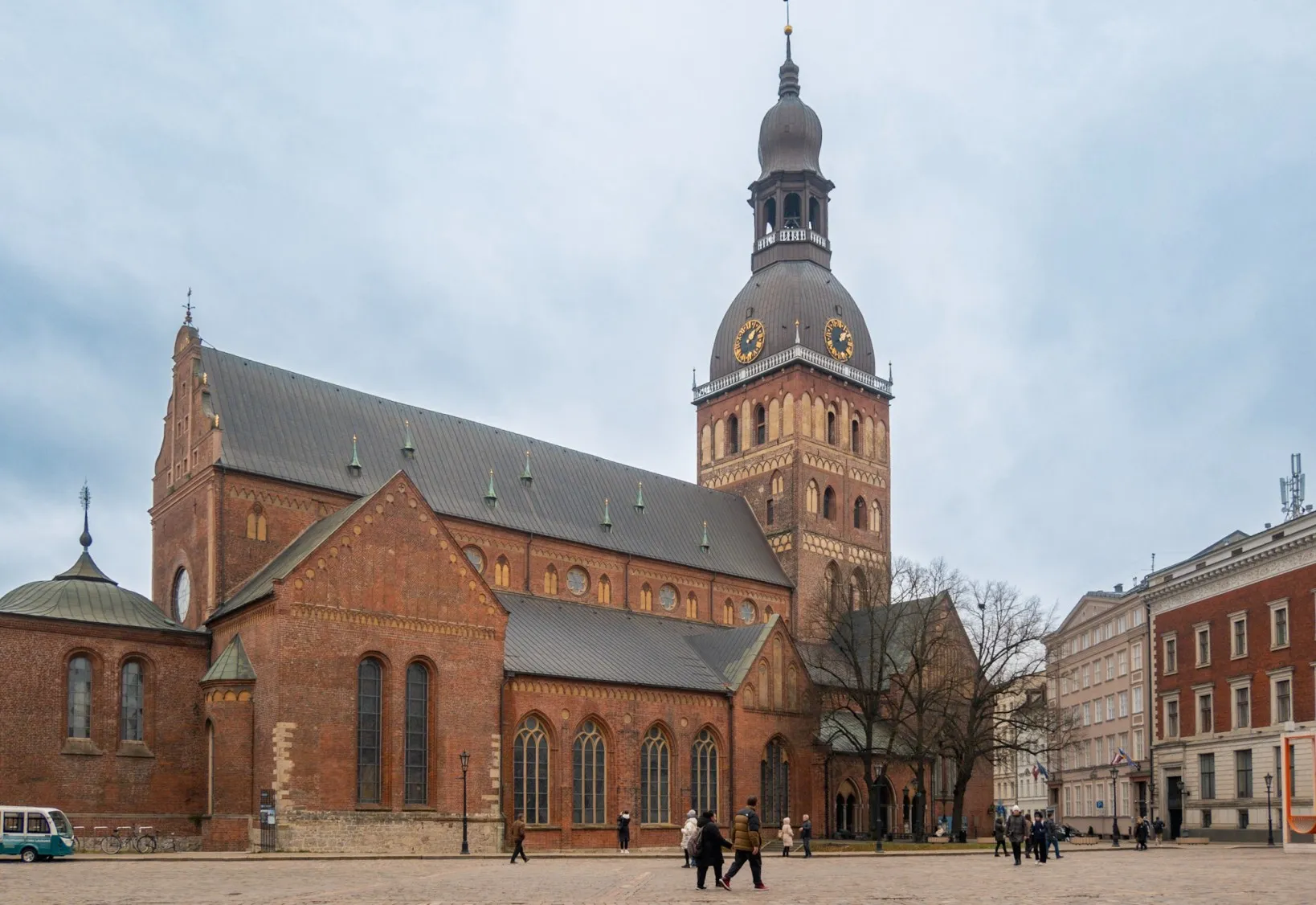
Doma Square is the biggest open square in Old Town and on a sunny day it’s where everyone ends up. Cafes, buskers, and lots of pidgeons. Riga Cathedral (the Dome Cathedral) dominates one whole side. It’s the largest medieval church in the Baltics, it’s been added to and rebuilt about six times since the 1200s, and the inside has one of the most famous organs in Europe, dating back to 1883. It’s known for it’s high build quality with excellent acoustics.
At 12:00 everyday is Concerto Piccolo, where a 20 minute organ performance occurs. Tickets are €15 and can be purchased on dom.lv. Entry to the cathedral alone is around €4.
You can also climb the 52 metre tower, tours run at 12:30 Monday, Thursday, Friday and Saturday, and at 15:30 on Sunday. It’s a guided group tour with only 15 people allowed per climb. It cost €15 per person and can be booked here.
5. Three Brothers
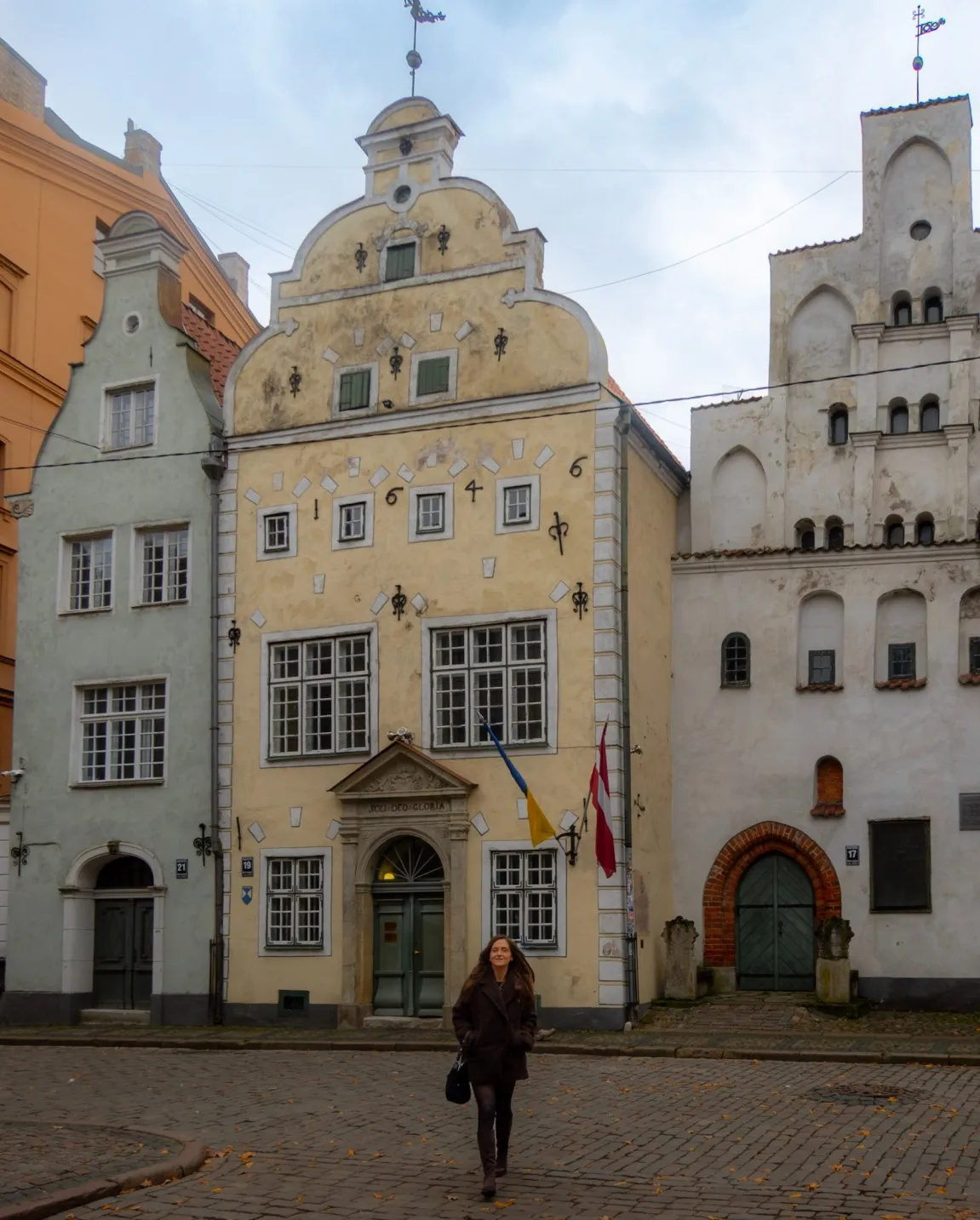
Three skinny houses pressed up against each other, each from a different century (15th, 17th and late 17th). They’re the oldest residential buildings in Riga and they look like something out of a fairytale, especially the white one on the left.
The middle building houses the Latvian Museum of Architecture which is small, free, and worth a 20 minute look if architecture is your thing. If it isn’t, just admire the outside, take the photo, move on. This is somewhere you’ll naturally walk by a few times while exploring the Old Town.
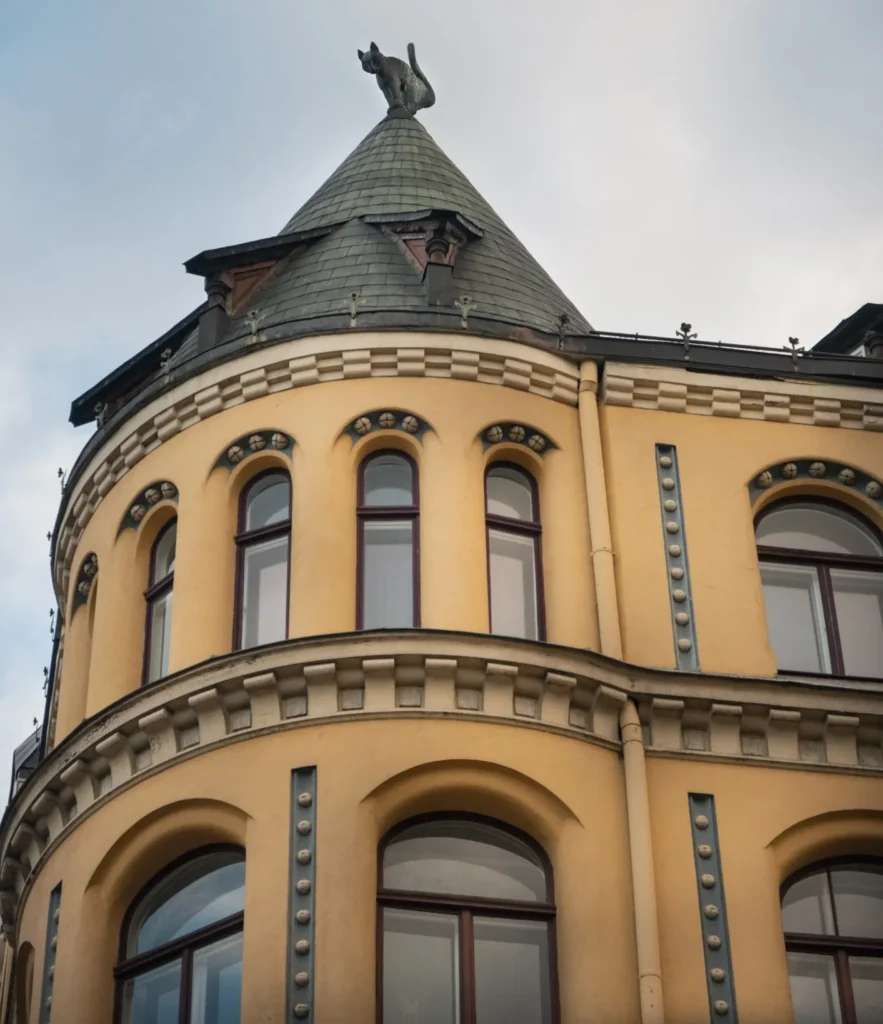
6. House Of Cats
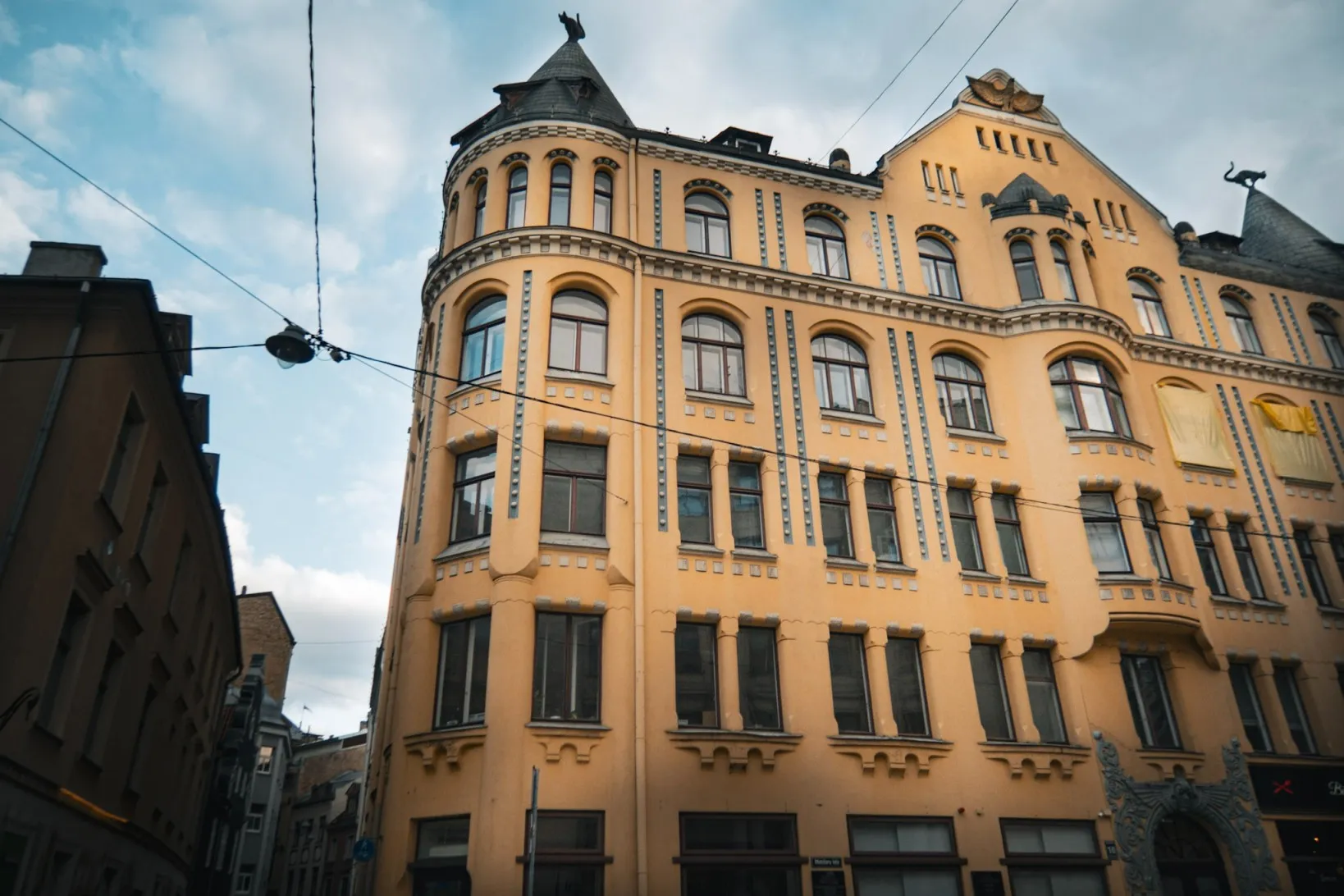
Look up when you’re walking down Meistaru iela and you’ll see two black cat statues with their backs arched on top of a yellow building. There’s a legend behind them that I love. The merchant who built the house was rejected from the Great Guild across the street, so out of spite he had the cats installed with their tails (and other ends) pointed directly at the guild’s windows. The guild sued, he won, and eventually they let him into the guild. After that he turned the cats around.
It’s a quick 5 minute stop but worth swinging by, plus the building itself is one of the prettier ones on that street.
7. Swedish Gate
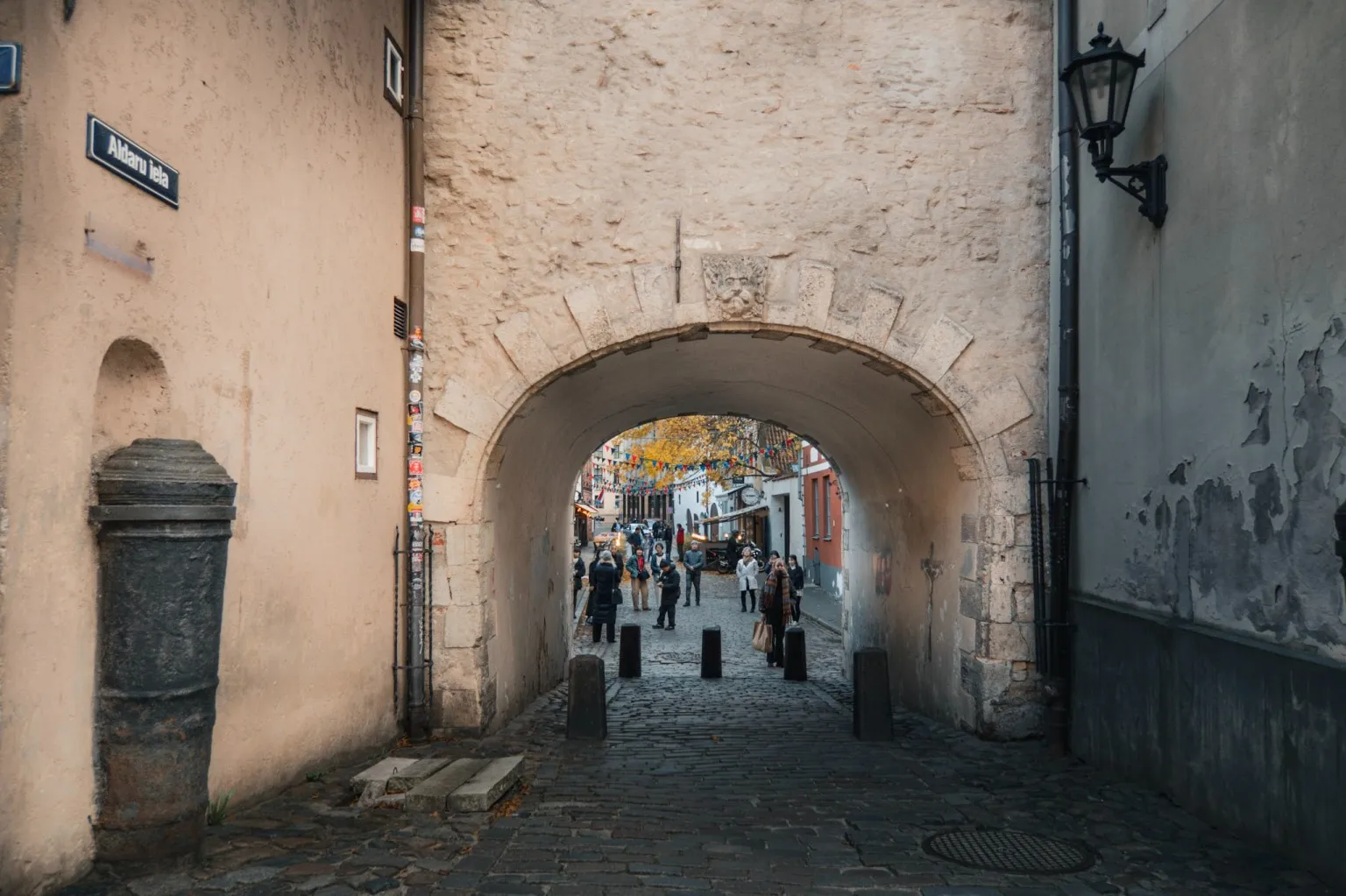
The only one of the original eight city gates still standing, built into a row of houses on Torņa iela in 1698. It’s a brick archway you walk through and that’s it. No museum, no entry fee, just a nice atmospheric little stop. The street it sits on is one of the most photogenic in Old Town so it’s an easy add to any walking route.
8. Freedom Monument
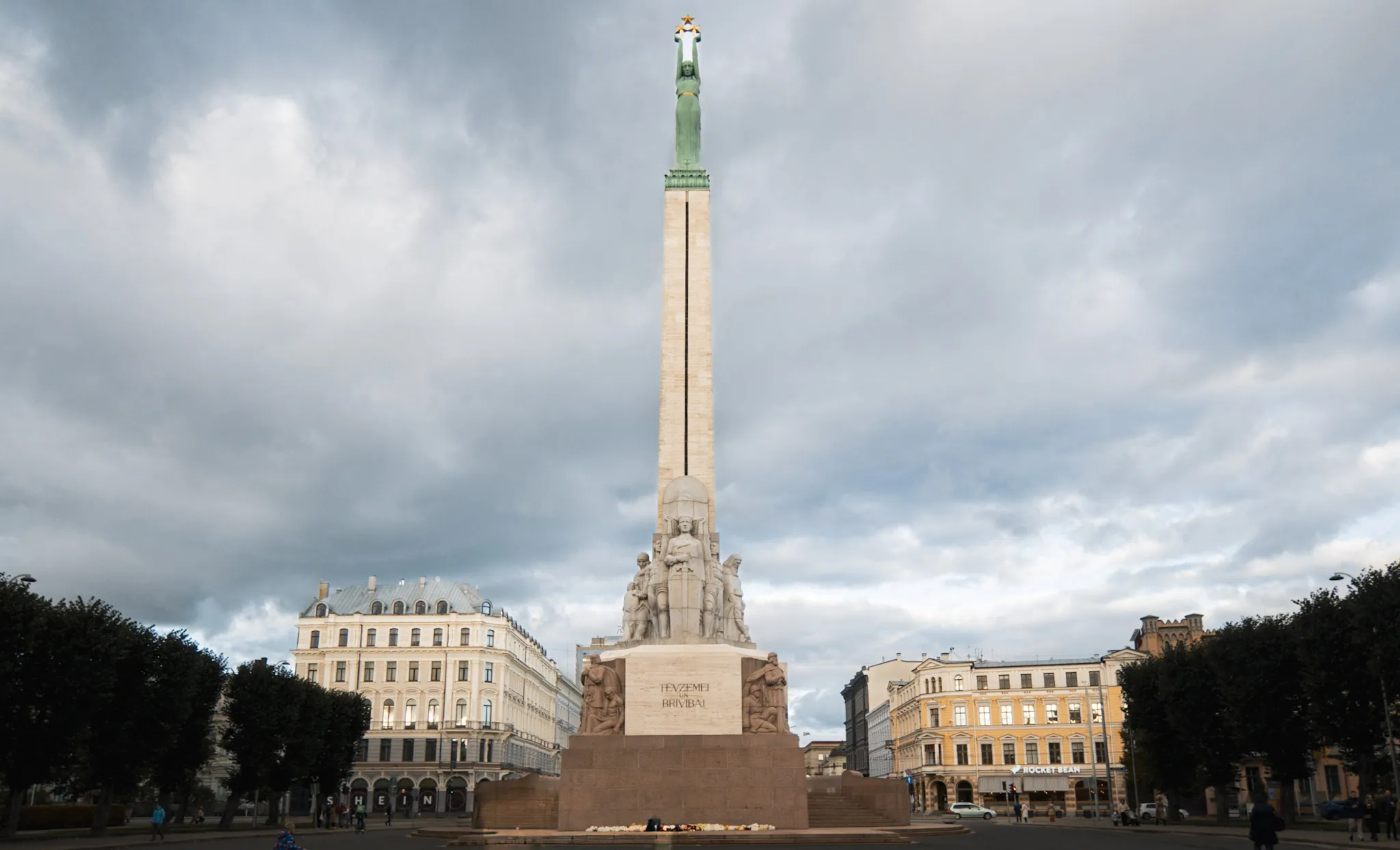
The symbolic heart of Latvia. A 42 metre column topped with a woman holding up three gold stars representing the three regions of the country. It was put up in 1935, somehow survived the Soviet era (the Soviets considered demolishing it but ultimately rebranded it as a Stalinist monument, which is mad), and is still where Latvians gather for every major national moment.
A military guard is posted at the base year-round and the changing of the guard happens every hour on the hour during the day. It’s quick, around 5 minutes, but worth watching once. Sits right at the edge of Bastejkalna Park so you can tick both off in one loop.
9. Bastejkalna Park
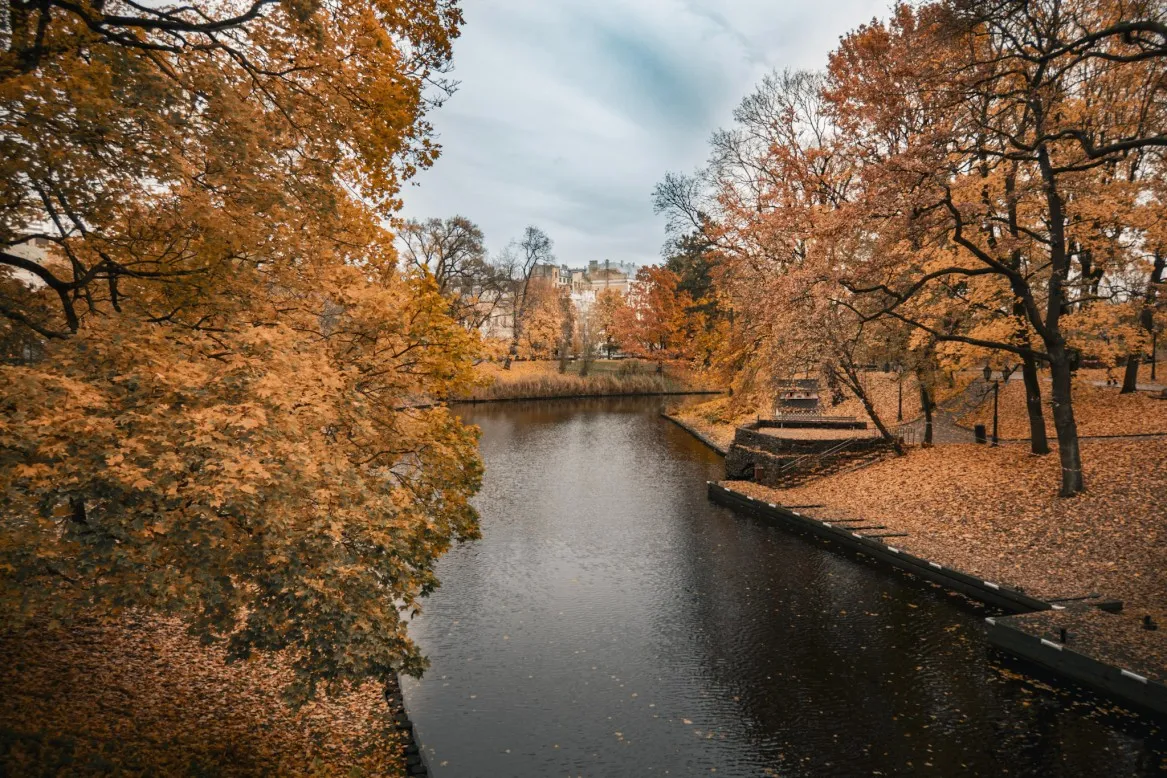
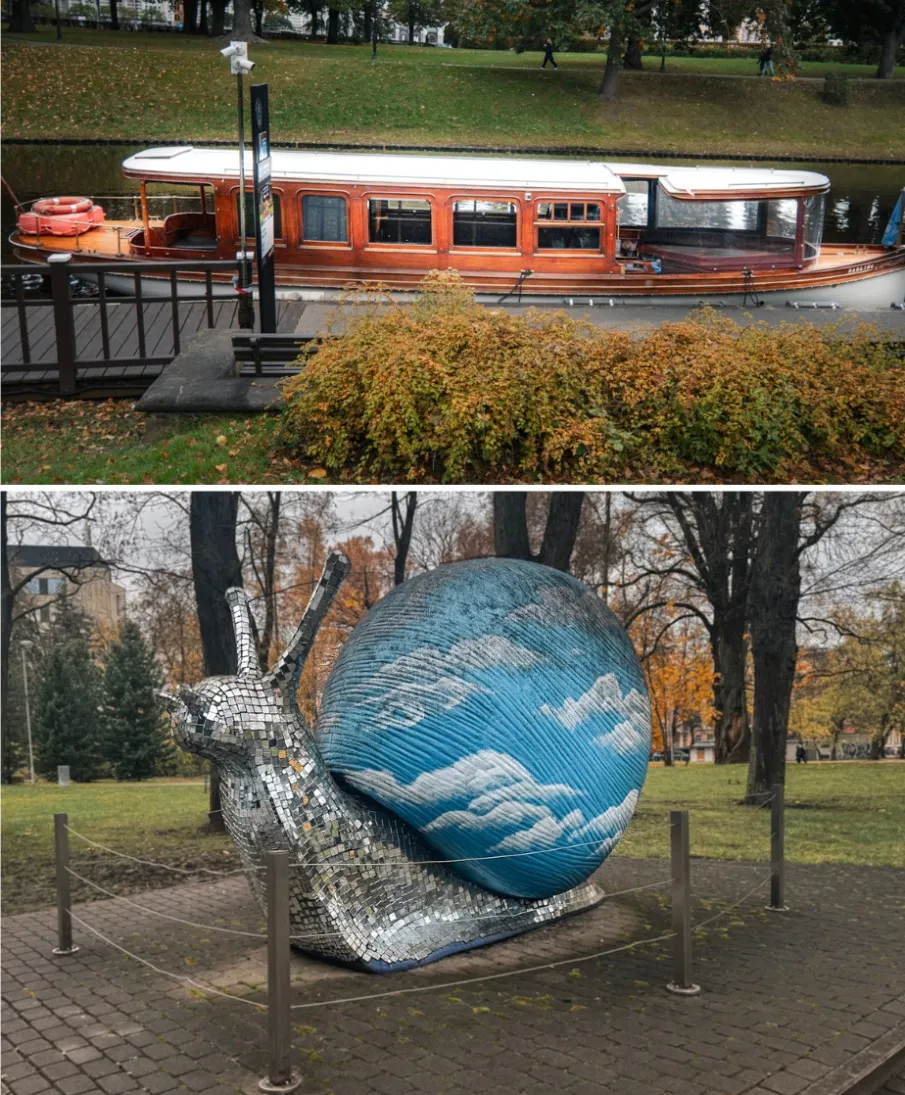
Right at the edge of Old Town where the medieval walls used to be is Bastejkalna Park, a thin strip of green that follows the old moat (now a canal). It’s one of those parks that locals actually use. Joggers in the morning, couples in the afternoon, people on the little tourist boats taking a tour down the water.
Walk it from end to end. It takes maybe 20 minutes and gives you a nice transition between Old Town and the Quiet Centre. In autumn the leaves go full red and orange and the whole thing looks like a postcard.
It sits below Kronvalda Park, it’s just a few minutes walk between the two so you can visit both in one go.
10. The Corner House (KGB Museum)
The most affecting thing we did in Riga and the thing I’d put first on your list if you only have one day. The Corner House is an Art Nouveau building on the corner of Brīvības iela that served as the KGB headquarters in Latvia from 1940 to 1991. The cells, the interrogation rooms, the courtyard where prisoners were brought in, the room where executions took place: all of it has been preserved.
The guided tour is the only way to see the full building and it’s worth every cent. It runs about 90 minutes to 2 hours and costs around €15. The guides are local historians, sometimes with personal connections to people who passed through here. It is bleak, it is heavy, and you’ll be quiet for a while afterwards. But you’ll understand Latvia in a way you wouldn’t have otherwise, and it gives proper weight to everything else you’ll see on your trip.
Book ahead online, especially in peak season. The English-language tours sell out.
11. Museum Of Occupation
After the Corner House, this fills in the rest of the picture. The Museum of Occupation covers Latvia’s three back-to-back occupations (Soviet 1940 to 41, Nazi 1941 to 45, Soviet 1945 to 91) with photos, documents, personal artefacts, and reconstructions including a gulag barrack you can walk through.
It’s a smaller museum than you’d expect from the scope. About 90 minutes is enough to do it properly. Entry is free, which is partly why I’d push everyone to go. It’s located right next to the House of Blackheads so easy to pair with that.
12. Alberta Street and the Art Nouveau Walk
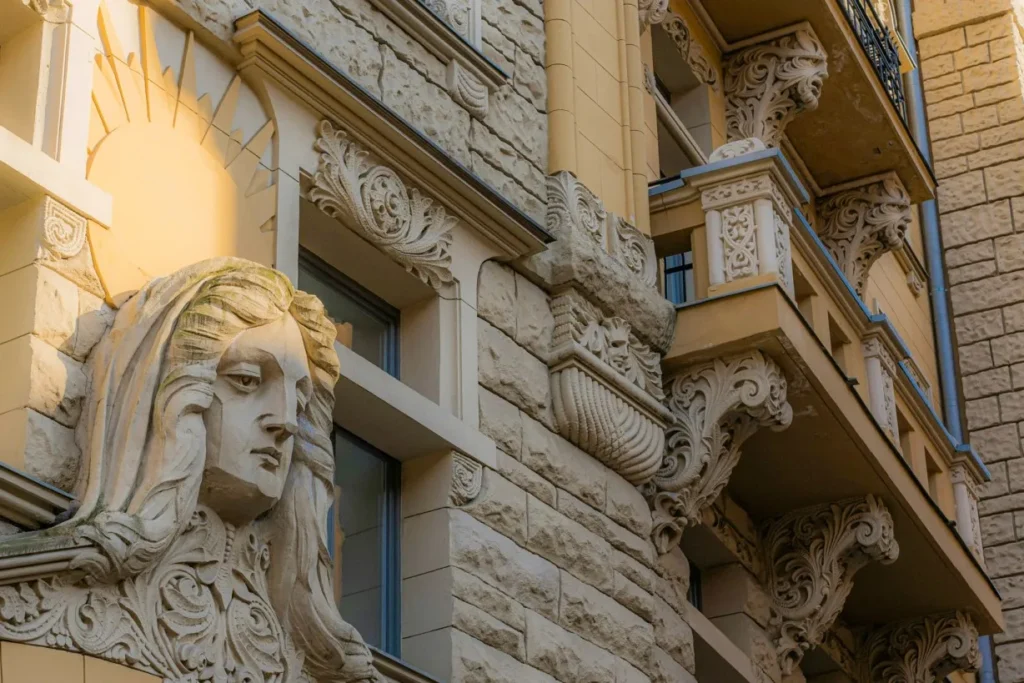
Riga has the densest concentration of Art Nouveau buildings of any city in the world. Over 800 of them across the city, mostly built between 1900 and 1914 when Riga was one of the biggest cities in the Russian Empire and the money was flowing.
The single best street for it is Alberta iela in the Quiet Centre, about a 15 minute walk from Old Town. The whole street is one show-stopper after another: sculpted faces, sphinxes, peacocks, screaming maidens, everything. Number 13 (designed by Mikhail Eisenstein, father of the film director Sergei) is the one everyone photographs.
The Art Nouveau Museum is on the same street if you want to go inside one of the buildings. Entry is around €9 and the recreated apartment interiors are gorgeous, all original furnishings and stained glass. Easily an hour well spent.
Pair Alberta Street with a coffee at MiiT or Rocket Bean (more on those below) and you’ve got a perfect Quiet Centre morning.
13. Riga Nativity of Christ Orthodox Cathedral
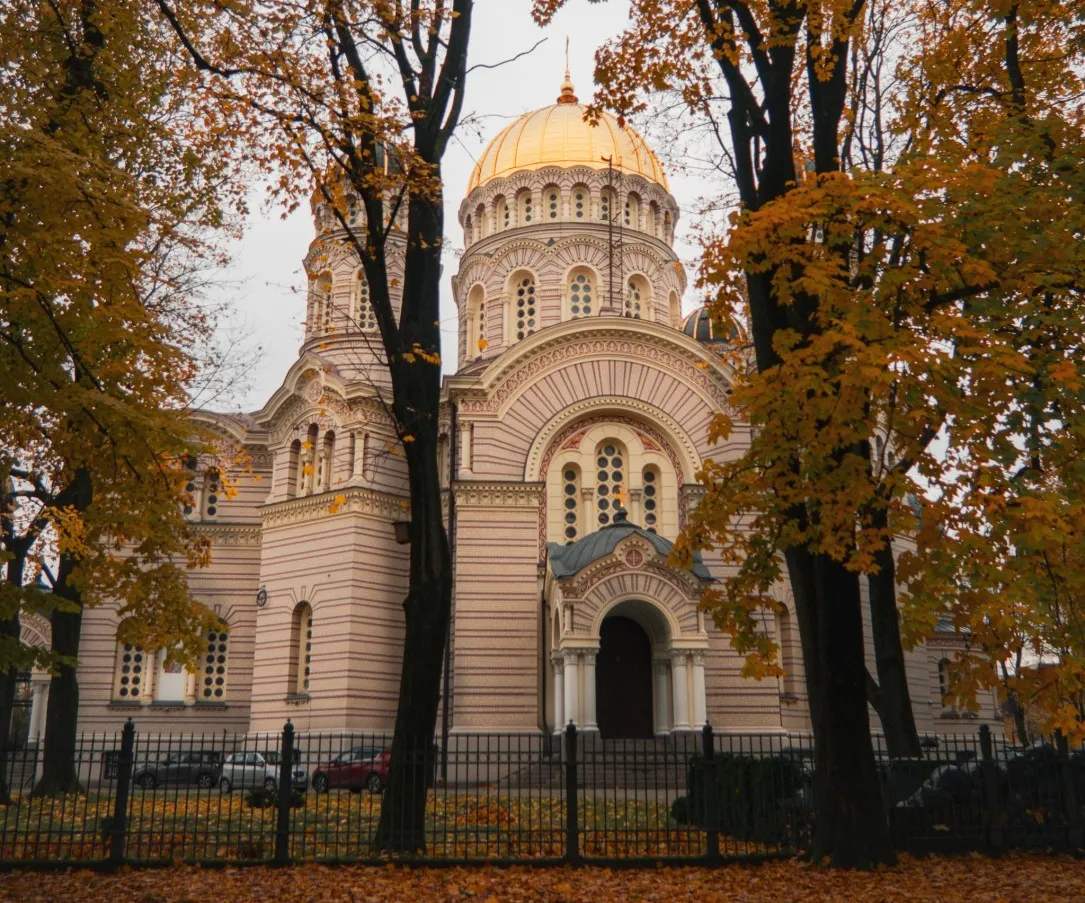
The biggest Orthodox cathedral in the Baltics and you genuinely can’t miss it. Five gold domes rising out of Esplanāde park. The inside is even more impressive than the outside. Dim, candle-lit, gold from floor to ceiling, icons everywhere, the smell of incense hitting you the second you walk in.
Entry is free but it’s a working cathedral so dress respectfully (shoulders and knees covered). Women are given a scarf at the door if needed. No photos inside, which honestly I think makes the visit better.
14. Holy Trinity Church of Pārdaugava
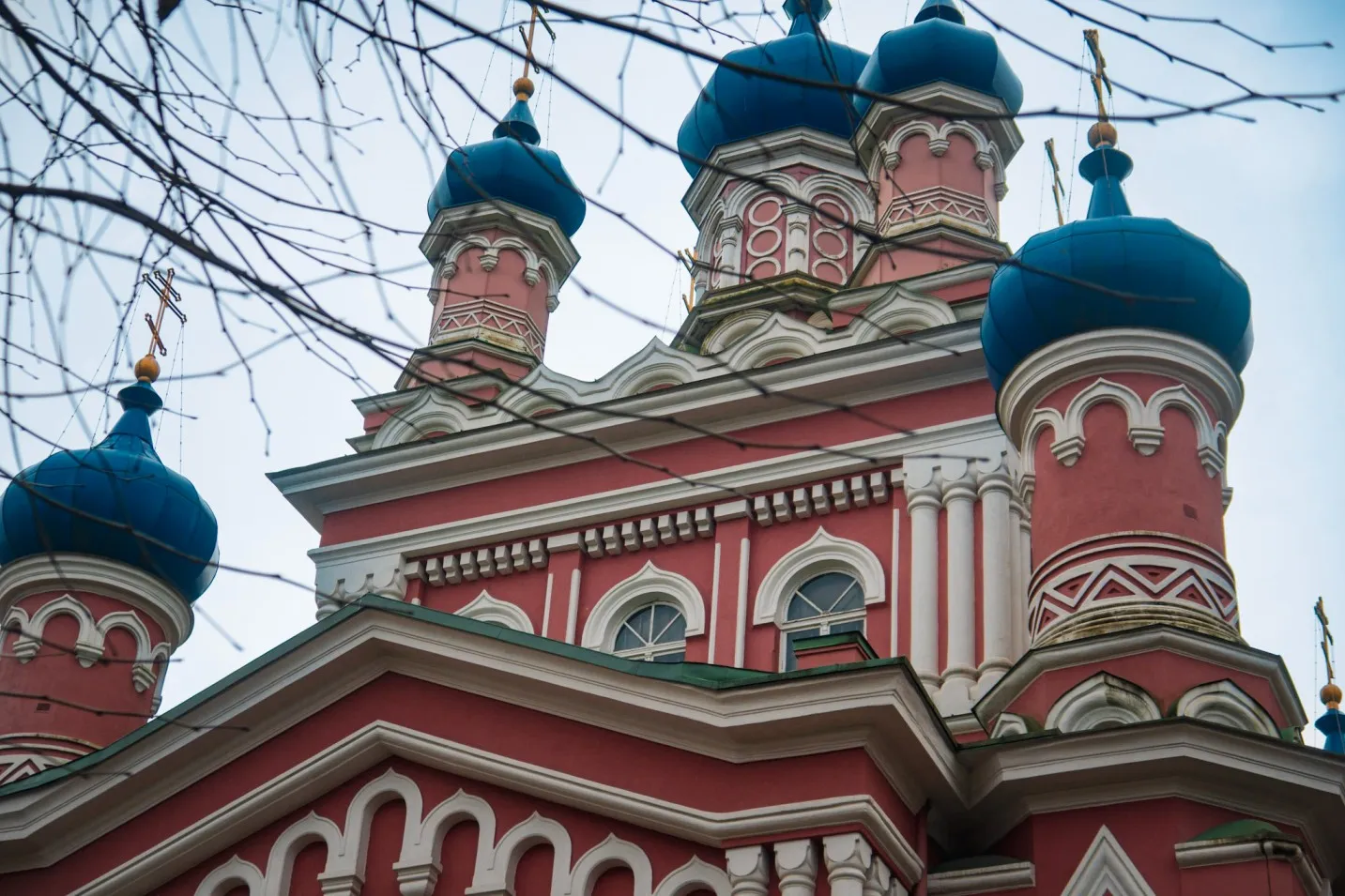
If Nativity is the obvious Orthodox cathedral, Holy Trinity Pārdaugava is the one your camera roll will thank you for. It’s a candy pink and blue Russian Baroque church with four blue onion domes, sitting in the Āgenskalns neighbourhood on the left bank of the Daugava. It looks like a marshmallow. It’s a shame the rest of Riga’s churches aren’t allowed to look this fun.
Built between 1892 and 1895 in Russian Revival style, it’s smaller than Nativity but more striking on the outside. Inside is your standard Orthodox setup (icons, gold leaf, incense, beeswax candles), pretty but not the main event. The main event is the exterior, and the photos you’ll get of it.
Getting there: about a 25 minute walk from Old Town across one of the bridges, or a 5 minute Bolt for around €3. We did the walk one way and the Bolt back. Entry is free, no photos inside, same dress code as any Orthodox church (shoulders and knees covered, scarf provided for women at the door if needed). Worth the detour if you’re not in a rush.
15. Latvian National Museum of Art
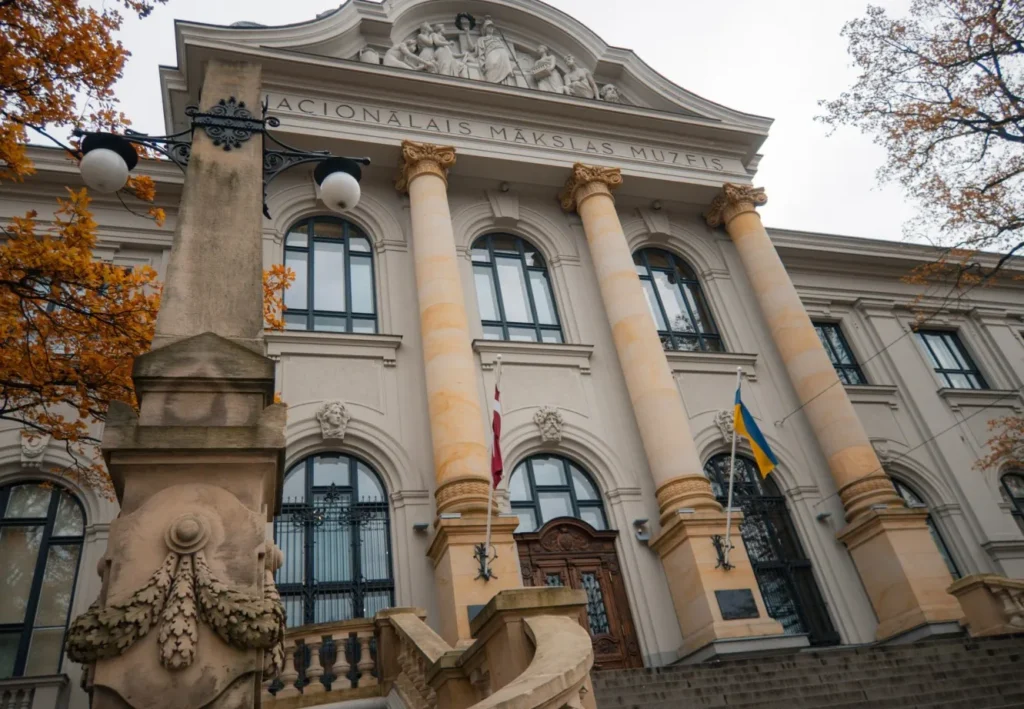
Housed in a gorgeous neo-baroque building in the Quiet Centre, this is where you’ll see Latvian art from the 18th century onwards. The Vilhelms Purvītis landscapes are the star of the show for me. All moody Latvian forests and frozen rivers and exactly the mood Riga puts you in.
Give yourself around 90 minutes. Entry is €6. Skip if you don’t usually like art museums, but if you do, this is a really good one and rarely busy.
16. Riga Central Market
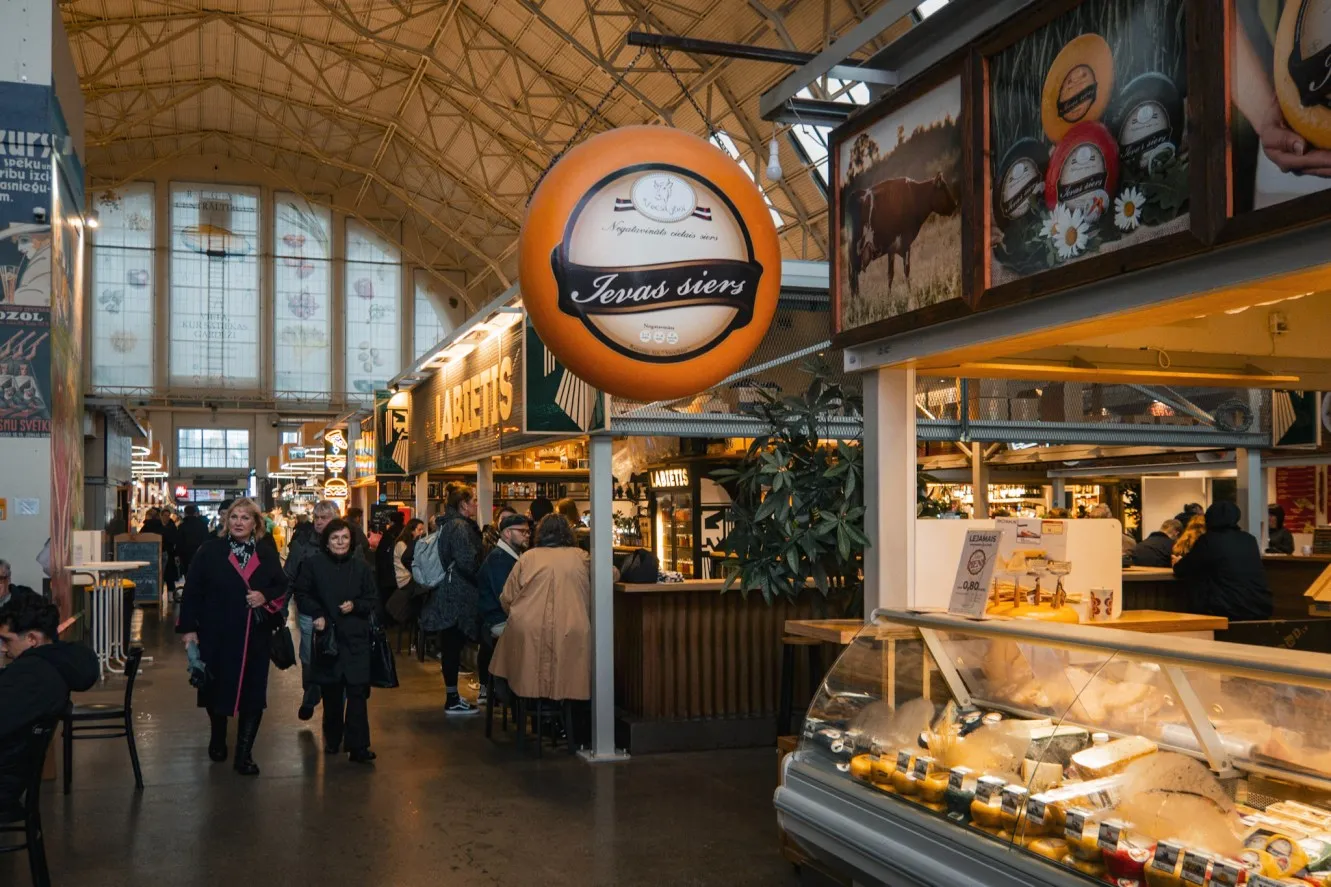
The Central Market lives inside five enormous old Zeppelin hangars and it’s one of the biggest markets in Europe. You could honestly spend half a day here just wandering. Each hangar has a theme (meat, fish, dairy, vegetables, bread) and the smells alone tell you which one you’re in.
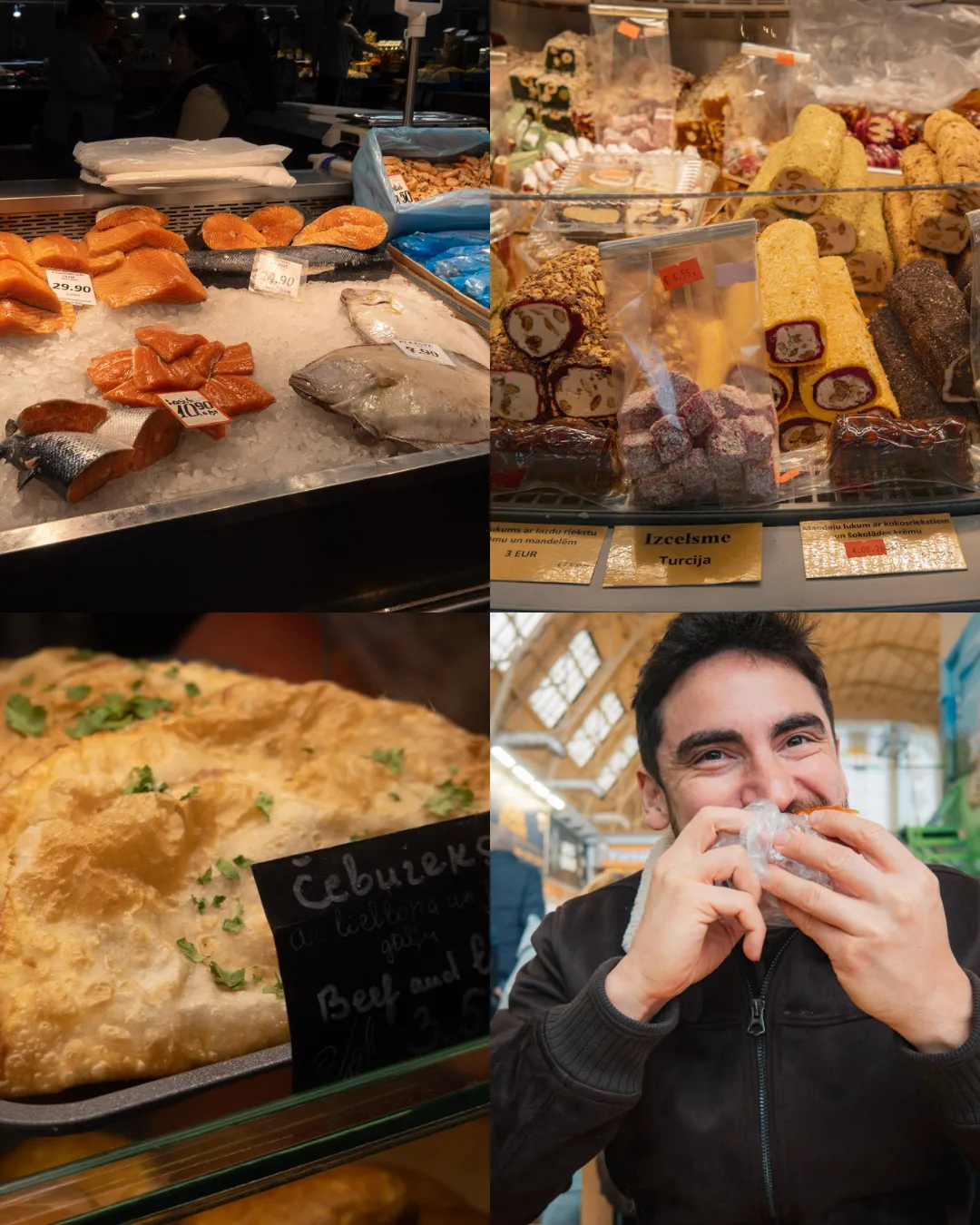
I’d come hungry. Grab smoked fish, pickles, a piece of rye bread, some local honey, sit on a bench and eat. The prices are about a third of what you’d pay at a touristy spot in Old Town. There’s also a Labietis tap room inside the market if you want a craft beer with your snacks, which I’d very much recommend.
Bring cash. A lot of the stalls take card now but the smaller ones still don’t. There’s an ATM at the entrance.
17. Body Museum (RSU Anatomy Museum)
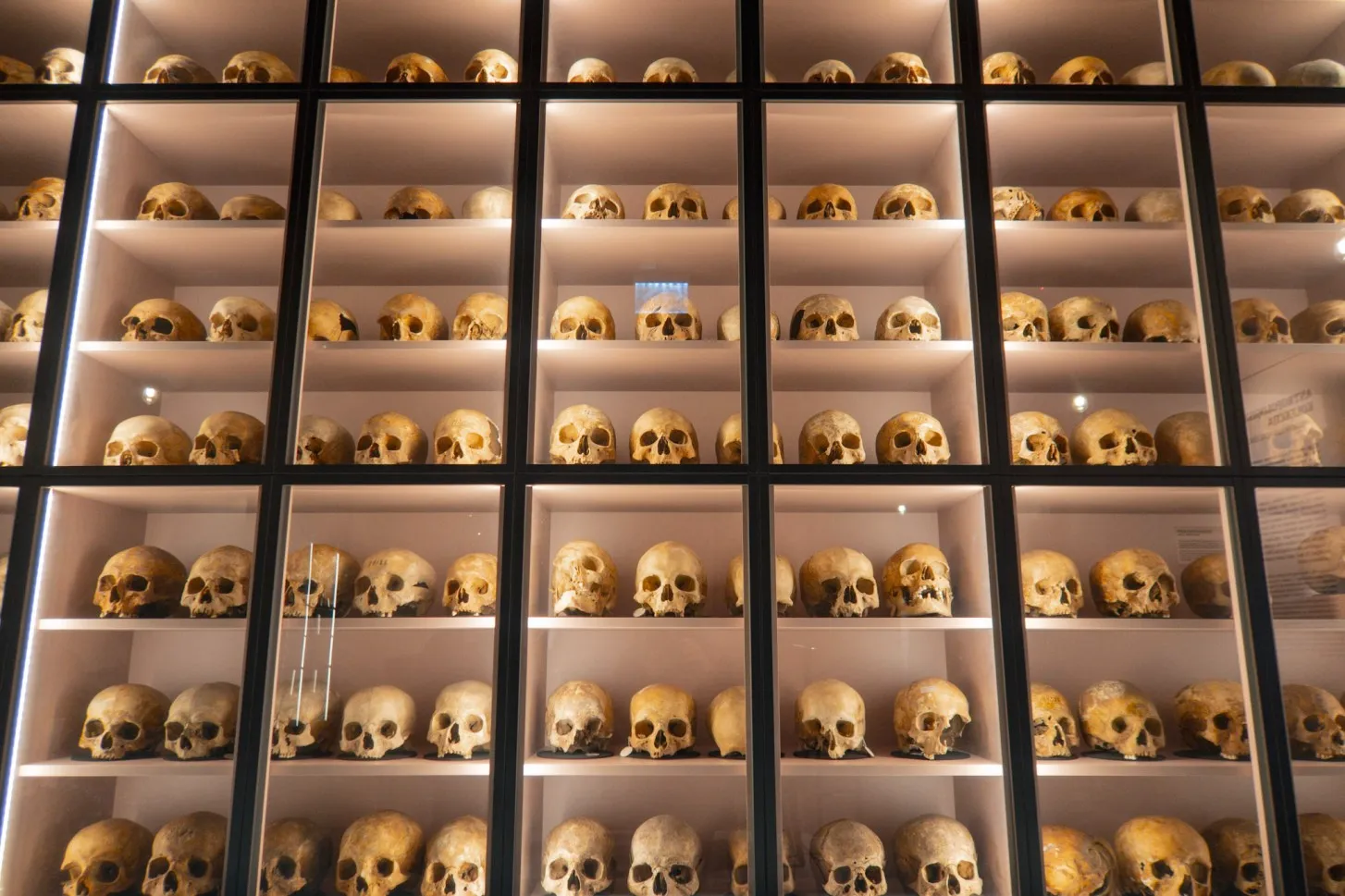
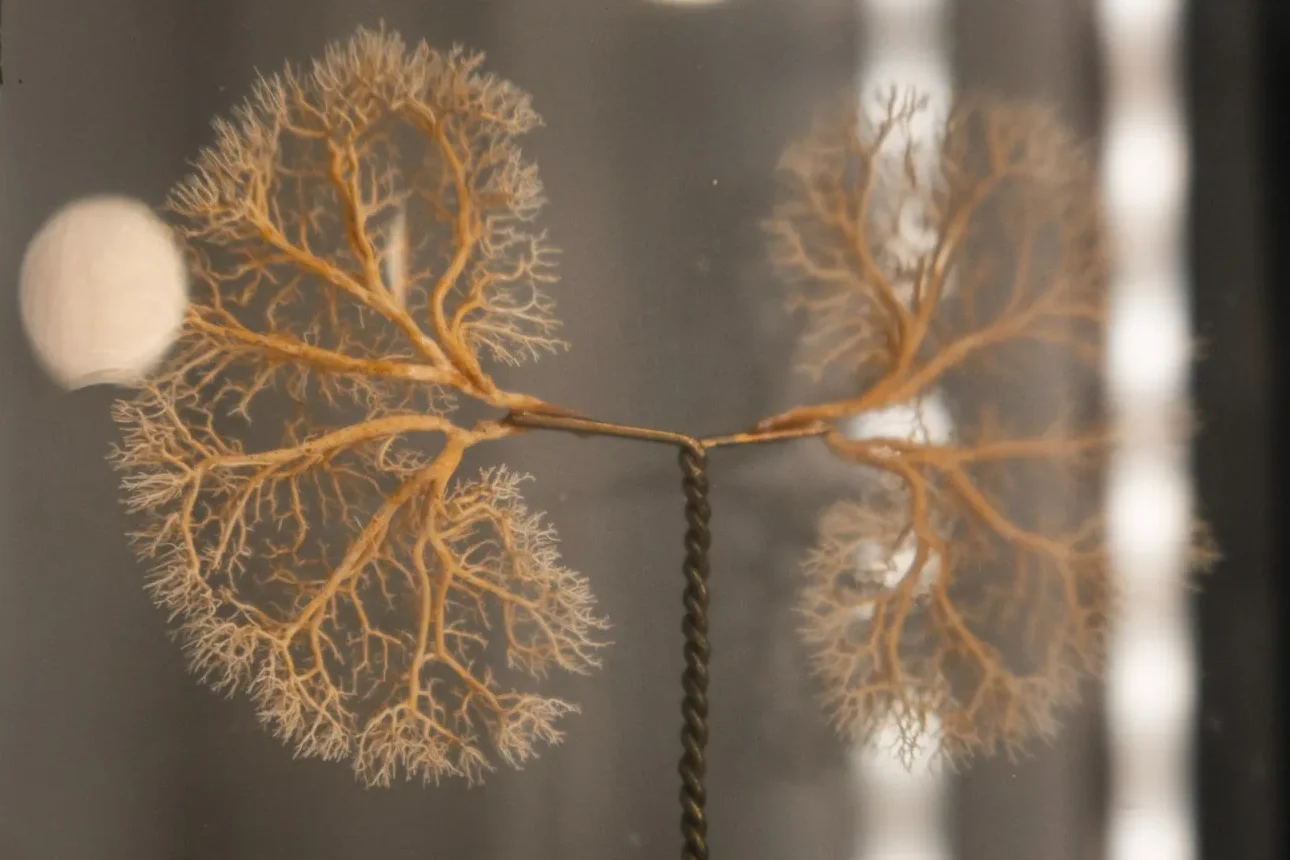
This one is not for everyone, but it’s one of the most unique things to do in Riga. The Body Museum (officially the RSU Anatomy Museum) is a proper anatomy collection from Riga Stradiņš University, originally put together in the early 20th century for medical students and opened to the public in 2020. There are real preserved human bodies, you’re going to see real organs, real bones, brains in jars, the lot.
The ground floor eases you in with some interactive stuff like a blood flow demonstration, anatomical models you can actually pick up, a machine that scans you and displays YOUR skeleton. We probably spent 30 minutes here just messing around.
The basement is where it gets serious. Here you’ll find full preserved cadavers, foetuses with birth defects in jars, photos are not allowed (rightly so) and you can feel the room go quiet when people walk in. It’s confronting, absolutely fascinating and not a place for anyone who’s even mildly squeamish.
Entry is around €10, give yourself around an hour, and it’s on Kronvalda bulvāris in the Quiet Centre.
18. Cocktails at Herbarijs (Galleria Riga)
If you want to see Riga from above with a drink in your hand, this is the move. Herbarijs sits on the rooftop of Galleria Riga, an 8-floor shopping centre on Dzirnavu iela about a 10 minute walk from Old Town. The terrace gives you a full 360 degree view of the UNESCO Old Town with all those red rooftops you’ve been walking around at street level, except now from above.
The bar itself looks like a greenhouse: all tropical plants and soft lighting, and they specialise in cocktails using herbs, berries and fruits. Order the beef tartare (it’s the move here), cocktails are around €11 to €14, and a clear-sky sunset is one of the best evenings you can have in the city. Lock in a table on weekends, the locals are very much in on it.
The terrace is free to access if you just want the view, so you can pop up without committing to anything.
19. BURZMA Food Hall at Galerija Centrs

If Lido is the traditional Latvian buffet, BURZMA is its hipper cousin. This food hall opened in 2023 on the 4th floor of Galerija Centrs, the old shopping centre right in the heart of Old Town, and it’s a brilliant call for lunch when you’ve been on your feet all morning.
Around 10 vendors covering a properly wide range: Georgian khachapuri at Hačapuri, Mexican tacos at L-Taco, plus Asian, pizza, salads, and a couple of decent cocktail bars in the mix. It’s split into a Grab&Go section if you’re in a rush and a Rest&Taste section if you want to sit and linger. Most plates land in the €8 to €14 range.
The real reason to come here is the rooftop terraces, which open right off the food hall and give you a free, sweeping view over the Old Town rooftops. Glorious in summer, and on a wet day you can stay inside and still get the view through the glass. One of the best rainy-day plans in the city, and unlike most Old Town food spots it’s full of locals on weekday lunches.
20. Try Latvian Food At Lido
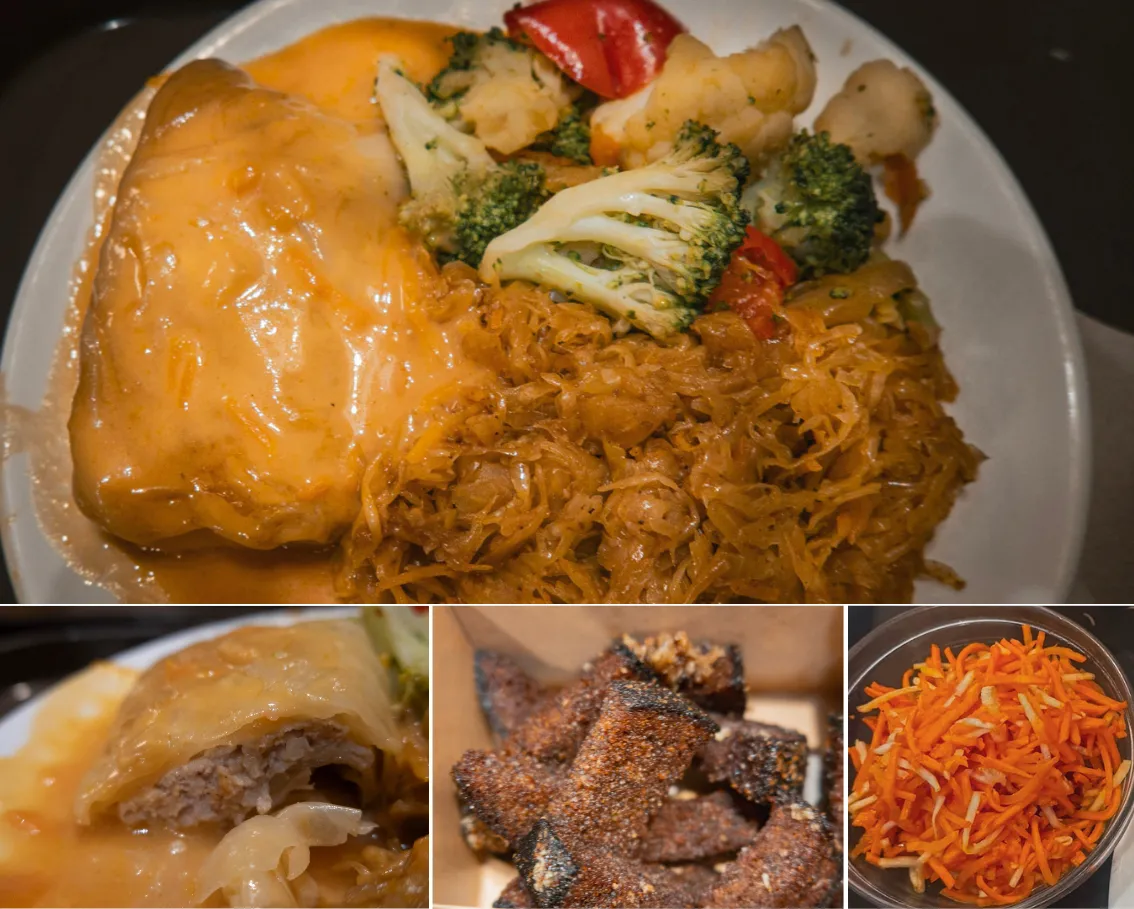
If you only do one food thing in Riga, do Lido. It’s a self-service buffet chain but please don’t let that put you off. This is the easiest way to try what Latvian cuisine has to offer, without committing to one dish. Although I heard mixed reviews, we came back three times during our one month in Riga.
Grab a tray, walk the line, point at what looks good. My recommendations are:
- Burkānu salāti: tangy and sweet grated carrot salad, so much flavor for “just carrot”.
- Pankūkas ar biezpienu: Cottage cheese pancakes with strawberry sauce.
- Kāpostu tīteņi: cabbage rolls stuffed with mince pork and rice, then drenched in a creamy tomato sauce.
- Kartupeļu pankūkas: crispy potato pancakes with sour cream.
- Kiploku grauzdiņi: strips of fried rye bread, heavily seasoned with salt and garlic. Usually served with sour cream or cheese sauce.
- Aukstā zupa: bright pink cold beetroot soup, so delicious
A full meal typically cost €16 each, with very large portions. There’s even sushi, a large cake selection, cocktails and beer on tap.
There are many Lido’s in Riga but the one at the Atpūtas Centrs location near the river is the original and feels like a wooden hunting lodge inside.
RELATED: Find out the best Latvian food to try during your time in Riga →
21. Cafe Hopping
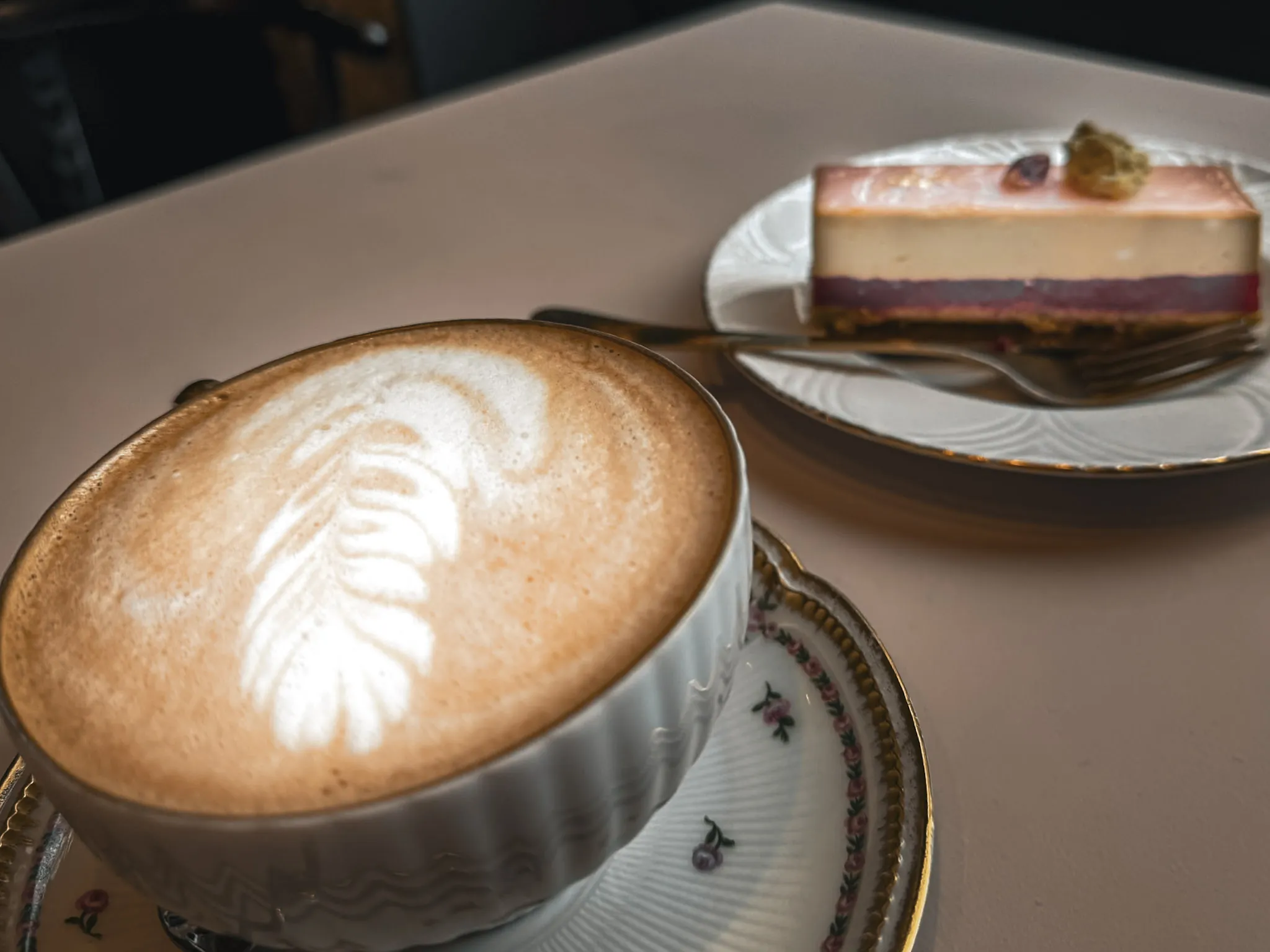
You might not hear many people rave about it, but Riga has a serious coffee scene. All around the city are speciality cafes that take their beans seriously, and you’ll still pay half what you would elsewhere in Europe.
These are the ones we kept going back to:
- KALVE: Riga’s hometown roaster, and the beans you’ll find in half the other cafes on this list. Original espresso room at Stabu iela 38, signature “Marmalade” espresso, discount if you bring your own cup.
- Mikla: Minimalist Scandinavian bakery on Dzirnavu iela (second spot inside Grand Hotel Kempinski). Pastries made on-site, Kalve coffee, open until 10pm weekdays.
- KŪRE: Tiny Quiet Centre bakery doing sourdough and decent coffee. Easy add to an Alberta Street morning.
- STRADA Coffee Bar: The only speciality coffee spot inside Old Town actually worth your time. They roast their own beans. Tomato-mozzarella sandwich is the lunch order.
- Coffee Society: A solid third-wave spot, quieter than the bigger names. Good for laptop work.
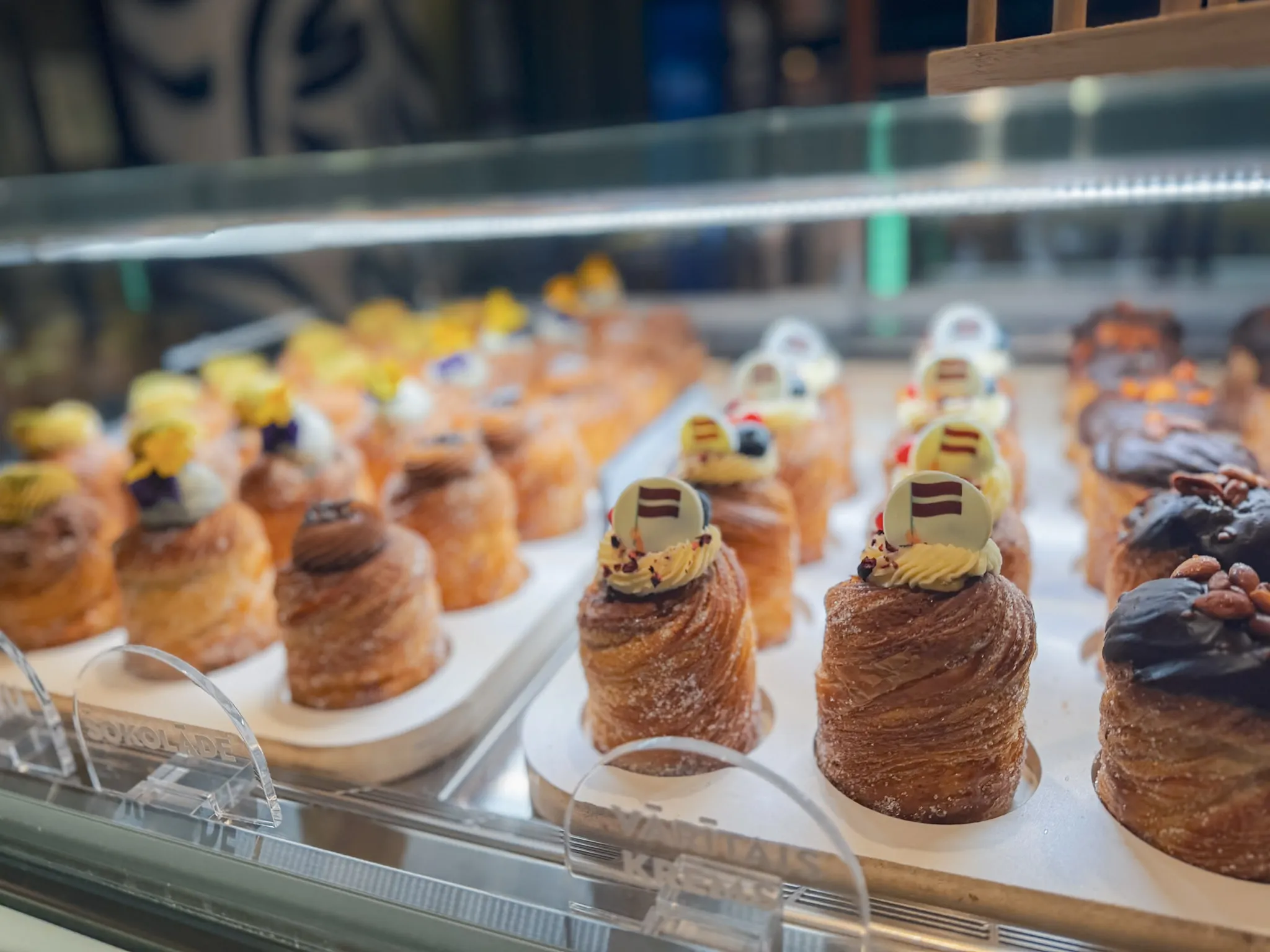
- Cruffins: On Kalēju iela in Old Town. Riga’s only bakery built entirely around the cruffin (half croissant, half muffin). 20+ flavours, €2.90 to €5.50.
22. Black Balsam
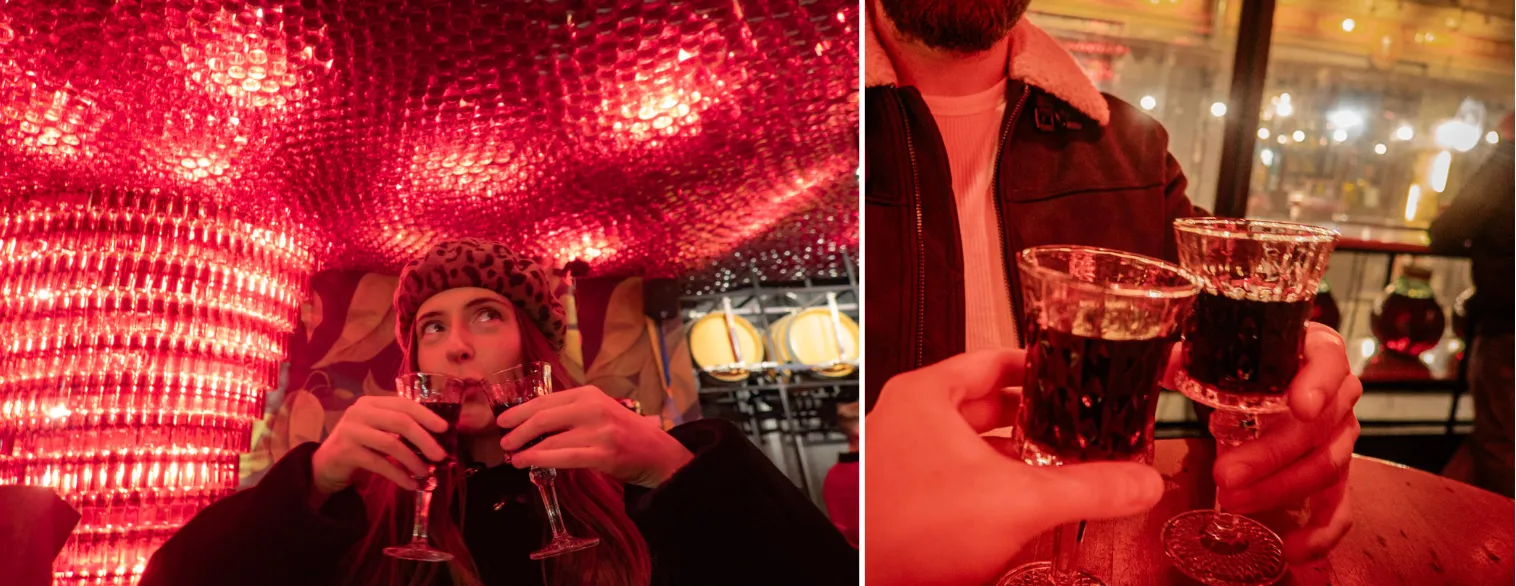
Latvia’s national drink and also a slightly terrifying experience the first time you try it. Riga Black Balsam is a herbal liqueur made with 24 ingredients including stuff like wormwood, valerian and linden buds. At 45% it does not mess around. It tastes a bit like medicinal Christmas cake.
Don’t drink it neat unless you want a face like a dropped pie. Have it mixed with blackcurrant juice (the standard pairing), or in coffee, or in a hot drink with honey on a cold night. There’s also a blackcurrant version of the Balsam itself that’s a lot more drinkable if the original is too much. Black Magic Bar on Kaļķu iela is the official Black Balsam bar. It’s done up like an old apothecary, very atmospheric, and they do flights so you can try a few different versions. The ceiling is covered in black balsam bottles, which looks very cool.
23. A Night in Ala Pagrabs
If you want to know where actual Latvians spend their Friday nights, it’s here. Ala Pagrabs is a cellar bar a couple of streets back from the main square. Low ceilings, candles on the tables, around 20 Latvian craft beers on tap, and live folk music most evenings.
Order the cold cuts platter and the smoked pork. Drink something dark. Stay longer than you meant to. We ended up here twice and the second time was even better than the first.
24. Giant Fox in Spīķeri
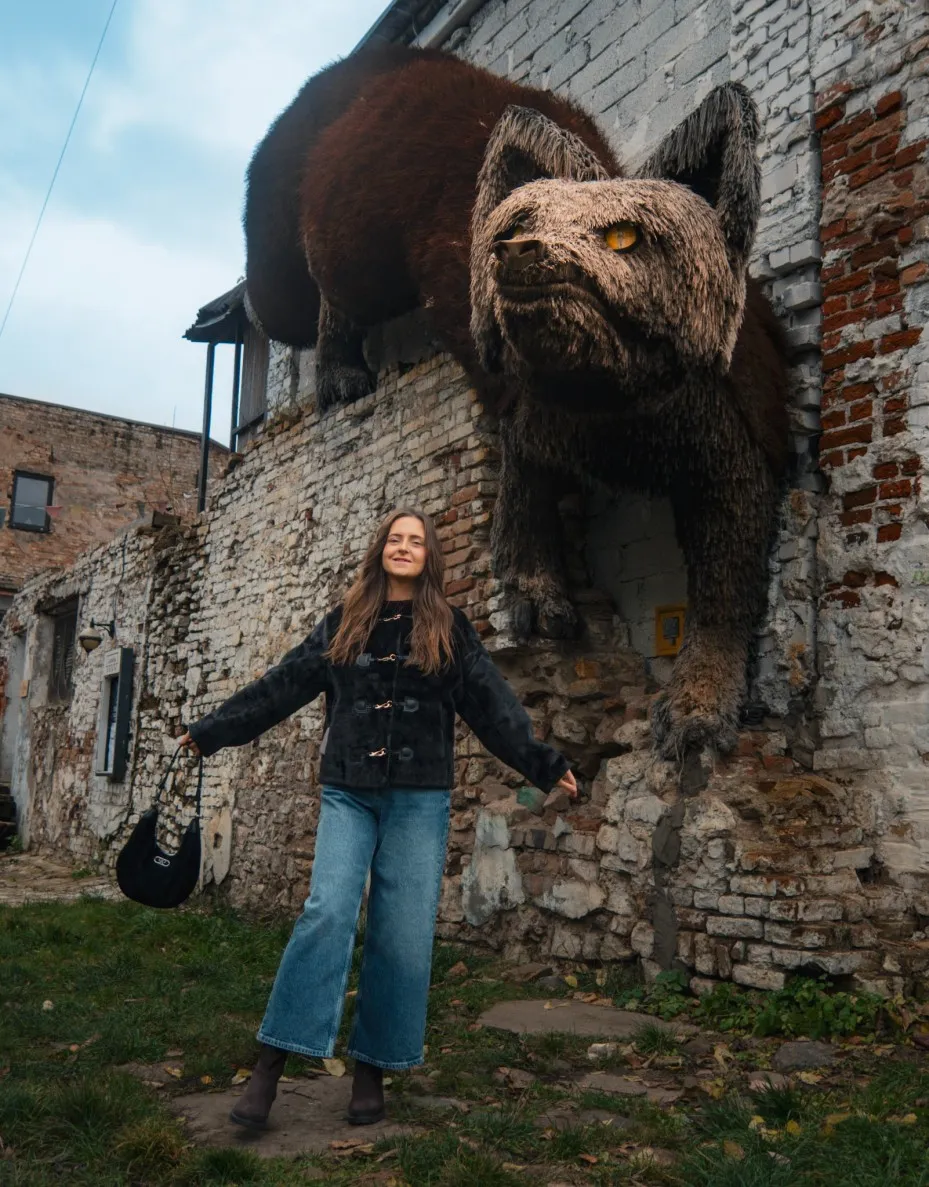
This one is a proper hidden gem and the perfect excuse to wander into a part of town most tourists miss. The Giant Fox is a big metal sculpture by Latvian artist Aigars Bikše, sitting right in the middle of the Spīķeri quarter just behind the Central Market. Kids love it, it photographs brilliantly, and locals walk past it every day without thinking twice.
The real reason to come here is everything around it. Spīķeri (which means “granaries”) used to be the city’s old warehouse district, all red brick buildings lined up along the canal. It’s been converted into a cluster of galleries, concept stores, cafes, craft beer bars and some of Riga’s better small concert venues. Pair it with the Central Market: pick up snacks at the market, walk three minutes over, grab a coffee or a Labietis beer, sit by the fox. Perfect afternoon.
What To Skip In Riga
The National Library (Castle of Light)
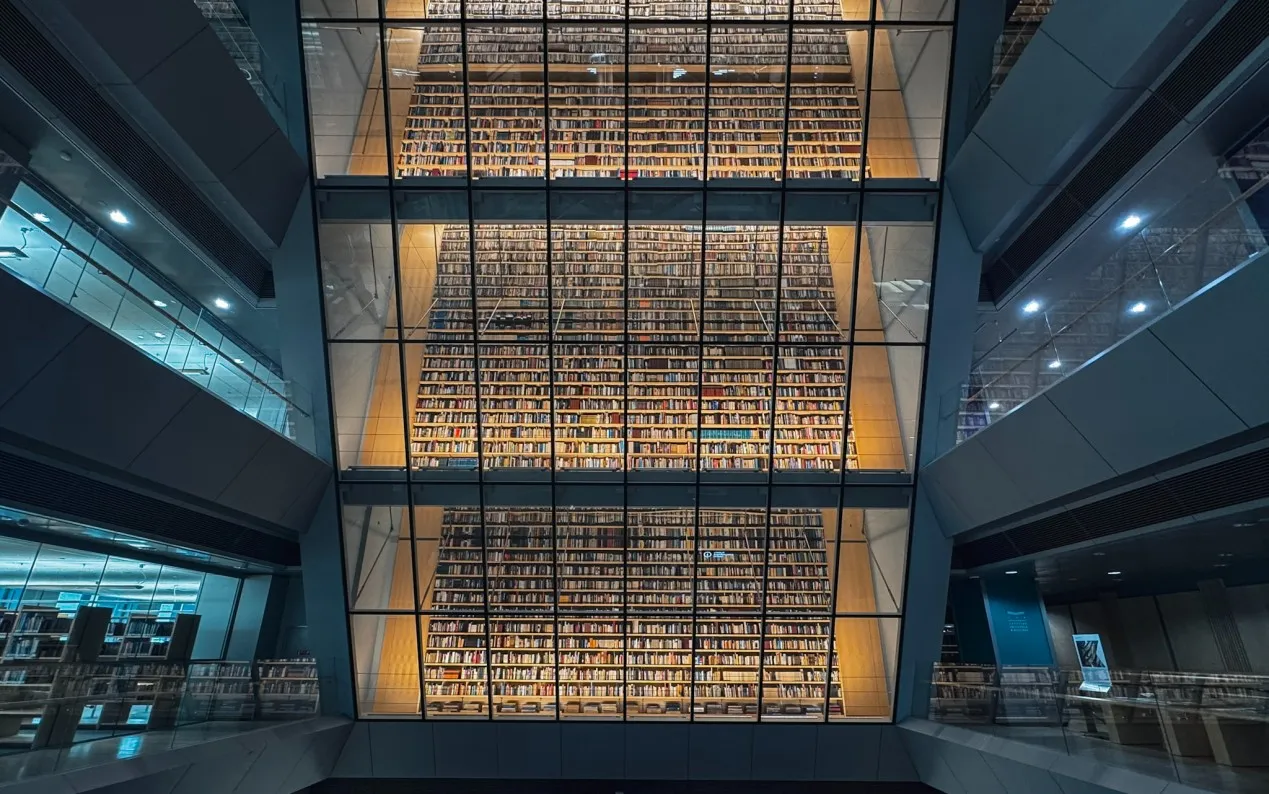
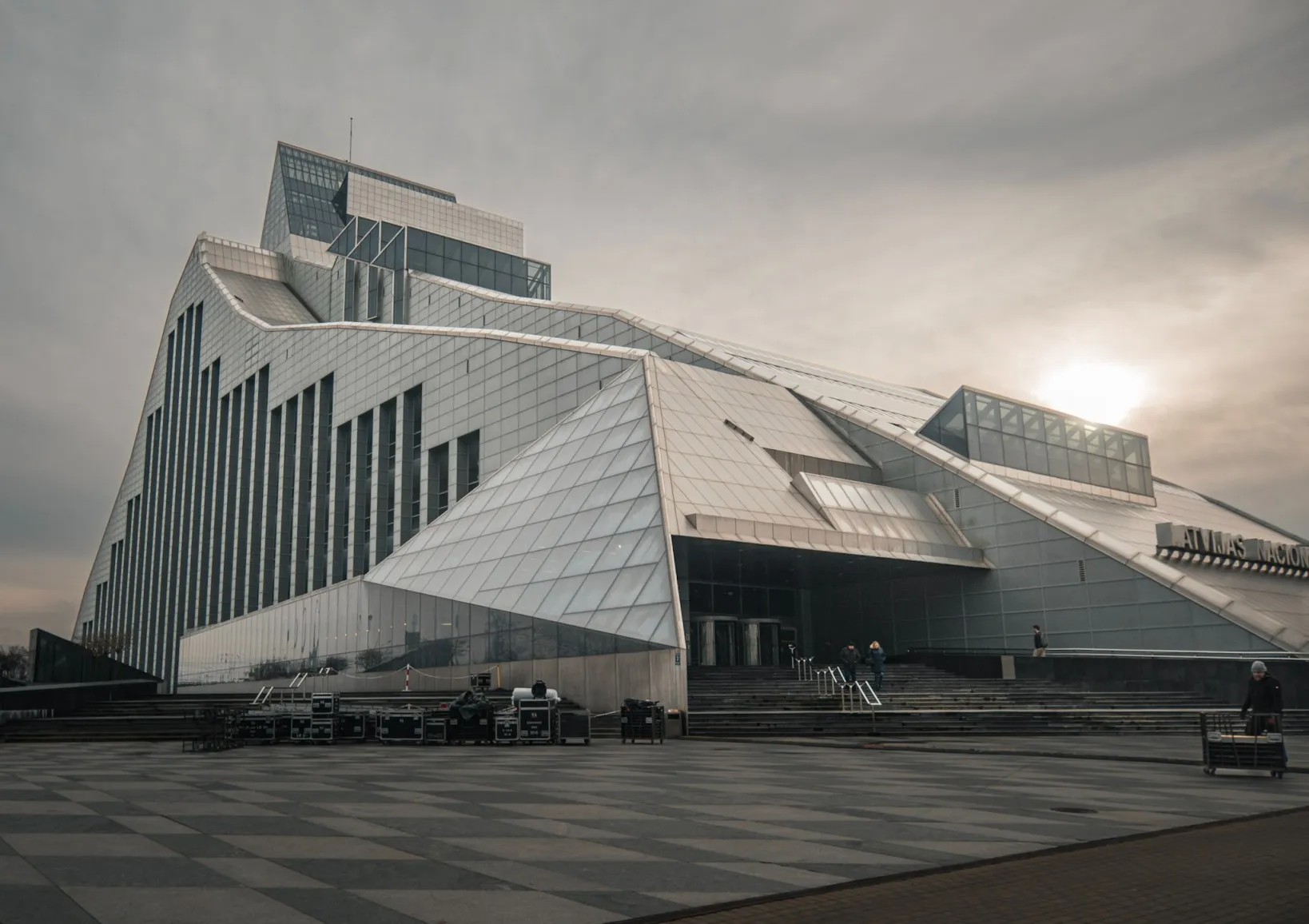
Every Riga guide will tell you to visit the National Library. The architecture is striking from across the river, all 68 metres of glass and steel rising out of the Daugava bank, and the building is actually pretty cool. But once you’re inside, there’s nothing really there. I spent more time getting there than I did inside.
The “rainbow wall of books” everyone hypes is a single feature wall and impressive for about 60 seconds. You can then check out the viewing area on the upper floors which offer a view of Old Town that you’ve likely already seen better of from St. Peter’s bell tower. It’s a 25 minute walk each way across Akmens Bridge for a payoff that doesn’t justify the trip.
This is a working library, there are people inside studying, you actually can’t even go into where the books are, so you’re just silently wandering the outskirts trying not to be a nuisance.
I recommend just taking a photo of the building from the Old Town side of the river (it actually looks better from a distance), admire the architecture for what it is and use the saved time checking out the city’s cafe scene.
Riga Day Trips
If you’ve got more than three days, getting out of the city is absolutely worth it. The Latvian countryside is gorgeous, the trains are cheap and reliable, and you can do all of these in a day.
Sigulda
Sigulda is dubbed “the Switzerland of Latvia,” which is a stretch, but the Gauja River valley is genuinely beautiful. Turaida Castle (the red brick one in all the photos) is the headline sight, the cable car across the valley is a real thrill, and there’s a Soviet-era bobsleigh track you can actually ride down in summer.
Trains take just over an hour and cost around €3 each way. Make it a full day and bring walking shoes. Autumn here is unreal when the leaves turn.
Cēsis
Less visited than Sigulda but I’d argue prettier. Cēsis is a small medieval town with a ruined 13th century castle you can explore by candlelight (they hand you actual candle lanterns at the entrance, which is brilliant and absolutely the highlight). The Old Town is tiny but charming and you can do the whole thing in half a day.
Train takes about 90 minutes, €4 each way. Pair it with Sigulda if you have a car, they’re 30 minutes apart by road.
Kemeri National Park
If you want one of those wooden boardwalk peat bog photos for your Instagram, this is where you get it. The Great Kemeri Bog boardwalk is a 5km loop through bog landscape that looks like nowhere else, especially at sunrise when the mist is sitting on the water.
It’s a bit harder to reach without a car. Train to Kemeri station (1 hour, around €3), then you’ve got a 4km walk to the trailhead. A taxi from Kemeri station is about €5 if you don’t fancy the walk. Worth the effort either way.
Jūrmala
The classic. A long stretch of pine forest and white sand beach 35 minutes from Riga by train. In summer this is where every Rigan goes on weekends. The main town of Majori has the wooden Art Nouveau holiday houses, a long pedestrian street full of cafes, and you can walk for hours on the beach.
Trains leave from Riga Central Station every 30 minutes. Tickets are about €2 each way, and you get off at Majori. Even in autumn or winter the beach walk is gorgeous, just dress for it.
Things To Do In Riga FAQ
How many days is enough in Riga
Three full days is the sweet spot in my opinion. Day one for Old Town and the Corner House. Day two for the Quiet Centre, the Central Market, and a museum or two. Day three for whatever you missed plus a half day trip to Jūrmala. Two days is doable if you’re tight on time but you’ll feel rushed. A week lets you slow right down and add Sigulda, Cēsis and Kemeri.
Is Riga safe?
Very. We walked back to our hotel at midnight multiple times without a worry. Standard city stuff applies (don’t flash valuables, watch your bag at the Central Market) but Riga is one of the safer European capitals. The only area that felt a bit dodgy was around the train station, however it is always busy with commuters passing through so never felt dangerous.
Is Riga worth visiting?
Yes, a hundred percent. It’s affordable, it’s photogenic, the food is so much better than people give it credit for and the Old Town is one of the prettiest in Europe without being overrun. If you’ve already done Tallinn and Vilnius, Riga deserves a spot on your list too.
Is Riga worth visiting in the winter?
Yes, with caveats. Late November through December is great for Christmas markets and snowy fairytale vibes. January and February are properly cold and a lot of the outdoor stuff is harder to enjoy. Pack proper boots, a real coat, and lean into the indoor things (museums, cafes, Black Balsam).
Is Riga a party city?
There’s a reputation but it’s overblown. Yes, you’ll see stag parties on certain streets in the Old Town (mostly around Vecpilsētas iela), and yes, beer is cheap. But Riga has so much more going for it than that, and you’ll only run into the chaos if you’re actively looking for it. The rest of the city is calm, even on weekends.