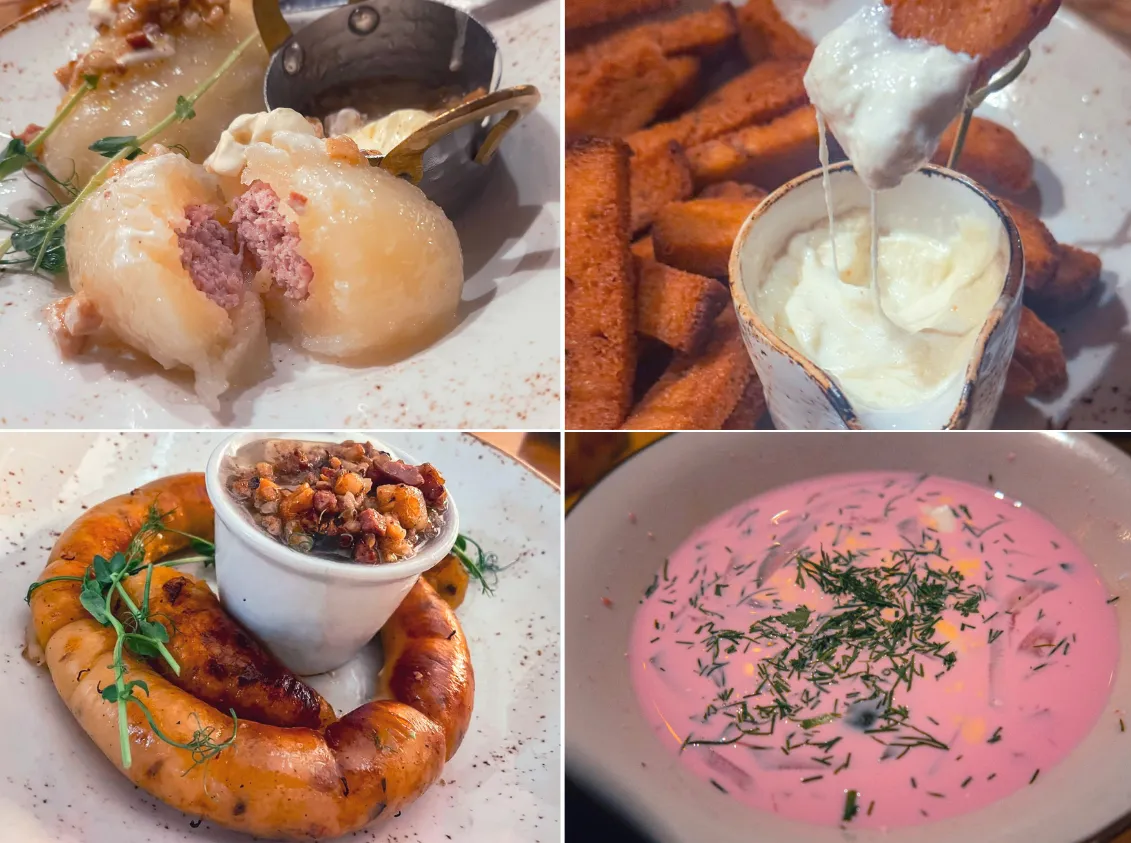
Before I went to Lithuania, my entire knowledge of Lithuanian food began and ended with “they probably eat a lot of meat and potatoes.” I was right to some extent, you do get a lot of meat and potatoes here, but that’s about 20% of the story.
Lithuanian food doesn’t get talked about much outside the Baltics, which feels like a shame to me no that I’ve had my fill of it. It’s hearty, cheap, it’s got some strange dishes that deserve more hype and once you get past the “everything is beige and comes with sour cream” stereotype, there’s a lot more going on. Some of it I couldn’t get enough of, while other stuff took a bit of convincing.
This is my honest rundown of the traditional Lithuanian food you should seek out, the stuff you’ll see on every single menu, and the famous Lithuanian food that’s basically non negotiable if you want to say you’ve properly eaten your way through the country. No filler, no “20 dishes” clickbait padding just to hit a number. Here you’ll only find what’s actually good.
RELATED: 21 Best Things To Do In Vilnius, Lithuania →
- What Is Lithuanian Food
- 15 Traditional Lithuanian Dishes You Need To Try
- 1. Cepelinai (Stuffed Potato Dumplings)
- 2. Kibinai
- 3. Kepta Duona (Fried Bread Sticks)
- 4. Bulviniai Blynai (Potato Pancakes)
- 5. Tinginys
- 6. Balandeliai (Cabbage Rolls)
- 7. Bulviniai Vėdarai (Potato Sausage)
- 8. Kraujiniai Vėdarai (Blood Sausage)
- 9. Sūrelis
- 10. Šaltibarščiai (cold beetroot soup)
- 11. Rūkytos Kiaulių Ausys (Smoked Pig Ears)
- 12. Šakotis (Tree Cake)
- 13. Silkė (Herring)
- 14. Raugintų Kopūstų Sriuba (Sauerkraut Soup)
- 15. Lithuanian Cheese
- Coffee Culture Lithuanian
- Lithuanian Food FAQ

Some links in this post are affiliate links, meaning I may earn a commission at no extra cost to you if you make a purchase.
What Is Lithuanian Food
Lithuanian food doesn’t get talked about much outside the country, but it should. It’s hearty, comforting, and built around a handful of ingredients done really well: potato, cabbage, pork, beetroot, rye bread, and a fair bit of sour cream. A lot of that comes down to the climate, it’s cold and northern, so the food is built around what actually grows there and what keeps well through a long winter.
It’s also not as isolated as you’d think. Lithuania has spent centuries next to Germany, Poland and Russia, and you can taste it. Šakotis, kugelis and vėdarai all have German roots, balandeliai came over from Poland, and there’s a bit of Russian influence too from more recent history. Kibinai is the odd one out, it didn’t come from a neighbour at all, it was brought over by the Karaim community from Crimea back in the Middle Ages and ended up becoming a Trakai specialty. So it’s less a case of traditional Lithuanian food borrowing recipes and more a case of taking in a bit from everyone over the years and making it their own.
15 Traditional Lithuanian Dishes You Need To Try
1. Cepelinai (Stuffed Potato Dumplings)
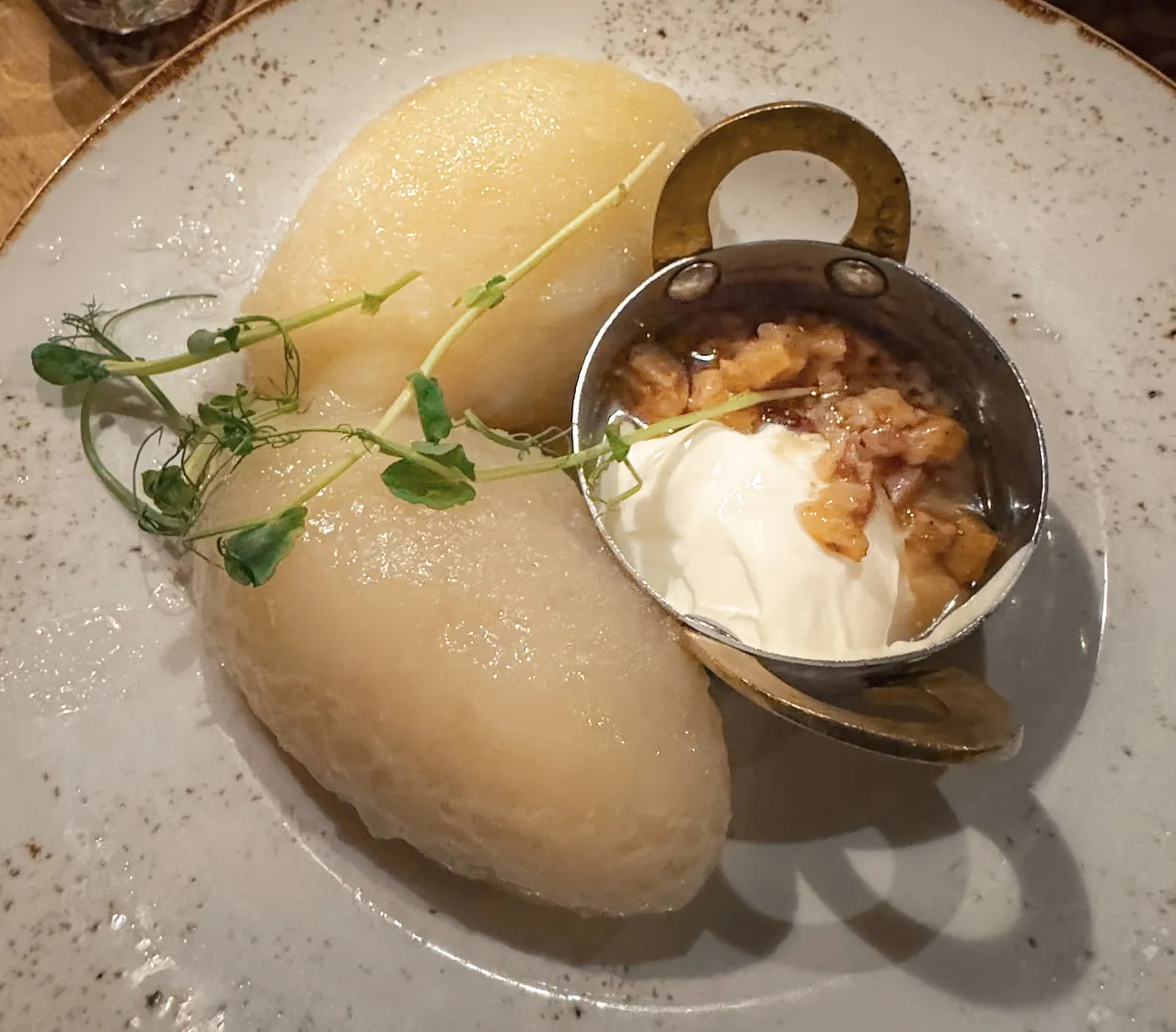
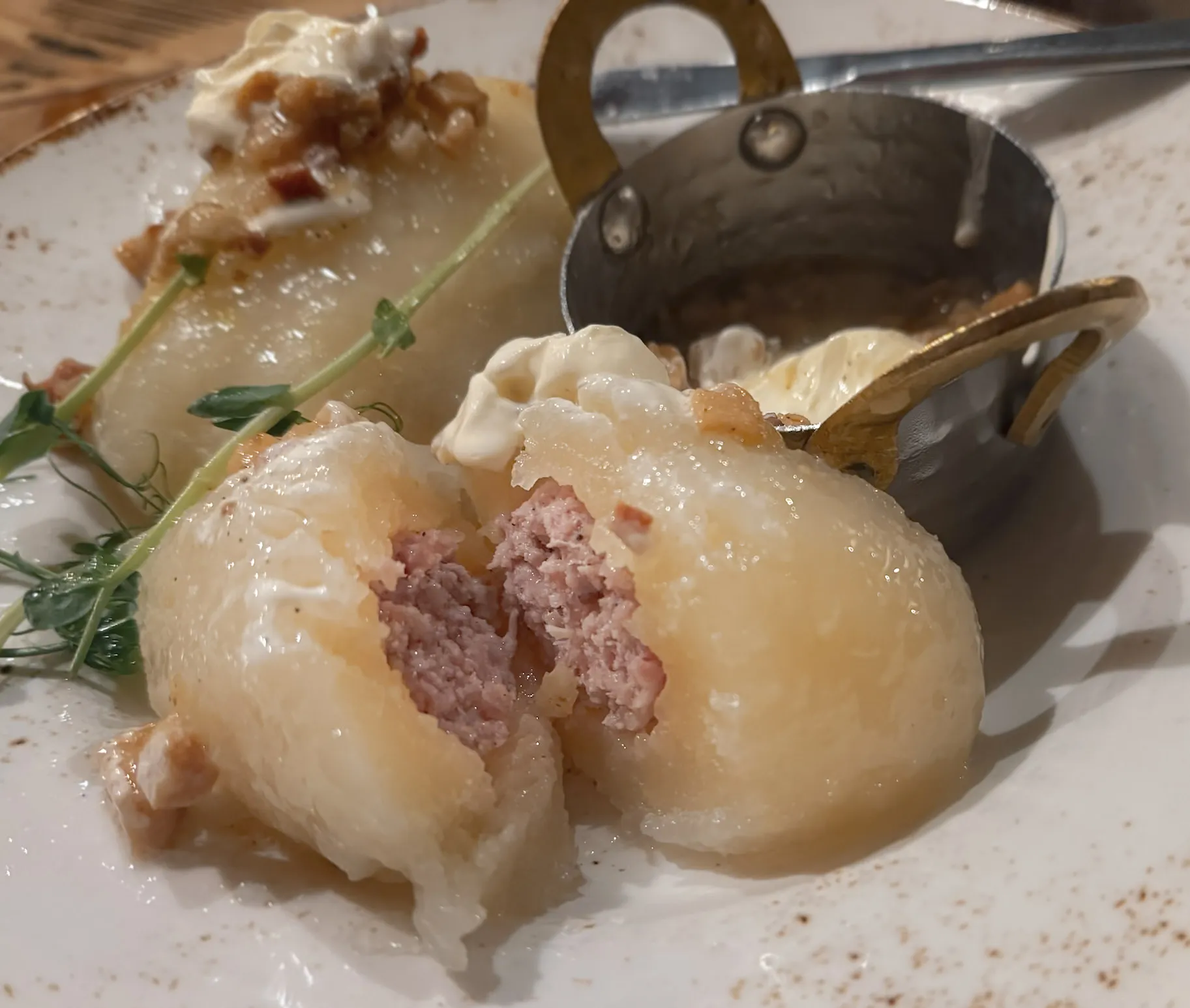
This is where you need to start on your Lithuanian food journey, because you’ll see these everywhere. Cepelinai are big potato dumplings, usually stuffed with minced meat (curd versions exist if you’re vegetarian), called “zeppelins” (you know, the old style large aircrafts) because of their shape. They come drenched in a sour cream and bacon bit sauce that I would drink from a mug if that was socially acceptable.
The outside has that same soft, slightly gluey potato texture you’ll find across a lot of Lithuanian food, dense, a little starchy, almost custardy once it’s cooked through. Bite into the middle and the meat filling is rich and well seasoned, a peppery minced pork that holds its own against all that potato. The sour cream and bacon sauce is what ties it all together though, salty, tangy, a little smoky from the bacon and it soaks into the dumpling just enough without turning the whole thing soggy.
These things are enormous. They’re typically served with two, which might not seem like enough, but it truly is. This is the most popular Lithuanian food, and it’s popular for a reason.
RELATED: Where To Stay In Vilnius : An Honest Area By Area Guide →
2. Kibinai
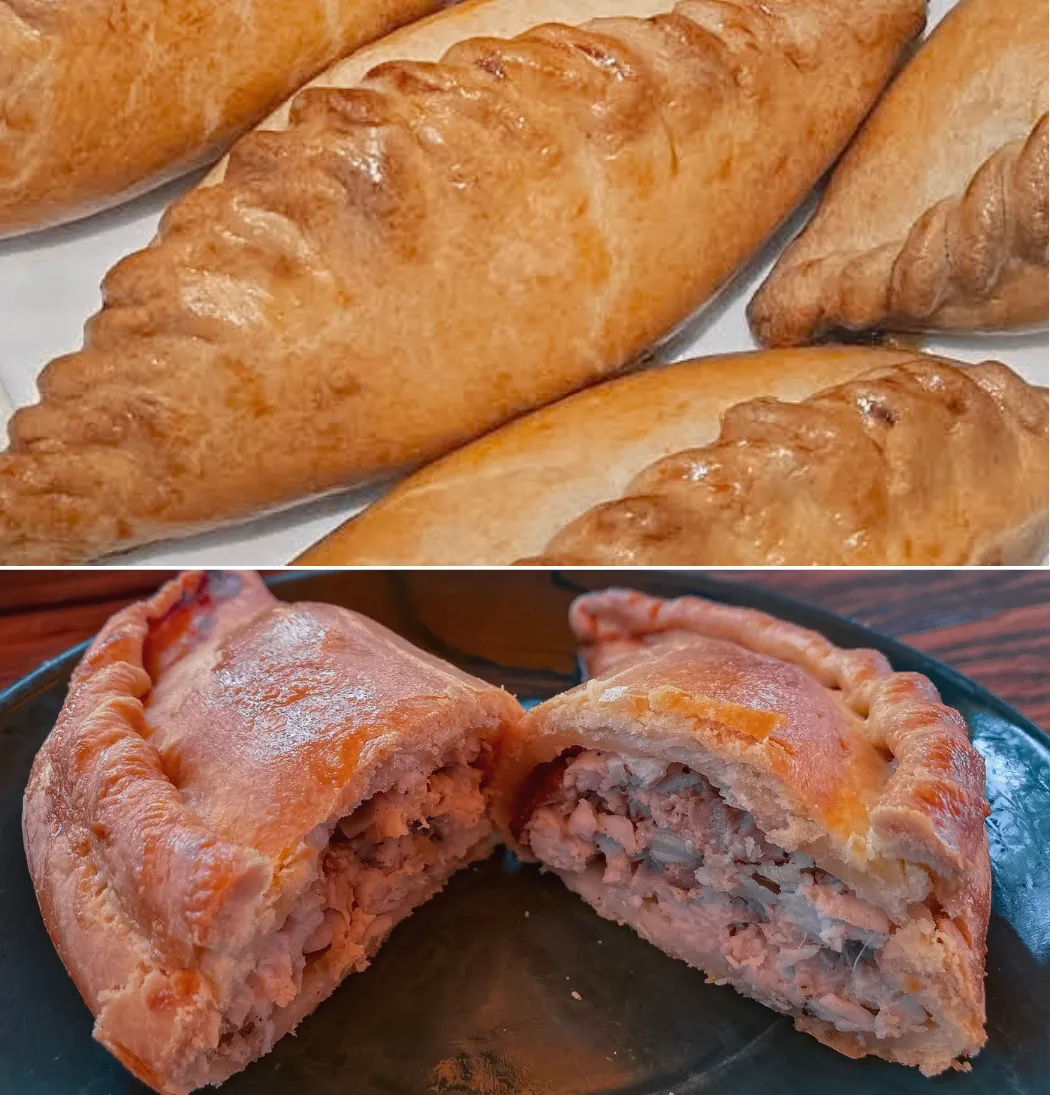
Lithuania’s answer to an empanada or a Cornish pasty, Kibinai are small handheld pastries, stuffed with pork, chicken or mushroom, sold out of bakeries all around the country. They’re exactly what you want when you’re wandering around and don’t fancy a full sit-down meal. Dangerously easy to eat three in a row without noticing – ahem, not that I’m speaking from experience of anything. Any UK readers will recognise the similarities with a cornish pasty.
The pastry is thin, crisp and flaky, more like a good pasty crust than anything bready. It’s baked until golden rather than fried, so it doesn’t feel too heavy. Bite in and you get a hit of onion and juice from the filling. It’s not as bland like some small pies can be. The pork version has a rich, meaty flavour with a bit of fat running through, while the mushroom one is earthier and more subtle, good if you want something lighter. Nothing about the seasoning is complicated, it’s mostly salt, pepper and onion. The simplicity is what makes it, the filling is where the taste is.
3. Kepta Duona (Fried Bread Sticks)
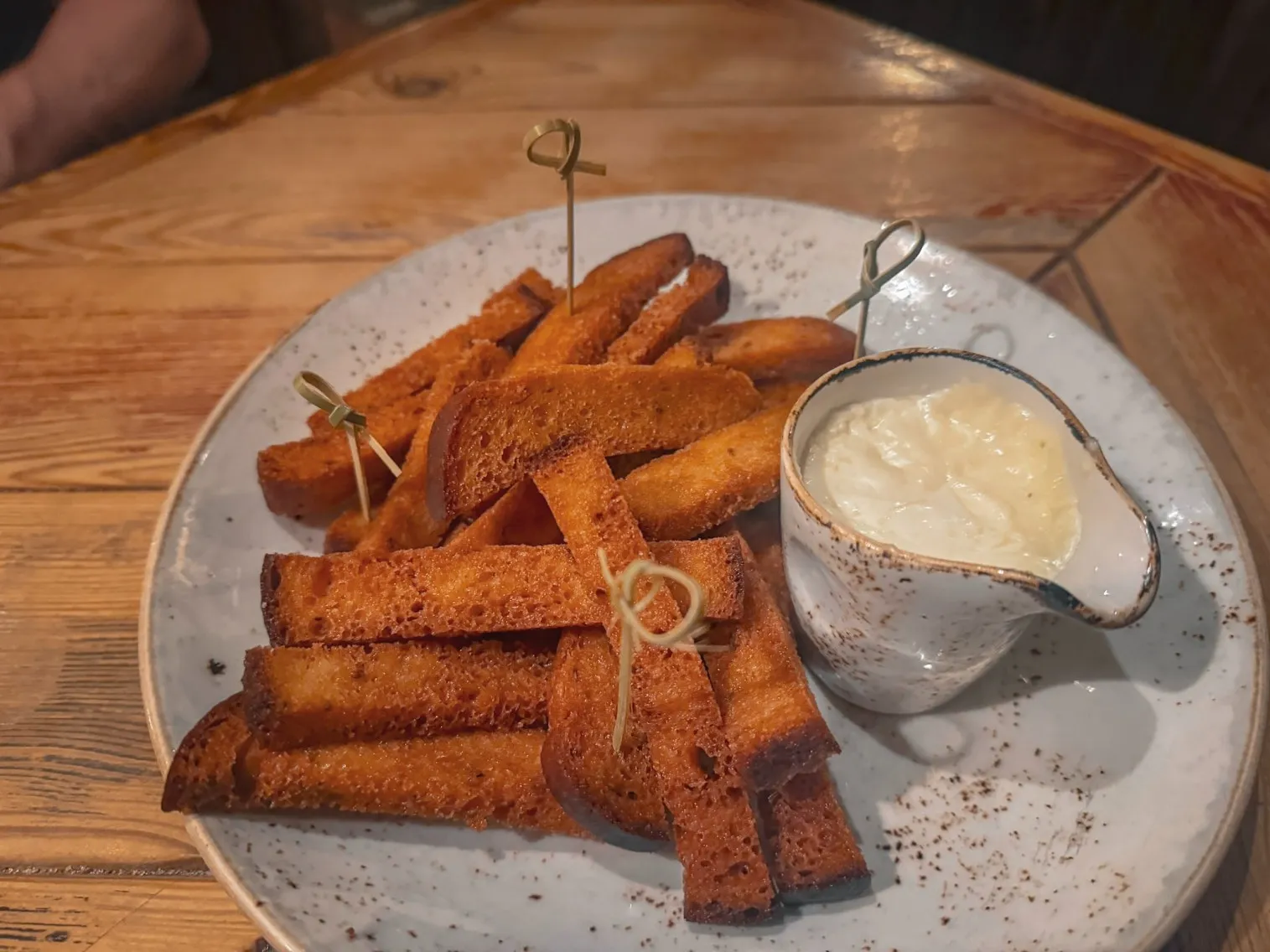
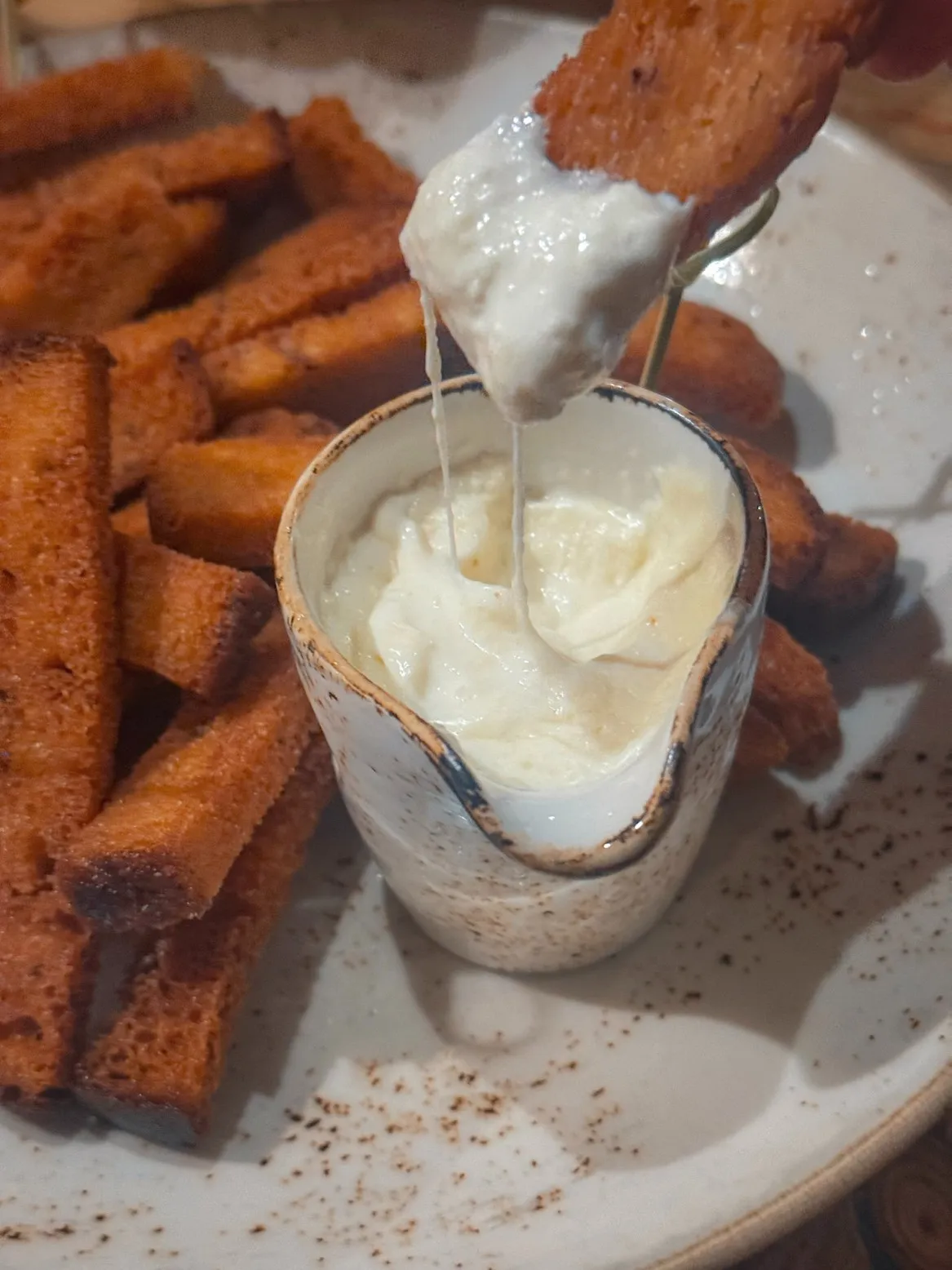
Such a simple concept, and yet it completely changed how I think about bread as a bar snack. Dark rye bread, cut into strips, fried until crispy, salted, and often served with a garlicky or cheesy dip on the side.
The rye itself is dense and slightly sour to start with, but once it’s fried the outside goes properly crunchy while the inside stays a bit chewy, so you get that contrast in every bite. The salt hits first, then that distinct rye tang comes through underneath, and if you’re lucky enough to get the garlic dip, it adds this warm, punchy sharpness that makes it very hard to stop at just one strip. The cheese dip version is milder and creamier if garlic isn’t your thing, but either way it’s salty, savoury, and dangerously easy to keep eating without noticing.
This might sound a bit basic, boring even, but they’re addictive. They’re a classic bar snack in Lithuania, and at times I found myself wondering was I in a bar for the drinks, or were the drinks a guise to order these sticks of heaven.
RELATED: The Best Things To Do In Užupis: Guide to Vilnius’ Mini Republic →
4. Bulviniai Blynai (Potato Pancakes)
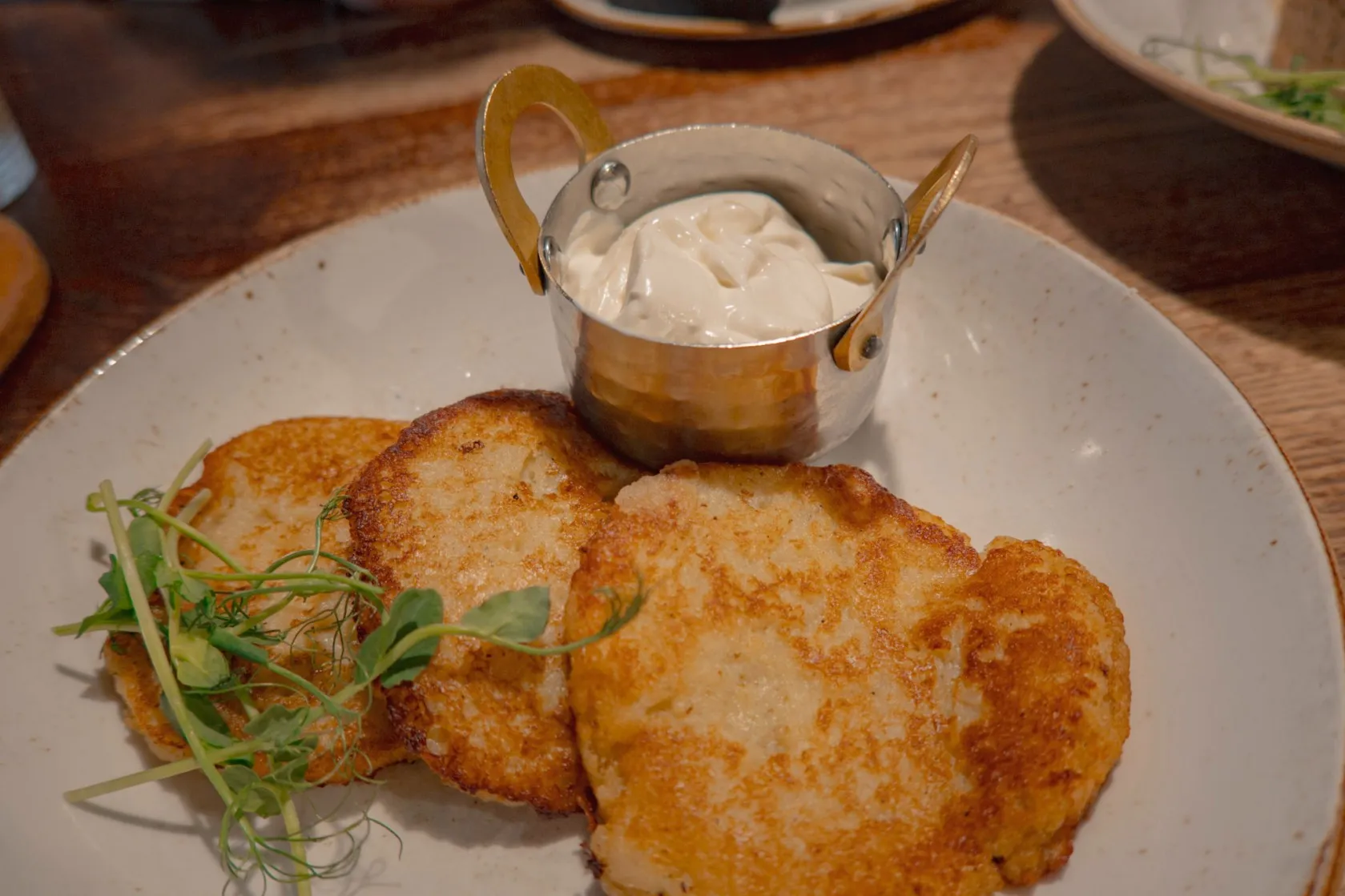
Bulviniai Blynai were my guilty pleasure during my time in Lithuania. They’re potato pancakes made from grated potato, egg and flour, then fried in a pan until the edges go dark and crispy. You’ll have had potato pancakes before somewhere else in the world, for UK/Irish readers they’re a fluffier version of the classic hash brown.
The taste is simple but so satisfying, savoury, a little earthy from the potato, with those crispy edges giving you a bit of salty, almost caramelised crunch against the soft, fluffy middle. On their own they’re fairly mild, which is exactly why the toppings matter so much. In Lithuania they’re typically served with a healthy dollop of sour cream, which adds a cool, tangy contrast, and some places even sprinkle bacon bits on top for good measure, which brings a smoky, salty hit that takes the whole thing up a level. These are simple, filling, and something you’ll crave after a long, cold winter’s day.
5. Tinginys
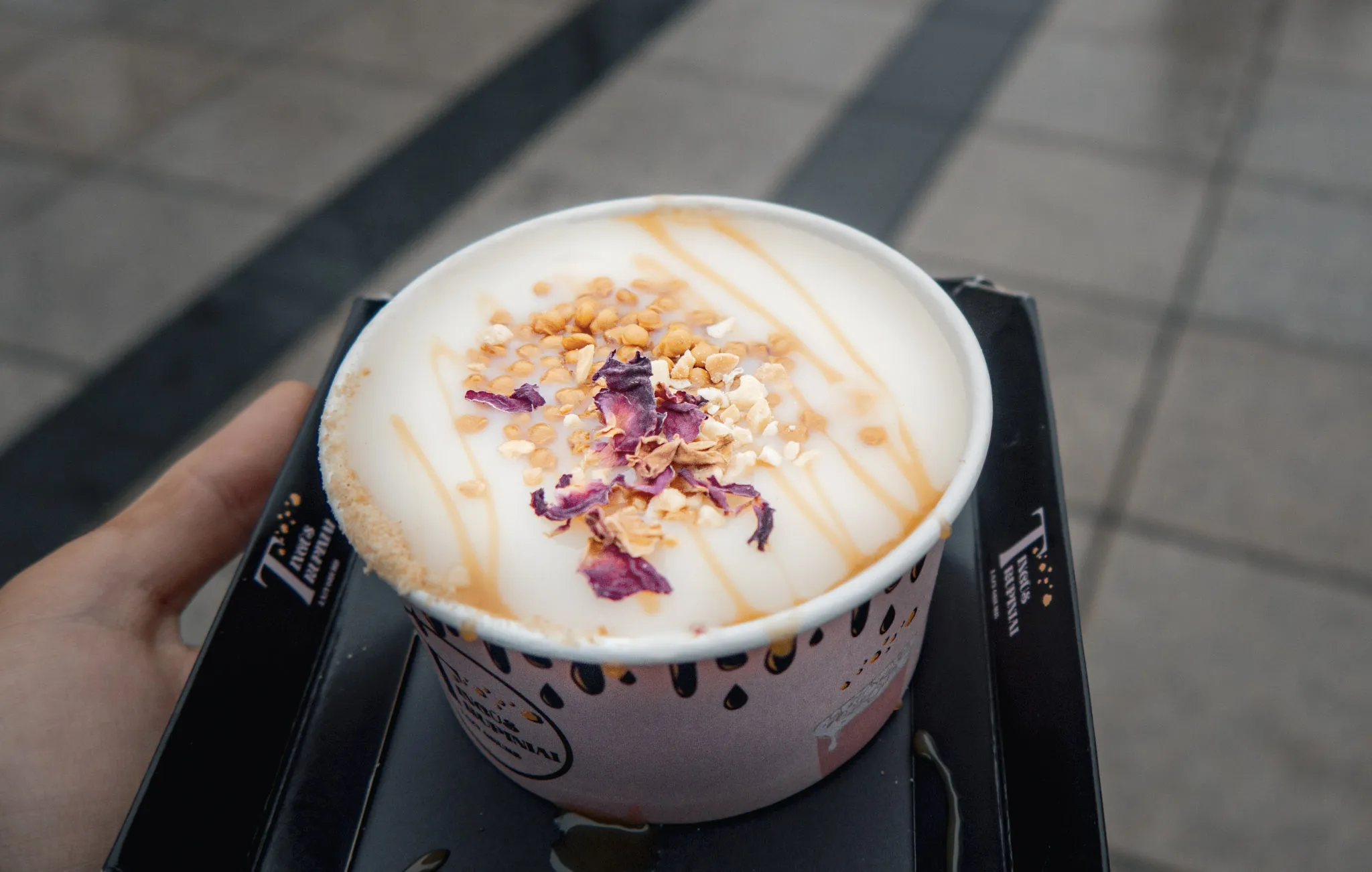
Translates to “lazy,” because it’s basically chocolate and crushed biscuits mixed together into a no-bake cake. Sounds too simple to be good. It is, somehow, really good.
The texture is the whole point, dense, slightly chewy, with little bits of biscuit still holding some crunch rather than turning completely soft. The chocolate coating is rich and a bit bitter, which balances out the sweetness from the condensed milk or butter binding it all together, so it never tips into sickly. It’s cold, fudgy, and stupidly moreish, the kind of thing you cut a “small slice” of and end up going back for three more.
If you’ve got a sweet tooth, Tinginys is the Lithuanian dessert to hunt down, and you’ll find it in pretty much every bakery in the country.
6. Balandeliai (Cabbage Rolls)
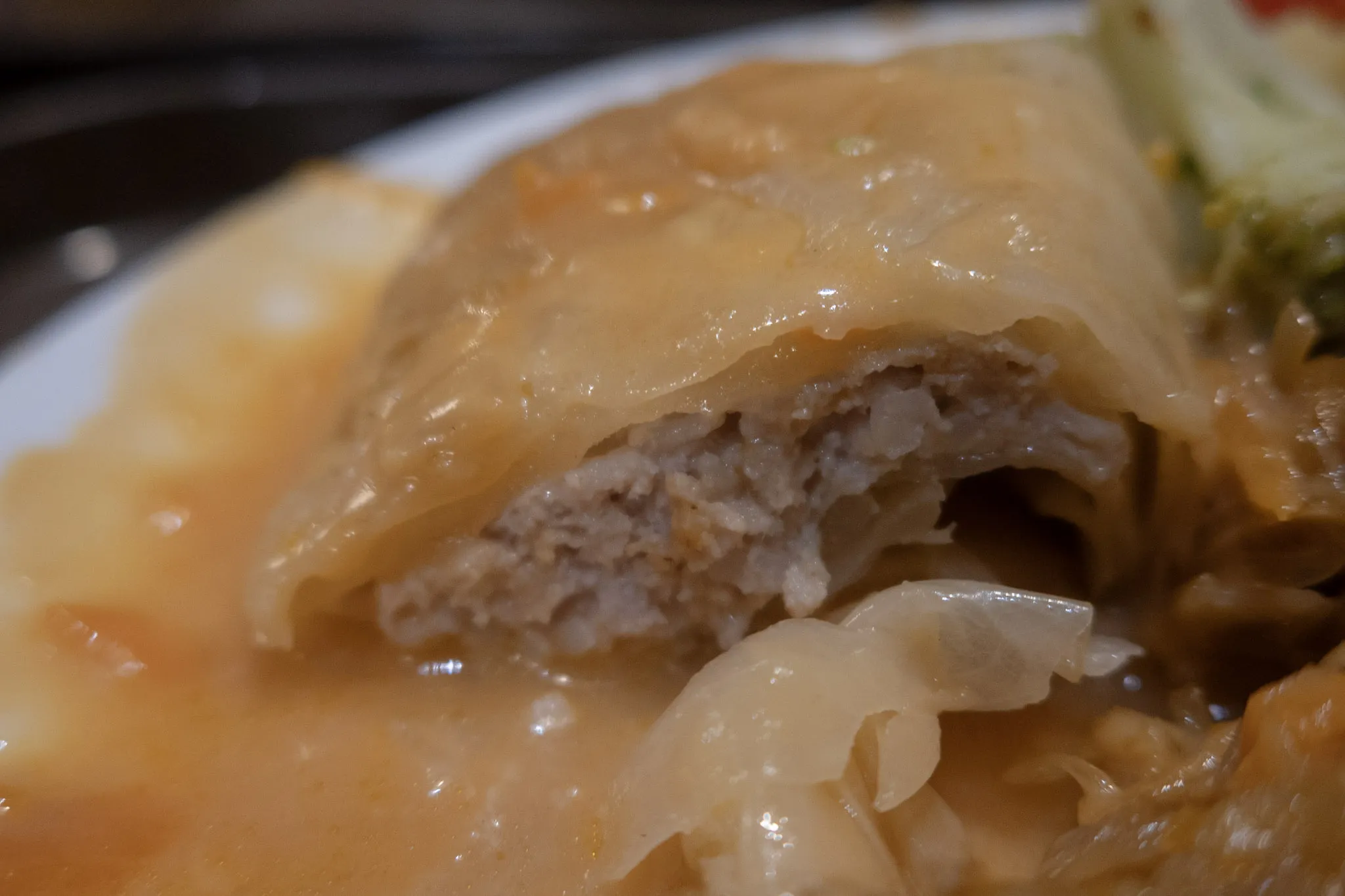
Maybe not the sexiest sounding of dishes, but to my surprise, I found myself really enjoying them. Balandeliai are ground meat, rice and vegetables all wrapped up in cabbage leaves, then typically swimming in a slightly sweet, a little bit sour tomato sauce.
The cabbage leaf itself goes soft and almost silky once it’s cooked down, so it barely tastes like cabbage at all, it’s more of a gentle, slightly sweet wrapper for whatever’s inside. The filling is warm and homely, ground pork or beef mixed with rice, so it’s got a bit of bite and bulk to it rather than being a mush. It’s not the Lithuanian dish that’s going to blow you away with bold flavours, everything is mellow, leaving space for the sauce to be the star. Tomato with just enough sugar and a slight tang to keep it from tasting flat.
7. Bulviniai Vėdarai (Potato Sausage)
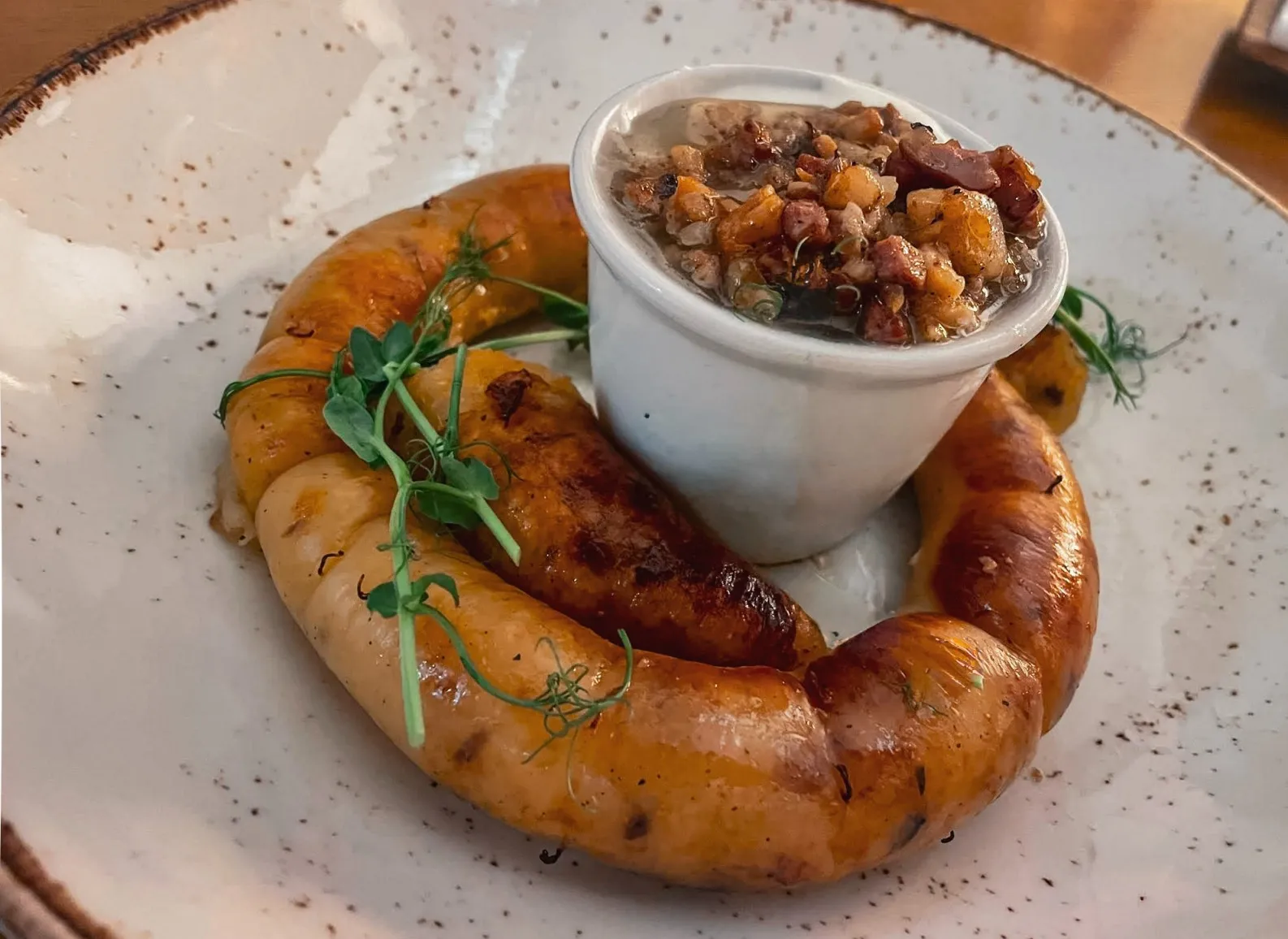
This was one of the traditional Lithuanian foods I was excited to try. Look, I’m an Irish girl, potato just gets me going! Bulviniai Vėdarai is a sausage but rather than meat, the filling is grated potato, pork fat and fried onion. Sometimes you’ll find a small bit of bacon or minced pork mixed in, it’s all then stuffed into a regular casing (pork intestine), so it looks just like a regular sausage.
What’s interesting about Bulviniai Vėdarai is that although it looks like a sausage the texture is so far from that. The potato has a similar texture to the cepelinai creating a mushy interior but the casing is crispy and chewy. It tastes far more meaty than the name suggest.
RELATED: Vilnius Christmas Market: My Experience + Everything You Need To Know →
8. Kraujiniai Vėdarai (Blood Sausage)
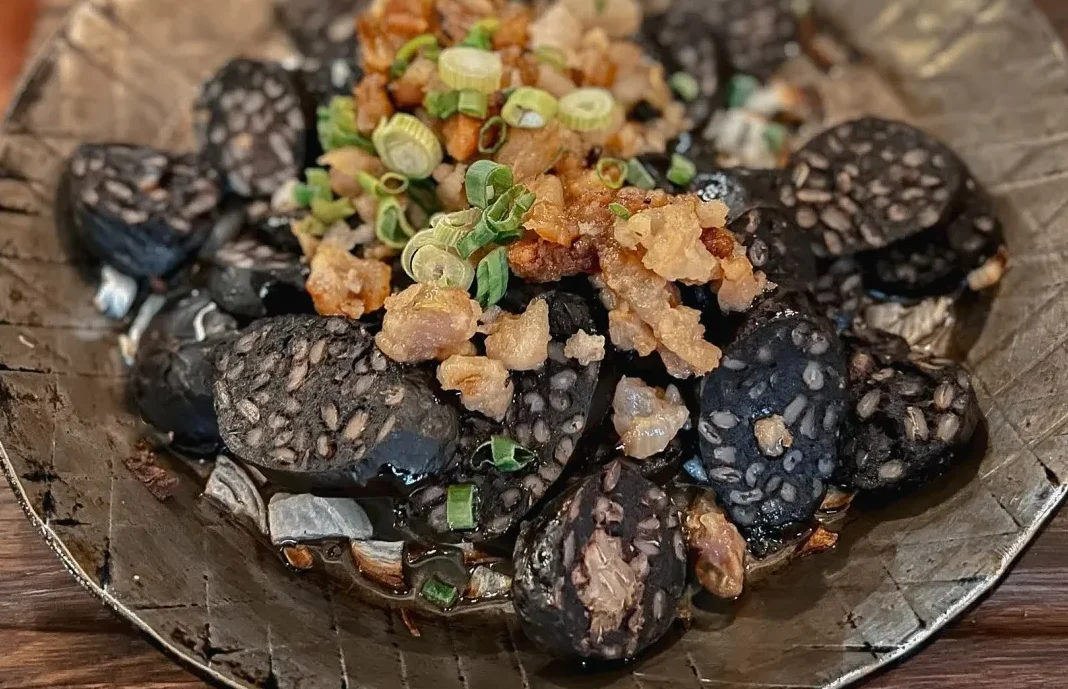
Same idea as above, different filling, and worth knowing the difference before you order. Kraujiniai vėdarai swap out, or mix in, pig’s blood with the potato, which puts this firmly in “know what you’re getting into” territory.
The blood changes everything about it, it’s dark, almost black in places, and a lot more iron-heavy and mineral tasting than the plain potato version. There’s still that same mushy, cepelinai-like interior from the potato, but it’s backed up by a deeper, meatier flavour that the plain version just doesn’t have, closer to what you’d get from black pudding than a regular sausage. The casing crisps up the same way when it’s fried, so you get that same contrast of chewy skin against soft filling, but the taste inside is heavier and more savoury throughout. It’s an old-school farmhouse dish, and it eats like one, dense, rich, and not shy about what’s in it. Not for everyone, but if you’re the type who orders black pudding without blinking, you’ll be fine here.
I love this, it’s similar to black pudding in my home country, Ireland, and it’s a staple in a cooked breakfast.
9. Sūrelis
When I tell you this became a small obsession of mine, I am not exaggerating. What started as a search for something high protein after a gym session became my favourite little treat.
A sūrelis is a bar of sweetened curd cheese, usually coated in chocolate, sold in every supermarket and corner shop in Lithuania, typically in the fridge section. It sits somewhere between a cheesecake and a chocolate bar, and once I found the caramel one I started buying them daily.
Look out for the Magija brand, these were the ones I ended up gravitating towards. Surelis are cheap, no restaurant required, and a great grab-and-go option if you want a Lithuanian dessert without sitting down for one.
10. Šaltibarščiai (cold beetroot soup)
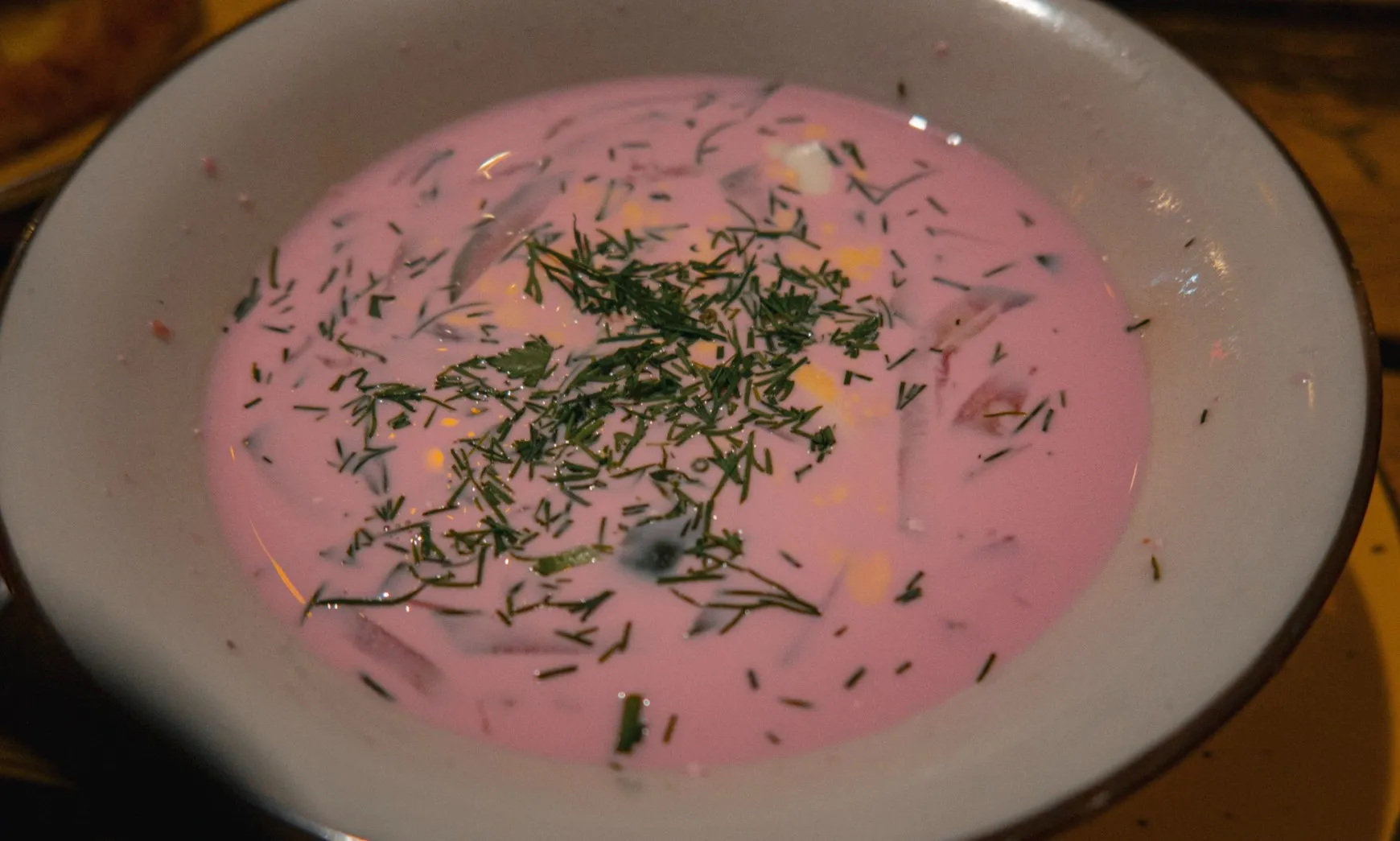
One of the prettiest dishes I ate in the entire country, it looks like it was made in the Barbie Universe. Šaltibarščiai is a refreshing cold beetroot soup, it’s very bright, almost neon pink, made with beetroot and kefir. The taste is somewhat sour and tangy, cut through by the earthy beets and dill. It has a hard boiled egg as well, this is usually chopped into the soup, though sometimes it’s just halved on top. It also comes with boiled potatoes on the side which you dip into the soup.
I was there in the middle of winter, which is apparently the “wrong” time to eat a cold soup, but it was still on all the menus and was just as tasty. Don’t overthink the season, just try it.
11. Rūkytos Kiaulių Ausys (Smoked Pig Ears)
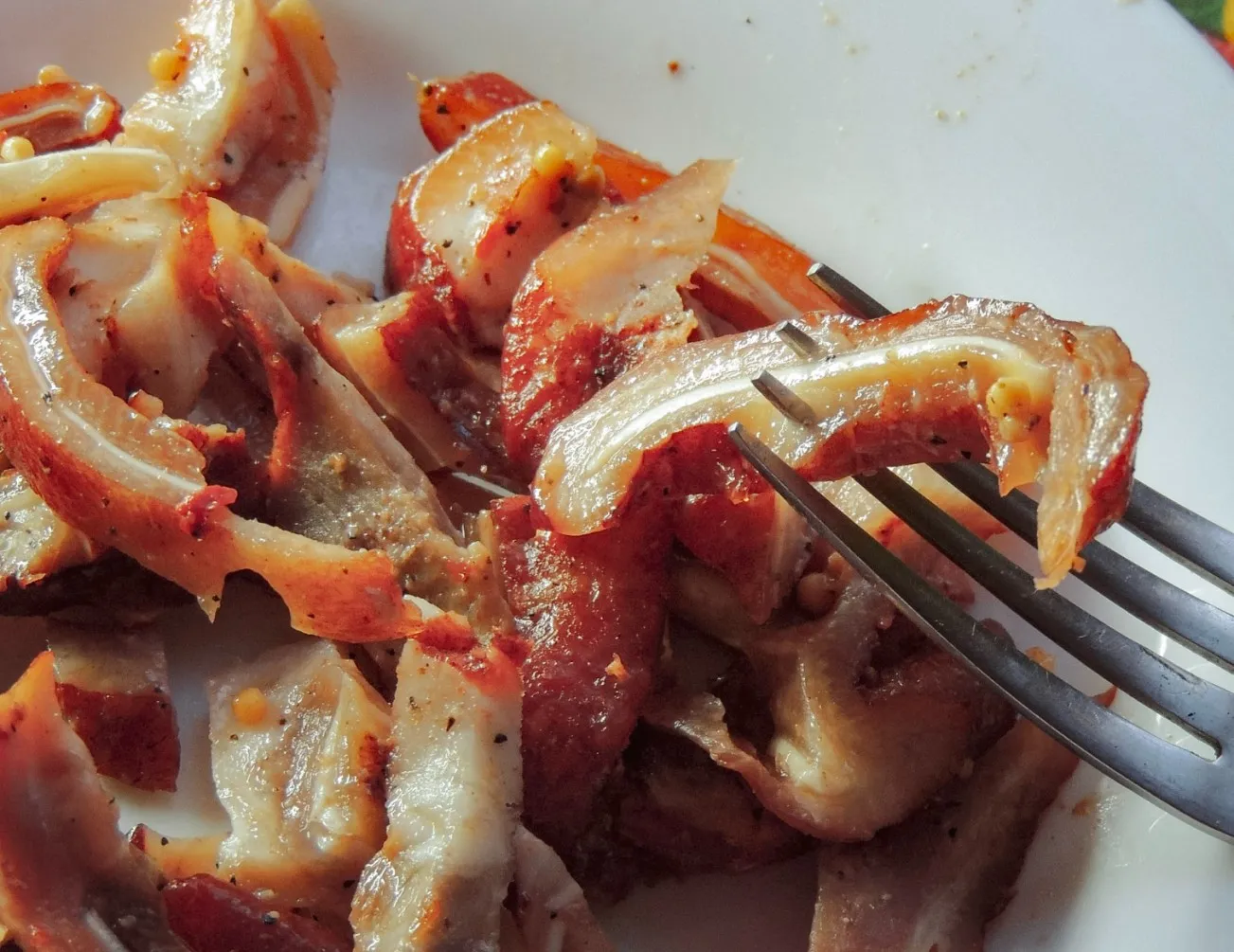
Apologies to Lithuanians, but the thought of eating this made me nearly gag. As the name suggests, smoked pig’s ears is an intense bar snack. Because the ear is mostly cartilage, skin and fat, there’s not much meat, so the taste is mostly from the smokiness and salt. Served in thin slices, the texture is gelatinous and slightly rubbery, but pairs well with a beer.
Honestly, this just wasn’t really for me. It’s not a dish I’d order for the taste alone, but it’s such a specific regional bar snack that I think it’s worth trying once just for the experience. Ask before you order though, some places serve it whole and it is, visually, still very much an ear.
12. Šakotis (Tree Cake)
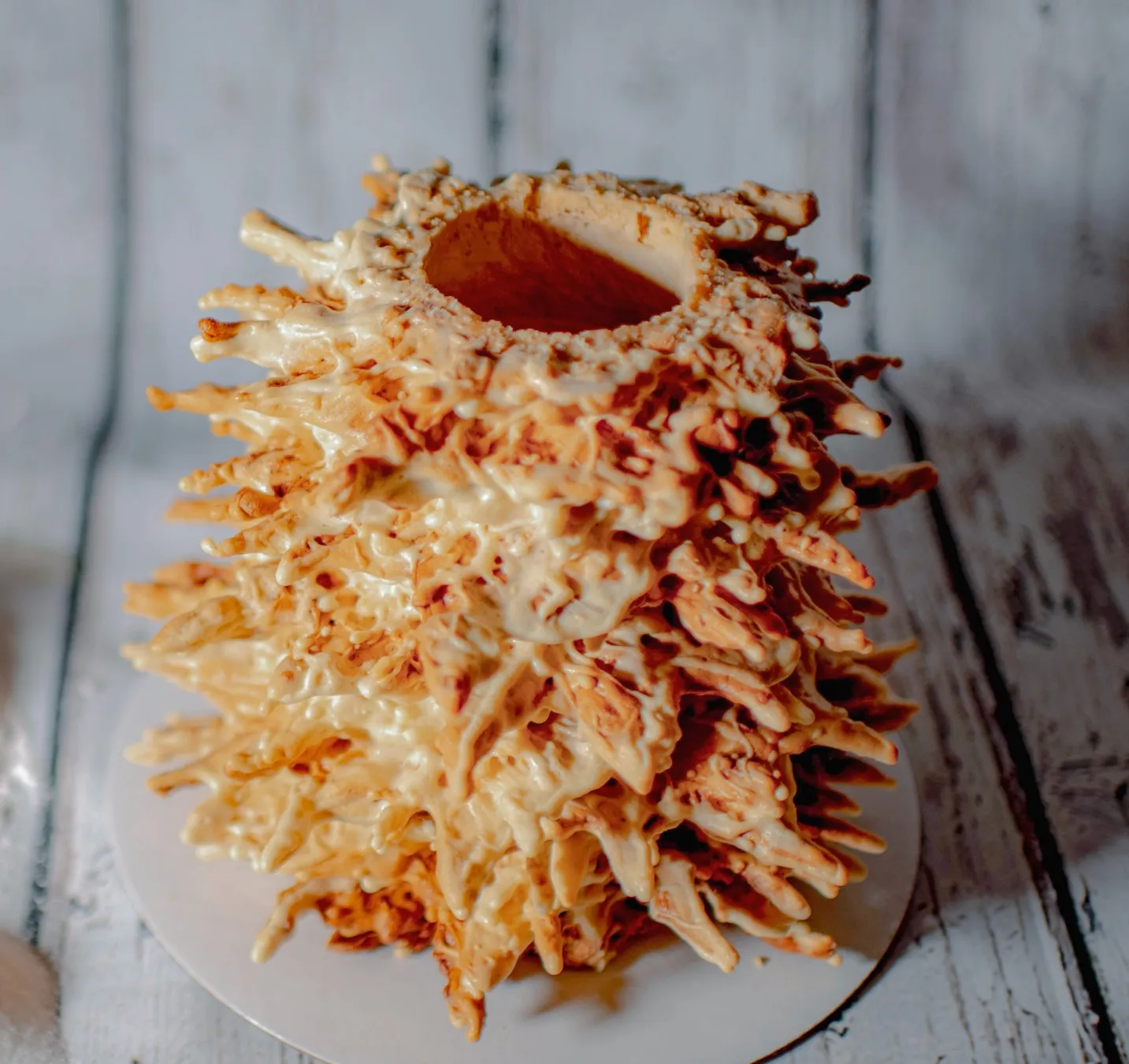
During every grocery trip I saw this spectacular cake in the bakery section of a grocery store. Looking like a tree, I assumed it was for Christmas, but nope, you can find this year round in Lithuania. Šakotis is cooked by layering batter on a rotating spit over an open flame, which gives it a strange spiky, branch like shape, hence the name.
Rich, consisting of butter and egg, with flour and usually lemon zest, vanilla and rum. It’s not as sweet as most cakes, the sweetness comes from the “branches” slightly caramelising when cooked. This caramelisation not only gives it a subtle sweetness but it creates a crunchy exterior, while the inside stays soft like a cake. It can be a bit on the dry and dense side, so a bit of chocolate sauce, pistachio creme or a hot drink alongside helps it along.
Related: Vilnius Or Riga? Which Baltic Capital Should You Visit →
13. Silkė (Herring)
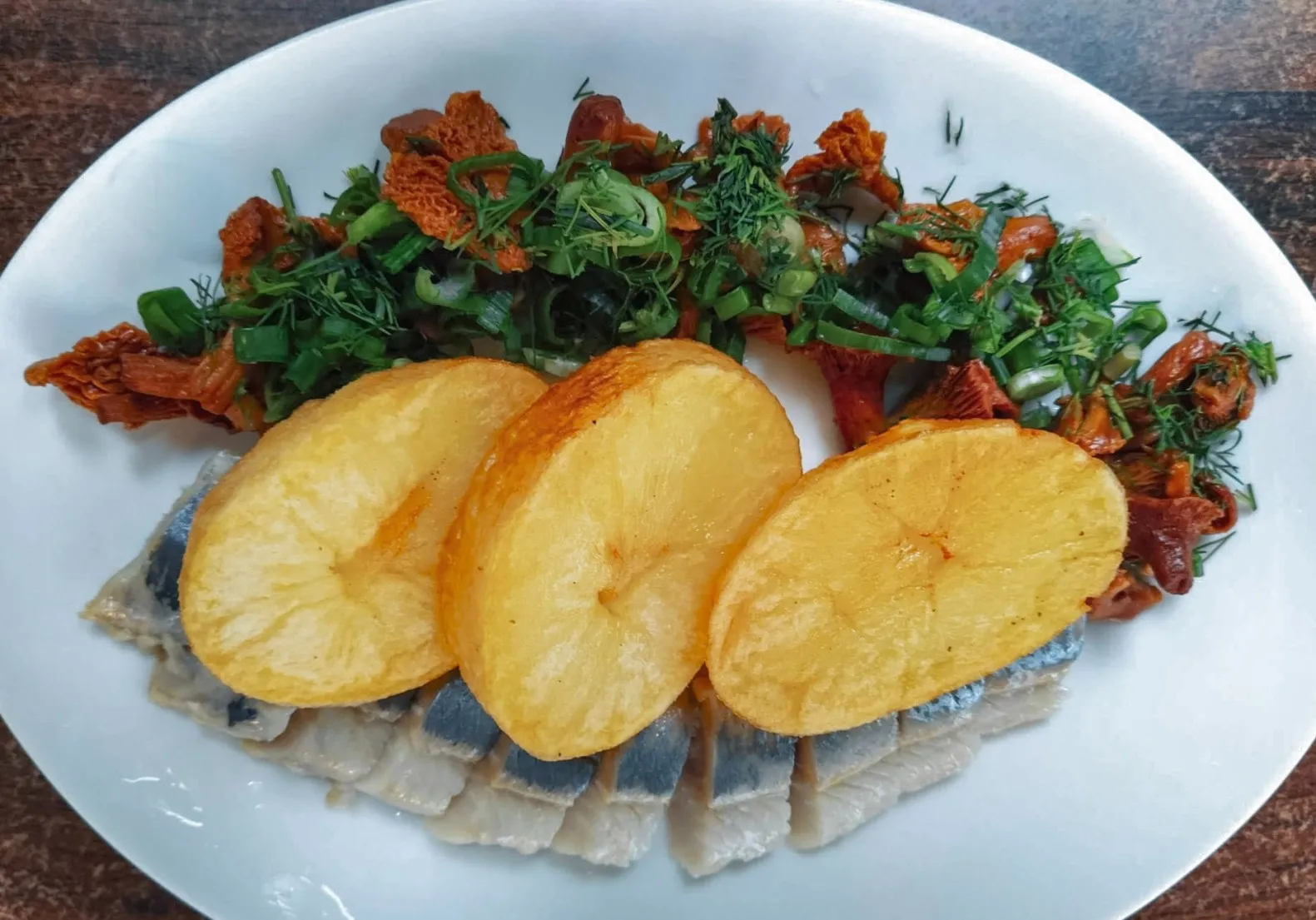
Herring is everywhere in Lithuania, and it took me a minute to come around to it due to a bad experience a few years ago in Amsterdam. It’s an oily, strong tasting fish, cured in brine or vinegar, so you get a sharp, tangy hit on your tongue before anything else registers. It’s salty too, almost anchovy level, so it’s not exactly a gentle introduction if you’re not used to pickled fish. The classic way to eat it is with sour cream, raw onion and boiled potatoes on the side, which softens the vinegar edge and makes it a little more balanced rather than a full on fish assault.
You’ll see layered herring in a lot of places, it’s sometimes called “herring under a fur coat” (not fond of the name myself, it sounds like it’s under a layer of furry mould). It’s a salad built in stacked layers with herring, boiled beetroot, potato, carrot, egg, all bound together with mayonnaise. The beetroot bleeds through everything, so by the time it lands on your table it’s this exuberant pink, not unlike the šaltibarščiai. Underneath all that colour it’s sweet earthy beetroot and creamy mayo doing most of the heavy lifting, with just enough herring coming through to remind you what you’re eating. If you’re herring-curious but on the nervous side, then this is the one I’d recommend starting with.
14. Raugintų Kopūstų Sriuba (Sauerkraut Soup)
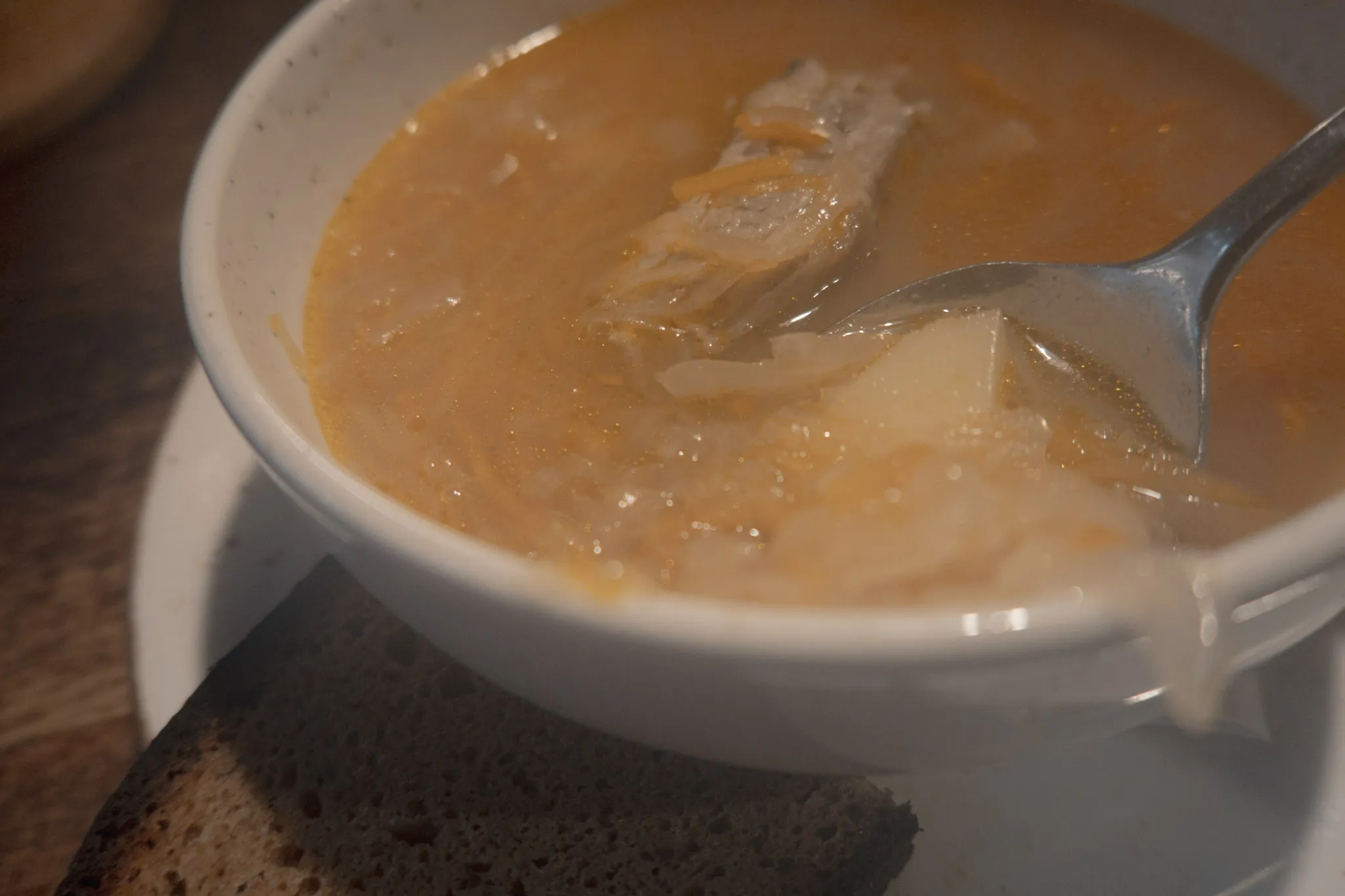
Sauerkraut soup is a broth built around fermented cabbage, so the base flavour is sour and tangy rather than rich or creamy, with none of the sweetness you’d expect from a regular cabbage soup. It’s usually bulked out with potato, carrot and a bit of pork or bacon. This brings in some fat and saltiness to balance all that sourness, and sometimes there’s a bit of smokiness in there too if smoked meat is used. The overall effect is a bit like a soured, hearty vegetable soup, warming and a little sharp, what you want on a grey, cold day rather than in the middle of summer.
It also has a bit of a reputation as a hangover cure, so save this for a Sunday lunch.
15. Lithuanian Cheese
Lithuania has fabulous cheese, you might know them for their meat and potato, but they are slowly being recognised for their cheesy offerings. Their most famous cheese is Džiugas which has won awards internationally. It’s 18+ month aged hard cheese that is nutty and a bit like gouda. Caraway farmhouse cheese is another good choice, a little mild, a little earthy combined with a creamy texture.
Lithuania might not be known for its cheese the way the UK and France are, but order a cheeseboard, drizzle some local honey and wash it down with some wine.
Coffee Culture Lithuanian
Coffee wasn’t always a big thing in Lithuania. Although it has been kicking around for centuries, since Turkish influence back in the 1700s, it went through some quiet decades under Soviet rule when a strong drink meant something a lot stronger than coffee. It’s really only in the last fifteen or twenty years that things really took off and Vilnius in particular now has a great specialty coffee scene, one that’s often overlooked next to other European cities, but it shouldn’t be.
You’ll still see the big chain, Caffeine, on what feels like every corner. But dig a little further and there’s an excellent independent scene of small roasteries and third wave cafes, especially around the old town and Užupis. A lot of these places roast their own beans, take their pour overs seriously and have that slow, unpretentious vibe where people are curious about where the coffee came from rather than showing off about it. As a self confessed coffee addict, this was honestly one of my favourite surprises of the whole trip, I wasn’t expecting Lithuania to have this kind of coffee culture and I ended up planning entire mornings around which cafe I wanted to try next.
RELATED: Best Cafes In Vilnius: 6 Of My Favourites →
Lithuanian Food FAQ
What is the national dish of Lithuania?
That’s cepelinai, hands down. Big potato dumplings, usually stuffed with minced meat, though cheese or mushroom versions exist for anyone skipping meat. They’re named after the Zeppelin airship because of the shape, and they come loaded with sour cream and bacon bits on top. It’s the one dish almost every menu has, and the one locals will tell you to try first.
What do Lithuanians eat for breakfast?
Nothing too far from what you’d expect in most of Northern Europe, porridge, pancakes, rye bread with butter or cheese, and coffee or tea. Buckwheat porridge is common too. A lot of Lithuanian breakfasts also lean on leftovers, so it’s not unusual to see something like kugelis, a potato and bacon bake, served in the morning even though it was made the night before for dinner.
Can I eat gluten free in Lithuania?
Easier than you’d think, honestly. A huge amount of the cuisine is potato, cheese and meat based rather than built around wheat, so plenty of traditional dishes are naturally gluten free or close to it, cepelinai, kugelis and varškė with honey among them. The main thing to watch for is rye bread, which is everywhere and definitely not gluten free, and some fried or battered dishes. Bigger cities also have health focused markets and cafes doing dedicated gluten free options if you want to be extra safe.
What are some vegetarian foods in Lithuania?
More than you’d expect from a cuisine this meat heavy. Cepelinai and kibinai both come in cheese or mushroom versions, šaltibarščiai (the pink beetroot soup) is naturally vegetarian, and varškė with honey makes a great light meal or snack. Cities like Vilnius also have a genuinely solid plant based scene now, with dedicated vegan spots and plenty of restaurants doing vegetarian versions of the classics.
What alcohol do they drink in Lithuania?
Beer is the big one, Lithuanians have been brewing farmhouse style beer for centuries and it’s still the most popular drink in the country. Midus, a strong honey mead, is the more traditional choice and feels like the local specialty, sweet, warming, and a good match for rich meat dishes. You’ll also come across gira, a fermented rye bread drink that’s mostly non-alcoholic and a good alternative if you’re not drinking.
What are the sweet foods in Lithuania?
Šakotis is the showstopper, the tree shaped cake I mentioned earlier. Beyond that there’s varškėčiai, fried curd cheese pancakes served with berries and cream, and varškės sūrelis, a sweet cheese bar you’ll find in every grocery store. Around Christmas you’ll also spot kūčiukai, little dry poppy seed cookies, and grybukai, mushroom shaped biscuits with a chocolate glaze. Honey shows up a lot too, whether drizzled over cheese or worked into cakes and drinks.