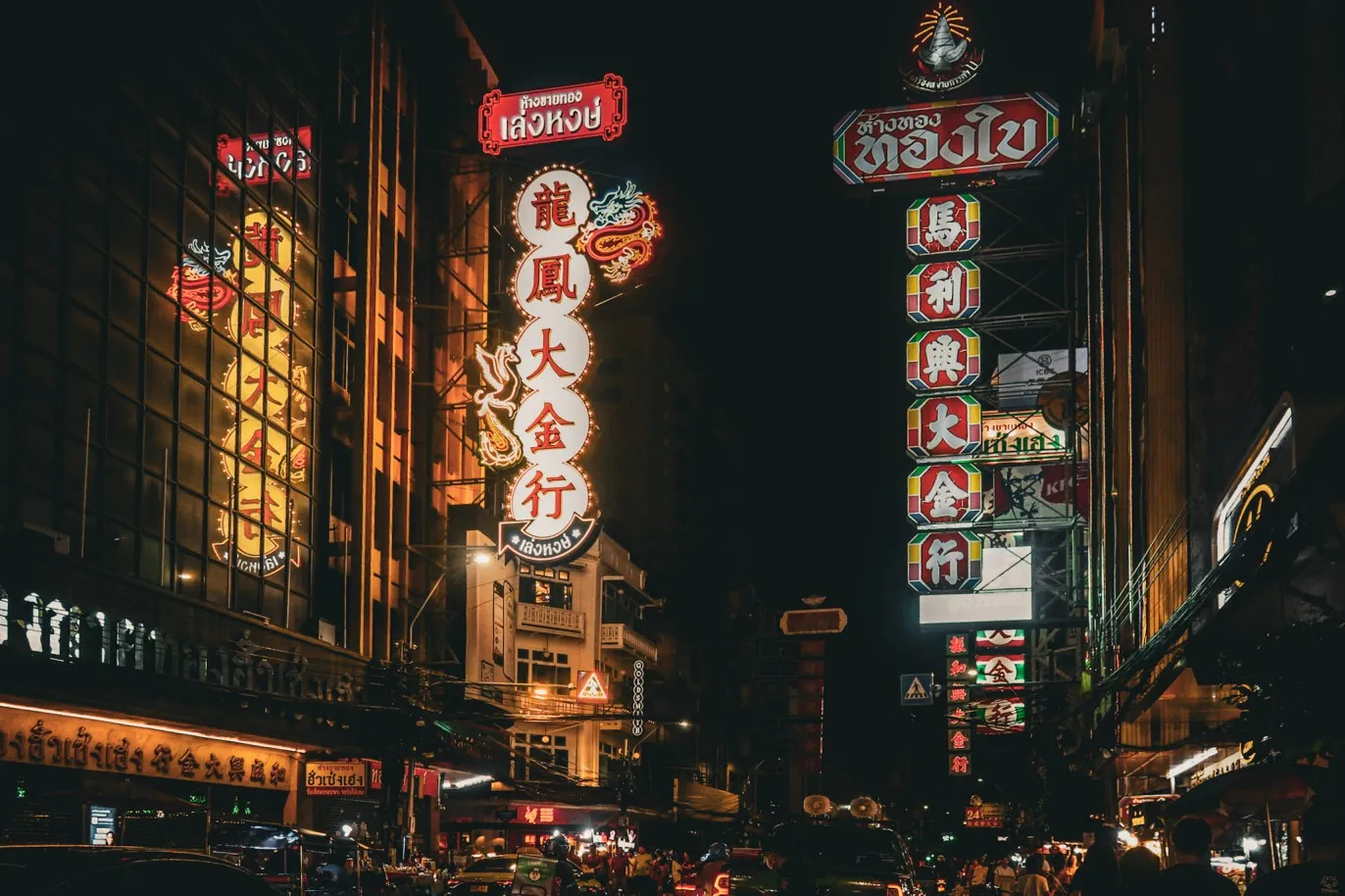
Chinatown Bangkok is considered one of the world’s largest Chinatowns, yet most visitors’ time here plays out like this: go at night, eat on Yaowarat Road, take photos of the neon signs, leave. But spending just one evening here is like judging a book by its cover, you’re missing the real story. And what a story this area has.
As someone who considers Chinatown Bangkok my absolute favourite neighbourhood in the city, I’m here to show you why this area deserves a full day, not just an evening stopover. Yes, it’s becoming increasingly trendy with Songwat and Talat Noi gaining popularity, but it still remains refreshingly authentic. Among the new aesthetic cafes and cocktail bars are centuries old temples, traditional Chinese medicine shops, gold shops, and so much amazing food sizzling on each corner.
This Chinatown Bangkok guide covers everything you need to know including the best things to do in China town Bangkok for first-time visitors and return travelers alike including temples, cosy cafes, rooftop bars, and the best street food you’ll have during your Bangkok trip.
Post updated July 2026.
 First time to Thailand? Read my Thailand travel guide and Bangkok travel guide here for all the essential information you need to plan your trip.

Some links in this post are affiliate links, which means if you make a purchase I may earn a commission at no extra cost to you
Chinatown Bangkok History
Envision this: 1782, boatloads of Chinese immigrants arriving at Bangkok’s riverbanks, fleeing famine in search of a better life. Entire families from the Hokkien and Teochew communities of southern China made the dangerous journey to Thailand, settling in a swampy riverside area outside the city walls that most people avoided.
What they built there was phenomenal. These were natural entrepreneurs, and when the 1855 Bowring Treaty opened Thailand to international trade, their riverside location became pure gold. Within decades, warehouses lined the Chao Phraya River and this forgotten marshland had become one of Bangkok’s most thriving economic areas.
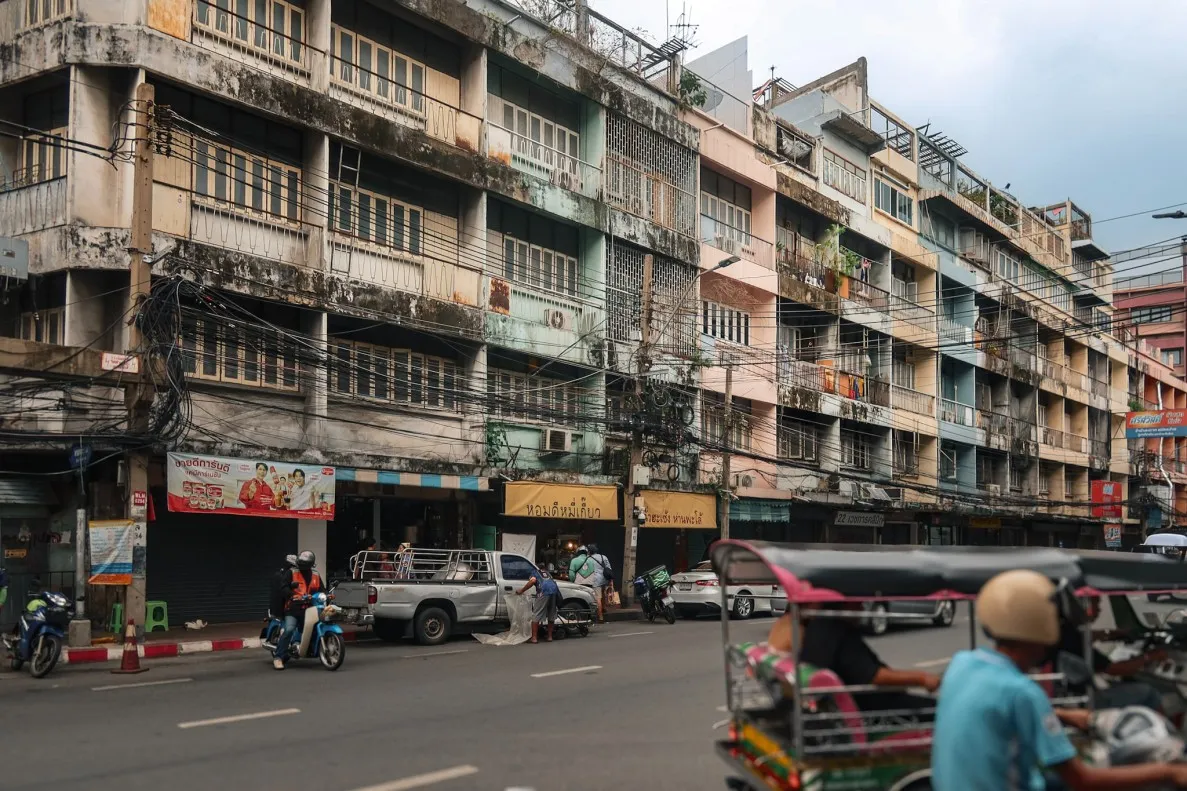
Their legacy still stands today in the narrow “shophouse” architecture found throughout Chinatown’s alleys, businesses downstairs, families living upstairs, a Chinese innovation that became Bangkok’s signature style. Modern Chinatown remains one of the world’s largest overseas Chinese communities (around 14% of Thais claim Chinese ancestry), and it’s still home to the world’s highest concentration of gold shops.
You can feel that history the moment you walk the alleyways: third generation families still running the same shops, old-timers speaking languages their great grandkids can barely understand.
Chinatown Bangkok Opening Hours
Chinatown is a neighbourhood and therefore it’s technically open 24/7, but the main Chinatown Bangkok night market on Yaowarat road generally opens at 5 PM and by 6 PM the neon signs are lit up and the road becomes one the liveliest places to be in Bangkok. Additionally, Sampeng Market is open from 8 AM to 5 PM.
If you don’t like crowds but want to try the street food I recommend arriving between 5 PM and 6 PM before the crowds pick up.
How To Get To Chinatown Bangkok
If you’re coming straight from the airport, it’s about 32 km from Suvarnabhumi and 28 km from Don Muang. Technically you can do this by public transport (Airport Rail Link to Ratchaprarop then a bus, or a couple of bus changes from Don Muang) but I find a taxi or Grab the easiest. It costs around 450 baht including tolls and saves you a lot of hassle after a long flight. If you want a smoother start, I’d book a Welcome Pickup instead of a taxi rank, you get a driver who messages you on WhatsApp and meets you in arrivals, for only a bit more than a regular taxi.
If you’re already in Bangkok, here’s how to get to Chinatown:
MRT: Chinatown has two MRT stations, Wat Mangkon and Hua Lamphong. Wat Mangkon is more central and puts you right in the heart of Chinatown. It also is decorated in a Chinese style with red colour, Chinese writing and dragons; it looks totally different to other Bangkok MRT stations. Check out the Dragon belly on exit 2 along with a dragon on the ceiling. You can use your credit card to pay your fare, you just need to tap on and off at the gates.
Boat: Ratchawong Pier and Marine Department Pier are both served by the Chao Express Boat which travels along the river passing Wat Pho, Phra Arthit (Khao son Roan) and IconSiam. It’s cash only onboard, so make sure you’ve some small notes on you. It should cost between 17 and 30 baht depending on where you get on. You can also get the Blue Flag tourist boat which is more expensive (approximately 150 baht) but larger and more comfortable.
How To Get Around Chinatown Bangkok
The best way to see Chinatown is on foot, exploring the alleyways, trying street food and visiting the local businesses. Although it’s a large area you can cover it all on foot, the vibrancy and fast pace has something interesting on every corner.
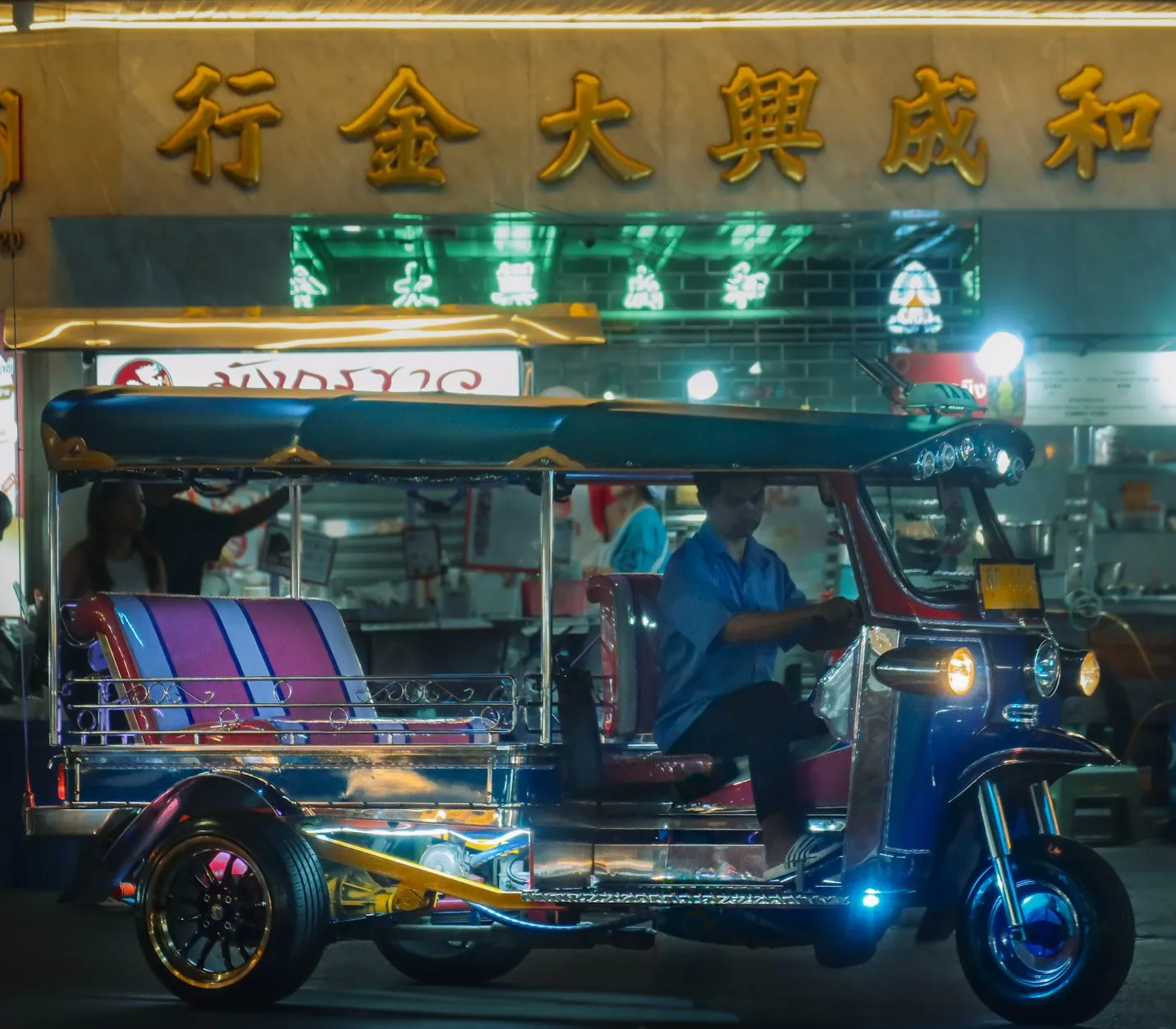
Alternatively, taking a tuktuk is an exciting way to get around, especially at night when you’re cruising under the neon lights, it can feel surreal. However, this can be expensive, make sure you agree a price BEFORE you get in. There are also tuktuk tours that take you around Chinatown and stop at a few street food stalls.
Short on time in Chinatown? Consider joining this 4 hour local life, culture & food walking tour →
Where To Stay in Chinatown Bangkok
Chinatown is one of my favourite areas to stay in Bangkok. I find it to be the most exciting place, the atmosphere is always electric, it’s what you imagine Bangkok to feel like. Chaotic, fun, friendly and pushes you to step out of your comfort zone. I think it’s best suited for couples who are looking for an adventure, families with small kids might find that it’s too busy.
China town is also a convenient base for your Bangkok trip. Not only are you in a vibrant area full of culture, good food, and nightlife you are also within easy reach of other areas of Bangkok. Wat Arun is a 6 minute boat ride, Khao San Road is 20 minutes by boat, CentralWorld is 12 minutes on the MRT + BTS, Lumphini Park is 6 minutes on the MRT and Asiatique 20 minutes by boat.
My Bangkok Chinatown Hotel Picks
 $$$ Higher-end
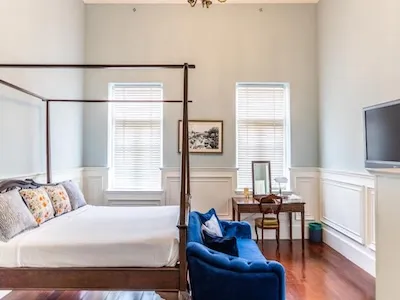
Beautifully restored heritage house blending period character with modern comfort, a quiet, characterful retreat tucked among Chinatown’s historic shophouses and hidden backstreet cafes.
Book Now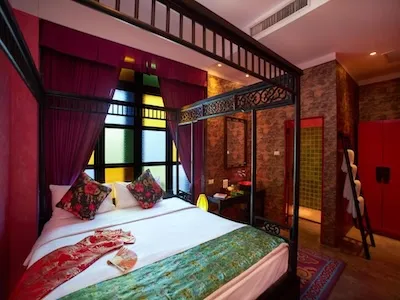 $$ Mid-range
Atmospheric boutique hotel dripping with old Shanghai glamour, all rich colours and vintage charm, set right on Yaowarat in the middle of the Chinatown action.
Book Now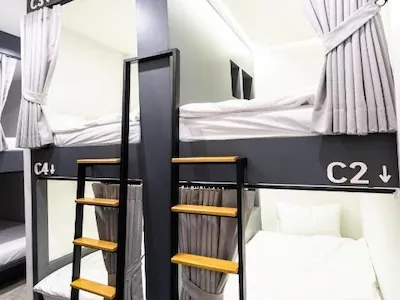 $ Budget
Sociable budget hostel right in the heart of Chinatown, putting you steps from Yaowarat’s legendary street food and the buzzing night market every single evening.
Book NowRELATED: Where to Stay in Bangkok: 9 Best Areas, Honest Pros & Cons →
Where To Eat in Chinatown Bangkok
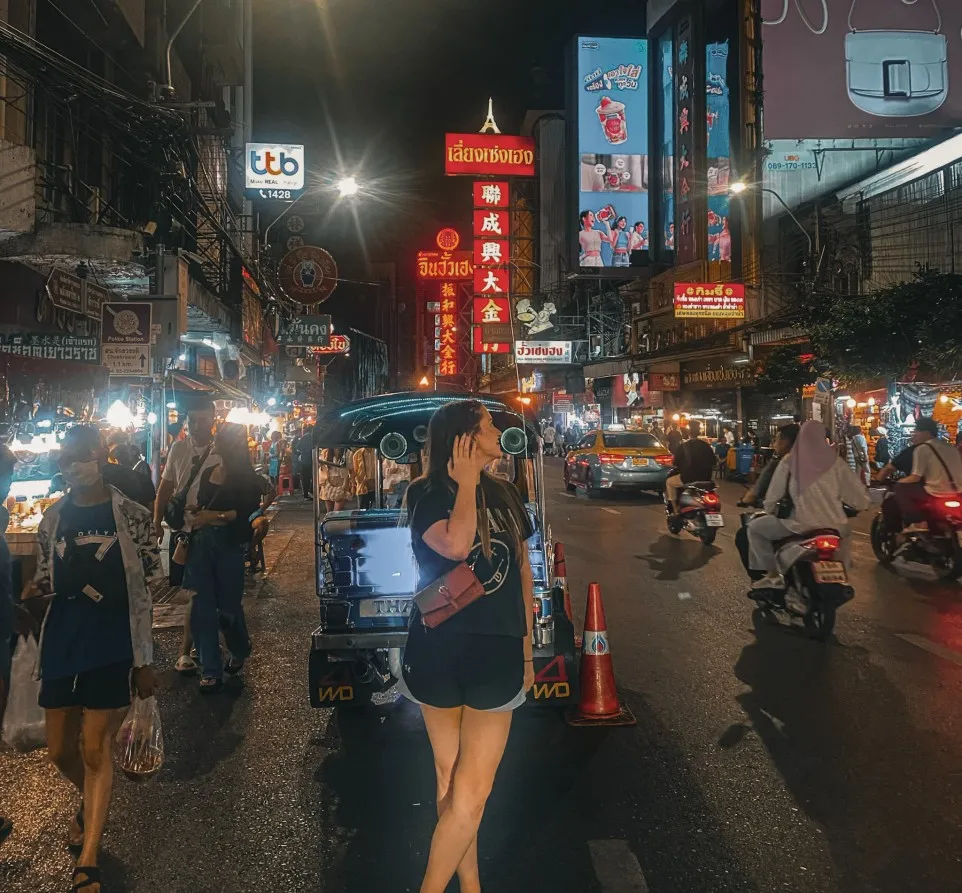
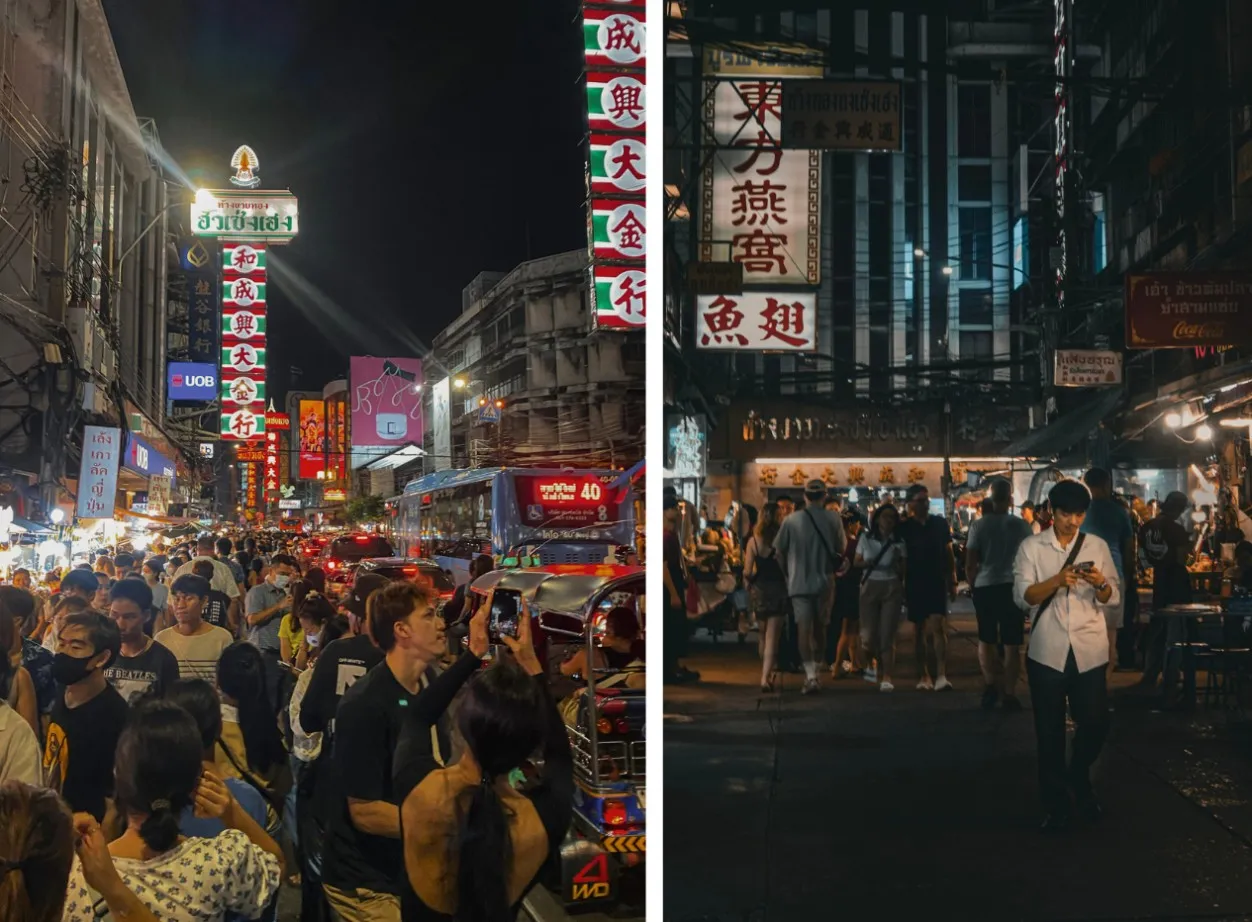
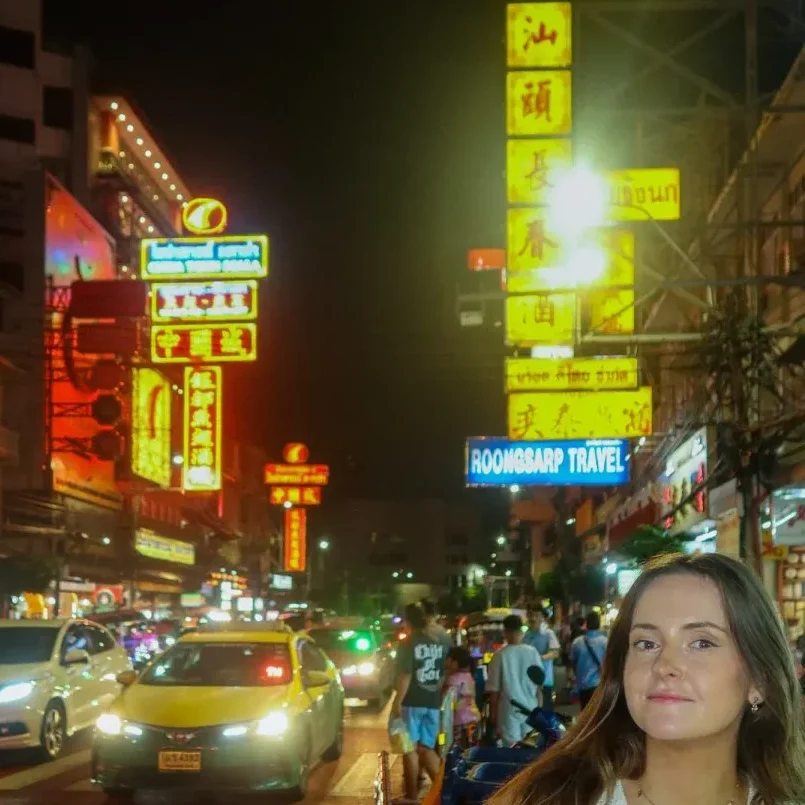
If you’re not leaving Chinatown with a belly fit to burst, then you’ve done it wrong. The secret is to eat whatever you want, and then to worry about it after. Food is Bangkok’s Chinatown identity, eating is the number one thing to do here, and it’s one of the best things to do in Bangkok in general. Yaowarat Road is the main spot, from about 5 PM every evening the barriers go up and stalls line the streets as well as the small alleys surrounding it. The area is like a backdrop for a movie, with bright neon signs flickering, colourful tuk tuks whizzing by, food vendors shouting, pans sizzling, pots steaming, people sitting on small plastic chairs under colourful lights in a cloud of scintillating aromas. The 1.5 km road is known as the tummy of the dragon for two reasons, it curves like a dragon’s back and it’s famous for all its mouth watering street food.
As it’s Chinatown, expect to find lots of roasted pork and duck, fish and noodle joints. You won’t come across many green or panang curry stalls here. It’s a place that proves you don’t need large kitchens or fancy plates, just chefs with real passion.
There are hundreds of stalls and restaurants in Chinatown but these are the places I keep returning to, and think you should visit at least once.
Nai Ek Roll Noodle
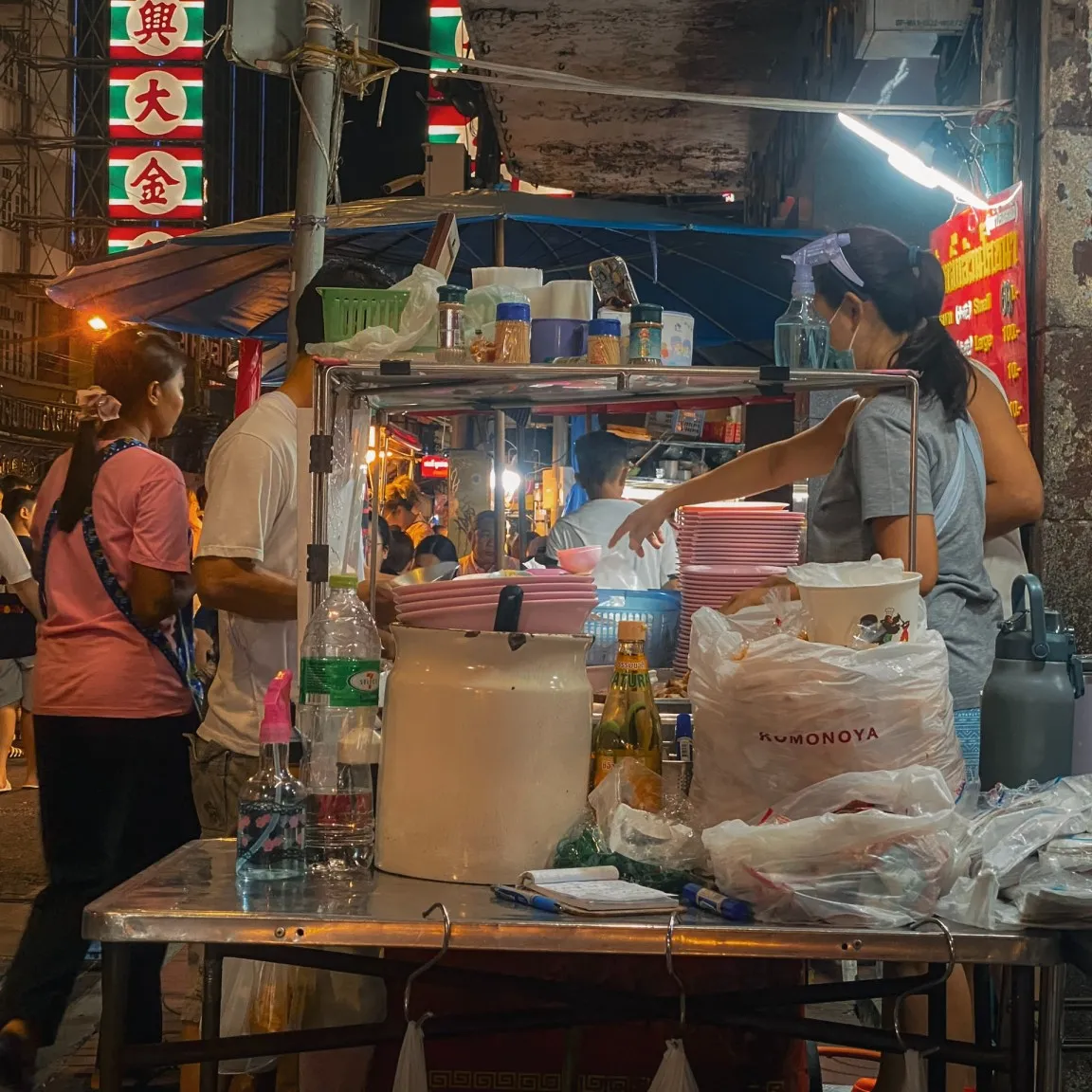
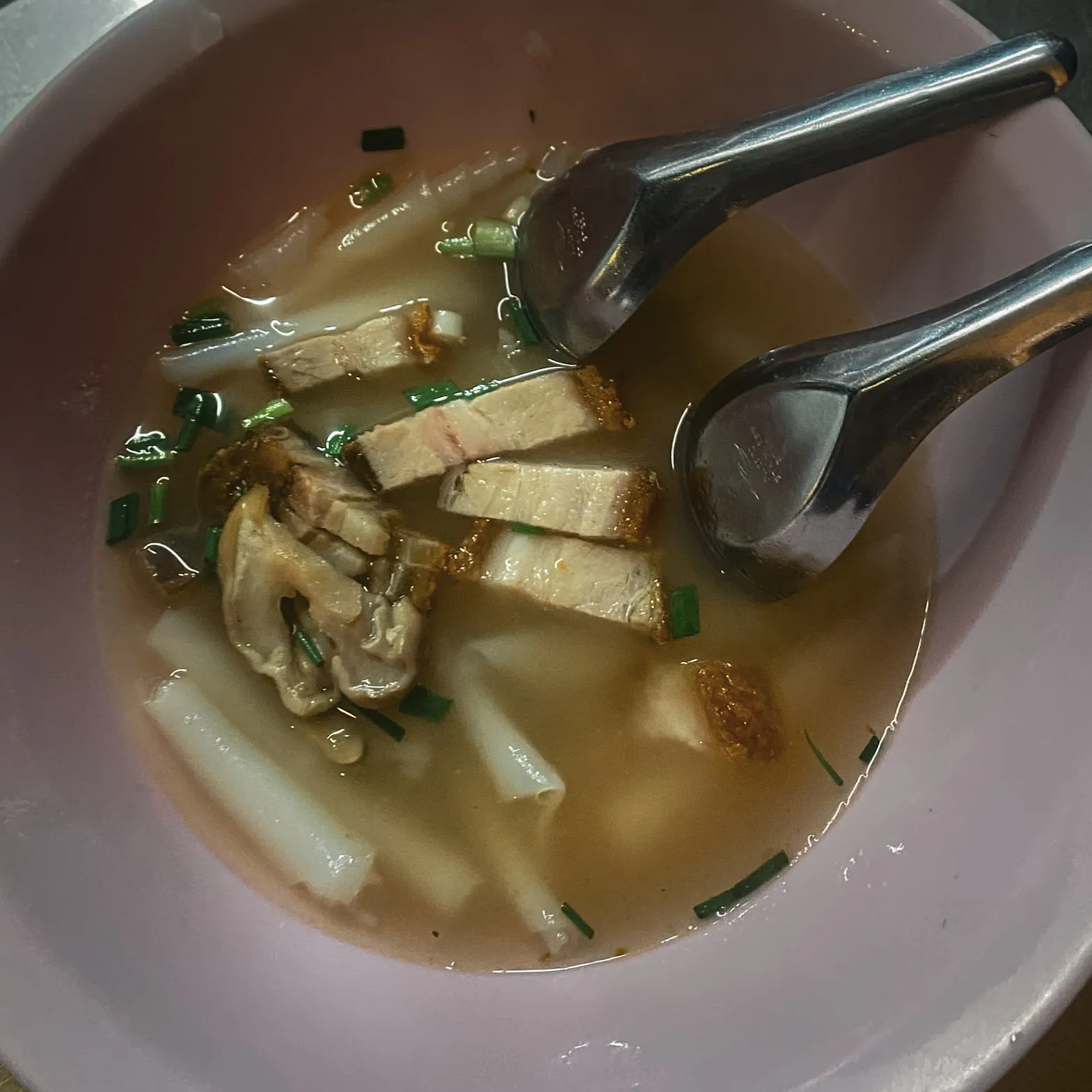
Nai Ek Roll Noodle has been operating for over 60 years, evolving from a humble street cart into a Michelin Bib Gourmand restaurant. It’s now a constant stream of people dining, and something of a landmark eatery on Yaowarat Road.
We tried the famous roll noodle soup (Kuay Jab), a hot, peppery soup with chewy rolls of rice noodles and crispy pork that somehow keeps its crunch even sitting in the broth. The broth itself is what really stands out, a deep, peppery kick balanced with sweetness. It wasn’t what I was expecting at all.
Nai Ek Roll Noodle is a must try in Chinatown.
HAGOW
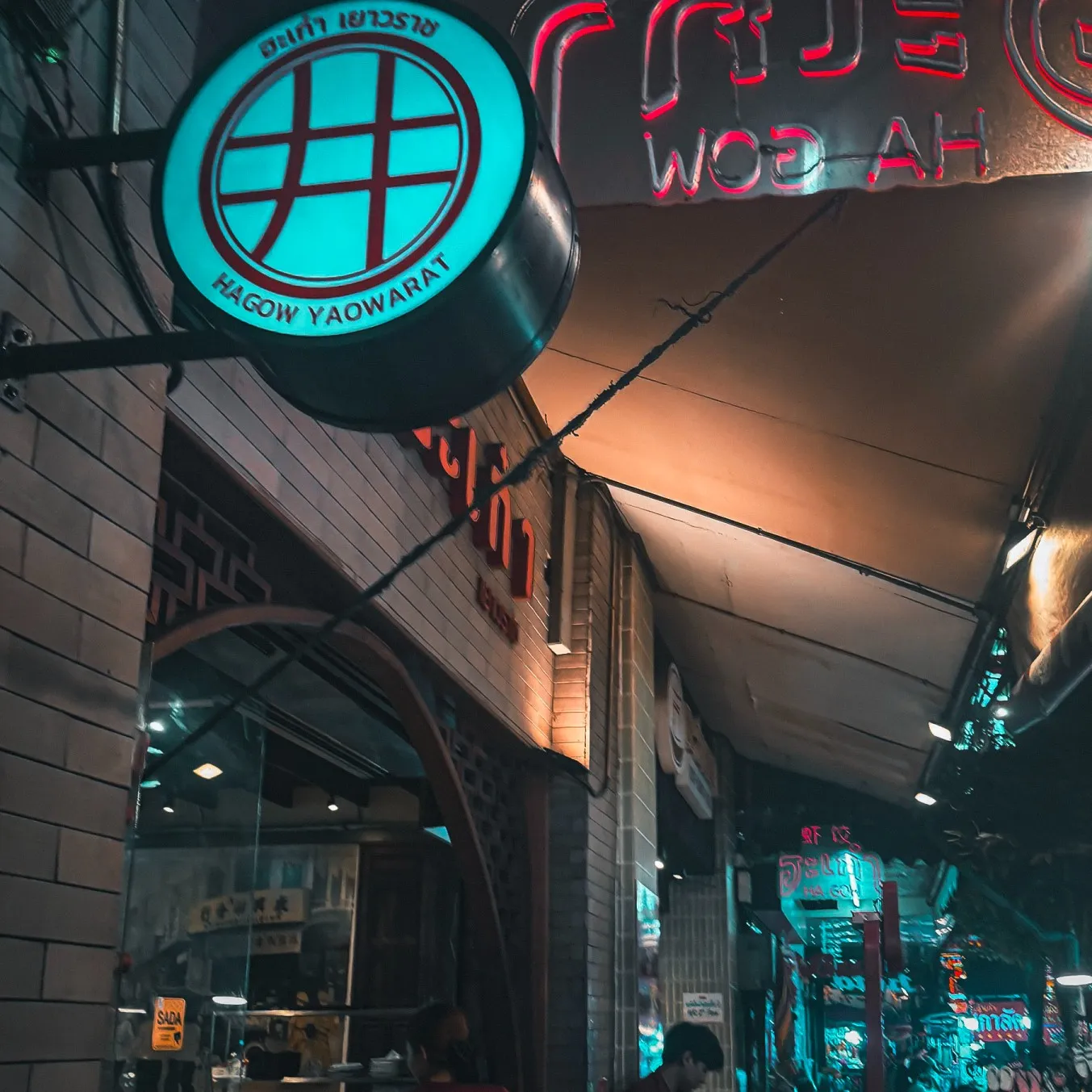
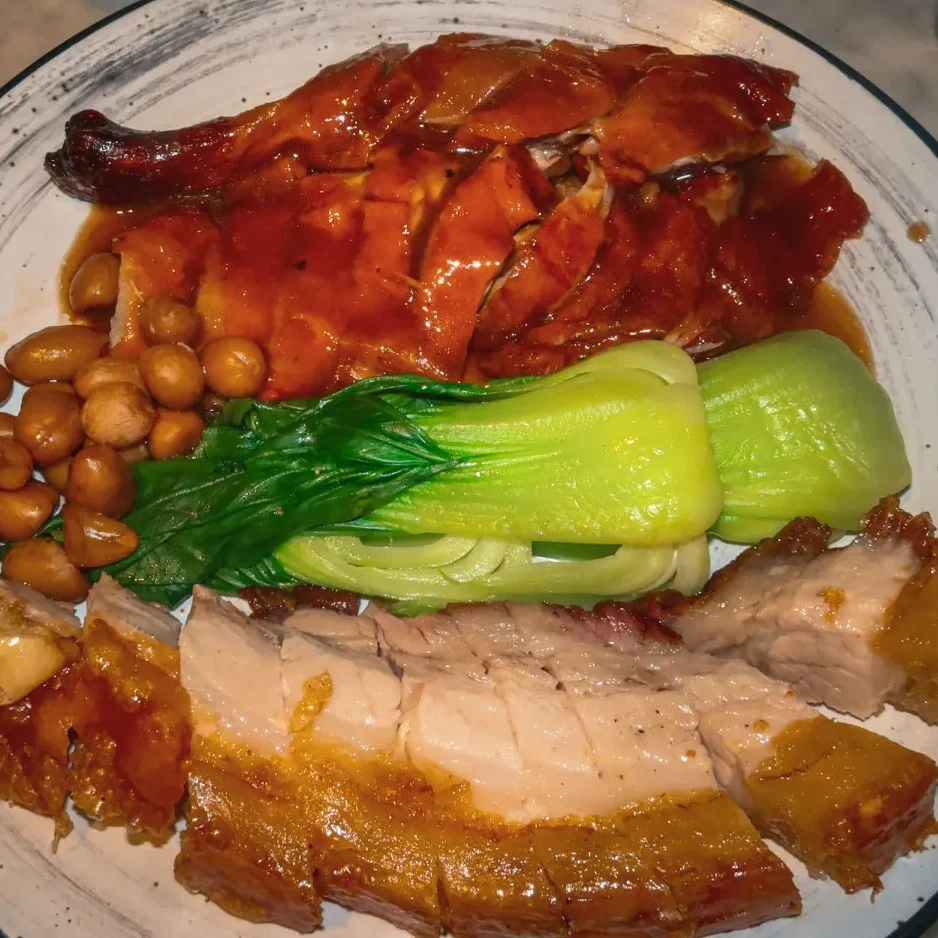
The restaurant that made my“I’ll never eat duck” fiancé throw out his lifelong morals, and not only taste duck, but demolish most of the portion. HAGOW is a casual sit-down restaurant, best known for its crispy pork, roast duck and dim sum. It’s understandably busy, so expect to queue on weekend evenings. But once you’re inside, it offers a much more relaxed dining experience than anything on Yaowarat Road.
We ordered the roast duck and crispy pork belly plate, which came with bok choy and roasted peanuts. The duck was succulent and tender, covered in a sweet red sauce. The pork was my favourite though, the fat was so crispy, and it came with two sauces, one spicy and one a fragrant coriander. Both complemented the pork perfectly.
Lim Lao Ngow Fishball Noodle
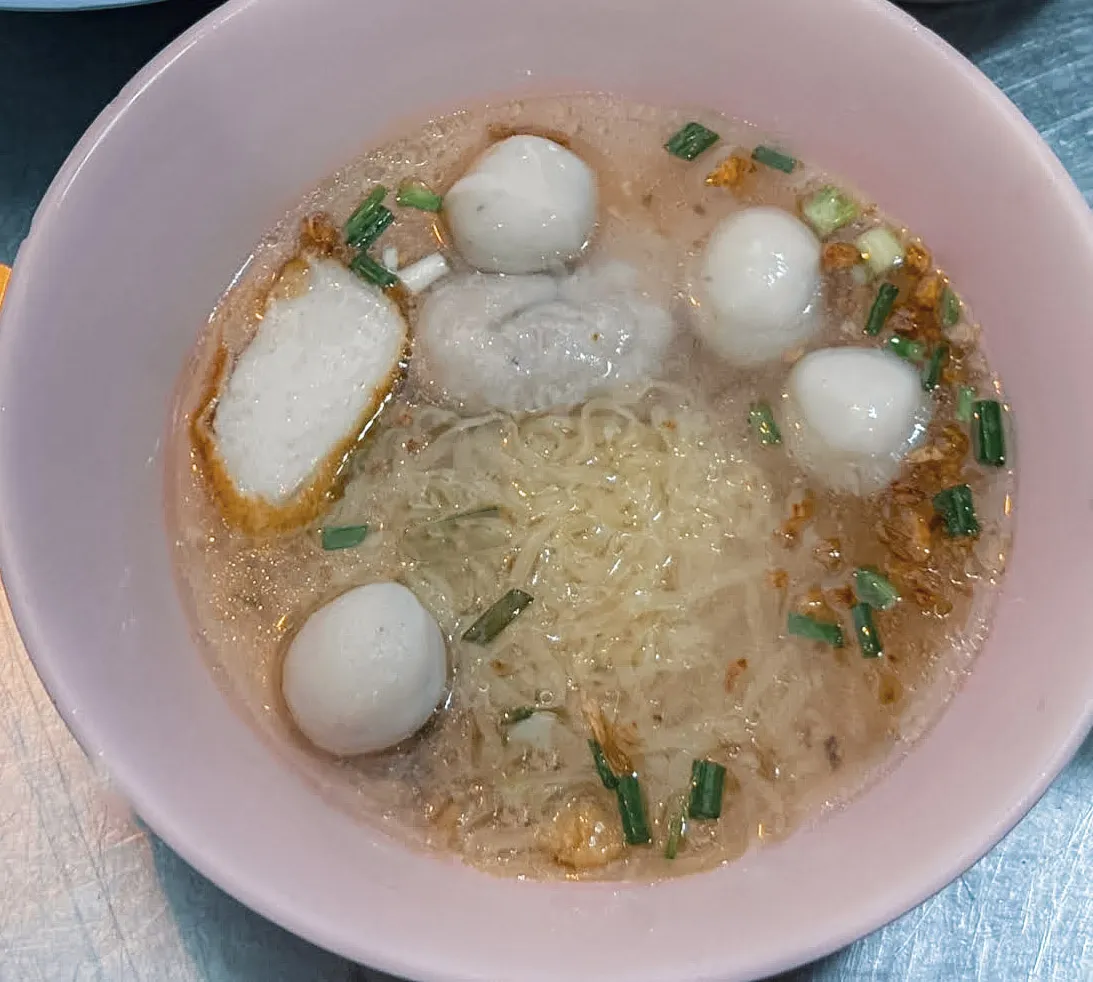
Lim Lao Ngow Fishball Noodle is another Michelin Bib Gourmand in Chinatown, and one of the original stalls before the brand expanded into big malls and popular spots across Bangkok. There’s something special about eating at the source though, this is where it all started, and you can feel it in the queue that builds up on Yaowarat Road most evenings.
You get to build your own bowl here. Choose between egg, wide or rice noodles, and decide whether you want it dry or with broth. I went with rice noodles and broth, partly because I wanted to see what all the fuss was about with that base.
The fish balls were soft, light and bouncy, exactly what you want from a good fish ball, with just enough give when you bite into them. They also do a fish maw soup, which I didn’t try this time but is meant to be a specialty here too, so it’s on my list for next visit.
Mali Gyoza
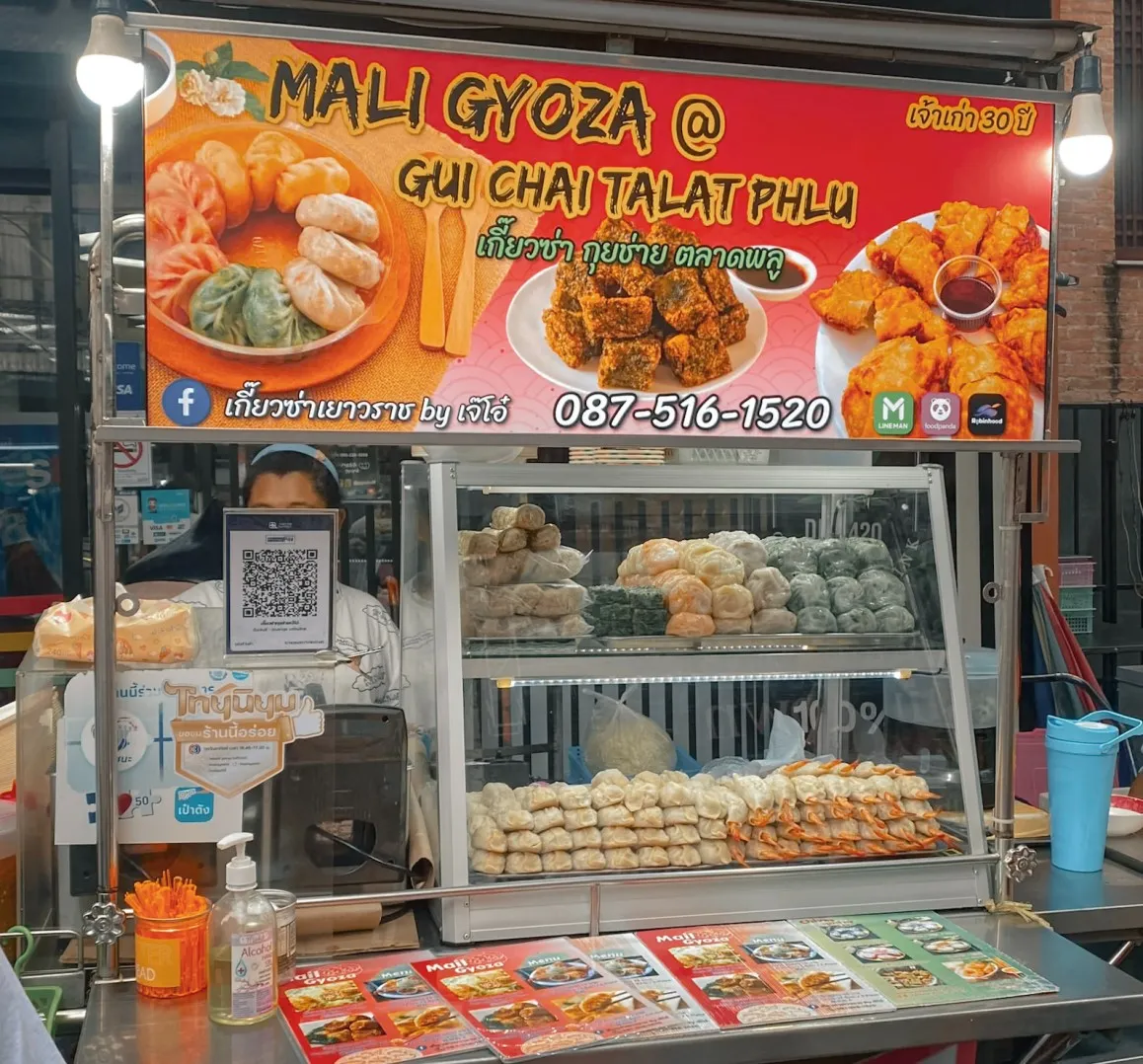
This was the first thing I ever ate on Yaowarat Road, and what an intro to Chinatown it was.
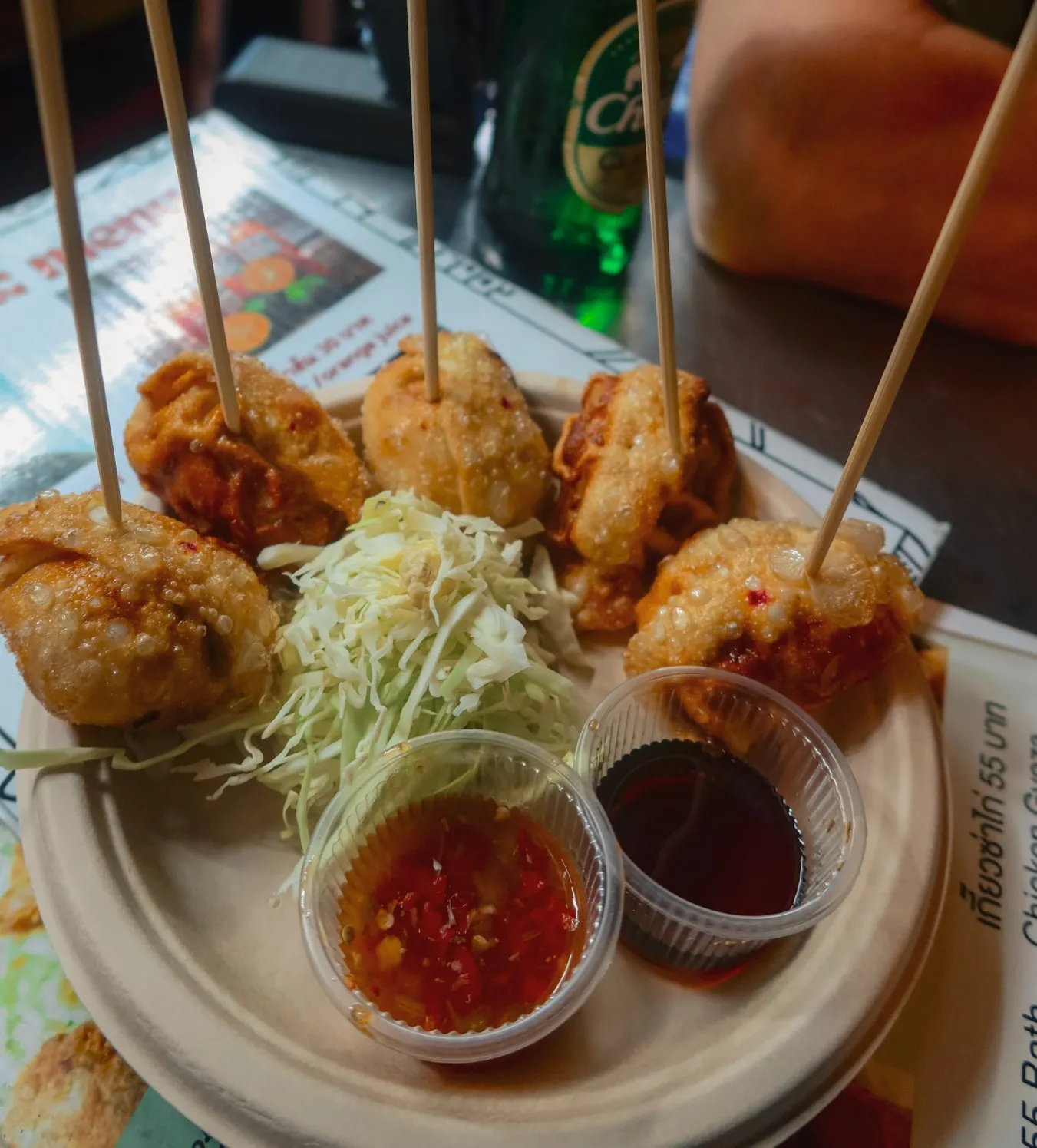
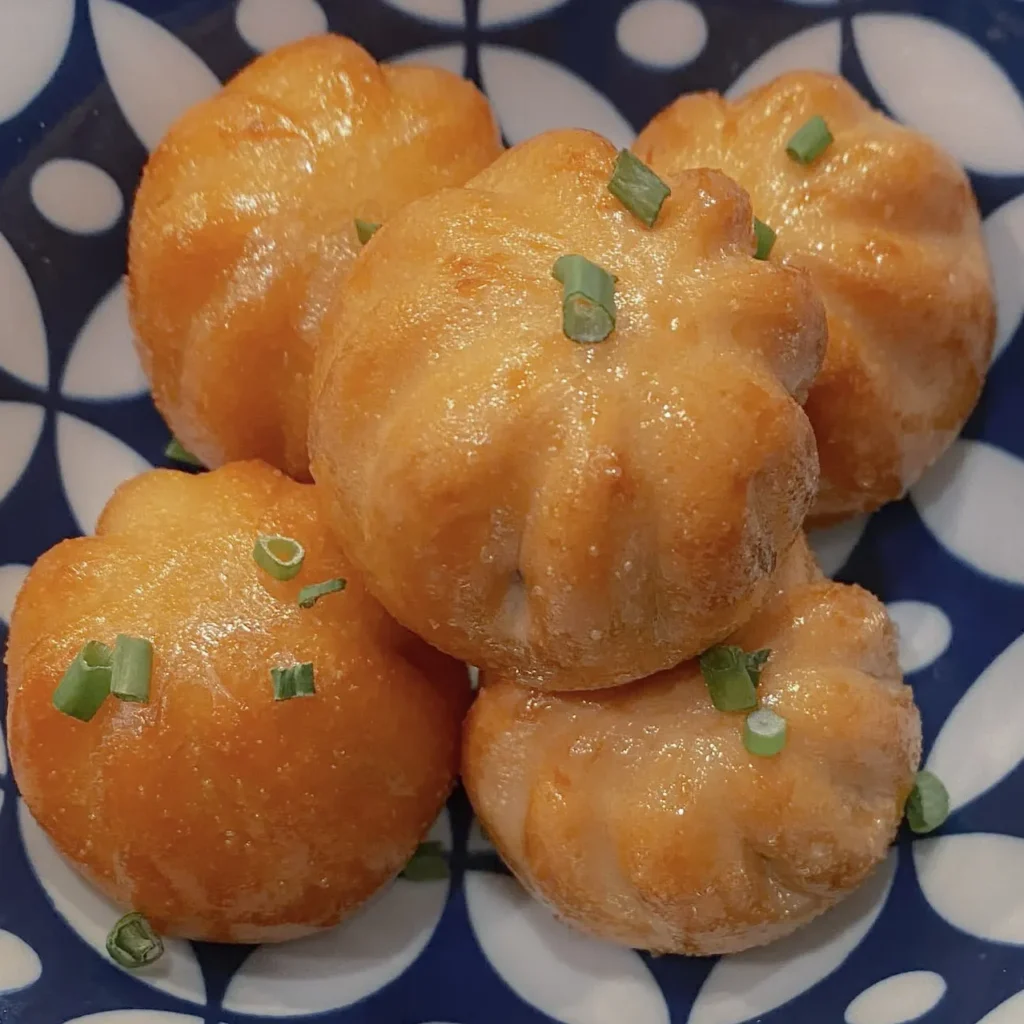
Deep fried, juicy pork gyozas, packed with herbs and spice running through the meat. The dough comes out crispy with little bubbles across the surface, and you get a small pot of spicy sauce on the side with a real kick to it. I’ve come back maybe six times since. Grab a stool right behind the stall and eat standing distance from where it’s all being cooked. I promise these will be the best gyozas you’ve ever had.
Hua Seng Hong
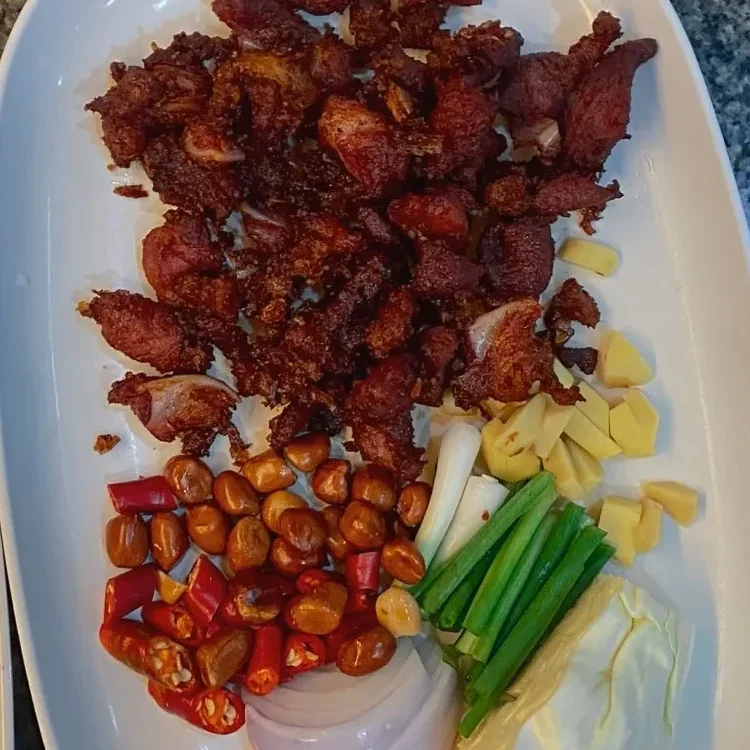
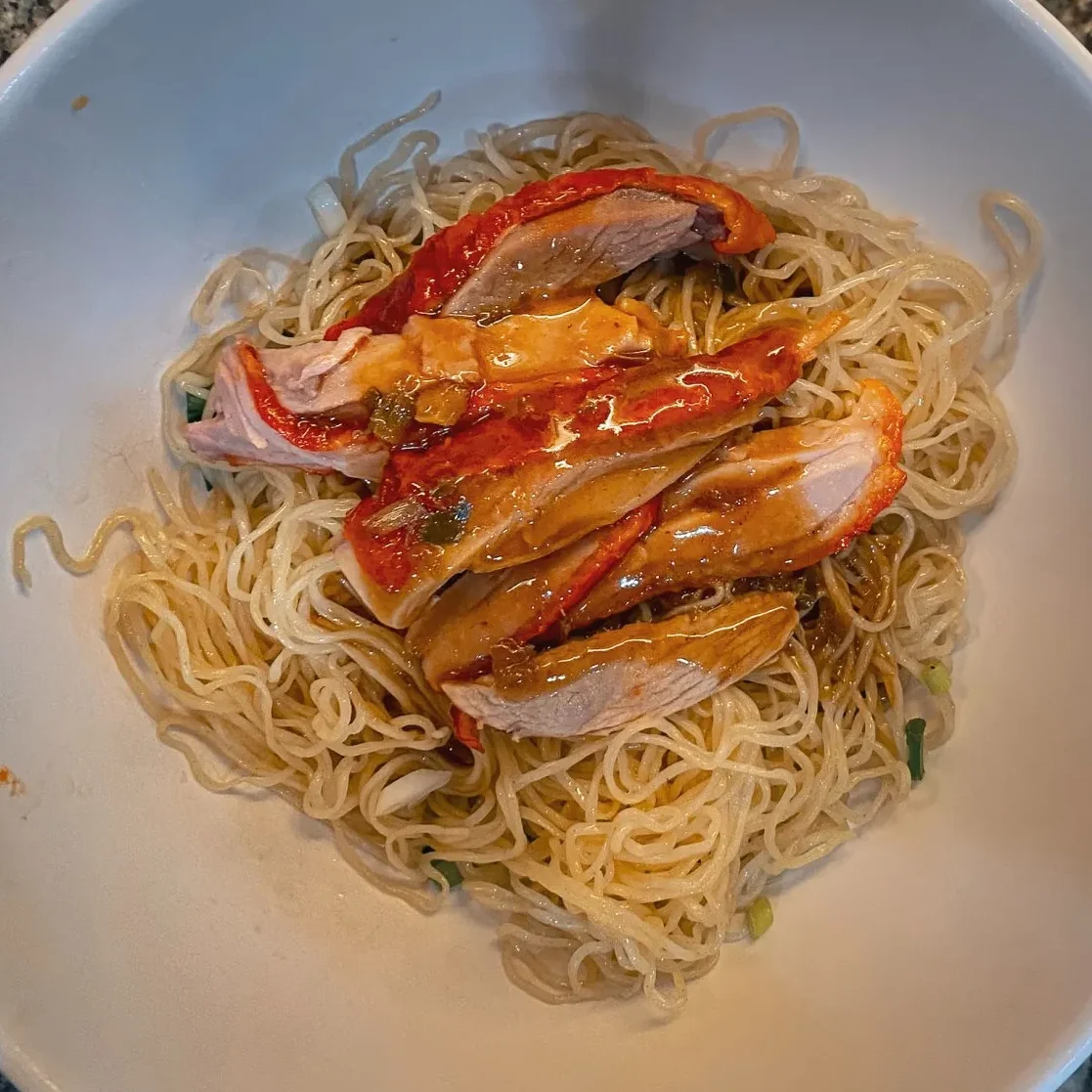
Hua Seng Hong is one of Chinatown’s most well known restaurants, and a good pick if you want proper Chinese comfort food without the queue or chaos of the street stalls. It’s been around for decades and has that reliable, always-busy feel to it.
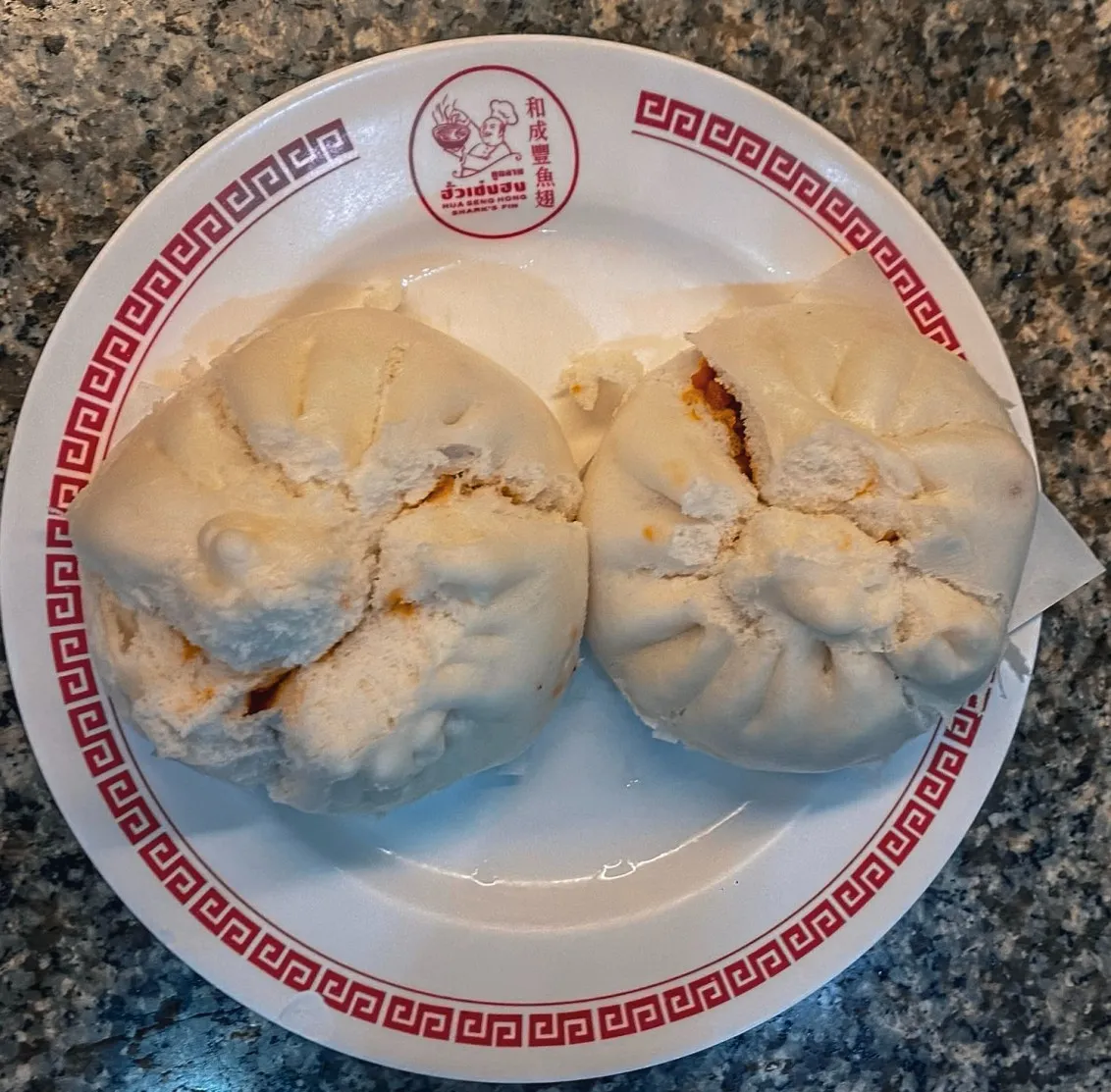
We ordered the roasted duck and egg noodles in a sweet sauce, along with barbecued pork and a char siu pork steamed bun. The duck was rich and fell apart easily, soaked up nicely by the sweet sauce coating the noodles. The barbecued pork had a good char to it, and the steamed bun was soft and fluffy, with the char siu inside striking a nice balance between sweet and savoury.
Sweettime
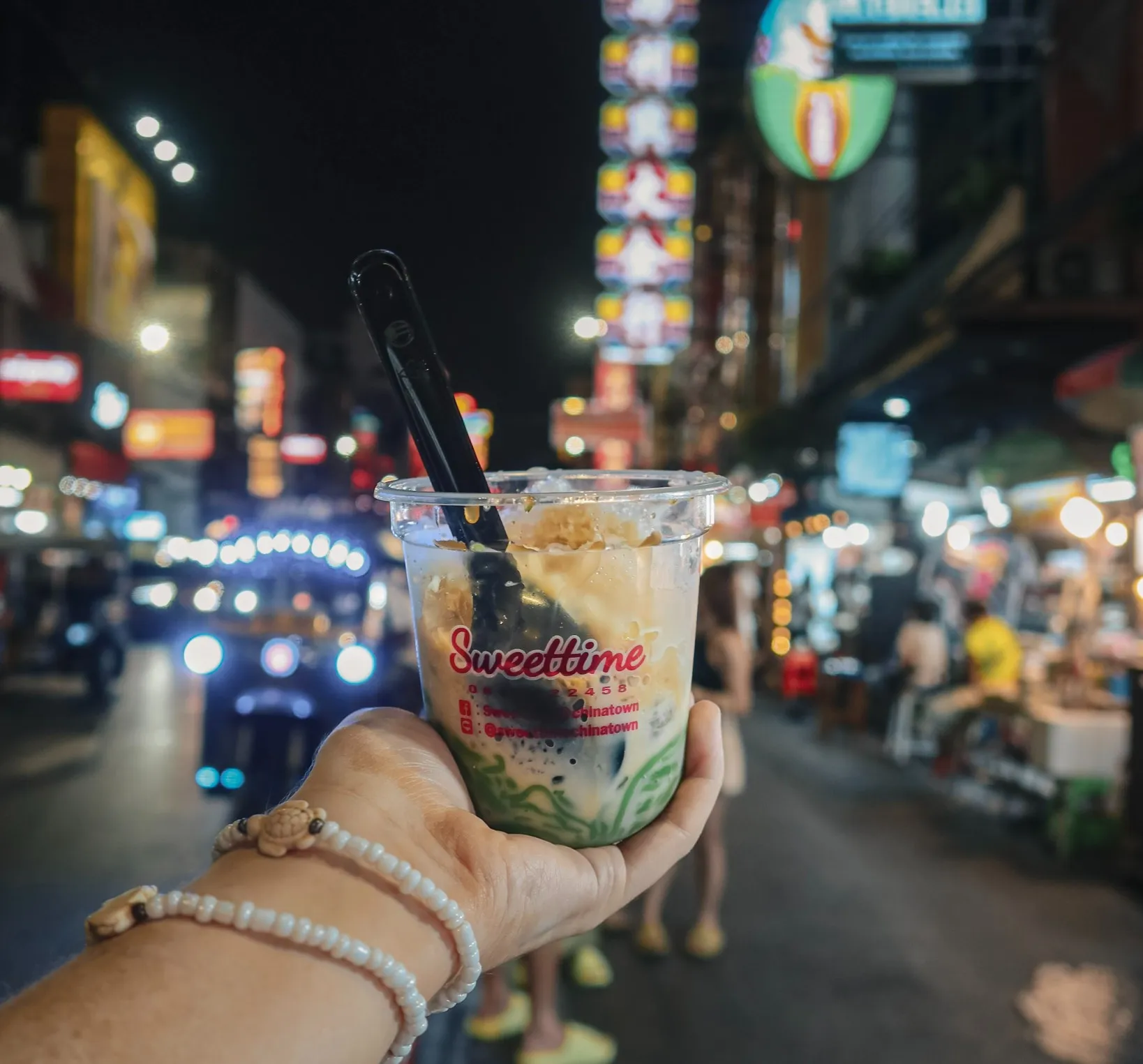
Another place you’ll always find me revisiting in Chinatown. If you’re after something refreshing after all the savoury food, Sweettime is a must. They specialise in cendol, the famous Southeast Asian dessert that’s wildly different from anything you’d get in the West. Expect flavours like bird’s nest (yes, saliva nests of swiftlets), black sesame, bean curd and taro balls.
My own go-to takes a little less courage: Thai pandan noodles in palm sugar and coconut milk. Bright green, soft, chewy, slurp-worthy noodles made from rice flour, floating in sweet coconut milk with crushed ice. It cools me down every single time.
Lhong Tou Cafe
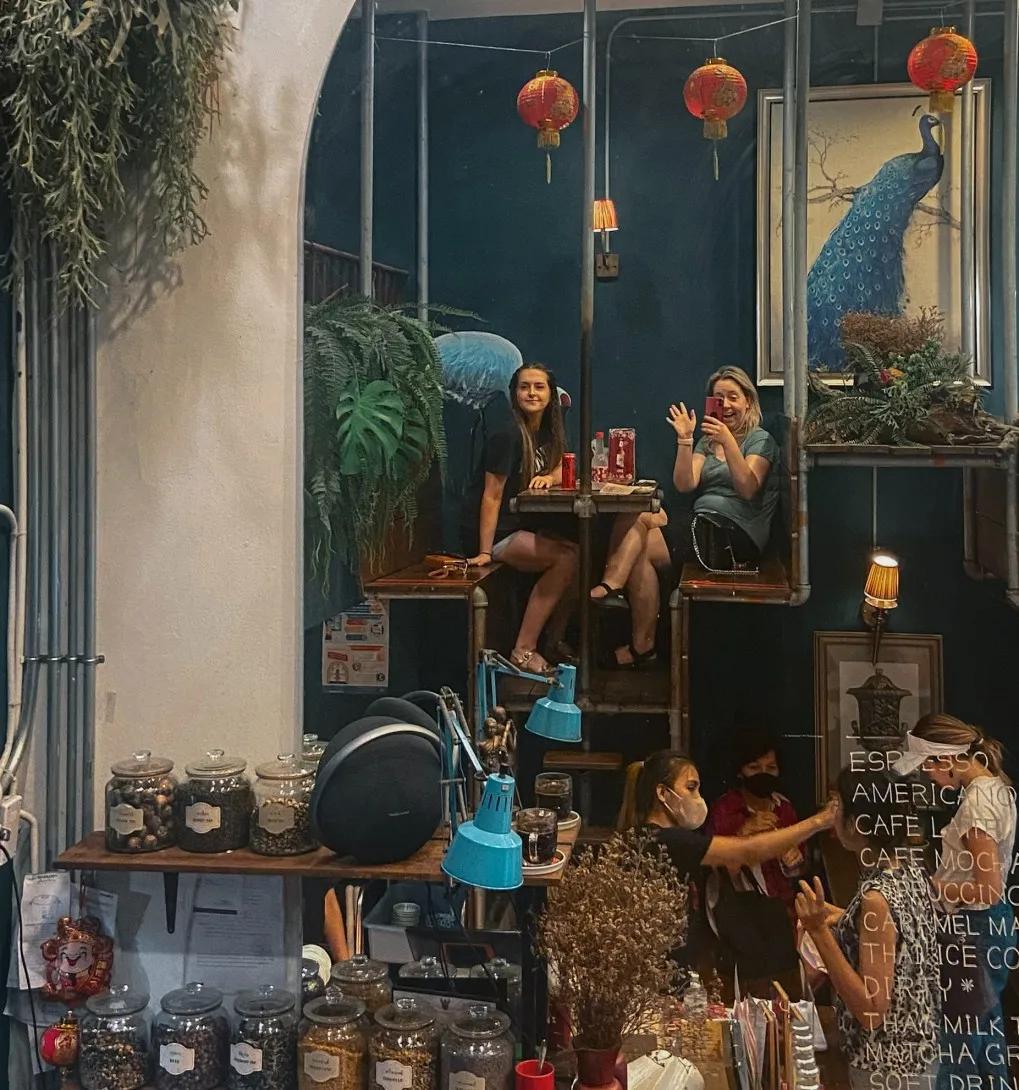
Lhong Tou Cafe is a quirky little spot with cool two-storey seating. The booths are almost like bunk beds, you climb a small set of steps up into yours while other diners eat below you. It’s a great concept, letting them fit far more people into the space than you’d expect, and it’s just something a little different from anywhere else I ate in Chinatown Bangkok.
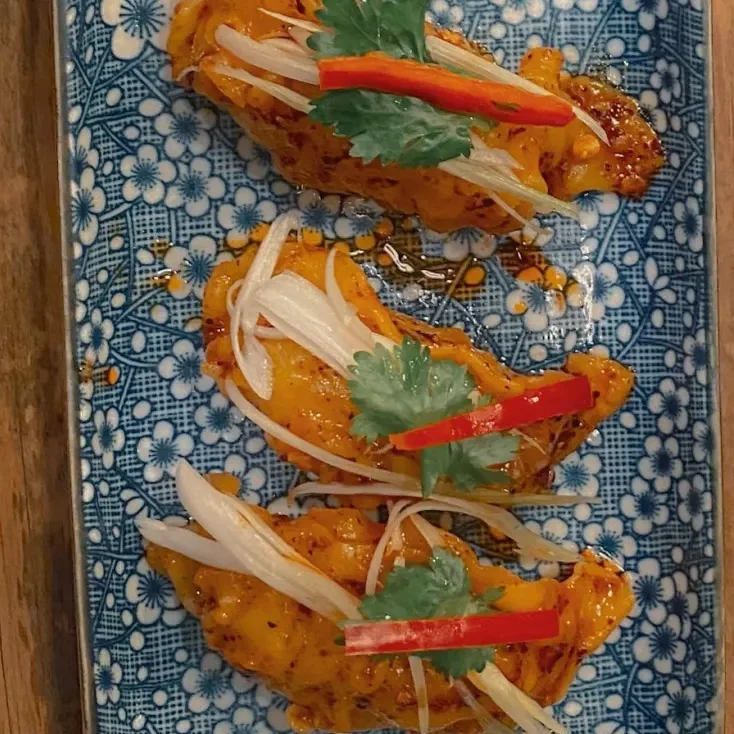
The menu is full of small Chinese dishes like shumai, congee and egg lava buns. We went for the shrimp dumplings and mini bbq buns, both were nice little bites, well seasoned with juicy meat.
Khao Gaeng Jek Pui (Je Chie)
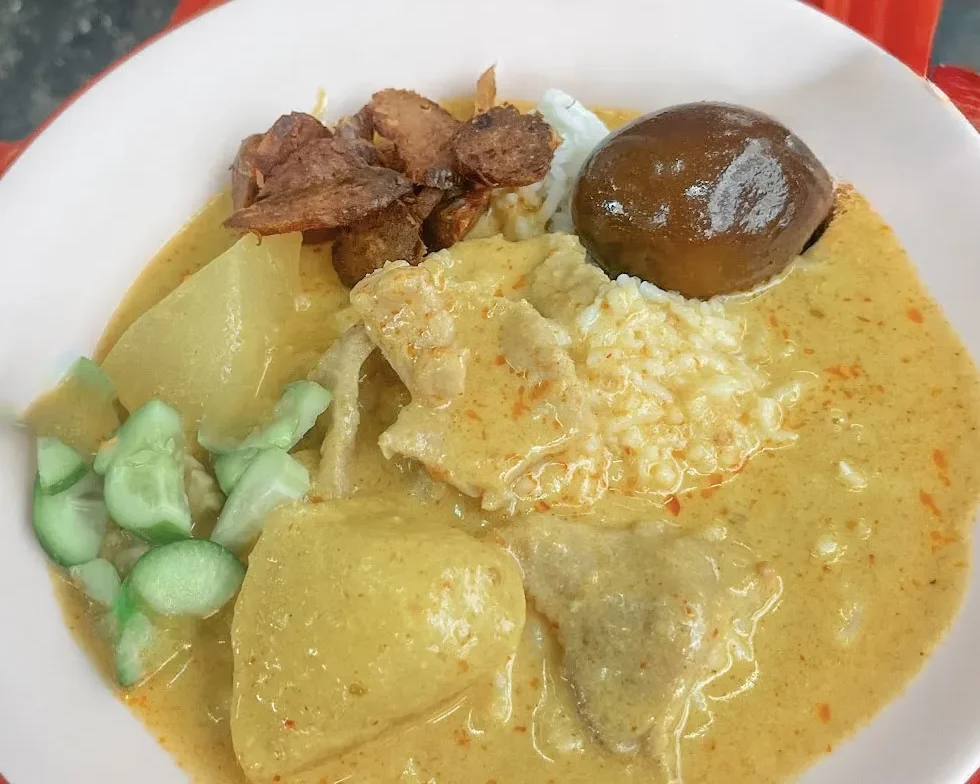
Close to Wat Mangkon Kamalawat is Chinatown’s most famous street food joint, Khao Gaeng Jek Pui (Je Chie). It’s even been featured on Netflix, and it’s easy to see why it’s loved by locals and tourists alike. Tucked down a corner, this place serves authentic Thai curry, and no matter what you order, make sure to try the Chinese sausage too, it’s delicious and unlike anything else in Chinatown.
We tried the yellow curry and the pork panaeng, and both were excellent. The yellow curry tasted closer to an Indonesian curry than a typical Thai one, thick and flavourful, with potato and sliced pork running through it. Grab a seat outside on one of the small red plastic chairs and enjoy your meal there, it’s part of the experience.
Bad Poutine
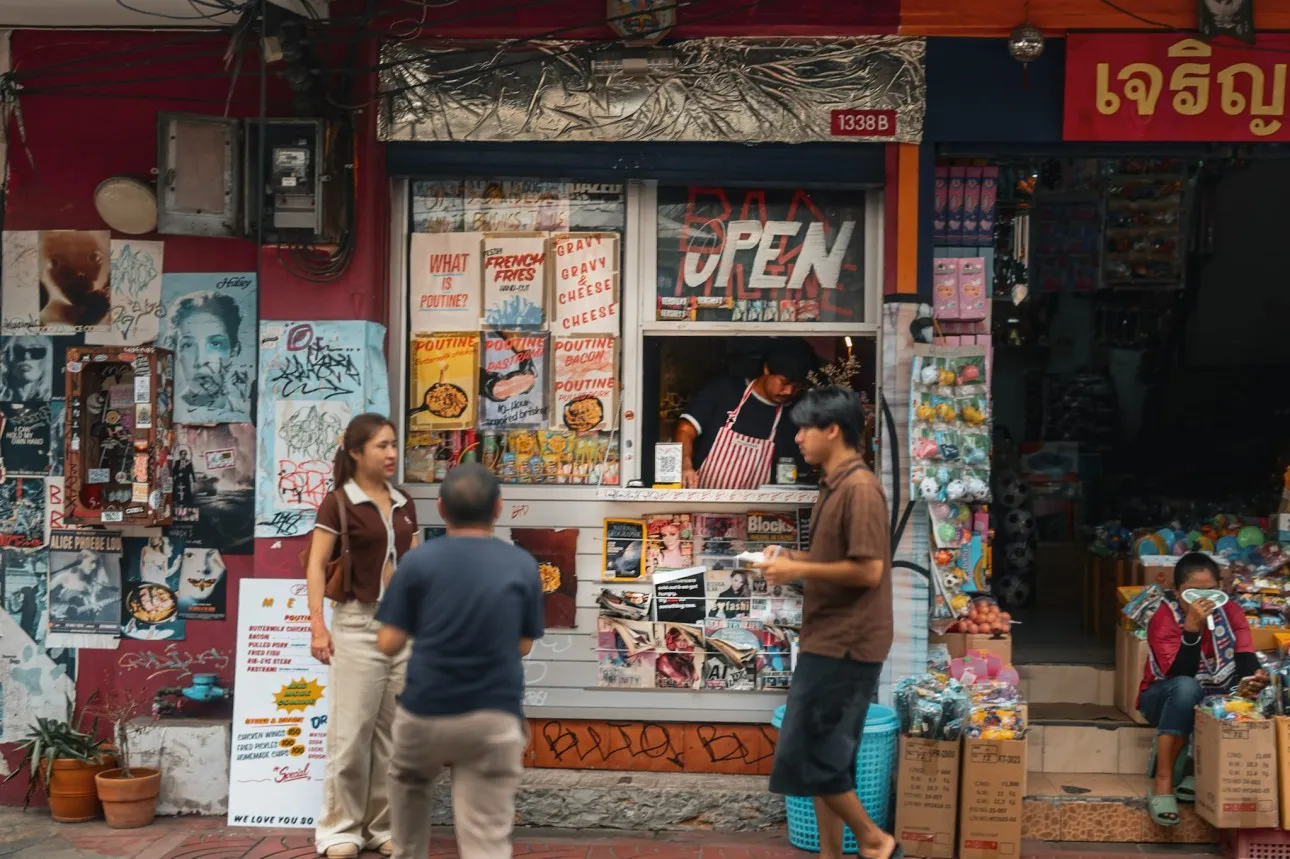
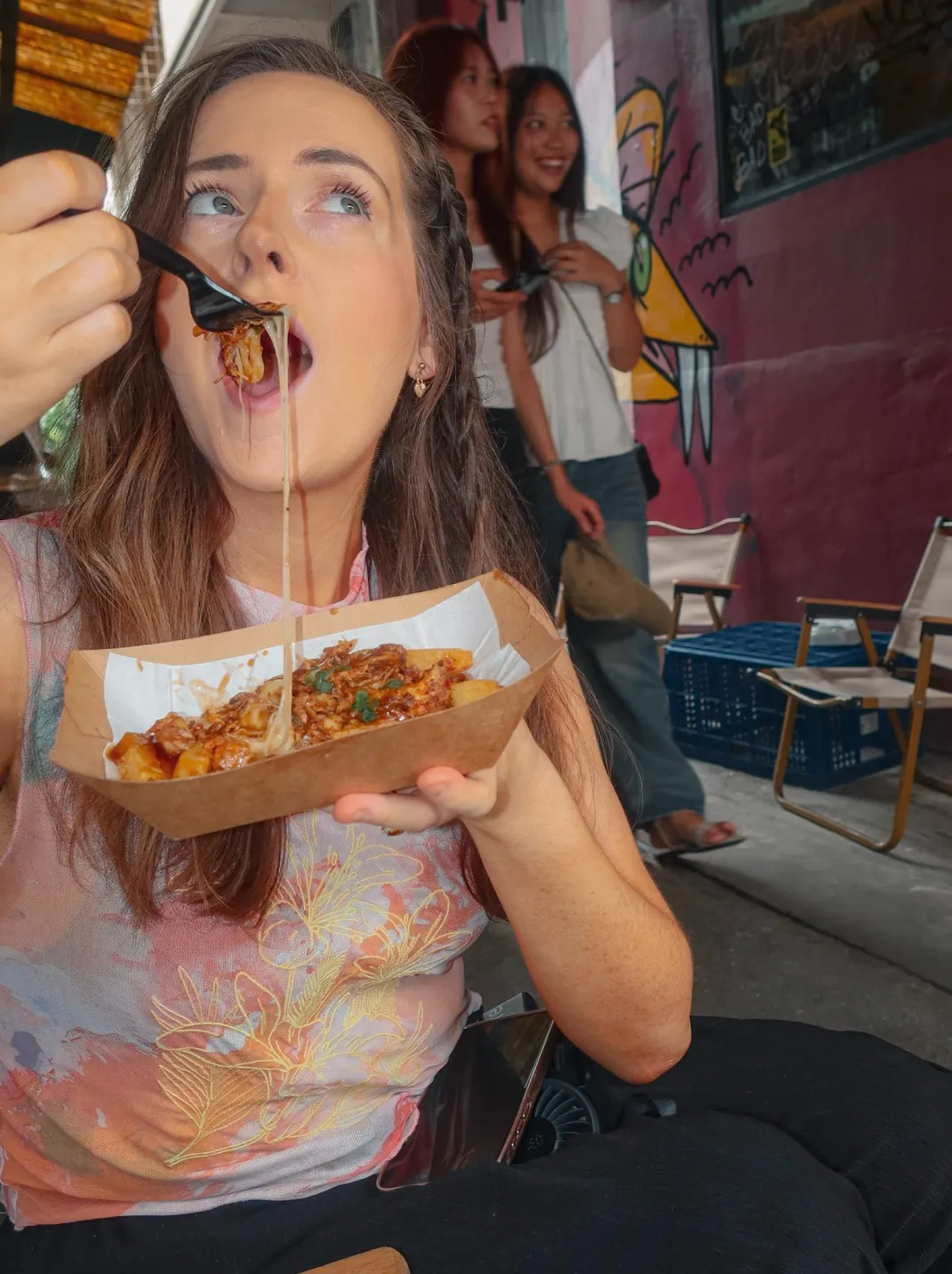
It feels sacrilegious writing about a Canadian dish in a post about Chinatown. But I wouldn’t recommend it if it wasn’t memorable. Bad Poutine in Song Wat is a one-man show, and it’s anything but bad.
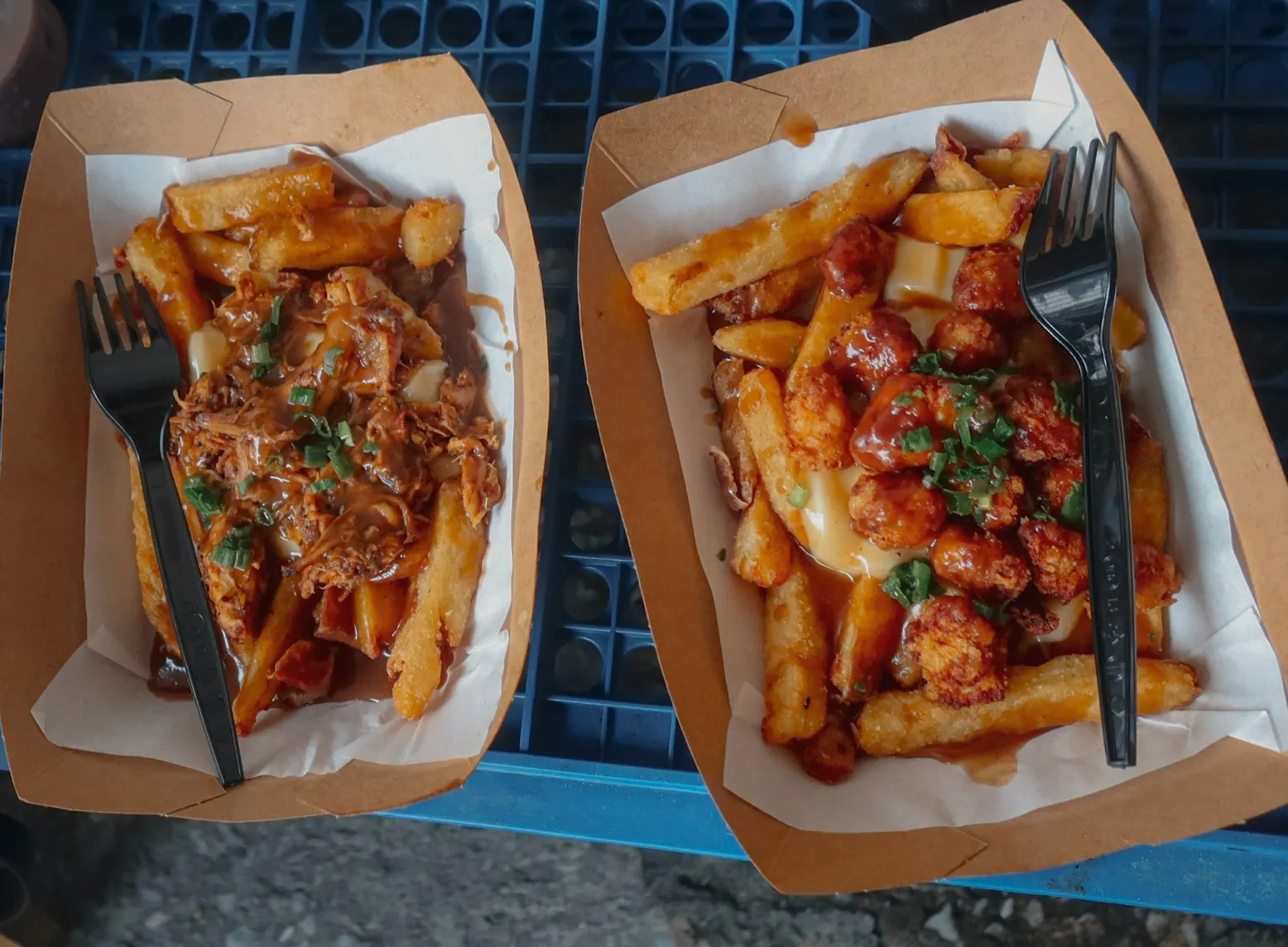
Who would have thought that a little hole-in-the-wall joint churns out some of the best poutine you’ll have in Asia. We ordered the pulled pork and crispy chicken poutine, both were very tasty, exactly what you want from a poutine: crispy fries, thick, flavourful gravy and an epic cheese pull. The toppings aren’t exactly what you’d get in Canada, but that Thai twist is half the fun, and there’s something great about eating it on a tiny stool in an alley, served by a friendly Thai guy who’s clearly having a good time running the whole show himself.
something to know…
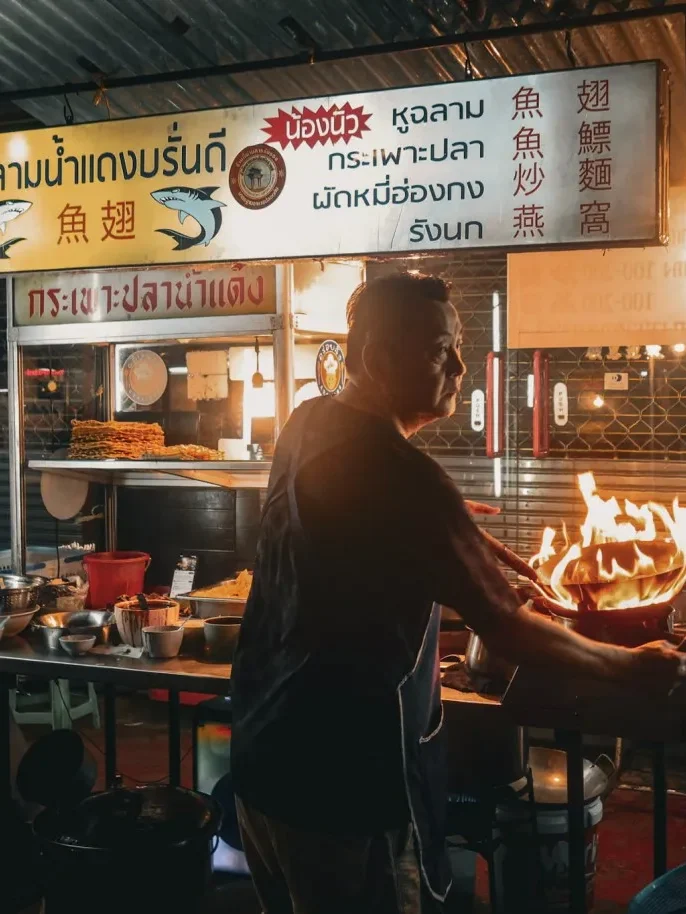
You will see shark fin soup a lot in Chinatown Bangkok night market. This is a dish made of the dried fins of sharks. Although it’s a much loved traditional meal there are real ethical consequences with millions of sharks being killed annually just for their fins, often their leftover carcass is just discarded. There is so much other delicious street food to try throughout Chinatown. This is not to shame the vendors, it’s a cultural norm here, but please be aware.
What To Do In Chinatown Bangkok
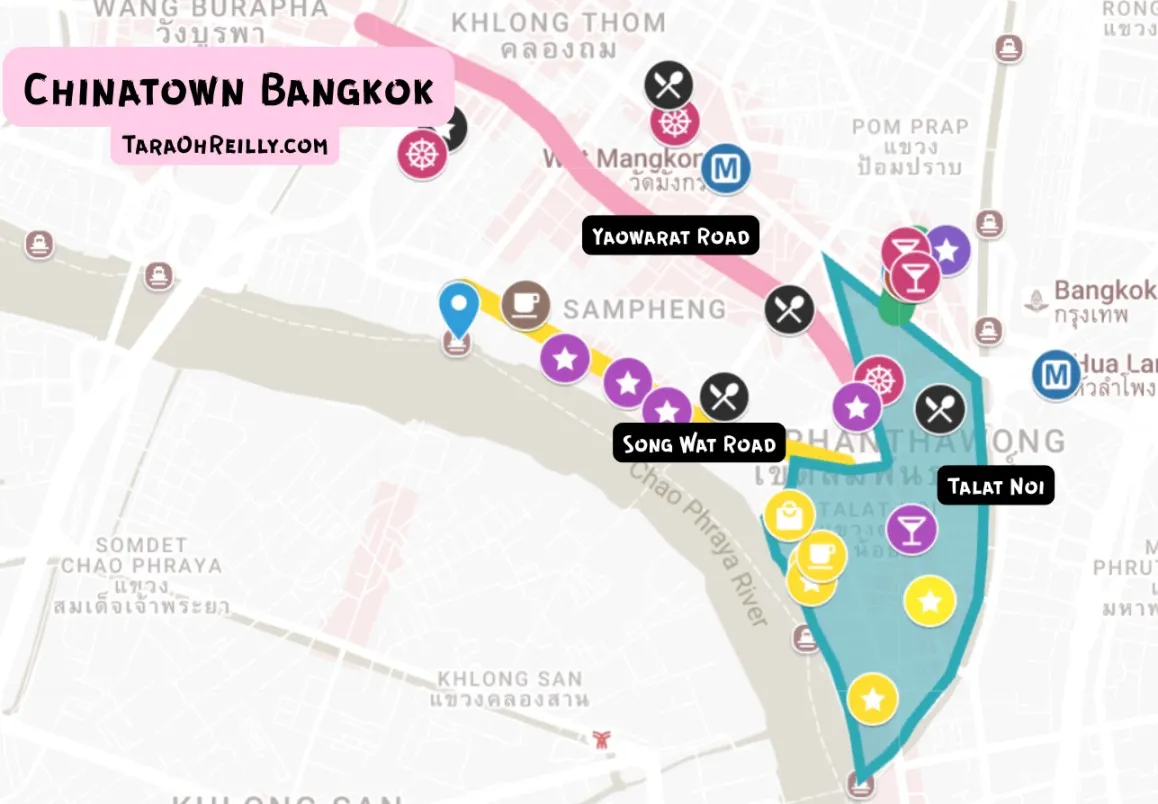
Chinatown Bangkok Map
This map features everything mentioned in this post. You can save it for later to easily find a cafe, restaurant, street or temple.
Song Wat
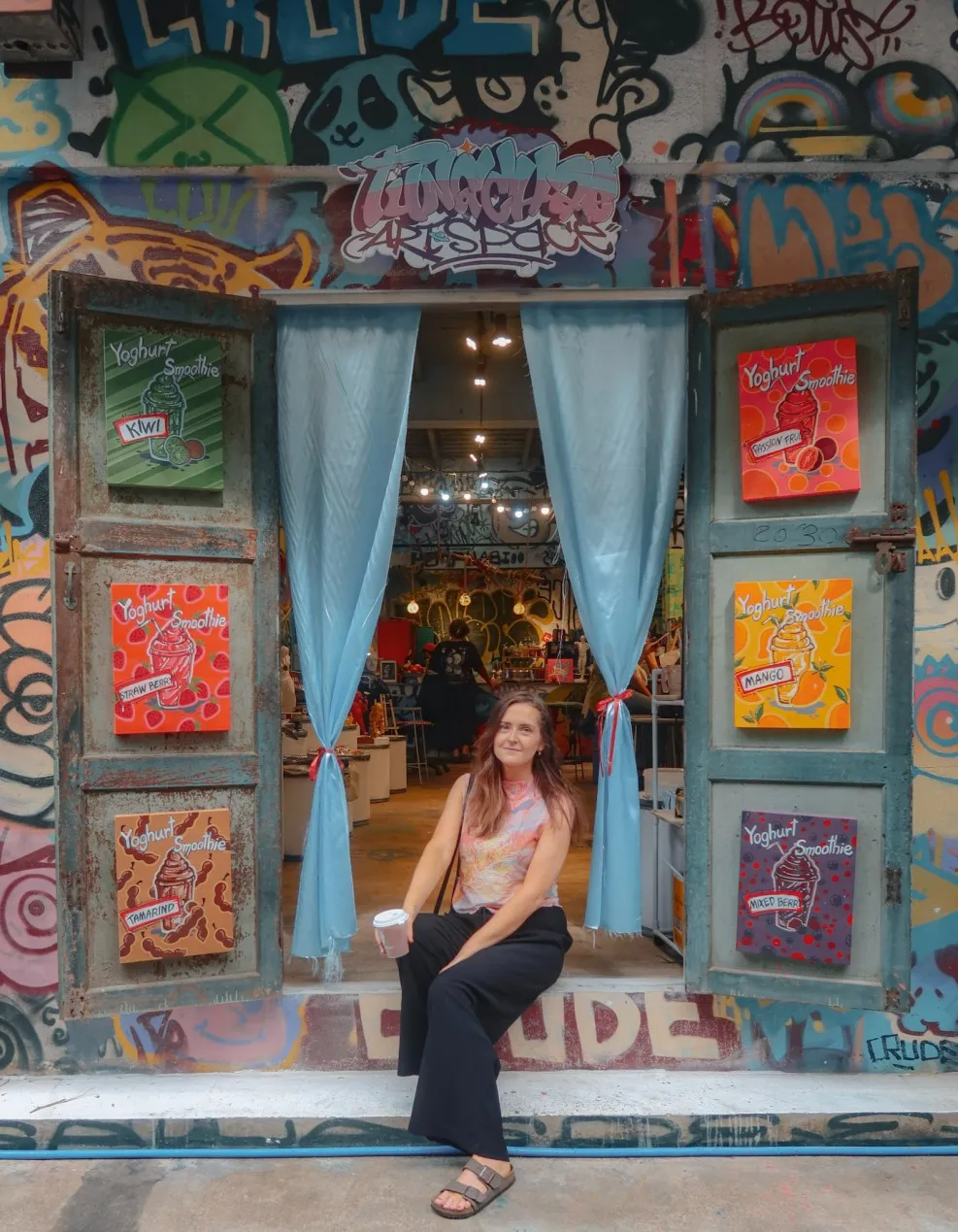
A cool fact about Song Wat Road is that King Rama V personally sketched out the road on a map, the name Song Wat actually translates to “drawing by the King”. Its riverside location made it an original transportation hub for boats carrying produce.
Today Song Wat is a colourful, hipster street that attracts a fiercely cool crowd who are seeking out cute cafes and delicious food against an old world backdrop. TimeOut also named it the 39th coolest neighbourhood in the world (you can check out the coolest street in Asia here).
Song Wat has gone pretty viral over the last few years, thanks to a 2022 initiative by entrepreneurs to revitalise the area. It worked, people are visiting in their droves. This little 1.2 km street is packed full of historic Chinese-style buildings that have been renovated into aesthetic cafes and Michelin starred restaurants.
In terms of where to eat along Song Wat Road, I recommend the pulled pork poutine from Bad Poutine, an iced chocolate drink from Choch, and a coffee from Local Boys.
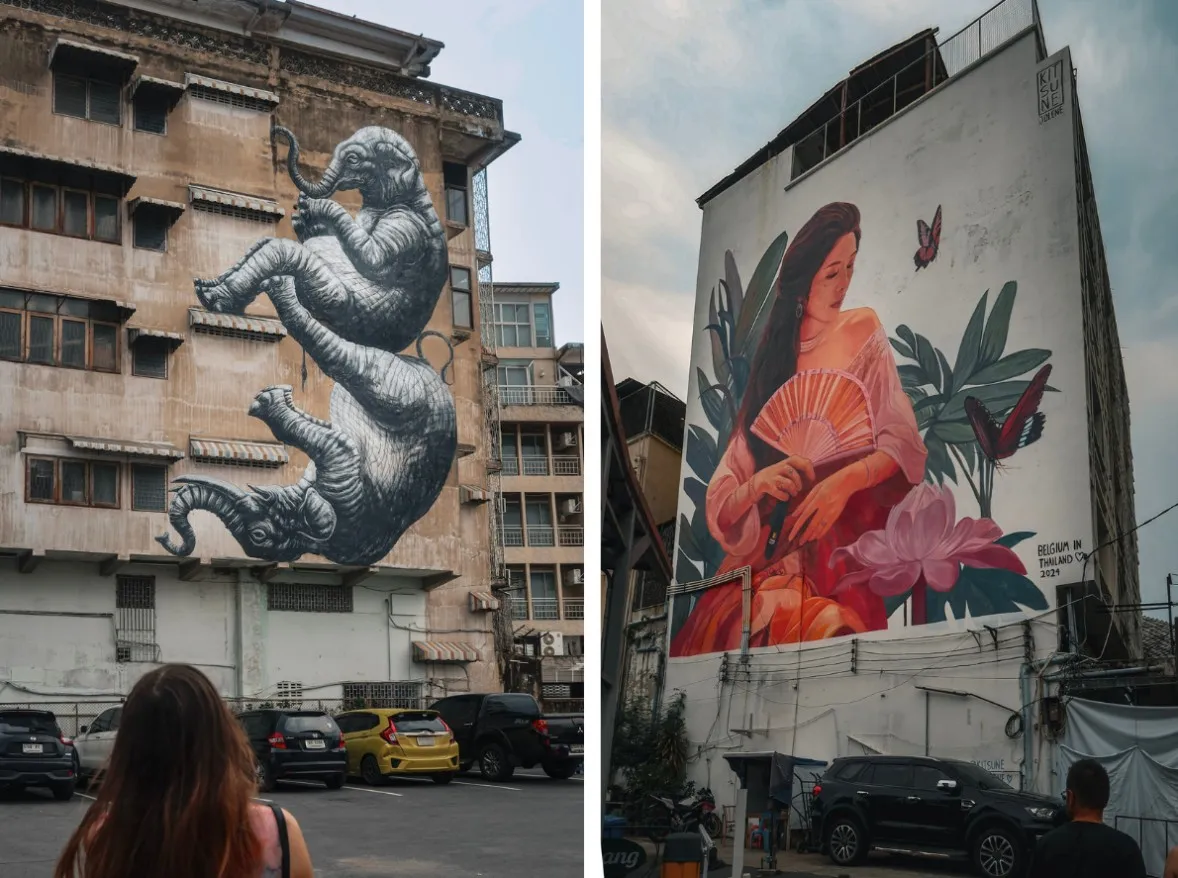
Aside from tasting all the delicious food and drink, Song Wat has a few impressive murals that breathe new life into this neighbourhood. The ROA upside down elephant murals and a colourful image of a Thai lady are two must check out pieces.
Talat Noi
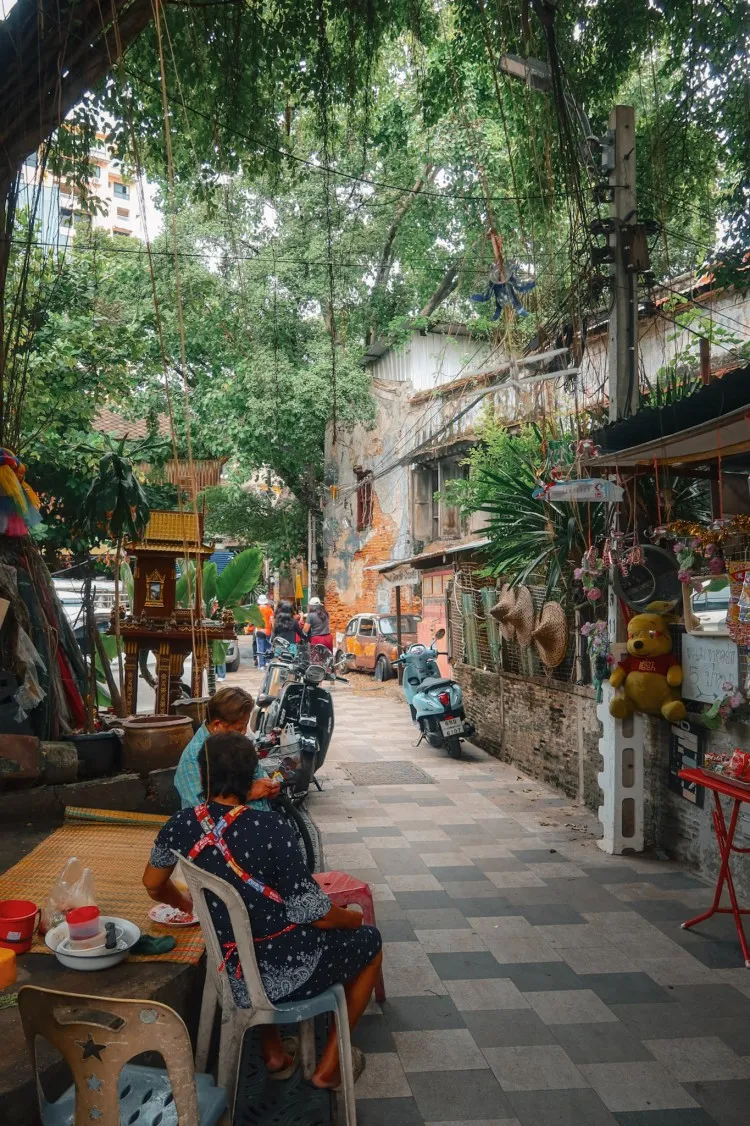
Talat Noi (also known as Talad Noi) is a lesser known neighbourhood in Chinatown that has a unique charm. Made up of a few narrow alleyways, Talat Noi features bright street murals against its ramshackle buildings.
There is a relaxed atmosphere with art hidden around every corner of the quiet alleys that takes you away from the big city feeling that Bangkok normally leaves you with. Similar to Song Wat, the blend of old and new is ever present. Many old mechanic houses are still standing, which creates a gritty and edgy atmosphere while you’re weaving through the art.
As one of Bangkok’s oldest neighbourhoods, the first settlers were the Portuguese from Ayutthaya who built the oldest place of Christian worship in Bangkok, called Holy Rosary Church.
Following this, in the late 17th Century Chinese immigrants moved in and changed the area into a booming trade area, this is where the name Talat Noi comes from, it means “little market”, although there is no market in Talat Noi today.
Although Talat Noi is a small neighbourhood, you could easily spend a full morning here leisurely exploring the alleyways while dipping in and out of teahouses and cafes.
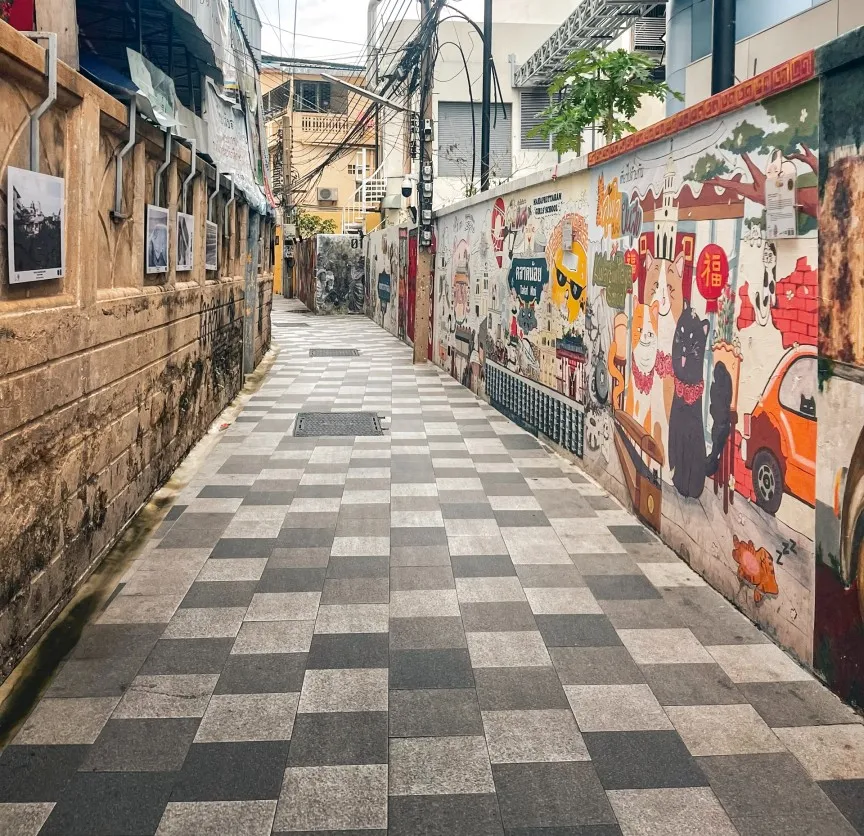
Things to do in Talat Noi
- Mansion Son Heng Tai: the oldest building in Bangkok dating back to the 1800’s.
- Snap a picture of the antique turtle car
- Taste the famous crispy pork & bbq pork rice at Khao Moo Daeng Si Morakot. This business has been around for 80 years so you know it’s good!
- Go for some tea at Baan Chim Cha or Citizen Tea Canteen
- Have a creative coffee in Photohostel & Photocafe (dirty cheesecake coffee is soo good!)
- Browse Vanich House for a unique souvenir
- Football fan? Drop by the Liverpool Mural
Chinatown Gate
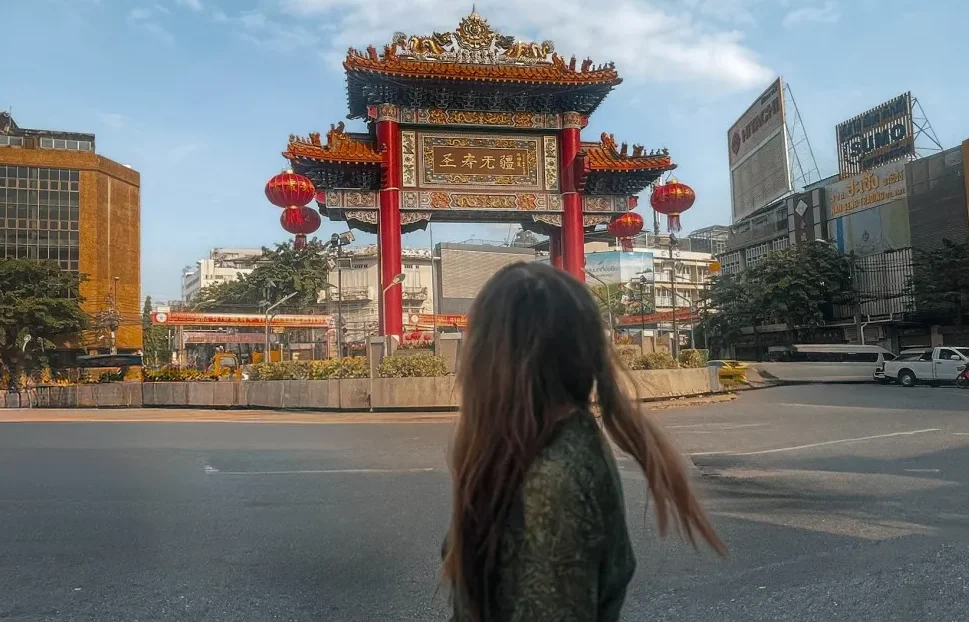
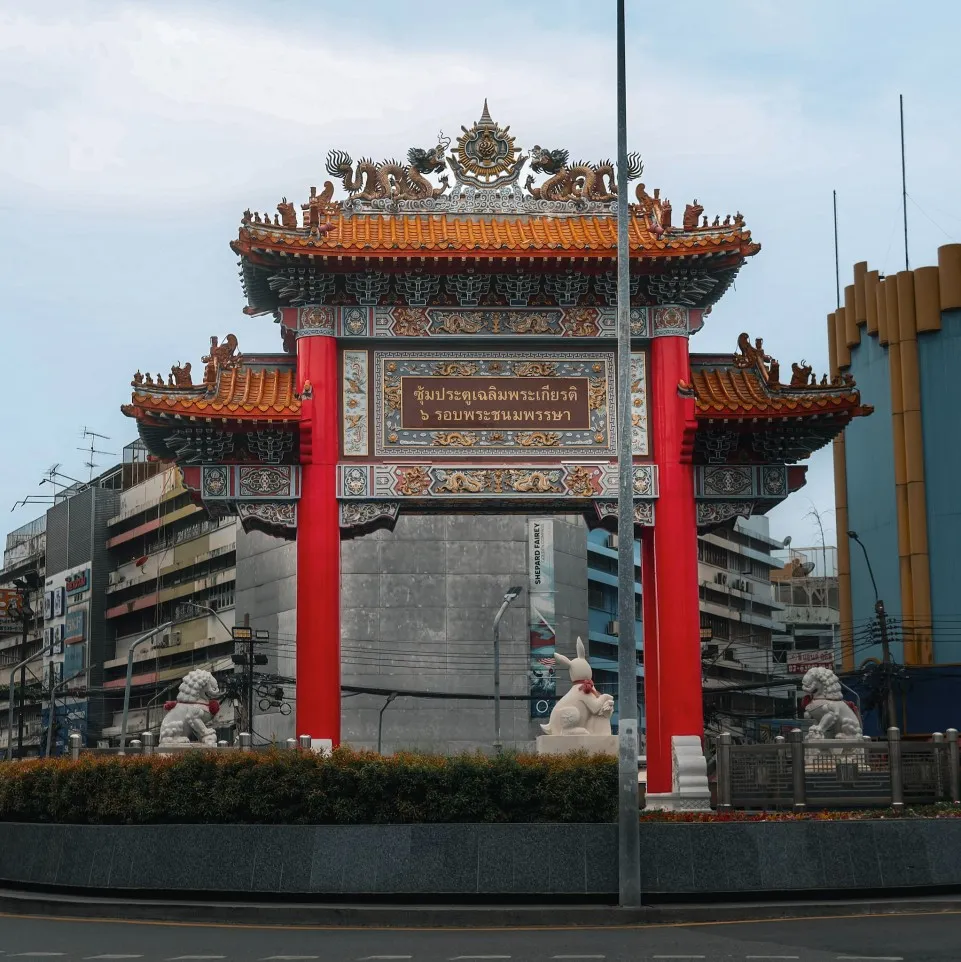
Nothing says welcome to Chinatown Bangkok like its big and bold red iconic gate. The gate states “Sheng Shou Wu Jiang” in Thai, which means “Long Live the King”. Built in 1999 for King Bhumibol’s 72nd birthday, although I cannot find any exact measurements for it online it’s impressive, large and well worth a visit.
Snapping a photo is no easy feat, it’s a very busy area with cars and scooters constantly whizzing by, but such is life in Bangkok. If you wait a while there should be a quick break in the traffic where you can take a photo or two.
Bangkok Chinatown Temples
Wat Trai Mit (Golden Buddha)
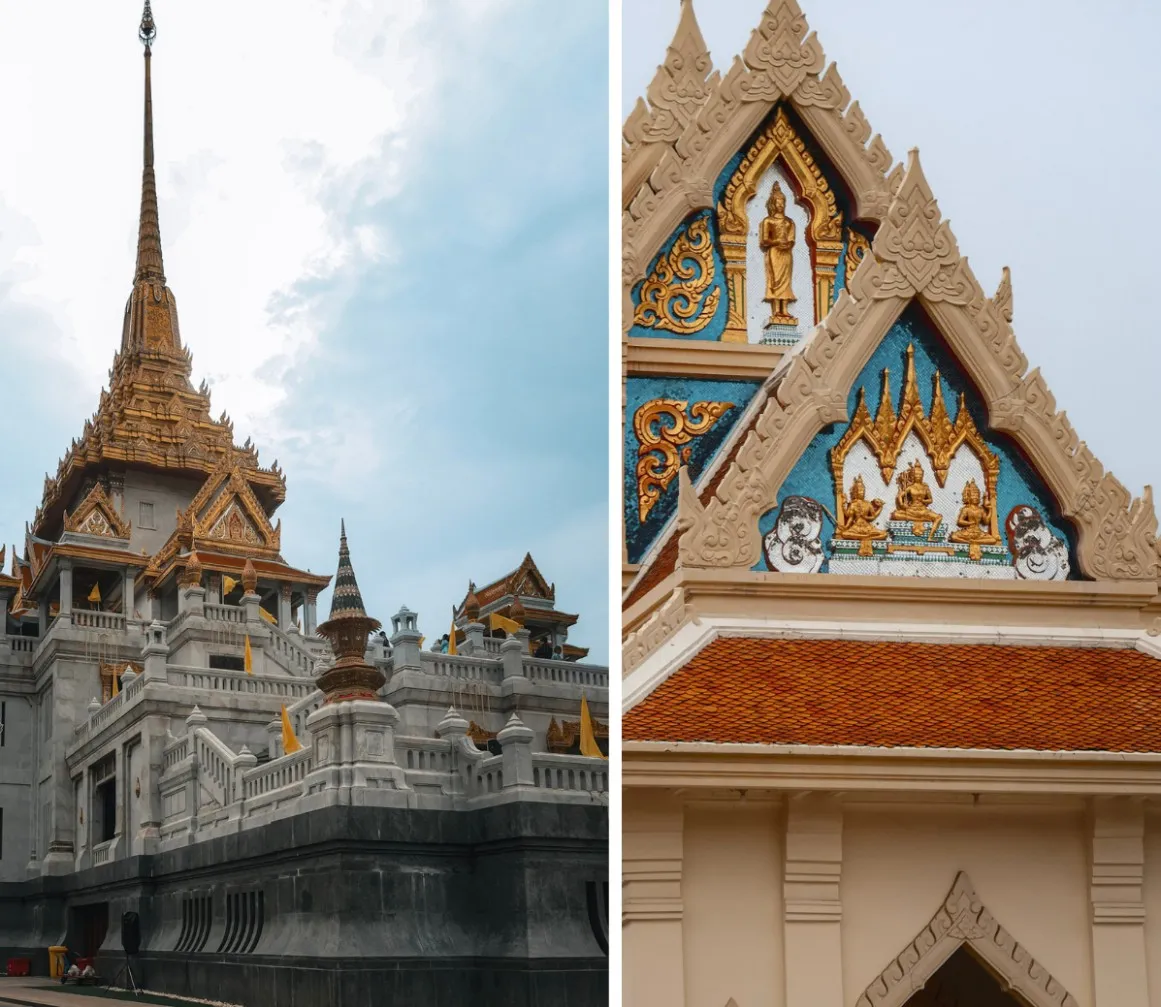
Made of marble with a golden roof, Wat Trai Mit (also known as the Golden Buddha Temple) houses a spectacular secret. Inside is a 24-carat solid gold Buddha statue weighing a hefty 5.5 tons and worth a staggering $250 million.
The Golden Buddha’s story is as interesting as it looks. It remained hidden under plaster for centuries to protect it from invaders, and was only accidentally discovered in 1955. The Golden Buddha is located on a terrace on the 4th floor, you will need to pay 100 THB to see it. From the terrace you have views across Chinatown. Additionally, there is a small museum downstairs.
Wat Mangkon Kamalawat (Wat Leng Noei Yi)
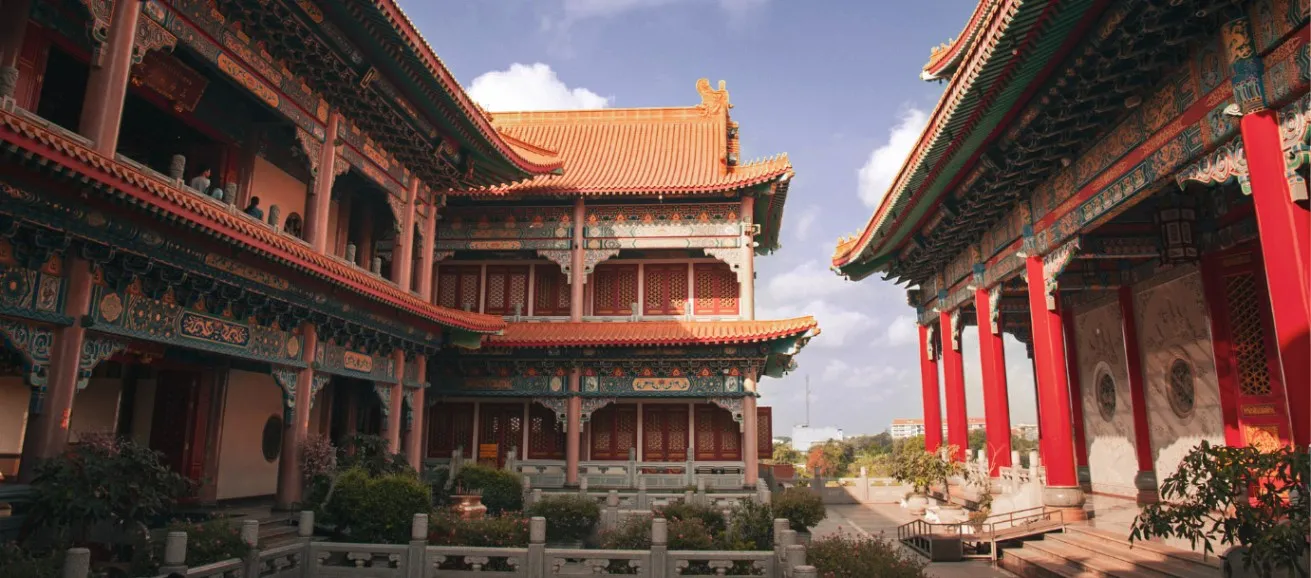
Wat Mangkon Kamalawat, founded in 1871, is Bangkok’s largest and most important Chinese-Buddhist temple. Known as the Dragon Lotus Temple, it houses over 50 deities for worship. It is said that if you are not born in a year that is lucky you can visit here to pray for the bad luck to be dispelled from you.
The temple is serene, idyllic and beautiful with hundreds of red lanterns hanging at the front along with dragons and Golden Buddha statues. If you visit during the Chinese New Year or the Vegetarian Festival it’s even more vibrant with ceremonies, offerings, and firecrackers.
Please note that incense is banned here in order to maintain a healthy environment. Another brilliant aspect of this temple is the main hall is air conditioned, which is a welcome feature to escape the Bangkok heat for a while.
Wat Mangkon Kamalawat is located just 20 metres from Watmangkorn MRT station.
Wat Chakkrawat Rachawat Woramahawihan (Wat Sam Pluem)
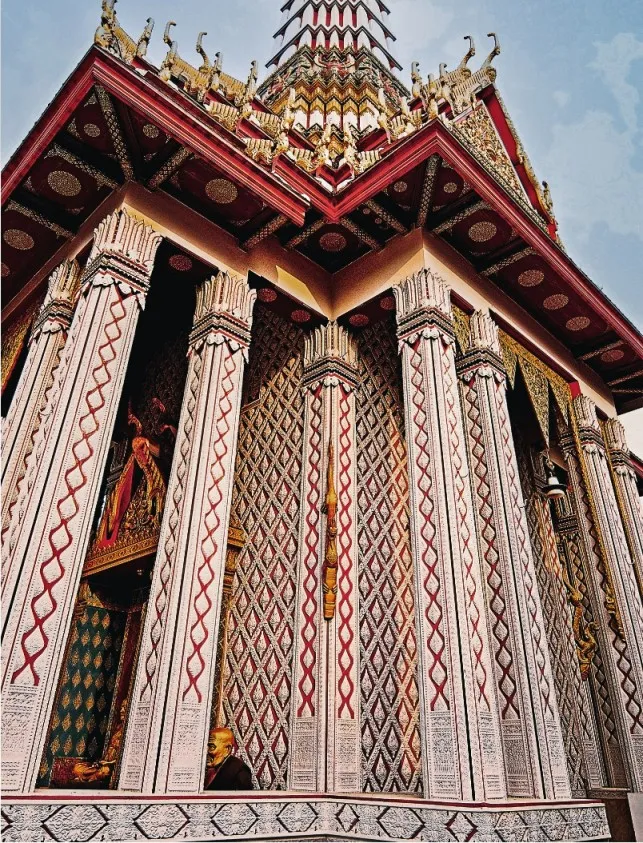
Unlike the bustling Chinese-Buddhist temples nearby, Wat Sam Pluem offers a peaceful Thai temple experience with fewer crowds. Local belief holds that business owners and those seeking financial prosperity should pray here for good fortune.
The temple is famous for housing several crocodiles cared for by the monks. Legend says a crocodile was once found hiding behind a monk’s quarters, inspiring the tradition. The crocodile enclosure is safely covered with green netting for visitor protection. As always, expect the unexpected in Thailand.
Bangkok Kunsthalle
This is a new major art space in a grungy former printing factory that showcases contemporary art through exhibitions. It’s worth noting there is strong AC!! The exhibitions are always changing so check here on what’s showing when you’re visiting.
Shopping In Chinatown
Aside from the temples and street food, Chinatown Bangkok is also one of the city’s best shopping areas with markets, specialty stores, and authentic Chinese goods. Prices are typically affordable and you never know what you might find.
Gold Shopping District
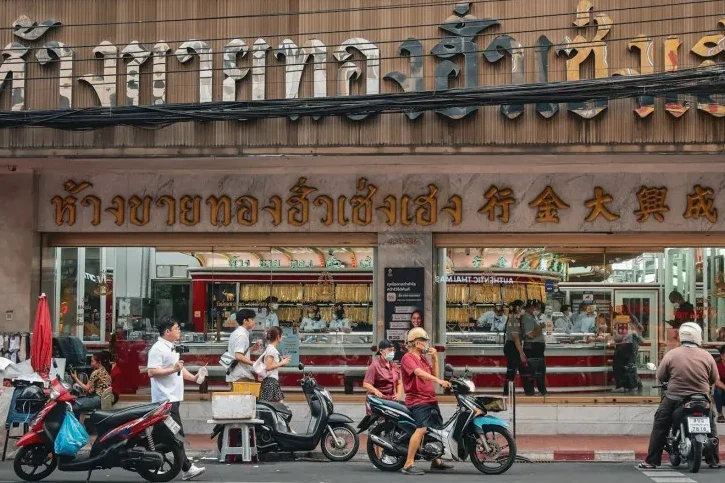
Gold is important in Thai culture, you can see it embellished on temples throughout the country, and locals often wear it. It symbolises power, wealth, and spiritual protection.
If you are looking to make a purchase there are over 40 gold shops in Chinatown, it’s referred to as “gold land”. Many of these gold shops line Yaowarat Road (you can’t miss them with their bright red storefronts and glimmering gold displays) but also don’t be afraid to explore the side streets to seek out some special pieces. Don’t forget to negotiate, haggling is expected here.
Hua Seng Heng and Thongbai Yaowaraj are both reputable sellers that have been around a long time.
Sampeng Market
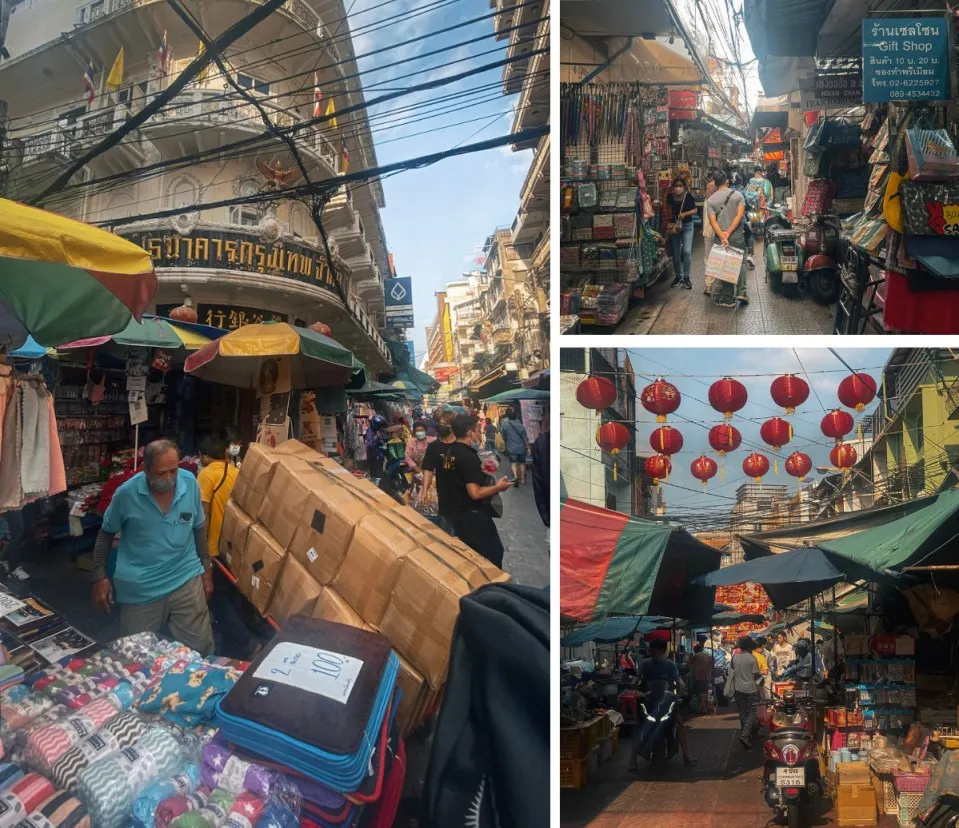
Open until 5 PM, Sampeng Market is the main daytime Chinatown market Bangkok experience, consisting of long narrow alleys lined with many stalls selling cute accessories, toys, bracelets, shoes, clothes and of course many many pairs of elephant pants.
Although not all, many of the stalls are wholesale so vendors will try to sell you at least 3-5 items. However, if you’re purchasing earrings or something small this isn’t so bad and the prices are still exceedingly low.
Even if you don’t want to buy anything it’s a fun place to experience Chinatown in the day. It’s busy, loud and vibrant with scooters weaving around you, it’s organised chaos at its finest.
Mega Plaza Saphan Lek
Basically otaku heaven spread across 6 floors. You’ll find anime figurines, toys, trading cards, soft toys, and high end figures, pretty much every collectible imaginable is here.
They’ve got a large camera section too, selling everything from vintage to new equipment. I actually sold an old camera to one of the stalls here and got a fair price, so they know their stuff.
Each floor has a huge variety and there’s also a decent cheap food court on the ground floor.
Traditional Chinese Medicine Shops
Also known as Chinese pharmacies, Traditional Chinese Medicine shops are where locals come for herbal and alternative remedies. Acupuncture, diet, herbal therapy, meditation, physical exercise, and massage are the types of treatment that Chinese Medicine prescribes. It requires some open-mindedness from those who are not used to these practices.
The Chinese medicine shops in Yaowarat are centuries old, as you walk through their doors the rooms are dark with intense medicinal scents permeating the space. The counters are lined with mysterious jars containing preserved specimens, colourful dried herbs, extensive ginseng displays and rows of traditional remedies.
The traditional consultation process can take 30-60 minutes, involving pulse reading, tongue examination, and comprehensive health history discussions. Although English is widely spoken around Bangkok, be prepared that your Chinese medicine pharmacist may not be fluent in it. Therefore, equip yourself with Google Translate.
Chinatown At Night
Soi Nana
Tucked away in Chinatown’s backstreets, Soi Nana has quietly become one of Bangkok’s most stylish nightlife spots. Not to be confused with the rowdy Nana Plaza in Sukhumvit, Soi Nana offers a more sophisticated kind of night out.
This small unassuming alley in the day looks worn down, however at night transforms into a chic cocktail laneway with trendy bars lining each side. The perfect place to recuperate after an evening tasting all of Chinatown Bangkok street food.
These are some good bars to visit:
- Teens Of Thailand: first gin bar in Thailand
- Wallflowers Upstairs: by day it’s one of Bangkok’s best cafes but by night it’s a laidback cocktail bar with a cute rooftop
- Asia Today: this bar bases its cocktails on local honey. Buzzing in charm and atmosphere!
Gen Z Rooftop Bar
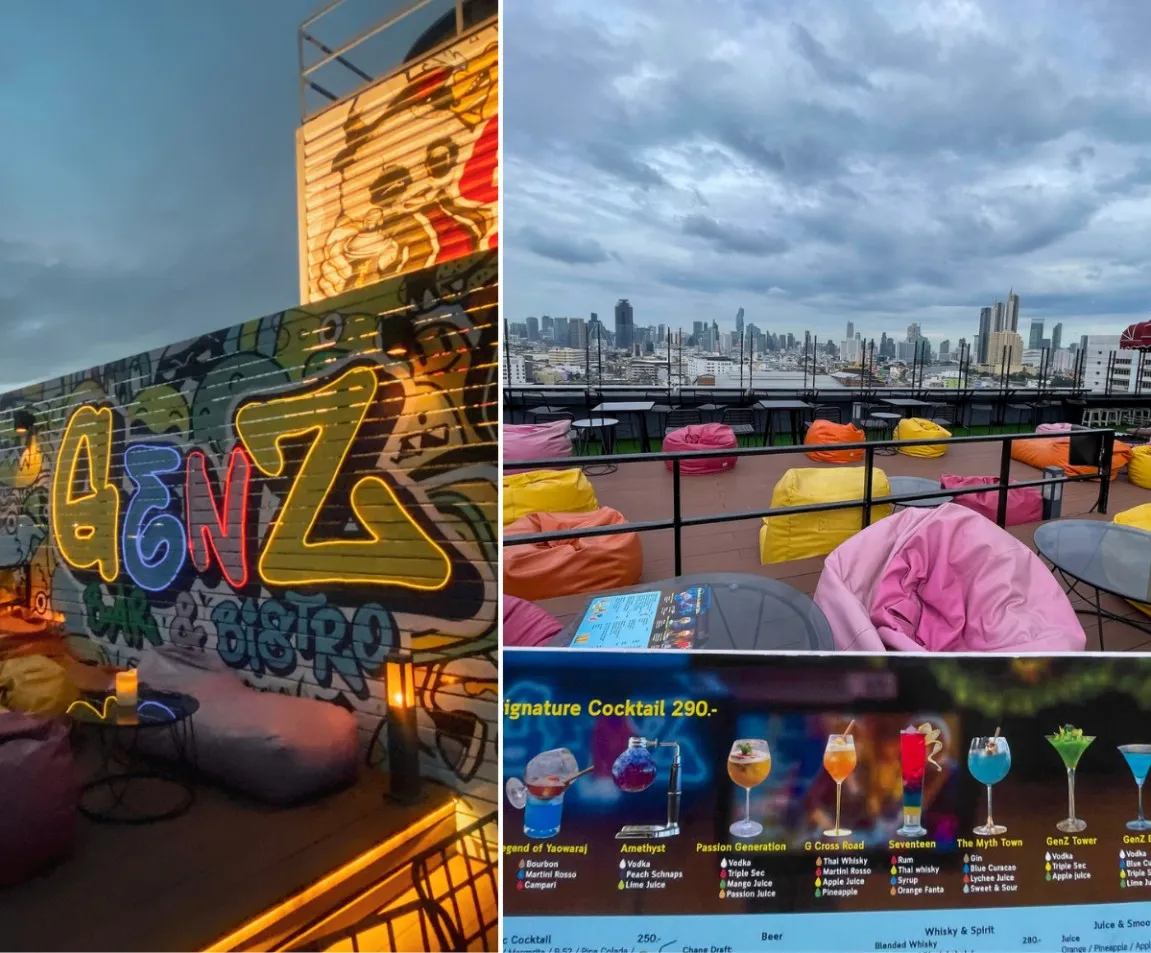
Although Chinatown Bangkok isn’t known for rooftop bars like Silom and Sukhumvit, you’ll find one of Bangkok’s best rooftop bars here: Gen Z, perched atop the Grand China Hotel. This 16-story rooftop bar offers serene sunset views over Bangkok with surprising clarity.
While many Bangkok rooftop bars tower at 50+ stories, Gen Z’s lower height actually provides better detail, you can actually distinguish individual buildings and street life rather than seeing everything as distant specks.
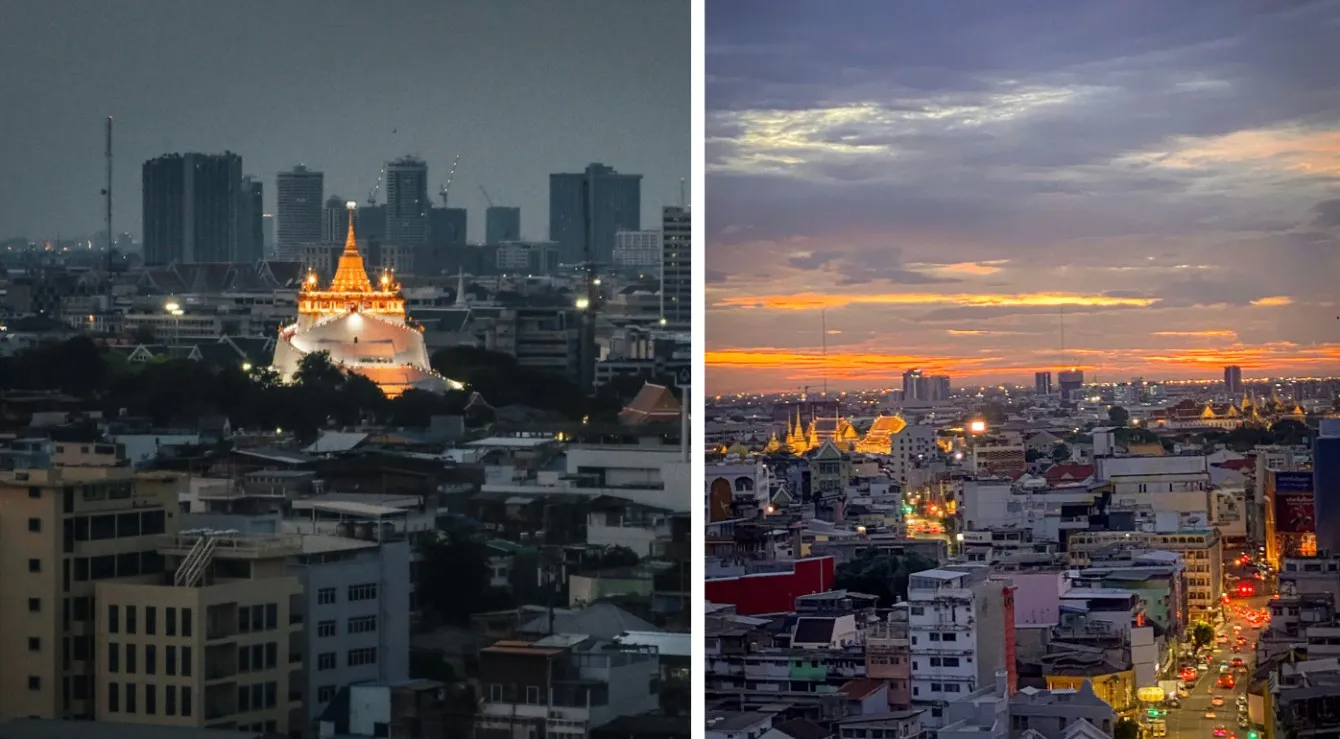
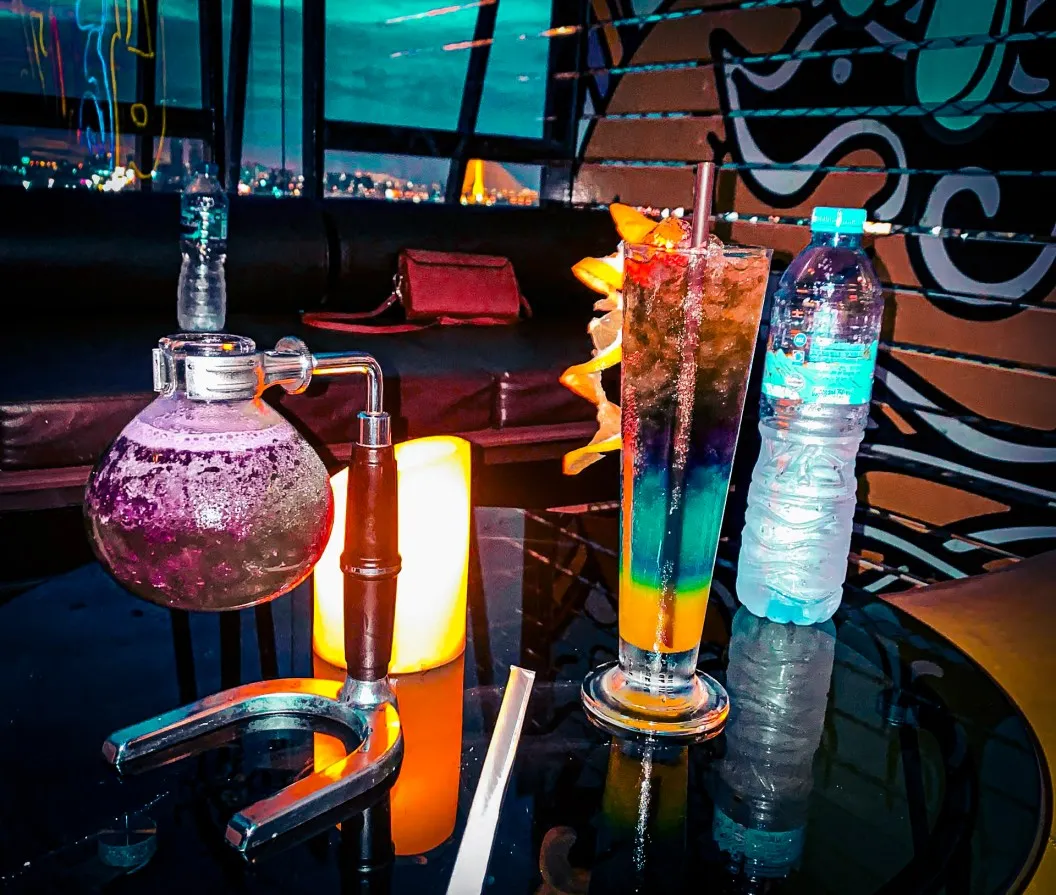
The vibes here are also really chill, it’s more laidback compared to usual rooftop bars in Bangkok with big comfy and colourful beanbags to lounge on and lively music playing.
The cocktails are creative and taste as good as they look. I’ve been here 3 times (I told you it was good) so sampled much of the menu. I recommend the Amethyst and Seventeen, both delicious!
100-Bit Barcade
If you’re looking for something completely different from the usual Bangkok bar scene, head to 100-Bit Barcade, a gaming bar in Talat Noi. It’s every 90s kid’s dream, a two-floor pub packed with classic consoles like Nintendo 64, PlayStation, Gameboy, and even a Commodore 64.
You just need to buy at least one drink per person and then get unlimited access to all the games, so you can spend hours battling it out on Street Fighter or racing through Mario Kart without worrying about feeding coins into machines. The game themed cocktails are a nice touch, and you can even choose the music playlist while you’re there.
The setup is perfect for groups with downstairs housing all the retro games, while upstairs is a jazz bar if you want to chill out between gaming sessions.
It’s open 6 PM onwards, six nights a week (closed Mondays), which gives you plenty of time to relive your childhood gaming glory days. The cosy atmosphere is perfect after a day of shopping, temple hopping and street food in Bangkok.
Chinatown Bangkok Festivals
- Chinese New Year (late January to mid-February): The largest Chinese New Year celebration in Thailand featuring dragon dances, lion performances, firecrackers, red lanterns, and street food. Yaowarat Road transforms into a walking street and is a must if you’re in Bangkok during this time.
- Mid-Autumn Festival (15th day of 8th lunar month (September/October)): Moon cake festival celebrated by Chinese community with family gatherings and lantern displays.
- Vegetarian Festival (9th lunar month (September/October)): Chinese-Thai community observes strict vegetarian diet for 9 days, with temple ceremonies and yellow flag displays throughout Chinatown indicating participating restaurants.
- Lantern Festival (15 days after Chinese New Year): Marks the end of the Spring festival, the 15th day of the New Year, and the first full moon day. The streets are full of colourful lanterns with houses and workplaces decorated with fancy lanterns.
1 Day Chinatown Itinerary
- 10 AM: Arrive at Mangkon MRT and walk 2 minutes to Wat Mangkon Kamalawat.
- 11 AM: Head to Chinatown Gate for a quick pitstop on your way to Wat Trai Mit
- 12 PM: Explore the alleys of Talat Noi stopping at a teahouse for a rest
- 1 PM: Then, head to Songwat for a coffee and a bite to eat in one of the many aesthetic cafes. Then, find the famous street murals.
- 3 PM: Stop by Wat Chakkrawat Rachawat, the Thai temple with crocodiles
- 3:30 PM: Browse the busy stalls in Sampeng Market
- 5 PM: Watch the sunset at GEN-Z bar
- 6:30 PM: Spend the night trying street food along Yaowarat Road. If you have energy left, visit a bar on Soi Nana.
Thank you for reading this what to do in Chinatown Bangkok guide. Keep reading for FAQ’s or let me know in the comments below what you love about Bangkok’s Chinatown.
Bangkok Chinatown FAQ
Yes, the street food in Thailand is not only super tasty but it’s clean with vendors taking the utmost care. If you feel nervous to try some street food then a good rule of thumb is to go to the stalls with a queue, especially with locals. Queues mean the food is being turned over quickly rather than just sitting there
Like most of Bangkok, Chinatown is safe with minimal levels of crime occurring. Just take the usual precautions and keep an eye on your belongings in the rare event of a pickpocket.
For solo female travellers, as a general precaution I would just advise not going down any empty alleyways on your own at night. In the day this is fine, but at night they are very dark and hard to see.
Yes, I noticed many children wandering Chinatown with their parents. It’s loud and very busy but perfectly fine for a child.
Like much of Bangkok this area is not wheelchair friendly. The footpaths rarely have ramps and have stalls lining them while the roads have lots of traffic. Additionally many shops are small and have a step leading into them. The most wheelchair friendly areas in Bangkok are Silom and Sukhumvit, along with the malls.