The iconic Brighton Palace Pier & Hove Beach Huts, meandering through the Lanes, the views from the i360 and getting locked up in a prison cocktail bar are just some of the best things to do in Brighton. I spent a month here and these are the highlights that should be on your radar be it a day trip from London or a few days of it.
“Why Brighton?”, “isn’t it a bit tacky?”, “London’s better”, “it’s only amusement arcades down there”, “it’s run down”. These are all direct quotes from people in disbelief when I told them I was considering moving to Brighton. These people were picturing Brighton in the 80s, when it was a shabby seaside resort. But Brighton today is one of the coolest cities I have lived in.
There is a quirky authenticity to it that spills out from its bohemian locals, painting the town with edge, charm and nonchalance. It’s a strange, brilliant mix of quintessential British seaside resort with historic Regency buildings, 99 cones, slot machines and stripy deckchairs, and counterculturist arcadia with a thriving vegan scene, a huge number of independent shops, a thrifting utopia and a friendly haven for the LGBTQ+ community. Brighton isn’t so much a place, but an experience. Come to feel it, not just to see it.
Don’t believe me? It’s been ranked as one of the friendliest and happiest cities in world. Compared to other cities in the UK it’s also considered the second best for food and the sunniest.
Brighton doesn’t have a powdery golden beach. It’s more of a pebbled paradise that attracts one too many stag parties and can get shoulder to shoulder busy at the pier when the sun is out. But none of that changes my answer to ‘Why Brighton?’ It’s the most fun I’ve had in a British city and I’d move back in a heartbeat. So read my Brighton travel guide (part love letter) for all the must visit attractions and little haunts.

Some links in this post are affiliate links, meaning I may earn a commission at no extra cost to you if you make a purchase
Brighton Cheat Sheet
things you should know…
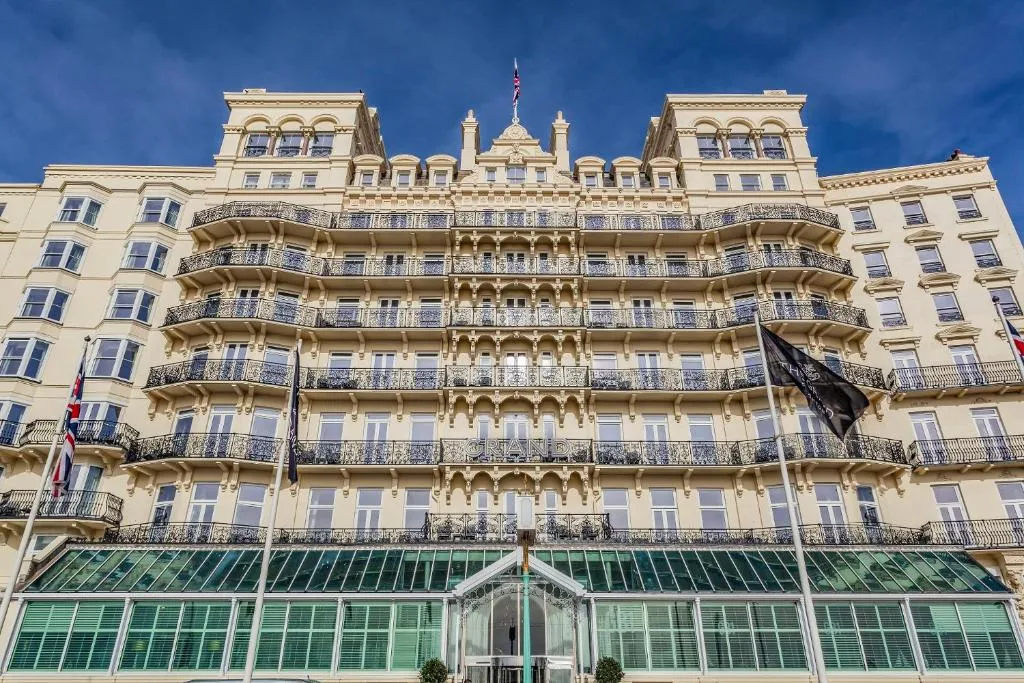
- Where to stay: The Grand Brighton on the seafront is the city’s most famous hotel. It dates back to 1864
- Ease Coffee in North Laine is my favourite cafe. It has the nicest coffee and tastiest sweet treats
- Best Fish & Chips is at Little Jack Fullers, who also have vegan options
- Alcotraz & Plotting Parlour are my top picks for a fun night out
- The biggest events of the year are Brighton Festival and Brighton Fringe in May while the biggest Pride in the UK is the first weekend of August
How To Get To Brighton
Most people come to Brighton as a day trip from London, so much so that it’s nicknamed “London by the Sea”. It’s just a short and comfortable 1 hour train ride away.
Most trains leave from London Victoria Station and London Bridge station and arrive at Brighton Station. The fastest is Gatwick Express which takes 58 minutes while the other options are 1 hour 10 minutes to 1 hour 20 minutes. You can book tickets online, the earlier you book the cheaper your tickets will be. We found a return journey typically cost £25. Off peak times and weekdays are much cheaper.
From Brighton Station it’s a 20 minute walk through the city centre to Brighton Pier.
If you’re arriving by air, the closest airport is London Gatwick, which also is serviced by a direct train to Brighton.
Where To Stay In Brighton
If it’s your first visit, base yourself on or near the seafront, or in The Lanes. You’ll be steps from the beach, the Palace Pier and the Royal Pavilion, and you can wake up to sea views if you’re willing to splurge a little. North Laine is a great choice if you want to be surrounded by independent shops, cafés and bars and it’s handy for Brighton Station if you’re arriving by train.
For something a little quieter, head to Hove, where you’ll find elegant Regency townhouses, quieter streets and the beach huts right on your doorstep. However you will probably need to take a bus to get into Brighton centre, which is around £3 per journey and takes about 10 – 15 minutes.
Kemptown, to the east, is the heart of Brighton’s LGBTQ+ scene, with a lively, friendly atmosphere and plenty of guesthouses that are often better value than seafront hotels. Wherever you choose, book early if you’re visiting on a summer weekend, or during Brighton Festival in May or Pride in August, as prices shoot up and rooms sell out fast. Legends Hotel is one of the best places to stay in Brighton for LGBTQ+ travellers, the hotel has a bar and cabaret that often hosts drag acts and a basement nightclub.
 🏆 Large Hotel of the Year 2026VisitEngland Awards £££
Brighton’s most famous hotel, a grand white Victorian landmark right on the seafront that first opened in 1864. The splurge pick if you want sea views, classic glamour and the beach on your doorstep.
Book Now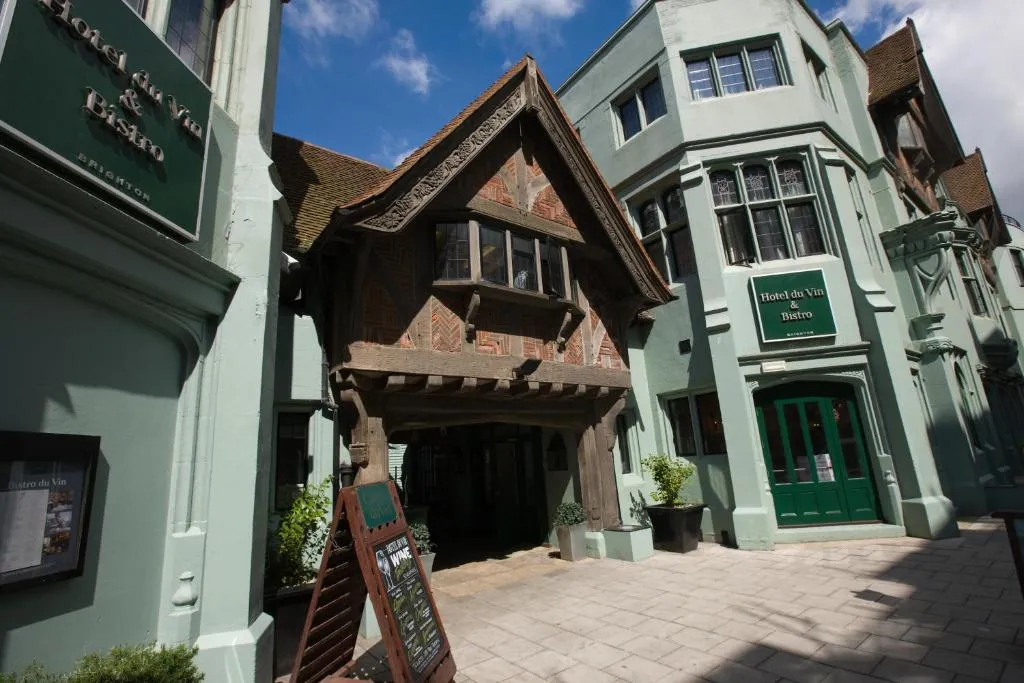 ££
Hotel du Vin & Bistro Brighton
A characterful boutique hotel tucked into The Lanes, just a short stroll from the seafront, with a French-style bistro and a serious wine list. Perfect if you want charm and a great location without the top-tier price tag.
Book Now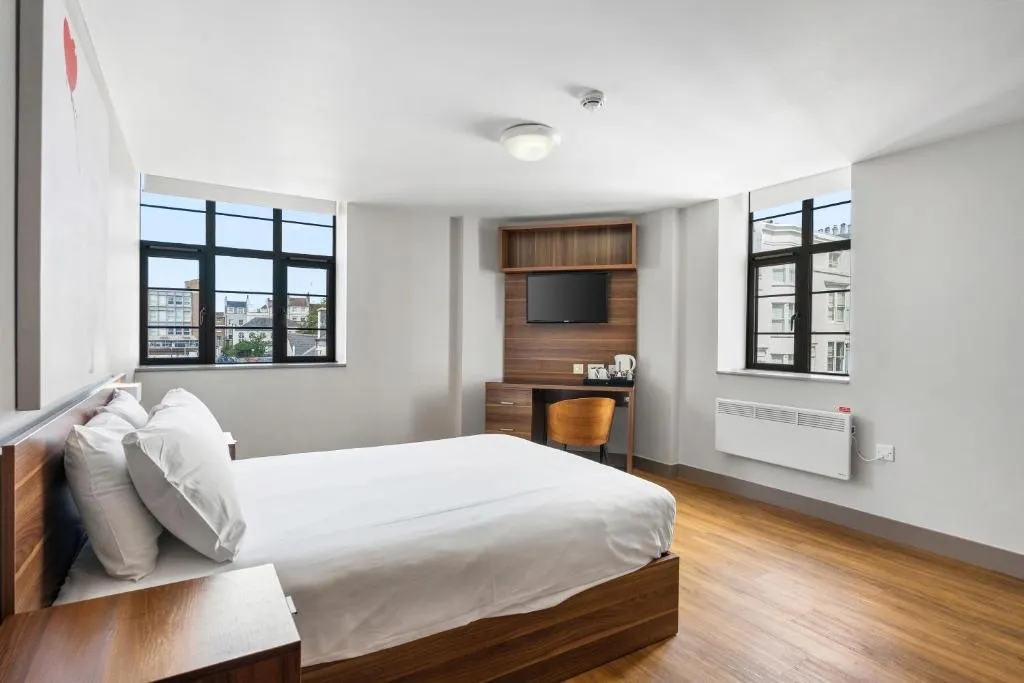 £
A modern, recently redeveloped hotel on Western Road, around a 5-minute walk from the beach and close to Churchill Square’s shops and restaurants. Breakfast is included, making it ideal for anyone watching the budget who still wants to be in the heart of the city.
Book NowWhat To Do In Brighton
1. Brighton Palace Pier
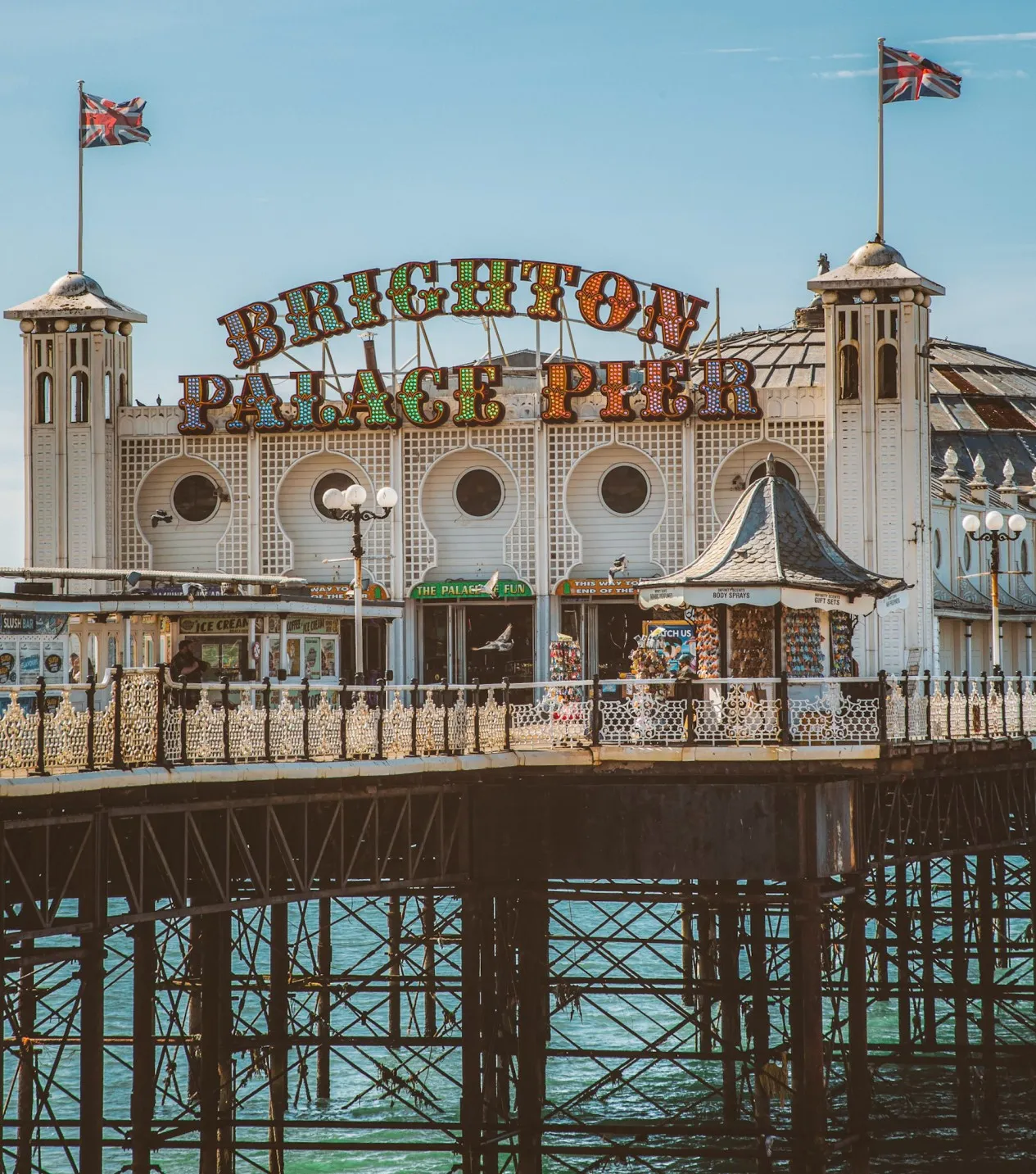
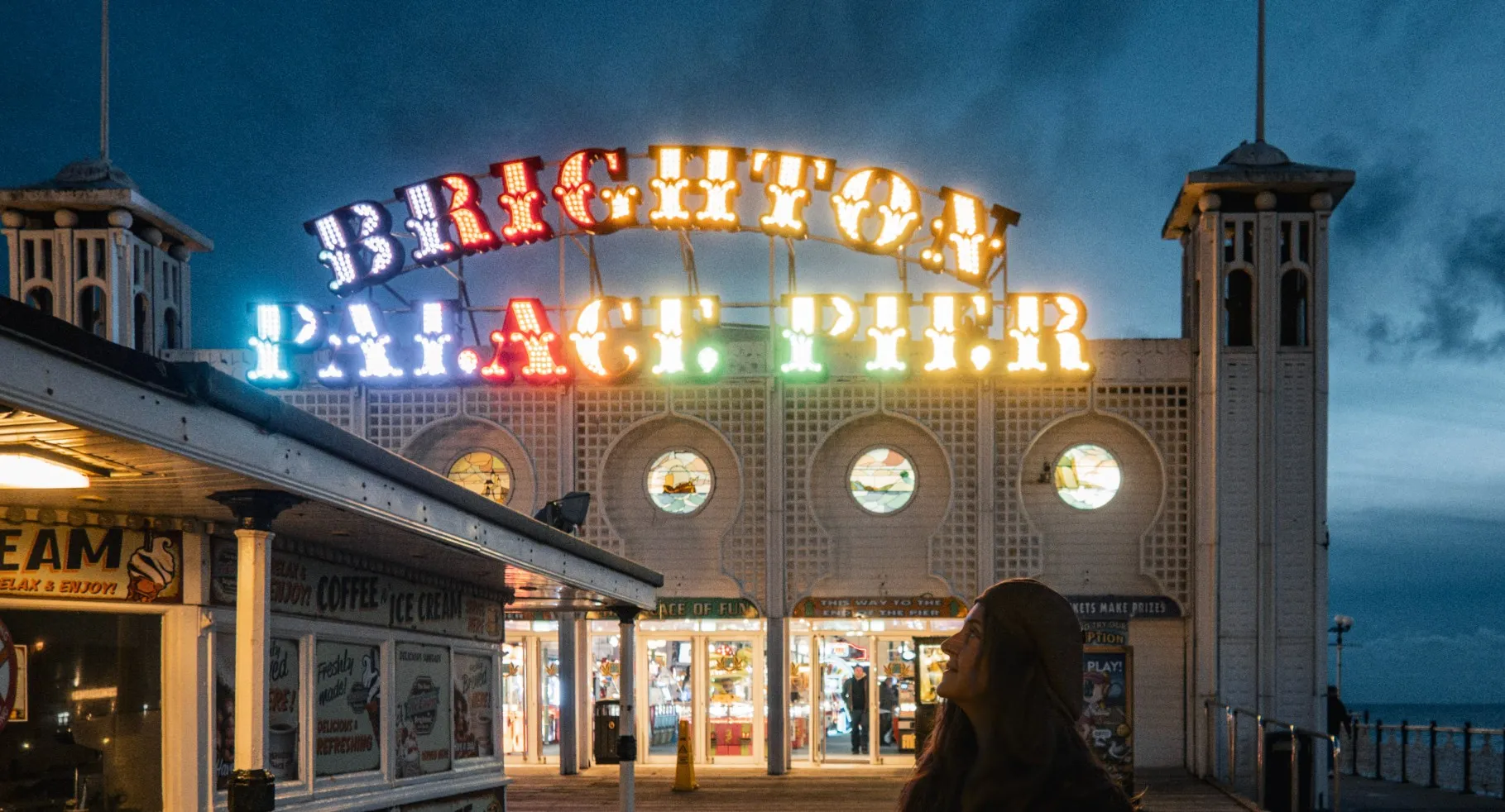
There is nowhere as iconic in Brighton as the Palace Pier, which first opened in 1899. Over half a kilometre of wooden boardwalk is packed with arcades, fairground rides and places to eat. It is everything you expect a British seaside pier to be. The air is filled with the unmistakable smell of fish and chips and candy floss, the sound of the sea, screams from the rides and seagulls squawking overhead, eyeing up every chance to commit daylight robbery. Brighton Palace Pier is a must for every trip to Brighton.
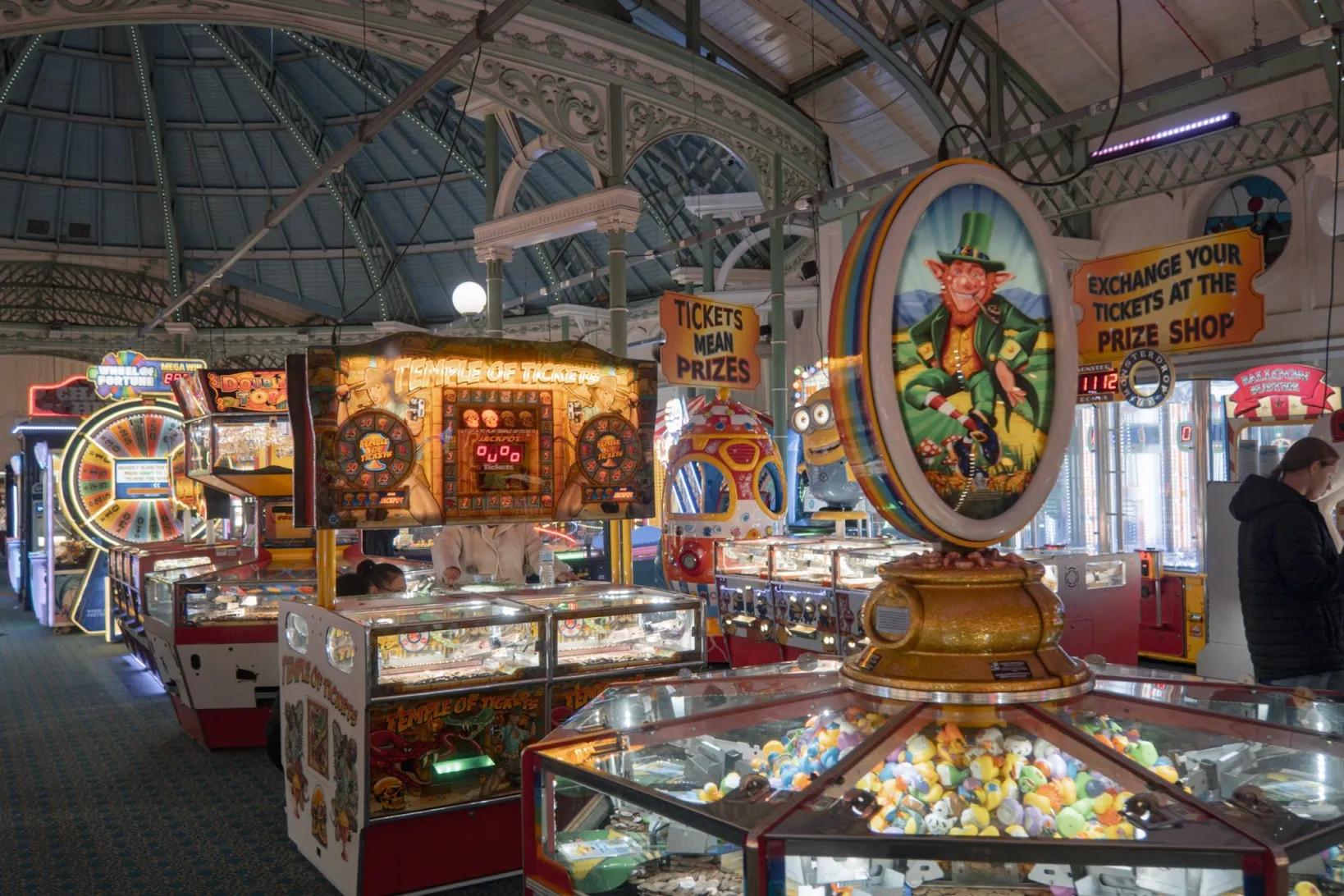
There is something so nostalgic about the pier. No matter where you are from I am sure it’ll remind you of a holiday or two that you had as a child. Head to the amusement arcade, where it’s like time has stood still. Keep a lookout for the 90s Coronation Street merchandise. There are slots, car racing, classic carnival games and grab machines. You could easily lose a full day here (and your bank balance).
At the end of the pier is the fairground section with rides like the Helter-Skelter, Waltzers and Crazy Mouse. Some sit so close to the edge (safely) that you feel like you’re about to ride straight into the sea.
Between March and November there is a £1 entry fee to get on the pier during peak times, unless you’re a local resident. Rides cost about £5 each or if you are going to go on a few I recommend getting the wristband that costs £25 so you can go on unlimited rides!
It’s fun for all ages. Even if you’re not into the rides or arcades, grab some ice cream or hot donuts, sit yourself on a bench and simply enjoy the views.
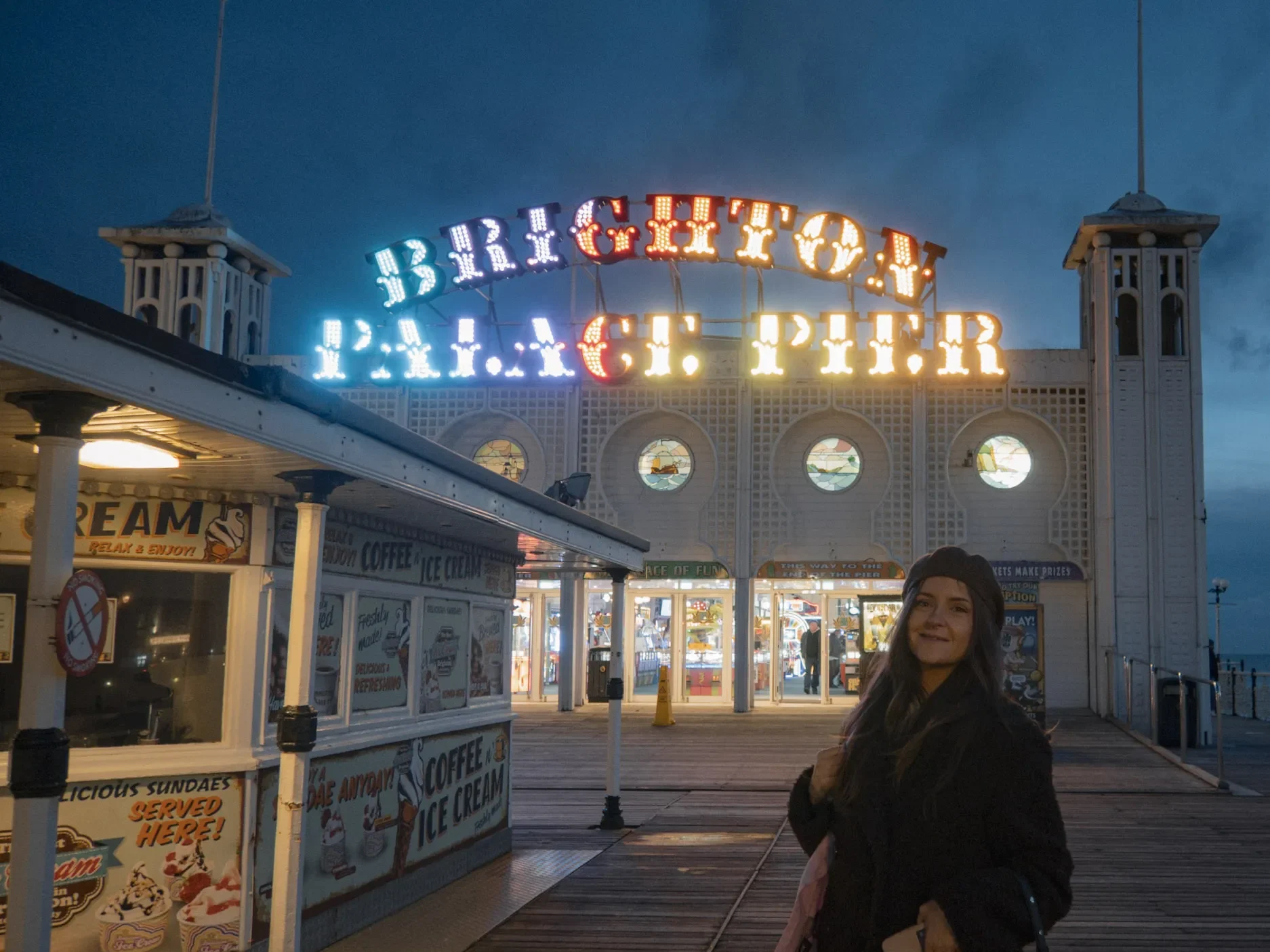
I highly recommend checking out Brighton Pier at night, when 62,000 lightbulbs switch on to light up the pier.
Brighton Rock
While you’re here, pick up a stick of Brighton Rock, the classic seaside sweet. It’s a hard, sugary stick with ‘Brighton’ written all the way through the middle, so no matter how much you bite off, the name is still there. It’s cheap, colourful and makes a fun little souvenir, though maybe not the best choice if you’ve got wobbly fillings. Brighton Best Rock Shop has lots of different colours.
2. Brighton i360
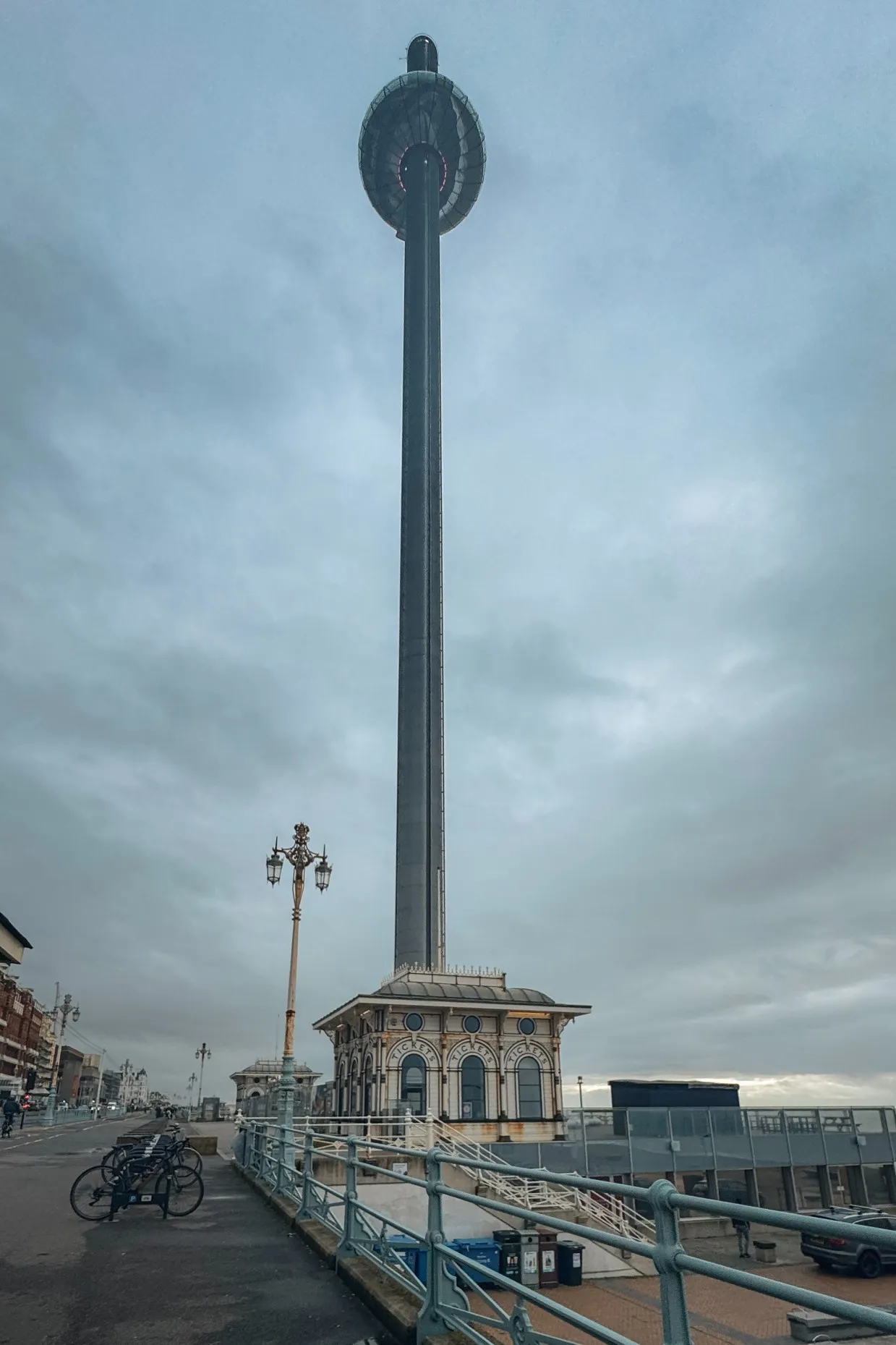
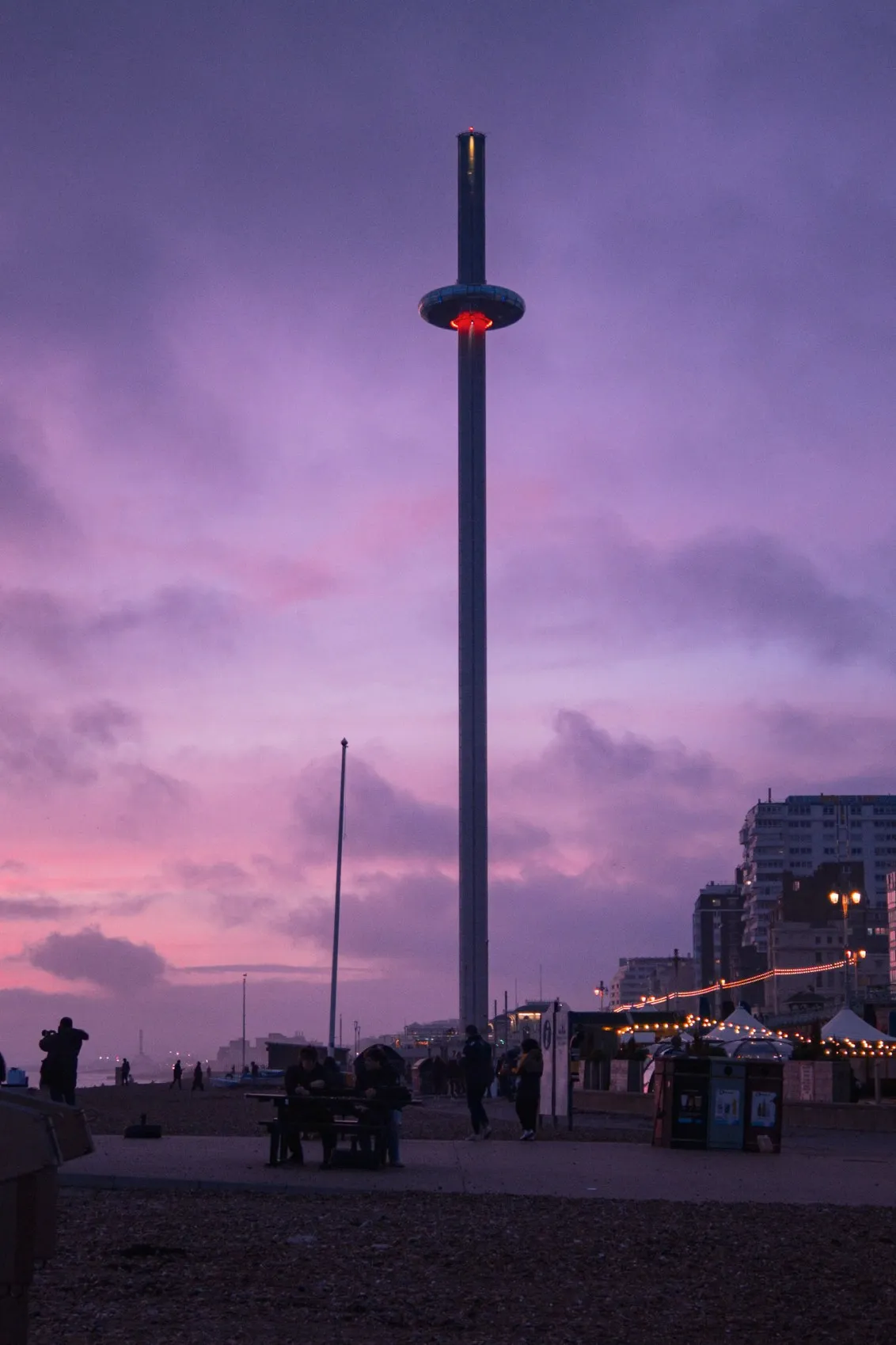
I have to admit, I didn’t think Brighton i360 would be as good of an experience as it was. Brighton is not known for its skyline so I didn’t think the view would be great. But the whole experience was excellent, it’s one of the best Brighton attractions.
At 450 feet it is considered Europe’s tallest moving platform. It basically looks like a glass spaceship moving up and down a pole, a modern fixture on the traditional English seaside.
As soon as I stepped inside I knew this was my type of activity. A fancy looking bar stood in the middle of the platfom with the 90s classic “Sexy Boy” by Air playing.
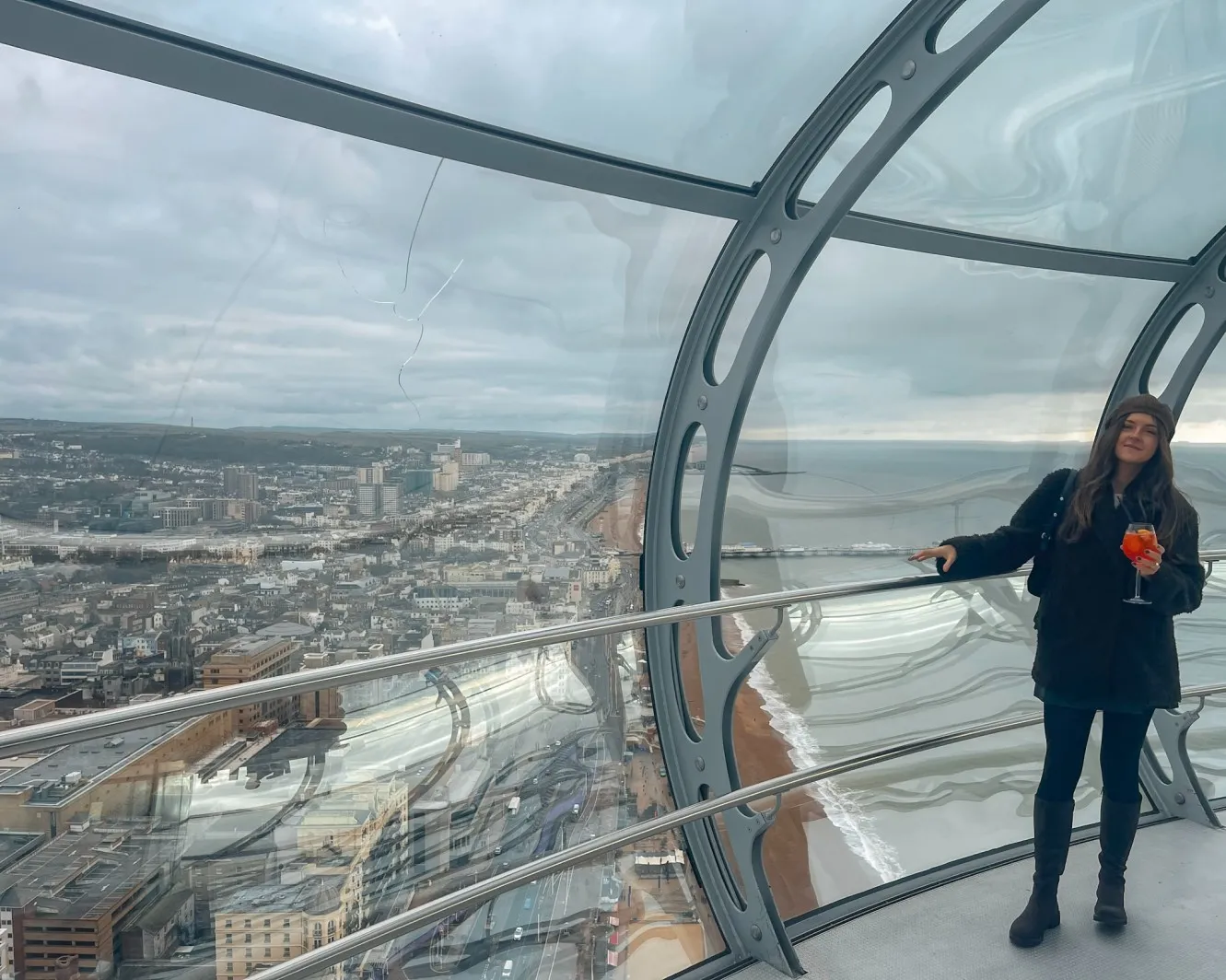
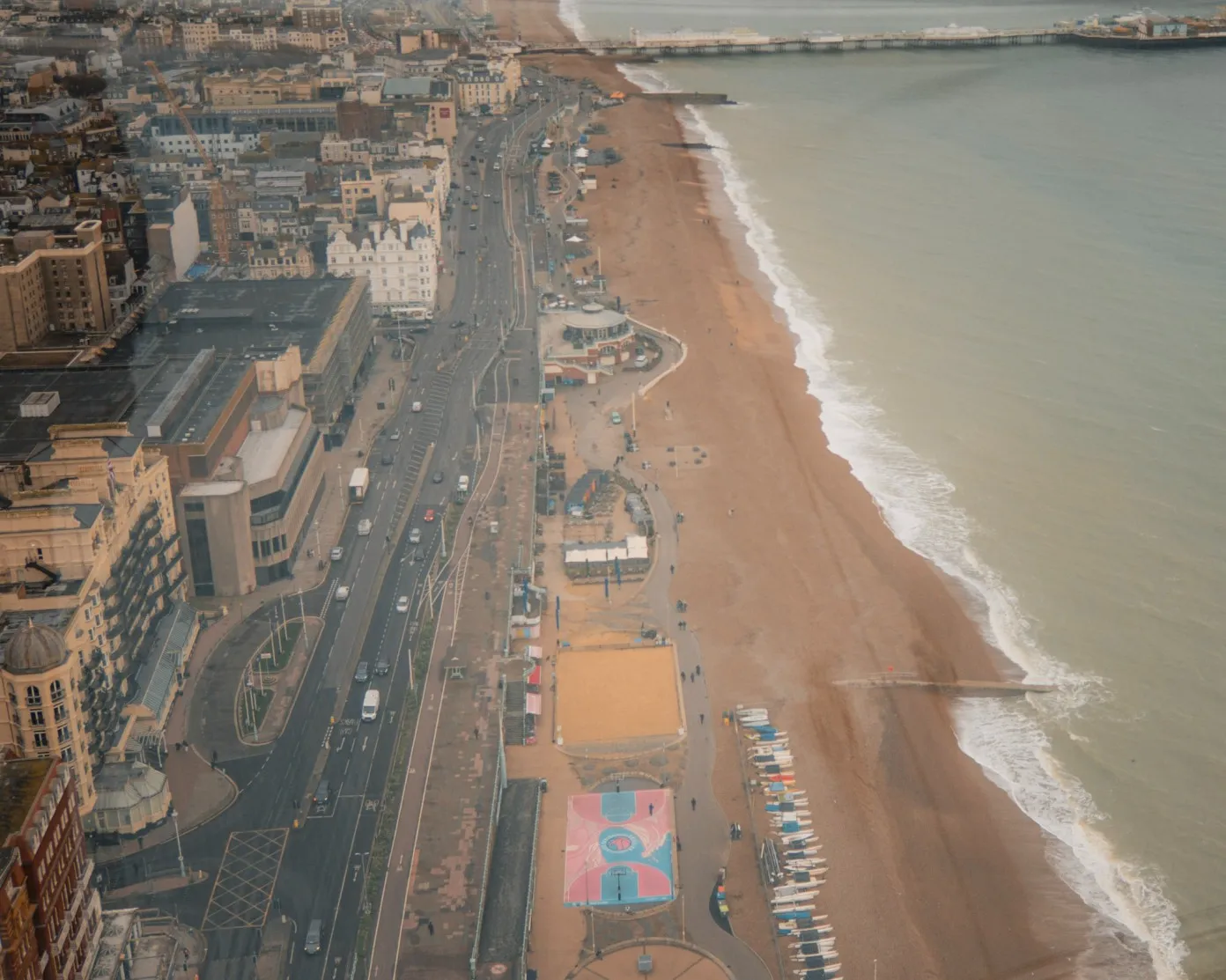
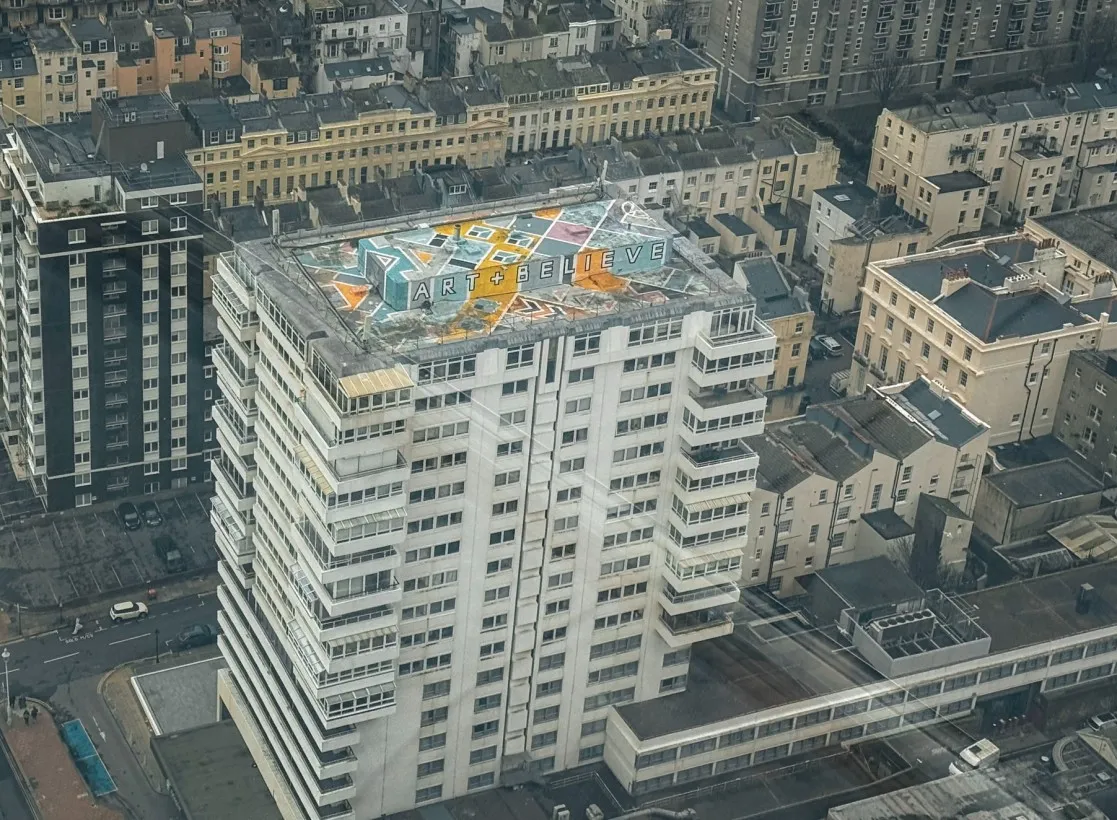
The journey lasts for a total of 25 minutes. The platform moves up at a very slow pace of 0.18 meters per second, taking around 13 minutes to reach the full height. It does not rotate but has enough space to walk around and appreciate the panoramic views. On one side you’ve got the sprawling sea, the iconic Brighton Pier and miles of beach east and west, while the other side looks over Brighton itself, where you can spot a few rooftop buildings with colourful murals. On a clear day you can also see the Isle of Wight.
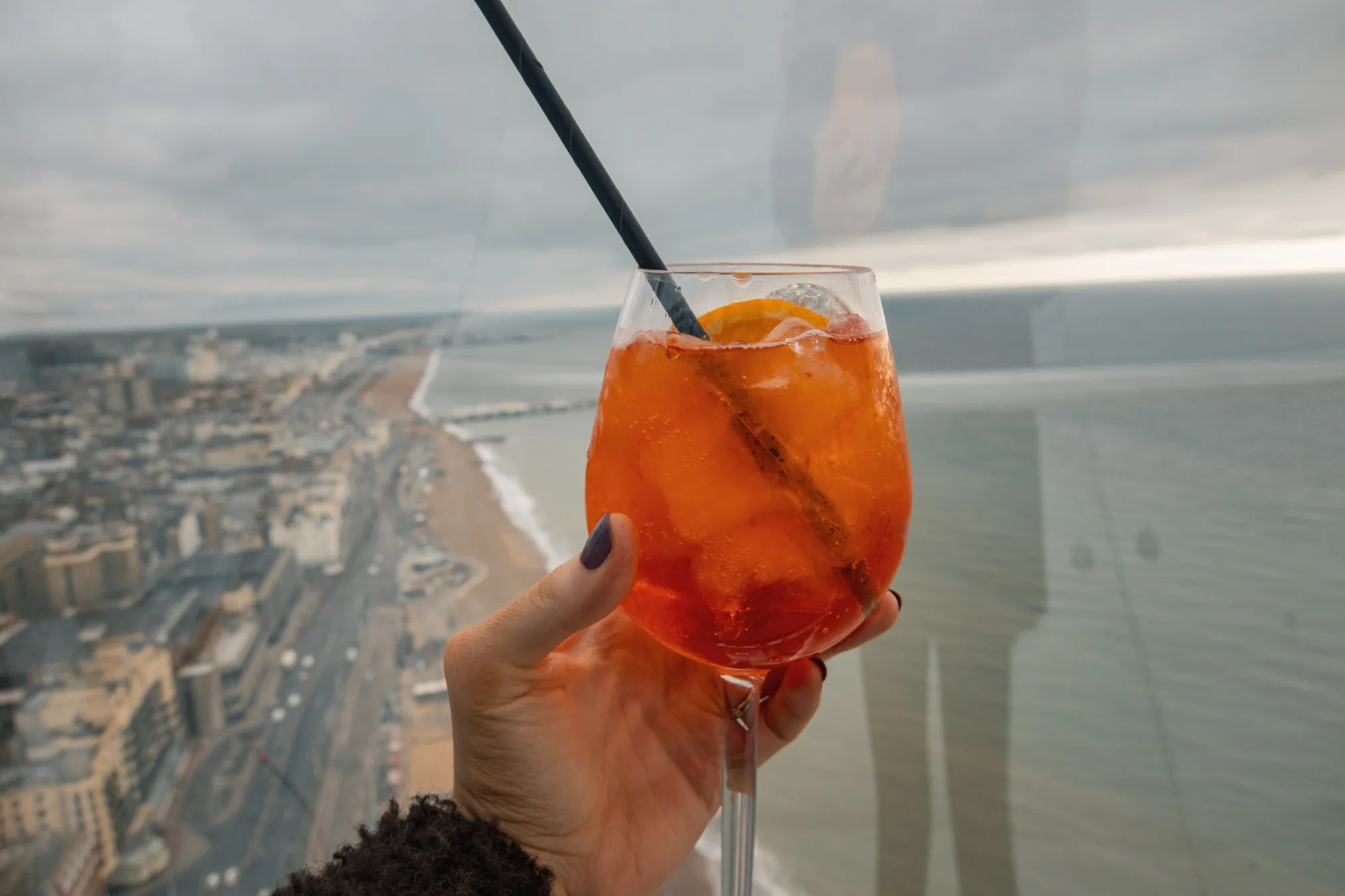
The bar serves many different drinks. I ordered a crisp Aperol and beer for £18.50. You can also purchase tickets which include a drink at a slight discount. It might not be the cheapest but it’s certainly the best rooftop bar in Brighton.
Tickets can be purchased online, which I would advise if you’re visiting in summer, at weekends or around sunset.
3. Brighton & Hove Beach
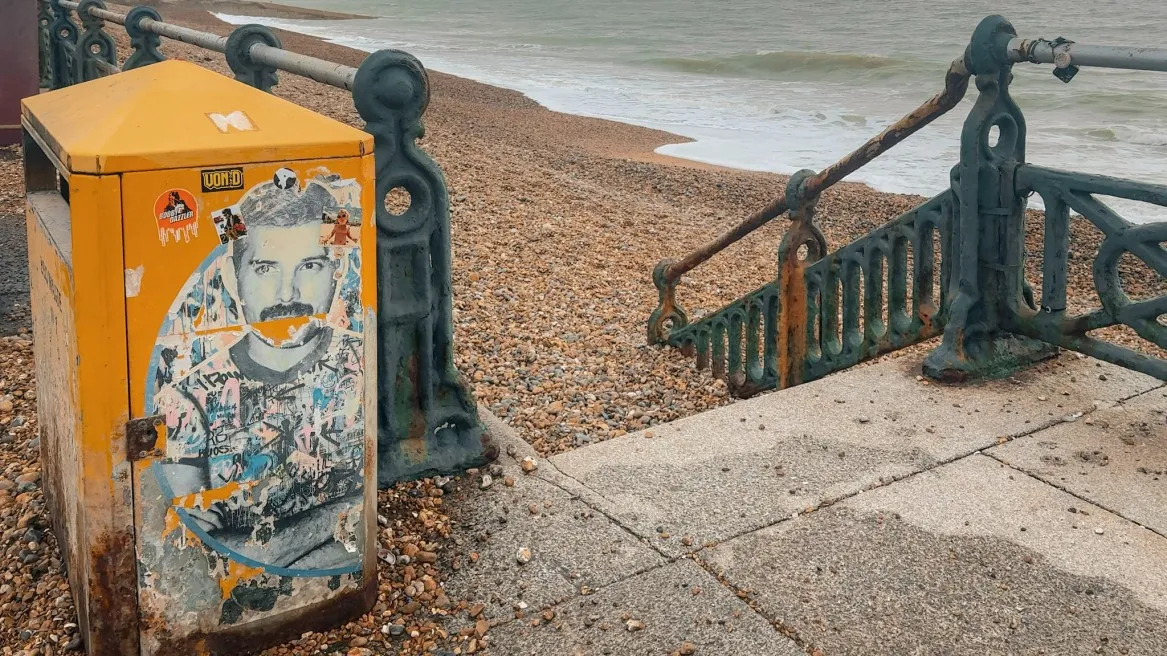
Whether you’re visiting Brighton in the summer or the winter, a visit to the beach is an absolute must. It’d be like visiting London but not seeing Buckingham Palace or Big Ben.
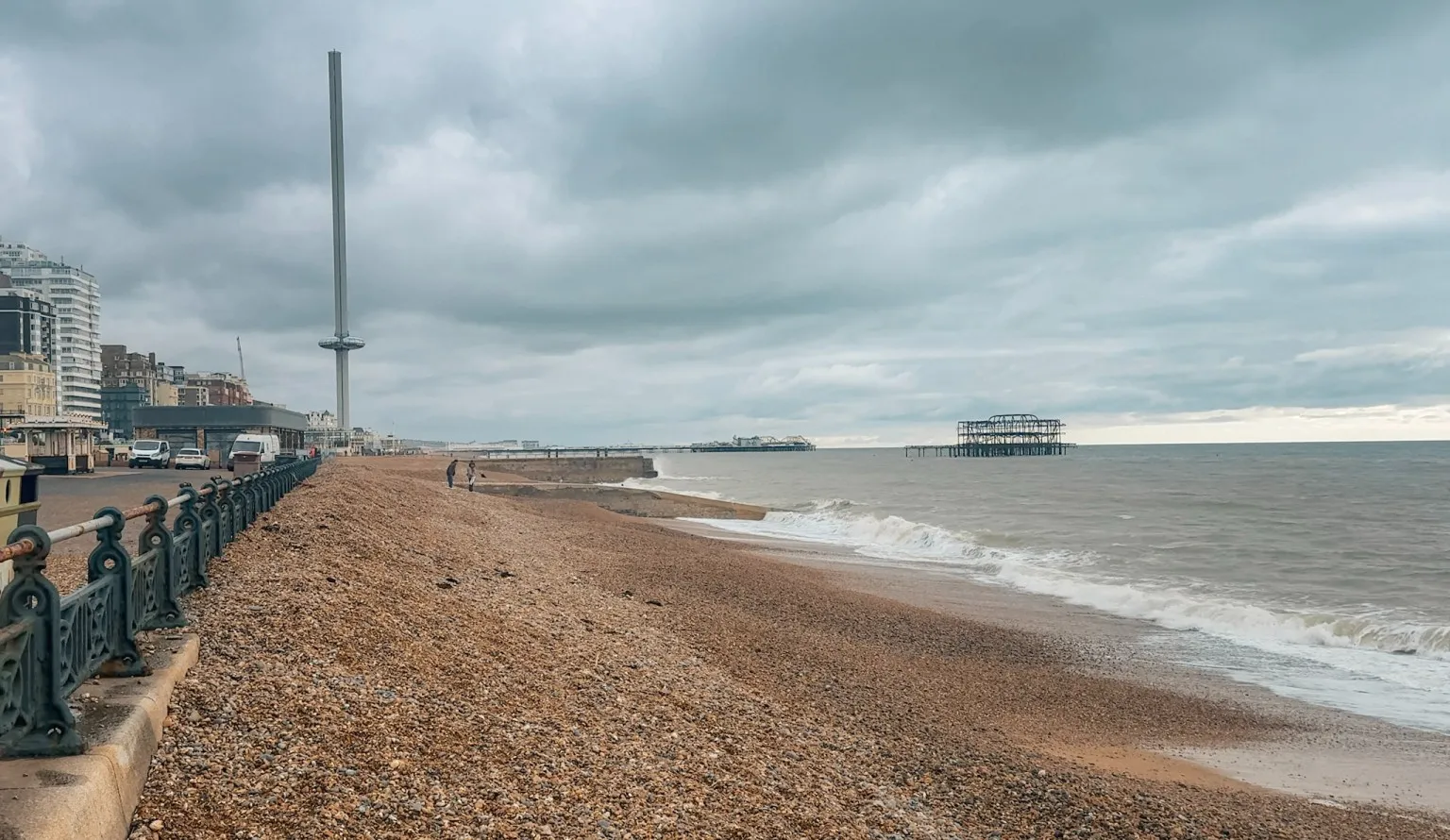
The full beach promenade from Hove to the Brighton Marina runs 6.5 to 8 km (4 to 5 miles). The stretch closest to the city centre, between the Palace Pier and the West Pier, is known as Central Beach. Around this area is the old fishermen’s arches with restaurants, cafes, bars, independent shops & galleries.
If you’re looking for a unique souvenir Daniel Laurence Artworks has lots of quirky home and garden pieces. You’ll also notice the Upside Down House, a funny looking building and illusion museum that’s popular for photos.
Unfortunately it does not have golden sand, instead there are grey pebbles and shingle, but it doesn’t dampen the beachy vibe of this city. In summer the beach is the place to be and therefore gets packed, especially at weekends, so arrive early if you want a good spot near the piers. You can rent deckchairs from attendants on the beach, costing between £3 and £8 per day.
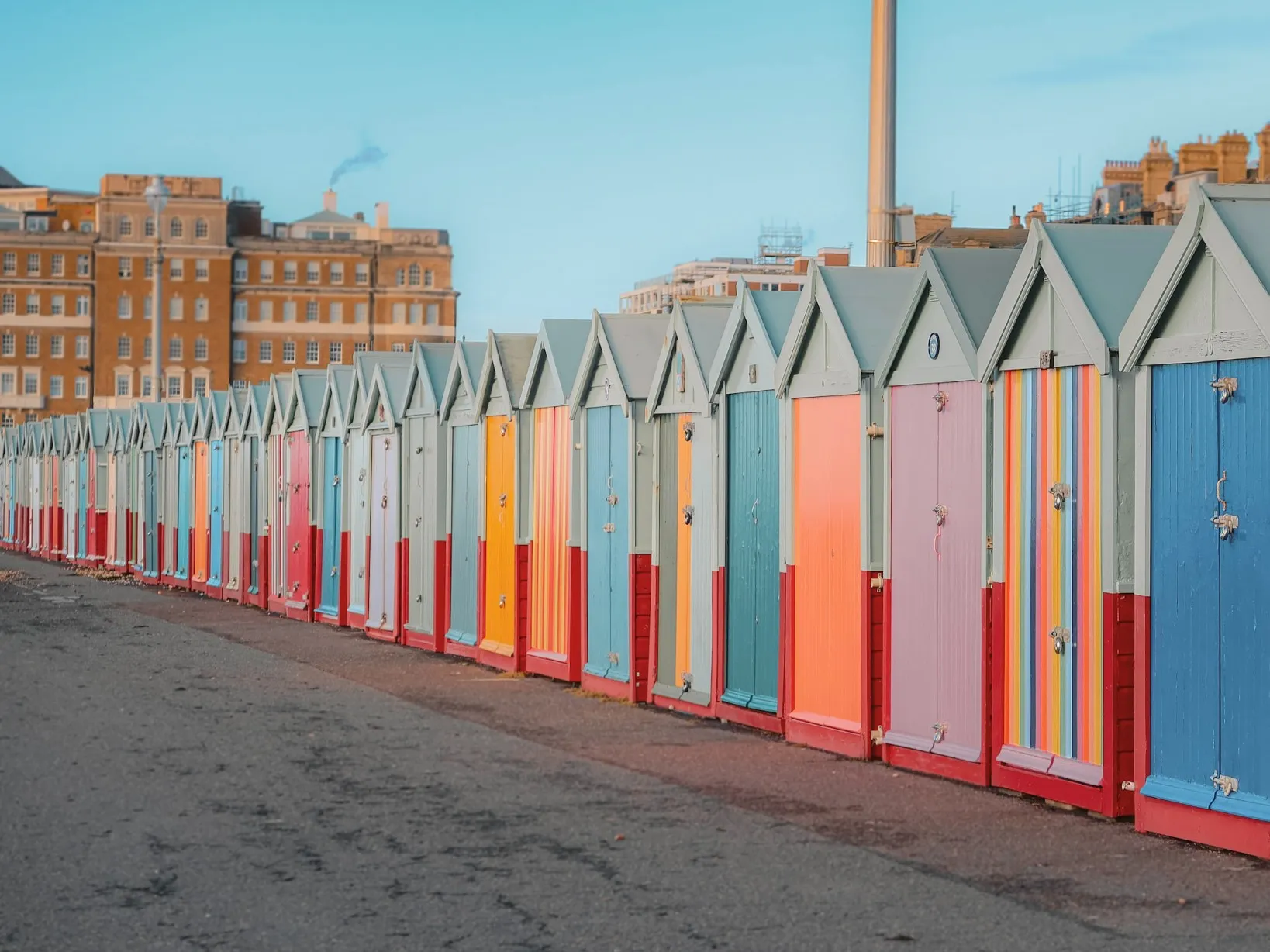
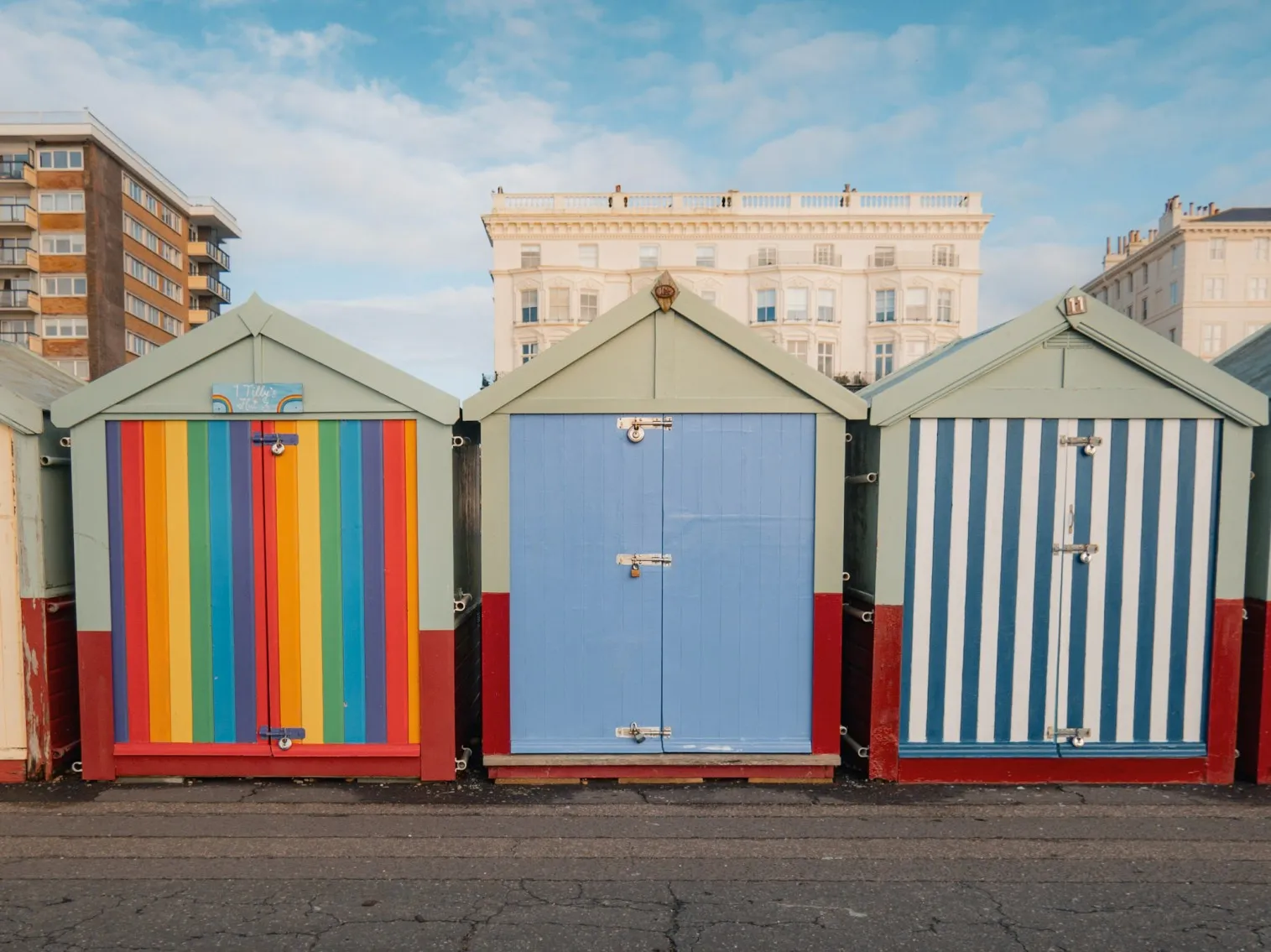
If you go down to the Hove side you’ll find one of the most iconic parts of this beach – the beach huts. A long line of cute and colourful wooden huts that are painted in bright colours, chosen by the owners. Some have little custom plaques on them too. I walked by a few times and on the odd occasion I got to peep inside if someone was sitting outside with the doors open. They typically have a small table and chairs, but a few have a small kitchen with a camping stove. Can you believe they cost around £18,000 to purchase?
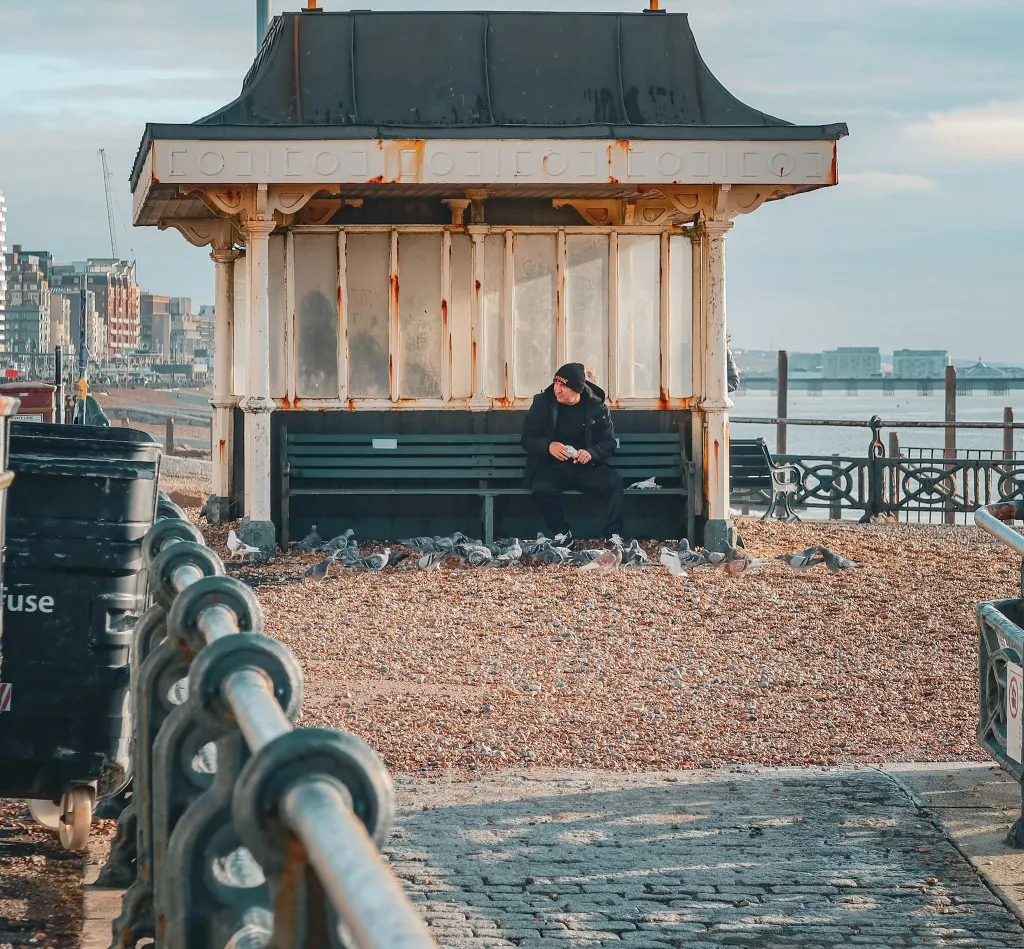
Be warned though, the seagulls in Brighton are supersized with bravado to match. If they want what you’re eating they have no qualms in fighting you for it.

Close to the marina is Brighton’s naturist beach. One of the first official nudist beaches in the UK, don’t say I didn’t warn you.
Volk’s Electric Railway
Opened in 1883, Volk’s Electric Railway is the oldest operating electric railway in the world. It trundles 1 mile along the seafront from Palace Pier to the Marina, costing £5.40 one-way or £7 return per adult.
It only runs from April through to October.
4. See Brighton’s Burnt-Out West Pier
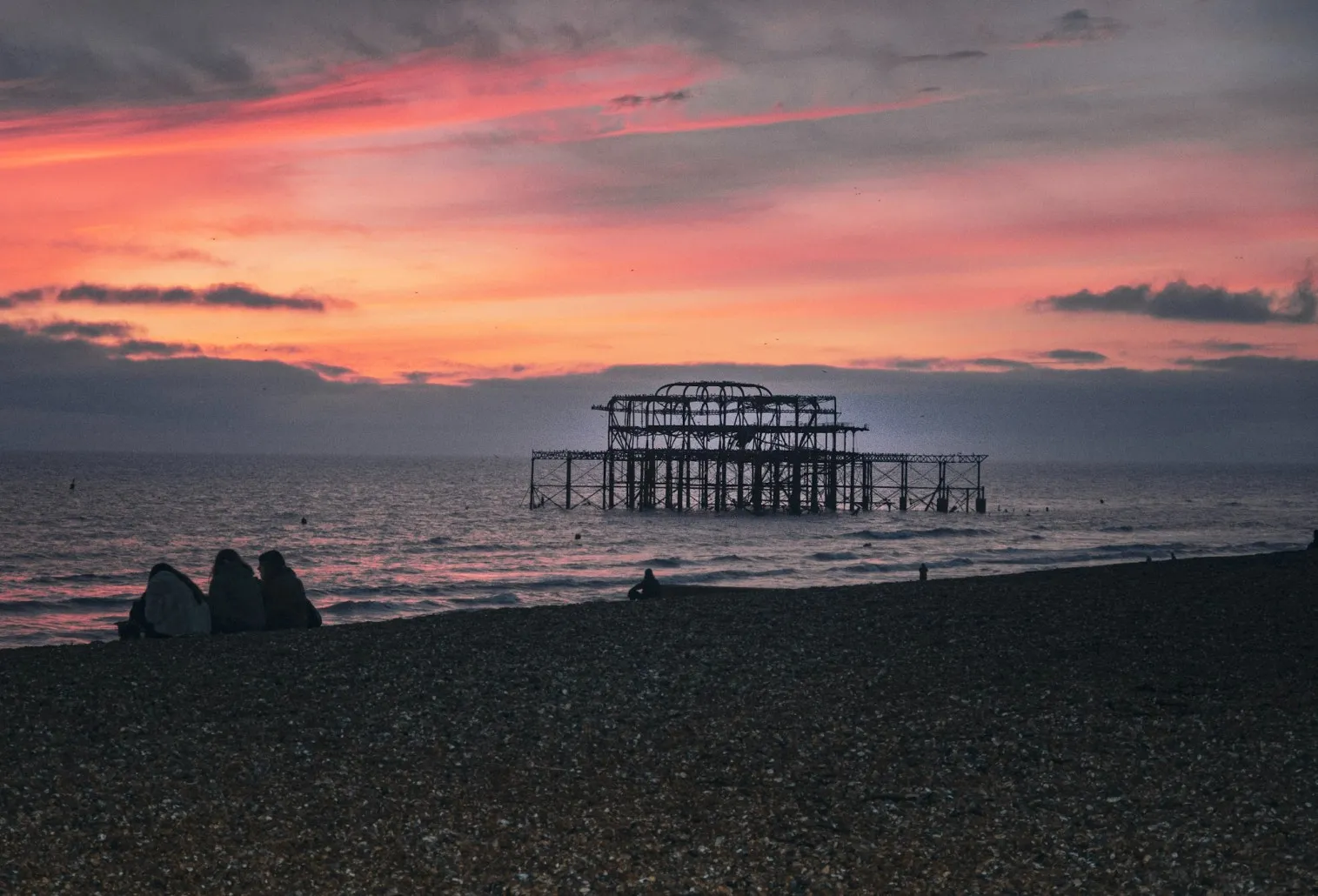
This is a bit of a depressing one, but worth taking a look at. Standing alone in the sea are the skeletal remains of the West Pier, a reminder of Brighton’s Victorian heyday. It opened in 1866 and at its peak, it drew 2 million visitors in a single year. It closed in 1975 after decades of bad luck.
The Great Storm of 1987 caused serious structural damage. In 2002, another storm almost collapsed the concert hall. Then in 2003, two suspected arson attacks left just the bare bones. Storms split the ruined pavilion in two in 2014, and another section collapsed in 2016. Yikes, what a series of unfortunate events.
It’s nothing like its original form, but it’s still one of the most photographed places in Brighton, especially at sunset. It may look lifeless, but it’s actually home to lots of different birds, like cormorants and starlings, so at least other species get to enjoy it still.
See it while you can. It is expected that it will keep collapsing until it’s just an offshore reef that is only visible at low tide.
5. Eat The Best Fish And Chips In Brighton
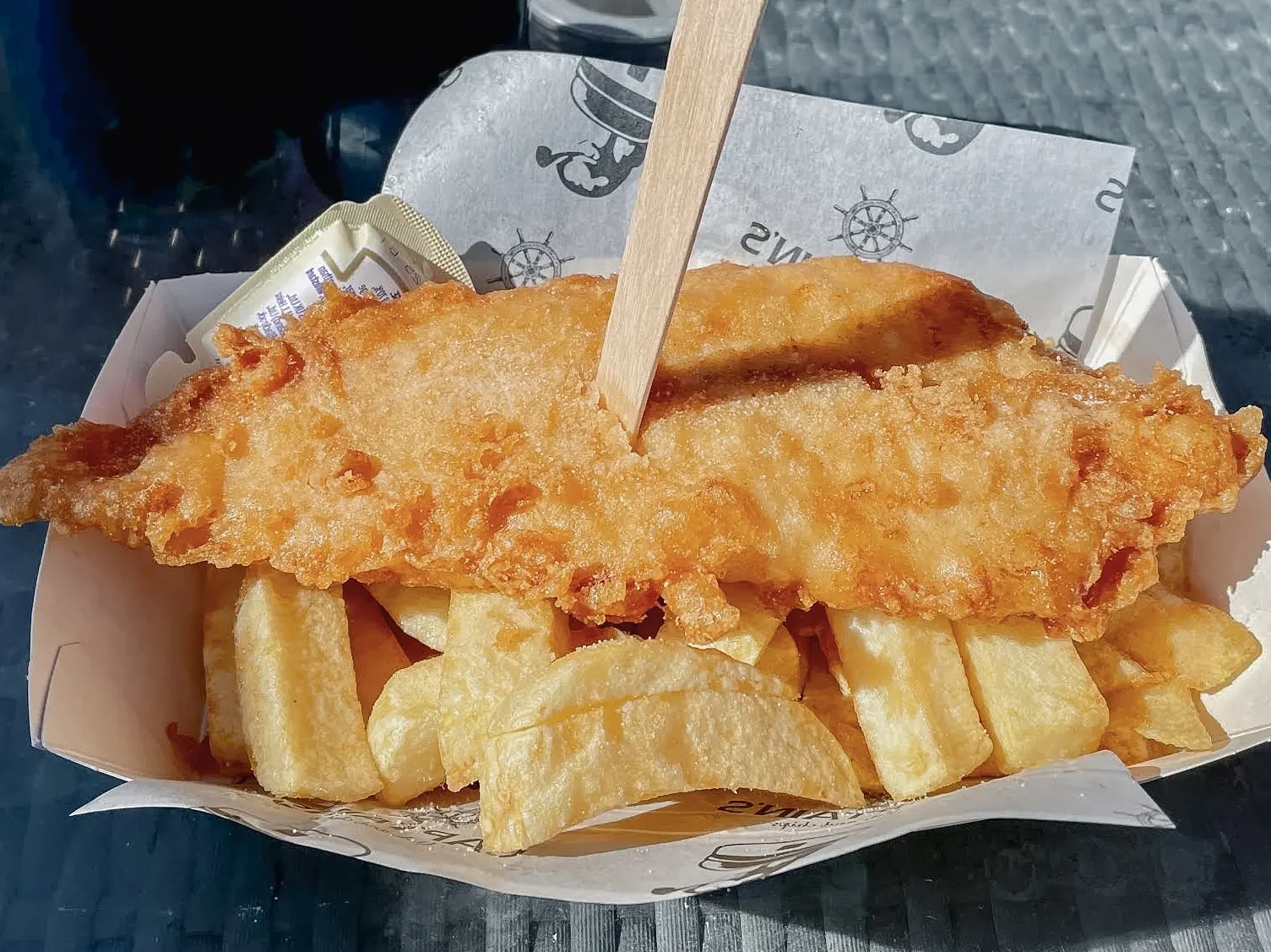
Have you really spent a day at the British seaside without a hearty helping of fish and chips? Think crunchy batter wrapped around a white fish, served on a bed of thick piping hot chips (fries) and then covered in salt and vinegar. Pick a spot on the beach or pier and dig in with your hands, no knife or fork required.
Now for the all important question, where to get the best fish and chips in Brighton? I’m talking fresh and flaky, absolutely zero sogginess.
- RYBKA (the fish likes to swim) in the Lanes. Get the haddock with the triple cooked chips, with either curry sauce or mushy peas.
- Little Jack Fullers 5 minute walk from Brighton Pier. They mostly use locally caught fish, offering haddock, cod, plaice, huss, calamari and scampi. They also have a large plant based menu, using tofu and jackfruit.
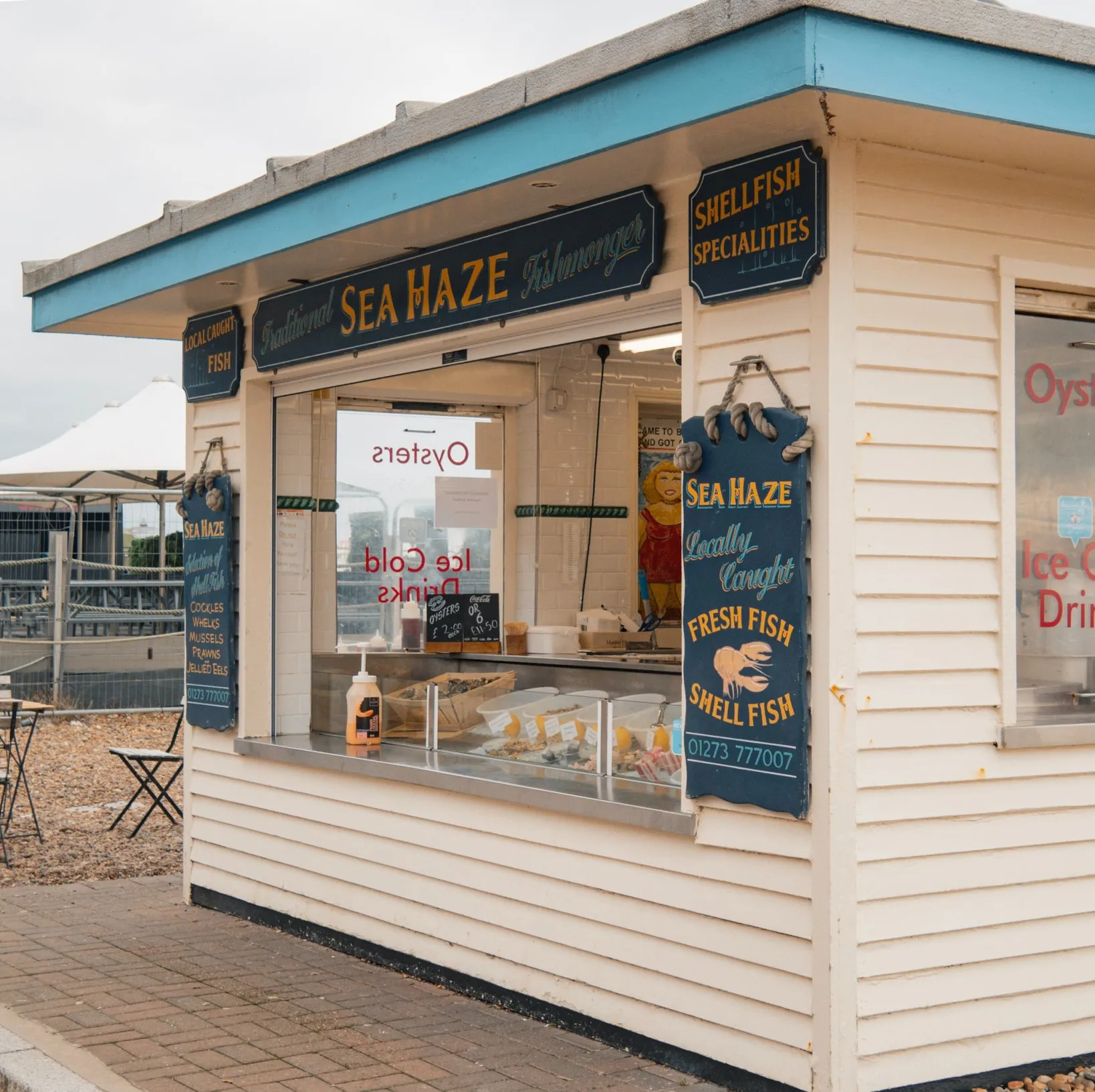
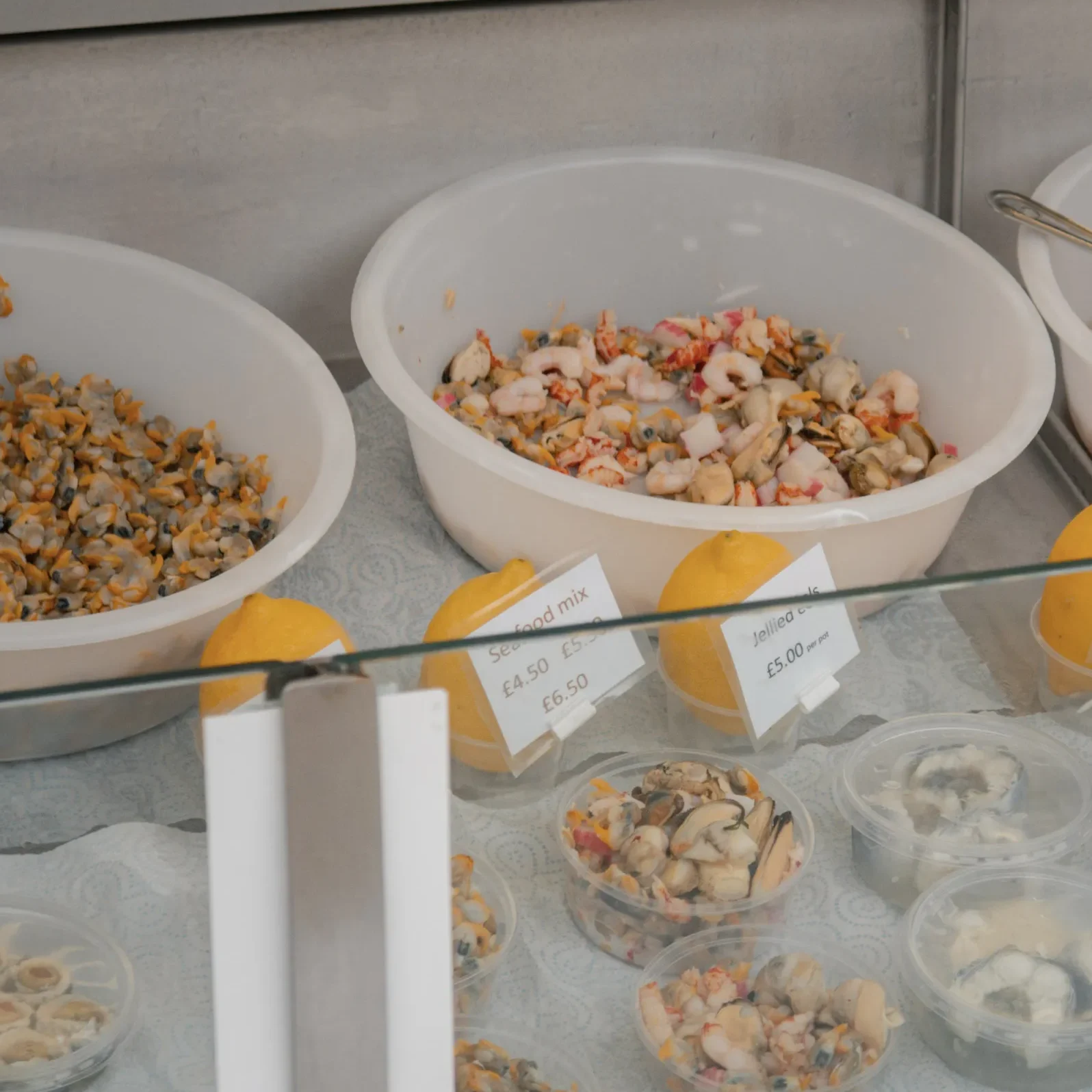
- Sea Haze is a small sea food hut right on the beach. They have little pots of fresh.oysters, crayfish, lobster, prawns and whelks.
- Captains Fish & Chips on Brighton Pier. Crispy cod, scampi and saveloy.
6. Royal Pavilion
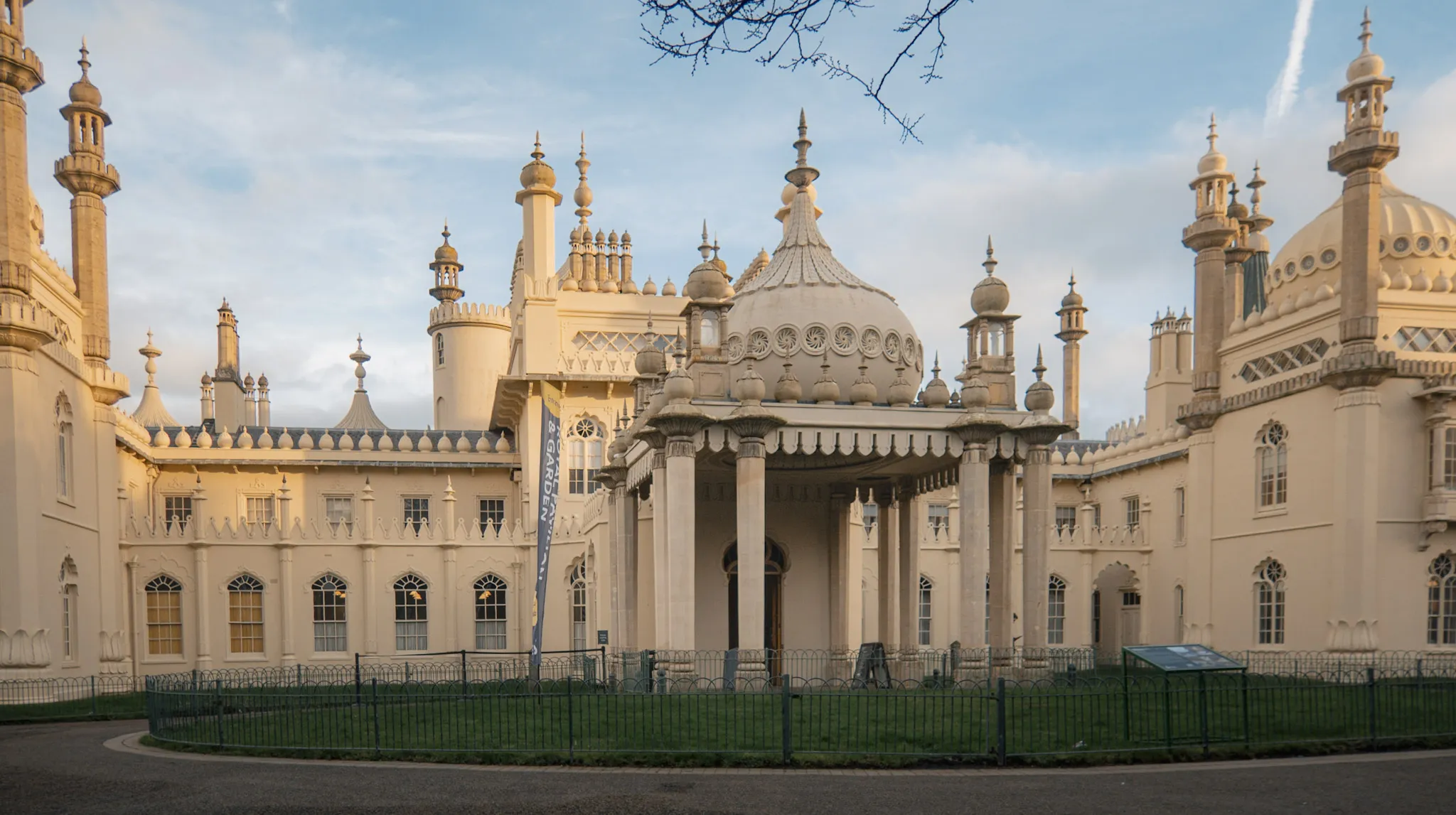
The Royal Pavilion looks like someone just dropped a mini Taj Mahal into the middle of an English seaside town. It’s featured in movies like The End of the Affair (1999) and Harry Styles’ My Policeman (2022). Today it may be making cameos in some Hollywood films but the Pavilion started life as a seaside retreat for George, Prince of Wales (later King George IV), who without a doubt had fanciful taste.
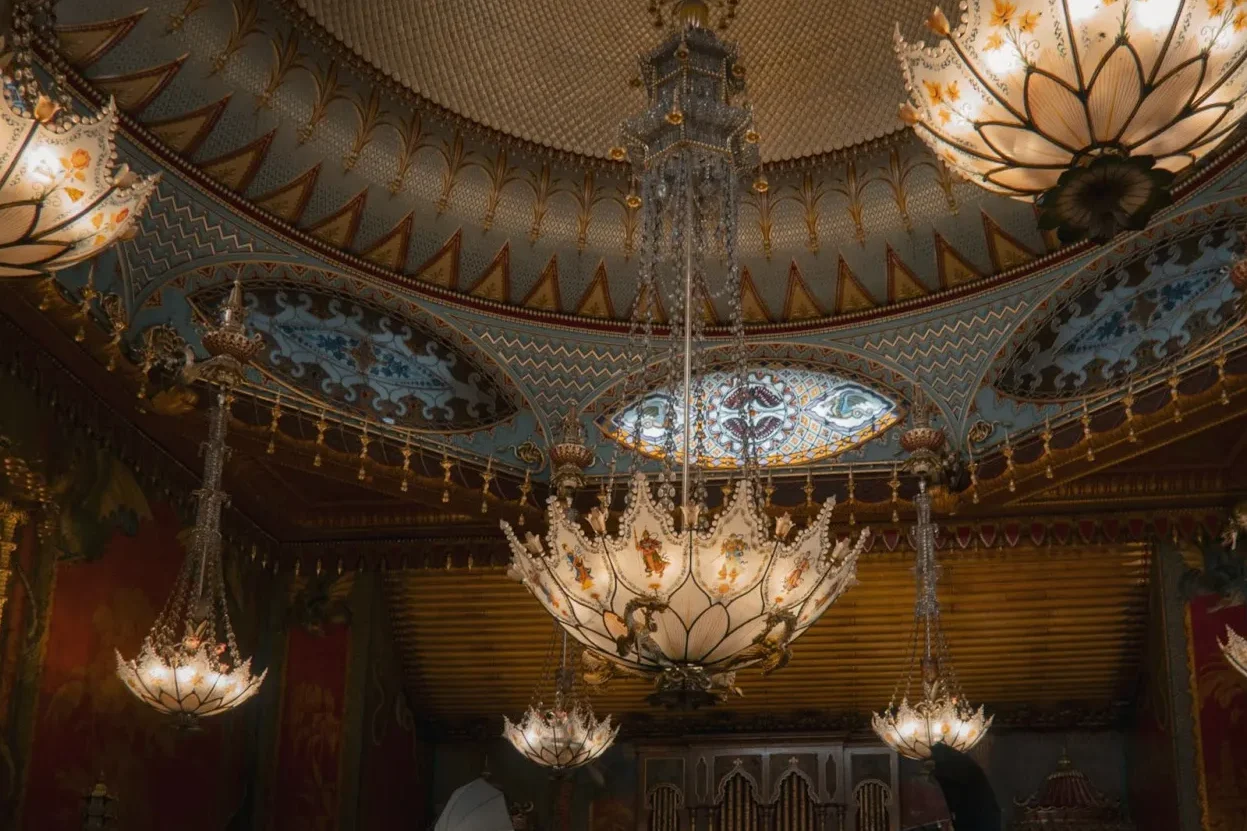
Between 1815 and 1822 the architect John Nash transformed it into the palace you see today with Indian-style domes and minarets on the outside and fantastically over the top Chinese inspired interiors on the inside. It’s hard to overstate how outrageous this looked in Regency England, where most grand buildings were all columns and pale stone.
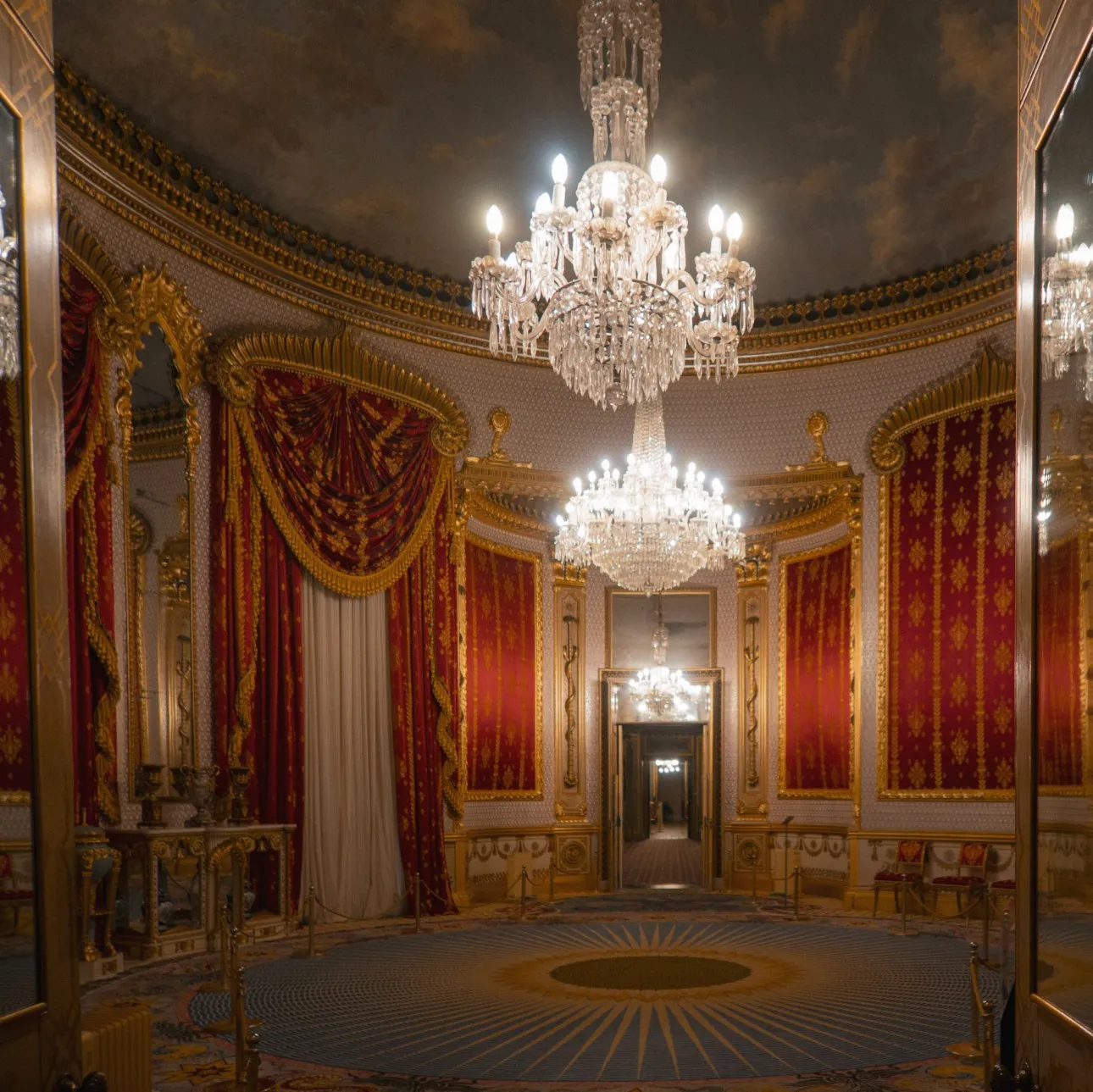
Inside is what I imagine a party thrown by Gatsby would look like. Every wall, ceiling and corner is covered in dragons, bamboo, gold leaf and hand-painted wallpaper. The highlight for me was the long hall, painted pastel pink with baby blue birds and branches climbing the walls. It leads to a cast iron staircase painted to look like bamboo, under an ornate yellow and blue stained glass ceiling.
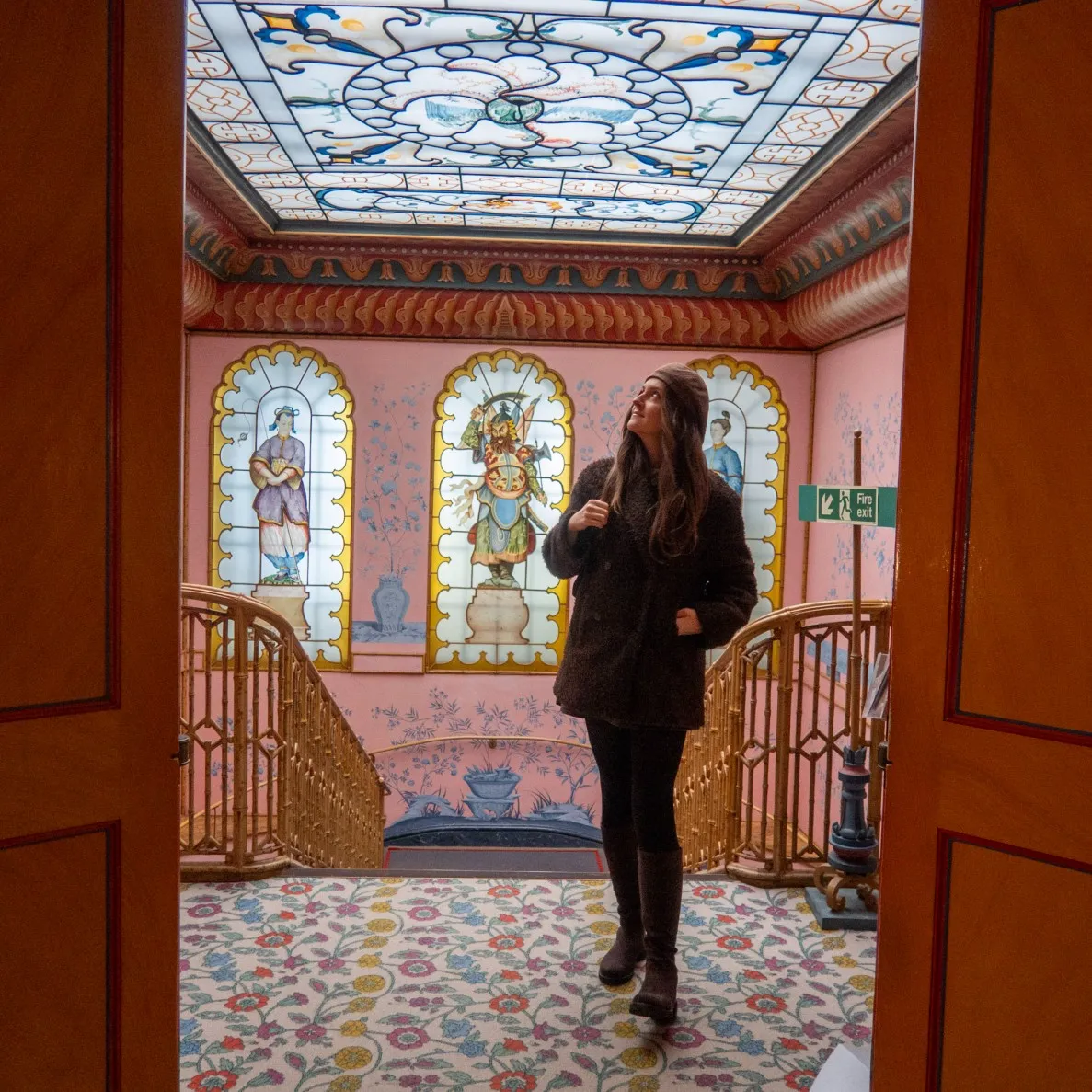
The Great Kitchen was another surprise. Its ceiling is held up by columns shaped like palm trees. Upstairs you can see Queen Victoria’s bedroom, although she famously wasn’t a fan of the place and ended up selling it to the town. The Pavilion also has a surprisingly moving chapter in its history. During the First World War, it was turned into a hospital for wounded Indian soldiers and the beautiful Indian Gate at the southern entrance was a gift from India to thank Brighton for the care they received. And during World War II Hitler told the Nazis not to bomb it as he wanted to use it as a summer house when the war was over.
If you want to learn more, the Chattri Memorial on the South Downs honours the Indian soldiers who died here.
I spent around an hour inside, then had a wander around the Regency-style gardens afterwards, which are free and a nice, quiet break from the busy streets around North Laine.
An adult ticket costs £21.50, and lets you come back for free for a whole year, which is great if you’re local or visit Brighton often. If you book directly through the Pavilion’s website, you get a 5% discount.
7. Explore The Lanes
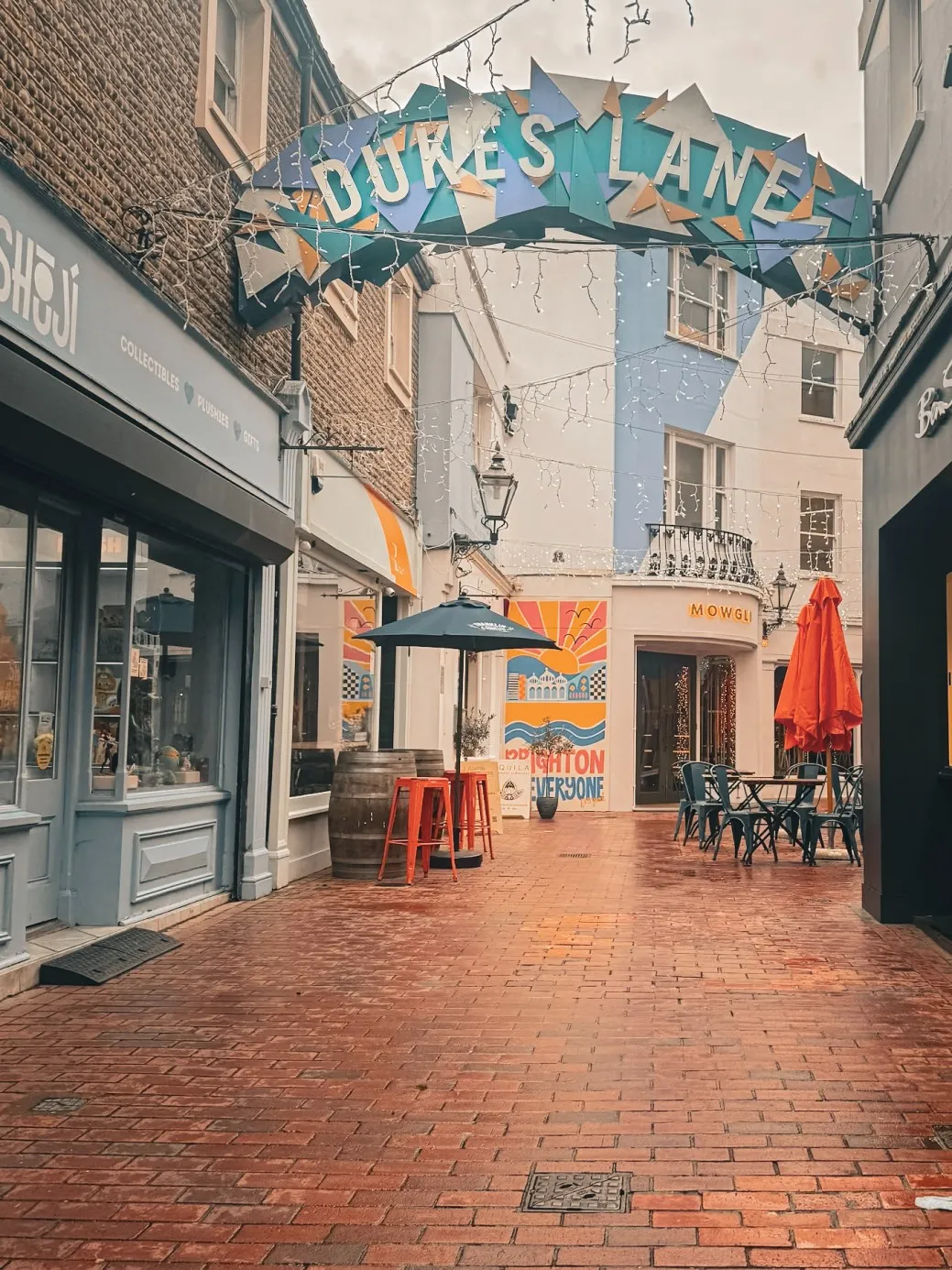
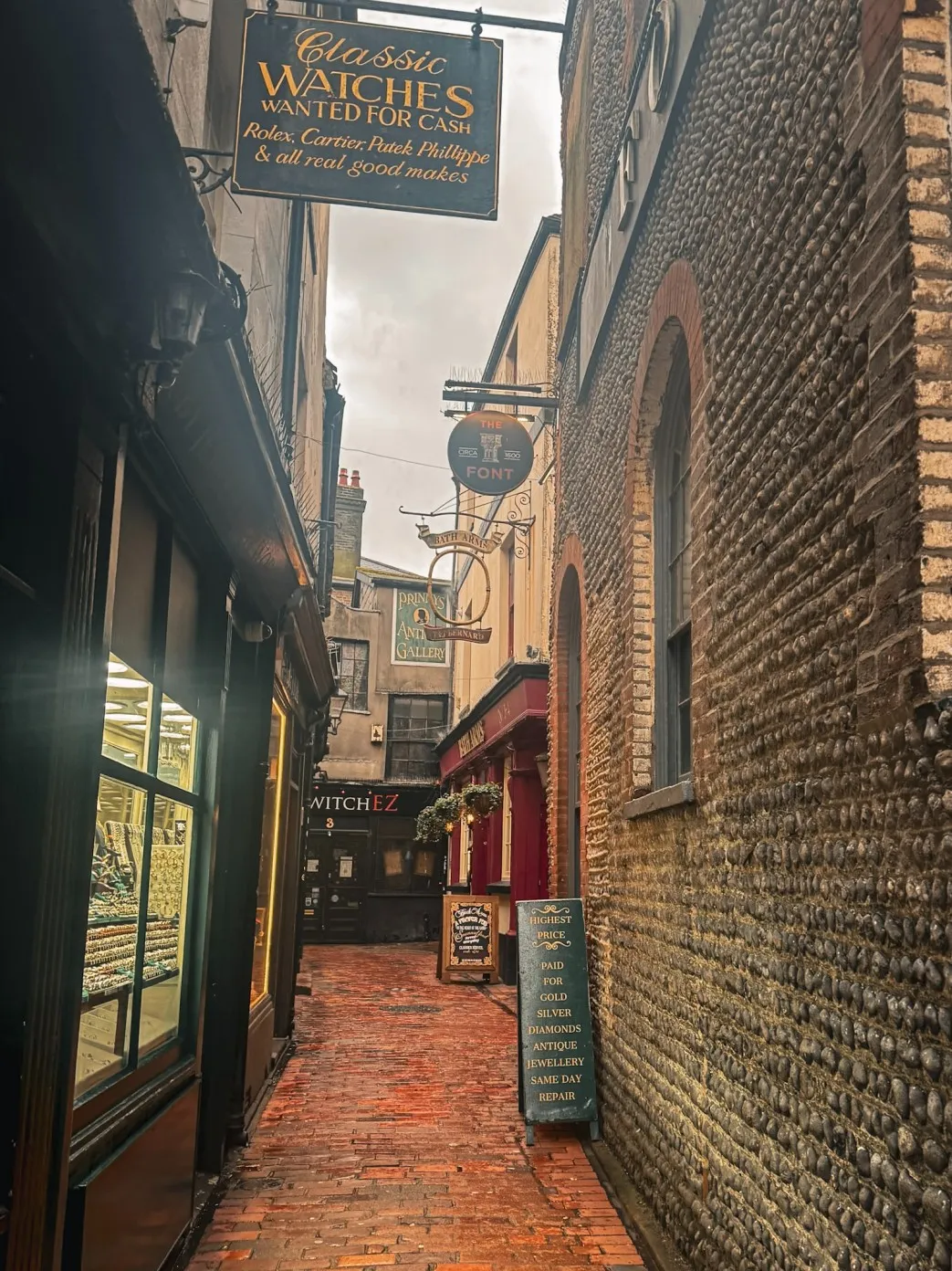
The Lanes are basically Brighton’s historic centre, a tangle of atmospheric alleys and narrow passageways (also known locally as twittens). The lanes follow the layout of the old fishing village, Brighthelmstone, though most of the buildings date from the 18th and 19th centuries.
It’s filled with an eclectic mix of shops and restaurants. There are a huge number of jewellers, both antique and bespoke, and the streets where they cluster together look just like I imagine Hogsmeade would. I was on the hunt for a cool ring and found Marc in the Lanes and Fetheray Antique & Vintage to have the most amazing selection.
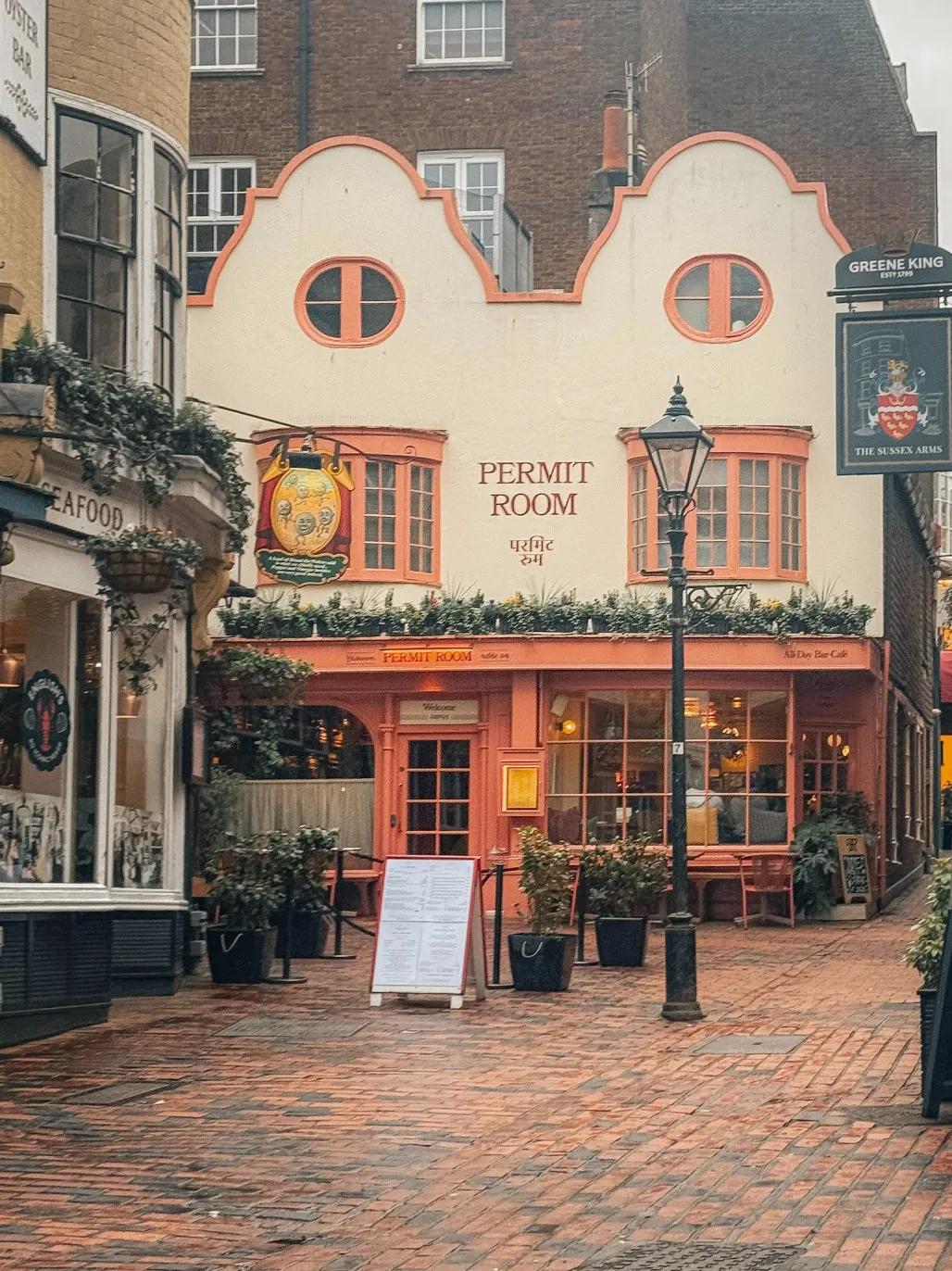
There are also lots of pubs here but I recommend stopping by the oldest pub in Brighton – The Cricketers. Inside is cosy and kitted out with red velvet seats. I got a delicious onion soup here but the Sunday roast with the gigantic Yorkshire pudding looked incredible.
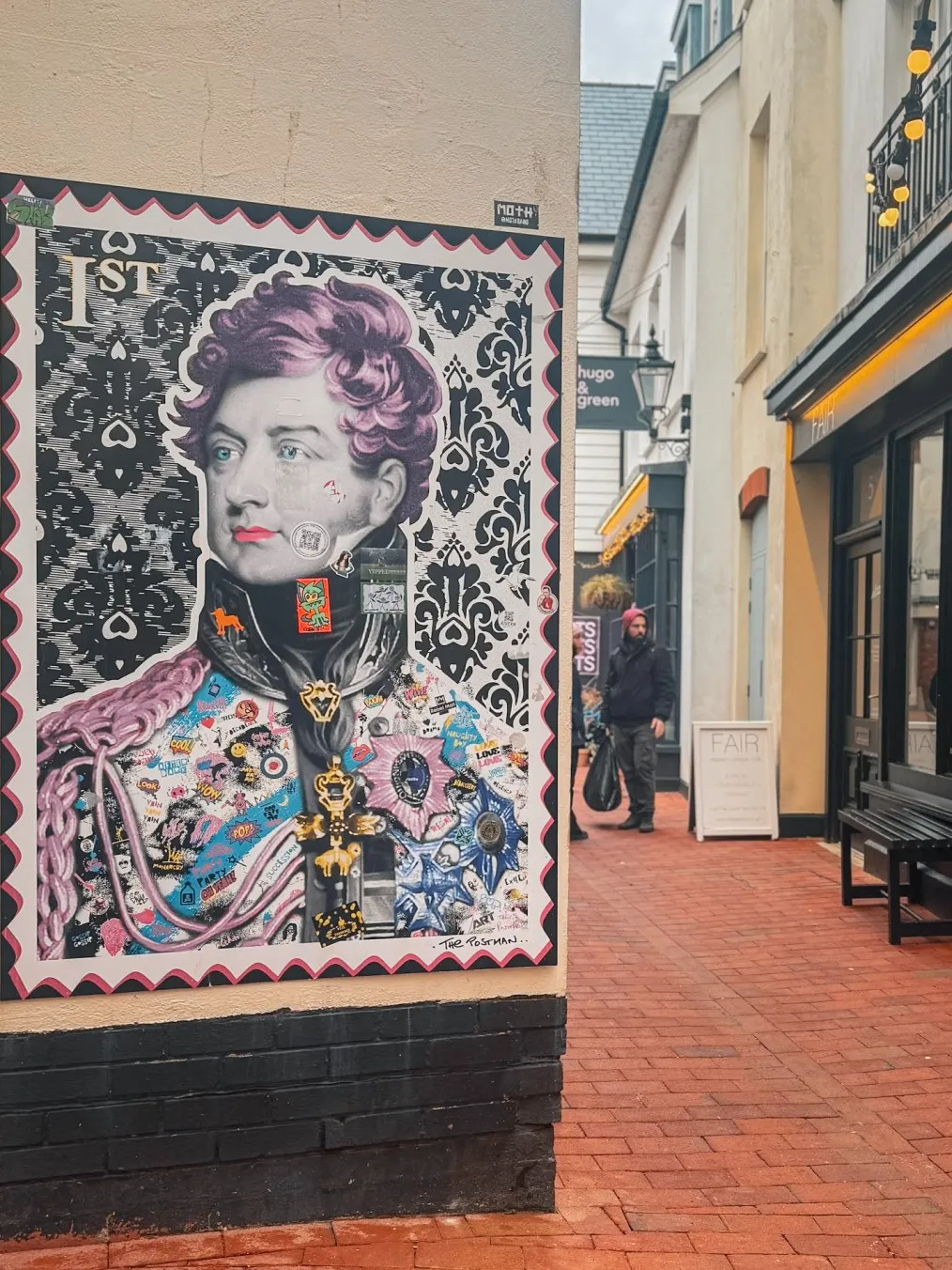
Vibrant, quirky murals sit alongside the historic buildings and cobblestones, a reminder of how far Brighton has come since its fishing village days. The next place shows you just how eccentric Brighton can be.
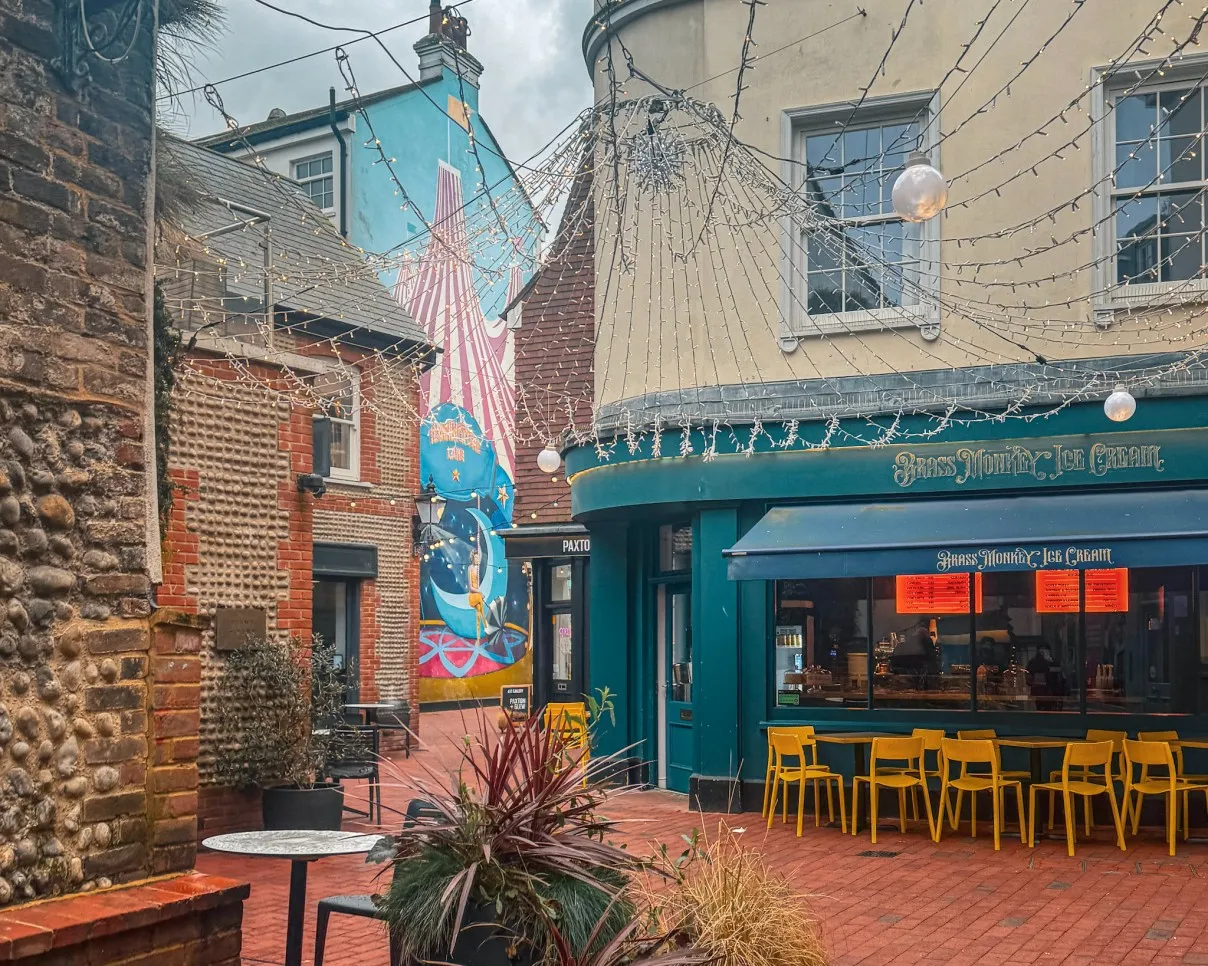
8. Explore North Laine
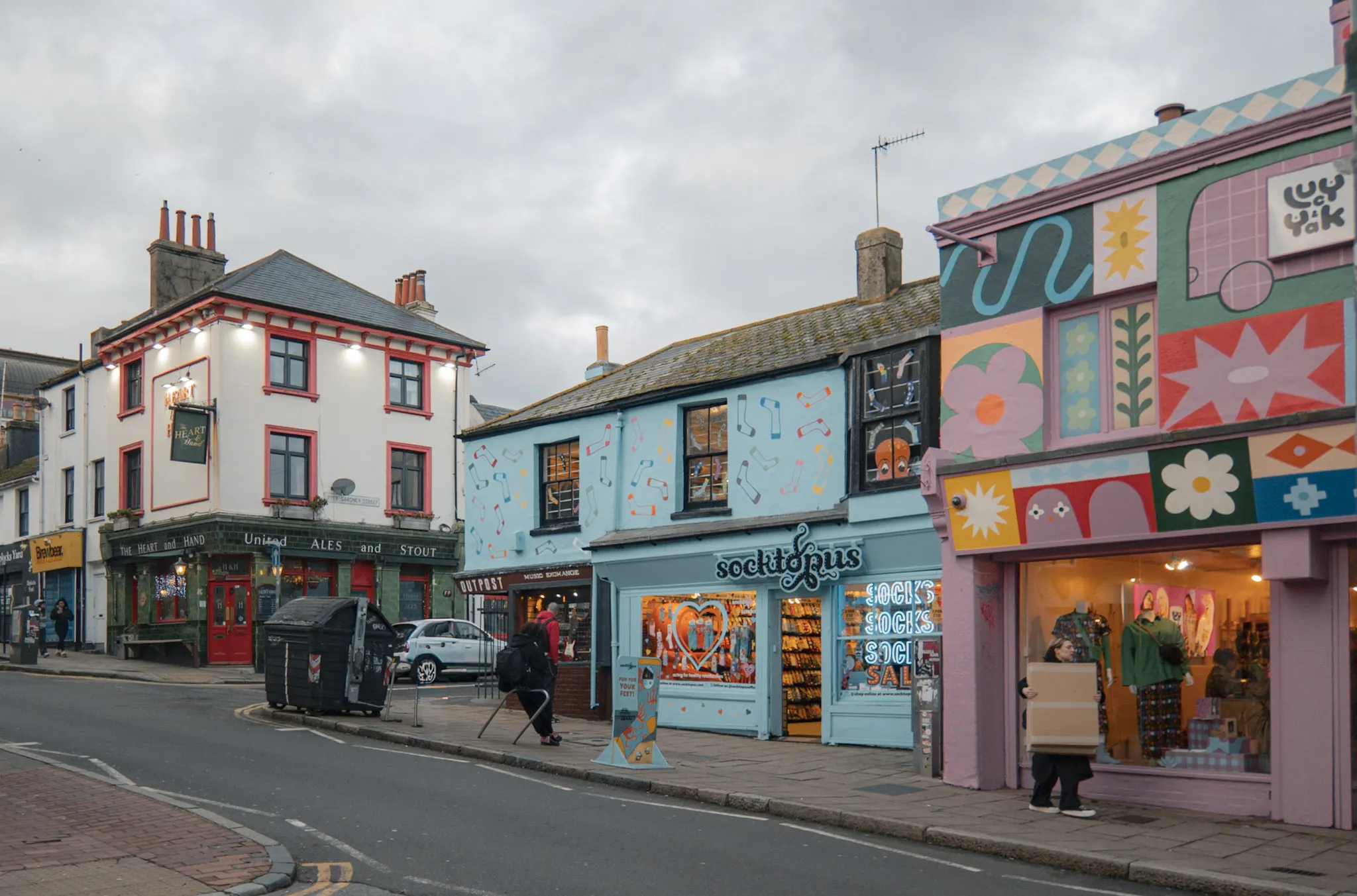
North Laine is about a 6 minute minute walk from The Lanes. Although they sound the same, they are two very different areas of Brighton. The Lanes are more upscale, you’re likely to get lost inside its winding alleys. It’s a living museum with history seeping from the walls.
North Laine on the other hand is characterised by vibrant buildings with loud and out there exteriors, similar to London’s Camden Town, but more authentic. It’s largely pedestrianised, with vintage shops, markets, cafes and bars. I ate here quite a lot. My favourites were the falafels from FilFil Cafe, and Fatto a Mano’s nduja pizza.
Kensington Gardens, one of the liveliest streets, is lined with independent shops like Oddballs (skateboards), Huu Huu (homeware), Retrocards (posters), Formula Fragrances (bespoke perfumes) and P***y Home Boutique (literally everything quirky). My favourite store here though is Resident, who have vinyl and CDs, along with a curated selection of very interesting books. It’s the type of place you enter and leave poorer, yet happier.
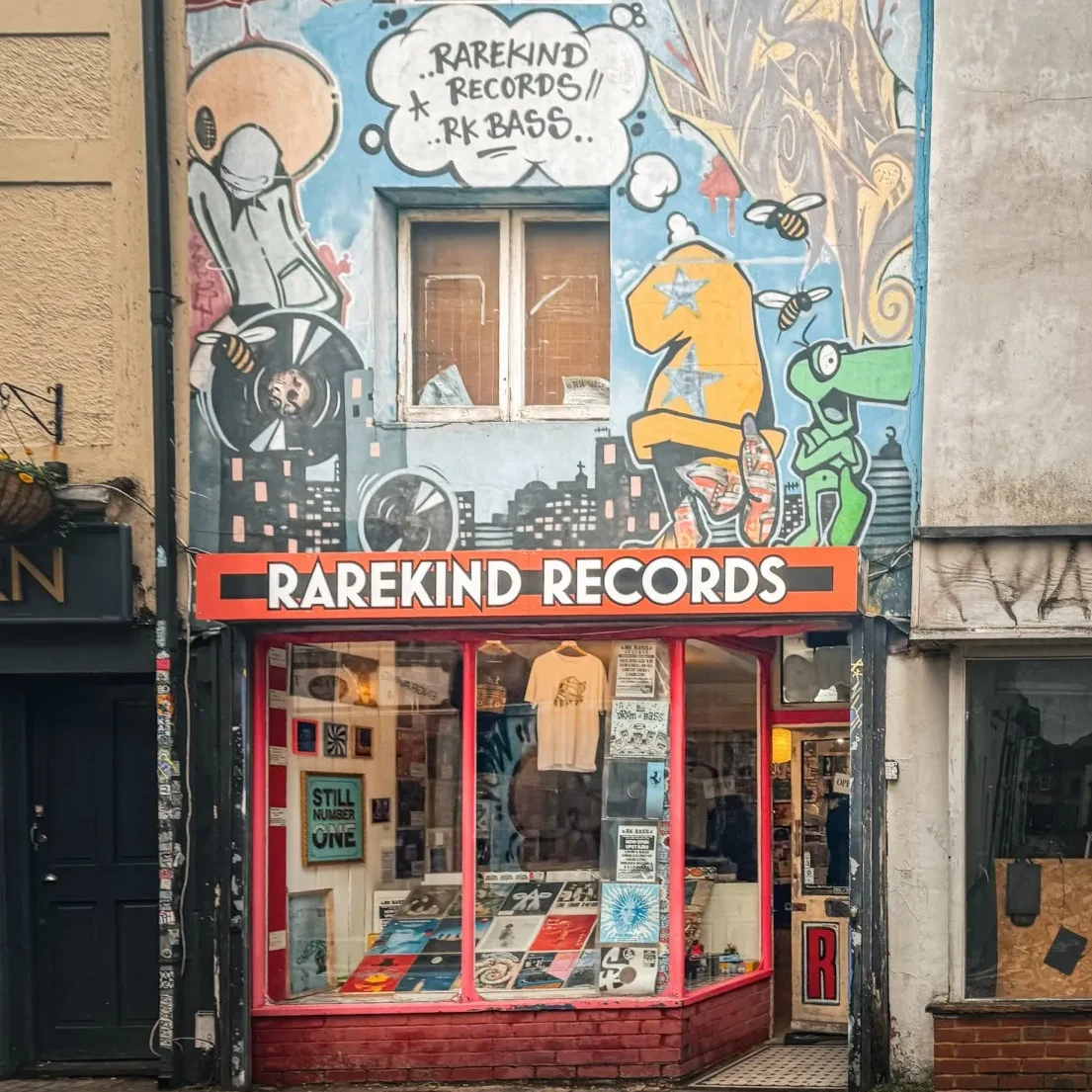
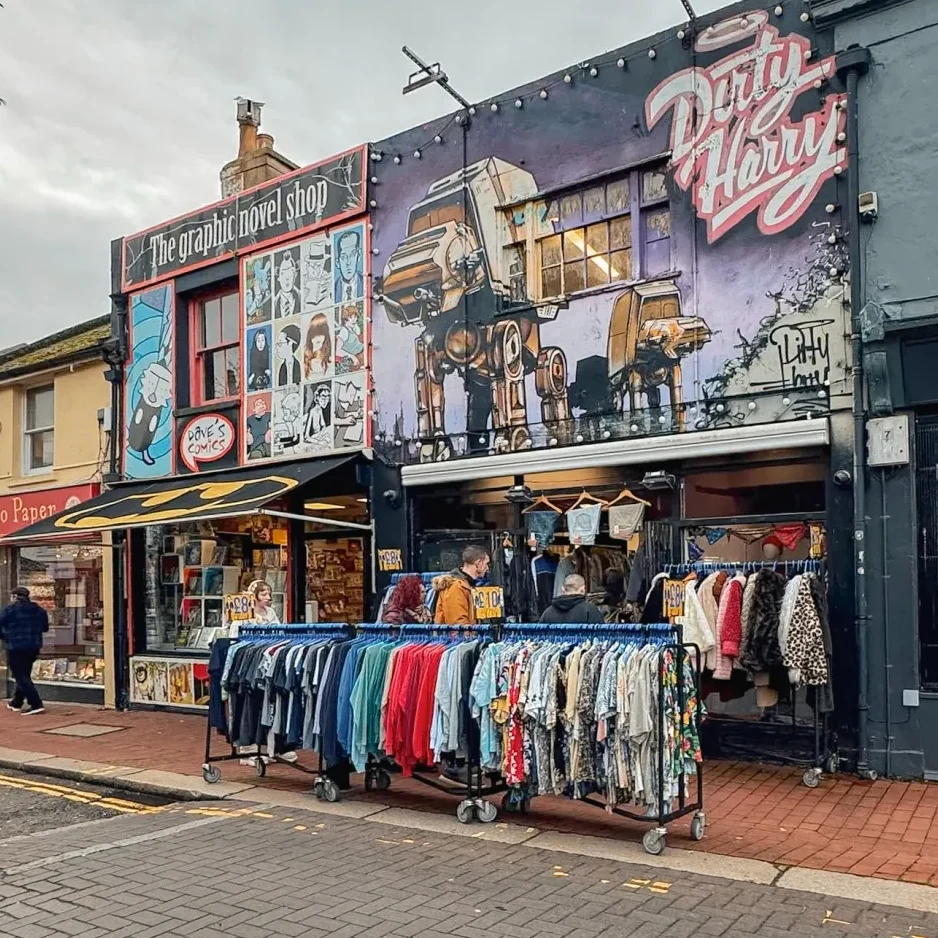
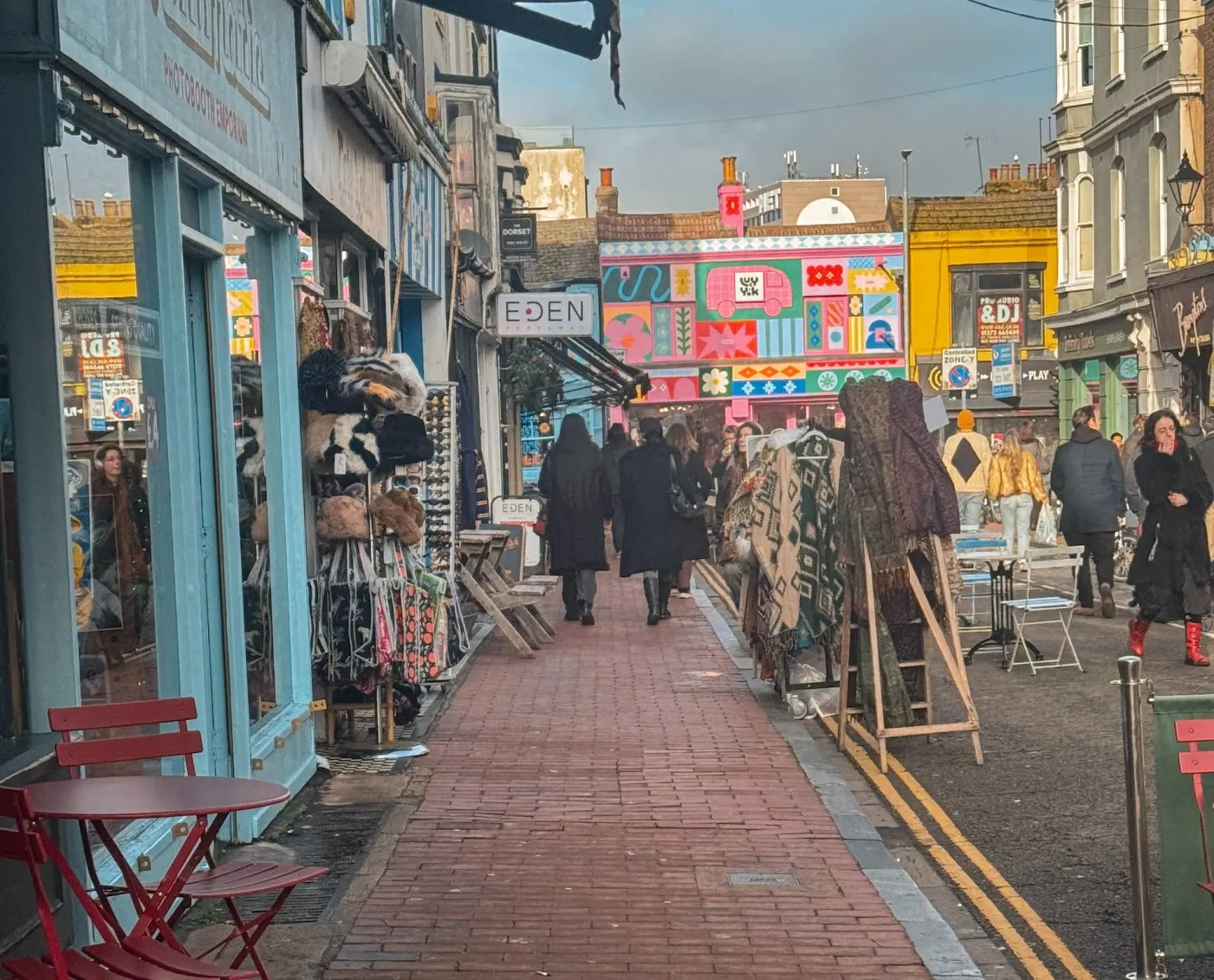
Long before North Laine was Brighton’s Bohemian enclave, it was an industrial suburb for over 100 years. Believe it or not, slaughter houses operated from here, which is crazy considering how many vegan eateries exist on these very streets today.
There is another shop in North Laine that deserves its very own entry.
9. Get Lost In Snoopers Paradise
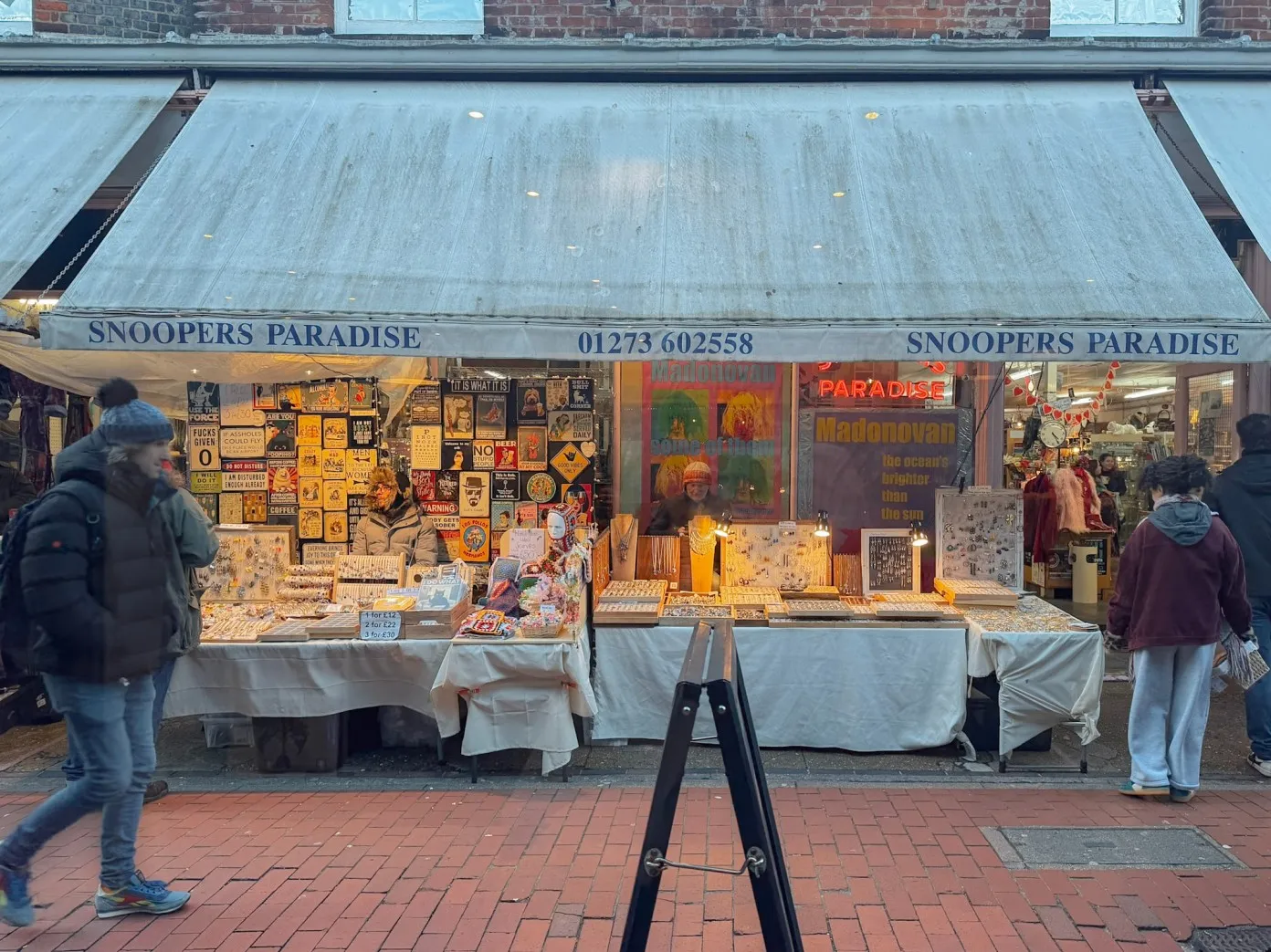
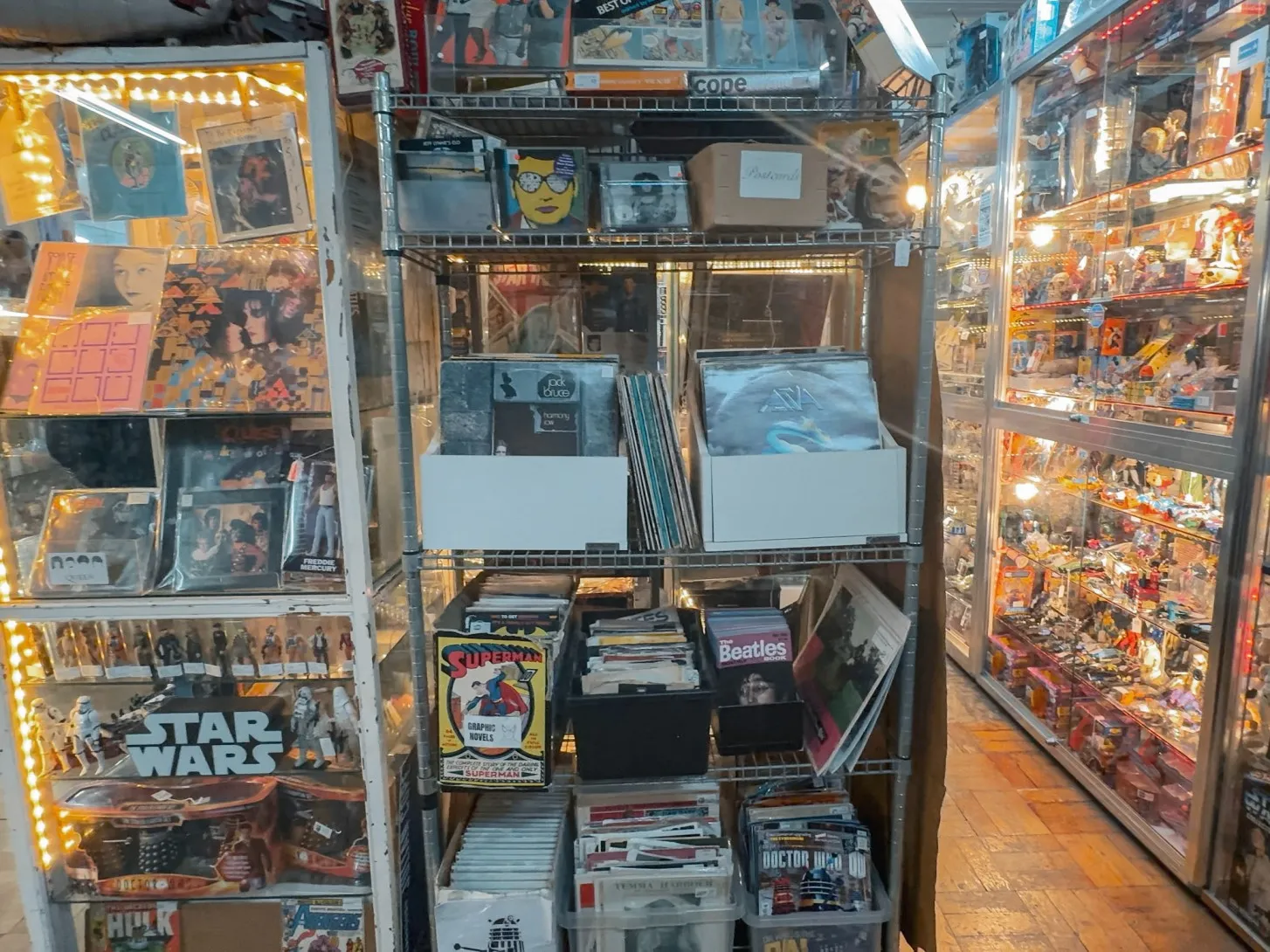
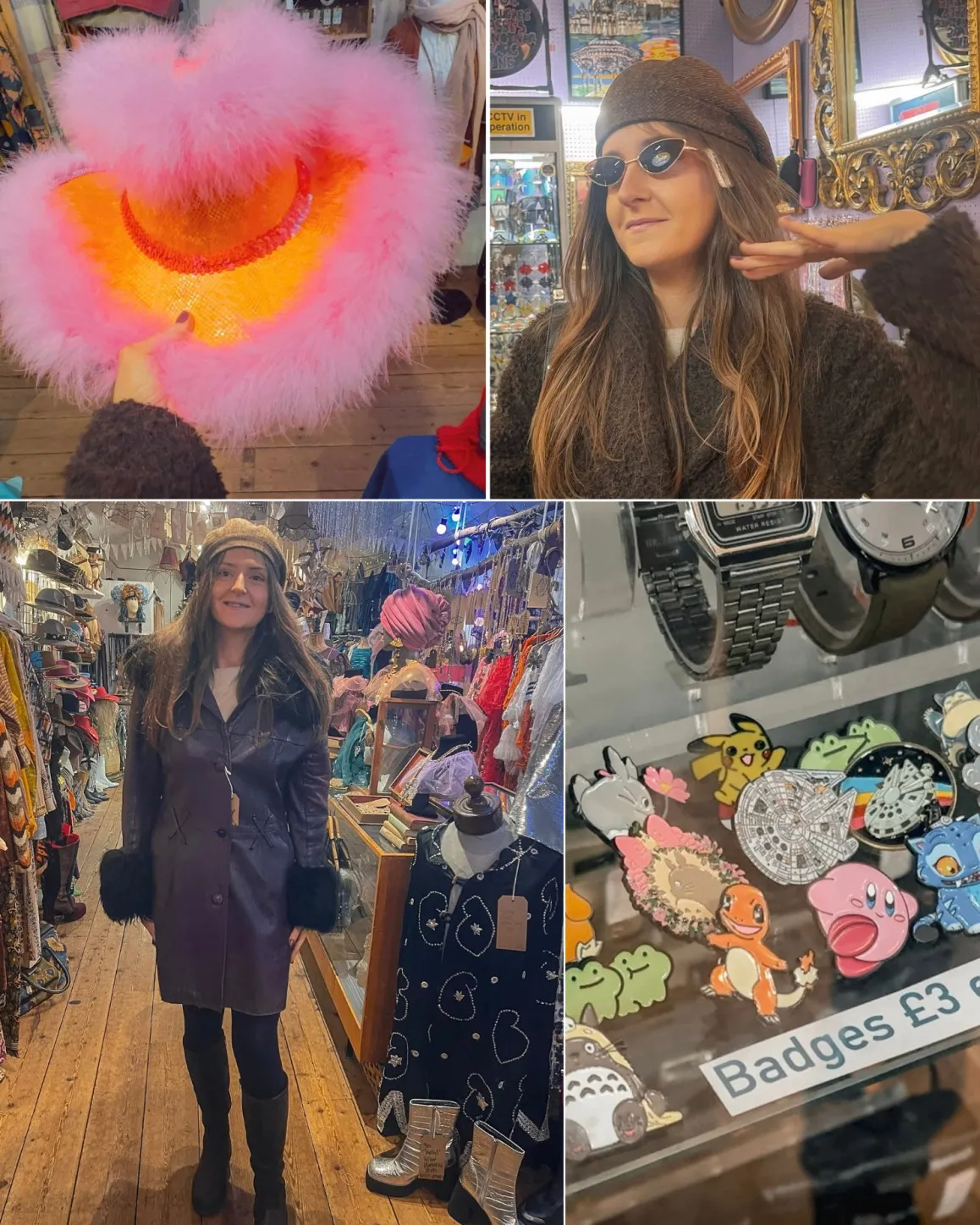
I just love a good vintage find. I am usually pretty picky but here, I found so many things I wanted. Located on Kensington Gardens, Snoopers Paradise is in fact a paradise for those of us who love perusing for a bargain. What’s better than finding something unique that has history? I spent over an hour searching every nook and cranny inside the best vintage shop in Brighton.
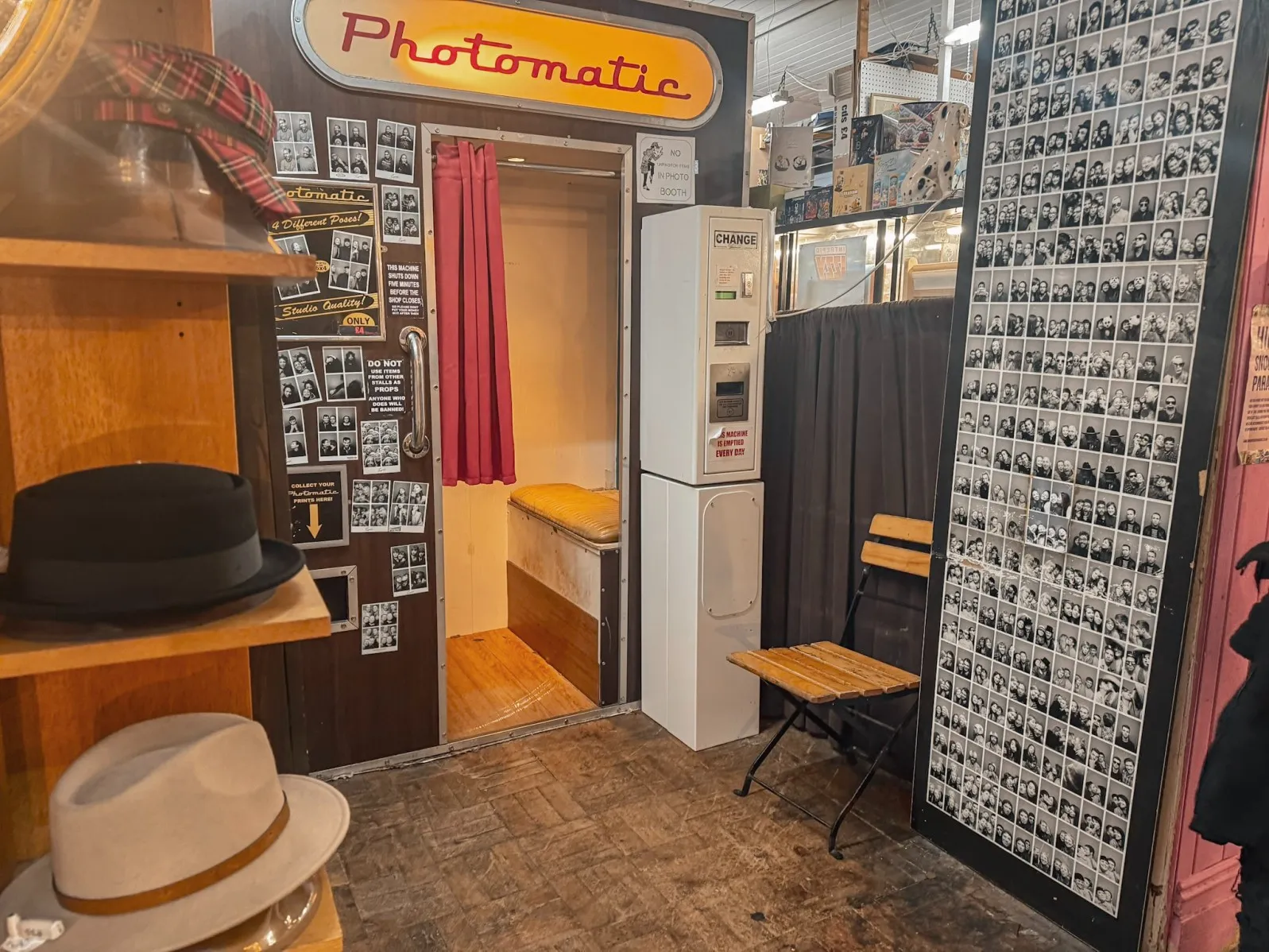
Snoopers Paradise is big enough to get lost in. Across its two floors is a mish-mash of second hand homeware, video games, clothing, accessories, jewellery and music records. There’s even a Berlin-style photobooth.
The clothes on the top floor were amazing. I found hand beaded dresses, funky trousers and one of a kind coats. I ended up purchasing a purple sheepskin 90s throwback jacket. There’s always room in your wardrobe for a quirky coat.
10. Try One Of The Best Cornish Pasties In The Country
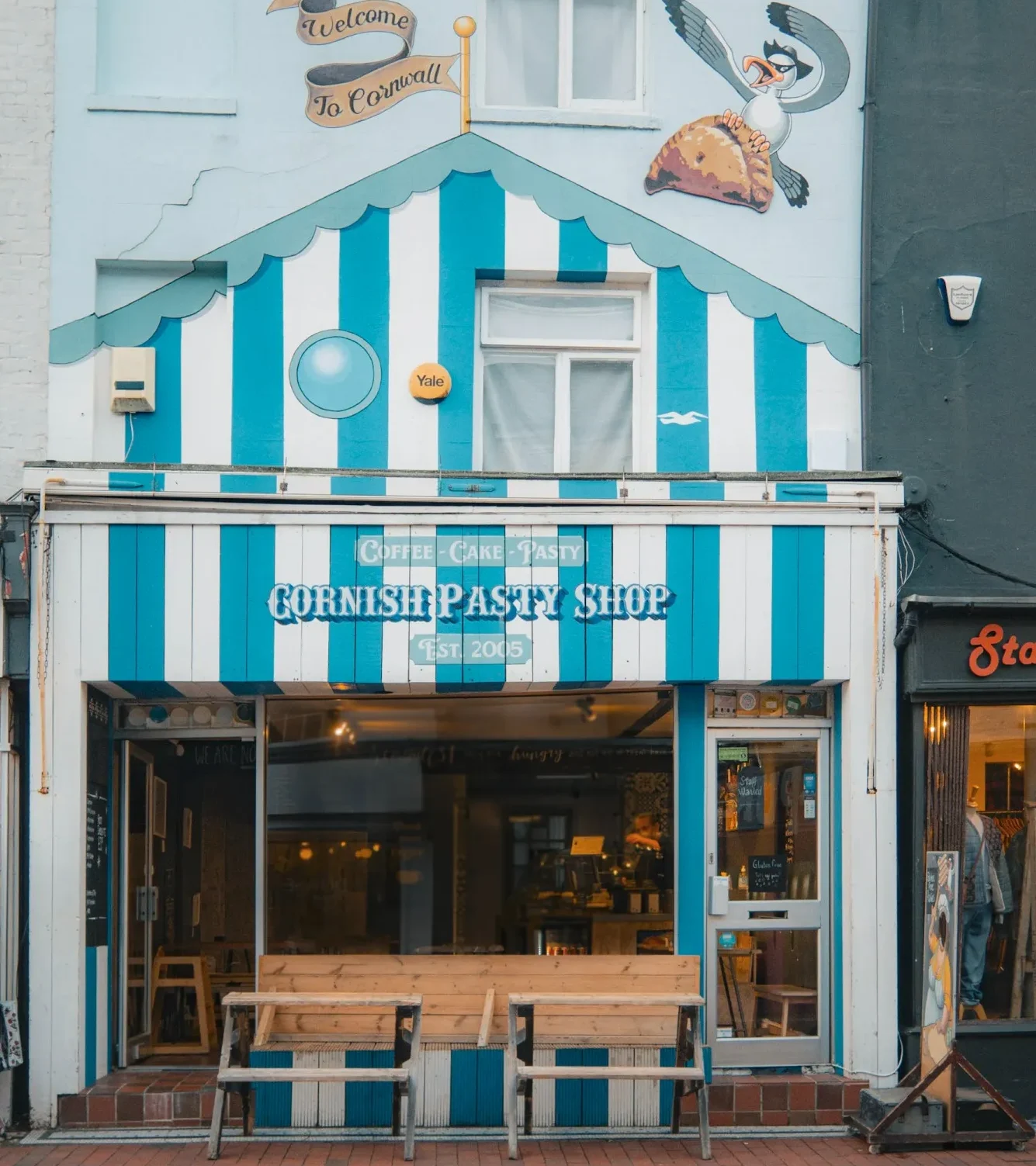
It might sound weird suggesting you eat a Cornish speciality when you are in Sussex, over 200 miles away from Cornwall. But I’m not telling you to try just any Cornish pasty, I’m sending you to Cornish Pasty Shop which has been ranked one of the best in the UK for the tastiest pasty. A “Cornish pasty” actually has protected status. To use the name, the pasties have to be prepared in Cornwall, but they can be baked elsewhere.
Pasties take me back. I grew up with a London Irish mum who would often tell me how much she craved a Cornish pasty (they aren’t widely available in Ireland) and would always look for them to no avail in rural Irish bakeries and shops. So now, when I see one I usually buy it in her memory. The lady had great taste.
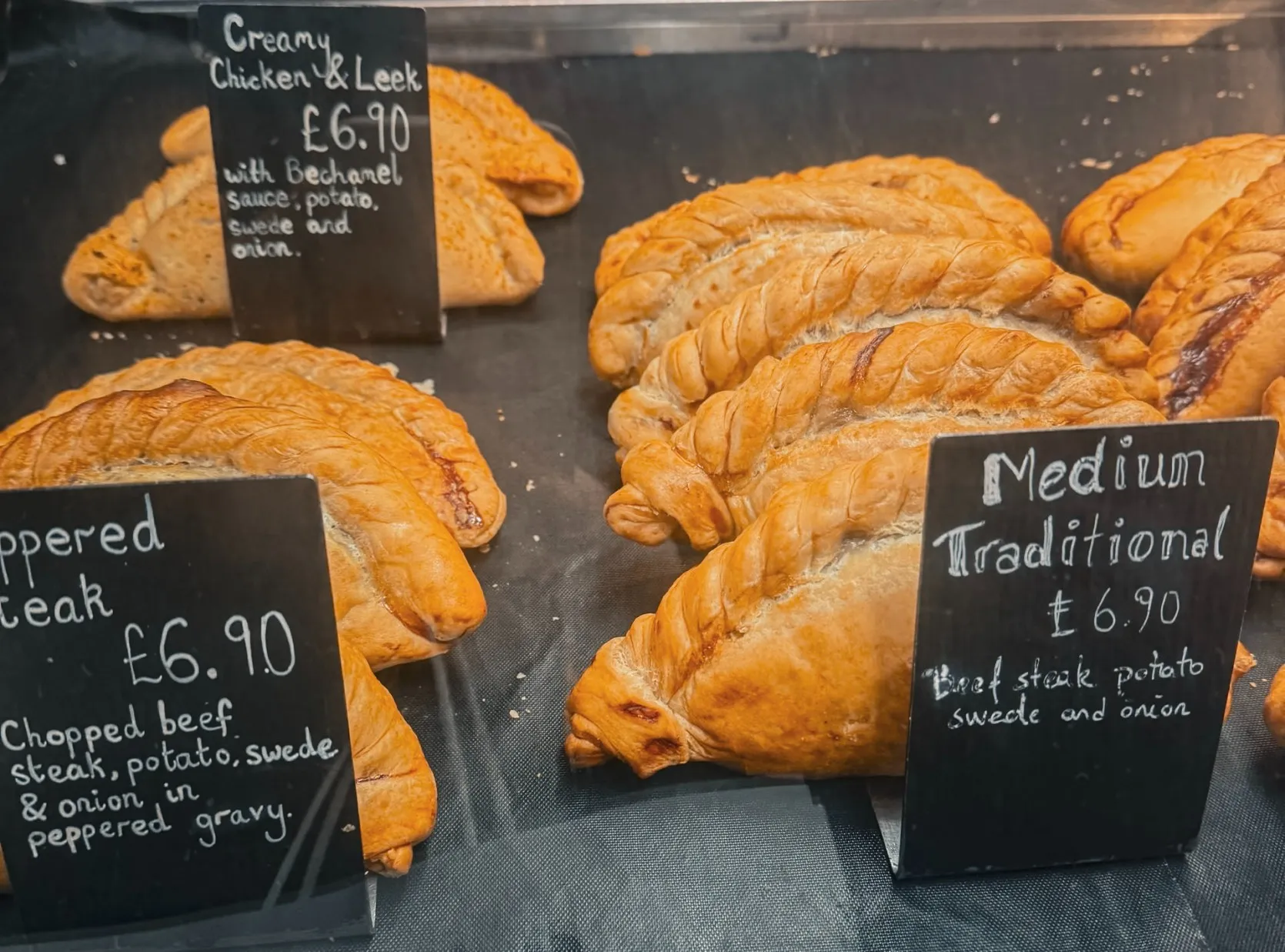
The pasties at Cornish Pasty Shop are as delicious as they get. These are large semicircles of flaky dough filled with pieces of tender steak, cubes of potato and swede, and diced onion. One piping hot bite fills you with comfort. They are the best rainy day snack. Along with the traditional pasties they have modern flavours like chicken katsu, creamy chicken and peppered steak with vegan and gluten free options available. Most pasties cost around £6.90 each.

Foodies might want to try the No Diet Club Food Tour. We found it so much fun and got to try some different food we would otherwise not have known about *cough* marmite ice-cream.
11. Visit Hove
Hove often gets overlooked, but it’s actually a cool spot. Brighton and Hove officially became one city in 2000, but it doesn’t take long to feel the difference between them. The crowds thin out, the arcades disappear and everything gets, dare I say, a little more elegant (sorry, but it’s true).
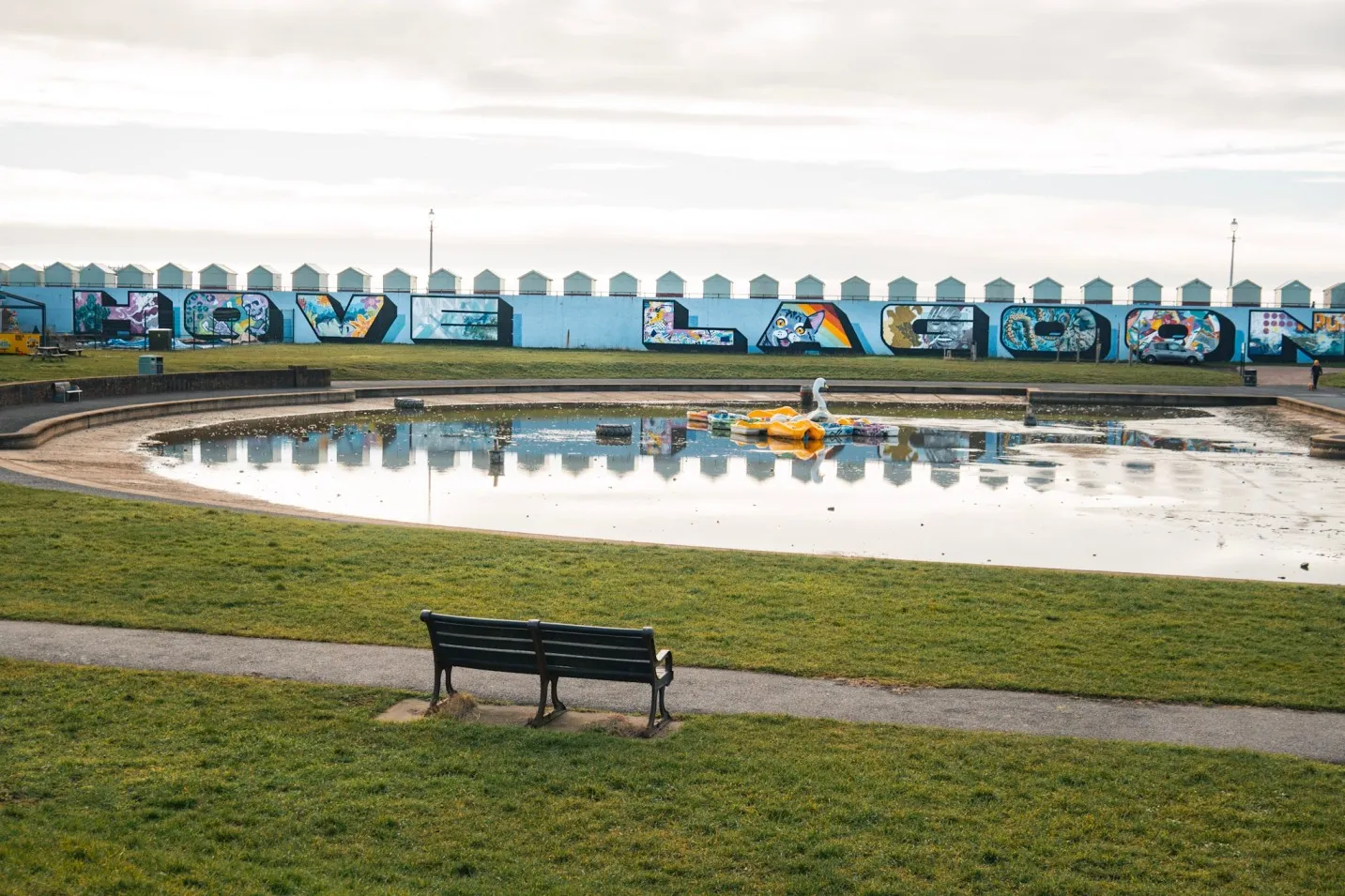
As I mentioned above, Hove’s promenade is lined with rows of colourful beach huts and they’re one of the most photographed sights in the city. Behind them are Hove Lawns, a long stretch of grass that’s perfect for a picnic when the pebbles get too much.
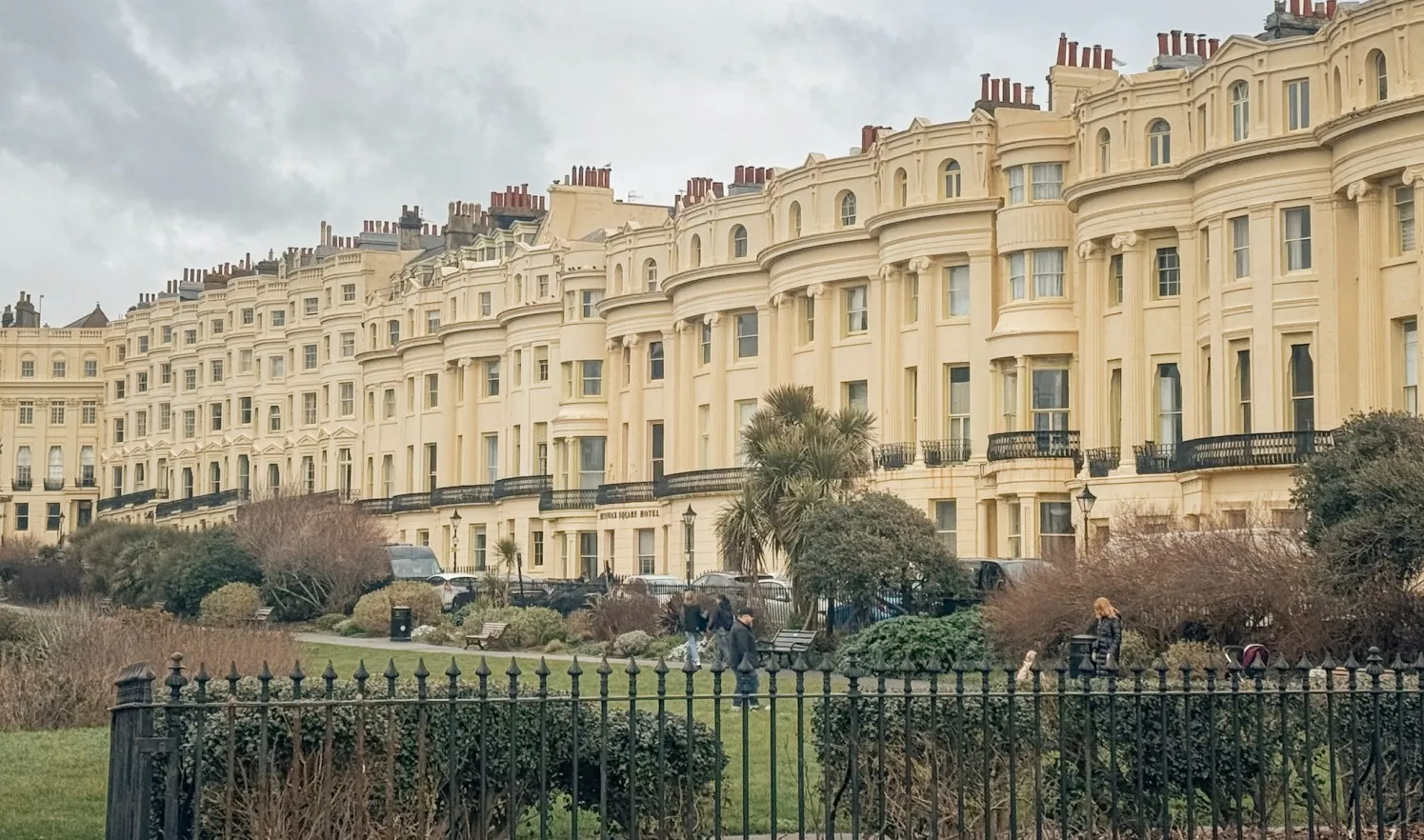
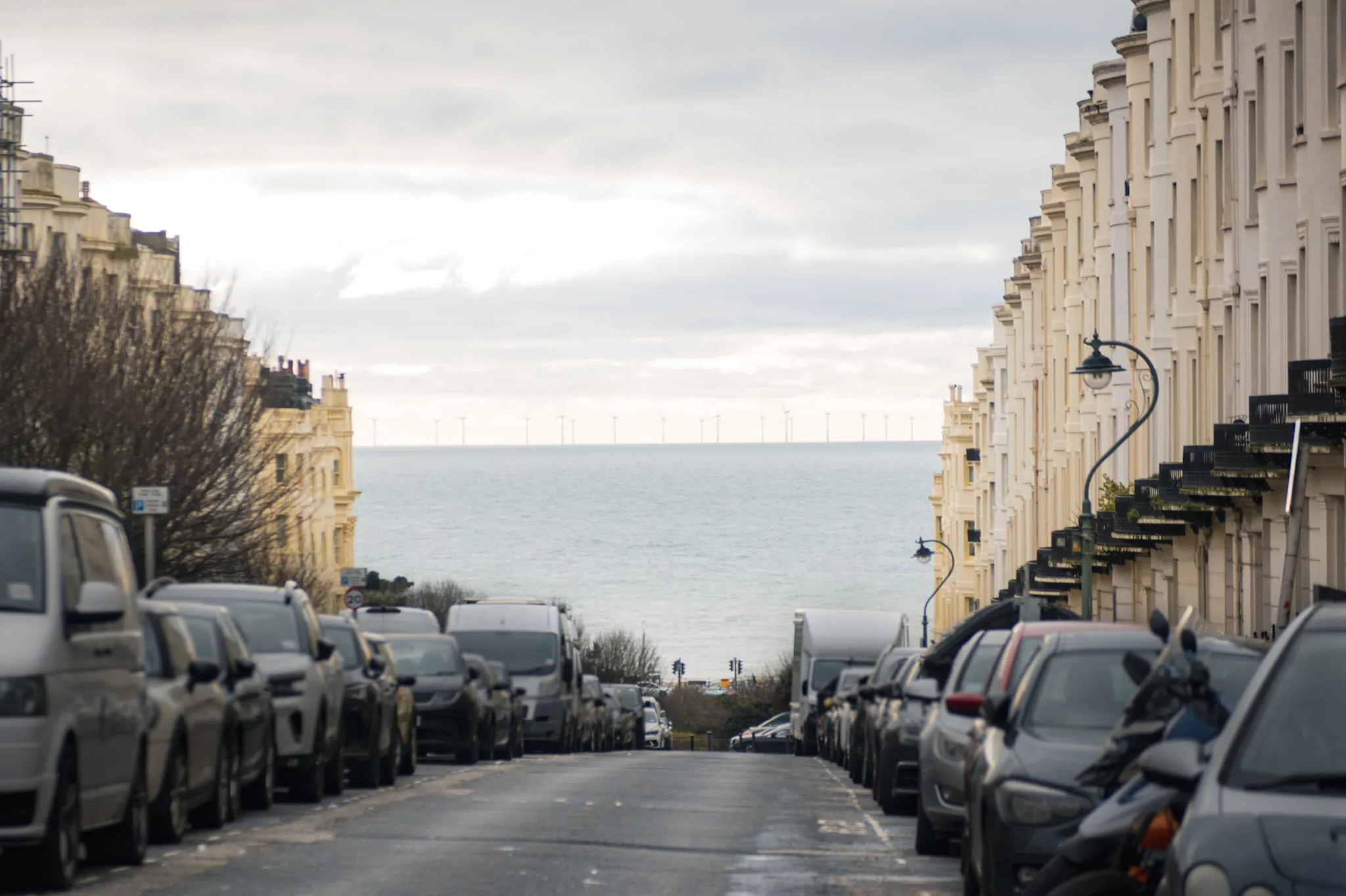
You can also see some of the grandest Regency architecture on the south coast. Brunswick Square, Adelaide Crescent and Palmeira Square are all long curves of cream-coloured townhouses, built in the early 1800s when Brighton was considered the most fashionable place in the country. They’re a lovely contrast to the colourful buildings of North Laine. They reminded me of the Mary Poppins house.
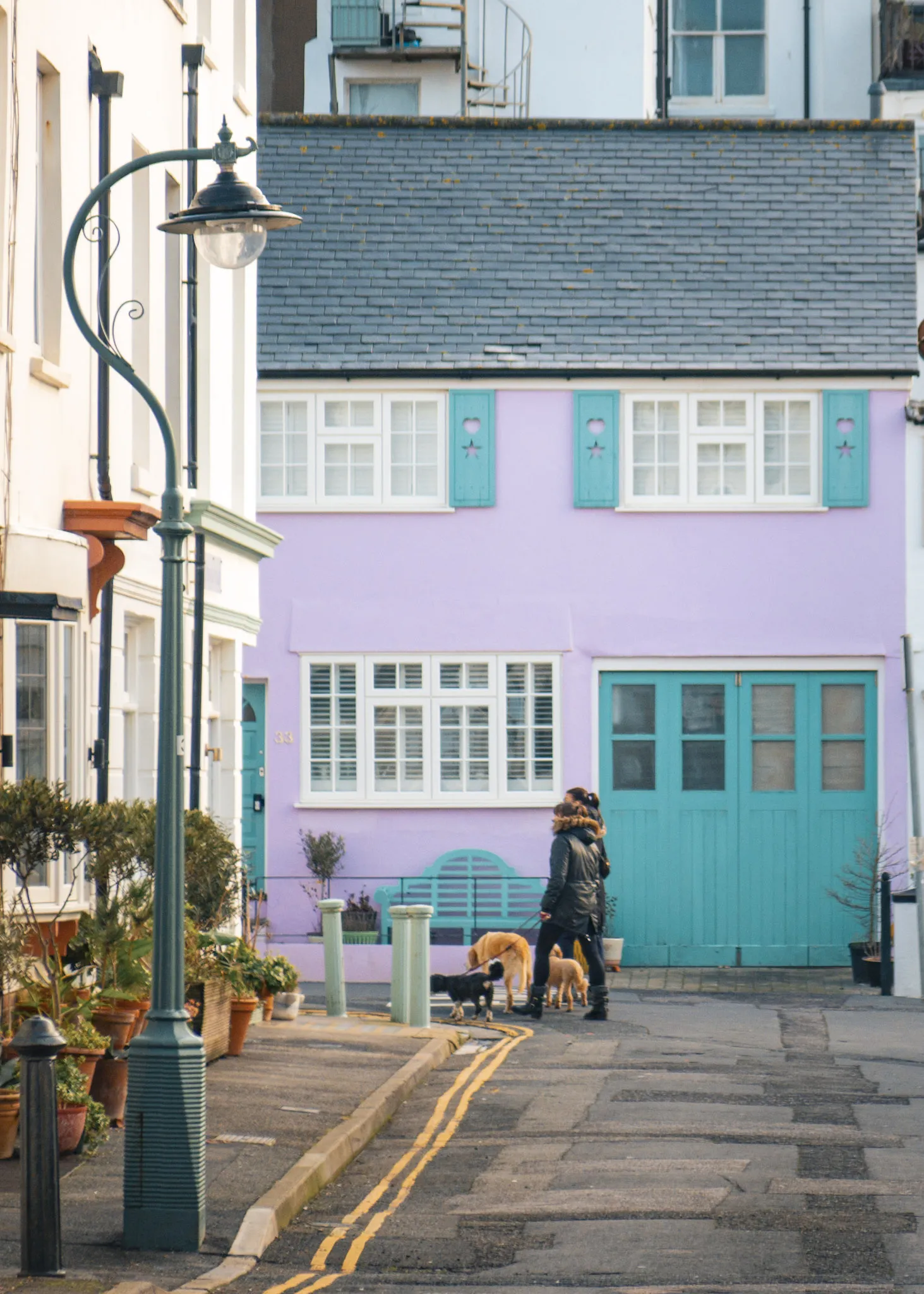
Keep walking west and you’ll reach Hove Lagoon, a man-made lake where you can try paddleboarding, windsurfing or kayaking. It’s also a great spot for families, with a playground and a café.
If you fancy something indoors, Hove Museum is worth a visit. Hove was actually one of the birthplaces of British cinema, with film pioneers making some of the country’s earliest movies here in the late 1800s. The museum tells that story, along with a fun collection of historic toys.
For food and shopping, head to George Street or Church Road, which are full of independent cafes, delis and restaurants. I loved WOLFOX Lab and SPRO Coffee Co, both speciality cafes.
Hove is about a 25 minute walk along the seafront from the Palace Pier or a short bus ride if your legs are tired from The Lanes. If you’ve got two days in Brighton, it’s well worth the trip.
12. Try Brighton’s Best Independent Cafes
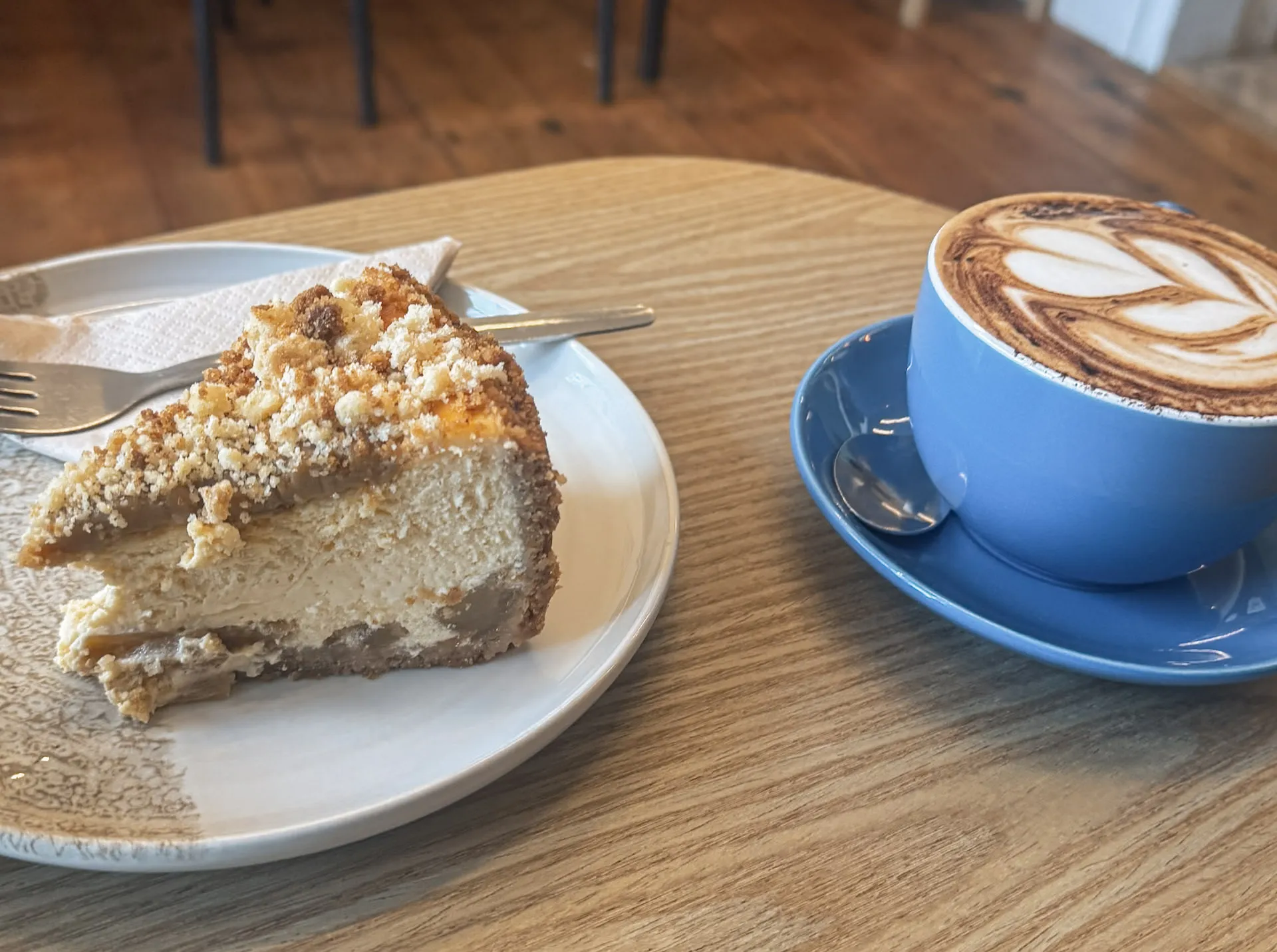
Brighton has one of the best independent cafe scenes I have seen in a long time. Every couple of steps is a trendy and cosy cafe with an array of artisanal desserts. This city is not the place to be on a diet.
I found that baristas went out of their way to say hello and shout goodbye, even in the hippest spots. It’s just another classic example of how friendly Brighton is.
These are my top picks of the best cafes in Brighton.
- Ease Coffee – I had the most delicious cinnamon apple pie cheesecake here, with a velvety cappuccino to match.
- Workshop Coffee Lab – minimalist interiors with very good matcha. I also recommend the cardamom bun.
- Cocoa Corner Cafe – cosy pink cafe with great coffee, cake, chocolate and plenty of savoury options. It’s a place to bring your book as you will want to stay a while.
13. Taste Traditional Fudge
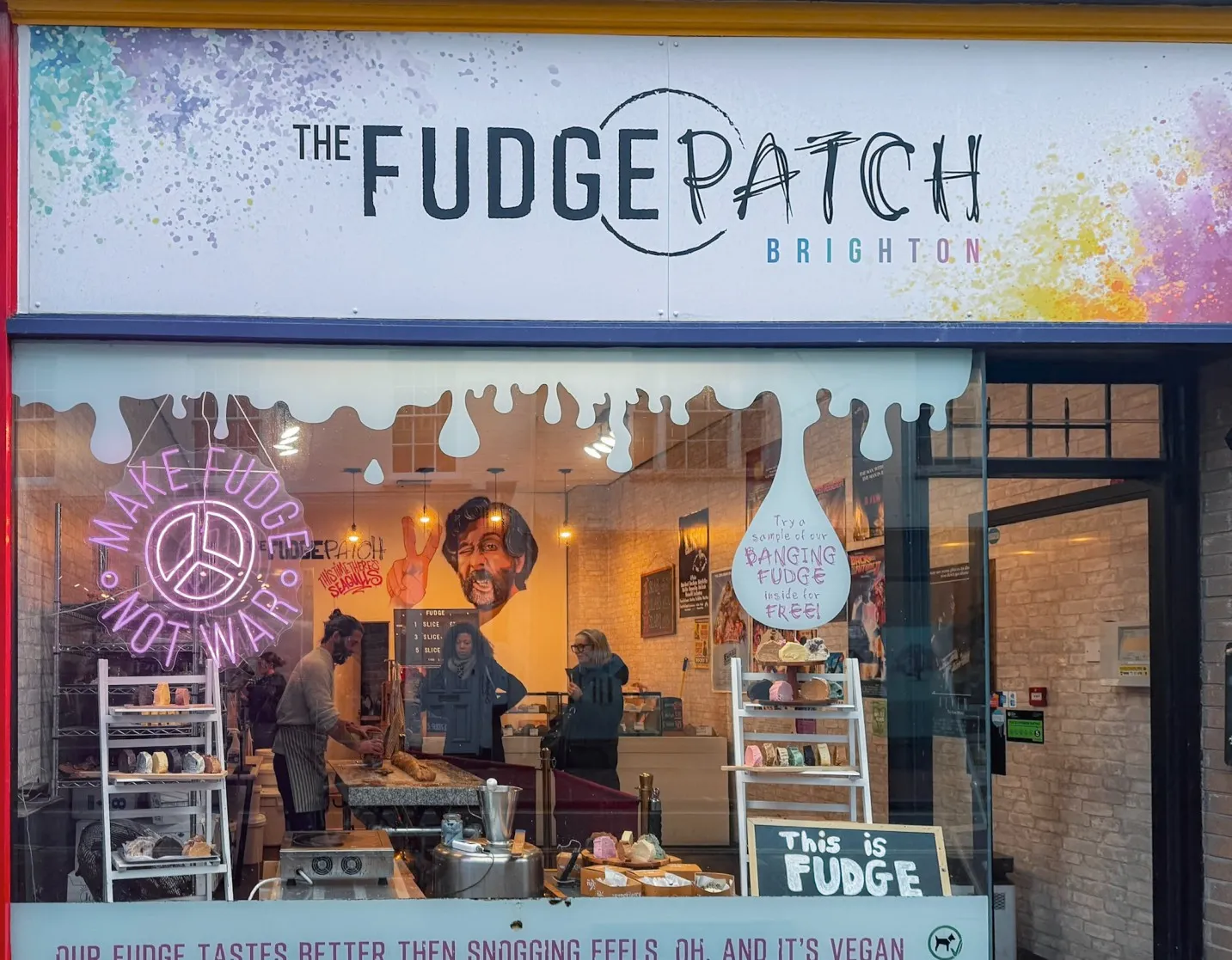
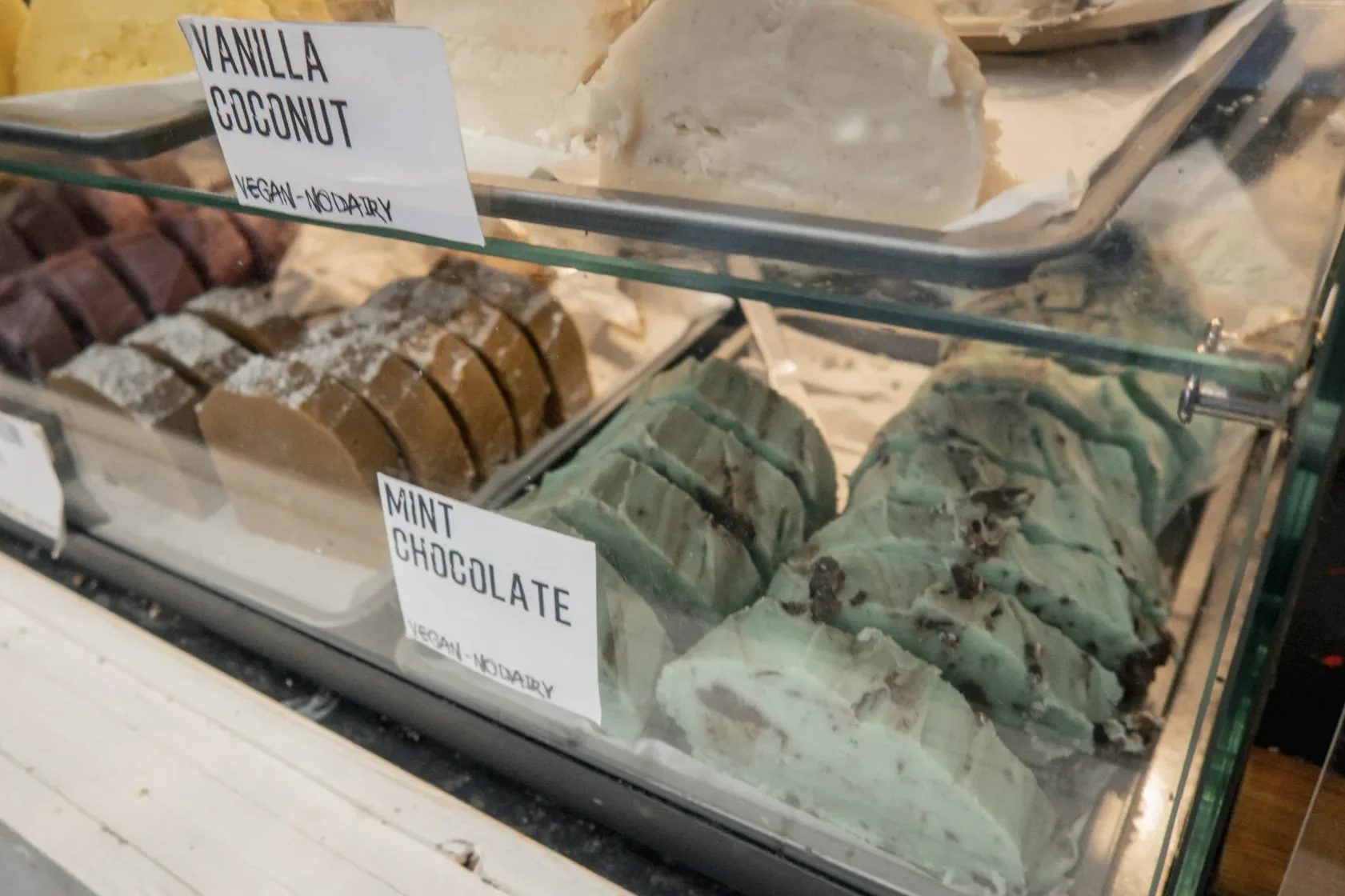
Founded in Greenwich Market London, Fudge Patch has just one other shop in the UK, located on Bond Street, Brighton. I am not the biggest fan of fudge. I don’t crave or seek it out. Walking by the Fudge Patch I could see the owner Patrick ‘Patch’ Hyde hand plaiting fresh fudge into a log on a cold stone slab. I was immediately drawn in. As soon as I walked through the doors he invited me to watch and taste a sample. Oh my God, it was delicious.
This is real fudge. It tastes entirely different to the mass produced versions I am used to which are typically overly sweet. This fudge is so smooth it melts in your mouth, but it also has a slight crumble to it. There are so many flavours. I ended up buying three different ones: cinnamon, mint and peanut butter. My favourite was the peanut butter but honestly I think they will all taste amazing. But if you are unsure they actually let you sample all of them. All of the fudge is also vegan and gluten free. They use rice milk rather than dairy.
The portions are huge. You are served by the slice, but it’s closer to a slab. It keeps for 2 to 3 weeks at room temperature so it’s easy to travel with. You can also freeze it. Slices cost £5.50 each.
Vegan Brighton: Where To Eat
You won’t be stuck picking the one sad veggie option on the menu. Brighton is easily one of the best places to eat vegan in the UK. Entire restaurants are built around plant-based food, and plenty of the people eating there aren’t even vegan.
You’ve already seen a few vegan-friendly picks in this guide: the tofu and jackfruit “fish” at Little Jack Fullers, the vegan pasties at Cornish Pasty Shop and the rice milk fudge at Fudge Patch. If you want a sit-down meal, these are the places to go:
- Terre à Terre in The Lanes has been serving creative vegetarian food since 1993, with plenty of vegan dishes, and is one of Brighton’s most celebrated restaurants.
- Purezza in Kemptown was the UK’s first vegan pizzeria and makes its own dairy-free mozzarella.
- Earth & Stars in North Laine is a historic pub with a fully plant-based menu and a great vegan Sunday roast.
- Bonsai Plant Kitchen is a fully plant-based restaurant serving Southeast Asian-inspired dishes and creative cocktails.
14. See A Comedy Show At Komedia
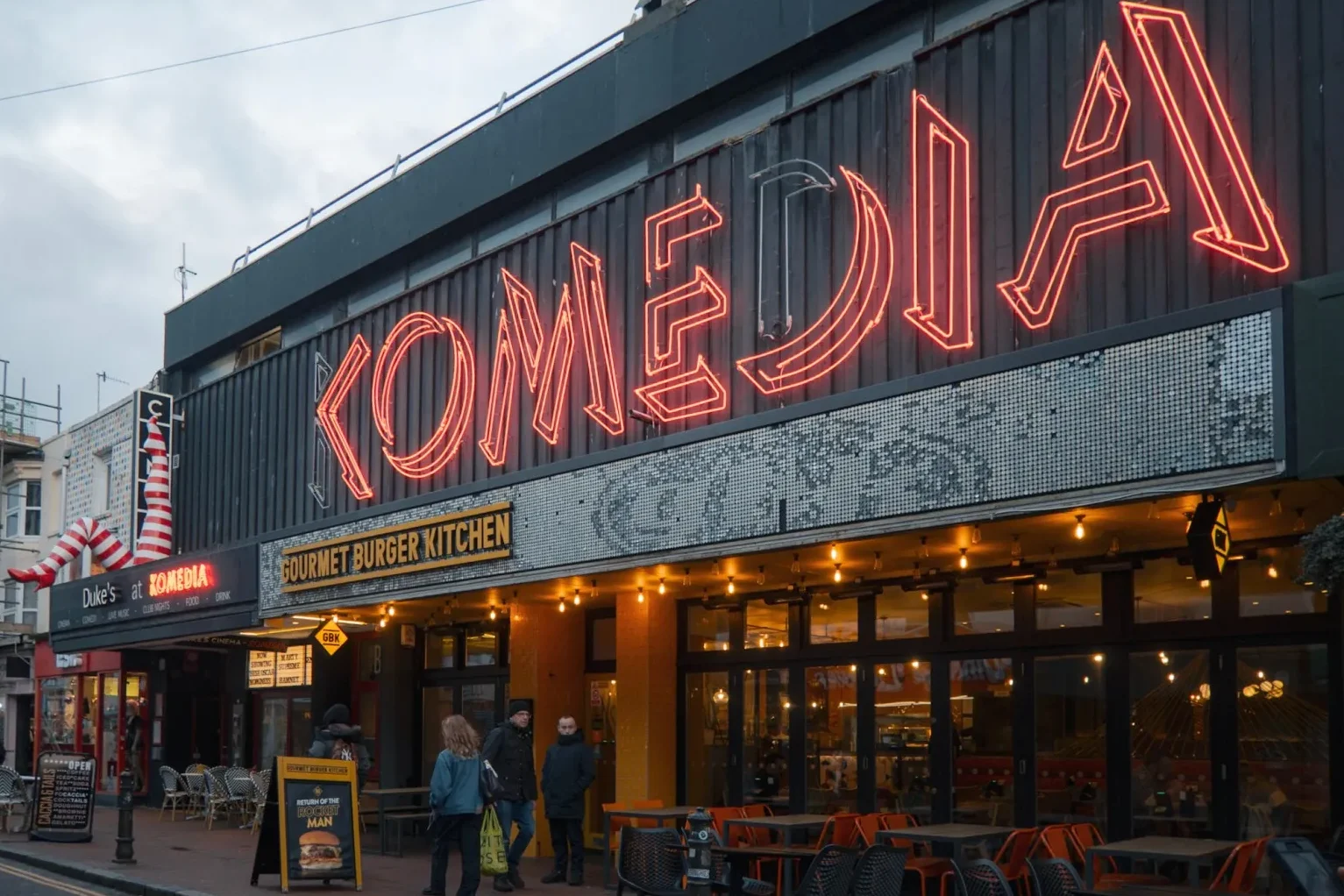
If you want a night out that feels truly Brighton, head to Komedia. Located in the heart of North Laine on Gardner Street, this independent venue has been making the city laugh since 1994.
Comedy is what Komedia is famous for. It has won the Chortle Award for Best Comedy Venue in the South a record number of times, and big names often pop in to try out new material. If you’re not sure what to book, start with the Komedia Comedy Club on a Friday or Saturday night, where you get three acts plus an MC.
It’s not just stand-up either. Komedia hosts over 700 events a year, including live music, drag, cabaret, club nights, live podcasts and even children’s theatre. It’s a regular venue for the Brighton Fringe and The Great Escape music festival, so it’s worth checking what’s on during your visit.
Most seated shows serve freshly prepared food, so you can grab dinner and a drink without leaving your seat. Seating is unreserved and allocated on arrival, so get there early if you want a good spot or a safe spot away from the comedians.
Upstairs is Duke’s at Komedia, a cosy two-screen cinema run by Picturehouse. They show new and classic movies, which makes it a great thing to do in Brighton on a rainy day. The screens are more intimate than regular cinemas along with spacious legroom.
Tickets can be booked on the Komedia website, and popular weekend shows sell out fast, so I’d recommend booking ahead.
Visiting in May? You’ll be in town for Brighton Festival and Brighton Fringe, when the whole city fills up with theatre, comedy, music and street performances. Many of the biggest shows take place at the Brighton Dome. Book accommodation early, as the city gets very busy.
15. Trafalgar Lane
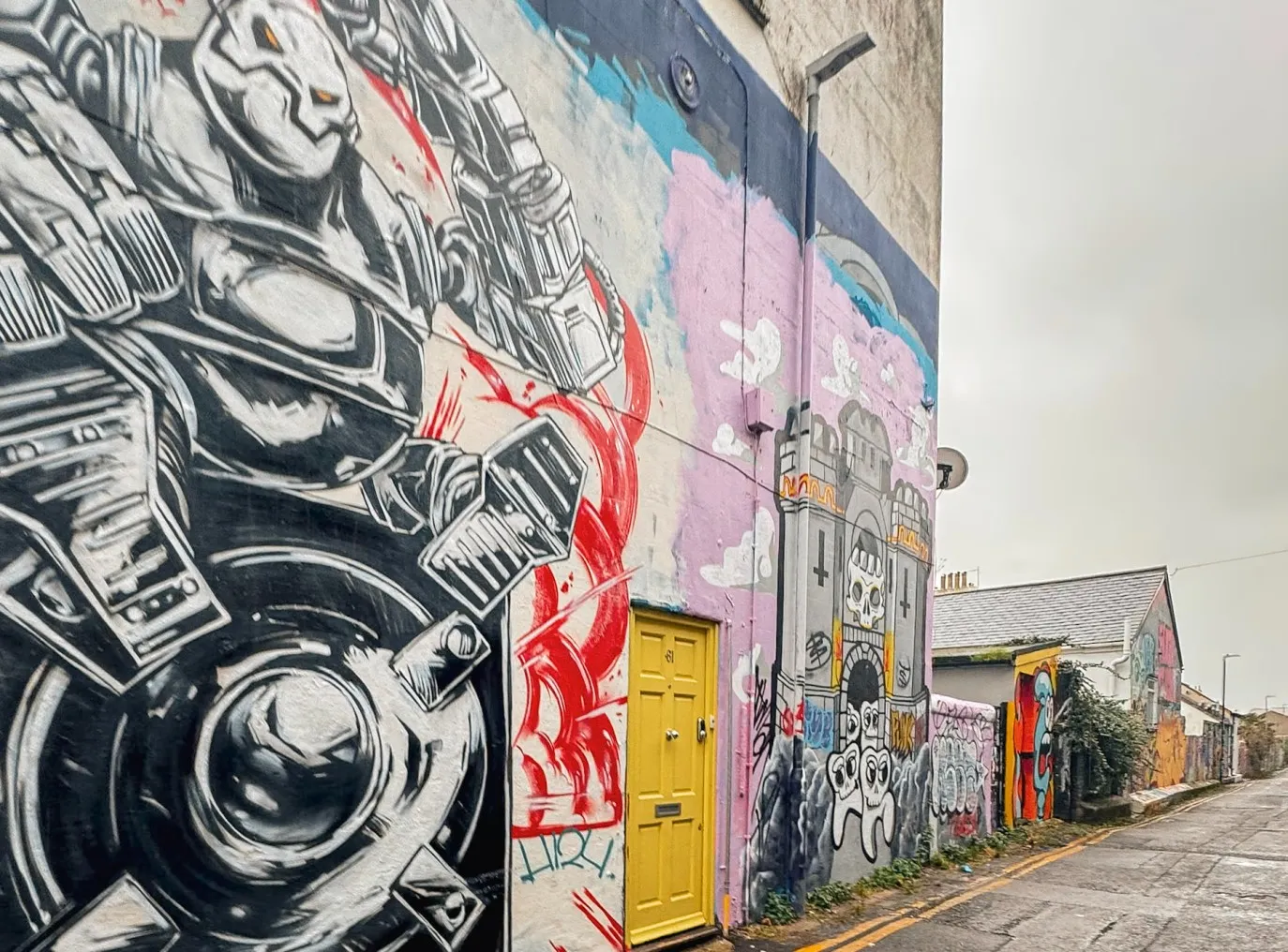
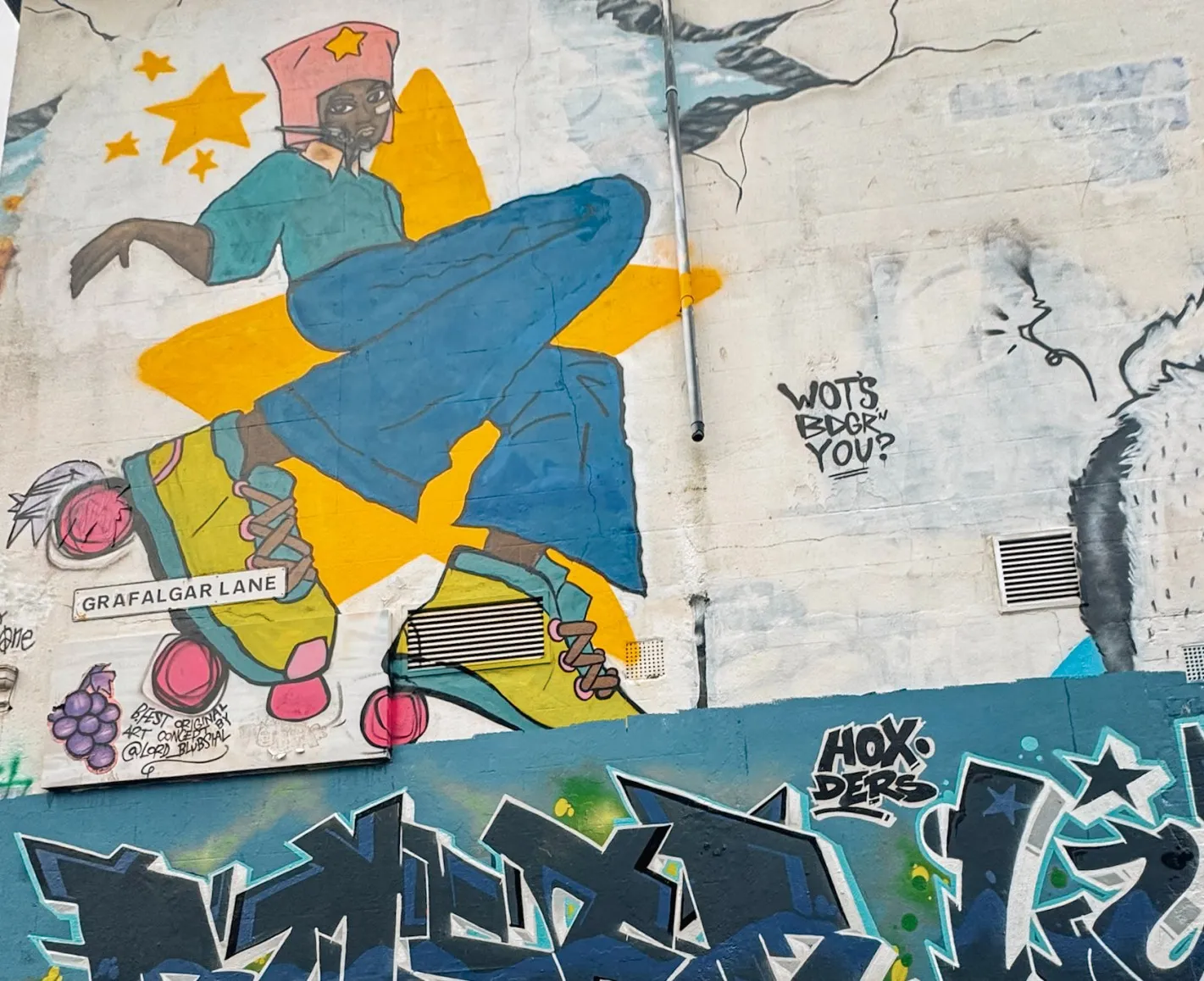
If you love street art, Trafalgar Lane is a must. This narrow little alleyway is just a few minutes’ walk from Brighton Station. You can find it at the top of North Laine just after the Lord Nelson pub. Almost every inch of this alley is covered in murals, graffiti and colourful characters. Local artists have nicknamed it “Grafalgar Lane”.
Look out for work by local legends like SNUB23, whose robot characters have been part of Brighton’s streets since the late 1990s, and Sinna One’s cartoon animals. The best part is that the walls change all the time, so what I saw might be painted over by the time you visit. We actually saw some lads adding their own artwork.
On the way, don’t miss the Prince Albert pub on Trafalgar Street. Its side wall is covered with a huge tribute to musicians we’ve lost, painted by local artists Req and Sinna One. The portraits are incredibly detailed. Some famous faces include Amy Winehouse, Bob Marley, Freddie Mercury, David Bowie and Sid Vicious. It was also home to Banksy’s famous Kissing Coppers, two policemen locked in a kiss. The original was removed and sold years ago, and what you see now is a copy.
16. Get A Dose Of Nostalgia At The Toy Museum
Just a few steps further up Trafalgar Street is one of the quirkiest things to do in Brighton. The Brighton Toy and Model Museum is tucked away in four Victorian arches right underneath Brighton Station.
The museum is packed with over 12,000 toys and models, from teddy bears and dolls to tin toys and puppets. The big highlight is the model railways, with some of the collection’s classic trains running along detailed miniature landscapes. It was such a trip down memory lane, especially the Basil Brush hand puppets which I watched all the time as a kid.
The arches outside are painted with a full-size mural of a carriage from the Brighton Belle, a famous old luxury train that used to run between London and Brighton. You’ll even spot the actor Laurence Olivier at one of the windows.
It’s a small, charity-run museum, staffed mostly by volunteers, which makes it feel really personal. It also runs special exhibitions and vintage train days throughout the year, so check what’s on before you go.
It’s a great rainy day option, especially if you’re travelling with kids or you’re a big kid at heart. The museum is normally open Tuesday to Saturday, and children under five go free while adults cost £10.
17. Have The Best Night Out In The UK
It’s not too much of a surprise. that a city as cool and quirky as Brighton has a crazy nightlife. We did not have one bad night out here. It’s not only known as the best place to go out in the UK but Time Out has recently named it one of the top 10 cities in the world for nightlife.
- Alcotraz: Immersive prison bar/ comedy experience. You are kitted out in an orange jumpsuit, “locked up”, and treated like a prisoner. The people running it are so funny. You’re challenged to smuggle in your own alcohol which the prison guards will make bespoke cocktails from.
- Madam Lola’s Cabaret & Vaudeville: the only artist-led cabaret in the UK. Also features burlesque, variety, aerial & fire. Lots of food and tasty cocktails are available. The bar is open until 2 AM.
- The Plotting Parlour: intimate cocktail bar with original innovative cocktails. You have to try the peanut butter maple Old Fashioned – it is divine. The whole vibe is cool with a mix of distressed furniture, dim lighting and dark wood.
- Cut Your Wolf Loose: whiskey & cocktail bar. The selection of whiskey is huge . They have some of the finest whiskies in the world but the guys here are not pretentious or snobby at all – you are even encouraged to draw on the walls. Prices range from £5 to around £40 per 25 ml.

Travelling on your own? Brighton Bar Crawl is a fun way to meet new people, they go to 5 different bars and clubs, with shots included.
18. Walk The Undercliff Walk To Saltdean
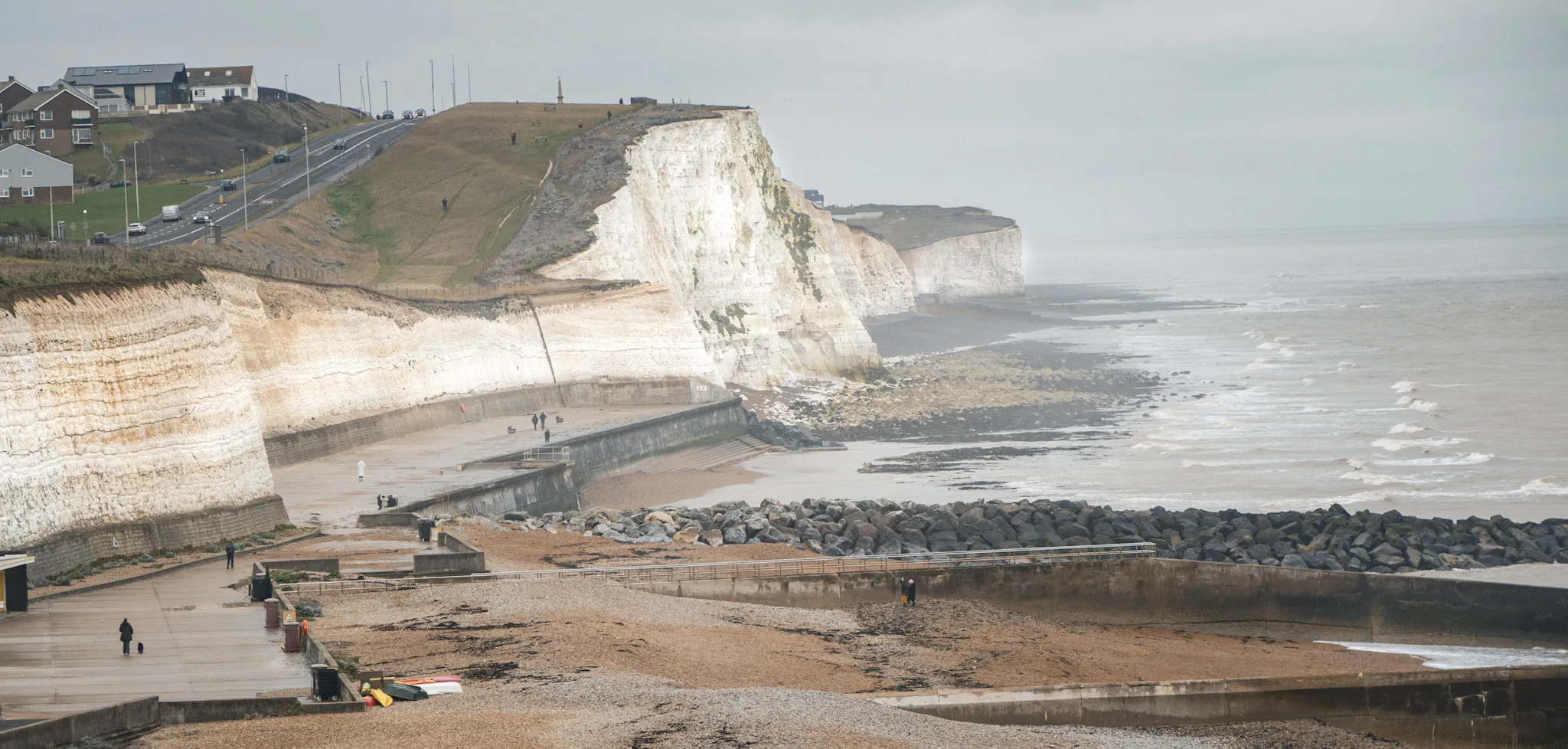
When people think of white chalk cliffs in Sussex, they usually picture the Seven Sisters. They’re beautiful, but they can get very busy, especially on summer weekends. To experience towering white cliffs without the crowds, head east from Brighton to Saltdean instead.
The best way to experience it is the Undercliff Walk. This flat, paved path starts behind the Asda at Brighton Marina and runs for about 3 miles (5km) to Saltdean, with sheer chalk cliffs on one side and the sea on the other. It was built in the early 1930s as a sea wall to protect the cliffs from erosion and today it makes for one of the most dramatic walks on the south coast. We visited on a windy January day, and found that the whiteness of the cliffs made it feel far less gloomy than a typical winter stroll.
It takes about an hour if you walk straight through. Halfway along you’ll pass the pretty village of Rottingdean and there are cafes and public toilets along the way at Ovingdean, Rottingdean and Saltdean.
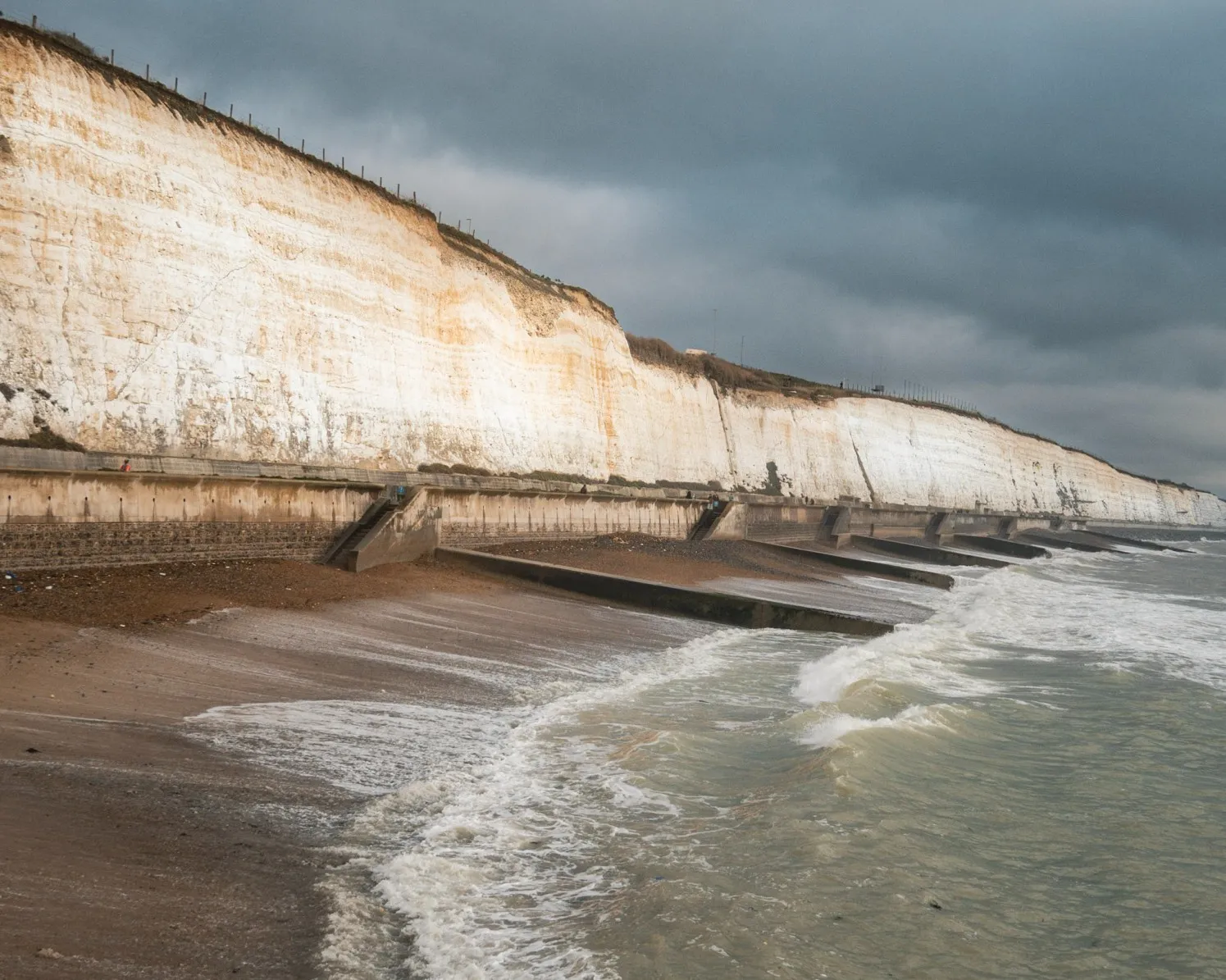
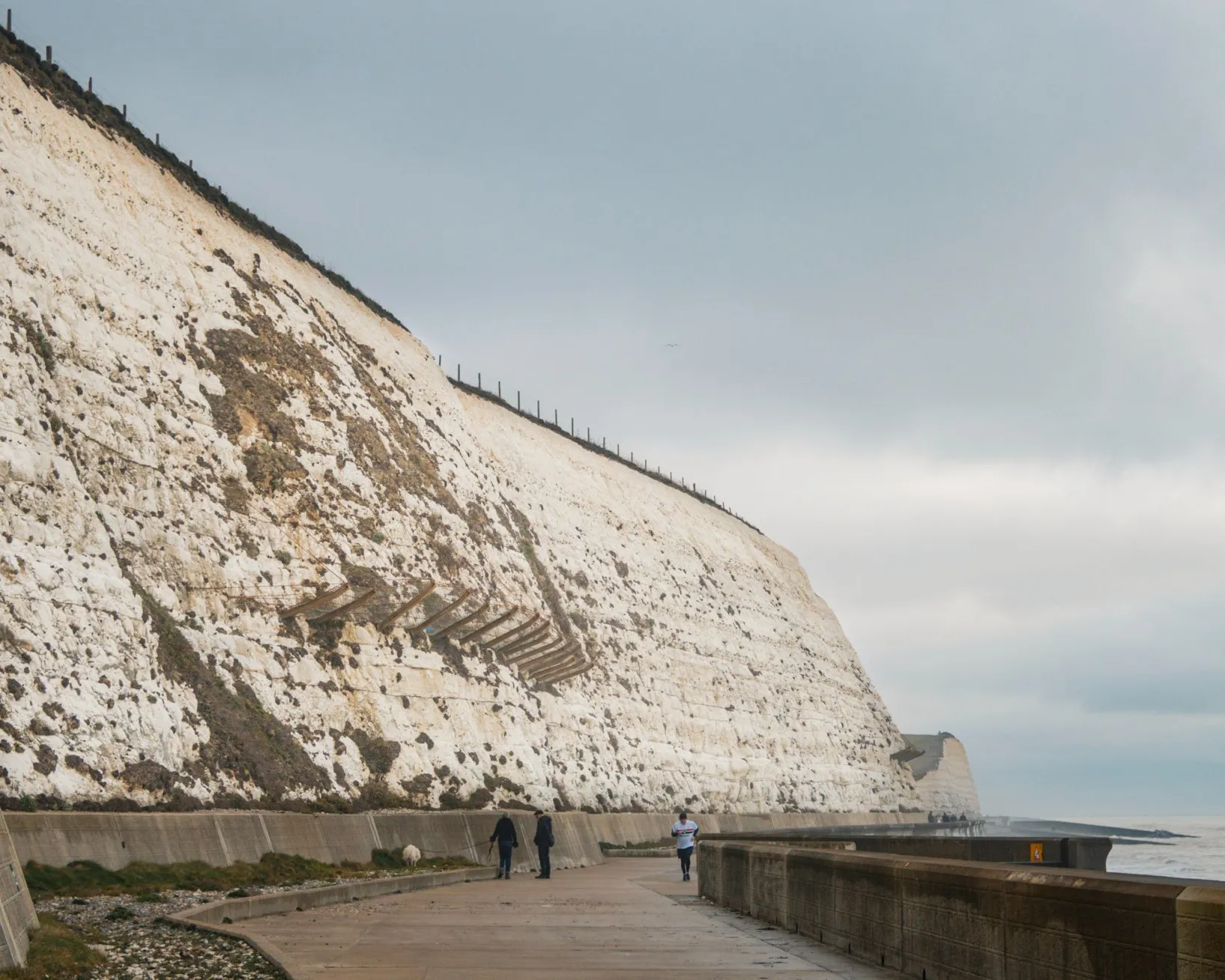
If you don’t fancy the walk, Saltdean is also around a 26 minute bus ride from Brighton. You could always walk one way and catch the bus back. The quickest bus is the 12X.
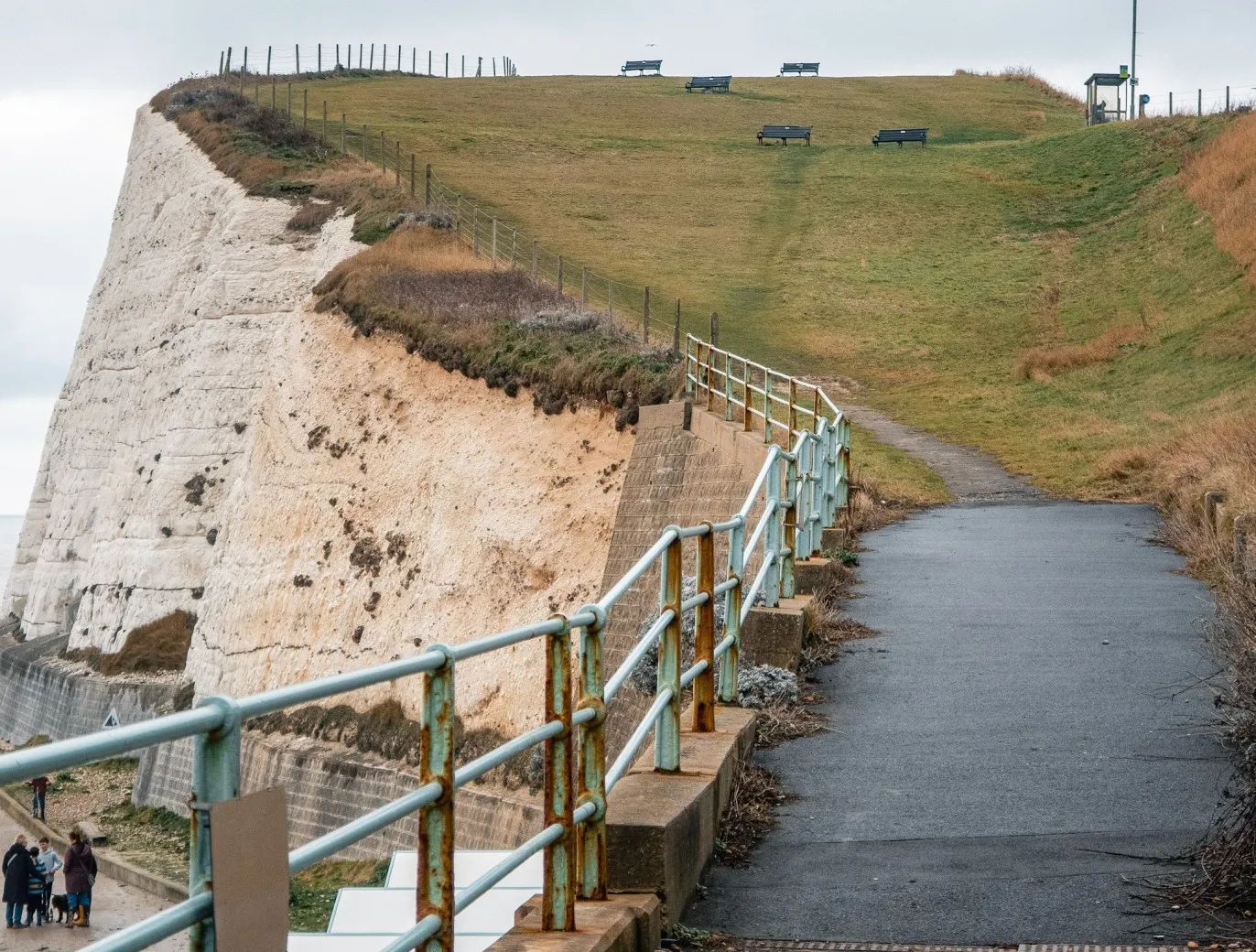
When you get to Saltdean, walk up the hill to the meadow and grab a bench. It’s a lovely, peaceful spot to rest your legs and look back at the coastline you’ve just walked. From there you can really appreciate just how dramatic the coastline is.
Then treat yourself at Whitecliffs Cafe, Bar and Grill who do coffee and a nice selection of cakes. Saltdean is also home to a beautiful Art Deco lido built in the late 1930s, so if it’s a warm day and you’ve packed your swimsuit, it’s worth checking if it’s open.
If you’ve still got energy, the nearby village of Rottingdean has a picturesque windmill you might want to visit.
19. Visit Rottingdean Windmill
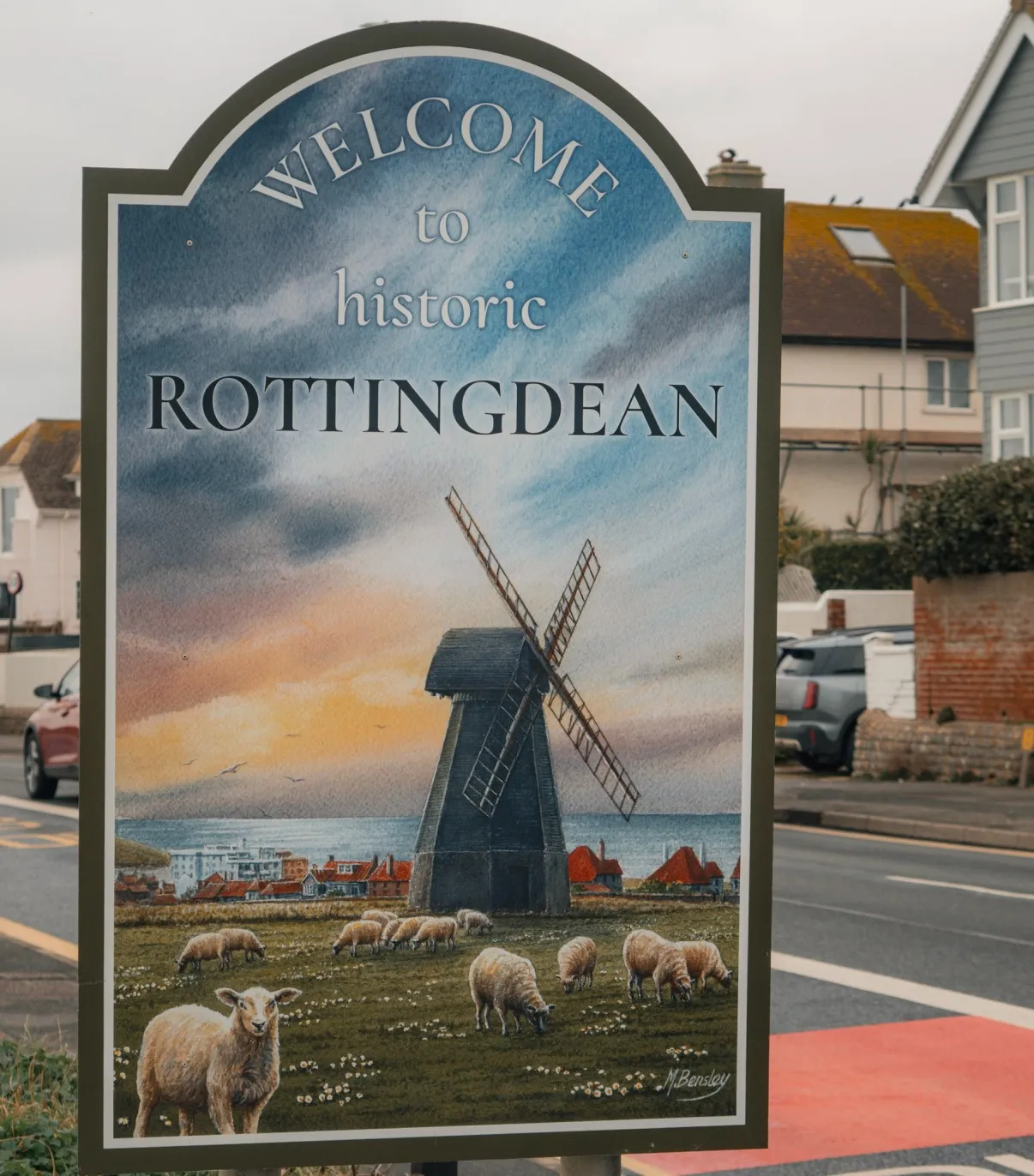
Shall we address the elephant in the room? Rottingdean is an awful name for a village, especially one in such a scenic location. Don’t worry, it has nothing to do with anything rotten. The name is thought to come from Old English, meaning something like “the valley of Rota’s people”. Rotten by name but not by nature, this village is home to the charming Beacon Hill Windmill.
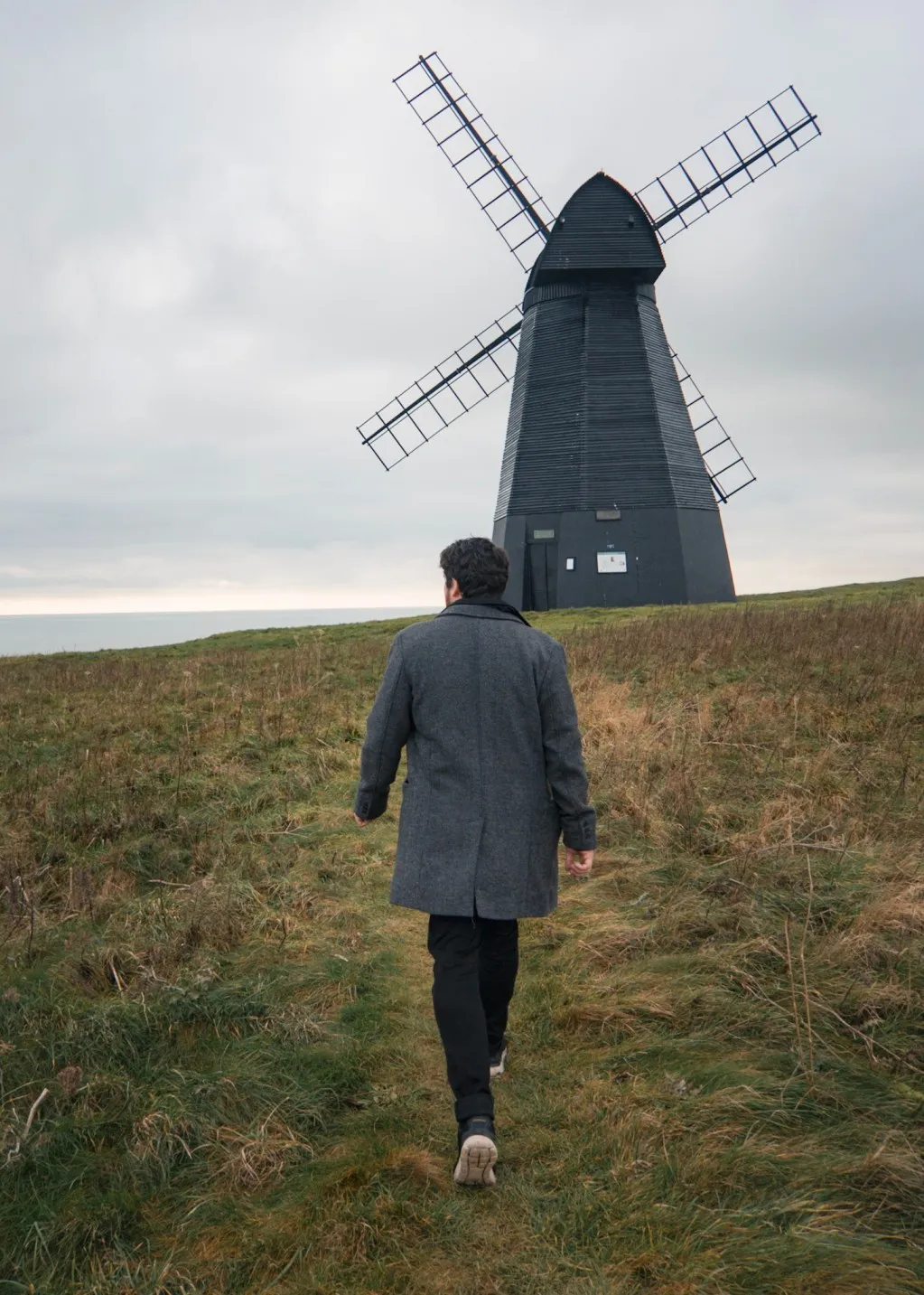
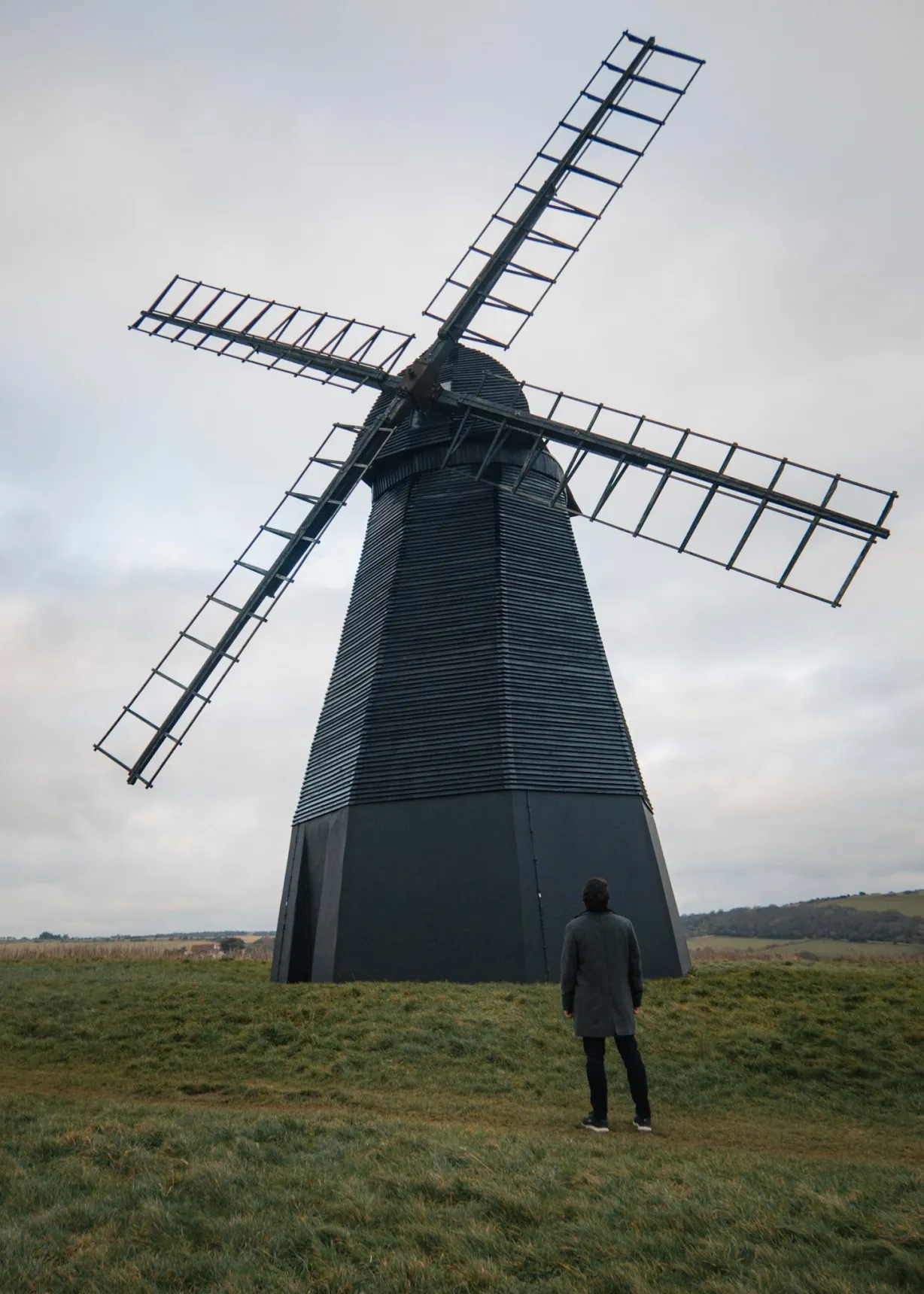
Sitting on top of a grassy hill just west of the village, the black Beacon Hill windmill looks like it has been lifted from a storybook. It was built in 1802 and ground corn for the village until 1881. Since then it has been restored several times and is now Grade II listed.
According to a local newspaper in 1802, workmen were digging the foundations and uncovered the skeleton of an ancient warrior with his sword. They took a break but when they returned, the remains were gone and were never seen again.
The hill itself is part of the Beacon Hill Local Nature Reserve, so it’s a lovely walk with views over the sea and the South Downs.
To get there, it’s a short but steep walk up from Rottingdean village. It pairs perfectly with the Undercliff Walk, as it’s around a 18 – 20 minute walk from Saltdean.
20. Take A Day Trip To The South Downs
If you’ve had your fill of the seaside, the South Downs National Park is right on Brighton’s doorstep, with rolling green hills and huge views all within an hour.
Devil’s Dyke is a deep, dramatic valley just north of the city. Legend has it that the Devil dug it to let the sea flood the churches of Sussex, but he was interrupted before he could finish. On a clear day the views stretch for miles, and the pub at the top is a good excuse to stop.
Ditchling Beacon is one of the highest points in the South Downs, and if you’re a keen walker, you can follow the South Downs Way along the ridge. It’s a steep climb from the village of Ditchling, but the panoramic views over Sussex are worth every step.
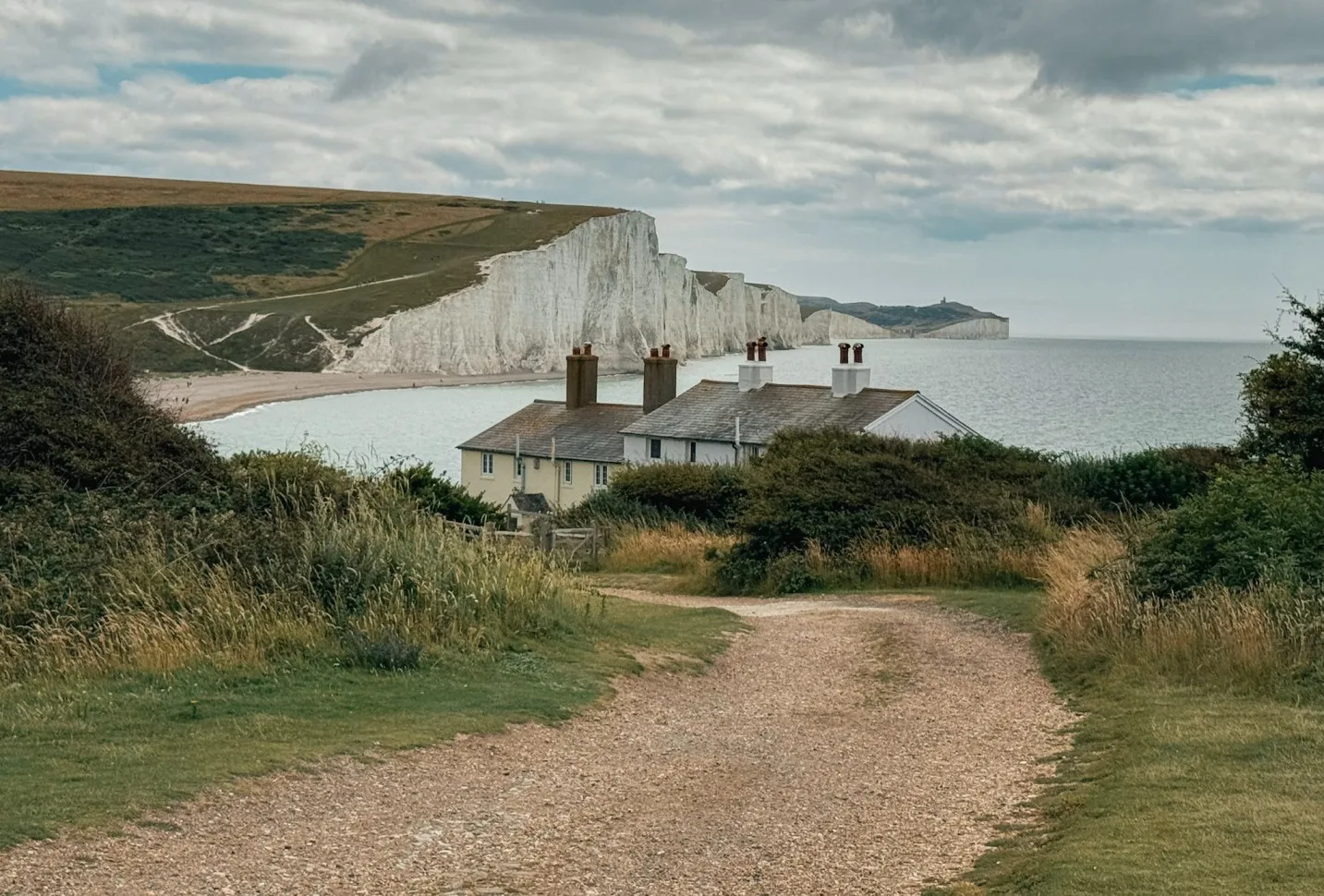
The Seven Sisters are the famous white chalk cliffs you’ve probably seen in films and on postcards. The classic photo is from Cuckmere Haven, with the old coastguard cottages in front of the cliffs. Take the bus from Brighton, or if you don’t fancy working out the route, book a guided day tour. Just keep well back from the edge, as the cliffs are crumbly and unfenced.
Brighton FAQs
Best time to visit Brighton
It really depends on what you’re after. For the classic seaside experience, visit between June and August, when the beach is buzzing, all the attractions are open and the days are long. It’s also the busiest and most expensive time, especially at weekends and during Brighton Pride in early August.
May is a great time to visit too, as Brighton Festival and Brighton Fringe take over the city, filling it with theatre, comedy, music and street performances. If you’d rather avoid the crowds but still want warm weather, September is a lovely choice. The sea is at its warmest, the summer holidays are over and hotel prices start to drop.
Is Brighton worth visiting in winter?
Yes, Brighton is still worth a visit in winter. You’ll just have a slightly different experience. Expect cold, windy days and some rain, although Brighton is one of the sunnier places in the UK. The days are short too, with the sun setting around 4pm in December. The upside is that the sunsets over the West Pier come early, so you can catch one and still be in the pub for dinner.
Some things close or scale back in the colder months. Volk’s Electric Railway only runs seasonally, some of the rides on the Palace Pier may be closed and outdoor spots like Saltdean Lido and the deckchairs on the beach are summer-only. The Palace Pier’s arcades stay open all year, though, so you can still get your nostalgia fix.
There is still plenty to do though. Winter is the best time to see the starling murmurations over the West Pier at dusk, when thousands of birds swirl through the sky before settling in for the night. It’s also perfect for cosy indoor spots like the Royal Pavilion, the Toy Museum, a comedy night at Komedia or a Sunday roast at The Cricketers. The Undercliff Walk is still worth doing too. We walked it on a windy January day and the white cliffs made it feel far less gloomy than a typical winter stroll. If you’re visiting around 21 December, look out for Burning the Clocks, a lantern parade along the seafront to mark the winter solstice.
How many days do you need in Brighton?
Two days is enough to see the best of Brighton. You can easily explore the city centre in a day, including the Palace Pier, the Royal Pavilion, The Lanes and North Laine. Then on day two, head west to Hove or east along the Undercliff Walk to Saltdean. If you’re visiting in summer, add an extra day so you have time to relax on the beach.
Is Brighton good for a day trip?
Brighton is one of the best day trips you can do from London. The train takes about an hour, so you can leave after breakfast and still be back in the city for dinner. From Brighton Station it’s a 20-minute walk down to the pier, and once you’re there everything is close together, so you don’t waste time getting around.
In a day you can comfortably see the Royal Pavilion, wander The Lanes and North Laine, eat fish and chips on the beach and finish on the Palace Pier. If it’s your first visit, that’s a great introduction to the city.
That said, a day only really scratches the surface. You won’t have time for Hove, the Undercliff Walk or a comedy night at Komedia, and you’ll spend most of the day in the busiest parts of the city. If you can, stay overnight. Brighton is a completely different place in the evening, and it’s worth seeing the pier lit up after dark.
What is Brighton famous for?
Brighton is best known as the classic British seaside city, with its pebble beach, Victorian pier and the skeletal ruins of the West Pier just offshore. It’s often called “London by the Sea”, because it’s only an hour from the capital and full of people who moved down from the city.
It’s also famous for the Royal Pavilion, King George IV’s extravagant seaside palace, which looks more like an Indian palace than anything you’d expect on the English coast. Add in The Lanes and North Laine, with their independent shops, vintage stores and cafés, and you’ve got a city that feels much more creative and alternative than most UK seaside towns.
Brighton is known as the unofficial LGBTQ+ capital of the UK, with a thriving scene centred on Kemptown and the biggest Pride celebrations in the country each August. It has a reputation for being one of the most vegan-friendly cities in the UK, and for its festivals, with Brighton Festival and Brighton Fringe taking over the city every May. It’s also a favourite for stag and hen parties, which is worth knowing if you’re visiting on a summer weekend.