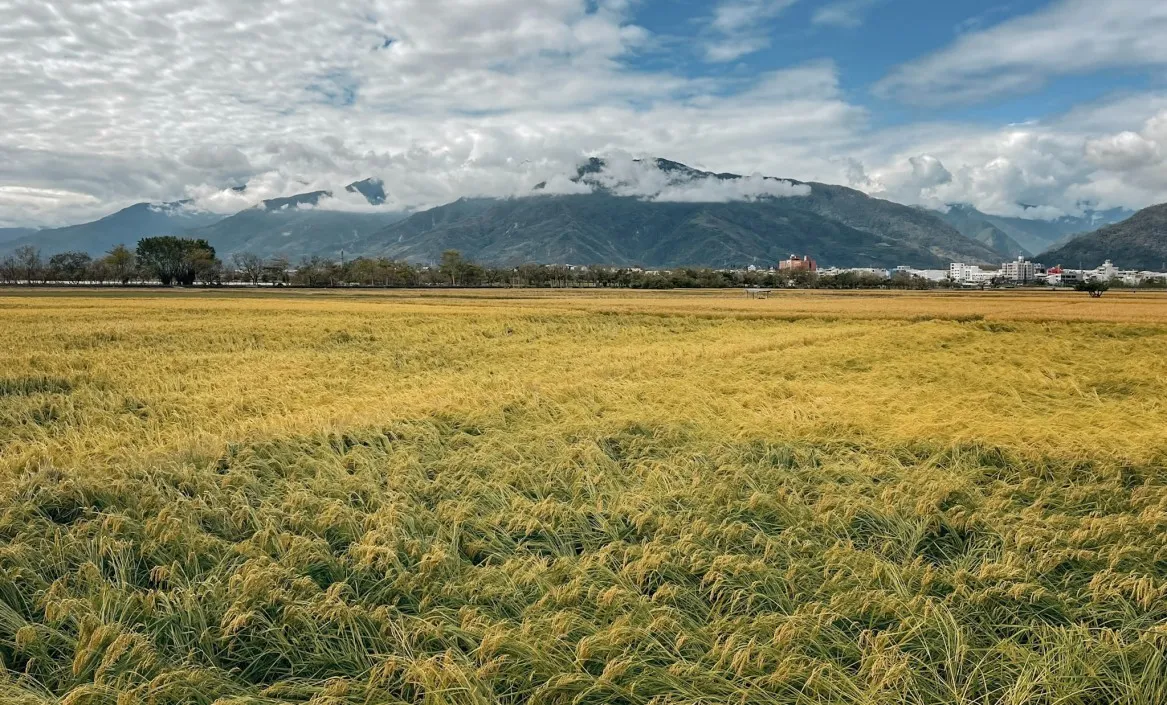
Chishang (pronounced roughly “chee-shahng,” 池上 in Chinese) is a small rural township tucked into Taiwan’s East Rift Valley, the long stretch of farmland running between the Central Mountain Range and the Coastal Mountain Range on the east coast, roughly halfway between Hualien and Taitung City.
For most of its history, Chishang was just known locally for growing some of the best rice in Taiwan. That changed in 2013, when EVA Air filmed a commercial here featuring actor Takeshi Kaneshiro cycling through the paddies and stopping for tea under a tree. Almost overnight, this quiet farming town became one of the most photographed spots in the country.
But don’t let the viral fame fool you into thinking that Chishang has turned into some overhyped tourist trap. It’s still a laid-back rural town. It’s worth experiencing an unfiltered slice of small-town Taiwanese life that a lot of the bigger cities can’t offer anymore, and many tourists don’t get to witness.
Chishang was a major highlight of our time in Taiwan. The cycling and views were phenomenal, but really it was the people and the quietness that made it so special.

Some links in this post are affiliate links, meaning I may earn a commission at no extra cost to you if you make a purchase
Is Chishang even worth visiting?
For most people travelling to Taiwan, Chishang probably looks like it’s a bit out of the way and an effort to get to. It’s between Hualien and Taitung, both cities that people include on their Taiwan itinerary, so it’s understandable many people skip Chishang in order to spend more time in the city.
I loved Chishang, it ended up being a real highlight of my Taiwan trip. Sure, it was quiet, but it was a nice peaceful break from the other cities we visited. Getting to cycle through the rice fields and seeing a glimpse of what rural life looks like in Taiwan was unforgettable.
That being said, if you don’t enjoy cycling or don’t care too much for being out in nature then Chishang might not be for you, which is ok. Secondly, if you are only in Taiwan for 5 days then Chishang will eat into your time in places like Taipei or Kaohsiung, which deserve more of your time. In that case I would bookmark Chishang for your next trip.
How Many Days In Chishang
At the very least, spend one full night. You need an afternoon and morning to cycle Brown Boulevard, Paradise Road and Dapo Pond without rushing. The whole point of Chishang is slowing down, trying to squeeze it into a few hours between trains defeats the purpose.
Two nights is where it gets really good, though. It gives you a full, unhurried day of cycling plus a spare morning or evening to just wander, sit in a cafe or catch the fields at a different time of day. If you’re someone who likes to actually relax on a trip rather than tick off sights, I’d push for two nights over one.
Any more than that and you’ll probably run out of things to do as Chishang isn’t a place with endless activities, it’s a place to slow down for a day or two and then move on.

Chishang Station now has luggage lockers if you need to store your bags for a few hours
Where To Stay In Chishang
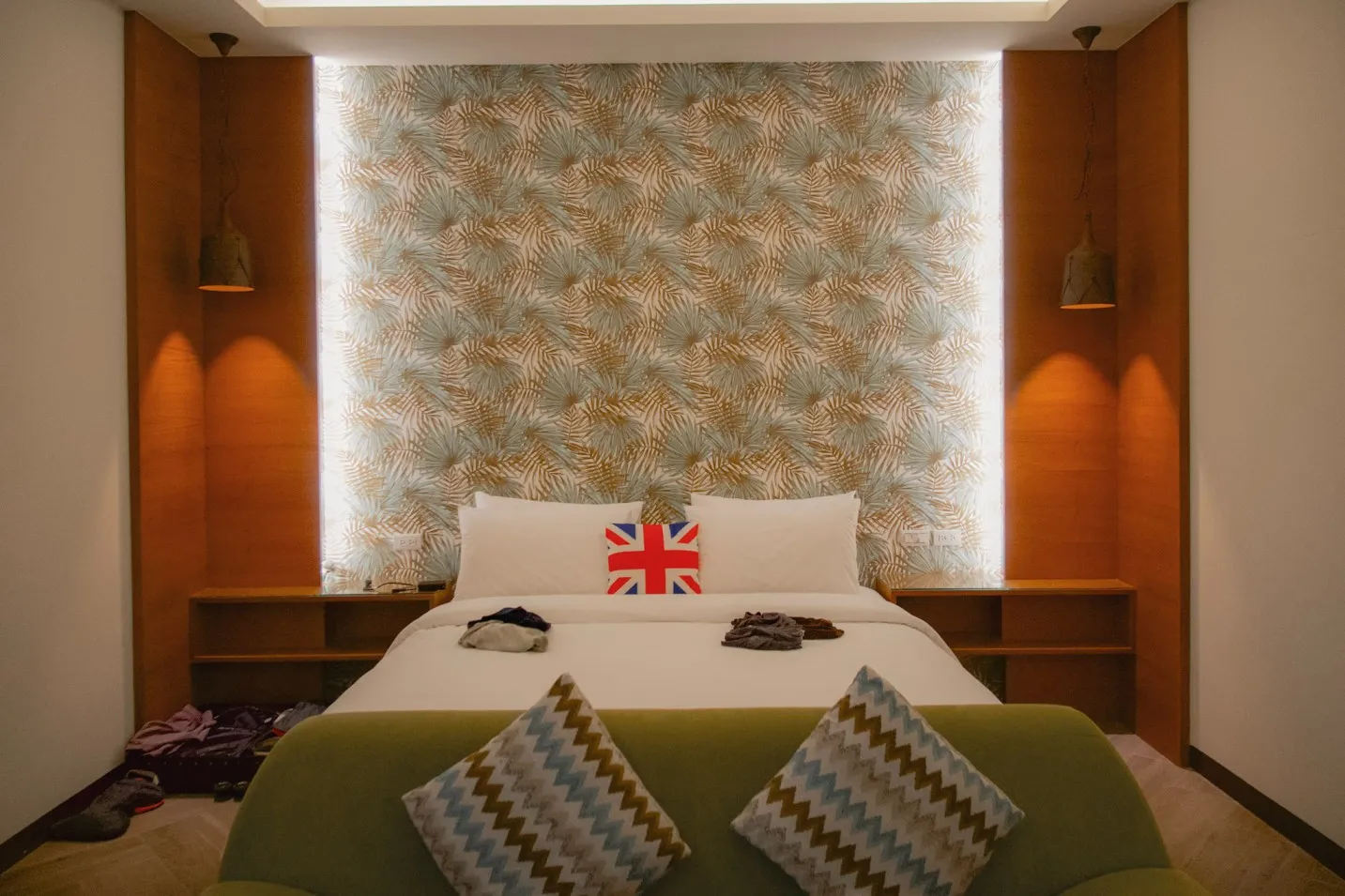
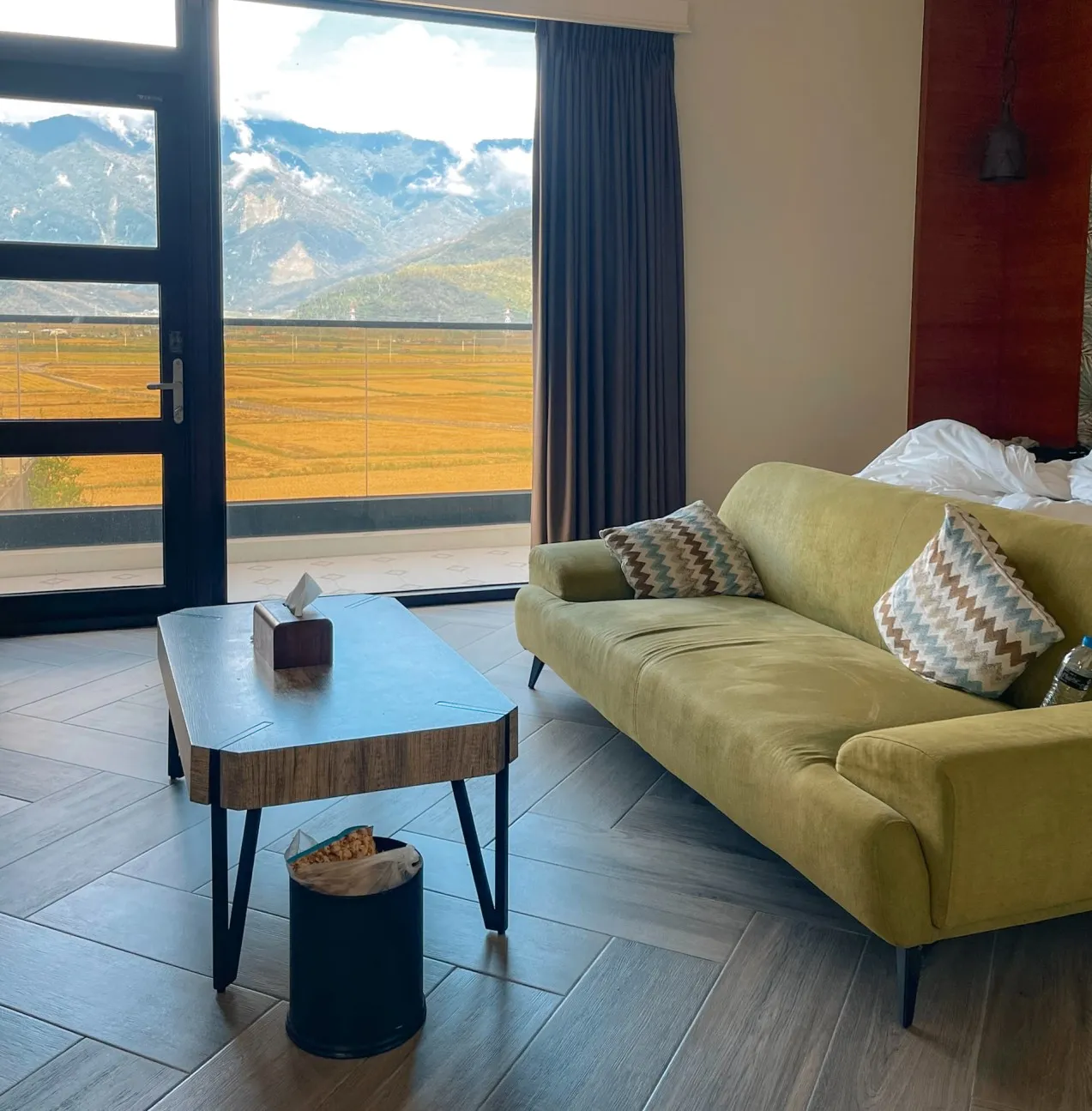
I can’t recommend Nuolv Homestay (蘴旅民宿) enough. This was a rogue choice by us as it’s a 5 minute cycle from town, but the photos made all the other hotels pale in comparison.
Let me start by saying the room was huge, a large suite with a kitchen, comfy sofa, flat screen TV, double bed, huge bathroom and balcony. The view of trains passing through the rice fields from the balcony was the cherry on top of a very nice cake. Speaking of cakes…
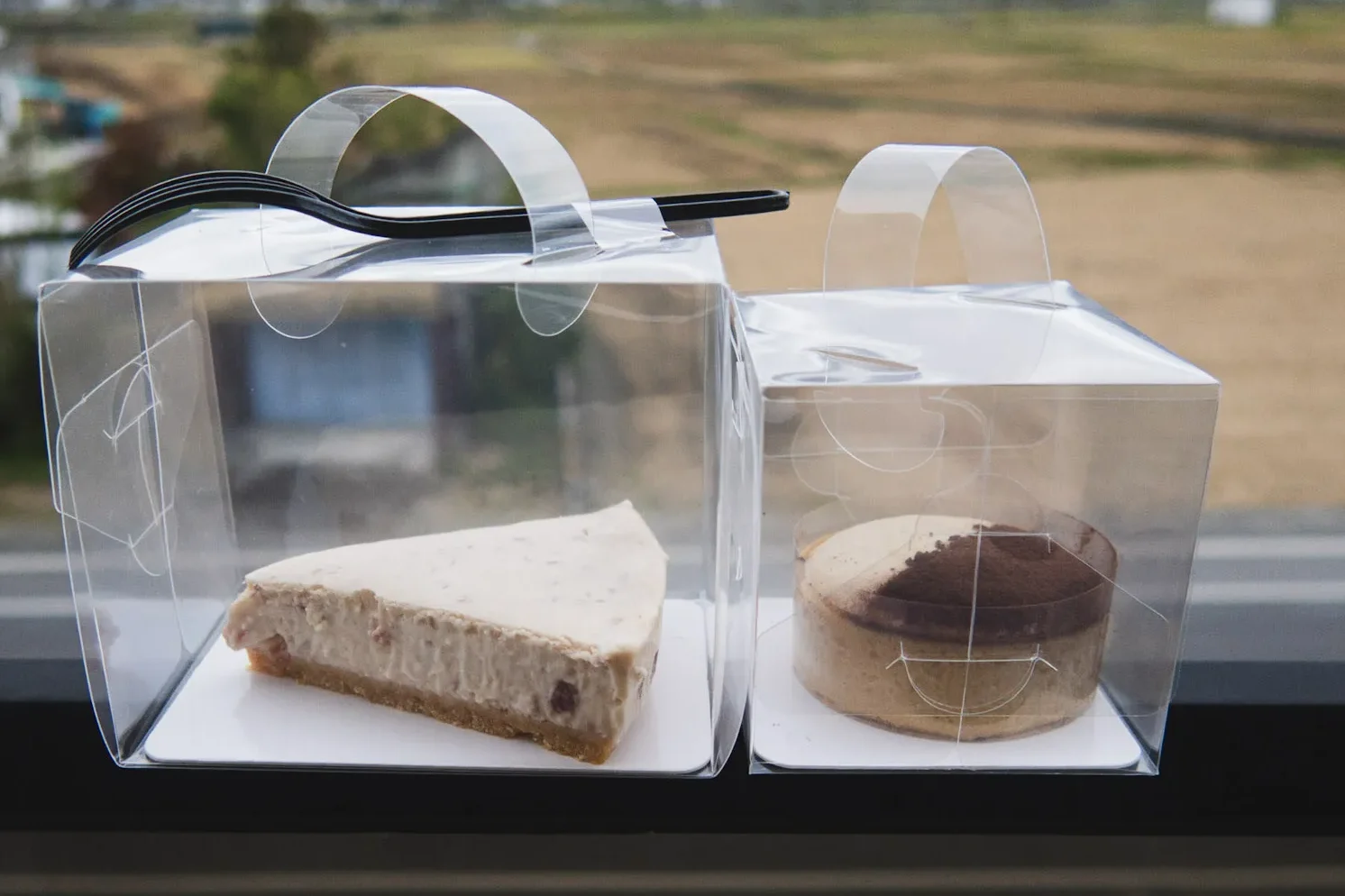
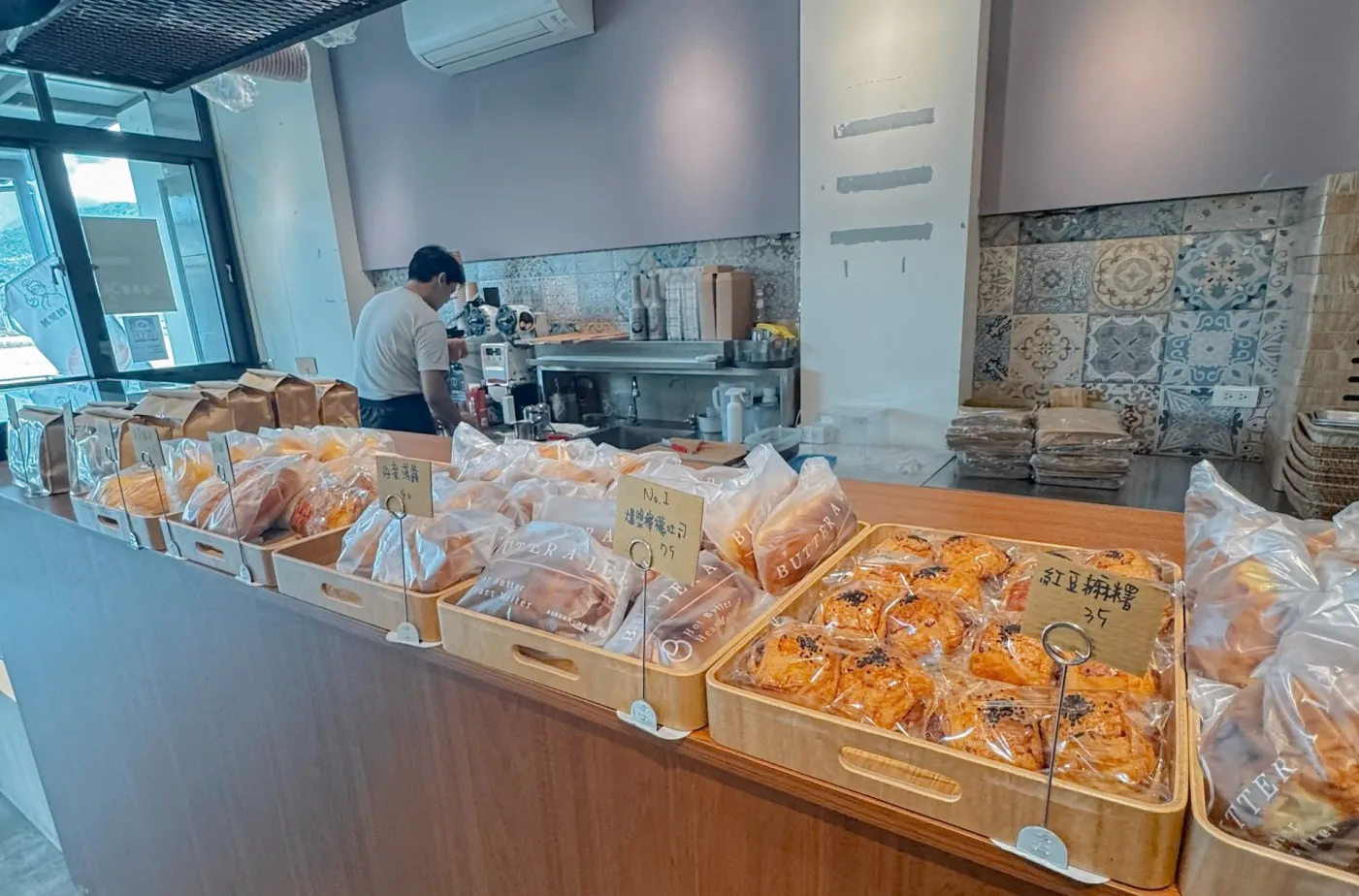
There is a cute bakery downstairs, with the most delicious bread, cakes, pastries and coffee. Part of the room rate is you can choose any bakery item and coffee each morning for breakfast. These are baked fresh in-house, they were incredible. Especially the cheesecake.
They also offer complimentary bikes, which although a little old, they did the job. It was the perfect place to stay after a long day cycling.
How To Get Around Chishang
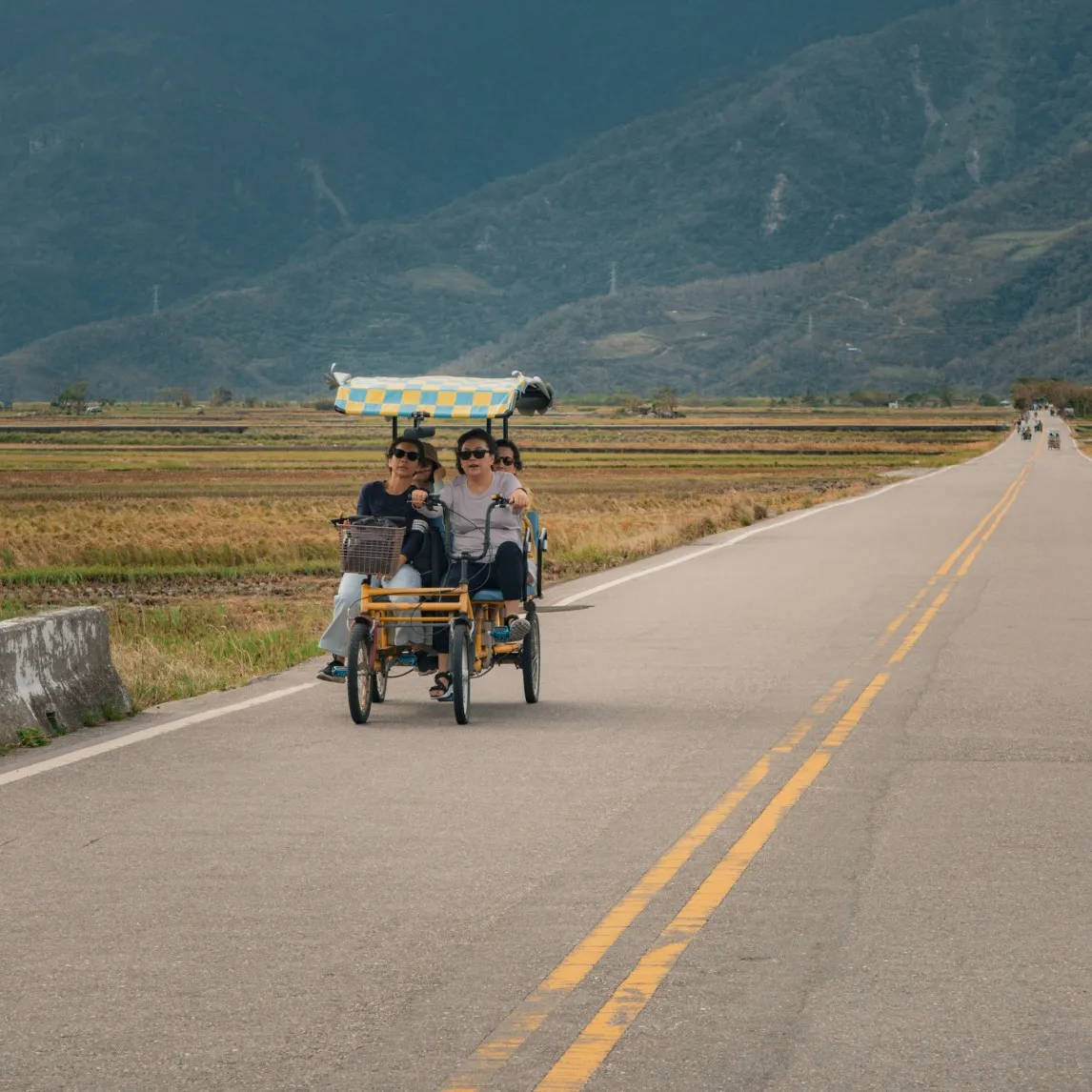
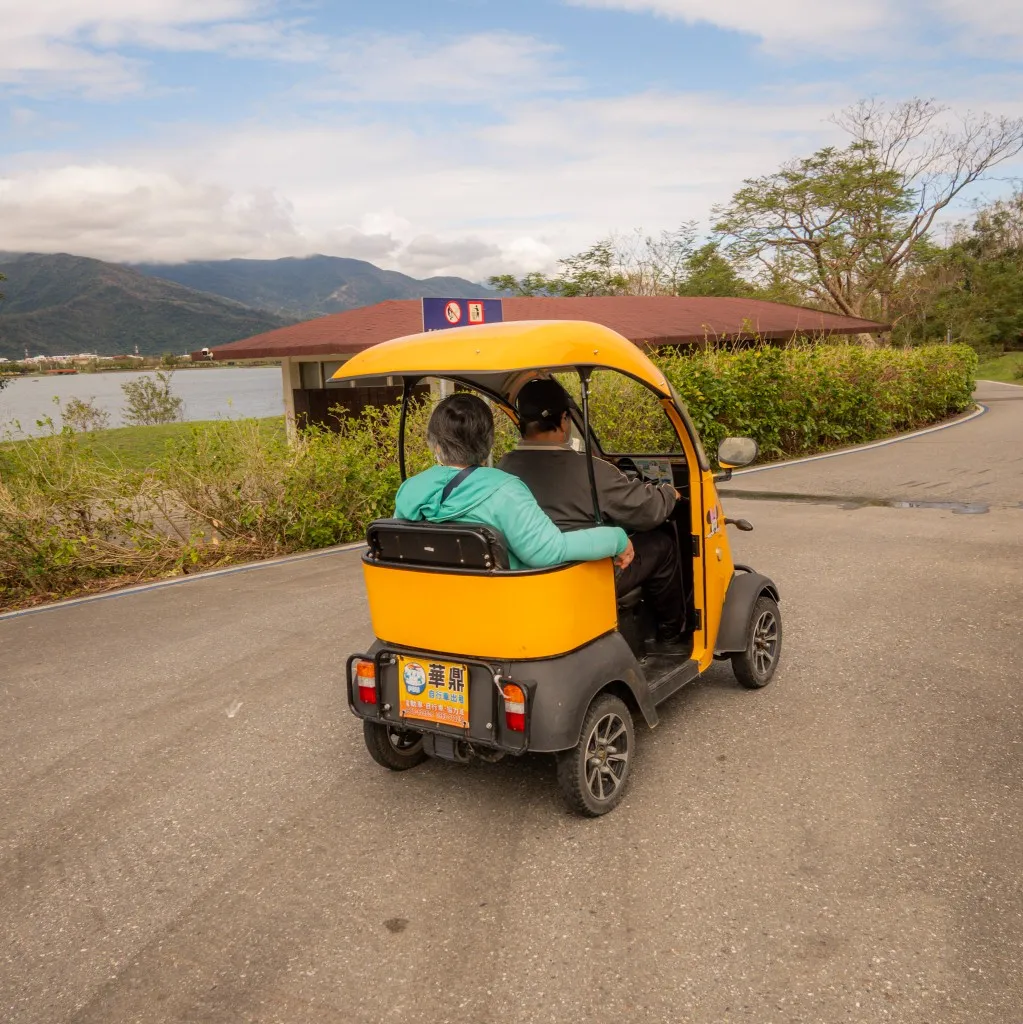
The only way to get around is by bike. Cars and motorbikes are not allowed along Brown Boulevard, Paradise Road or Dapo Pond. The roads are flat so if you choose a regular bicycle it’s very relaxing.
These are a few different options and their rates:
- Bicycle: approx NTD$100 (regular) / NTD$400 (e-bike)
- Electric: NTD$500 – NTD$600 (2 people) / NTD$800 (4 people)
- Egg Bike: NTD$600 for 2
It’s best to rent the bikes away from the train station. The rentals directly outside the station are almost twice the price of the other rentals in Chishang.
YouBike is also available outside Chishang station and Dapo Pond. However, if you don’t have a Taiwanese phone number then you must register for single use and pay a deposit of about NTD$3,000. It takes up to 2 weeks for this deposit to be refunded to your account.
What To Do In Chishang
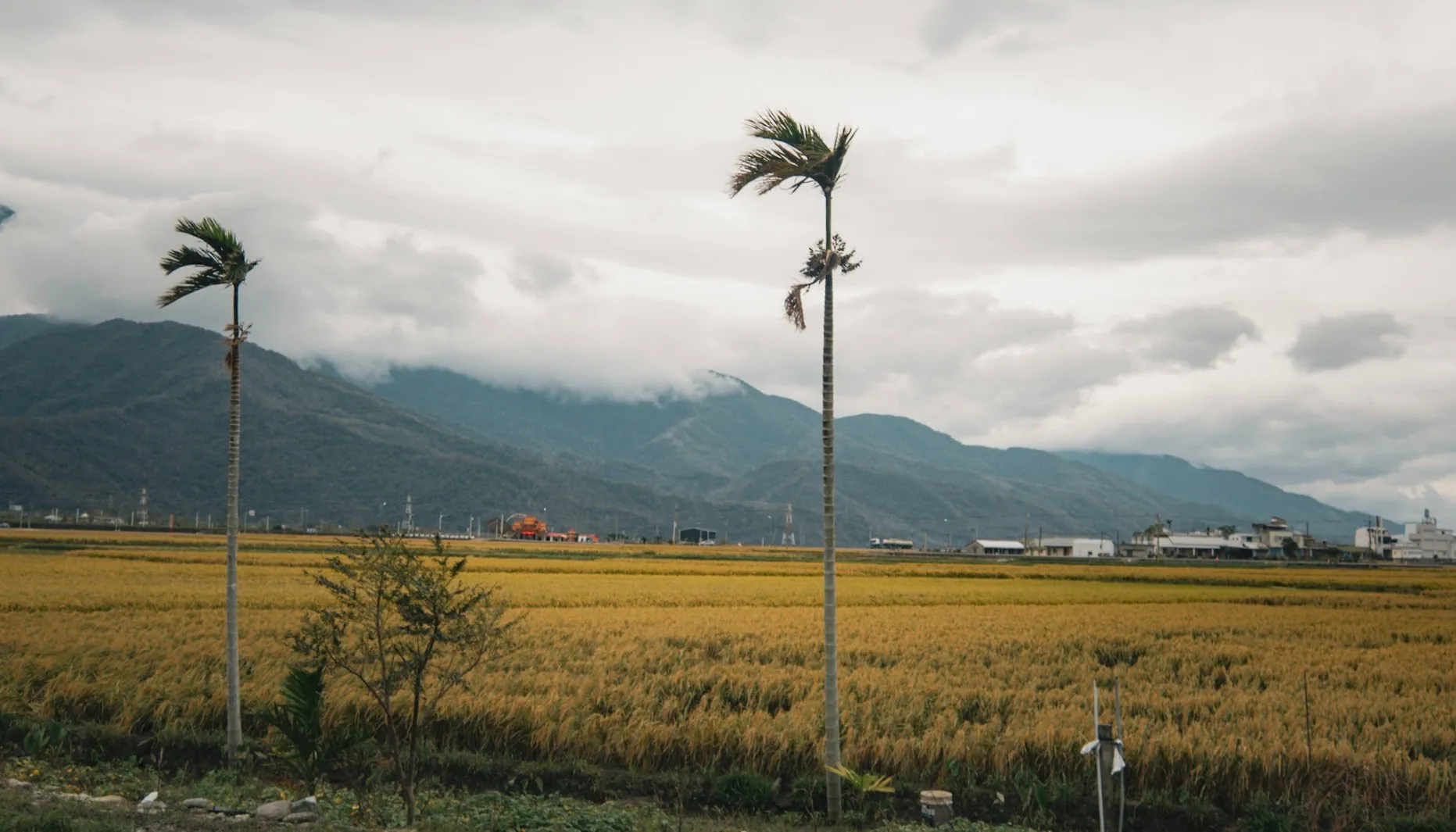
The best thing you can do in Chishang is explore the fantastic scenery by cycling through the rice fields. There are some notable stops along the way like Brown Boulevard, Paradise Road and Dapo Pond.
Brown Boulevard
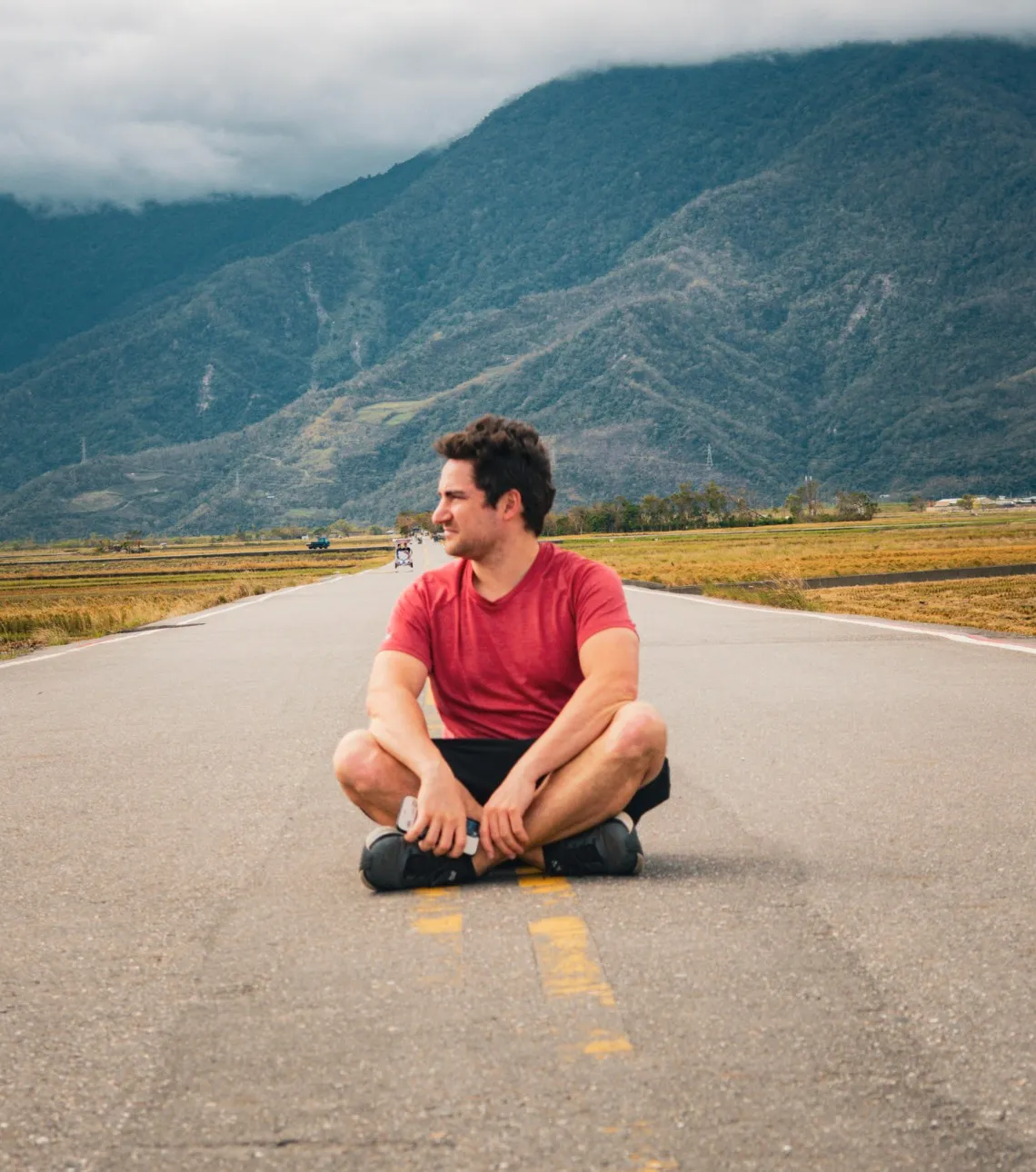
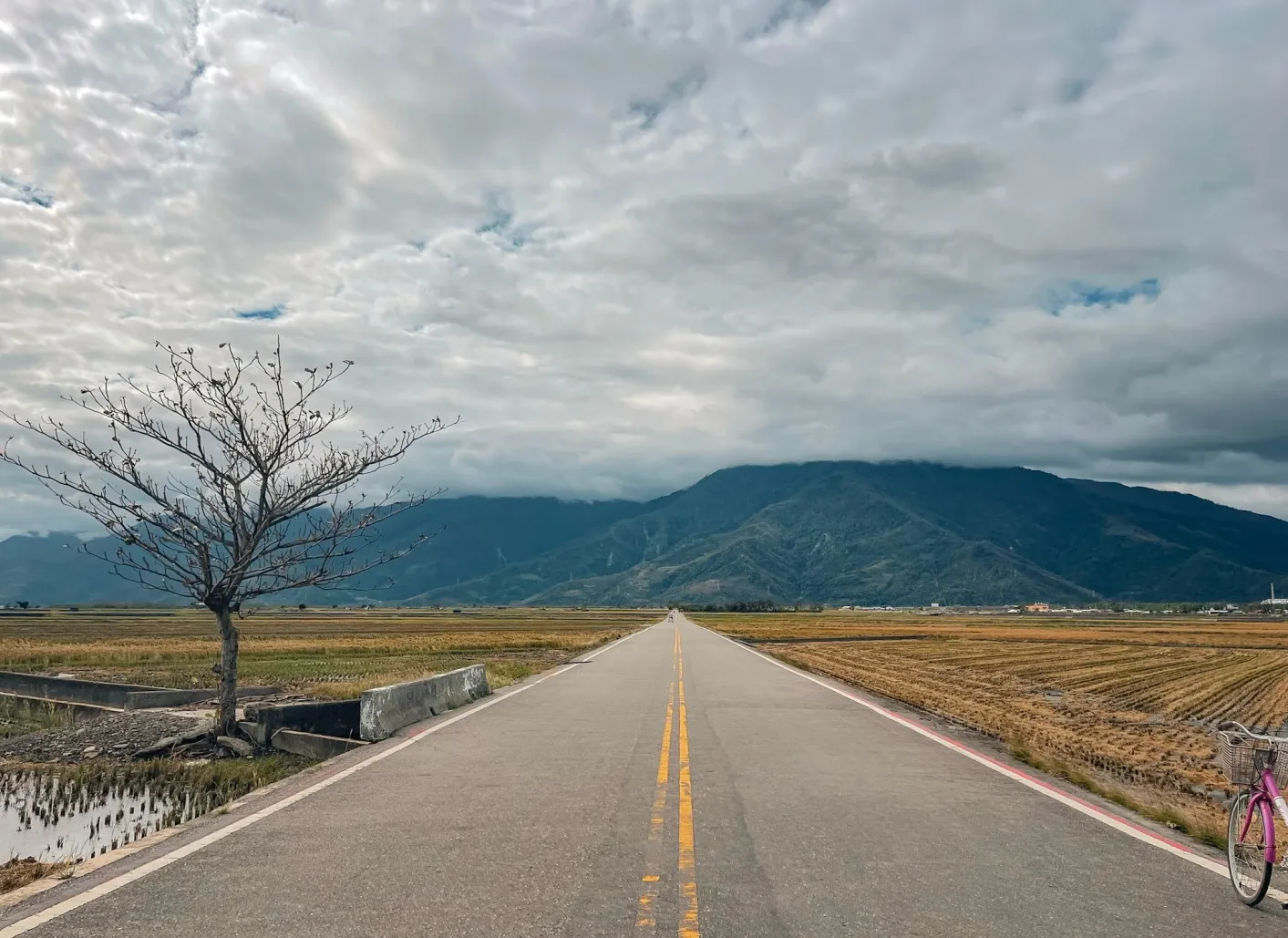
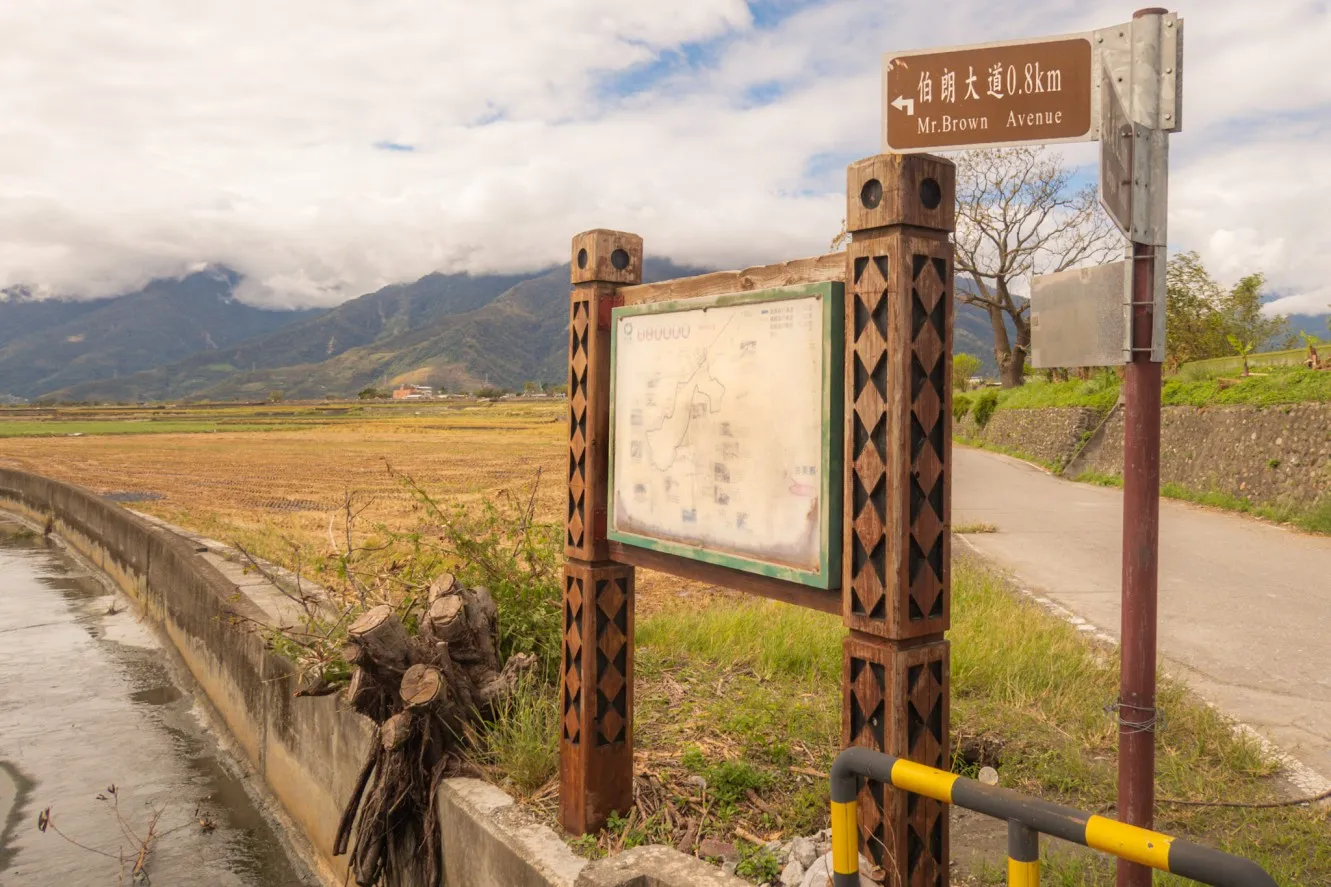
This is Chishang’s most famous road, a flat, car free 2.2 kilometres cutting through rice fields leading to the Central Mountain Range. The road has no fences, walls or poles so you get completely unobstructed views of the fields and mountains. It feels like cycling through a painting.
How this road got famous is a pretty funny story. In 1997 the Taiwanese coffee brand Mr. Brown (伯朗咖啡) filmed a commercial here, which attracted locals looking for a rural escape. The road then got unofficially nicknamed “Mr. Brown Avenue”, as a nod to the commercial.
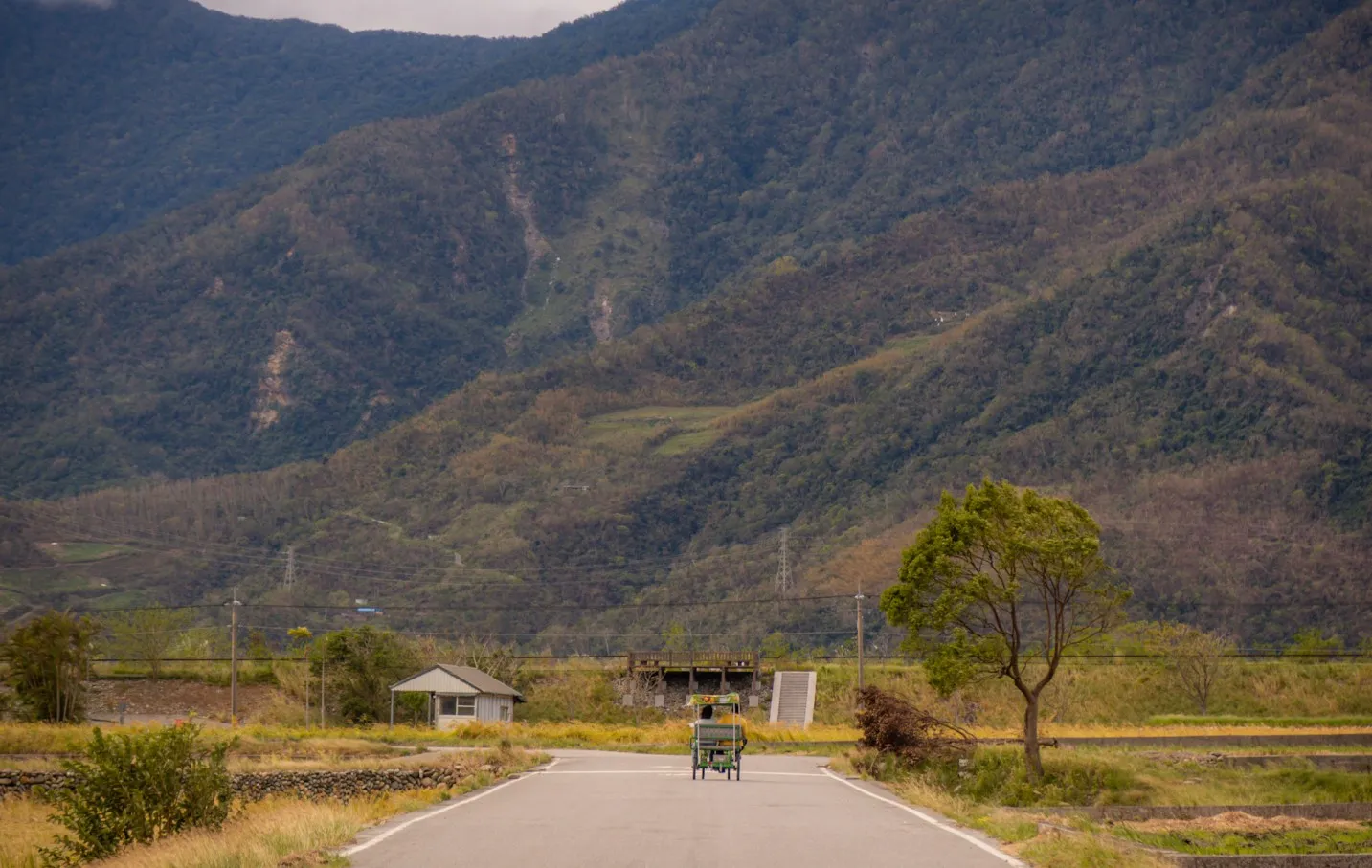
Takeshi Kaneshiro Tree
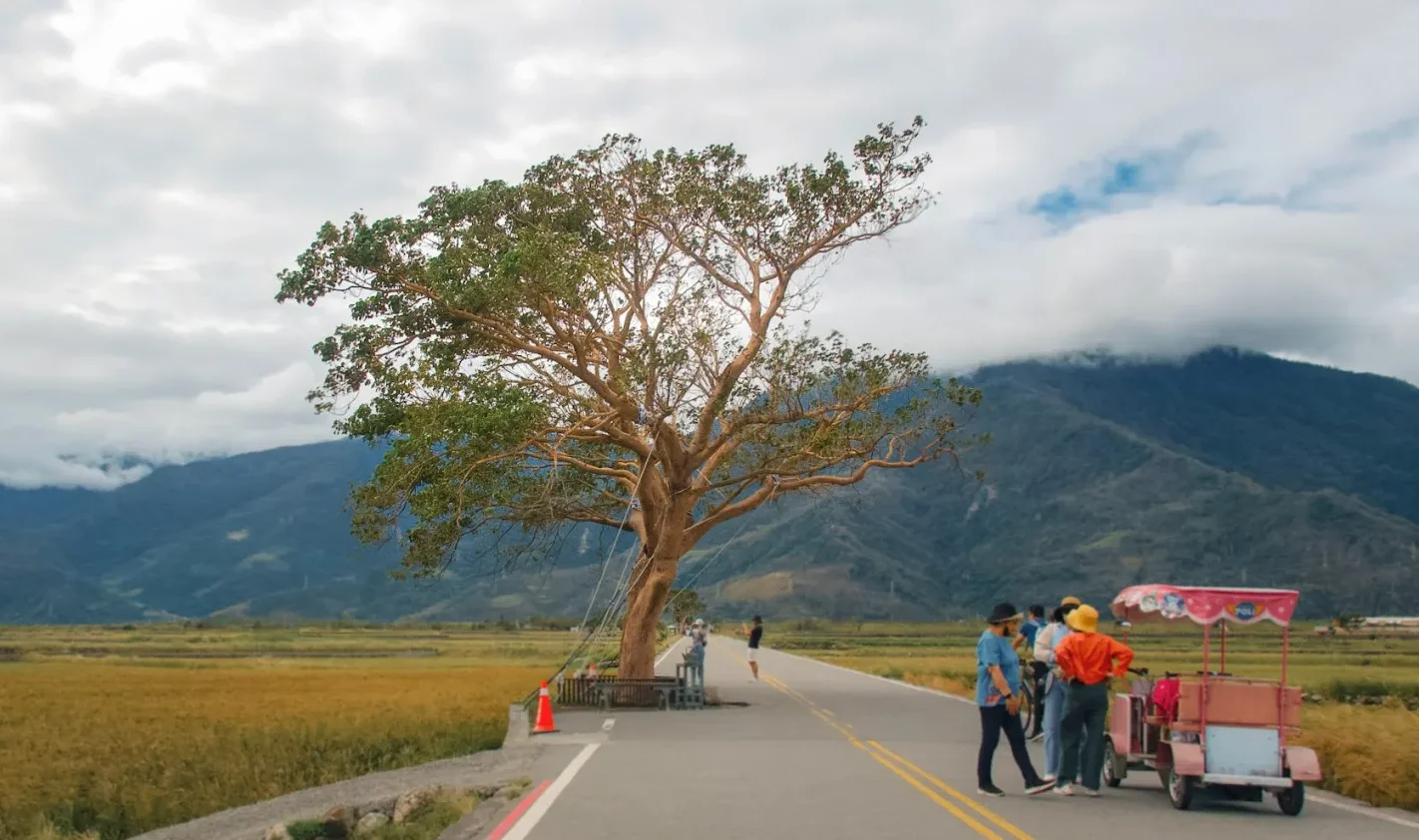
Along Brown Boulevard is Takeshi Kaneshiro Tree, which much like the boulevard, it got its fame from a commercial. Rather than coffee, this time it was EVA Air, the nation,s airline. Shot in 2013, the commercial followed Taiwanese-Japanese actor Takeshi Kaneshiro as he cycled through the rice fields, stopping under a Bischofia javanica (bishop wood) for a cup of tea. It’s considered the most famous tree in Taiwan.
A tree drawing so many people may seem silly, but a local farmer actually planted it around the 1970s beside his field, to tether his buffalo and sit in the shade. What a view he had.
Paradise Road
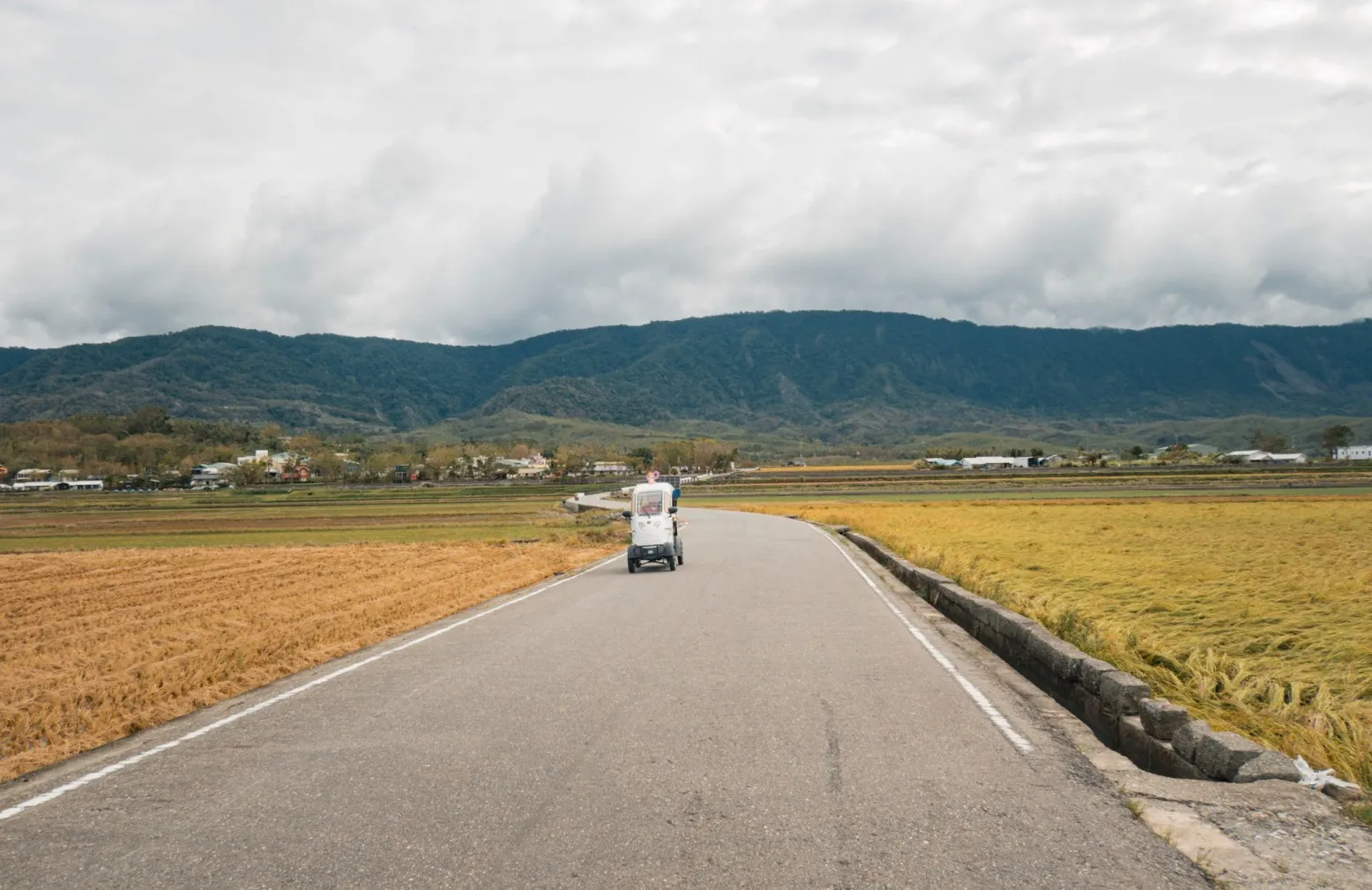
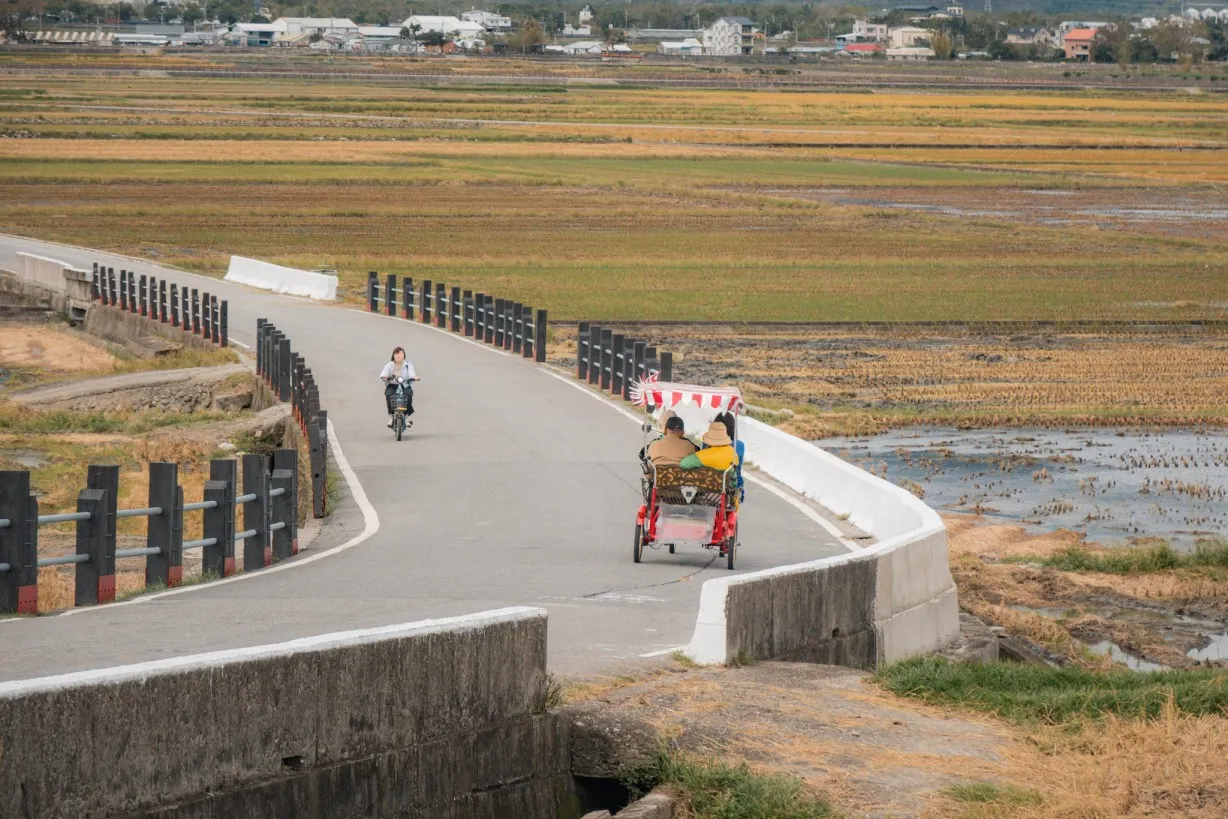
While Brown Boulevard is a straight road, Paradise Road twists and turns through the fields. No big commercial was filmed here, instead it seems the popularity of this road was a knock on effect of Brown Boulevard, which you naturally cross.
Maybe not as famous, but it’s just as scenic as Brown Boulevard, with tall smokestacks of the old Taisugar Muye Resort and the Southern Cross-Island Highway’s mountains visible in the distance.
Along the way are lots of different photo installations like frames, swings and sculptures.
Both roads together are protected as part of a designated cultural landscape called the “Chishang Wan’an Old Farmland” cultural landscape. This bans new farmhouse construction and motor vehicle access on both roads to preserve the unspoiled valley scenery.
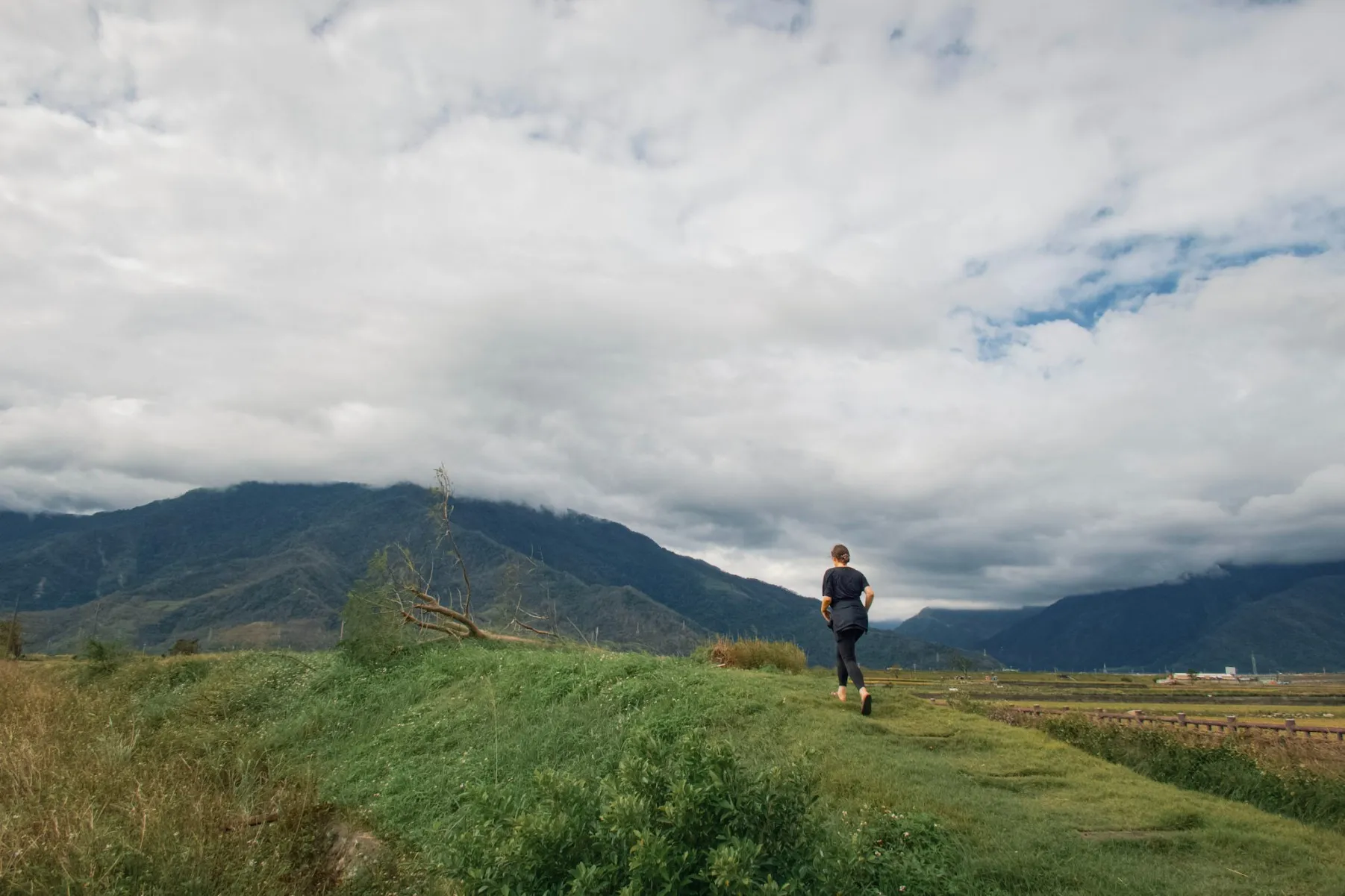
Chishang Huge Waterwheel
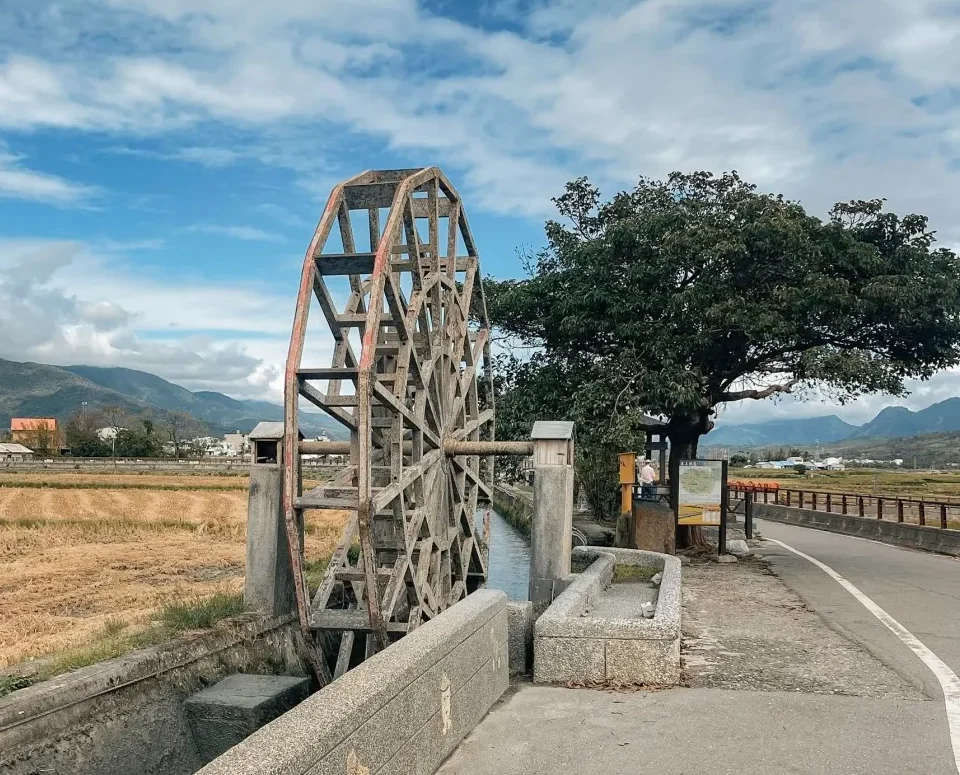
Another interesting pitstop on your cycle is the 6 meter tall Huge Waterwheel, also called “Shiquan Waterwheel” that was built in 1999.
Located at the front of the area’s old floating irrigation channel, it helps move water through the surrounding paddies. It turns 10 times per minute and is a symbol of good luck.
In the late 2010’s, sun and wind had damaged its structure making it unable to turn. A local shopkeeper fixed it but added three steel-plate monkeys and a rooster attached to its frame, the monkeys nodding to a Hoklo Taiwanese phrase for liveliness and abundance, and the rooster acting as a weathervane symbolizing stable winds and a good harvest.
Dapo Pond
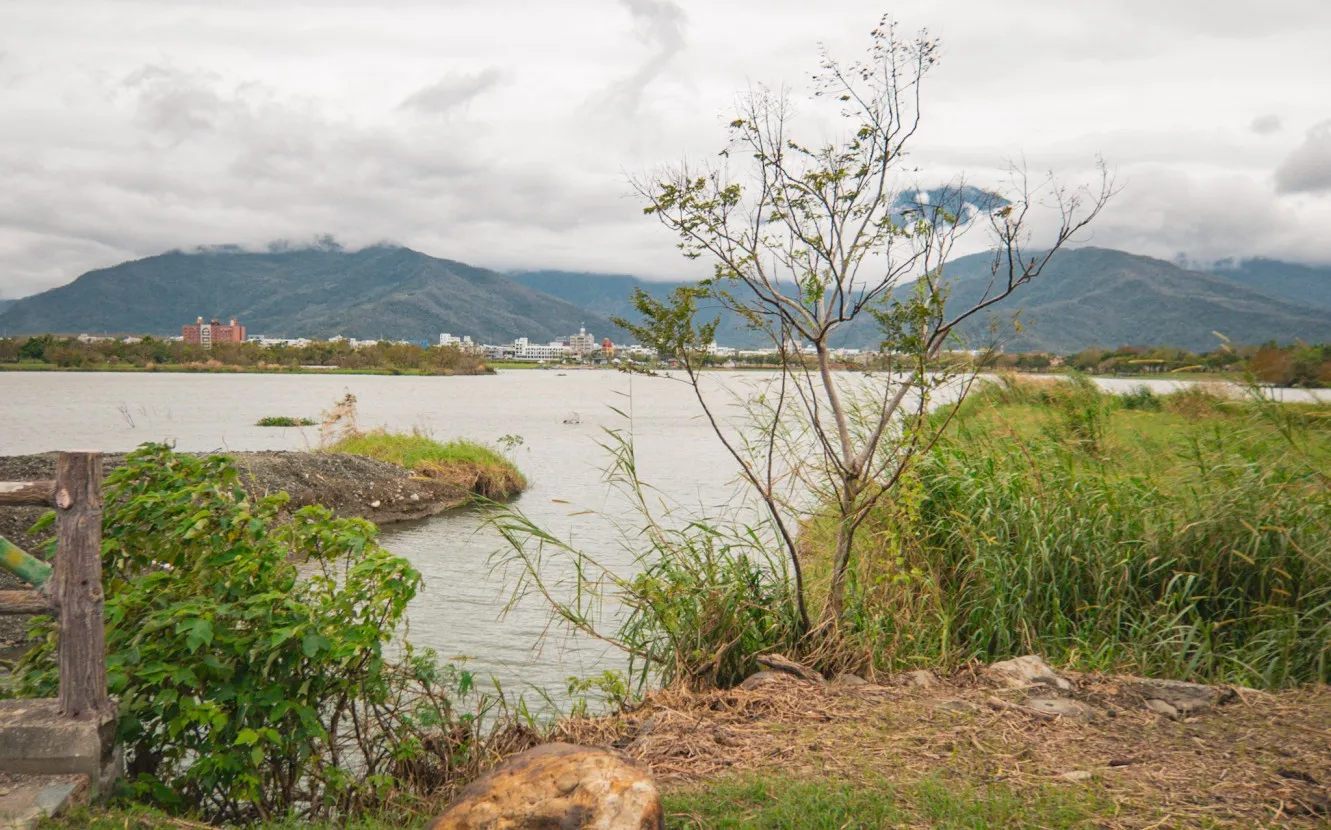
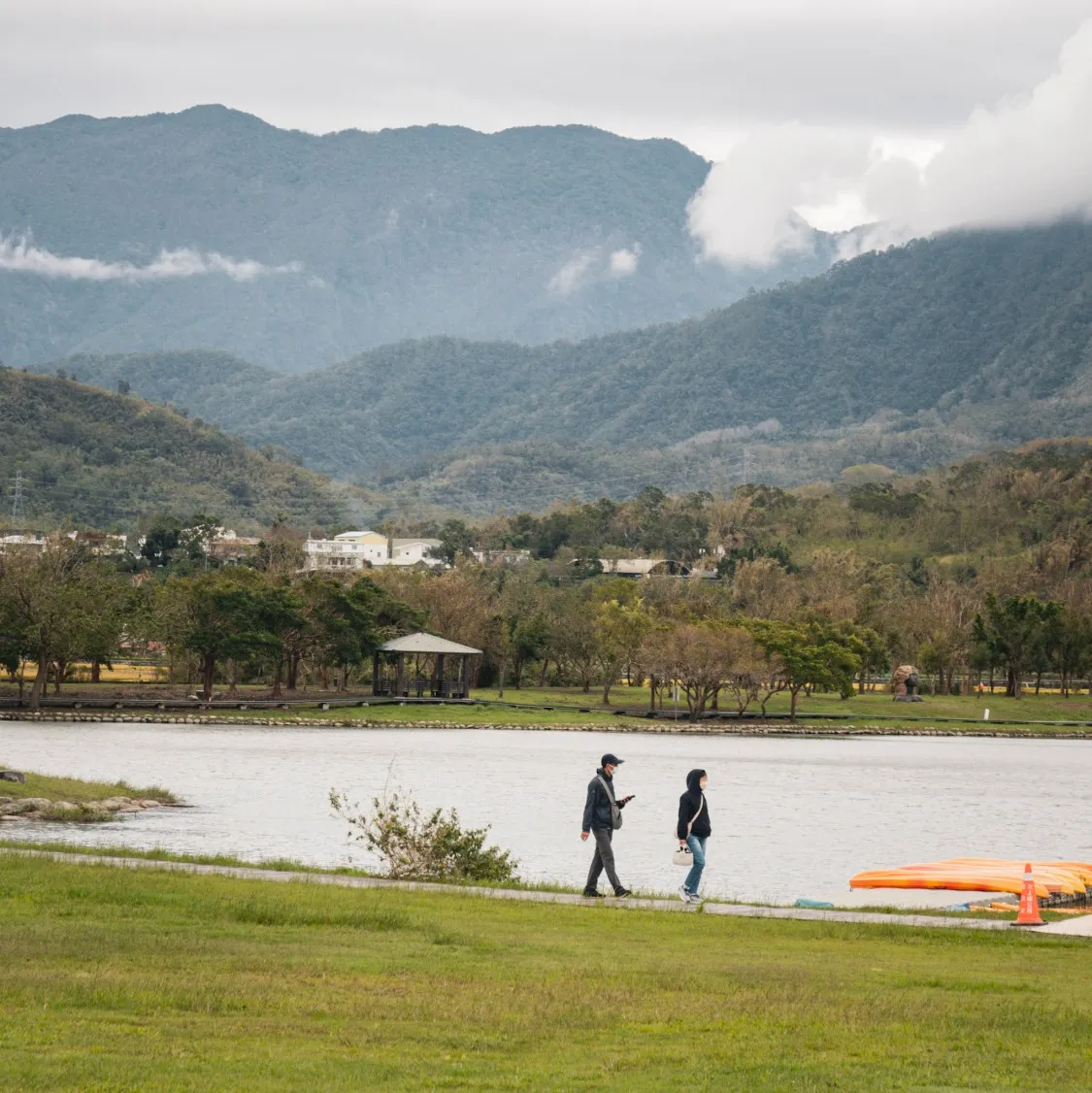
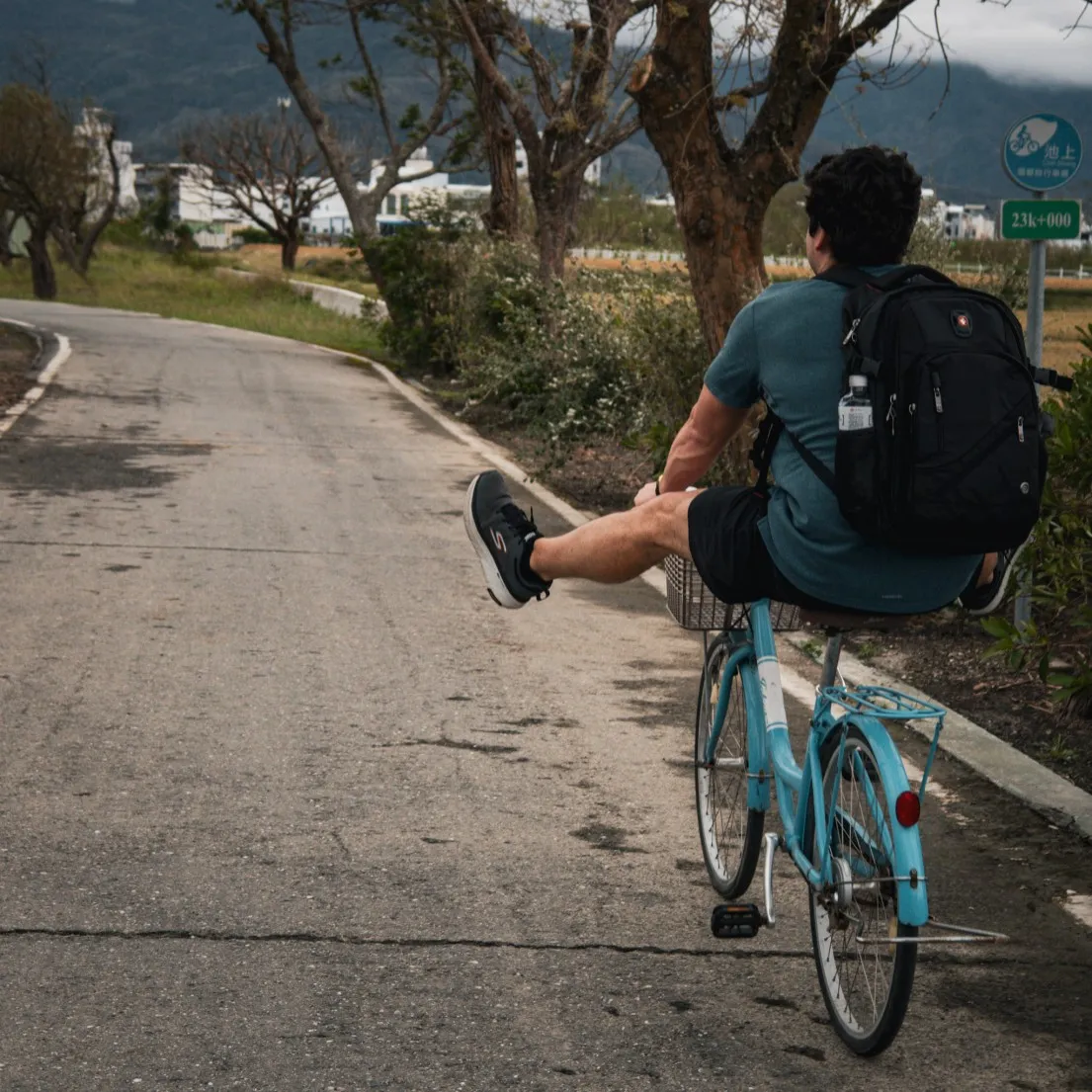
A 3 minute cycle from Chishang town is Dapo Pond – the quieter corner of Chishang that actually gave the whole town its name. It’s a natural pond born from a fault line running beneath the valley, fed by underground water seeping up from the Xinwulu River.
When the Japanese arrived to build their model rice-farming village here in the early 20th century, they named their settlement Ikegami which means “on the pond” and that name simply got translated straight into Mandarin as Chishang. In other words, every bowl of famous Chishang rice, every roadside bento box, every golden field along Brown Boulevard exists because of the water this pond once supplied.
It sees fewer crowds than Brown Boulevard and Paradise Road but it’s just as scenic and has a few cool sculptures scattered around. It takes around 20 minutes to cycle around it.
Chishang Bento Boxes
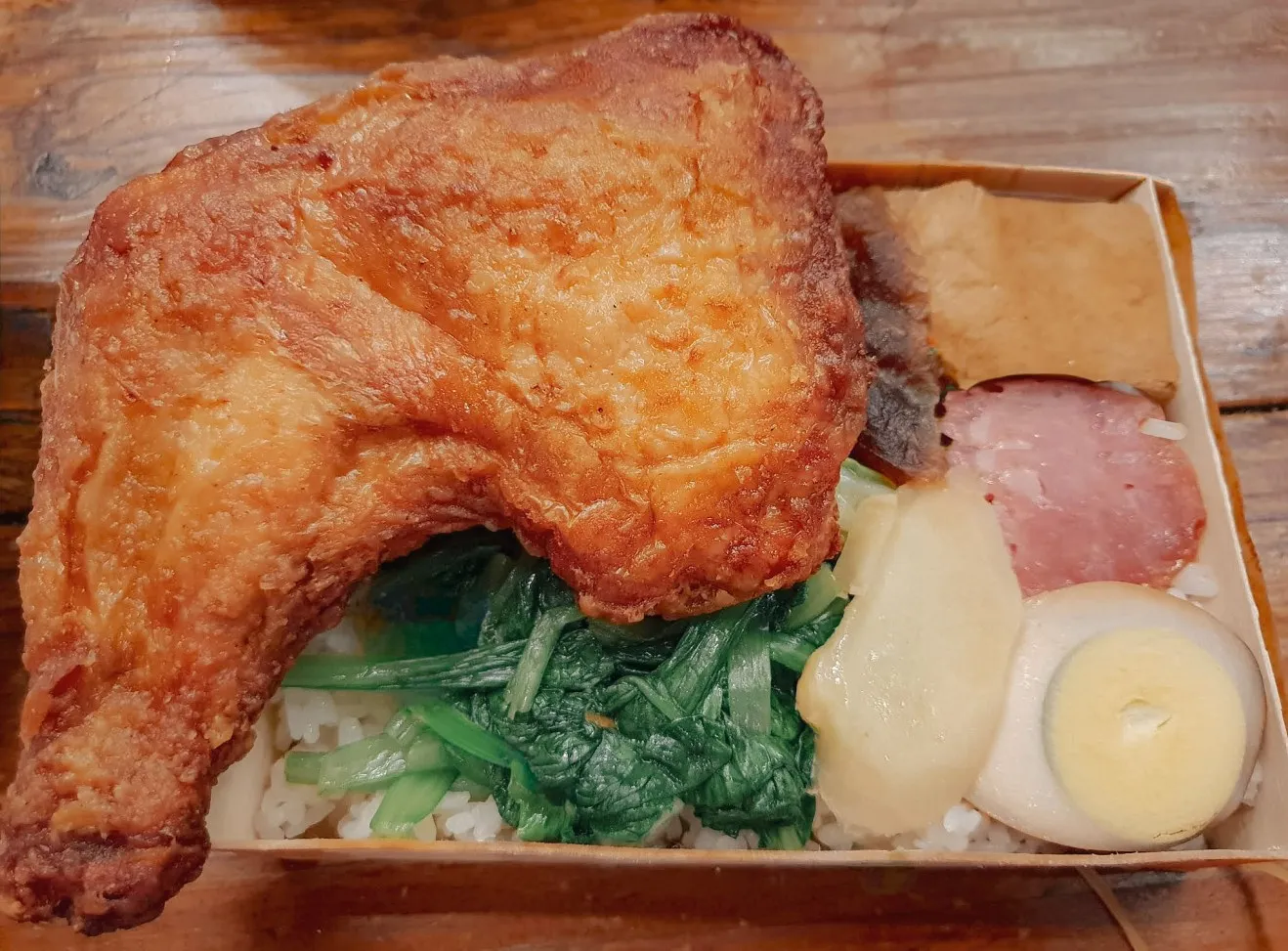
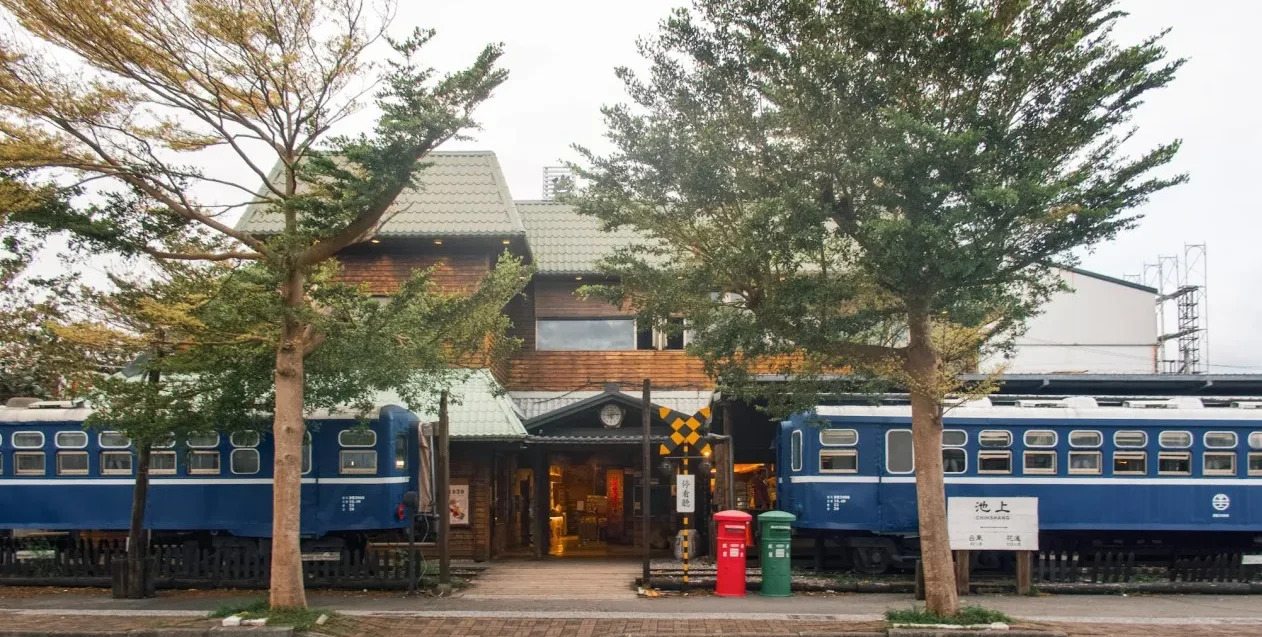
Chishang Bento Box (池上飯包) is a well known Taiwanese bento box company, and their flagship store is located in the town. They have lots of different flavours and use the local rice. Which is a nice way to round out your day after cycling through all the rice fields. You can then eat the bento boxes inside two train carriages parked outside.
There’s also a very small museum inside which takes you back to the brand’s origins in 1940 when vendors were just wrapping rice balls and meat in leaves, Japanese-style, to sell to people passing through on the train.
It’s touristy, no doubt. But it’s a good excuse to sit down and try the local rice, which is really the point of the whole stop. I got a fried chicken leg box which came with tofu, sausage, greens, egg and rice. Although the flavours were pretty forgettable, eating it on an old train carriage and tasting the local rice was a nice experience.
Where To Eat In Chishang
There are many nice restaurants in Chishang, I wasn’t expecting the variety of food. These are the places I enjoyed.
Fengkou Ice Room (奉口冰室)
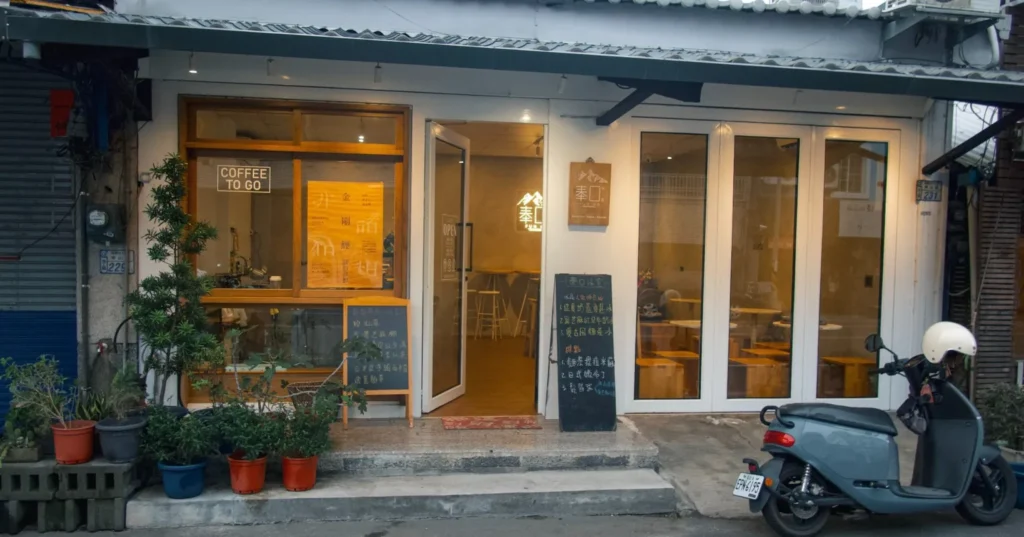
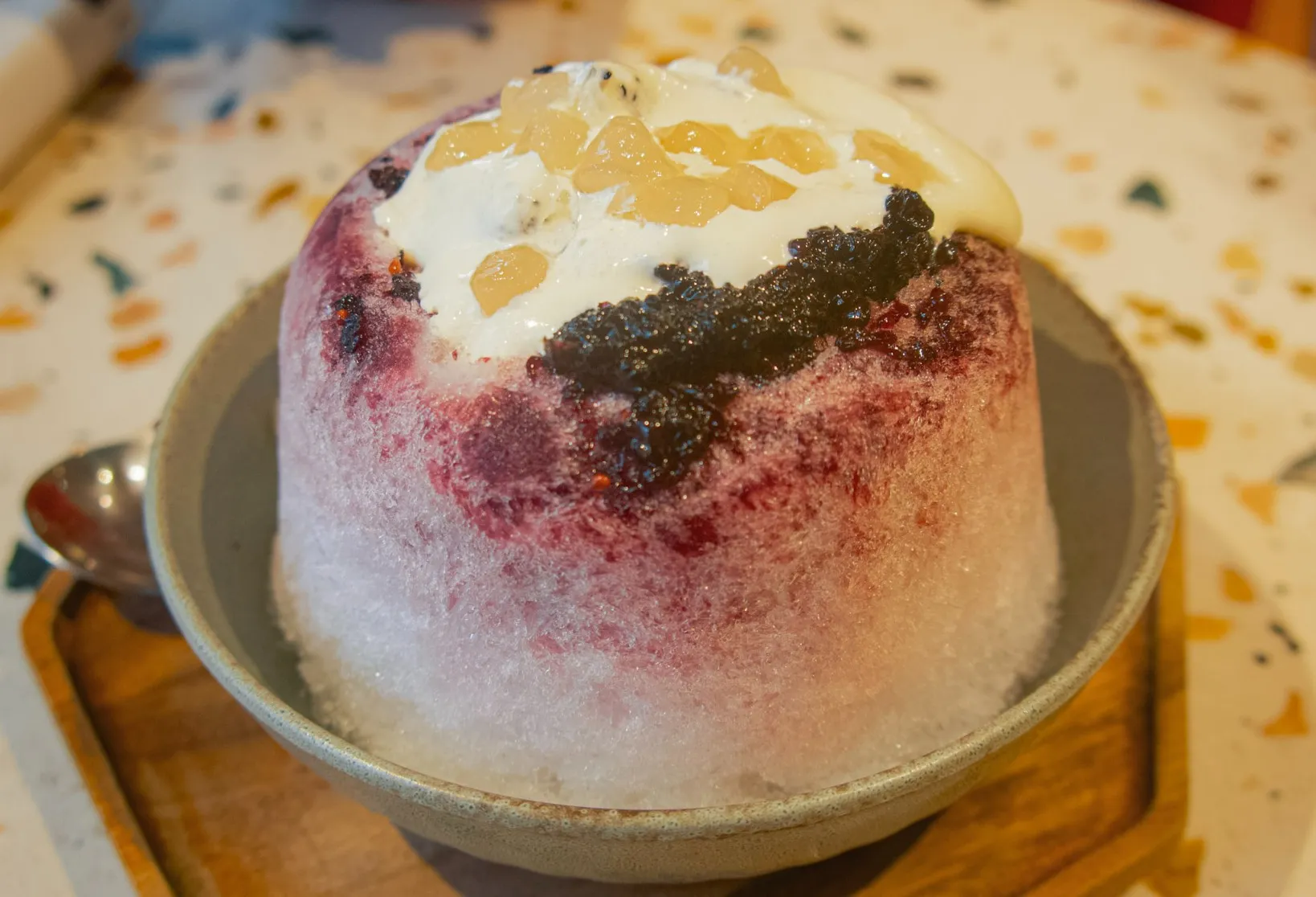
This shaved ice cafe completely cooled us down after a sweaty day of cycling. We got the mulberry shaved ice which was generously topped with milk foam and fresh mulberries, then as you are eating it you uncover pieces of coconut jelly hidden inside. It was so flavourful and refreshing. The mango ice also looked delicious, with every inch covered in juicy mangos.
The prices are also very good with shaved ice ranging from NTD$100 to NTD$160 ($3 – $5)
Soher
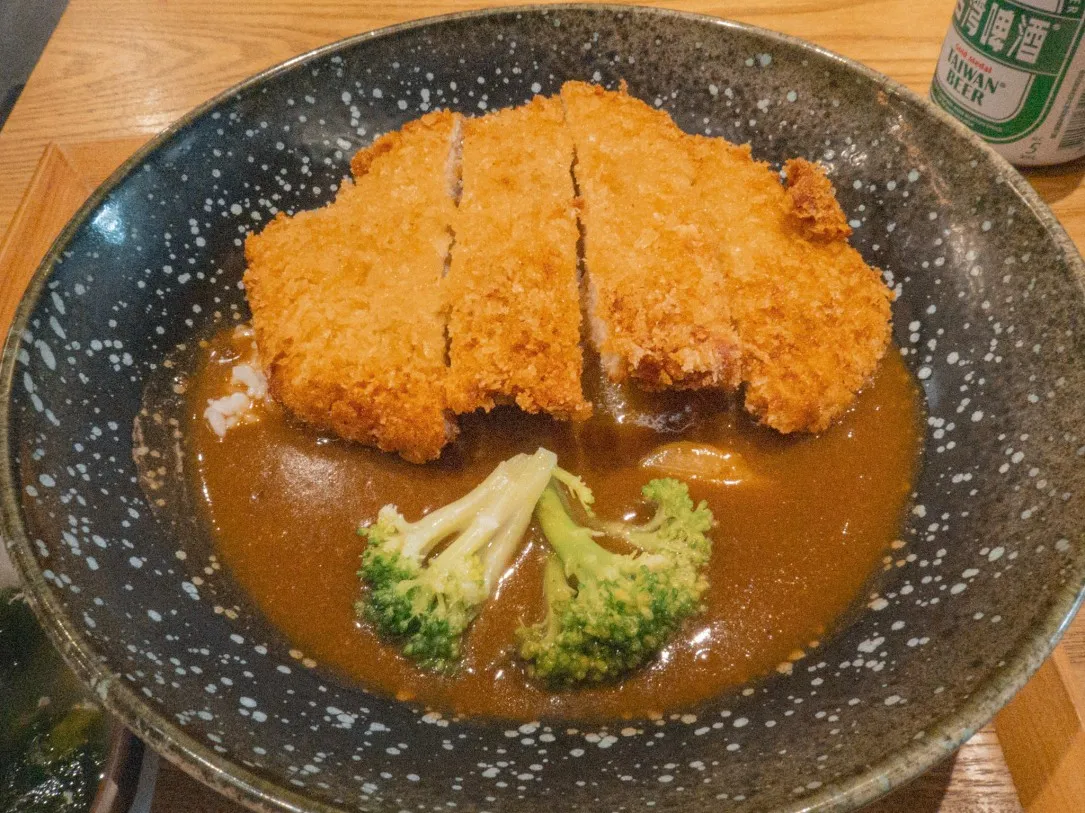
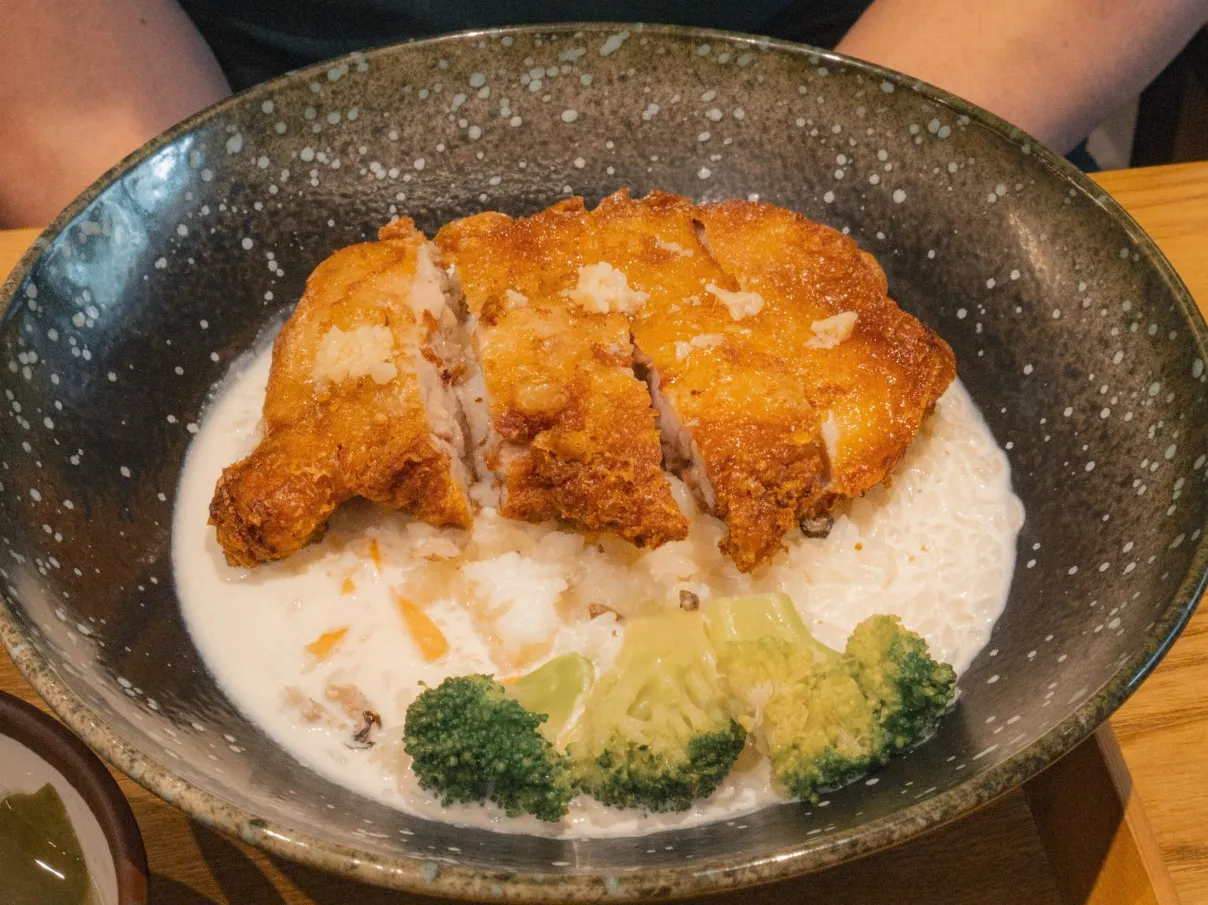
We were looking for something hearty and tasty after the train ride here, Soher more than delivered.
I got a deliciously spicy katsu curry with a huge piece of pork cutlet. So good my boyfriend kept stealing forkfuls – more than what is socially acceptable. He got a creamy garlic fried chicken which was also very good. Portions were so big we both walked away with noticeably rounder bellies.
Rice House
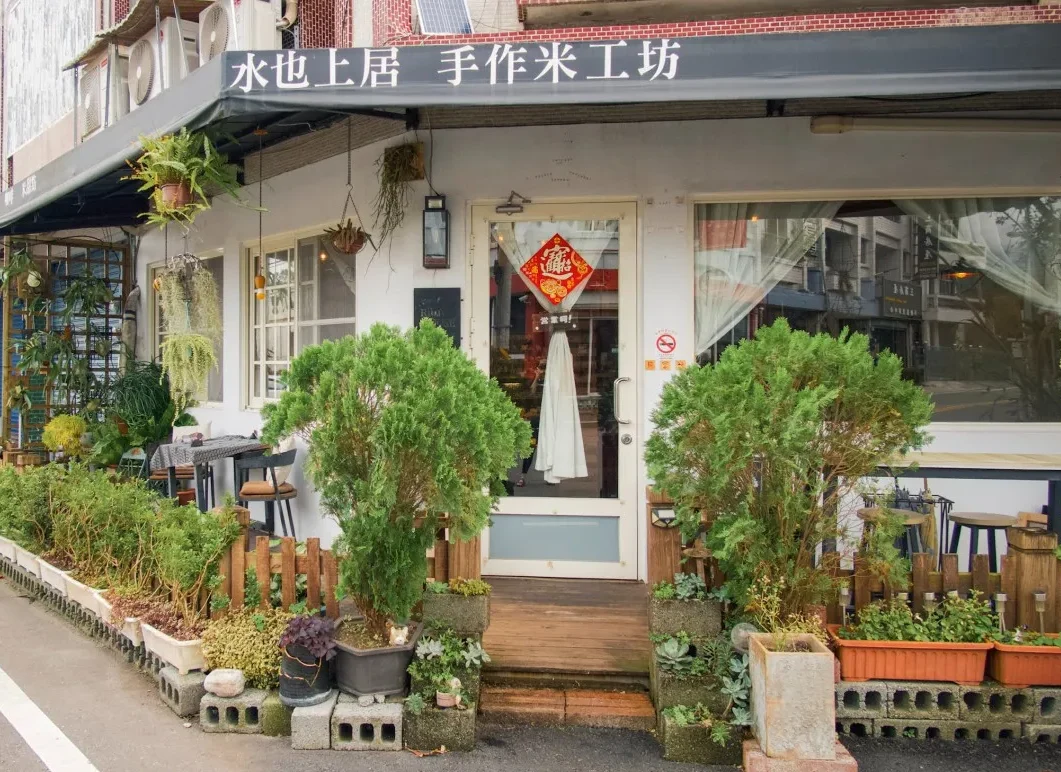
What a cute brunch cafe the Rice House is. The place itself has lots of cosy nooks that makes you feel like you’re in someone’s house rather than a cafe. As the name suggests, this cafe has a unique rice based menu.
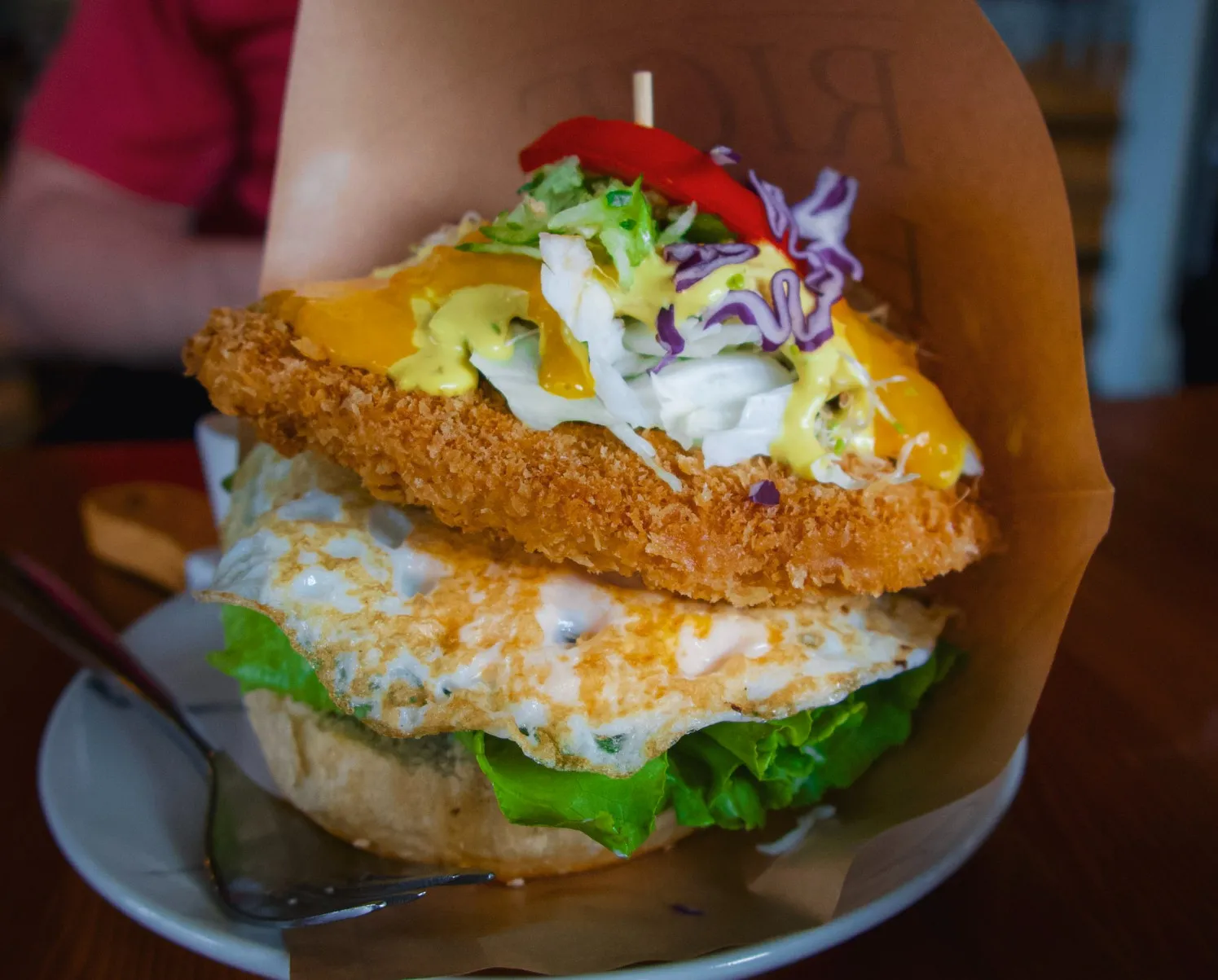
We got the crispy chicken burger which was inside a bun made with rice rather than flour. This gave it a dense and slightly chewy texture. When I placed my order they had to check if there were any rice buns left as they are made fresh in-house everyday, thankfully there were.
Although we didn’t get it, I saw other people with huge fluffy souffle pancakes drenched in sauce. They looked unbelievable.
Getting To Chishang
There’s no high speed rail (HSR) out this way, so it’s regular train (TRA) all the way. But the station is located in the town, so it’s very easy to get to.
From Taipei, it’s about 3-3.5 hours direct (roughly NT$400-700 depending on train type). From Hualien it’s closer to 1.5 hours, and from Taitung City it’s under an hour.
Trains run roughly hourly, so you don’t need to plan your life around a timetable, but book ahead for the faster Puyuma/Tze-Chiang services since they can sell out. Book TRA tickets through their official website, 12go Asia or app “Taiwan Railway e-booking”, up to 28 days in advance.

Bike De Koffie is located beside the train station, they do excellent coffee and tasty rice bagels. They also allowed us to come in with our massive cases.
Best Time To Go To Chishang
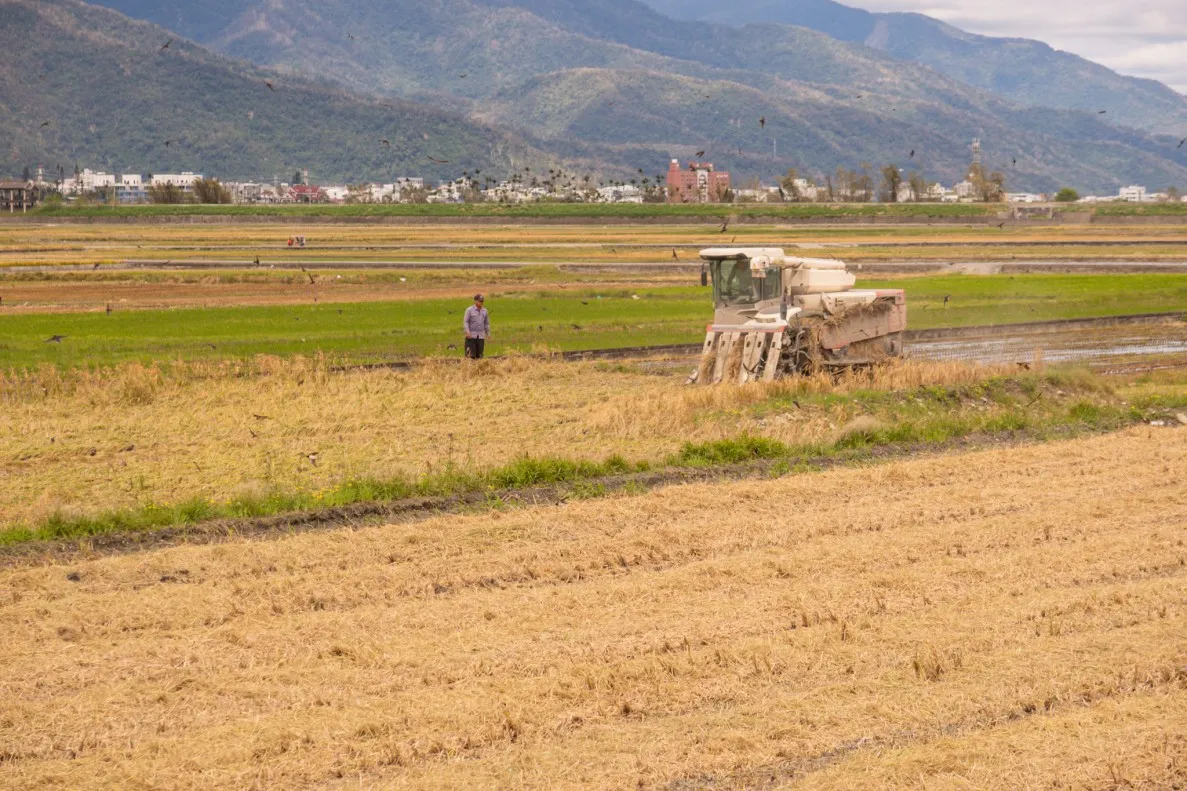
Chishang’s rice fields go through two growing cycles a year, so the valley looks completely different depending on when you turn up. If you’ve seen the photos that made you want to come here, you’re picturing the golden fields and those only happen twice a year for a few weeks at a time.
The fields turn gold in the weeks just before each harvest: roughly mid-May to mid-June and again late October to early November. Get the timing right and the whole valley glows. Get it wrong by two weeks and you’ll arrive to bare, muddy paddies, because harvest is fast and the fields are stripped almost immediately afterwards.
Here’s the rough calendar, though the exact weeks shift every year depending on weather:
- bare fields: July & January
- golden fields: late may – mid June & late October to early November
- green fields: March to May and August to mid-October
- rapeseed flowers: January to February
Because the dates move, don’t book flights around a blog post (including this one). Taitung Tourism runs a live camera pointed at the fields, so you can check the actual colour before you commit.
Chishang FAQ
Is Chishang a day trip or do you need to stay overnight?
You can technically do it as a day trip if you’re based in Taitung City, but I wouldn’t. Getting here and back eats into your time, and the town is genuinely nicer in the early morning and evening once the day-trippers clear out. One night is enough to hit the main sights without rushing.
Is Chishang worth it if you’re not into cycling?
Probably not. Almost everything here is built around getting out on a bike through the rice fields. If that’s not appealing to you, there isn’t a huge amount else to fill a day.
Can you visit Chishang without a car?
Yes, easily. The train gets you into town, and everything worth seeing is flat and bikeable from there. This is honestly one of the few places in Taitung County where not driving isn’t a disadvantage.