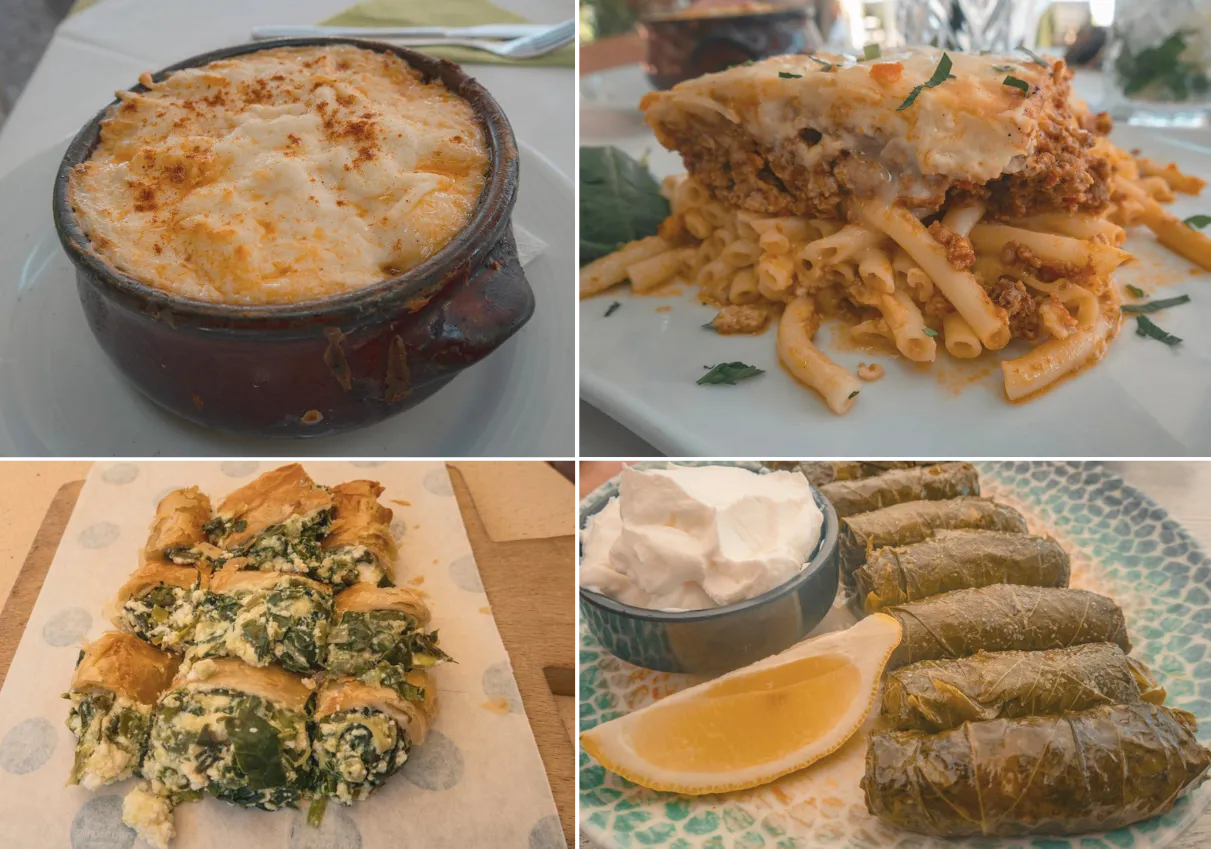
Yes, Greece is where democracy was born, birthplace of philosophy, the Olympics, more ancient ruins than you could see in a lifetime. All true, all impressive but none of it is actually why I fell in love with the place. Call me an uncultured but my fondness for Greece happened somewhere between my third plate of dolmades and a taverna owner who wouldn’t let us leave until we’d downed a shot of Ouzo.
Traditional Greek food is typically viewed as gyros, souvlaki, a bit of feta scattered around. And sure, that’s some of it but it barely scratches the surface. This is what makes up the best Greek food, built on olive oil (Greece is one of the biggest producers in the world), fresh herbs, whatever vegetables are actually in season and a culture sharing everything rather than ordering your own plate and guarding it. Meze culture means the table fills up fast, plate after plate landing in the middle for everyone to pick at and somehow there’s always room for one more.
It’s also one of the few cuisines where the “healthy” reputation actually holds up, Greece has some of the highest life expectancy rates in the world and a diet built around olive oil, vegetables and legumes is a big part of that. Cheese and fried dough sneak in there too though, so don’t go in expecting to eat like a Spartan.

Is Greek Food Gluten Free?
Not really and I say that as someone who went in hoping it would be easier than it was. Menus rarely flag what’s gluten free, so you’re mostly guessing or asking and hoping the person behind the counter actually knows. Supermarkets carry a small gluten free bread selection if you want to self cater, but bakeries are a dead end and the odd gluten free dessert does turn up in some of them, it’s just not widespread enough to rely on.
The easiest workaround is ordering smart rather than expecting the menu to work around you. A gyros plate instead of the wrap, same meat and fries, just skip the pita, solves half your problems. A few places do offer a gluten free pita but not enough that you can count on it everywhere, so don’t build your trip around finding one. When in doubt, Greek salad with souvlaki, grilled fish or dolmades is about as safe as it gets, naturally gluten free and on pretty much every taverna menu you’ll come across.
RELATED: 17 Traditional Cretan Dishes You Need To Try →
Greek Food You Need To Try: 22 Tastiest Dishes
Gyros
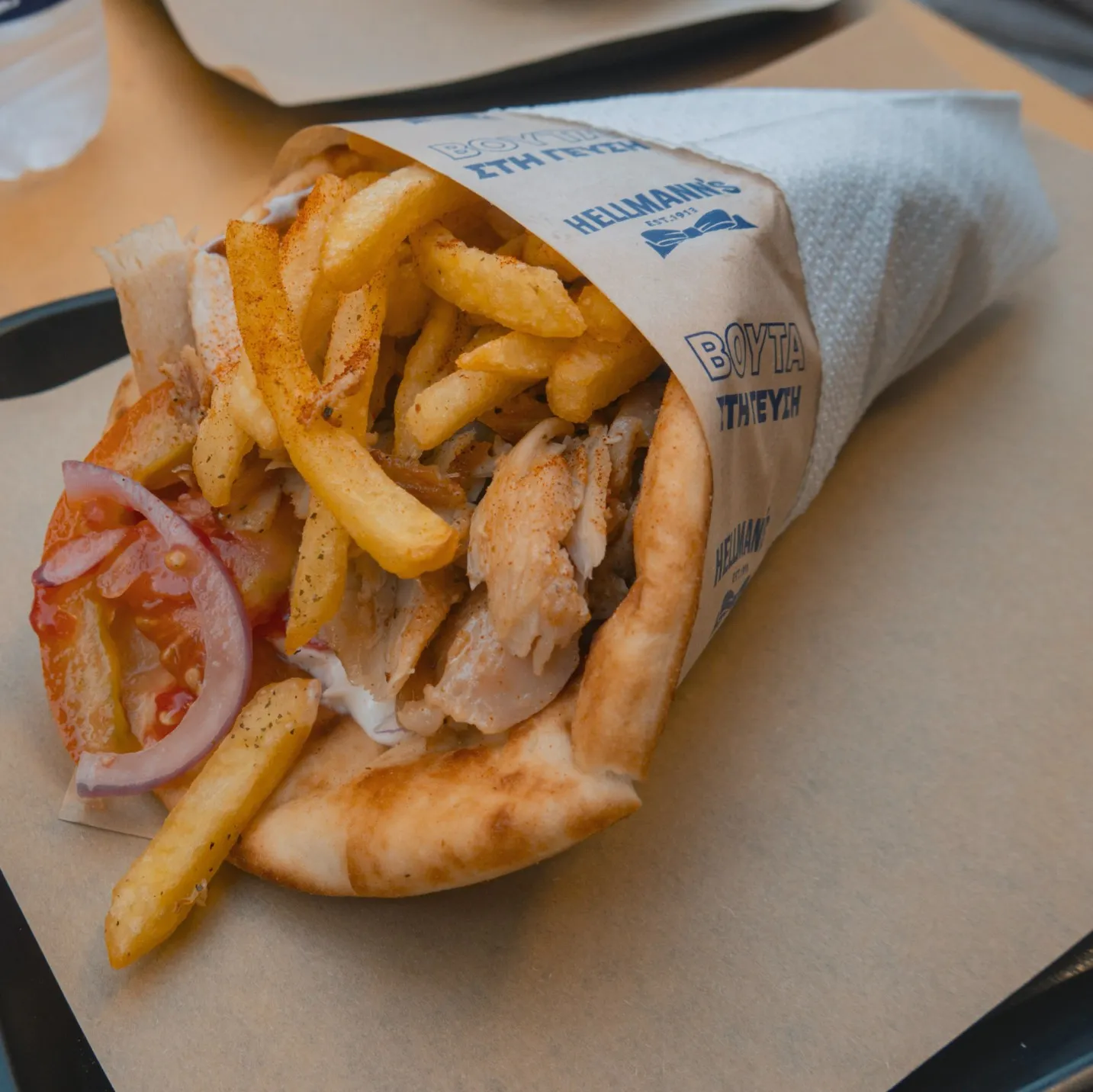
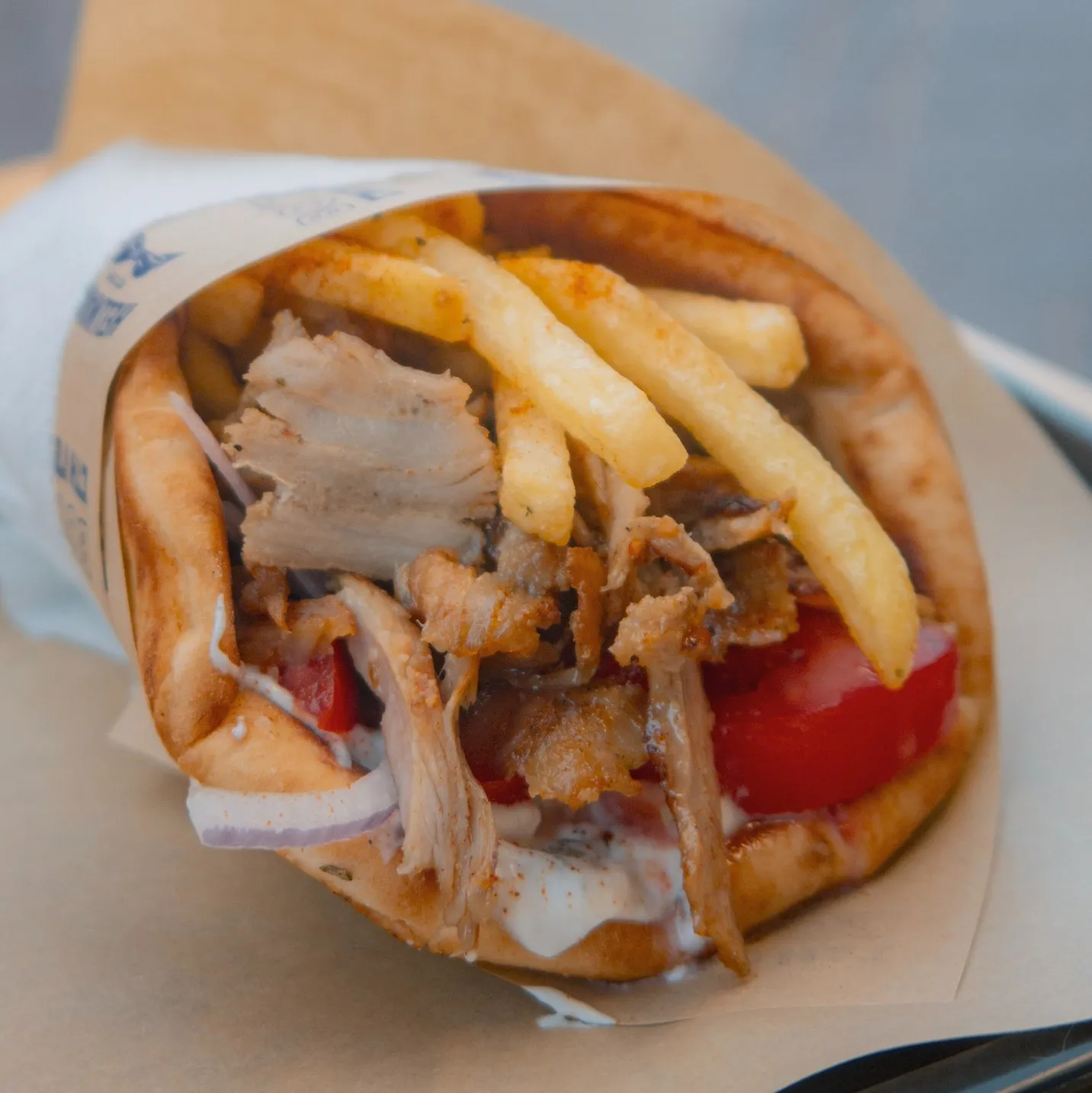
When it comes to gyros, there is one thing that’s certain, you’re going to eat much more than you plan to, they are probably the most popular Greek food. Pork or chicken, shaved off the spit, wrapped in pita with tomato, onion, a thick swipe of tzatziki and if you’re doing it right, fries stuffed inside sprinkled with paprika too. It sounds like a lot happening in one wrap and it is, but it hits the spot each and every time
The best ones I had were from small hole in the wall spots rather than at a sit down restaurant with a large menu.
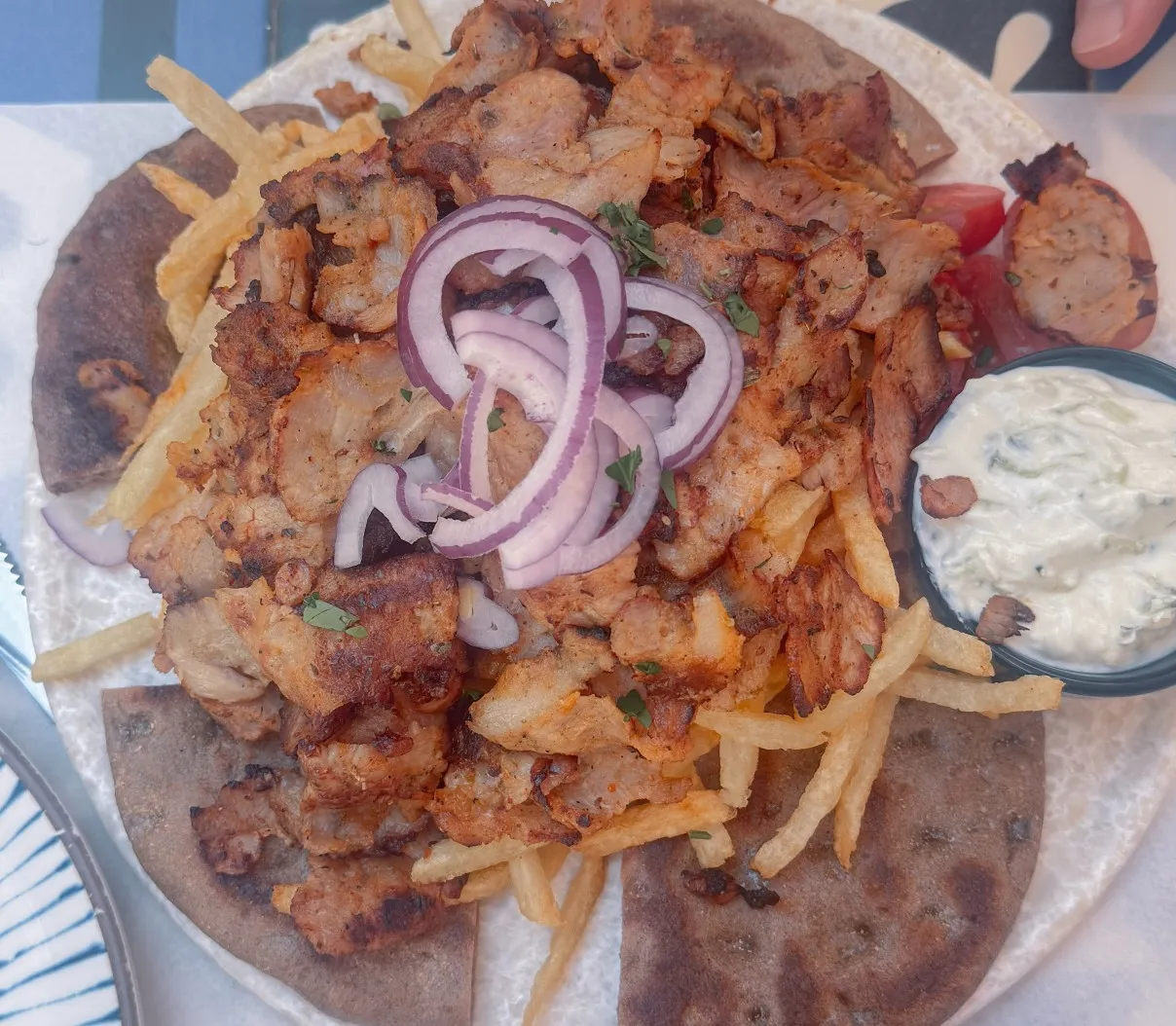
You can also get a gyros plate, which is basically everything inside a regular gyro but on a plate over a bed of fries, there’ also more meat, you will literally get a mountain of thin slices of pork or chicken.
RELATED: 11 Alternative Things To Do In Athens (museum free guide) →
Souvlaki
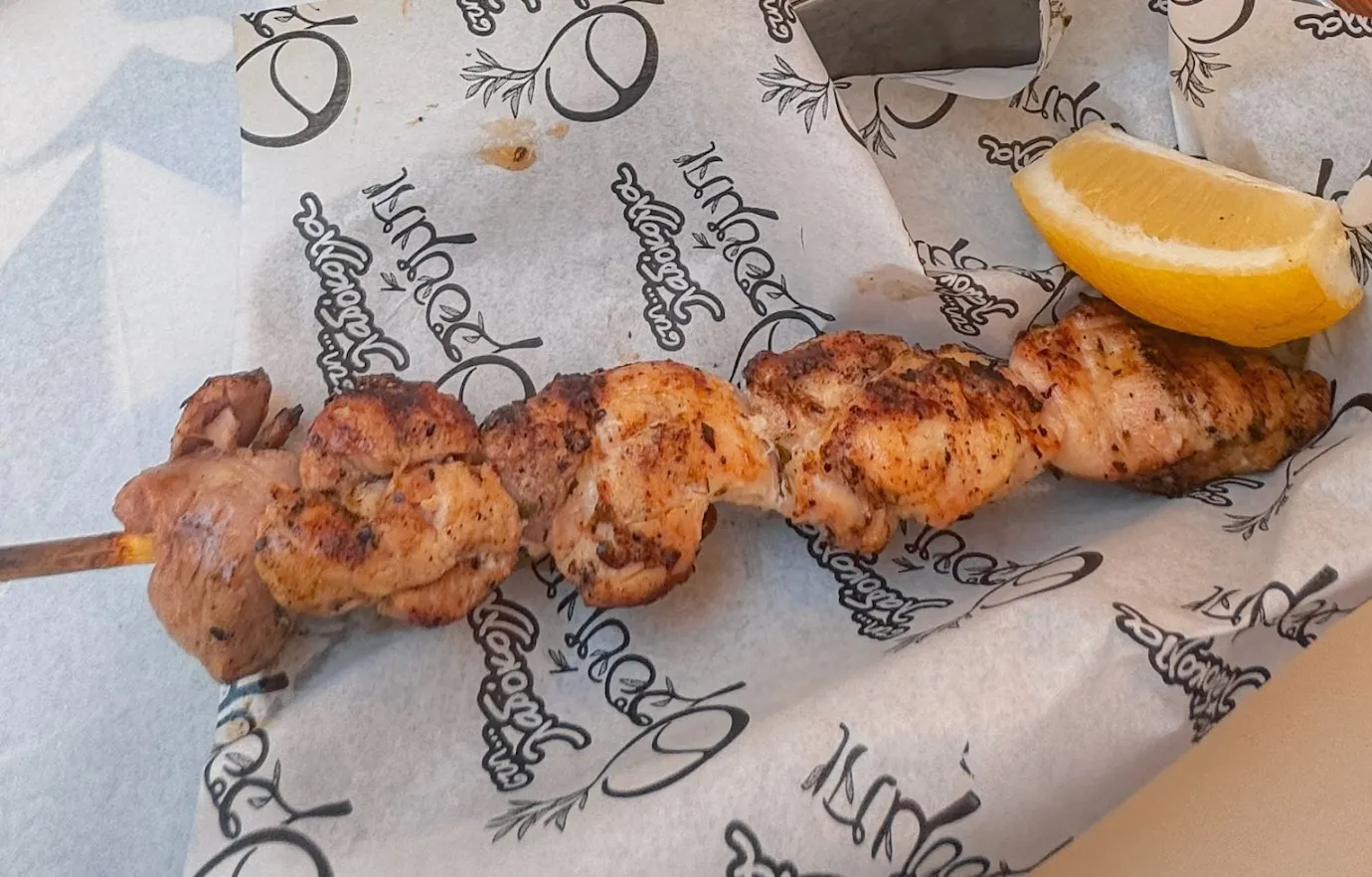
Not to be confused with gyro, though half the tourists I met used the words interchangeably. Souvlaki is skewered, grilled meat, usually pork, served either on the skewer itself or wrapped in pita like a gyro. It usually comes dressed with tomato, onion and tzatziki.
Like gyros, street stalls do this better than sit down restaurants most of the time. Souvlaki and gyros are the best Greek street food you’ll find late at night.
Tzatziki
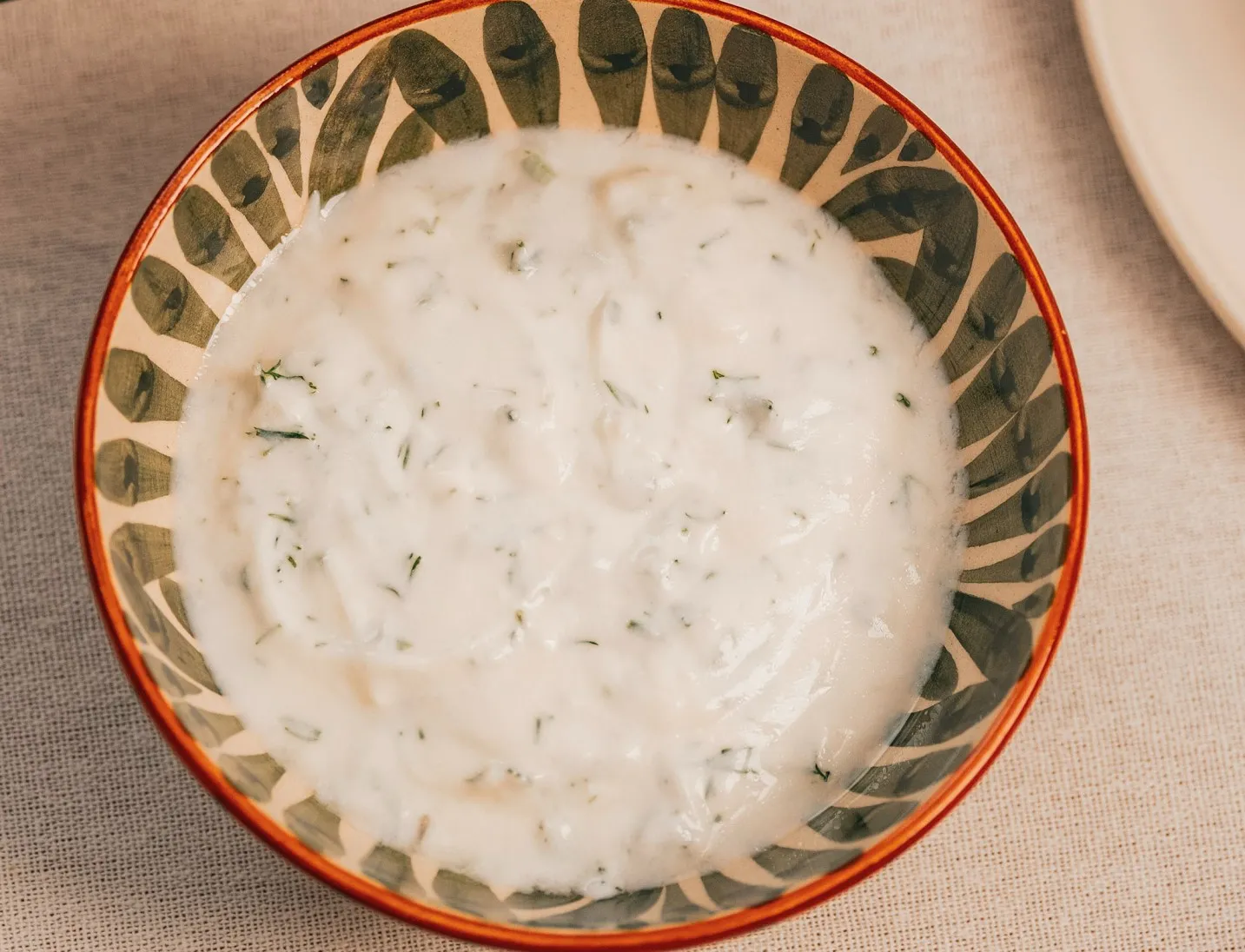
Every table gets a bowl of this whether you order it or not and that’s how it should be. Thick Greek yoghurt, grated cucumber, garlic, a splash of olive oil, sometimes a bit of dill or mint depending who’s making it. Simple ingredients, but the good versions have a bite of garlic that hits you a few seconds after the first spoonful.
I started using it as a sauce for everything, not just the classic gyro or souvlaki pairing. Roast potatoes, bread, even just a spoon straight from the bowl when nobody was looking.
Pastitsio
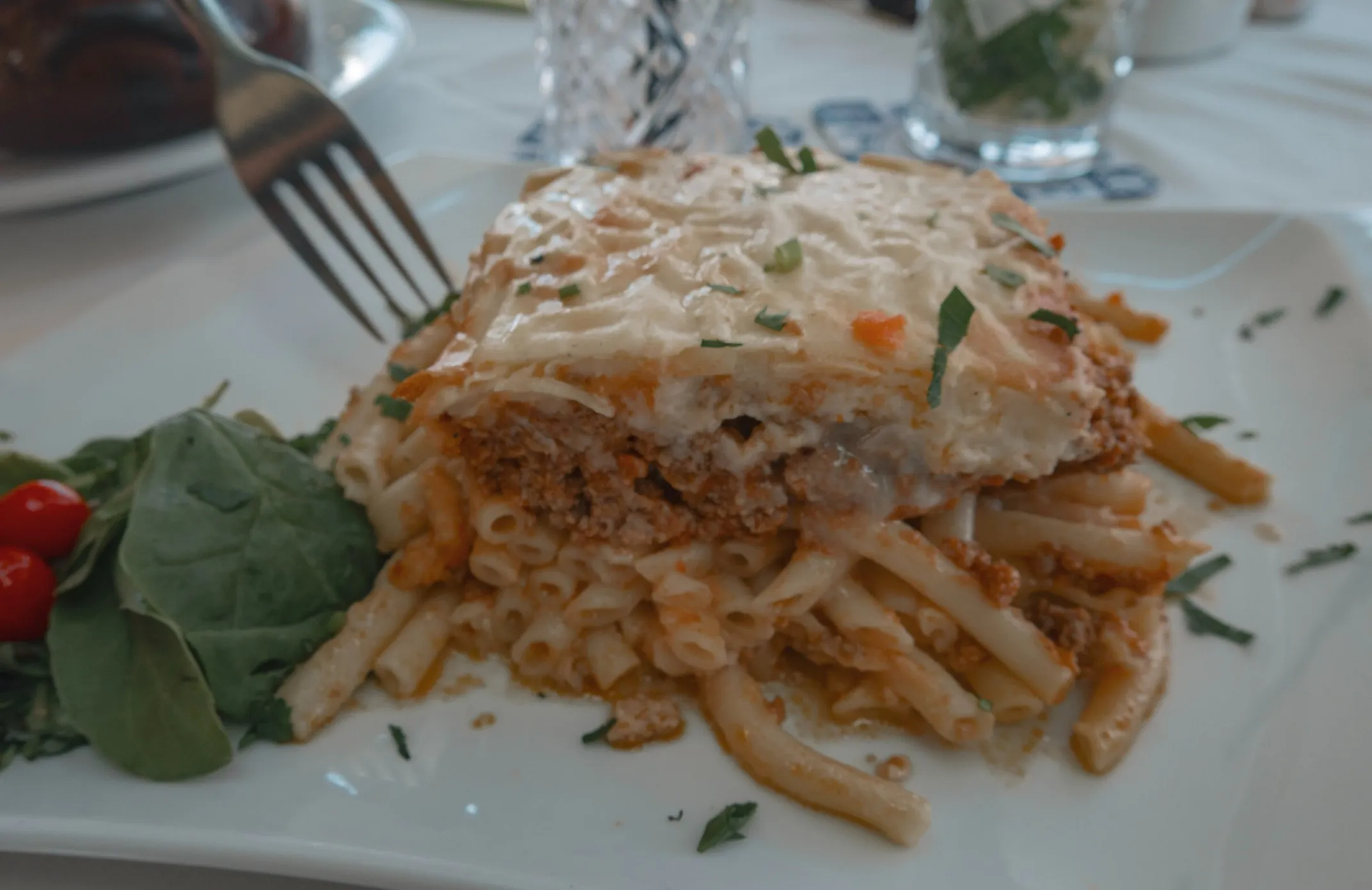
Layers of tubular pasta, a rich meat sauce with cinnamon running through it, topped with a thick bechamel that goes golden and slightly crisp in the oven. This is my favorite Greek dish. It’s Greece’s answer to lasagna and once you’ve had a good one you’ll wonder why moussaka gets all the attention.
It’s heavier than most things you’ll eat in Greece, this is a fork and knife, sit down for an hour type of dish. I prefer to order it for dinner rather than lunch and nights when I’ve an elasticated band.
Moussaka
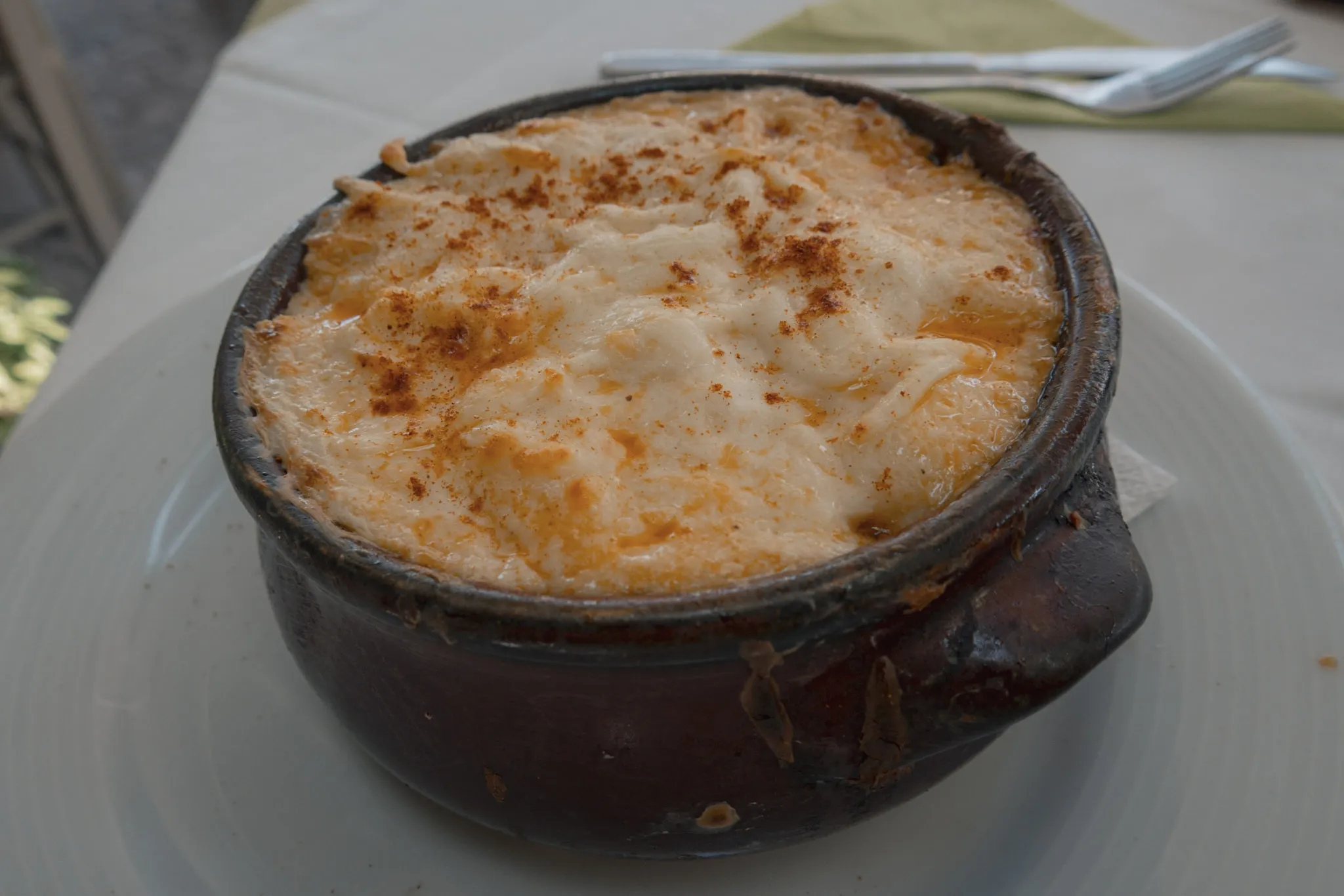
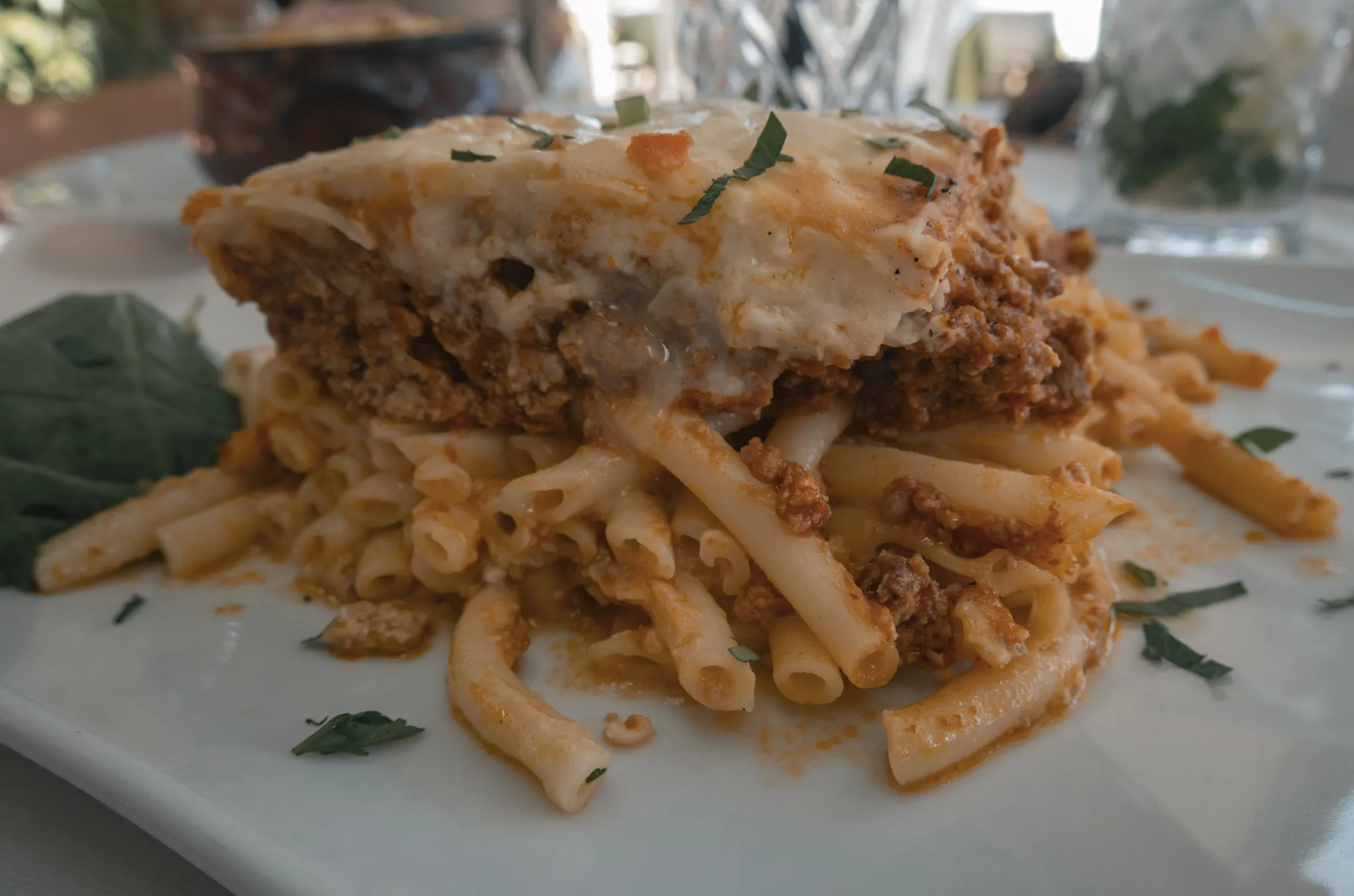
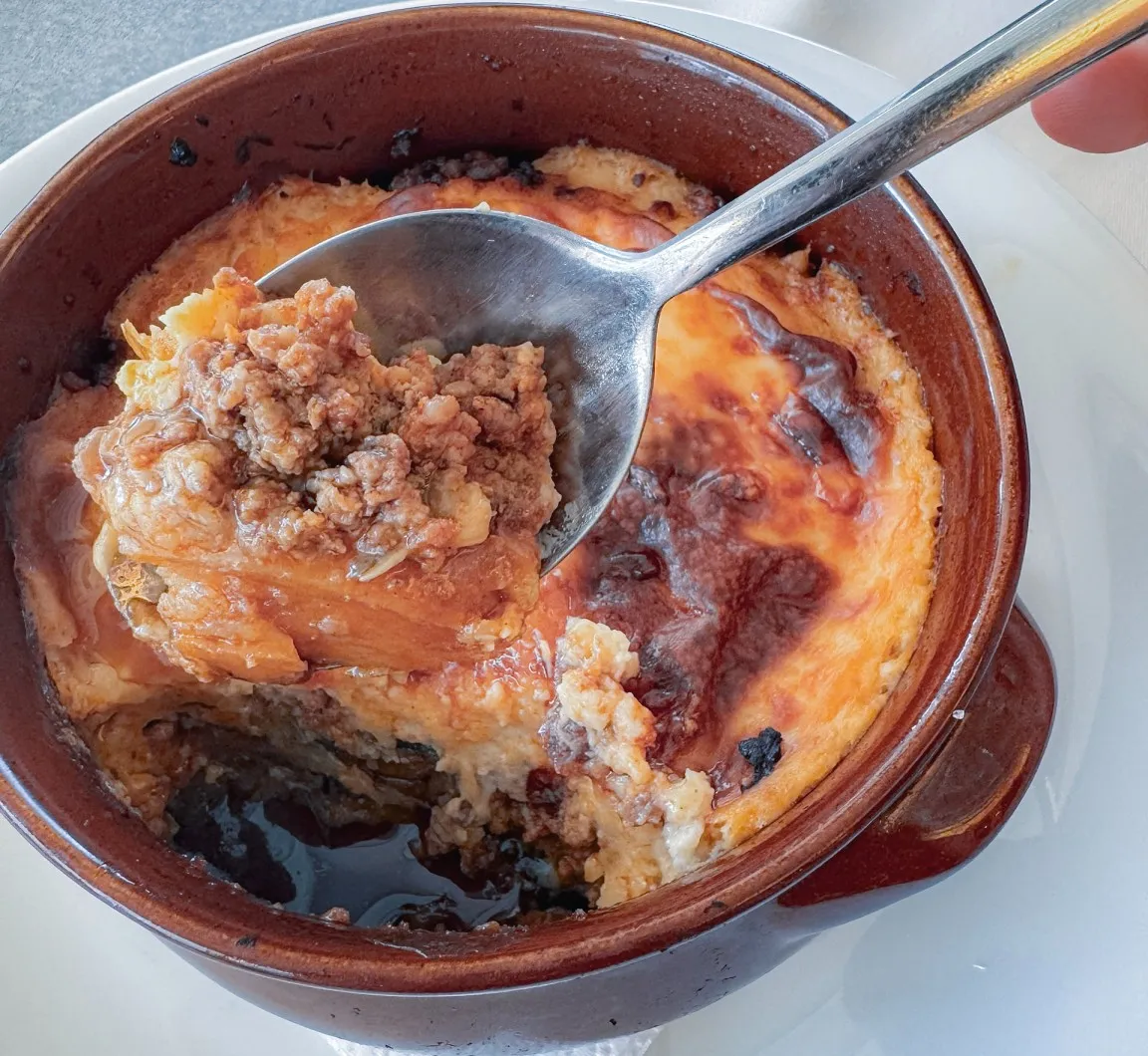
Mousakka is one of the most famous dishes in Greece. Every taverna has it on their menu. It’s made of thin slices of eggplant, spiced beef or lamb, sometimes a layer of potato thrown in too, topped with a thick creamy bechamel that goes golden on top. It comes out of the oven in a big casserole dish, still bubbling when it hits the table
It’s hearty and something you’ll keep going back to. I love it with a slice or two of bread to soak up all the juices at the end.
RELATED: How To Spend 1 Day In Athens →
Spanakopita (spinach pie)
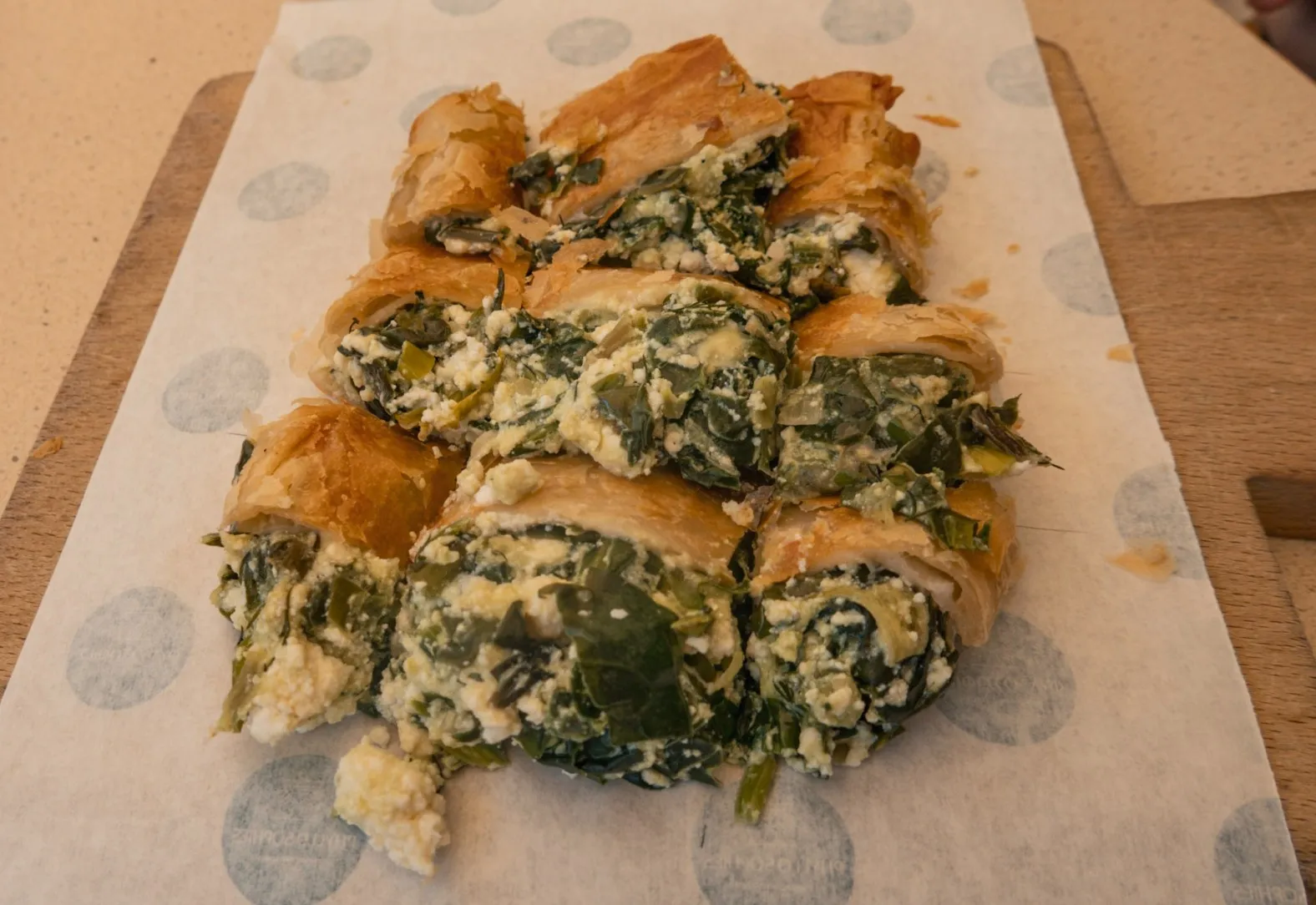
Spinach and feta wrapped in crisp, buttery phyllo, folded into triangles or rolled into a spiral depending where you get it. It’s everywhere, bakeries, cafes, even petrol stations sell a version of this and I’ve yet to find one that wasn’t good.
Spanakopita tends to be different in each place, some are heavy on the feta, tangy and salty, others lean more toward the greens with just a hint of cheese. I ended up preferring the ones with a bit of dill mixed through, it cuts the richness of the phyllo nicely.
Kleftiko
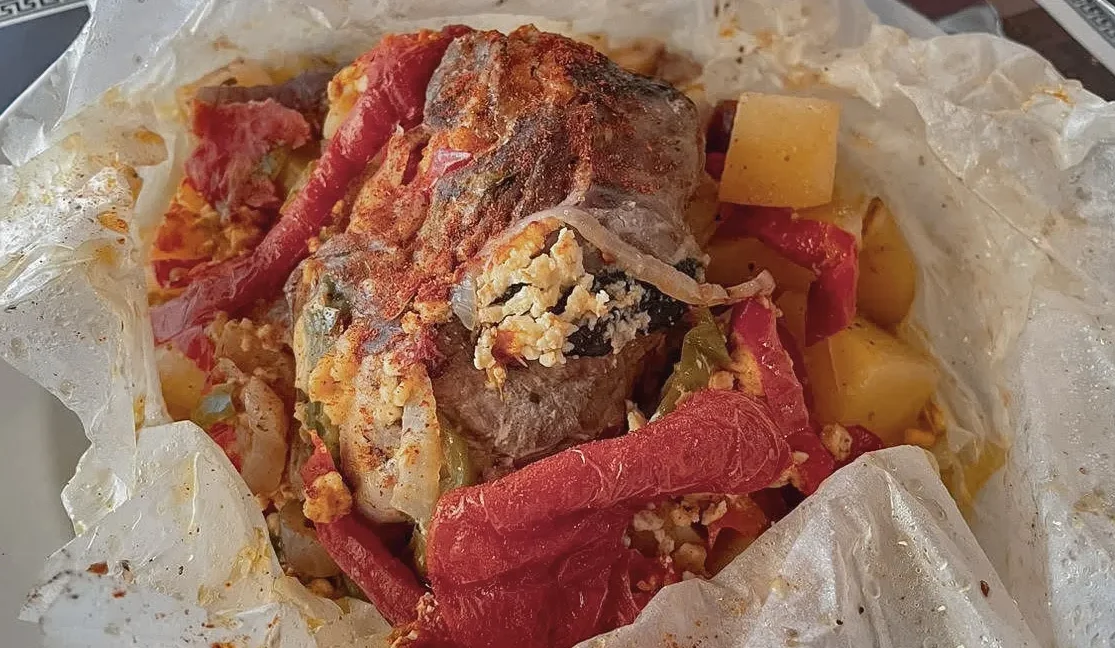
The name means “stolen meat,” a nod to when Greek rebels would steal a lamb, bury it with herbs and slow cook it underground so the smoke wouldn’t give away their location. These days it’s cooked in a sealed clay pot or wrapped tightly in parchment, but the idea is the same, meat cooked low and slow until it’s falling off the bone. It’s cooked with potatoes, garlic, lemon and herbs that are all sealed in together for hours. When they finally open the parcel at your table, the smell alone is worth the wait.
Fasolada
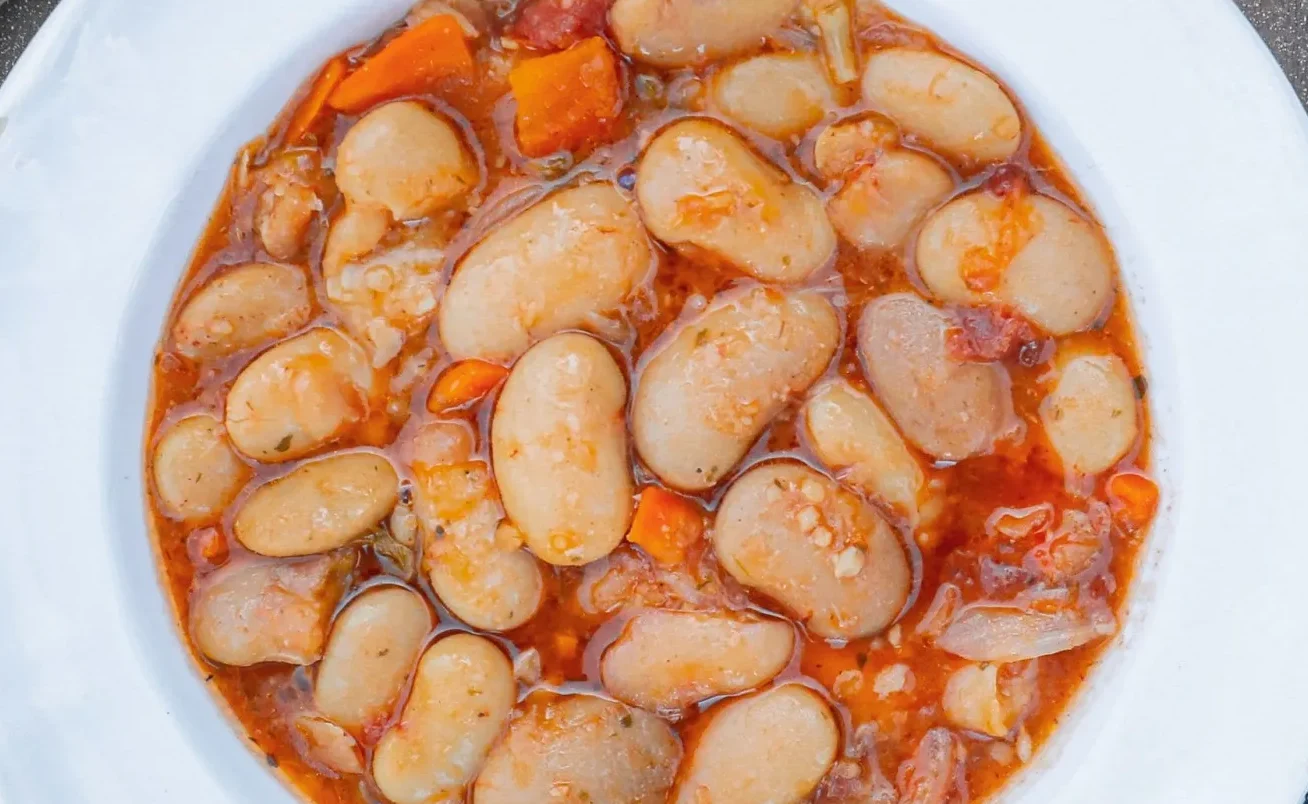
Some call this Greece’s national dish, which surprised me the first time I heard it, a bean soup doesn’t sound like the flagship of a country’s cuisine. I assumed it’d be gyros, but once you’ve had a good bowl on a rainy day, you get it. White beans, tomato, carrot, celery, olive oil, simmered until everything’s soft and the broth’s gone thick. It’s comfort in a bowl.
It’s cheap and cheerful food made from whatever was in the pantry. You won’t find it on every tourist menu, it’s more of a home cooking thing, so if you spot it somewhere, order it. Honestly, I love beans and found this to be delicious.
Gemista
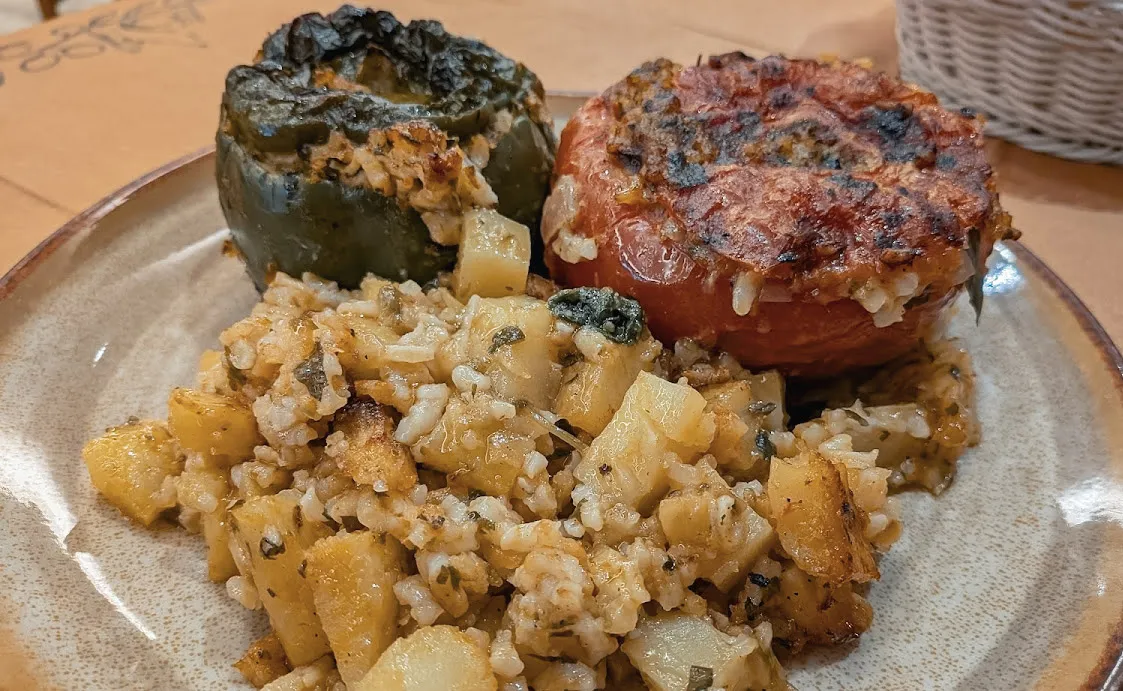
Tomatoes and peppers hollowed out and stuffed with rice, herbs, sometimes minced meat, then baked until the vegetables collapse into themselves and the filling’s soaked up all that flavour. It’s a summer dish through and through, made when tomatoes are actually good and ripe rather than the sad ones you get in winter.
I had a vegetarian version most of the time, just rice, herbs and a hit of mint and didn’t miss the meat.
Saganaki
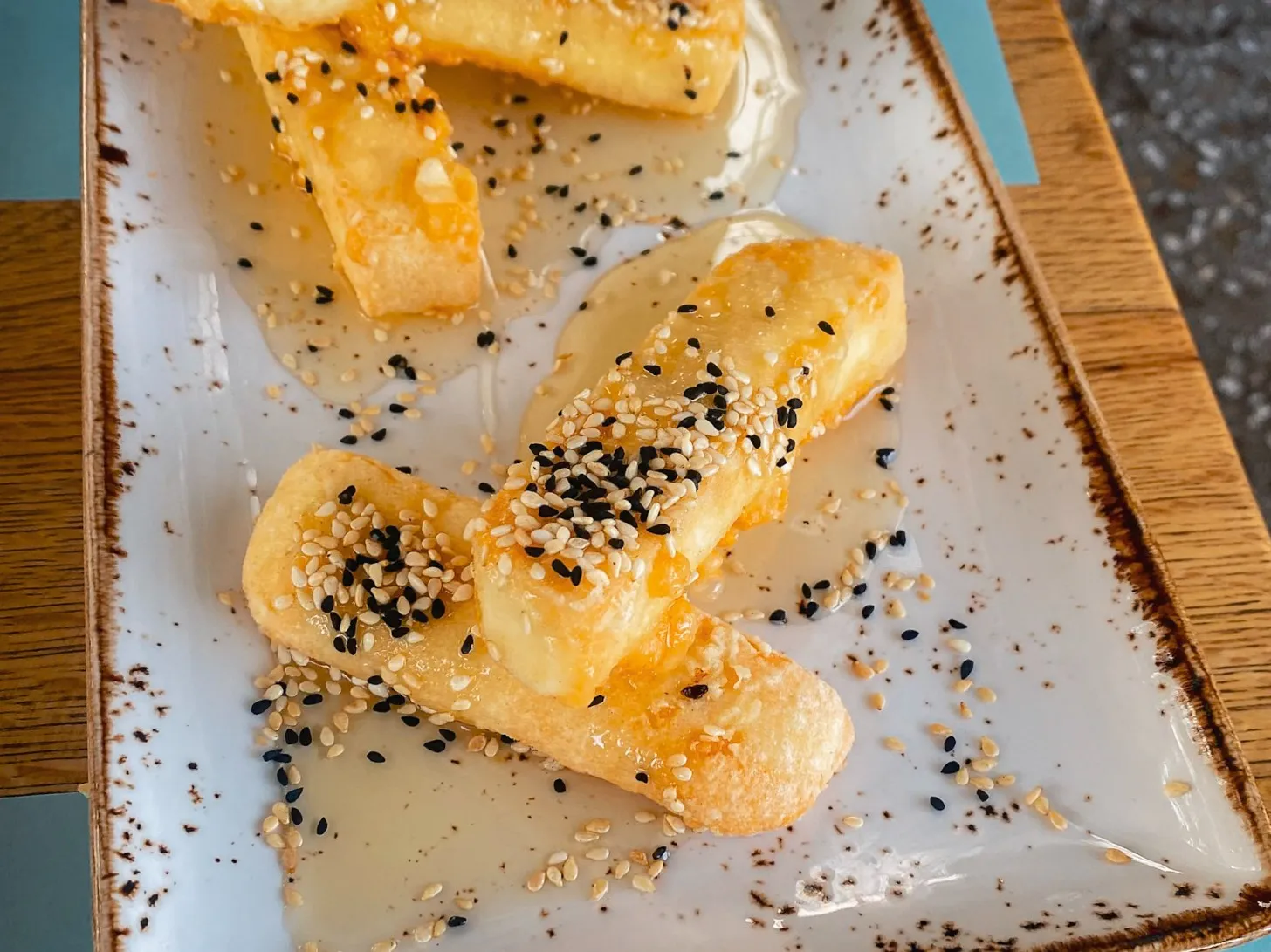
Fried cheese and yes, it’s exactly as good as that sounds. A slab of cheese, usually kefalotyri or graviera, coated in flour and fried until it’s got a crisp golden crust and a molten centre. Some places set it alight with brandy at the table, which is more show than necessity but it’s fun to watch.
Ice-Creams From Bakery
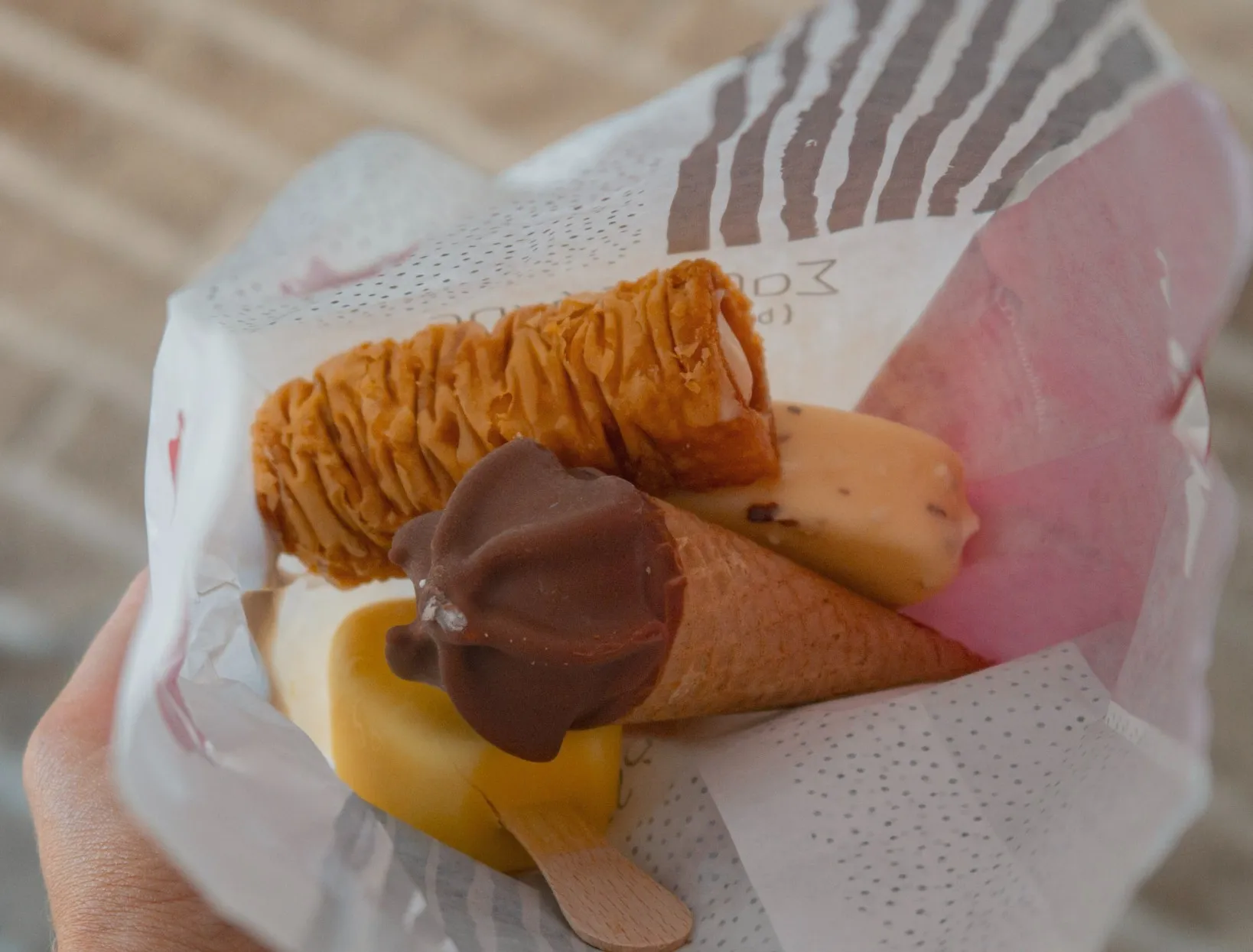
Step away from the freezers in a mini mart of grocery shop, the bakery is where the best ice creams are at. Yes, really.
Most bakeries in Greece have a tall freezer filled with mini ice creams. You cannot pick them yourself, instead you tell a member of staff which ice creams you want and then they weigh them. Not only are they more delicious but they are much cheaper than shop brought ice creams. I strongly recommend saragli, which are baklava cigars filled with ice cream.

Stifado
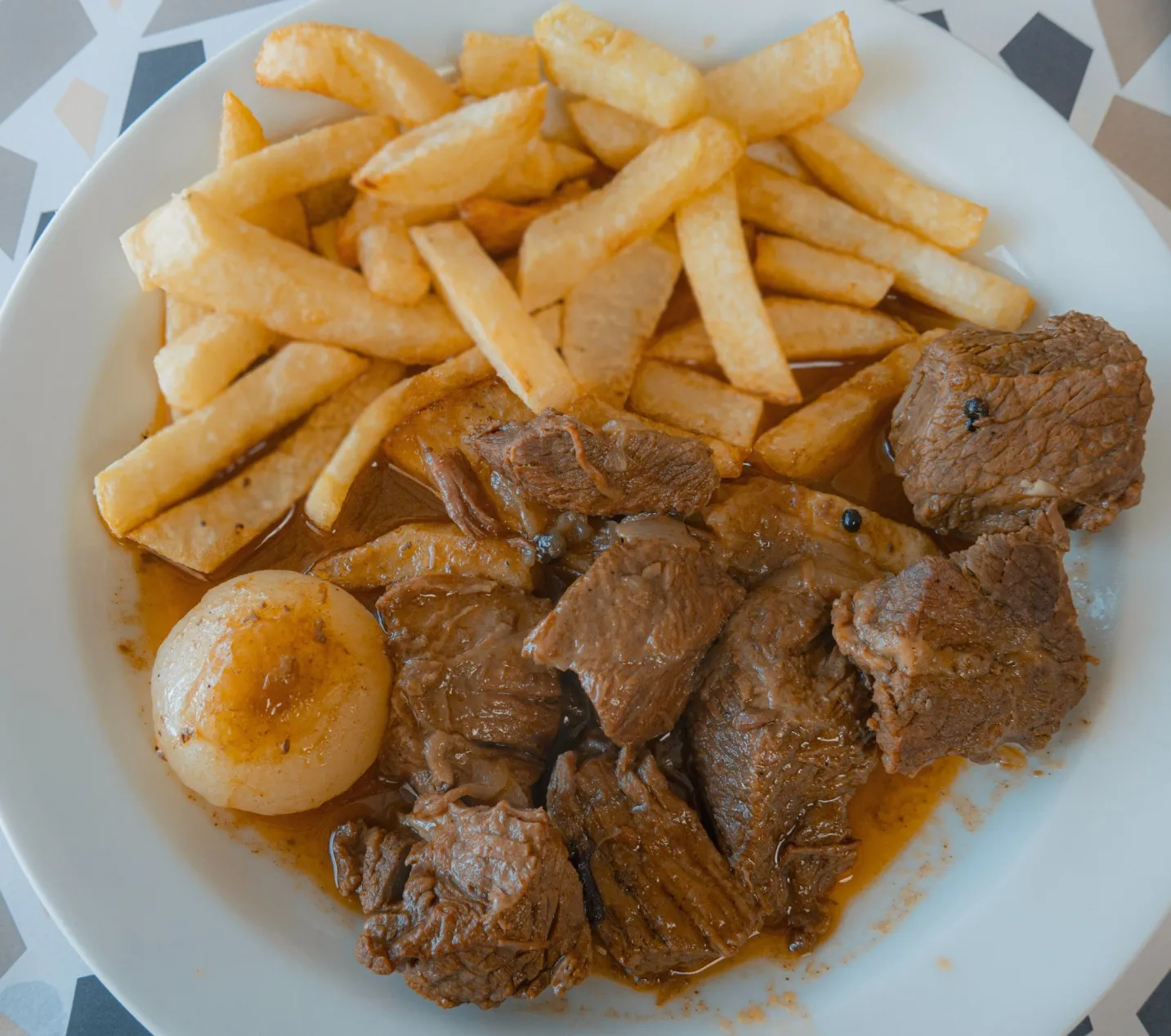
I’ve already spoken about this in my Crete food post, but it deserves a mention here too since you’ll find it all over mainland Greece as well, not just the island. A slow cooked stew, usually beef, sometimes rabbit or pork, in a deep red wine and tomato sauce with a good hit of cinnamon and small pearl onions cooked down until they’re soft and sweet.
Every region does its own version, so don’t be surprised if the one you get in Athens tastes a bit different to the one you had in Crete. Both are worth ordering, I wouldn’t skip it just because you’ve already had it once.
Bougatsa
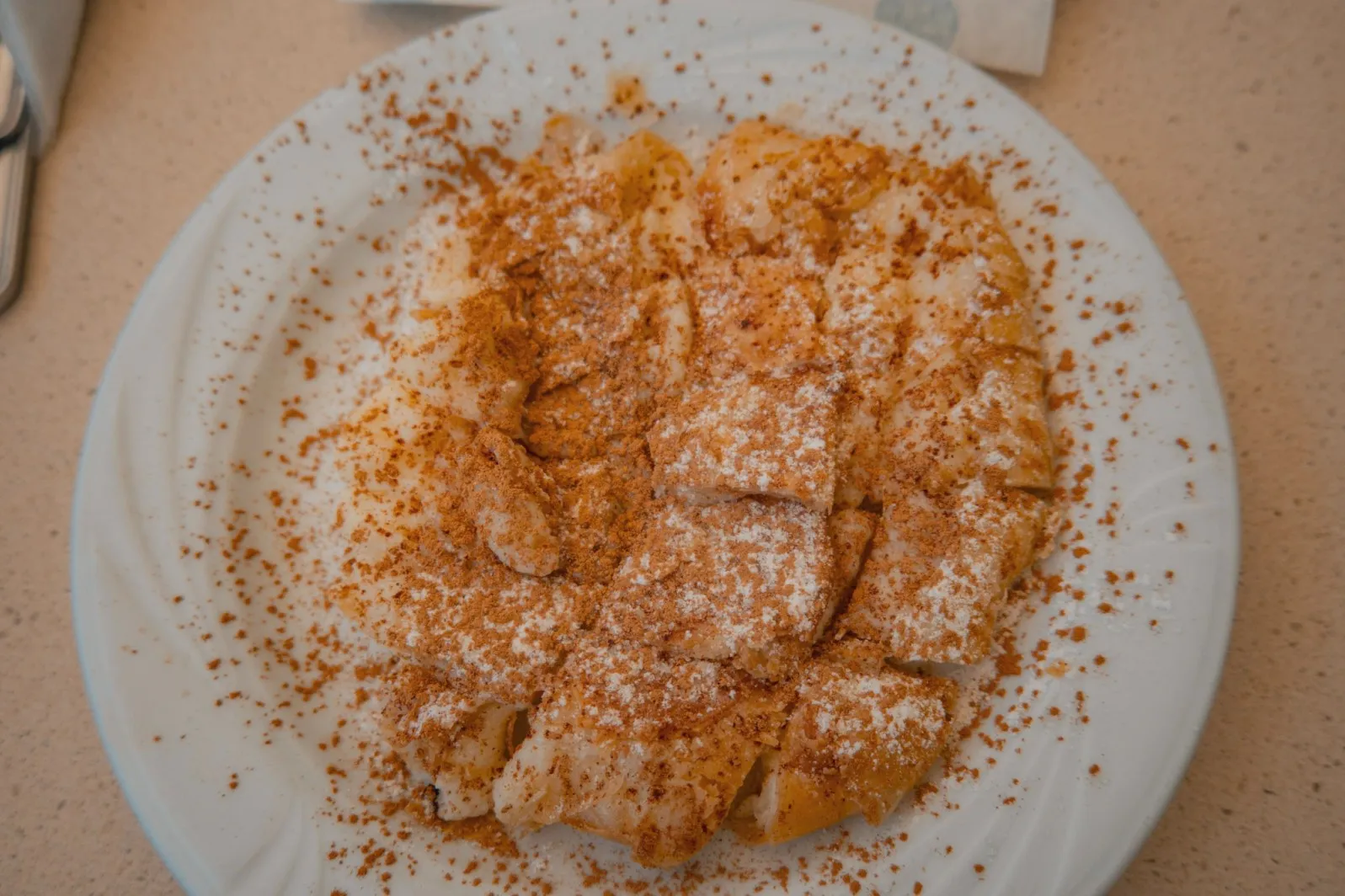
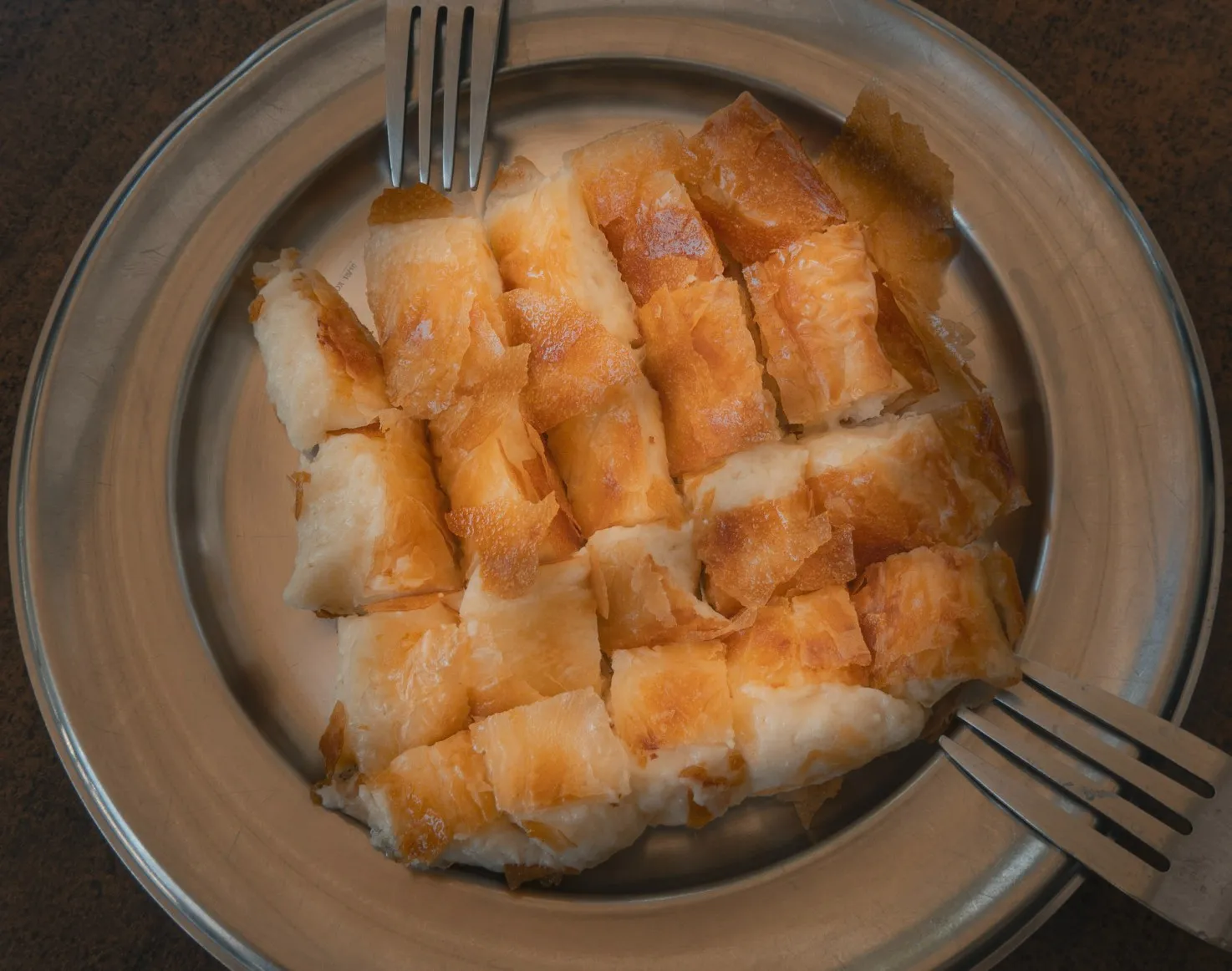
Another one that shows up on the Crete list too, but it’s worth its own mention here because the mainland does its own take. In places like Thessaloniki, bougatsa usually means a sweet custard filling in crisp phyllo, dusted with icing sugar and cinnamon, quite different to the savoury mizithra version you get in Chania.
If you’re travelling between islands and the mainland, it’s a good one to compare. Ask locals which version they grew up on, you’ll usually get a strong opinion either way.
RELATED: Where To Eat In Chania – Restaurant Guide →
Dolmades
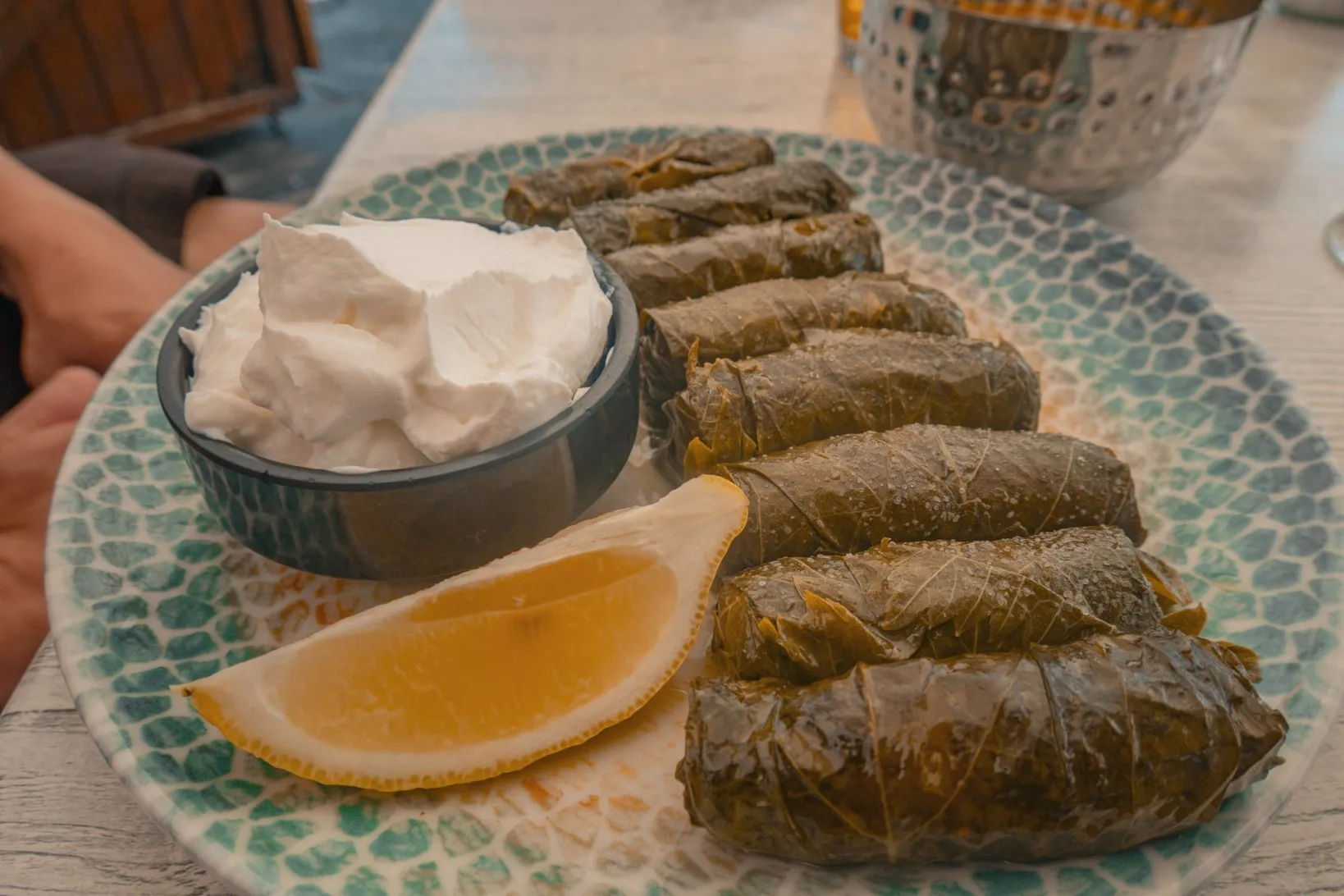
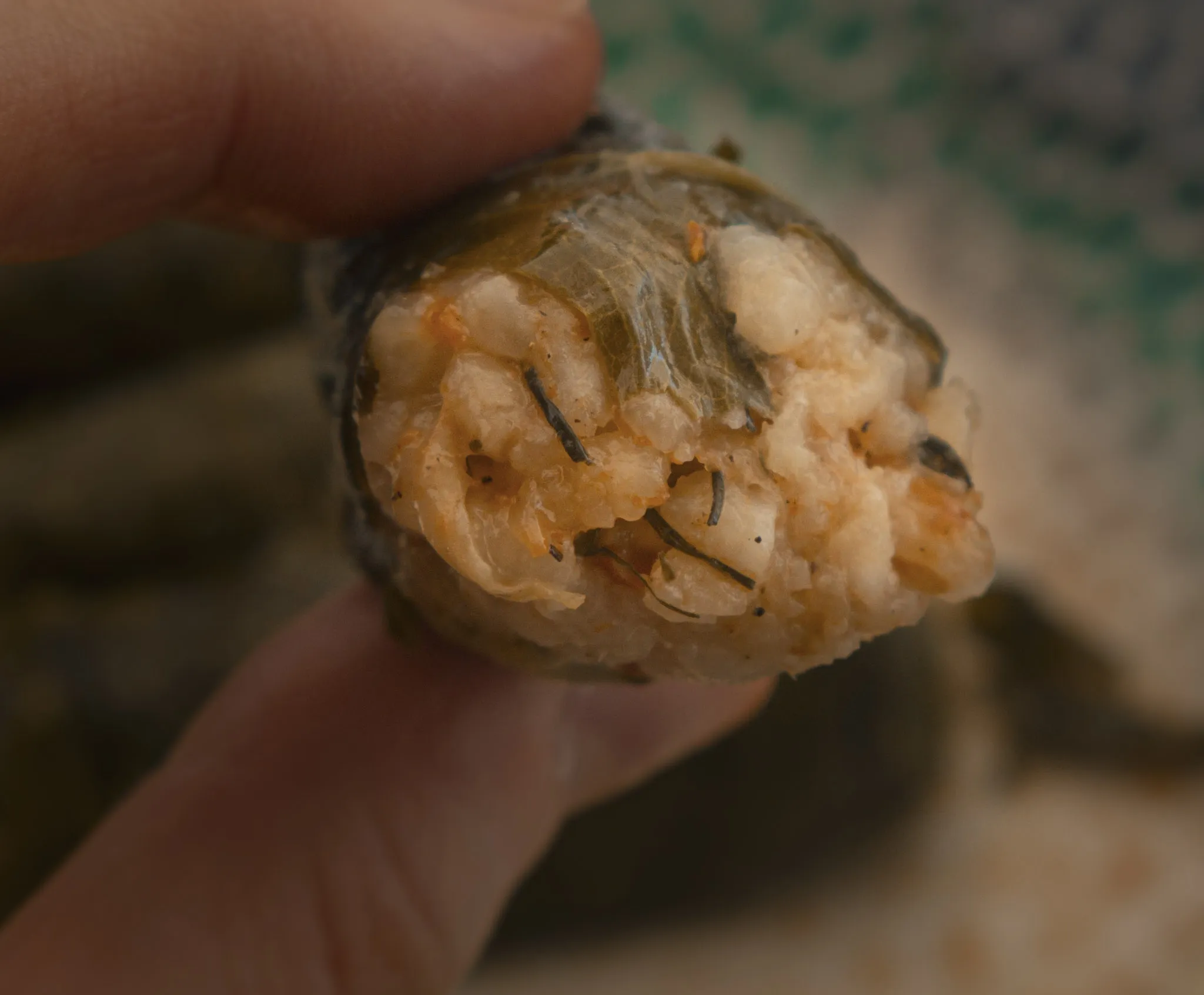
Grape leaves stuffed with rice, herbs and sometimes minced meat, rolled tight and usually served with a squeeze of lemon or a dollop of yoghurt on the side. The vegetarian version, just rice and herbs, tends to be served cold as a starter, while the meat version often comes warm as more of a main.
I wasn’t expecting to like these as much as I did, grape leaves sounded like an odd thing to eat wrapped around rice, but the lemony, herby filling won me over fast. Good ones aren’t chewy or tough, the leaf should almost melt away and just leave you with the filling.
Greek Salad (Horiatiki)
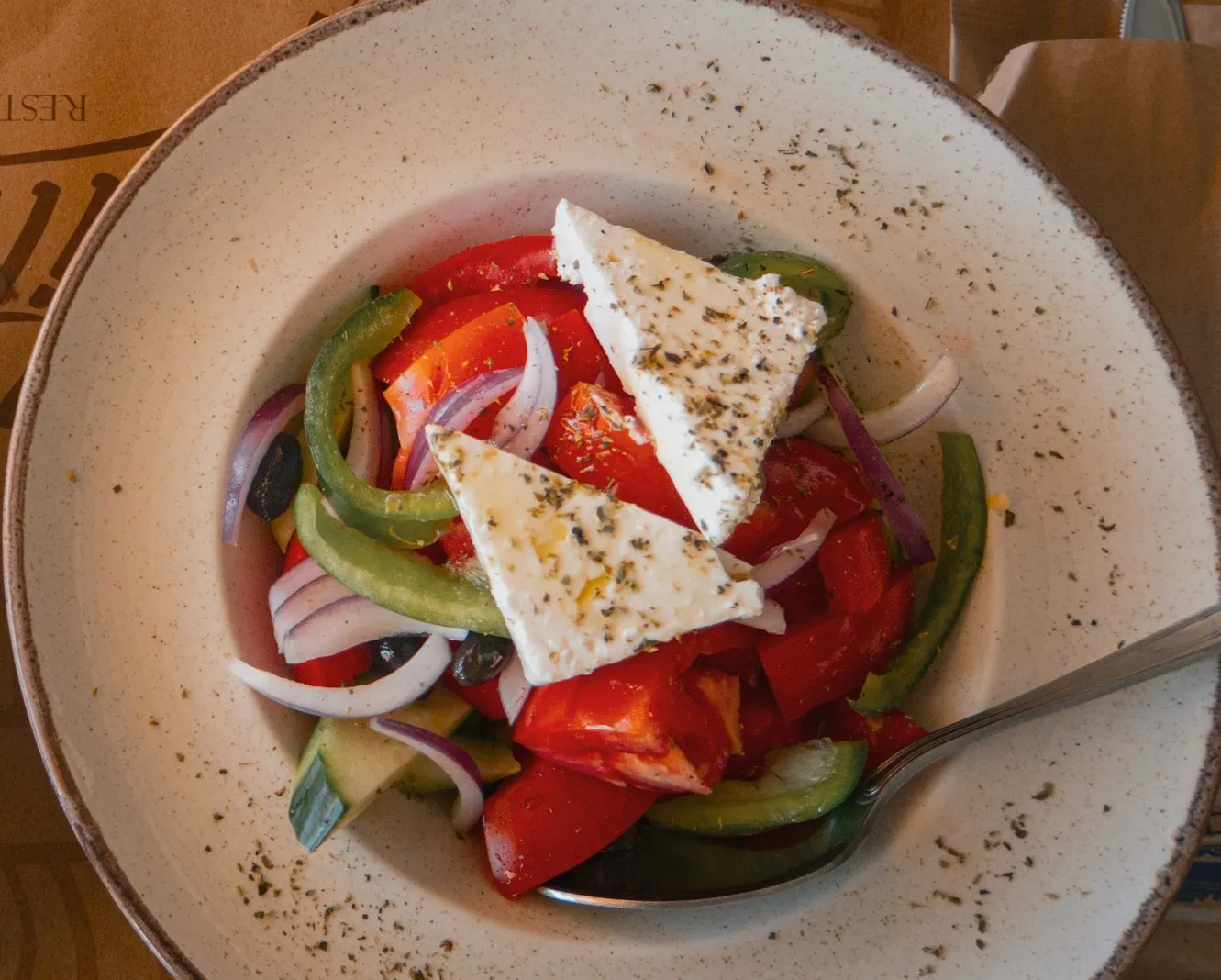
The one dish everyone thinks they already know before they even land and then Greece proves them wrong. Big chunks of tomato, cucumber, green pepper, red onion, kalamata olives, all sitting under a slab of feta that hasn’t been crumbled anywhere near it, just plonked on top whole and finished with a drizzle of olive oil and a sprinkle of oregano. There’s no lettuce, so if you’re served one with lettuce I’m sorry but it’s a tourist trap.
What made the difference for me was the tomatoes, they actually taste like something. Ripe, sweet, a little different at every taverna depending on what was picked that morning. Order it as a side to share rather than a solo starter, it’s meant to sit in the middle of the table alongside everything else, not eaten alone with a fork while you wait for the mains.
Keftedes (Greek Meatballs)
Small, herby meatballs, usually pork or beef mixed with breadcrumbs, mint, oregano and a good amount of grated onion, then fried until the outside’s crisp and the inside stays soft. They turn up as a starter or part of a meze spread more often than a main, so don’t expect a big plate of them with sides, they’re built for sharing and picking at.
The mint adds a different layer of flavour and cuts through the richness of the cooking oil. A squeeze of lemon on top makes a big difference too, ask for one if it doesn’t come with it already.
Loukoumades
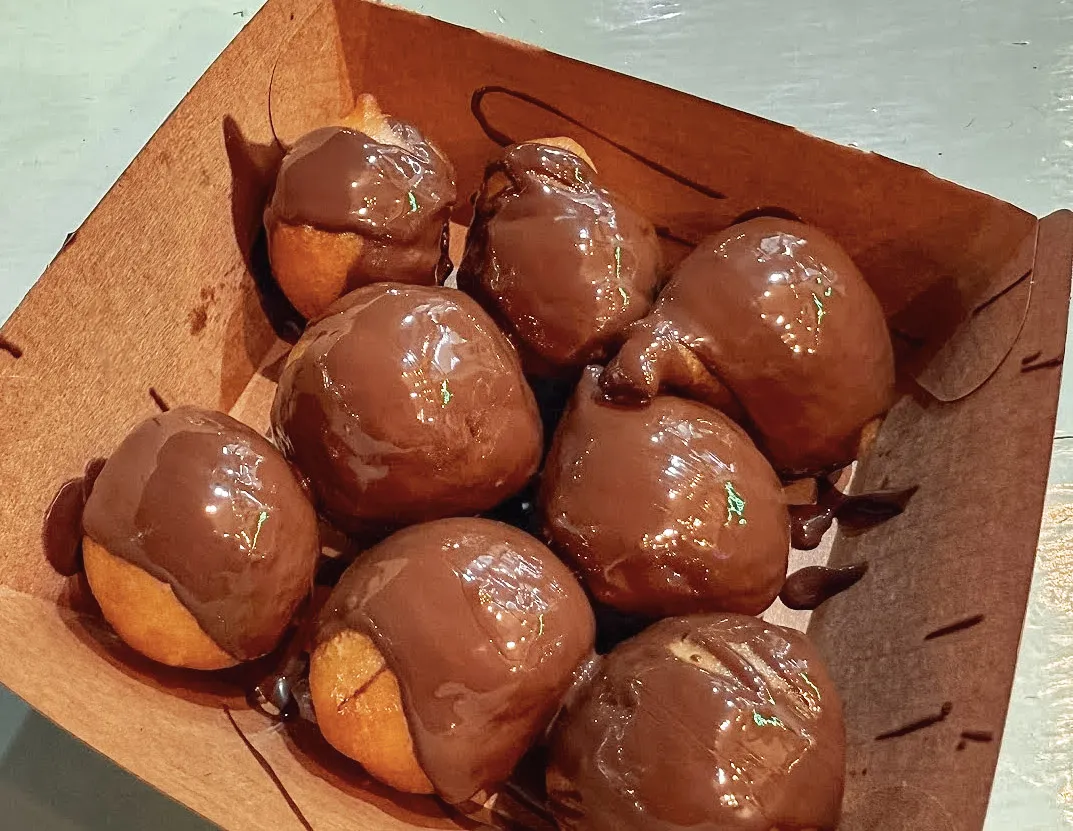
Small fried dough balls, crisp outside, soft and airy inside, drenched in honey syrup and usually finished with a scatter of cinnamon or crushed walnuts. Think of them as the Greek answer to doughnuts, except lighter and in my opinion, better.
These are a street food and dessert stall staple and they’re best eaten within minutes of being fried while they’re still warm and the honey hasn’t fully soaked in.
Ouzo
An anise flavoured spirit that turns cloudy white the second you add water or ice, which throws people off the first time they see it happen. It’s sipped slowly, usually alongside meze rather than knocked back the way raki is in Crete and it’s often the drink that kicks off a long, unhurried lunch.
I wasn’t a fan on the first sip, the anise flavour is strong and takes some getting used to if you’re not into liquorice. By the end of the trip though, I was ordering it without thinking twice, it grows on you fast once it’s paired with the right food.
Zucchini Balls
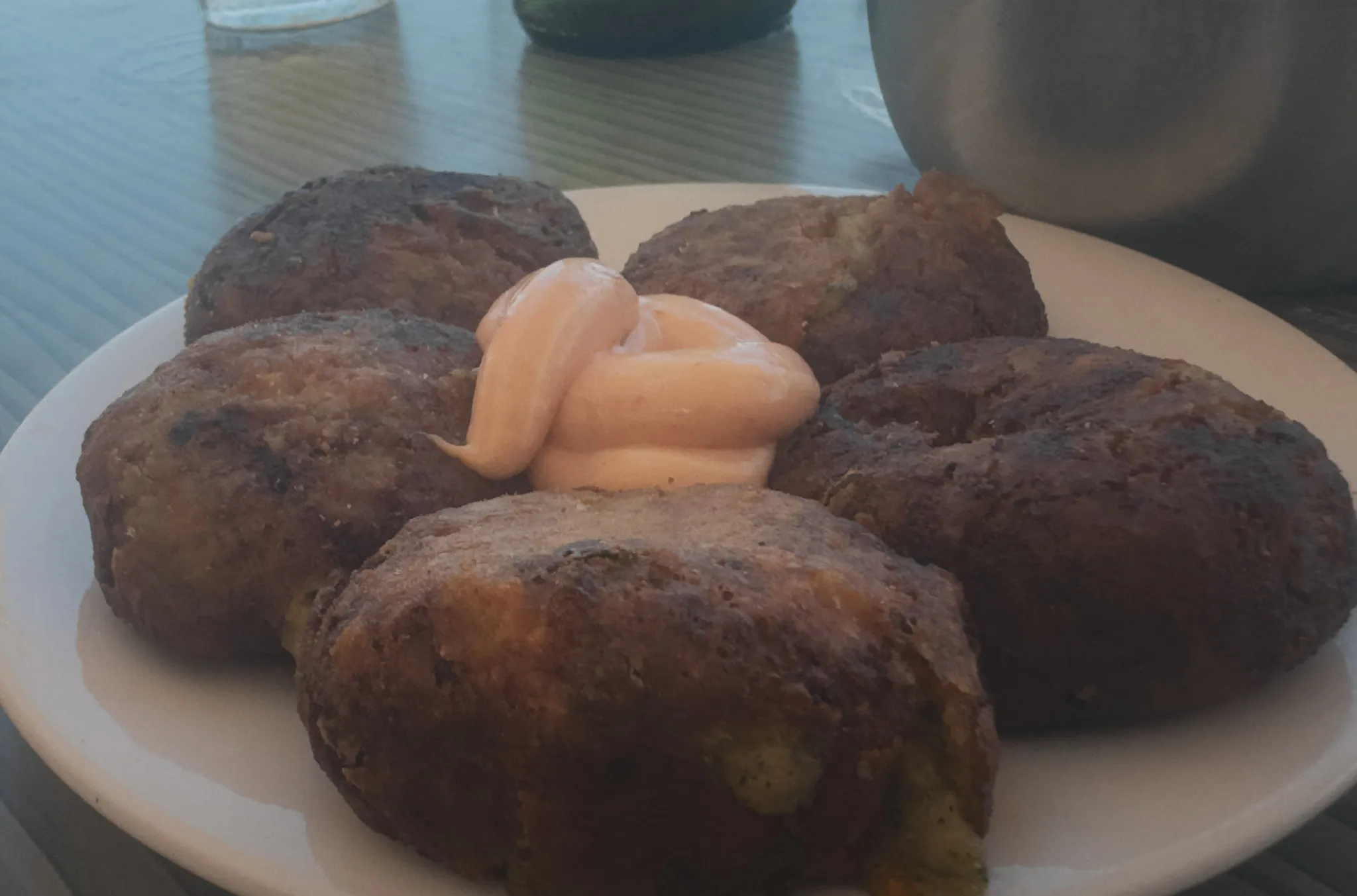
These don’t get nearly the attention gyros and souvlaki do, but they should. Grated zucchini mixed with feta, herbs, sometimes a bit of mint, bound together and fried until the outside’s crisp and golden. They’re lighter than keftedes, less meaty obviously, but just as easy to keep eating without noticing how many you’ve had.
You’ll usually find these as part of a meze spread rather than a dish on their own, tucked in next to the tzatziki and bread. A squeeze of lemon is really all they need. We loved these with a mythos.
Greek Coffee
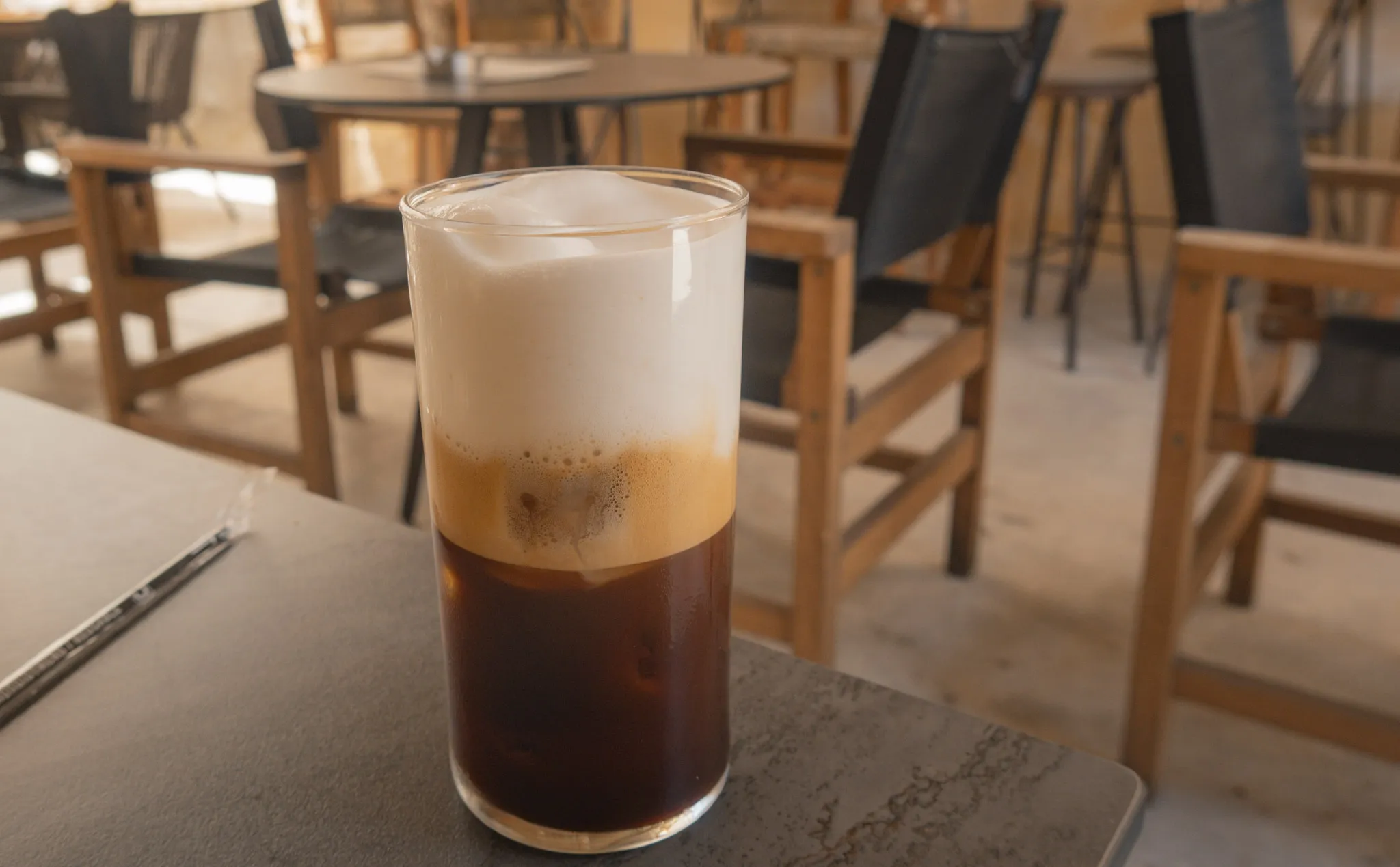
Thick, strong and served in a tiny cup with the grounds settled at the bottom, this isn’t something you knock back on your way out the door. It’s brewed slowly in a briki, a small copper pot and how sweet it comes down to how you order it. I found requesting just a small bit of sugar was enough.
Then there’s the frappé, Greece’s other coffee obsession, instant coffee whipped up with water and ice until it’s foamy, sipped through a straw over a long conversation rather than gulped down. Freddo espresso and freddo cappuccino are the newer additions, both served cold, both absolutely everywhere now and from what I could see, what most locals seem to actually drink day to day. Whatever the type, one thing stays the same, coffee here is slow, it’s social and nobody’s rushing you out for the next table.
RELATED: Chania’s Best Cafes →
Glykaki
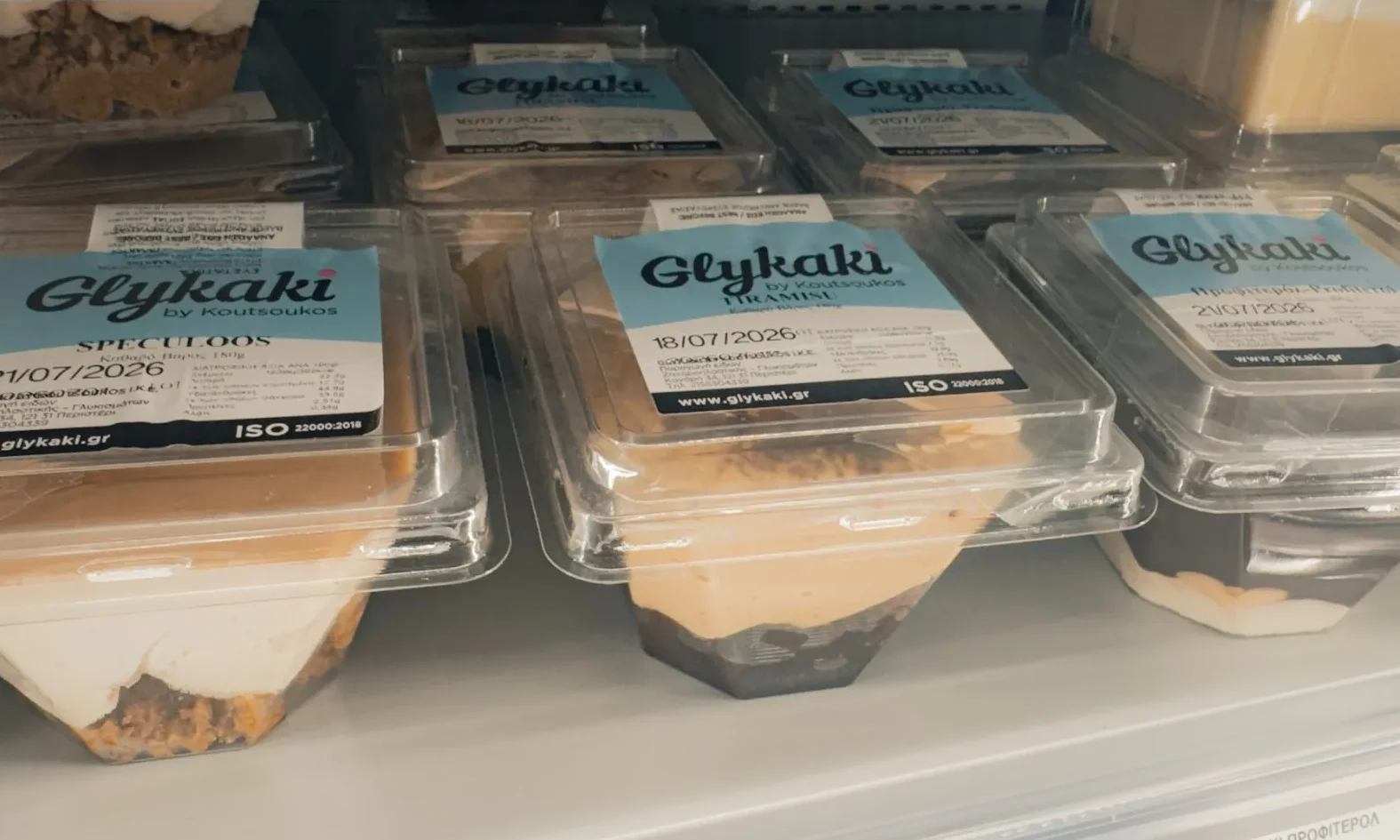
You’ll only find this in the supermarkets, so on your snack crawl you need to head to the fridges and throw these into your bakery. Glykaki is an Athens based connectionist. They’ve won a large number of awards which once you try the first spoonful it’ll all make sense.
They specialise in dessert tubs with flavours like speculoos, tiramisu and bueno. I tried a few but I kept going back to specaloos – a crunchy carmelised biscuit base, thick cream and a layer of a biscoff style creme. These on your balcony after a day on the beach: perfect!
Oregano Lays
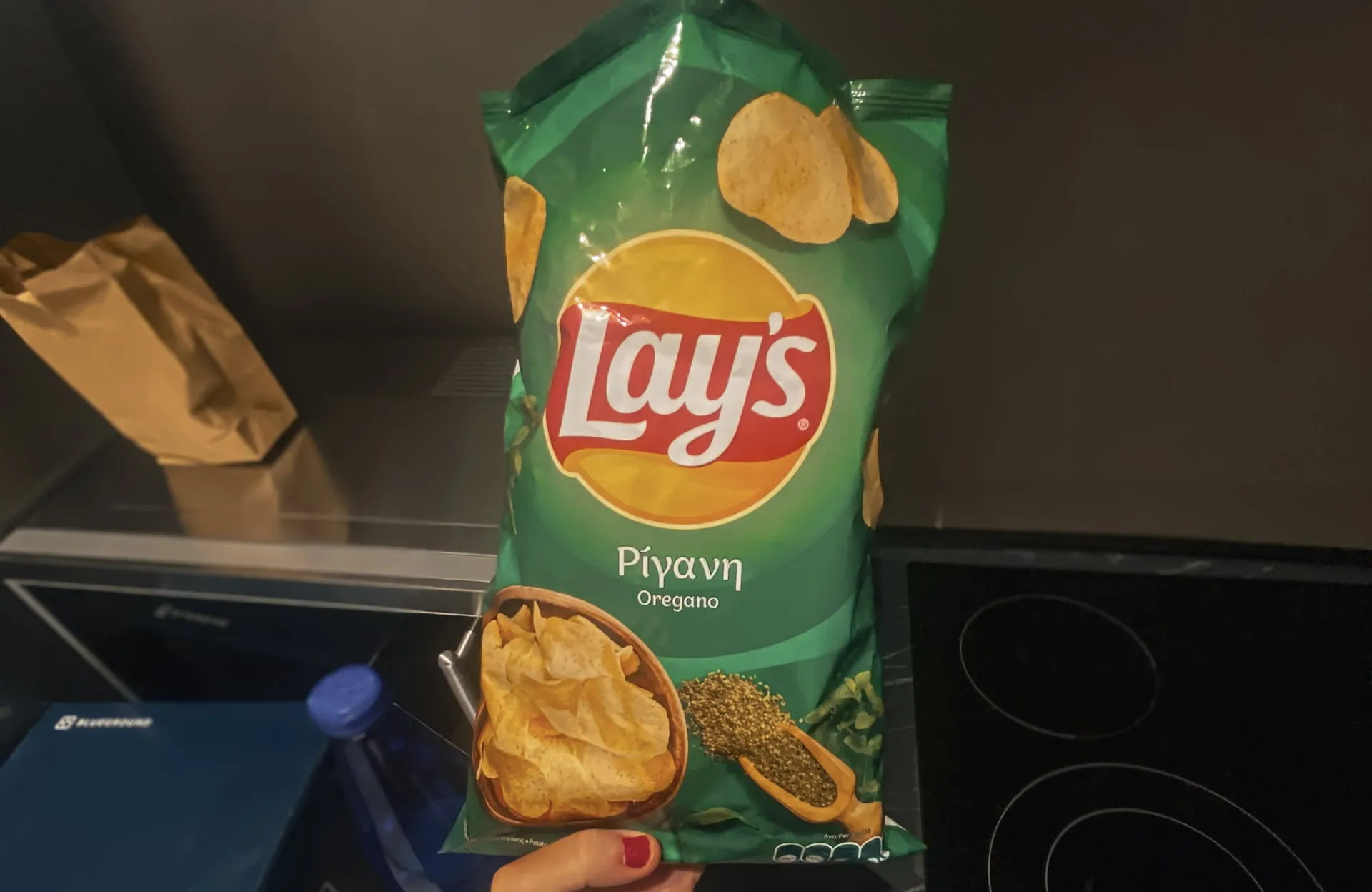
I can’t talk about supermarket snacks without mention the holy grail – Lays oregano crisps. Oregano is a big deal in Greece, it’s in almost everything and a bag of local oregano makes for a great souvenir. These crisps are covered in it with the addition of a hint of garlic. Dangerously addictive.
Greek Food FAQs
What is traditional Greek food?
Traditional Greek food is built around olive oil, fresh vegetables, herbs and shared plates rather than one big main course. Staples include moussaka, souvlaki, gyros, dolmades and Greek salad, alongside slow cooked dishes like kleftiko and stifado.
What is the most popular Greek food?
Gyros and souvlaki are the most widely eaten, both easy to find on nearly every street corner in Greece. Greek salad and tzatziki come close behind, since they turn up on almost every taverna table as a starter or side.
What is Greek street food?
Greek street food centres on gyros, souvlaki and loukoumades, all cheap, fast and usually better from a small stall than a sit down restaurant. Zucchini balls and keftedes also show up at street level, though they’re more common as part of a meze spread.
What is the difference between gyros and souvlaki?
Gyros is meat shaved off a vertical spit, wrapped in pita with tomato, onion and tzatziki. Souvlaki is skewered, grilled meat served either on the stick or in a wrap and the two get used interchangeably by tourists even though they’re cooked differently.
Is Greek food healthy?
Greece has some of the highest life expectancy rates in the world and the diet is a big part of that. Meals lean heavily on olive oil, vegetables and legumes, though cheese, fried food and pastries show up often enough that it’s more about balance than strict healthy eating.